Democratic and Popular Republic of Algeria
Ministry of Higher Education and Scientific Research
University of Batna
Faculty of Letters and Human Sciences Department of English
Title :
Thesis submited in part fulffilment of a magister degree in language and communicative competence
Presented by : Supervisor :
Miss Nezzar Kenza Pr. Mohamed Salah Nédjai Members of the jury :
- - -
Before all I thank god for the accomplishment of this work .
So many people sustained my efforts during this journey in the world of
knowledge and research ,so many people whom I thank from the bottom of
my heart .
First of all , I thank my supervisor , Professor Mohammed Salah Nédjai for
his supervision, help ,and fatherly like affection and support , I am sincerely
indebted to him , and I duly owe him much gratitude , I will always
remember the care and attention with which he surrounded me .
Secondly, I must thank Pr Byram ,Dr Risager , and Dr Aboubou for their
insightful opinions that helped me in my research .
Thirdly , I thank Dr Ghoar ,and Mr kheireddine for their help and advices .
Fourthly , I am much grateful to second year students, and British
civilisation teachers for their contribution to this research .
My gratitude goes also to the members of the jury who accepted to examine
and evaluate my work .
Last ,but not least, I thank my uncles , brothers, sisters, and all my friends
for their moral support .
Outline
Contents
Dedication Acknowledgements Abstract………I List of tables………II List of figures……… III Glossary……….... IVIntroduction
Statement of the problem ………...1
Hypotheses ……….3
Background and significance of the study………..4
Objectives of the study………5
Theoretical part
Chapter one : Research methodology design
Introduction...7I.1- Aims of the research methodology ...8
I.2-The research method ...9
I.3-Participants ...10
I.3.1-The population... I.3.2-The sample... ... I. 4- The instruments ...11
I .4 .1-Students ' questionnaire ... I.4.2- Teachers ' questionnaire... I.4.3- Questions to experts...12 I .4.4- Reliability of instruments ... I.4.4.1-Questionnaires ...
I.4.4.3- Piloting
I.5- Scope and limitations...14
Conclusion...16
Chapter two : The growth of interest in the cultural dimension of
foreign language education
Introduction...18II.1-Culture and civilisation...20
II.1.1-Definitions of culture II.1.2 –The term civilisation across history and its relation to the term culture...26
II.2-Culture in language and language in culture...29
II.2.1-The interrelation of language and culture...30
II.2.2-The cultural component of language education...33
II.3-Intercultural studies and foreign language education...36
II.3.1-The intercultural dimension in foreign language education...38
II.3.2-Intercultural competence ...40
II.3.3-Intercultural awareness ...41
Conclusion...43
Chapter three : Motivation to learn
Introduction...44III.1-Definitions of motivation...45
III.2-Some motivation theories...47
III.3-Students motivation to learn...51
III.4-Foreign language teachers’ motivation in developing countries...53
III.4.2-Some factors of teachers’ demotivation ...56
III.5-Impacts of teachers beliefs and practices on students motivation to learn...58
III.6-Teacher / learner relationship and motivation...59
III.7-Some motivational strategies in the foreign language classroom...60
Conclusion...63
Field work
Chapter four : Students’ questionnaire
Introduction...64IV.1-Participants and procedures...65
IV.2-Questionnaire administering IV.3-Questionnaire analysis and presentation Section I : item 1...66 item 2...67 item 3...68 Section II : item 1...70 item 2...71 item 3...72 item 4...72 Section III : item 1...74 item 2...75 item 3...76 item 4 item 5...77 item 6...78 item 7...79 item 8...80
item 1...81 item 2...82 item 3...83 item 4...84 item 5...85 item 6...86
IV.4-Discussion of the findings...87
Conclusion...90
Chapter five : Teachers’ questionnaire
Introduction...91IV.1-Participants and procedures...92
IV.2-Questionnaire administering IV.3-Questionnaire analysis and presentation Section I : item 1...93 item 2...94 item 3...95 item 4 item 5...96 item 6...97 Section II : item 1...98 item 2 item 3...99 item 4... 100 item 5 item 6...101 item 7...102 Section III : item 1 item 2...103 item 3...104 item 4...105 item 5
item 6...108
item 7...109
item 8...110
item 9...110
IV.4-Discussion of the findings...111
Conclusion...112
Recommendations
...113Conclusion
...115Bibliography
Appendices :
Appendix 1 : Students’ questionnaire Appendix 2 : Teachers’ questionnaire Appendix 3 : Experts’ questions Appendix 4 : Experts’ answers a)Pr Byram
b)Dr Risager c)Dr Aboubou
Appendix 5 : Rosanthal experience
Appendix 6 :The guiding principles of the UNESCO /ILO recommndation concerning the status of teachers
Appendix 7 :The world conference on education (Dakar 2000)education for all commitements
Abstract
The teaching of culture as a component of language teaching, in an attempt to understand and overcome particularity , by building bridges between one culture and an other , has been overlooked, it is only recently , that the importance of culture in language education is recognized and given due regard .In this context , English , as the most internationally used language , gained a widespread importance , it is
promoted every where in the globe .It has been established that the motivation to learn a foreign language ,and the motivation to learn about its culture and civilisation are so intimately linked that a lack of interest ,or demotivation in one, inevitably leads to a lack of interest ,or demotivation in the other ; therefore , any attempt to perform English language education quality –As is the case of many developing countries , Algeria included –requires motivating learners to learn about the British culture and civilisation .In our case , second year students of English at Batna university display a lack of interest in learning British civilisation .The purpose of our study is to identify the causes of this lack of interest ; hence the reform of British civilisation teaching will benefit greatly from insights on the learning of this module gained from learners themselves .Approaching the problem from both students and teachers perspectives , we tried to spot causes behind students’ lack of interest in learning this module ,and suggested what would be a more interesting and motivating teaching of this module. Our study ,thus takes into account the students attitudes ,opinions ,and preferences , and the opinions of British civilisation teachers and experts .Based upon the responses of both students and teachers questionnaires , and on experts answers on a series of
questions , some factors which demotivate learners were highlighted , and many suggestions were made .The findings of this research show that the factors that demotivate the students the most are :the content , the way of teaching , and the teachers’ practices ,their lack of training and lack of motivation .The paper concludes with some recommendations and future guidelines for this module .
-II-
List of tables :
Chapter three :
Table 1 : Motivation and higyene factors ( Herzberg) ...49
Chapter four: Table 2 : The choice of English ...66
Table 3 : Students attitudes towards English language study ... 67
Table 4 : Students attitudes towards British civilisation learning ...68
Table 5 : Some causes of students lack of interest...69
Table 6 : What the students like to know about the British people...70
Table 7 : The students awarness of cultural differences...72
Table 8 : What will motivate the students most in a British civilisation course..74
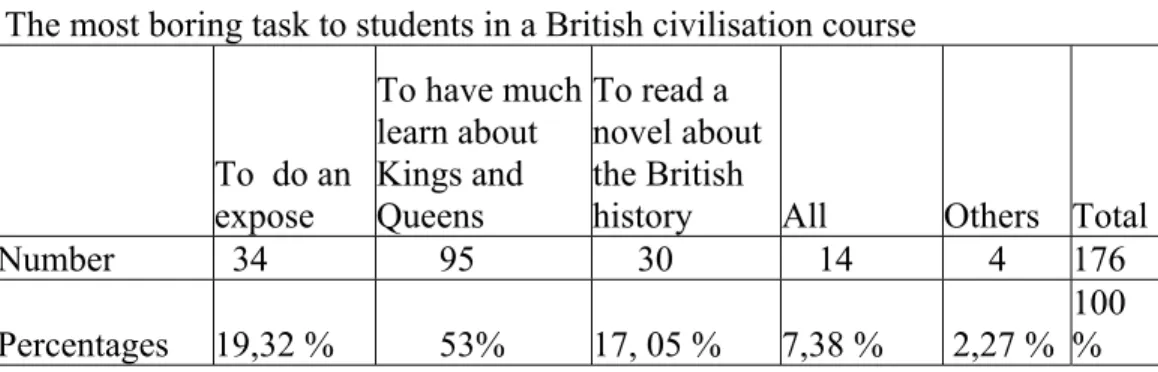
Table 9 : The most boring task to students in a British civilisation course...75
Table10 : Reading British novels ... 76
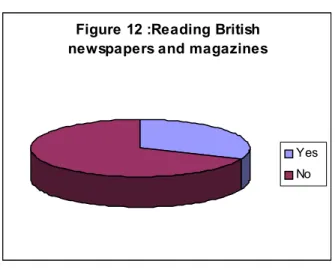
Table 11 : Reading British newspapers and magazines ...76
Table 12 : How often students watch British channels ...77
Table 13 : Watching films on British history and Social life...78
Table 14 : The influence of the teacher's positive perception of the student on the latter's motivation...79
Table 15 : The influence of the teacher's negative perception of the student on the latter's motivation ...80 Table 16 : Statement 1 ...81 Table 17 : Statement 2 ...82 Table 18 : Statement 3 ...83 Table 19 : Statement 4 ...84 Table 20 : Statement 5 ...85 Chapter five : Table 21 : The choice of teaching as a profession ……… 93
Table 22 : The period of teaching British civilisation……… 94
Table 23 : Teachers’ perception of their students ………95
Table 24 : How much teachers think their students are aware of cultural differences ……….95
Table 25 : Teachers opinions on exposes ……… 96
Table 26 : Teachers opinions on whether the students should have a greater say in the content of the couses and method of teaching………. 97
Table 27 : Statement 6 ………..98
Table 28 : Statement 7 ………..98
Table 29 : Statement 8 ……….99
Table 30 : Statement 9……….100
Table 32 : Statement 11………. 101 Table 33 : Teachers opinions on the time allocated to British civilisation …….102 Table 34 : Teachers opinions on British civilisation content ……… 103
Table 35 : What teachers find the most fruitful technique in teaching British
civilisation……… 104 Table 36 : How often teachers include discussions of cultural differences (social
habits ,values , lifestyles) in British civilisation courses………...105 Table 37 : How often teachers include discussions on current events ( social or
political issues ) in British civilisation courses ……… 106 Table 38 : How often teachers use Films ,photos , or maps in British civilisation
courses ………..107 Table 39 : How often teachers use short stories novels or any other literary work in
British civilisation courses ……… 107 Table 40: Teachers opinions on the effect of the lack of language knowledge on
students’ motivation to learn British civilisation ……….108 Table 41 : Teachers’ knowledge about intercultural competence………109
List of figures
:
Chapter one :
Figure 1 : Methodological frame work……… 17
Chapter three : Figure 2 : Maslow’s hierarly of needs ( 1970)... 48
Chapter four Figure 3 : The choice of English……… 67
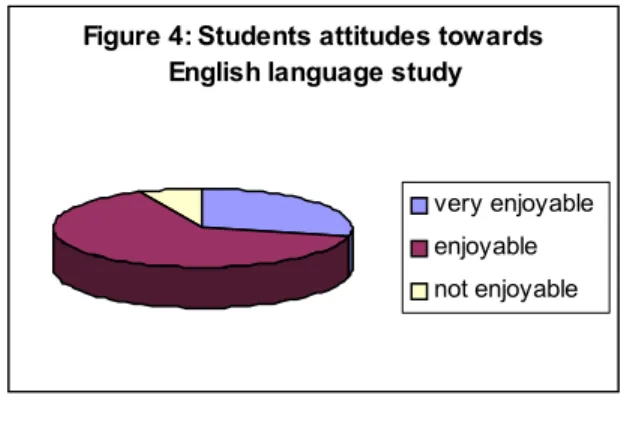
Figure 4 : Students attitudes towards English language study... 68
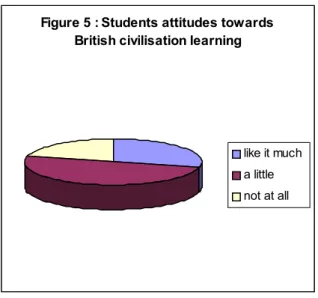
Figure 5 : Students attitudes towards British civilisation learning... 69
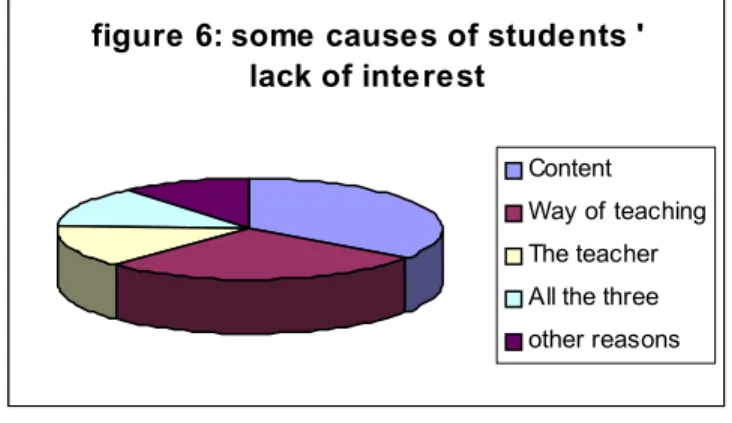
Figure 6 : Some causes of students lack of interest ...70
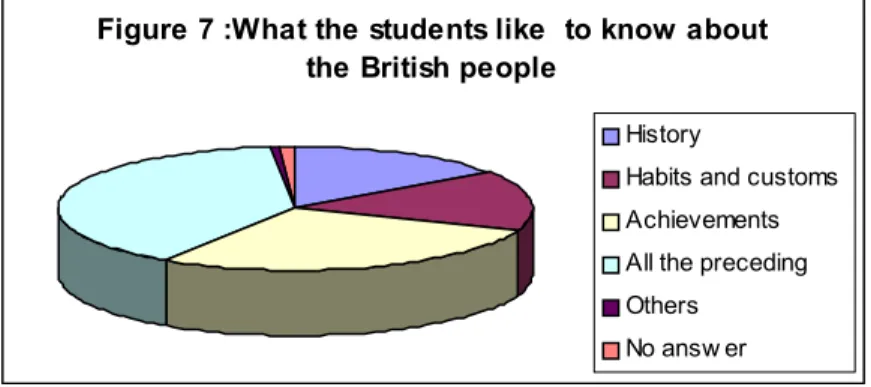
Figure 7 : What the students like to know about the British people ...71
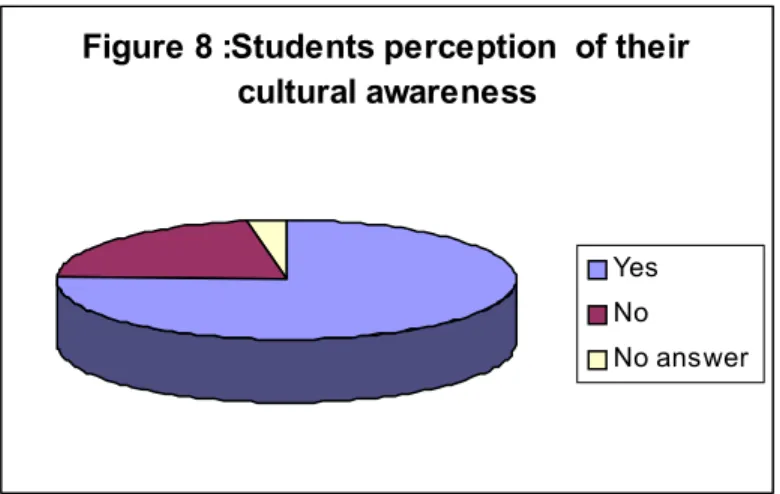
Figure 8 : The students awarness of cultural differences... 73
Figure 9 : What will motivate the students most in a British civilisation course... 74
Figure 10: The most boring task to students in a British civilisation course...75
Figure 11: Reading British novels...76
Figure 12 :Reading British newspapers and magazines... 77
Figure 13 :How often students watch British channels...78
Figure 14 :Watching films on British history and Social life ...78
Figure 15 :The influence of the teacher's positive perception of the student on the latter's motivation ...79
Figure 16 :The influence of the teacher's negative perception of the student on the latter's motivation ...80
Figure 17 : Statement 1...81
Figure 18 : Statement 2 ...82
Figure 19 : Statement 3...83
Figure 21 : Statement 5 ...85
Chapter five : Figure 22 : The choice of teaching as a profession ……… 94
Figure 23 : The period of teaching British civilisation ……… 94
Figure 24 : Teachers’ perception of their students ………95
Figure 25 : How much teachers think their students are aware of cultural differences… ………. 96
Figure 26 : Teachers opinions on exposes……… 96
Figure 27 : Teachers opinions on whether the students should have a greater say in the content of the course and method of teaching ………. 97
Figure 28 : Statement 6……… 98 Figure 29 : Statement 7………. 99 Figure 30 : Statement 8 ……… 99 Figure 31 : Statement 9……….100 Figure 32 : Statement 10 ………..101 Figure 33 : Statement 11……….. 102
Figure 34 : Teachers opinions on the time allocated to British civilisation……… .103
Figure 35 : Teachers opinions on British civilisation content……… 104
Figure 36 : What teachers find the most fruitful technique in teaching British civilisation ……… 105
Figure 37 : How often teachers include discussions of cultuiral differences (social habits ,values , lifestyles) in British civilisation couses……… 106
Figure 38 : How often teachers include discussions on current events ( social or political issues ) in British civilisation courses ……… 107 Figure 39 : How often teachers use Films ,photos , or maps in British civilisation
courses ……… 107
Figure 40 : How often teachers use short stories novels or any other literary work in
British civilisation courses ………108 Figure 41 : Teachers opinions on the effect of the lack of language knowledge on
students’ motivation to learn British civilisation ………..109 Figure 42 : Teachers’ knowledge about intercultural competence……….. 109
-IV-
Glossary
Acculturation : bring persons of a different culture into once own culture . Aptitude : it is specific to tasks and depends on the possession of certain
characteristics by the learner these characteristics may be either genetic(innate) ,or they
may be dependent upon prior learning or exposure to certain situations . Communicative competence : introduced by Hymes (1966) , it is what a speaker needs
to know to communicate appropriately within a particular speech community .It involves knowing not only the language code ,but also what to say ,to whom , and how to say it appropriately in many situations , further ,it involves the social and cultural knowledge speakers are presumed to have .It has important implications for the selection and sequencing in language curricula .
Civilisation : is the study of all cultural features whether ethnographic ,religious, technical ,or aesthetic ,which during the course of history have marked the societies whose language we study .
Culture shock : feelings in the learner of estrangement ,anger ,hostility , indecision frustration unhappiness, ,sadness, loneliness, homesickness ,and even physical illness. The person undergoing culture shock views his new world out of resentment ,and
alternates , between being angry at others for not understanding him and being filled with self-pity .
Extrinsic motivation : refers to a condition where it is felt that there is an absence of interest and hence the drive to study lies in some area extrinsic to the goal to be
achieved , it is also referred to as instrumental motivation. Foreign Language proficiency : consists of having at least 4 abilities
a) Phonetic coding : the ability to code auditory phonetic material . b) Grammatical sensitivity : the ability to handle grammar.
c) Rote memorization ability : the ability to learn vocabulary and associations in a short time.
d )Inductive language learning ability : the ability to infer new linguistic forms, rules ,and
patterns
intercultural attitudes : curiosity and openness , readiness to relativise one's own values, beliefs and behaviours and appreciate how others might perceive and interpret them.
Intercultural awareness: an ability to evaluate critically and on the basis of explicit criteria, perspectives ,practices ,and products in one's own and other cultures and countries .
intercultural competence : the ability of a person to behave adequately in a flexible manner when confronted with actions ,attitudes ,and expectations of representatives of
foreign cultures(Meyer 1999 quoted in Cortazz and Jin 999:198 ) . interest : usually refers to the condition where the source of the drive lies in the student ,
the latter sees the intrinsic value of the effort to be expended , and the goal to be achieved
and this is what is referred to as "intrinsic" or " integrative " motivation .
Lingua franca
: A language that two ,or more persons use and which is foreign to both,or to all
Prestige bias :
Prestige bias is the tendency for respondents to answer in a way that make them feel better. People may not lie directly, but may try to put a better light on themselves.Stereotypes : it involves labeling or categorizing particular groups of peoples , usually in
a negative way , according to preconceived ideas or broad generalizations .
Worf and Sapir hypothesis :
The relationship between language and culture is often discussed in the literature in relation to the so-called linguistic or cultural relativity hypothesis ,whose best known modern proponents have been Worf and Sapir ( sometimes also called the worfian hypothesis or the Sapir Worf hypothesis ) .The strong formulation of the hypothesis posits that with each different language system there is correlated a unique thought pattern which determines the speakers worldview . the consequence of this position is the denial of the possibility of an exact correspondence between two linguistic
expressions that belong to different language systems . The weak formulation only admits that coding systems in general , of which language represents one example , facilitates or inhibits memory functions , this position denies a direct influence of the language system on perception , and admits the possibility of "equivalent expressions "
across different language systems .
1
Introduction :
Statement of the problem :
The current international context presents the field of foreign language
education with many challenges ,and language educators face a great deal of pressure as stated by C.Kramsh (2004 ) in " The cultural component of language teaching" :
"There is a great deal of political pressure now put on foreign language educators to help solve the social and economic
problems of the time. Educators fear that the mere acquisition of linguistic competence is no garantee of international peace and understanding .After years of communicative euphoria, some language teachers are becoming dissatisfied with purely functional uses of language .some are pleading to supplement the traditional acquisition of "communicative skills "with some
intellectually legitimate,humanistically oriented , cultural "content".Others who teach their language to non-native speaker immigrants , are under pressure to absorb ( acculturate) into their society great number of newcomers .And there is of course a recrudescence of nationalism all around the world that draws political capital from increased links between national language and national cultures"(p1) .
This statement explains the growing culturalisation of foreign language
the language of a people ,we are inevitably in a contact with its culture ,in this respect , Jackobovits(1971) stated :
"The language of a people is a living growing changing
reflection of that people's heart and mind ,when we learn a foreign culture we intermingle with a foreign people , language contact is insepareble from culture contact ,in a
real sense becoming bilingual entails becoming bicultural " (p 62)
From the obove statement , we understand the urgent need of learning foreign languages in the current context of globalisation ,and it becomes obvious also, that encouraging positive attitudes towards the foreign culture and its people is a way to promote foreign language learning. Now adays , English is becoming a lingua franca, affording to the non English speaking countries the possibility of participating in the global economy and international politics , which entails that the promoting of English learning requires motivating its learners to learn about the British culture and civilisation .
As a matter of fact ,this motivation to learn about the British culture and civilisation is not displayed by our students,following students'lack of motivation to learn ,there is a lack of interest among second year students of English at Batna university to learn British civilisation .
This jugement is based on our experience ,firstly ,as English language students when we were always hearing complaints of our classmates about British
3
civilisation content and teaching , complaints such as : "why are we obliged to learn about all those Kings and Queens,their marriages
and divorces ... ? " "what is the future use of this course , while the majority of us are to be teachers
in middle and secondary schools where only linguistic competence is taught ?" secondly , as teachers of British civilisation , when our students made almost the same complaints . Hence after a careful evaluation of this problem ,we decided to investigate it, seeking answers to the following questions :
-What are the factors underlying this lack of interest ? -Is the actual content a demotivating factor ?
-Are the techniques used to teach this module innadequate and demotivating ?
-Is the teacher 's lack of motivation the demotivating factor ?
-Is the fact that students find no future use or application of this module -as the majority are to be teachers in the middle and secondary schools where only linguistic competence of the language is taught - a demotivating factor ? -What will be a more motivating teaching of this module ? . Hypotheses :
As a first attempt to answer the preceding questions we formulated the following hypotheses :
Hypothsis 1:
lack of interest in learning British civilisation because of the content ,that is not motivating , it is mainly historical ,and it lacks many cultural aspects . Hypothesis 2 :
We assume that this lack of interest is due to the lack of use of new techniques in teaching culture and civilisation ; some techniques of teaching civilisation , that are found to be more interesting and motivating are not used .
Hypothesis 3 :
we assume that this lack of interest is caused by the teachers' negative perception of their students , some teachers ‘practices and the impacts of these on the students ‘ motivation .
Backgroud and significance of the study :
The language teaching profession started , recently , to recognize the importance of the cultural dimension in foreign language education , governments around the world are designing educational policies that take into account the necessity of incorporating a cultural side in foreign language learning . This is the case of English language learning in the current context of globalisation ,in this vein Amy Bik May Tsui (2004) stated :
"In an era of globalisation in which English is de facto a lingua franca , non-English speaking countries,especially
developping countries , are caught in a dilemma of
maintaining their own identity , culture and values on the one hand , and succumbing to the powerful forces of global
5
on the other .
As these countries draw up language policies which promote access to the language which affords participation in global economy and international politics ,they are wary of the impeding threat of assimilation by the English speaking superpowers " ( p1) .
Algeria as one of those developping countries , is willing to promote the learning of foreign languages , especially English language , to allow for an openess on the world of economy and technology ,and to participate in international politics . Our role as English language teachers is to motivate students in English language learning by trying to motivate them to learn about the British culture and civilisation, the English language vehicles .
Our present research , will be, particularly, significant for future foreign language education researches seeking a more motivating teaching of British culture and civilisation , and for researches on students' interest and
motivation ,it may also help us see more unsuspected factors that may hinder students' motivation to learn English language .
Objectives of the study :
Our aims from undergoing such a research are basically :
1-To identify and spot the factors underlying students' lack of interest in learning British civilisation ,by trying to approach the students attitudes towards the learning of this module , the content and techniques of teaching
related to it ,and by seeing the problem from the teachers' perspective ,trying, thus ,to correlate the answers of both participants .
2 -To suggest some improvements in the content and the techniques of teaching this module , giving hints and some guidelines to teachers in the teaching of a foreign language and its culture .
Our research ,nevertheless, is far from pretending to give magical solutions or readymade recipies to the teacher in a foreign language classroom , they remain
suggestions based on factual data ,that is a record of students' opinions, attitudes and preferences , teachers' perceptions and opinions , and finally , some experts opinions .
Theoretical part
Chapter one : Research methodology design
Introduction...7 I.1- Aims of the research methodology ...8 I.2-The research method ...9 I.3-Participants ...10 I.3.1-The population... I.3.2-The sample... ... I. 4- The instruments ...11 I .4 .1-Students ' questionnaire ... I.4.2- Teachers ' questionnaire...
I.4.3- Questions to experts...12 I .4.4- Reliability of instruments ... I.4.4.1-Questionnaires ...
I.4.4.2-Questionnaires ' design ...13 I.4.4.3- Piloting
I.5- Scope and limitations...14 Conclusion...16
7
Introduction
The researchers who are the lamplighters of a nation , and the pillars of its progress have sought throughout mankind history to solve problems ,man is
past an era where knowledge was based on custom, tradition ,authority and personal experience .He now appeals for knowledge based on sientific inquiry
as stated by Hillway (quotedin Judy and Marylin 1971) in the following statement :
"No longer does man ascribe natural phenomna to supernatural influences,and no longer does he rely upon eccepted authority . He has developed an orderly system of searching for the truth which by basing
conclusions upon factual evidence and by using logic as a means of showing relationship betwen related ideas, has given him better and more accurate answers to his many questions. This orderly system is what we call research " .
In the educational realm ,research may be carried on by an individual ,a team, or an
organisation on problems deemed worthy of investigation . In this research ,we
attempt to identify the main causes behind students' lack of interest in learning British civilisation ; trying to know their attitudes towards foreign language and
foreign culture learning , their perception of the English language teaching and more
particularly ,of British civilisation teaching ,by correlating their answers and the
British civilisation teachers' answers .This investigation will also help us suggest some
solutions regarding this lack of interest by stating what would be a more worthwhile
language experience and culture experience. Bofore achieving such aims , it is important to state the different steps to allow the reader to follow the thread of
thought in this research ; the sources of data choosing and data collecting , the
method used ,the instruments and the participants in this research .
I-1-Aims of the research methodology :
Since research is a formal,systematic intensive process used in the inversigation of
a problem ,it must lend itself to scientificness and objectivity , as stated in “ Research in education ”(1971) :
" an important attribute of a researcher is the ability to be objective ,he reportes what he finds irrespective of his feelings about the results obtained .He reports all what he finds . He does not present only the data
that supports a hypothesis while at the same time suppressing, camouflaging , or omitting conflicting
9
information ". ( p4)
so, we will pursue this research as objectivelly as possible ,with the following aims :
-identifing and spoting the main causes underlying second year students lack of interest in learning British civilisation .
-suggesting some solutions based on data collected from the students ,the teachers
and the experts .
The overall aim is to ellicite more favorible attitudes towards English and British
civilisation learning .
I- 2 -The research method :
The descriptive method is what is found to be the most appropriate method in this
kind of research ,since it describes a current situation,so that one can develop appropriate guidelines for future use ,as stated in the same reference : " descriptive research is that process that is concerned with characterising the features of situations ,objects ,
or practices , it allows one to find out pertinent information about an existing situation .descriptive research is usually thought of as an effort to determine current practices or
status so that we may develop guidelines for future practice "(p8)
"Descriptive research is more than the mere collection of data,
it is not research unless discussion of the data is extended to the
level of adequate interpretation "(p 52)
In our case, the existing situation is second year students of English lack of interest in
learning British civilisation ,the descriptive method is , particularly, relevant here as far
as it allows us to describe this state , to be able to develop guidelines
for the future teaching of this module .
I- 3-Participants :
I-3-1-The population :
Following the requirements of our research ,we needed both a polpulation of students for the administering of a questionnaire dsigned for students, and a population
of teachers for the administering of a questionnaire designed for teachers . The population of students for this study was 7 groups the equivalent of 340
second
year students of English at Batna university , academic year : 2004 - 2005 . The population of teachers for this study was 10 teachers ;all teachers who taught
British civilisation to second year students of English at Batna university for the last 5
years, including those who taught it only for one year .
I-3-2-The sample :
11
students and teachers , since it is an investigation of attitudes and opinions of both
students ,and teachers of this module ,so the more attitudes and opinions we collect,
the more closer we are to resonable suggestions and effective solutions .Hence for the
students questionnaire we will take all the polpulation ,that is 7 second year groups,
340 students , and for the teachers questionnaire we have 10 teachers who taught British civilisation to second year students withing the last five years ,eccept the resarcher herself ,so we will have 9 teachers .
I- 4-The instruments :
To collect the necessary information for our reasearch we used two questionnaires;one
designed for students , another designed for teachers .we also designed a series of
questions to experts in foreign language education , culture and civilisation , and intercultural studies.
Questionnaires are particularly adequate for our study ,because they allow us to maximise the proportion of subjects answering ( the response rate ) ,and to obtain accurate relevant information . They allow us to collect factual data that can be analysed quentitatively and systematically .
I -4 -1-Students ' questionnaire :
it was designed for all second year students of English at Batna university .Following the
objctives of our research ,the questionnaire was divided into 4 sections , and included in
all 21 items ,more detailed information about the questionnaire implementation is presented in chapter 4 . For the general layout of the questionnaire see
Appendix 1 .
I-4 -2- Teachers ' questionnaire :
It was designed for teachers who taught British civilisation to second year students of
English at Batna university within the last 5 years ,even if it was only for one year.
Following the needs of our research it was devided into 3 sections , and included in all
22 items.more detailed information about the questionnaire's implementation is presented in chapter 5. For the general layout of the questionnaire see Appendix 2 .
I- 4 -3- Questions to experts :
They are 10 questions designed to have the opinions of experts in foreign language
education , culture and civilisation , and intercultural studies about foreign language and
foreign culture education, students' motivation , techniques of teaching British civilisation ,and aspects to be included in a British civilisation content .
They were sent via e mail to Michael Byram ,the most famous expert of culture teaching and intercultural studies ,who teaches actually at the university of Durham in
13
To Karen Risager , a teacher in the departement of language and culture at the university of Roskilde .They were directly given to Mr Aboubou El hachemi a specialist in civilisation , and a teacher of american civilisation at Batna university .
I -4-4- Reliability of instruments :
The question of reliability of instruments is of paramout importance in any research,
since the more reliable the instruments are the more valid results they will yield . so we
have taken mush care as far as this issue is concerned ,to ensure that the instuments
are as reliable as possible .
I-4-4-1-Questionnaires :
It is important to remember that a questionnaire should be viewed as a multi-stage
process begining with the definition of aspects to be examined and ending with the
interpretation of results . every step needs to be designed carefully ,because the final
results are valid only if all steps have been faithfully executed .Following this evidence
the questionnaires were carefully designed .
I-4-4-2-Questionnaires ' design :
In designing our questionnaire , meticulous attention was paid to ensure that individual questions are relevant , appropriate , intelligible , precise , and unbiased .
We have used a variety of question format to maitain the respondents' interest , we
tried to avoid sensitive issues .
The questionnaires were self-completion questionnaires written after the review of
litterature about questionnaires' design and analyses ,and many questionnaires in different topics we also used in one section of both questionnaires, the social
connectedness scale originally developed by Lee and Robins (1995) ; we used a modified version of this scale (from 1-strongly agree to 4-strongly disagree ), thus eliminating "neutral" and "I don't know" ,because the respondents are likely to find them
a safe refuge .
I-4-4-3-Piloting :
Before administering the questionnaires we went through the following check list to
spot whether any of the common mistakes applly to our questionnaires : 1-Have we avoided all leading questions ?
2-Are the questions as specific as possible ?
3-Are the questions going to be understood by all respondents? 4-Is each question applicable to all respondents ?
5-Are any of our questions doublebarreld ? 6-Is any question ambigious ?
7-Are the instructions clear?
8 -Is there any question or questions that do not yield usable data ?. The students 'questionnaire was not piloted, because it was directly administered to
15
students and the instructions were explained to them ,they were also encouraged to
answer ,since they were asured that information contained in the questionnaire will
remain anonymous .The teachers' questionnaire was piloted once ,on a sample ( 2 teachers ) representative of the population (9 ) ,and they were asked the
following questions:
1-How long did it take you to complet ? 2-Were the instructions clear ?
3-Were any questions unclear or ambiguous ? 4-Did you object to answering any question ? 5-Was the layout clear and attractive ?
6-Any other comments ?
I-5- Scope and limitations :
Perhaps more than any other domain ,the domain of human sciences is a difficult and
complex domain of research, the research in human sciences is limited by a number
of factors intrinsic or extrinsic to the research ,ranging from managerial constraints to
respondents' prestige bias and lack of consistency .
In this research , emphasis is put on the factors underlying students' lack of interest in
learning British civilisation ,and what is found to be the most motivating techniques and
necessary aspects to be included in the content of British civilisation , at a time when
English becomes a lingua franca, to motivate students to learn about the British culture
and civilisation is a way to promote English language learning and encourage students
positive attitudes towards the British people and the British culture .Finally the research
draws the teachers ' attention to the effect of their practices on students' motivation,
and how their lack of motivation is directly felt by the students,who in turn are dispirited
and demotivated .
17
Conclusion
Research is realy a facinating domain that needs all the care of the researcher ,it is a
plant that needs care and mush attention to grow and bloom . It is a process to seek
truth ,a process whereby each step must be faithfully executed and not taken lightly,
all the parameters of clarity and logic must be met if we seek valid ,replicable results. .
We have tried ,so far, to clarify the steps taken in our research and explain our
objectives , what remains ,then , is to organize and analyse the collected data ,and
hence ,allow for appropriate suggestions and recommendations , after duly discussing the findings .
Figure 1 : Methodological framework
Research purposes -Identify the main causes behind students’ lack of interest in learning British civilisation . -Suggest some solutions .
Research question
Hypotheses
The research method
Research sample
Data gathering tools
What are the causes underlying students’ lack of interest in learning British civilisation ?
Hypothesis 1:The content of the syllabus Hypothesis 2:The lack of use of new techniques.
Hypothesis 3-The impact of teachers beliefs and practices on the students’ motivation
The descriptive method
All 2nd year students at Batna university
-Students’ questionnaire -Teachers’ questionnaire -Questions to experts Data analysis Recommendations Conclusion
How do different factors influence students’ interest
Chapter two : The growth of interest in the cultural
dimension of foreign language education
Introduction...18 II.1-Culture and civilisation...20 II.1.1-Definitions of culture
II.1.2 –The term civilisation across history and its relation to the term culture...26 II.2-Culture in language and language in culture...29 II.2.1-The interrelation of language and culture...30 II.2.2-The cultural component of language education...33 II.3-Intercultural studies and foreign language education...36 II.3.1-The intercultural dimension in foreign language education...38 II.3.2-Intercultural competence ...40 II.3.3-Intercultural awareness ...41 Conclusion...43
Introduction
In the little village which is today’s world , communication is becoming Instantaneous .contacts and transactions between people of different languages and cultures are becoming something of a necessity. Hence, the need to learn foreign languages has increased to allow effective communication . Recently, it has been demonstrated that a good foreign Language mastery
presupposes knowledge of the target culture . However, the relation between foreign language teaching and the culture of the
foreign language remained vague for a long time . It is only over the last decades that the cultural dimension in language teaching gained value . There is nowadays a general tendency as to the necessity of incorporating a cultural side in foreign language teaching . What language is and how it
functions has become a more complex issue . Teachers and scholars became aware that what enables us to function effectively in
our speech is not simply the inventory of language items , but the pragmatic knowledge which equips us to select appropriately from that
inventory .
This pragmatic knowledge is culturally conditioned and students
are naturally curious about the attitudes , the values and the behaviours of the users of the language they are learning , and how these elements of the
19
In some English speaking countries , mainly the UK and the USA , the inclusion of a cultural component in language teaching can be explained by the need for "acculturation " of numerous Asian ,African, and Latin American immigrants . A more humanistic perspective would suggest that , including a
cultural component in language teaching may foster positive attitudes towards foreign language learning and the people from other communities. Also it may
stimulate students’ intellectual curiosity about the target culture and encourage empathy towards its people .Thus, a climate -where tolerance
and respect for other cultures are basic standards – is needed . The ever growing interest in the cultural dimension of foreign language can
be explained by a variety of factors, ranging from pragmatic tasks (the acculturation of immigrants in the UK and the USA ) and humanistic ones (encouraging understanding between cultures and civilizations ,and
promoting empathy and tolerance towards other cultures ) to purely
linguistic ones ,or to the shifting priorities in the linguistic science itself , that is a change from structural linguistics with its focus on formal patterning of discourse to functional and cognitive linguistics with its emphasis on the relationship
of context and culture and patterns of social and cultural behaviour . Contacts with groups of teachers from overseas and liaisons between
departments of English Foreign Language raise the question of cultural learning both at the level of classroom practice and curriculum design .
syllabuses are no longer structural but multiple. This is how course books have begun
to acknowledge cultural learning as a significant component of language learning . How to teach civilisation became an important issue for most non-native speakers
and
teachers of English .
We will try to define the concept culture from different perspectives and try to highlight its relation to the word civilisation that has always been linked to it . The interrelation of language and culture in foreign language teaching announces the development of intercultural studies in foreign language education ,we will explain concepts related to intercultural literacy , such as intercultural
competence and intercultural awareness .
I.1-Culture and civilization :
I.1.1-Definitions of culture :
In this study , we are not interested in the individual sense of culture or " la Culture cultivé " as it is known in French, that is someone's appreciation of arts and literature and which makes us say this person is cultivated or not ,as explained in this quotation of Besse ( quoted in Chevrel 1999) :
“ la culture cultivé is all what is related to works of the mind –particularly those produced by literature and arts –and what results in the mind of the person who elaborates these works, or who uses them regularly ,thus it is the
property of a relatively few classes of our societies ” (p11)
What is, rather , of relevance to us is culture in the sense of civilisation.
21
Culture is ,really, an elusive concept ,there are as many definitions of culture as there are fields of inquiry into human societies, it is ,as Rosaldo (1984)pointed out, far more than a mere catalogue of rituals and beliefs ;
so ,the term culture is only a clue to the wider subject itself . we can distinguish three approaches to the study of culture : the anthropological ,the sociological, and the semiotic approach , each
seeing culture from a different perspective . Hence ,if the anthropologists definitions converge all in considering it as
the whole way of life of a particular group or community ,as is made plain
in the words of Raymond Williams(quoted in Sandall 2003) :
" the difficulty about the idea of culture is that we are continually forced to extend it until it becomes almost
identical with our whole common life "
( p 2)
or in this famous definition of Goodenough (1964quoted in Byram 1992 ) : "the culture of a society is made of all what we have to
know or to believe , to behave in an acceptable manner in the eyes of its people (...) it is the form of thing people
have in mind ,their models of perceptions , relations and
interpretations " (p 113 ) it is in this sense, that Herder (quoted in Sandall 2003) considers culture as a totality
,he
" culture is to be prized as a self -sufficient totality ,a
totality embodied in its language ,in its arts , and its religion ,so that in order to understand one you have
to understand all " (p 3) it is this particular meaning that the famous writer T.S Eliot (quoted in the same
reference)
embraced when he said :
" by culture ,I mean first what the anthropologists mean : the way of life of a particular people living in one place, that culture is made visible in their arts ,in their social system , in their habits and customs ,in their religion, but these things added together do not constitute the culture, though we often speak for convenience as if they did , these things are simply the parts into which a culture can be anatomized as a human body can, but just as a man is something more than the assemblage of the constituent
parts of his body, so culture is something more than the assemblage of its arts ,customs , and religious beliefs,
these things all act upon each other ,and fully to
understand one you have to understand all " (P 4) the sociologists definitions, on the other hand ,stress the social aspect of culture
and see it as all what links a society together ,this is what Richard Brislin (1990:
23
" culture refers to widely shared ideals ,values ,
information and uses of categories ,assumptions about life ,and goal directed activities that become unconsciously or subconsciously accepted as right and correct by people who identify themselves as members of a society ” (p2) not far from this sense , is the definition of Michael Peron and William
Stewart( 1987) in their ' language of social sciences ' :
"culture is what we learn to do without thinking about what we are doing, we learn this from our environment and it is passed from generation to generation by parents , peers ,teachers, institutions and finally, by arts, literature,
music , manners ,one of its key elements is language " (p 194) Hudson (1980:p74 quoted in Lines 1984 ) goes on to consider culture as socially acquired
knowledge he said : "culture is the knowledge that someone has by virtue of his
being a member of a particular society " (p302) from a third perspective, the semiotic definitions identify culture as a
system of symbols or signs and significations passed from generation to generation, as is clearly stated in the following definitions of
Geertz (1975: p 89 quoted in Byram 1992) : "culture is a structure -transmitted historically - of
significations incarnated in symbols , a system of ideas inherited and expressed symbolically ,with which man communicate, perpetuate an extend their knowledge
concerning attitudes towards life " (p113) .
it is the same point of view that Claude Lévi Strauss (quoted in Zarate2003) adopted , when he said :
"culture is a set of symbolic systems ; language ,the matrimonial rules, the economic rapports ,art ,science ,religion , in which the
relational aspect is determinant " (p166 ) . Benvenist sees culture ,rather, as a set of complex representations organized
by a code of values and relations that language manifests and transmits . so ,from these three approaches culture is seen ,subsequently , as a way of
life of a community , as socially acquired knowledge, or as a set of
symbolic systems transmitted historically from a generation to an other . In an attempt to clarify more the concept of culture G.I.Nemetz Robinson
(1985 ) tried to categories the existing definitions of culture into four points of view ; according to him , from the behaviourist view point, culture consists of observable patterns of behavior : traditions, habits , and customs. For the functionalists it is the rules and functions underlying the behaviour ,while a cognitive definition sees culture as the worldview ,a common system of standards for perceiving ,believing ,evaluating and acting ,or as the collective programming of the mind which distinguishes
25
the members of one group or category from those of an other ,finally, the symbolic definition views culture as a shared system of symbols and meanings which dictate what we pay attention to , how we act ,and what we value . According to Schein (quoted in Lazar2001) the concept of culture may be divided into three levels ;on the outer level ,there are explicit products : artfacts , perceivible behavior ,etc ;the middle level includes norms ,values and attitudes ;and the deepest level
comprises fondamental assumptions about existence . Of a wealth of definitions ,two definitions may be highlighted that are of relevance to FL
Teaching( quoted in Lazar 2001) ; on the one hand culture is referred to as "formal culture"
(Brooks 1964),"culture with a capital C "(Stern 1992) ," achivement culture " (Stempleski and Tomalin 1993),or " high culture" (Scollon 1995),in the sense of a people's intellectual and artistic achievements as well as their economic , social and political history .this has been a traditional part of high school curricula and has been taught under different headings : civilisation in France ,British studies in UK ,American studies in USA , or Lundskunde in Germany .on the other hand ,this contrasts with "deep culture"(Brooks 1964),"culture with a small c " (Stern 1992) ,"behavioral culture "(Stempleski and Tomalin 1993),or "anthropological culture" (Scollon 1995), it refers to what some educators call the ground of meaning ,that is the attitudes ,values and beliefs , ways of thinking and
remembering shared by the members of a particular society , and these are the two definitions we adopt in this study .
I.1.2-The term civilisation across history and its
relation to the term culture :
The word civilisation derives from the French verb "civiliser" ,that was at the time (around 1732) only a term of jurisprudence ,which meant to change a criminal trial into a civil one ; the modern sense " the passage to a civilized state" come later in 1756 with the publication of Mirabeau 's "Traité de la population " and Voltaire's " Essai sur les moeurs et sur L'esprit des nations " ,in this new sense civilisation contrasts with Barbary .From France the word made the tour of Europe , it is in England since 1772 , in Germany it is " zivilisation " in Italy it is " civiltà " ; in this journey around Europe the term civilisation is accompanied by an old word "culture" that Ciceron used centuries ago .In 1819 the word civilisation passes to the
plural "civilisations" ,and since then it gained a third sense, as stated by Braudel (1993) ,it
became :
"the whole characters that the collective life of a group or
an epoch presents " ( p37) so ,civilisation took almost the same meaning as culture to the extent that in 1830 ,in the university of Berlin ,Hegel used interchangeably the one or the other ,later on the necessity was felt to distinguish the two notions on the ground that civilisation is a double notion ,it is at the same time the
27
moral values and the material achievements , and from here came the temptation of some authors to distinguish the two terms (culture and civilisation) so that one means the spiritual side and the other means the material one ; unfortunately , there was no agreement on the distinction to retain ,Braudel argues that it varied according to countries ,and in the same country according to authors , in Germany for instance ,the
distinction gave a certain predominance to the word culture " kultur " over
the word civilisation ,Alfred Weber(quoted in the same reference) said : "civilisation is only a set of technical and practical
knowledge ,a collection of means to stand nature , but culture is the normative principles ,the values and ideals of a word ' the spirit ' " (P35) Russia and Poland took the same position ; whereas in France ,England and USA , the word civilisation remains the dominant .
The English anthropologists added to this complexity , starting from E.B.Taylor in " Primitive cultures " (1874) ,the anthropologists
searched for a word to apply to the primitive societies they study ,a word different from 'civilisation ' that the English use ,ordinarily, to refer to modern developed societies ,so they used the expression ' primitive
cultures ' as opposed to 'civilized societies ' . Fortunately , for the adjective 'cultural ' invented in Germany in 1850 , we
content of both culture and civilisation ,hence we say of a culture or a civilisation that it is a set of cultural properties , that its history is a cultural history ,that the transfers from civilisation to civilisation are cultural
transfers . Sapir defines civilisation as a set of specific traits that give to a particular group in the universe its original place , not far from this meaning Henri
Mendras (quoted in Chevrel 1999 ) said : " civilisation is a set of coherent rules of behaviour,
beliefs, material and intellectual techniques that characterize a social group " (P1)
C.L .Kluckhohn emphasizes the symbolic dimension of civilisation , he defines it as explicit and implicit systems of behavior acquired and transmitted by symbols including artifacts ,the French historian Eugéne
Cavainac (quoted in Braudel 1993 ) said : " civilisation is a minimum of science ,art , order and
virtue " (p37 ) .
Among the numerous existing definitions of civilisation we opted for the
following given by F .Poirier (quoted in Byram and Fleming 1998 ) ,that we found most
relevant to foreign language teaching : "By civilisation we mean the study of all cultural
features whether ethnographic , religious,
29
have marked the societies whose language we study " (p13)
I.2-Culture in language and language in culture :
The intrinsic relationship of language and culture is widely recognized , and although there is some controversy regarding the extent to which language shapes and controls the thinking of its speakers or merely reflects their worldview (Sapir Worf hypothesis ) ,there is no doubt that there is a
correlation between at least the vocabulary of a language and the beliefs values, and needs present in the culture of its native speakers .
so ,we will briefly examine the relationship between language and culture and see why the teaching of culture should constitute an integral part of the language curriculum .
I.2.1-The interrelation of language and culture :
To begin with ,language is a social institution both shaping and shaped by
society at large ,this is what Sapir (quoted in Downs 1998 )emphasized when he said :
"language is primarily a social product and must be understood as such "
(p415 ). He further argues that a language and the culture of its speakers cannot be
analyzed in isolation , because language can be seen as a way to describe and represent human experience and understanding of the world , and that members of a language community share systems of beliefs and assumptions which
underlie their constructions of the world . Muriel .S.Troyke in "Sociolinguistics and language teaching " (1996) notes that the vocabulary of a language provides an interesting reflection of the culture of the people who speak it , since it is a catalog of things of import to a society ,an index of the way speakers categorize experience , and often a record of past contacts and cultural borrowings ,it is in that sense that
linguists such as William Downs and Jhon Lines assume that we cant not really appreciate a culture without knowing the language of its community ,it is in
this same vein that Byram ( 1992) sees language as an open manifestation of cultural
identity . Kramsh (2004) , in saying : "one of the major ways in which culture manifests itself is
through language, material culture is constantly
mediated, interpreted and recorded -among other thing - through language (...) language plays a crucial role not only in th constraction of culture ,but also in the
emergence of cultural change " ( P 2) joins the nineteenth century sociologist E .Durkheim who claims
that language is not only the external covering of a thought ,it is also its internal framework, it does not confine itself to expressing this thought after it had once been formed ,it also aids in making it ; not far from this assertion
Samova Porter and Jain(1981,24 quoted in Tanassoulas 2001) argued that culture and communication are inseparable, because culture not only dictates who talks to whom ,about
31
what ,and how the communication proceeds ,it also helps to determine how people encode
messages ,the meaning they have for messages ; simply ,that culture is the foundation of
communication .
perhaps the most striking remark is that of the eminent German diplomat and
scholar Wilhelm Van Hambolt (quoted in Tanassoulas 2001), in which we can not but see
language and culture as intertwined ,he said : " the spiritual traits and the structure of a language of
a people are so intimately blended that , given either of the two , one should be able to derive the other to the fullest extent ... language is the outward manifestation of the spirit of people : their language is their spirit , and their spirit is their language ,it is difficult to imagine any two things more identical " (p8)
As Sapir noted , language can not exist apart from culture ,that is ,from the socially inherited assemblages of practices and beliefs that determine the texture of our lives . For Bourdieu language exists as a linguistic habitus , as a set of practices that imply not only a particular system of words and grammatical rules , but also an often forgotten or hidden struggle over the symbolic power of a particular way of communicating , with particular systems of classification ,address
Hence ,there is a kind of affinity between language and culture that makes them inseparable , we are certain that language is not an autonomous construct , it can not exist in a vacuum , but rather there is a kind of
transfusion at work between language and culture , these two interpenetrate ; the foreign language is a tool for learning about the foreign culture and the foreign culture is a source for learning the foreign language .
I.2.2-The cultural component of language education
Applied linguists and language teachers have become increasingly aware that a foreign language can rarely be learnt or taught without addressing the culture of the community in which it is used . though in 1960's and 1970's , investigations of the connections between language and culture produced such impressive works as Hymes 's " language in culture and society " (1964), Gumperz "On interact ional sociolinguistics " (1972), kaplan "On rhetorical patterns accepted in different cultures and styles of writing " (1966) , and Hall " On behavioral and cognitive constructs " (1976) , the studies curried out at the time did not ,however establish the relevance of their conclusions to foreign language pedagogy . until recently , teaching culture as an integral part of foreign
language had not had the attention it ought to have ,language was seen as a means of communication which should not be bound to culturally specific