UNIVERSITÉ DE MONTRÉAL
DEVELOPMENT OF HEMICELLULOSES BIOREFINERIES FOR
INTEGRATION INTO KRAFT PULP MILLS
OLUMOYE ABIODUN AJAO DÉPARTEMENT DE GÉNIE CHIMIQUE ÉCOLE POLYTECHNIQUE DE MONTRÉAL
THÈSE PRÉSENTÉE EN VUE DE L’OBTENTION DU DIPLÔME DE PHILOSOPHIAE DOCTOR
(GÉNIE CHIMIQUE) SEPTEMBRE 2014
UNIVERSITÉ DE MONTRÉAL
ÉCOLE POLYTECHNIQUE DE MONTRÉAL
Cette thèse intitulée:
DEVELOPMENT OF HEMICELLULOSES BIOREFINERIES FOR
INTEGRATION INTO KRAFT PULP MILLS
présentée par: AJAO Olumoye Abiodun
en vue de l’obtention du diplôme de : Philosophiae Doctor a été dûment acceptée par le jury d’examen constitué de:
M. LEGROS Robert, Ph.D., président
M. PARIS Jean, Ph.D., membre et directeur de recherche
Mme MARINOVA Mariya, Ph.D., membre et codirectrice de recherche M. SAVADOGO Oumarou, D. d’état., membre et codirecteur de recherche M. HENRY Olivier, Ph.D., membre
M. VAN HEININGEN Adriaan R. P., Ph.D., membre
DEDICATION
ACKNOWLEDGMENT
Looking back at the past 4 years, I am leaving with a strong conviction that joining E2D2BF, a creative, supportive and culturally diverse team, was one of the best decisions I ever made. Special thanks to Prof. Jean Paris, who made this possible in the first place. Thank you for being an inspiration, I am immensely grateful for the opportunity and the conducive environment for independent self-development that you fostered. My gratitude goes to Dr. Mariya Marinova for her advice, encouragement and helping me see my work from a different point of view. Prof. Savadogo, your kind suggestions, support and appreciation of my work means a lot to me. I count myself privileged to have had you all as my team of directors. Merci à vous tous !
Part of my work was carried out in the framework of a collaborative project at the Centre National en Électrochimie et en Technologies Environnementales in Shawinigan. I am grateful to Dr. Mohamed Rahni and Dr. Hassan Chadjaa and the entire CNETE team for their support. I would not have made it without the timeless encouragement and words of advice from my dear friends, Miyuru, Indi, Mohammad, Samin, Enrique, Hilda, Walid, Tatiana, Radia and Salomeh. Morgane, thank you for your interesting work on hemicelluloses and for translating the abstract. Maryam, Sourour, Francois, Olivier, Hana and all my other colleagues that I might not have mentioned here, thanks for the lunch break discussions, potlucks and unpaid French lessons. Mr and Mrs Olowude, Prof. Akande and Prof. Erdtmann, your constant calls, support and encouraging discussions about your experience as international students in Europe and North America decades ago gave meaning to the African saying “it takes a village to raise a child”. To my family who always found the time to call, visit and also welcomed me in Gastonia or Melbourne whenever I was homesick. Uncle Fola, Aunty Bunmi, the Awobusuyis and Dapo, Ese gidi gan !
My deepest gratitude goes to my parents as well as my siblings, Tope, Yemisi and Segun, for their enduring love and support, I’ll make up for being absent during your important moments. Anna and Jerry, it’s been 6 years, 6 months and 13 days since you’ve always been there for me. Thank you for enduring me, I can’t imagine myself without your unwavering love through these years. Anna, du bist das Beste was mir je passiert ist!
RÉSUMÉ
Le développement des installations de production de biocarburants, de produits biochimiques et de biomatériaux est une condition importante pour réduire la dépendance aux ressources fossiles limitées et permet une transition vers une bioéconomie mondiale. L’industrie des pâtes et papiers en Amérique du Nord est confrontée à une consommation importante d'énergie coûteuse entrainant des coûts de production élevés. D’autre part, elle doit faire face à une concurrence intense de la part des économies émergentes. Les Bioraffineries Forestières Intégrées (IFBR) ont été proposés comme un moyen de diversifier la production, d'accroître les revenus des industries des pâtes et papiers et d’atteindre un aspect durable. Cette intégration est réalisable car elle utilise la biomasse forestière comme source d'alimentation après la transformation du bois. De plus, l'intégration d'un processus de bioraffinerie partageant des infrastructures existantes et des services publics sur le site de l'usine de pâtes permettrait de diminuer les coûts d'investissement et les risques associés.
Les usines de fabrication de pâte par le procédé Kraft présente une possibilité d’intégration de bioraffinerie prometteuse car elles possèdent une étape de pré-hydrolyse pour extraire les sucres d’hémicelluloses avant la mise en pâte du bois ou encore lors du procédé de la mise en pâte. Les hémicelluloses extraites peuvent ensuite être transformées en une vaste gamme de produits à valeur ajoutée, ce qui élargirait la gamme de produits de l’usine réceptrice. Pour un bon fonctionnement d’une bioraffinerie utilisant les hémicelluloses, de nouveaux procédés qui sont techniquement et économiquement implantables sont nécessaires. Il est indispensable d'identifier les produits qui seraient rentables et d’imaginer des processus économes en énergie, qui permettront aux industries de pâte réceptrice de produire de l’énergie et des produits chimiques et de répondre aux exigences matérielles de l'unité de bioraffinerie. L'objectif de cette thèse est de développer les bioraffineries ciblant les hémicelluloses pour leur intégration dans un procédé de mise en pâte Kraft. Une usine de pâte à papier était l'étude de cas de référence. La transformation des sucres hémicellulosiques par conversion chimique et biochimique en furfural et en l'éthanol comme produits représentatifs pour chaque voie a été étudiée.
En tant que première partie du travail, la faisabilité de la concentration d’un préhydrolysat grâce à une membrane d'osmose inverse a été étudiée. L’étape de concentration est nécessaire afin de
réduire le besoin en énergie pour les opérations de conversion ultérieures et permet de réduire la taille des équipements de traitement. Des solutions reconstituées de préhydrolysat contenant différentes concentrations de glucose, xylose de l'acide acétique, le furfural et syringaldéhyde ont été utilisées pour déterminer la faisabilité de leurs concentrations avec une membrane d'osmose inverse. Les effets de la composition de la solution et des conditions de fonctionnement (vitesse d'écoulement transversale, température et pression) sur la sélectivité de la membrane et le flux de perméat ont été étudiés. Les résultats ont révélé que, indépendamment de la composition de pré-hydrolysat, la pression d'alimentation et la température présentent l'effet le plus important sur le flux de perméat. Une baisse de flux de perméat a été observée dans toutes les expériences et les mécanismes responsables de cette baisse de flux ont été expliqués. Il a également été confirmé que l'encrassement de la membrane est réversible et que sa régénération peut être réalisée avec succès grâce à un nettoyage avec une solution d'hydroxyde de sodium.
La deuxième partie du travail a été consacrée à la conversion chimique lors de la production de furfural. Une solution de préhydrolysat a été générée en utilisant des copeaux de bois similaires à ceux utilisés par l'usine de référence. Ce pré-hydrolysat a été utilisé pour évaluer la concentration par membrane nécessaire pour une bonne production de furfural. Le taux de rétention et les caractéristiques de flux de six membranes organiques commerciales fabriqués à partir de différents polymères (polyamide, acétate de cellulose et polypiperazine amide) et avec des seuils de coupure différents (poids moléculaires coupées (MWCO) compris entre 100 et 500 Da ont été comparés. Une membrane présentant une rétention totale des sucres de 99% et un MWCO d'environ 200 Da a été mise en avant pour être la plus appropriée pour un processus de production de furfural à partir des critères suivants: une faible consommation d'énergie pour la concentration et un faible degré de colmatage et des rétentions importantes des composés désirés (sucres, l'acide acétique et du furfural). Le facteur de concentration volumique maximale a été déterminé égale à 4, le dépassement de cette limite entraîne une augmentation de l'encrassement de la membrane. Le nettoyage de la membrane est réalisé avec de l'hydroxyde de sodium par flux inverse, le flux de perméat à 75%, par rapport à une membrane vierge. Un modèle de réponse de surafce de surface est développé pour minimiser la baisse de flux lors de la concentration.
La troisième partie de ce travail traite la conversion biochimique lors de la production d’éthanol. Les composés organiques du préhydrolysat qui sont capables d'inhiber la fermentation des sucres en éthanol en provoquant la mort des micro-organismes de fermentation doivent être éliminés.
Les membranes appropriées qui pourraient être appliquées pour la détoxification ont été identifiées lors d’un test de différentes membranes. L'efficacité d'élimination des composés inhibiteurs suivants ont été obtenus: composés phénoliques (20%), furfural (80%), acide acétique (94%) et hydroxymethlyfurfural (89%). La filtration sur membrane peut être utilisée pour la concentration et l'élimination de la plupart des inhibiteurs, elle ne présente cependant pas d’efficacité sur l'abattement des composés phénoliques. L'identification d'une étape de détoxification secondaire avec une haute spécificité pour l'élimination des composés phénoliques a été nécessaire. Des expériences visant à évaluer l'utilisation de l'adsorption sur charbon actif et la floculation avec du sulfate ferrique, de l'aluminium ou de la chitine ont montré que le sulfate ferrique réduit de façon significative la concentration en composés phénoliques en évitant une perte trop importante de sucres. L'élimination des composés phénoliques optimale tout en conservant une quantité importante des sucres a été déterminée en présence d’un rapport des ions fer/phénols: [Fe] / [Phénols] = 1 g/g et pour une opération réalisée à un pH compris entre 6,5 et 7,7. Une stratégie de détoxication pouvant être utilisé pour le préhydrolysat a donc été déterminée en combinant la nanofiltration membranaire et la floculation au sulfate ferrique.
Les modèles de simulation pour la production de furfural et d'éthanol à partir des hémicelluloses présentes dans le préhydrolysat ont été développés avec la contribution des résultats expérimentaux. La bioraffinerie pour la production de furfural est composée de 3 étapes : la concentration de préhydrolysat, la transformation des sucres et la valorisation des produits. Un réseau d'échangeurs de chaleur optimisé et une pompe absorbant la chaleur ont été avancés pour réduire la consommation d'énergie. La faisabilité de l’intégration d'énergie et du matériel pour l’intégration de la bioraffinerie a été justifiée et les demandes en électricité peuvent être égalées par la production de l'usine de référence. Une évaluation technico-économique du procédé développé a montré qu'il est économiquement viable et un retour sur les dépenses en capital (ROCE) atteignant 36% peut être obtenu. Le processus de bioraffinerie d'éthanol a présenté un besoin en énergie thermique plus faible que le processus furfural et peut également être intégrée avec succès à l’industrie réceptrice.
Dans la dernière phase de cette recherche, les stratégies pour la mise en œuvre des bioraffineries hémicellulosiques sont proposées pour les usines de pâtes et papiers canadiennes. Une analyse des modifications requises pour les différents types de procédés de fabrication de pâte Kraft, l'optimisation énergétique des approches pour répondre à la demande accrue d'énergie après
intégration, les facteurs à considérer lors de la sélection des bioproduits et les types de collaboration pouvant être utilisés pour réduire les risques et les coûts d'investissement plus faibles ont été approchés.
ABSTRACT
The development and wide spread acceptance of production facilities for biofuels, biochemicals and biomaterials is an important condition for reducing reliance on limited fossil resources and transitioning towards a global biobased economy. Pulp and paper mills in North America are confronted with high energy prices, high production costs and intense competition from emerging economies and low demand for traditional products. Integrated forest biorefineries (IFBR) have been proposed as a mean to diversify their product streams, increase their revenue and become more sustainable. This is feasible because they have access to forest biomass, an established feedstock supply chain and wood processing experience. In addition, the integration of a biorefinery process that can share existing infrastructure and utilities on the site of pulp mill would significantly lower investment cost and associated risks.
Kraft pulping mills are promising receptor processes for a biorefinery because they either possess a prehydrolysis step for extracting hemicelluloses sugars prior to wood pulping or it can be added by retrofit. The extracted hemicelluloses could be subsequently transformed into a wide range of value added products for the receptor mill. To successfully implement hemicelluloses biorefinery, novel processes that are technically and economically feasible are required. It is necessary to identify products that would be profitable, develop processes that are energy efficient and the receptor mill should be able to supply the energy, chemicals and material demands of the biorefinery unit. The objective of this thesis is to develop energy efficient and economically viable hemicelluloses biorefineries for integration into a Kraft pulping process. A dissolving pulp mill was the reference case study. The transformation of hemicellulosic sugars via a chemical and biochemical conversion pathway, with furfural and ethanol as representative products for each pathway was studied.
In the first part of this work, the feasibility of concentrating prehydrolysate solution with a reverse osmosis membrane was studied. The concentration step is required to reduce the energy demand of the subsequent conversion processes and the size of process equipments. Reconstituted prehydrolysate solutions containing different concentrations of glucose, xylose acetic acid, syringaldehyde and furfural was used to determine the feasibility of concentrating with a reverse osmosis membrane. The effect of the solution composition and operating conditions (cross flow velocity, temperature and pressure) on the selectivity of the membrane and
the permeate flux were investigated. The results revealed that irrespective of the prehydrolysate composition, the feed pressure and temperature had the most dominant effect on the permeate flux. A permeate flux decline was observed in all experiments and the mechanisms responsible for the flux decline were elucidated. It was also confirmed that the membrane fouling is reversible and regeneration can be successfully carried out by cleaning with a sodium hydroxide solution.
The second part of this work focussed on a chemical conversion pathway for furfural production. A prehydrolysate solution was generated by using a wood chips furnish that is similar to that of the reference mill and used to evaluate the membrane concentration requirements for furfural production. The retention and flux characteristics of six commercial organic membranes made from different polymers (polyamide, cellulose acetate and polypiperazine amide) and with molecular weight cut offs (MWCO) between 100 and 500 Da were evaluated. A membrane with total sugar retention of 99% and a MWCO of about 200 Da was shown to be the most suitable for a furfural process based on the criteria: low energy requirement for concentration, low degree of fouling potential and high retentions of the desired components (sugars, acetic acid and furfural). The maximum volumetric concentration factor was determined to be 4, exceeding this limit leads to increased fouling of the membrane. Cleaning of the membrane with sodium hydroxide returned the permeate flux back to 75%, relative to a virgin membrane. A response surface model was developed for minimizing the flux decline during concentration.
The third part of this work covered a biochemical conversion pathway for the production of ethanol. The organic compounds in the prehydrolysate, that inhibit fermentation of the sugars into ethanol and cause the death of the fermentation microorganisms, must be removed. Suitable membranes that could be applied for the detoxification were identified during the membrane screening. The following inhibitor removal efficiencies were achieved: phenols (20%), furfural (80%), acetic acid (94%) and hydroxymethylfurfural (89%). Membrane filtration could be used for concentration and elimination of most of the inhibitors, it was however not efficient for the removal of phenolic compounds. The identification of a complementary detoxification step with a high specificity for phenols removal was necessary. Experiments to assess the use of activated charcoal adsorption and flocculation with ferric sulfate, alum or chitin showed that ferric sulfate significantly removes the phenolic compounds relative to sugar loss. To maximize the removal of phenolic compounds, the optimum ratio of iron to phenols ions [Fe]/[Phenols] was found to be
1g/g and the pH between 6.5 and 7.7. A detoxification strategy that can be used for prehydrolysate detoxification was developed by combining nanofiltration and flocculation with ferric sulfate as the coagulant.
Simulation models for the production of furfural and ethanol from hemicelluloses prehydrolysate were developed with inputs from the experimental results. The furfural biorefinery was made up of 3 steps, prehydrolysate concentration, sugars transformation and product recovery. An optimized heat exchanger network and an absorption heat pump for implementation were designed to lower the energy consumption. The feasibility of the energy and material integration of the biorefinery was demonstrated and the utility demands can be met by the reference mill. A techno-economic evaluation of the developed process showed that it is economically feasible and a return on capital employed (ROCE) as high as 36 % can be obtained. The ethanol biorefinery process was shown to have a lower thermal energy requirement than the furfural process and can also be successfully integrated with the receptor mill.
In the last phase of this research, the guideline for the implementation of hemicellulosic biorefineries in Canadian pulp and paper mills are proposed. It included analyses of the modifications required for different types of Kraft pulping processes prior to their conversion into a biorefinery, energy optimization approaches to address the increased energy demand after integration, factors that must be considered during bioproducts selection and types of collaboration that can be used to reduce risk and lower investment.
TABLE OF CONTENTS
DEDICATION ... III ACKNOWLEDGMENT ... IV RÉSUMÉ ... V ABSTRACT ... IX TABLE OF CONTENTS ...XII LIST OF TABLES ... XVIII LIST OF FIGURES ... XX LIST OF SYMBOLS AND ABBREVIATIONS... XXIV
INTRODUCTION ... 1
CHAPTER 1. LITERATURE REVIEW ... 4
1.1 Context and Motivation ... 4
1.2 Biomass Potential ... 5
1.3 Pulping Processes ... 6
1.3.1 Kraft Pulp ... 6
1.3.2 Dissolving Pulp ... 8
1.4 Enhancing the competitiveness of Kraft pulp mills ... 9
1.4.1 Improvement of water and thermal energy consumption... 9
1.4.2 Mill conversion ... 10
1.4.3 Development of integrated forest biorefineries ... 12
1.5 Hemicelluloses: Extraction, Concentration and Conversion ... 15
1.5.1 Hemicelluloses Extraction ... 16
1.5.2 Hemicelluloses Concentration and Detoxification ... 19
1.6 Critical Review ... 27
CHAPTER 2. METHODOLOGY, OBJECTIVES AND THESIS ORGANIZATION... 29
2.1 Objectives ... 29
2.2 Methodology ... 30
2.3 Structure and Organization ... 32
2.3.1 Presentation of Publications ... 32
2.3.2 Link between Publications ... 33
CHAPTER 3. ARTICLE 1: CONCENTRATION OF HEMICELLULOSES PREHYDROLYSATE BY MEMBRANE FILTRATION: FEASIBILITY AND EFFECT OF COMPOSITION ON FLUX DECLINE MECHANISMS... 35
3.1 Introduction ... 36
3.2 Material and methods ... 39
3.2.1 Membranes ... 39
3.2.2 Experimental Setup ... 39
3.2.3 Model Solutions Preparation ... 40
3.2.4 Filtration Procedure ... 41
3.2.5 Analytical Methods ... 42
3.3 Theory and computation method ... 42
3.3.1 Design of experiments (DOE) by the Taguchi method ... 42
3.3.2 Measures of membrane perfomance ... 45
3.4 Results and Discussion ... 46
3.4.1 Membrane screening ... 46
3.4.2 Influence of variables on permeate flux ... 48
3.4.3 Influence of variables on sugar retention ... 50
3.4.5 Influence of variables on flux decline ... 53
3.5 Conclusions ... 59
3.6 Acknowledgment ... 59
3.7 References ... 59
CHAPTER 4. ARTICLE 2: RETENTION AND FLUX CHARACTERISTICS OF NANOFILTRATION MEMBRANES DURING HEMICELLULOSE PREHYDROLYSATE CONCENTRATION ... 62
4.1 Introduction ... 63
4.2 Materials and methods ... 65
4.2.1 Prehydrolysate Generation ... 65
4.2.2 Screened Membranes ... 67
4.2.3 Membrane Setup ... 67
4.2.4 Filtration Procedure ... 68
4.2.5 Analytical Methods ... 69
4.2.6 Experimental design and data analysis ... 69
4.2.7 Measures of membrane performance ... 70
4.2.8 Membrane flux and flux decline mechanisms ... 71
4.3 Results and Discussion ... 71
4.3.1 Membrane screening ... 71
4.3.2 Membrane selection ... 75
4.3.3 Prehydrolysate concentration ... 75
4.3.4 Response surface optimization of membrane life and operating conditions ... 77
4.4 Conclusions ... 85
4.5 Acknowledgment ... 86
CHAPTER 5. ARTICLE 3: FURFURAL PRODUCTION IN AN INTEGRATED FOREST BIOREFINERY: PROCESS DEVELOPMENT AND TECHNO-ECONOMIC ASSESSMENT89
5.1 Introduction ... 90
5.2 Kraft pulping process as a receptor mill of an IFBR ... 91
5.2.1 Kraft pulping process ... 91
5.3 Furfural feedstock, production processes and derivatives ... 93
5.3.1 Furfural feedstock ... 93
5.3.2 Furfural production processes ... 94
5.3.3 Furfural derivatives and applications ... 95
5.4 Methodology for process design and economic analysis ... 96
5.5 Proposed biorefinery configuration for furfural production ... 97
5.5.1 Identification of alternatives, selection and design of process steps ... 97
5.5.2 Proposed biorefinery process ... 101
5.5.3 Energy requirement minimization and upgrading ... 104
5.5.4 Integration with the receptor mill ... 107
5.5.5 Economic analysis ... 109
5.6 Conclusion ... 116
5.7 Acknowledgment ... 117
5.8 References ... 117
CHAPTER 6. ARTICLE 4: CONCENTRATION AND DETOXIFICATION OF KRAFT PREHYDROLYSATE BY COMBINING NANOFILTRATION WITH FLOCCULATION .. 121
6.1 Introduction ... 122
6.2 Materials and Methods ... 125
6.2.1 Materials ... 125
6.2.3 Activated Carbon (AC) adsorption ... 127 6.2.4 Flocculation ... 127 6.3 Analyses ... 128 6.3.1 Sugars analysis ... 128 6.3.2 Furans analysis ... 128 6.3.3 Phenols analysis ... 128
6.3.4 Organic acids analysis ... 129
6.3.5 Physico-chemical characteristics ... 129
6.4 Results and discussion ... 129
6.4.1 Membrane selection ... 129
6.4.2 Effect of operating conditions on membrane flux and retention characteristics ... 130
6.4.3 Secondary detoxification method selection ... 132
6.4.4 Flocculation with ferric sulfate ... 134
6.4.5 Strategies for sugars recovery and detoxification, and future perspectives ... 138
6.5 Conclusions ... 142
CHAPTER 7. FEASIBILITY OF INTEGRATING AN ETHANOL PROCESS WITH A DISSOLVING PULP MILL ... 145
7.1 Introduction ... 145 7.2 Context ... 146 7.3 Methodology ... 147 7.4 Process overview ... 148 7.5 Process Simulation ... 149 7.7 Conclusions ... 152
CHAPTER 8. HEMICELLULOSES BASED INTEGRATED FOREST BIOREFINERIES: IMPLEMENTATION STRATEGIES ... 153
8.1 Introduction ... 153
8.2 Pulping processes and modifications required for IFBR implementation ... 154
8.2.1 Kraft paper pulp ... 154
8.2.2 Dissolving pulp ... 155
8.2.3 Hemicelluloses: composition and extraction ... 156
8.2.4 Receptor Kraft pulp mill modifications ... 157
8.3 Energy optimization, upgrade and introduction of renewable energy sources ... 160
8.4 Products from hemicelluloses / Applications ... 161
8.4.1 Product selection strategy ... 163
8.5 Biorefinery Clusters ... 166
8.5.1 Development of clusters with other pulp mills ... 166
8.5.2 Integration with chemical complexes ... 168
8.5.3 Integration with local communities / development of eco-industrial complexes ... 170
8.6 Practical guidelines for implementation of an IFBR ... 171
8.7 Conclusions and implications... 173
CHAPTER 9. GENERAL DISCUSSION ... 174
CHAPTER 10. CONCLUSIONS, CONTRIBUTIONS AND RECOMMENDATIONS ... 176
10.1 Conclusions ... 176
10.2 Original contributions ... 176
10.3 Recommendations ... 177
LIST OF TABLES
Table 1.1: Distribution and consumption of biomass by regions, 103 PJ/year [7] ... 5
Table 1.2: Steam and fresh water consumption for Canadian and Scandinavian industry [19-22] . 9 Table 1.3: Motivations for developing integrated forest biorefineries ... 13
Table 1.4 Composition of different lignocellulosic materials [59] ... 15
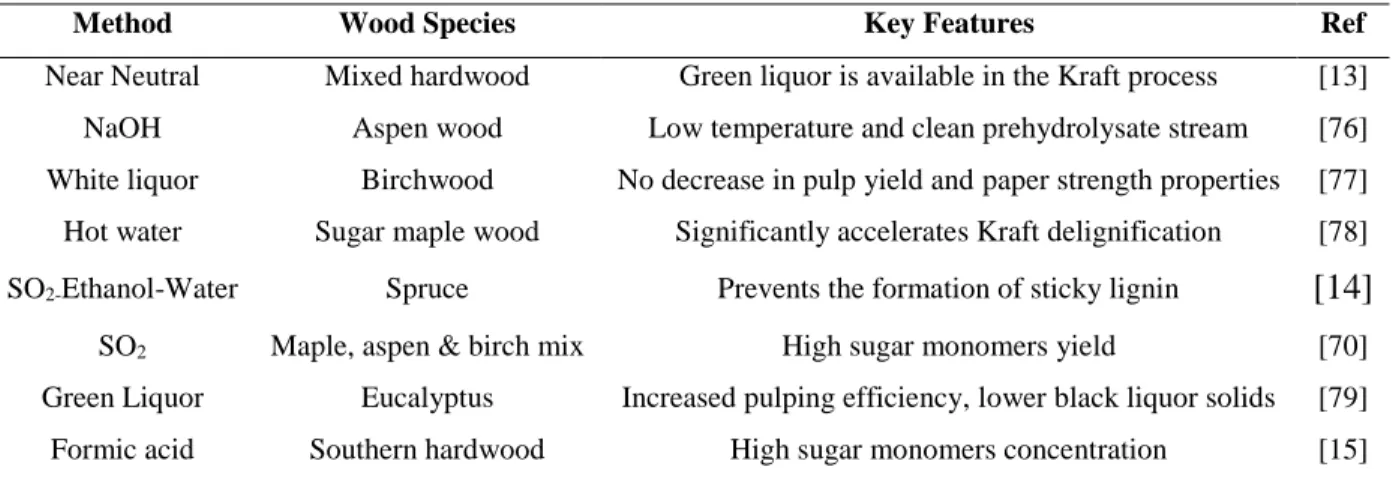
Table 1.5: Some proposed methods for hemicelluloses extraction in forest biorefineries ... 18
Table 1.6: Composition of mixed maple aspen prehydrolysate solution [80] ... 19
Table 1.7: Classification of different detoxification methods for inhibitors removal ... 25
Table 2.1: Comparison of biorefinery products selected as case studies ... 30
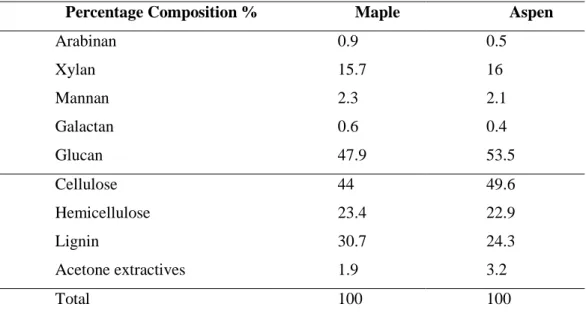
Table 2.2: Composition of wood species used for generating prehydrolysate solutions ... 31
Table 3.1: Physico chemical properties of the model solution compounds ... 40
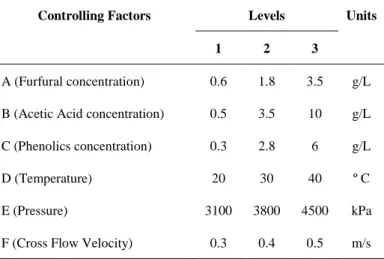
Table 3.2: Experimental design of six controlling factors with three levels ... 43
Table 3.3: Orthogonal array of L18 (36) and measured parameters ... 44
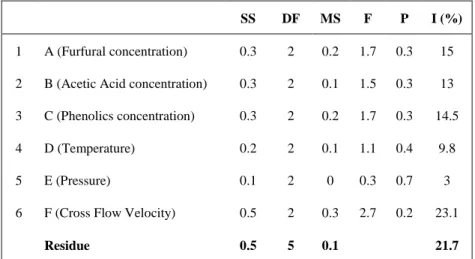
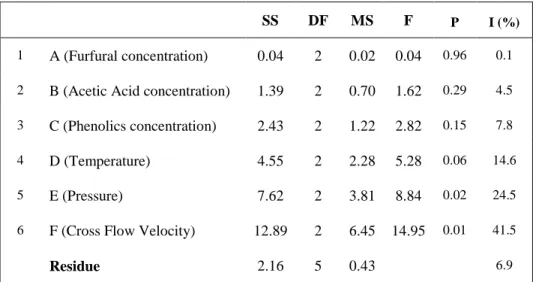
Table 3.4: ANOVA table: Impact of parameters on permeate flux ... 49
Table 3.5: ANOVA table: Impact of parameters on retention of sugars ... 51
Table 3.6: ANOVA table: impact of parameters on acetic acid retention ... 52
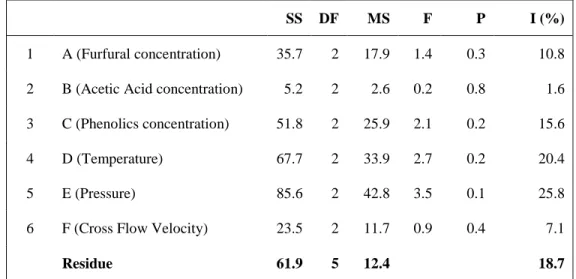
Table 3.7: ANOVA results for the parameters influencing flux reduction ... 55
Table 3.8: Conditions for confirmation of permeate flux decline ... 55
Table 4.1: Composition of maple and aspen wood chips (% by weight, dry basis) ... 65
Table 4.2: Composition of hemicelluloses prehydrolysate generated for use in the experiments . 66 Table 4.3: Characteristics of the reverse osmosis (RO) and nanofiltration (NF) membranes provided by suppliers ... 67
Table 4.4. Test conditions to determine the influence of operating conditions on component separation ... 76
Table 4.6. RSM-BBD design matrix and experimental results ... 78
Table 4.7: ANOVA table for the model of initial permeate flux ... 79
Table 5.1: Selected furfural production processes and main characteristics ... 94
Table 5.2: Composition of hemicelluloses prehydrolysate ... 97
Table 5.3: Comparison of nanofiltration membranes and multi-effect evaporators ... 99
Table 5.4. Entrainer solvents evaluated for the extractive distillation of furfural... 101
Table 5.5. Data for key process streams ... 104
Table 5.6: Energy requirement minimization after HEN design and AHP implementation ... 107
Table 5.7: Parameters and values used for economic evaluation of the membranes ... 110
Table 5.8: Overview of the installed equipment costs excluding the membrane system ... 112
Table 5.9: Estimated fixed capital investment for furfural plant ... 113
Table 5.10: Economic analysis of the furfural biorefinery ... 115
Table 6.1: Composition of prehydrolysate used for the experiments ... 125
Table 6.2: Evolution of prehydrolysate composition during detoxification (Membrane filtration – Hydrolysis –Flocculation) ... 140
Table 7.1: Composition of the ethanol process feed stream ... 147
Table 7.2: Data for key process streams ... 149
Table 7.3: Energy requirement minimization after HEN design and AHP implementation ... 151
Table 8.1: Typical variation of wood chemical composition (percent) [59] ... 156
Table 8.2: Feasibility of integrating some hemicellulose extraction methods with a receptor Kraft pulp mill ... 159
Table 8.3: Classification of the top 12 building block chemicals as hot, warm and cold, based on the level of industrial interest [177]. ... 165
LIST OF FIGURES
Figure 1–1: Forest industry production trend in Canada [6] ... 4
Figure 1–2: A simplified diagram of the Kraft process ... 7
Figure 1–3: Dissolving pulp derivatives and end use [17] ... 8
Figure 1–4: Global dissolving pulp demands [36] ... 11
Figure 1–5: Structural representation of hemicellulosic sugar monomers [58] ... 15
Figure 1–6: Classification of membrane filtration based on pore size ... 20
Figure 1–7: Membrane requirement for A) concentration B) concentration and detoxification ... 21
Figure 1–8: Classification of organic compounds in hemicelluloses prehydrolysate ... 21
Figure 1–9: Schematic hemicelluloses derivatives production and end uses ... 26
Figure 2–1: Stepwise approach for biorefinery processes development ... 32
Figure 3–1: Schematic representation of an Integrated Forest Biorefinery for furfural production ... 38
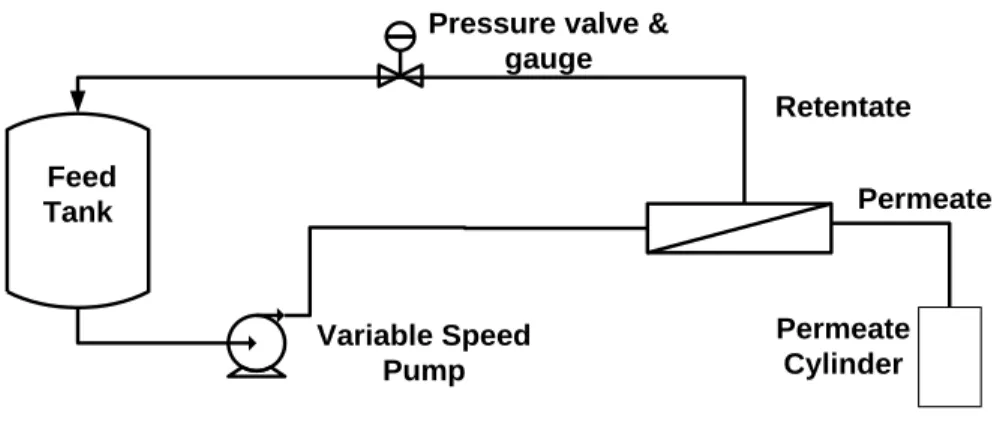
Figure 3–2: Schematic of the reverse osmosis concentration setup, batch mode ... 40
Figure 3–3. Retention of components by membrane at a) minimum and b) maximum component concentrations ... 47
Figure 3–4: Main effect plots for permeate flux (dashed line indicates standard error) ... 50
Figure 3–5: Main effect plots for sugar retention (dashed line indicates standard error) ... 51
Figure 3–6: Main effect plots for acetic acid retention (dashed line indicates standard error) ... 53
Figure 3–7: Initial and final permeate flux for the L18 Taguchi experiments ... 54
Figure 3–8: Comparison of flux decline caused by the model solution components ... 56
Figure 3–9: Effect of model solution components on the osmotic pressure ... 57
Figure 3–10: Permeate flow against feed pressure to differentiate fouling from concentration polarization ... 58 Figure 4–1: Proposed biorefinery for producing furfural from hemicellulose prehydrolysate [5] 64
Figure 4–2: Schematic membrane screening setup in closed loop mode ... 68
Figure 4–3: Pure water permeate flux and equivalent pressures for component retention screening ... 72
Figure 4–4: Retentions of the main components by each membrane from highest to lowest... 73
Figure 4–5: Relative pure water flux after concentration followed by physical and chemical cleaning of membranes (indexed to virgin membrane) ... 74
Figure 4–6: Comparison of component retentions for the four experiments (%) ... 76
Figure 4–7: Permeate fluxes as a function of concentration factor for Exp. 1-4 ... 77
Figure 4–8: Observed initial permeate flux versus the values predicted by equation 8 ... 80
Figure 4–9: Response surface of the combined effects of A) Cross velocity and pressure B) Feed temperature and pressure on initial permeate flow ... 81
Figure 4–10: Pareto chart of standardized effects for permeate flux decline ... 82
Figure 4–11: Observed initial permeate flux versus the values predicted by equation 9 ... 83
Figure 4–12: Response surface of flux decline, the combined effects of A) feed pressure and temperature B) cross velocity and temperature ... 84
Figure 5–1: Simplified block diagram of Kraft dissolving pulp mill with A) prehydrolysate sent for combustion in the recovery boiler B) prehydrolysate diverted to a biorefinery unit ... 92
Figure 5–2: Pentosan content of plants and agricultural residues for furfural production [17] ... 93
Figure 5–3: Family tree showing some potential furfural direct applications and derivatives ... 95
Figure 5–4: Overview of methodology for the furfural biorefinery development ... 96
Figure 5–5. Process diagrams illustrating A) conventional furfural distillation B) extractive distillation ... 100
Figure 5–6. Process flow diagram of the furfural biorefinery ... 103
Figure 5–7: Thermal composite curve for the furfural biorefinery ... 105
Figure 5–8: Positioning of absorption heat pump illustrated in A) the composite curve B) distillation column ... 106
Figure 5–9: Process scheme for biorefinery integration with receptor mill ... 108 Figure 5–10: Sensitivity of annual operating cost (k$) to membrane replacement and cleaning frequency ... 111 Figure 5–11: Sensitivity of return on capital employed (ROCE) for the biorefinery ... 116 Figure 6–1: Sources of the main inhibitory compounds produced during prehydrolysis ... 123 Figure 6–2: Schematic of membrane system for A) membrane selection B) prehydrolysate concentration ... 126 Figure 6–3: Membranes and observed retentions, in order of increasing MWCO (L-R) ... 130 Figure 6–4: Permeate flux decline during concentration ... 131 Figure 6–5: Component retentions after A) compaction B) compaction before pH adjustment and filtration ... 132 Figure 6–6: Comparison of alternatives for secondary detoxification of prehydrolysate ... 133 Figure 6–7: Effect of coagulant dosage on the sugars recovery and phenols elimination ... 134 Figure 6–8: Relative amount of sugars and phenols in the supernatant after flocculation ... 135 Figure 6–9: Sugars recovery and residual phenolics in the prehydrolysate and hydrolysate after flocculation ... 137 Figure 6–10: Alternative process configurations (A-C) for concentration and detoxification of hemicellulose prehydrolysate ... 138 Figure 6–11: Sugar recovery and residual phenolic compounds evolution with configuration C
... 140 Figure 6–12: Schematic flow sheet of the proposed concept for the concentration and detoxification ... 141 Figure 7–1 Simplified scheme of an integrated forest biorefinery for ethanol production ... 146 Figure 7–2: Overview of methodology for the ethanol biorefinery development ... 148 Figure 7–3: Process diagram for ethanol production ... 148 Figure 7–4: Thermal composite curve for the ethanol biorefinery ... 150
Figure 8–1: Simplified diagram of the Kraft process with a prehydrolysis step for hemicelluloses extraction ... 155 Figure 8–2: Process diagrams for a biorefinery plant integrated with a Kraft A) pulp mill B) Dissolving pulp mill ... 158 Figure 8–3: Stepwise methodology for innovative steam and water optimization [160] ... 161 Figure 8–4: Potential applications and products from hemicelluloses prehydrolysates ... 162 Figure 8–5: Value versus market volume for different bioproducts in an IFBR ... 164 Figure 8–6: Schematic of a biorefinery cluster ... 167 Figure 8–7: Regional distributions of A) Chemical products plants B) petrochemical plants [184]
... 169 Figure 8–8: Requirement for a successful IFBR implementation ... 172
LIST OF SYMBOLS AND ABBREVIATIONS
AC Activated Carbon
adt Air dry tonne
AFEX Ammonium Fibre Explosion AHP Absorption heat pump ANOVA Analysis of variance
Aw Solvent Transport Coefficient BBD Box-Behnken Design
BLGCC Black Liquor Gasification Combined Cycle System Bs Solute Transport Coefficient
CCD Central Composite Design CF Concentration Factor CF Concentration in Feed
COP Coefficient of Performance CP Concentration in Permeate
d Depth
D Diffusion Coefficient at 25 ₒC
Da Dalton
DAD Diode Array Detector
DF Degree Of Freedom
DME Dimethyl Ether
DNA Deoxyribonucleic acid DNS Dinitrosalycilic Acid DOE Design Of Experiments
DP Degree Of Polymerization
EBIDTA Earnings before Interests, Taxes, Depreciations and Amortizations EBIT Earnings before interest and taxes
EPA United States Environmental Protection Agency
F F-Value
FCI Fixed Capital Investment FTL Fischer-Tropsch Liquid GAE Gallic Acid Equivalents GAPTM Generator Acid Purification GDP Gross Domestic Product GJ/ODt Gigajoule per oven dry tonne
h Height
HEN Heat Exchanger Network ICP Inductively Coupled Plasma IFBR Integrated Forest Biorefineries
Js Solute Flux
Jv Solvent Flux
MA Mixed Alcohols
MCC Microcrystalline Cellulose
MS Mean Sum Of Square
Mt/a Global Market Volume
MVC Mechanical Vapour Compression MW Molecular Weight
NF Nanofiltration
odt Oven Dried Tons
p P-Value
PJ/year Petajoules/year pKa Dissociation Constant P&P Pulp and Paper QP-f Final Permeate Flow
QP-I Initial Permeate Flow
RA Acid Acetic Retention
RI Refractive Index
RNA Ribonucleic Acid
RO Reverse Osmosis
ROCE Return On Capital Employed RSM Response Surface Model S/N Signal-to-Noise Ratio
(S/N)S Smaller is better, Signal-to-Noise Ratio
(S/N)N Nominal is the best, Signal-to-Noise Ratio
(S/N)L Larger is better, Signal-to-Noise Ratio
SEW SO2-Ethanol- Water
SS Sum of Squares
t Tonne
T-H Temperature Enthalpy TFC Thin-Film Composites THF Tetrahydrofuran
UF Ultrafiltration
UV Ultraviolet
VCF Volumetric Concentration Factor
wt Weight
w/v Weight per Volume
∆P Transmembrane Pressure
∆Tmin Temperature Difference
INTRODUCTION
Pulp and paper mills in North America have been confronted with a decline in the demand for pulp and paper commodity products, high energy prices and intense global competition from emerging economies with lower production costs in the past decade. The conversion of a pulp and paper mill into integrated forest biorefineries (IFBRs) where lignocellulosic biomass will be converted into a broad spectrum has been proposed as a means for mills to diversify their sources of revenue and become more sustainable. In the past decades, this interest has led to widespread research on the best way to develop IFBRs.
Several alternatives for valorizing cellulose, hemicelluloses and lignin, the three main classes of wood components are being evaluated and in most cases, significant scientific and technological breakthroughs are still required. Several pulp mills in North America are characterized by high energy consumption and ageing equipments that must be upgraded or replaced before a biorefinery process can be integrated. Furthermore, the cost of producing biochemicals, bioproducts or biofuels from woody biomass is higher than for alternative feedstock such as sugar cane or corn due to its higher recalcitrance. Biorefinery processes that are technically and economically feasible must be developed in order for pulp and paper mills to play a role in the emerging bio-economy.
Wood pulping is a mature process that has been carried out since decades using mechanical, chemical or hybrid methods. The Kraft process, a full chemical pulping method, is the most utilized method for pulping globally[1] and it is a cost effective method because most of the chemicals used in the process can be recovered. The pulp produced also has a higher quality than the pulp produced with other methods due to the stronger fibre. Types of pulp that can be produced from hardwoods using the Kraft process include paper grade and dissolving pulp. Dissolving pulp has higher cellulose purity (≥96 compared to paper pulp (72-79%) [2-4]. The hemicelluloses and lignin are typically combusted to produce energy in the Kraft process.
Hemicelluloses are polymers that comprise of hexoses (mannose, glucose and galactose) and pentoses (xylose and arabinose). They are typically burnt in the Kraft process to produce energy but they can be extracted prior to Kraft pulping and diverted for transformation into higher value products in a biorefinery. Hemicelluloses extraction would not lead to a significant reduction of the energy production capacity of the mill because the heating value of hemicelluloses is lower
than that of lignin[5]. On the contrary, the pulp production capacity can be increased if it is constrained by the recovery boiler. A suitable method for extraction must be compatible with the subsequent Kraft pulping step and not lead to a pulp yield reduction or a lower pulp quality. Furthermore, depending on the desired application of the hemicelluloses, attaining an acceptable level of sugar purity and a low amount of toxic compounds that can inhibit fermentation might be necessary.
Bridging the gap between research and implementation of IFBRs requires the development of novel process concepts and the adaption of process operations that would be economically feasible and ready for scale up within a short time frame. This thesis deals with biorefinery technology development and the main focus is to develop hemicelluloses biorefinery processes that can be integrated into Kraft dissolving pulp mills. To achieve this goal, retrofit biorefinery processes were developed for the production of ethanol and furfural from hemicelluloses prehydrolysate. Ethanol and furfural were selected as representative bioproducts via biochemical (fermentation) and chemical conversion pathways respectively. Furfural is a low market volume product while ethanol is a high market volume product. The composition of a prehydrolysate solution is pre-determined by the extraction step of the receptor Kraft process, therefore a dissolving pulp mill was used as a case study.
Concentration of the prehydrolysate stream is necessary to reduce the process equipment size and energy cost in both processes. In addition, the ethanol process requires a detoxification step for the removal of the organic compounds in the prehydrolysate, which are toxic to the fermentation microorganisms. Experiments revealed that nanofiltration membranes can be successfully used for concentration in the furfural process and the conditions that would lead to a low flux decline during membrane were identified with a response surface model. The ethanol process however needed a complementary process step for detoxification. A novel detoxification strategy that combines membrane filtration and flocculation with ferric sulfate was developed to this effect. The experimental results were used for process design evaluation. Computer based simulation models were developed to compute the mass and energy balances of the alternatives. Energy optimizations of the biorefineries were carried out by performing a heat exchanger design and implementing an absorption heat pump. The level of integration that can be achieved between the receptor mill and the biorefinery plant was determined. The results revealed that energy, material
and chemical demands can be supplied by the receptor mill. The process development methodology has been used to develop practical guidelines for the integration of hemicelluloses biorefineries into Kraft pulp mills.
CHAPTER 1.
LITERATURE REVIEW
1.1 Context and Motivation
The forest industry comprising of wood products, pulp and paper and wood derived value added products groups is an important sector of the Canadian economy. It contributes to the GDP, provides export earnings and creates employment. A comparison of the industry indicators for the pulp and paper segment between 2004 and 2011 showed that manufacturing revenues reduced by 28%, and the number of employees by 42 %. Several pulp and paper mills have closed down in Canada in the past decade. The closures can be attributed to a falling demand for paper and paper commodity products as illustrated in Figure 1–1, high production costs, intense global competition and high energy prices. [5] The mills are usually located in rural areas where they serve as drivers for economic activity and the impact of closures are disruptive to the communities.
Figure 1–1: Forest industry production trend in Canada [6]
It is therefore imperative to develop a sustainable approach for using forest resources (biomass) in order to prevent the closure of currently operating mills and to also bolster the economy of several regions that are largely dependent on pulp and paper mills.
0 5 10 15 20 25 30 Pr o d u cti o n ( M T) Newsprint
Chemical wood pulp Paper & paper board
Dissolving pulp Wood pulp
1.2 Biomass Potential
Biomass can be used to produce a broad spectrum of products that include energy, biomaterials and biochemicals. Biomass resources include sources of wood, wood waste, agricultural crops, algae and aquatic plants. The potential of biomass for different regions is shown in Table 1.1. The consumption in North America constitutes about 16% of the potential.
Table 1.1: Distribution and consumption of biomass by regions, 103 PJ/year [7] Biomass potential Middle
East Europe Former USSR North America Africa Latin
America Asia World
Woody biomass 0.4 4 5.4 12.8 5.4 5.9 7.7 41.6 Energy Crops 0 2.6 3.6 4.1 13.9 12.1 1.1 37.4 Straw 0.2 1.6 0.7 2.2 0.9 1.7 9.9 17.2 Other 0.1 0.7 0.3 0.8 1.2 1.8 2.9 7.6 Total potential 0.7 8.9 10 19.9 21.4 21.5 21.6 103.8 Use 0 2 0.5 3.1 8.3 2.6 23.2 39.7 Use / Potential (%) 0 22 5 16 39 12 107 38
In the past decade, the use of renewable feedstock has gained acceptance as an important means for transitioning towards a global bioeconomy. Daleet al. [8] identified the key features of a mature bioeconomy. The success of industries could depend on factors such as:
Production capacity and yield: High production yields and efficient processes are necessary, cost advantages improve as the capacity increases but after a certain point diminishing returns could set in
Integration feasibility: The ease with which a biorefinery can be integrated with other well established processes and locations
Market saturation: Products from biorefineries have different world demands, an oversupply of a product with a limited market size will lead to market saturation and affect the price
Feedstock supply: having a guaranteed supply of feedstock is essential for a biorefinery or commodity process such as a pulping mill
Technology diffusion: The rapid development and deployment of biomass conversion technologies and processes will influence the cost of production
Substitute products: the availability of substitute products in the target market might pose a competition for bioproducts and hinder commercialization
A bioeconomy can lead to infrastructure development and the creation of jobs that are necessary for running the biorefinery and other associated industries.
1.3 Pulping Processes
Pulping refers to the separation of fibres (celluloses) that are fixed in a wood or plant matrix. Several bonds that exist within the wood structure must be ruptured in the process and it could be necessary to separate the other classes of wood components (hemicelluloses and lignin) from the fibres. Some of the existing methods for pulping can be grouped into four classes: chemi-mechanical and chemical pulping , semi-chemical, chemi-chemi-mechanical and chemi-mechanical [9]. The classifications are listed in the order of increasing dependence on mechanical energy and increasing dependence on the use of chemicals to facilitate fibre separation. Although mechanical pulping requires a higher amount of energy than the other methods, its main advantage is that a yield of up to 95% of the dry weight of wood can be obtained [4]. Chemical pulping on the other hand has a lower yield but the strength of the produced pulp is higher and the chemicals employed in the process can be recovered, a detailed description of the various pulping processes is available in published literature [4, 9]. Kraft pulping, a full chemical process is the most predominant pulping method in use worldwide and about 89 % of global pulp production is based on this process [1]. The process can be used to produce conventional Kraft pulp and Kraft dissolving pulp.
1.3.1 Kraft Pulp
Wood chips are composed primarily of cellulose (40-45%), hemicelluloses (softwood - 25-30%, hardwood – 30-35%) and lignin (softwood - 25-30%, hardwood – 20-25%) [10]. Delignification can be carried out in either a batch or continuous digester. It is known that the dissolution of lignin is a selective reaction which has three distinct kinetic phases, the initial, bulk and terminal phase [11]. In the first phase, the solubilisation of lignin and some hemicelluloses occurs; the second phase is characterized by selective lignin dissolution until about 90% of all lignin has been dissolved. In the final phase lignin cannot be removed easily without a consequential dissolution of cellulose. The delignification should be stopped prior to the terminal phase to prevent pulp yield losses and quality reduction. A schematic of the Kraft process is shown in Figure 1–2. The active chemical required is white liquor, a mixture of sodium hydroxide (NaOH) and sodium sulphide (Na2S).
WOOD CHIPS PULP Dryer Bleaching Plant Evaporators Causticizer Digester Blow Tank Recovery Boiler Washers Lime Kiln Black Liquor White Liquor CaO CaCO3
Figure 1–2: A simplified diagram of the Kraft process Some of the important variables [4, 9] for Kraft cooking include:
1. Wood species and geometry or chip size, especially chip thickness.
2. Liquor sulfidity which is the ratio of sulphides to active alkali, Na2S/ (NaOH+Na2S).
3. Ratio of active alkali to the weight of dry wood and liquor to wood.
4. The cooking time and temperature that are conveniently combined to a single parameter the H-factor.
After delignification, the cellulose fibres are separated from the spent liquor (black liquor) using countercurrent washers and subsequently bleached. Bleaching of pulp is carried out to further remove lignin which is present in pulp because not all the lignin present in the wood is liberated during cooking. Results from a study by Gellerstedt [12] indicate that this could be due to a condensation mechanism which involves sulphur elements. It is therefore necessary to control the degree of delignification in order to prevent a deterioration of pulp bleachability. The recovered black liquor is concentrated using a multi-effect evaporator train and sent to the recovery boiler where it is combusted to produce energy. A causticizer is used to regenerate white liquor from the smelt produced in the recovery boiler in a soda lime reaction.
1.3.2 Dissolving Pulp
Dissolving pulp has a higher cellulose content (≥ 96 %) than Kraft pulp (72-79%) [3]. The higher purity level is achieved by carrying out prehydrolysis to remove hemicelluloses prior to delignification. Prehydrolysis can be carried out sequentially in the same digester for delignification in a batch process but a separate digester dedicated to prehydrolysis will be necessary if the Kraft process utilizes a continuous digester. Traditional pre-hydrolysis processes use steam or hot at temperatures between 150–180ºC but a lower temperature of about 110– 120ºC would be sufficient if dilute acid is used as catalyst. Some recent mediums for prehydrolysis that have been proposed include a near neutral liquor [13], SO2 –Ethanol -Water
[14], Formic Acid [15]. A comparison of the prehydrolysis methods is difficult because each method requires different levels of investment, level of chemical recovery, operating costs and secondary effects on the wood chips that cannot be quantified at an experimental scale. Furthermore, if the recovery and transformation of the extracted hemicelluloses into sugar based chemicals or fuels is desired, the prehydrolysis method will also influence the investment and operating cost of the biorefinery Products such as rayon, cellophane and cellulose nitrates can be produced from dissolving pulp [16]. A list of derivatives and end use applications of cellulose is given in Figure 1–3. Hardwood / Softwood Specialty Grades Dissolving Pulp Rayon Grades Dissolving Pulp FEEDSTOCK PULP GRADE
Cellophane CELLULOSE DERIVATIVES
Casings
Lyocell
Viscose Staple Fiber Industrial Filaments Microcrystalline Cellulose (MCC)
Nitrate Diacetate & Triacetate
Ether Sponge
Textile Filament
Flexible Packaging Material END USE
Ham & Sausage Casings
Textiles, Non-woven
Hi-performance Tires, Transportation hoses & Belts, Air springs Tableting agent, water-binder, Bulking agent, Retardant Agent
Inks, Paint, Lacquers, Nail varnish, Explosives Cigarette Filter, Plastics, films
Oil drilling, Food Products, Pharmaceuticals, Cosmetics, Detergents, Thickeners Household and Industial
Figure 1–3: Dissolving pulp derivatives and end use [17]
A dissolving pulp process has a lower yield than a Kraft pulp but this could be compensated for by its higher price of the product. Dissolving pulp production is also economically attractive
when the price of wood is low or the prices of substitute natural fibres (cotton) or synthetic fibres (petroleum based) are high. A correlation between the economic feasibility of dissolving pulp production (pulp price) and the price of wood in relation to oil, process yield, pulp and the heating value of black liquor and oil has been proposed by Lonnberg [18].
1.4 Enhancing the competitiveness of Kraft pulp mills
Reported approaches for making Kraft pulp mills more competitive and sustainable can be categorized into three groups:
Water and thermal energy consumption improvement
Mill conversion and repurposing
Development of integrated forest biorefineries
They can all be implemented while a mill is still operational except for the repurposing of a mill, which can be implemented after closure of a mill.
1.4.1 Improvement of water and thermal energy consumption
Improving the thermal energy and water consumption of Kraft pulp mills present an opportunity for cost savings. This is because most of the Canadian mills are older than those in competing countries and their respective consumptions are not at par with other modern mills. Reported typical steam and water consumption for the Canadian pulp and paper industry and the Scandinavian industry that is renowned for its best practice are compared in Table 1.2. Values presented are for both real and ideal mills.
Table 1.2: Steam and fresh water consumption for Canadian and Scandinavian industry [19-22] Real Mills Model Mills
Canadian Scandinavian Canadian Scandinavian
Water consumption (m3/adt) 70 15 40 15.9
Steam consumption (GJ/ODt) 22.10 13.20 9.18* 10.4
*Theoretical possible energy consumption
Improving the water and steam consumption can be achieved by modifying the operating conditions, upgrading or changing inefficient equipments. The required adjustments can be identified by carrying out an equipment performance analysis [23].
Other means of reducing the energy and water consumption are internal heat recovery, water reutilization and energy upgrading. The recovery of internal heat that is hitherto unutilized in a process can be achieved by using the pinch analysis technique [24-26] or mathematical programming [27, 28].
Kraft pulping is a water based process in which the quality of the final product can be influenced by the presence of contaminants. Water contamination occurs during operations such as screening, scraping, equipment/product washing and extraction processes. Water pinch which is analogous to the thermal pinch technique can be used to determine the extent to which water can be reutilized based on the maximum allowable contaminant concentration in each process step [29].
Energy and water consumption are interrelated in the pulping process and a reduction of energy consumption in the form of steam consequently leads to a reduction of fresh water consumption. Methods which involve the simultaneous optimization of energy and water consumption have been proposed by Savulescuet al. [30] and a similar method has been applied for a case study in the pulp and paper industry by Mateos-Espejelet al. [31].
Heat pumps are devices for upgrading low temperature energy that is available in a process to a higher temperature. Heat pumps can be widely used in the petroleum refineries and petrochemical industry, food and beverages, utilities and the forest industry [32]. Areas of application in the forest industry include: black liquor concentration (pulp production), flash steam recovery (paper manufacturing), process water heating (paper manufacturing) and product drying (lumbering). Types of heat pumps include the closed-cycle mechanical heat pumps, open-cycle mechanical vapour compression (MVC) heat pumps, open-open-cycle thermo-compression heat pumps and closed-cycle absorption heat pumps (AHP).The implementation of an AHP has been shown to be a promising alternative for energy upgrade, especially at high energy costs [33] and guidelines for their implementation have been proposed by Bakhtiari [34].
1.4.2 Mill conversion
Another strategy for improving the economic viability of Kraft pulp mills is the conversion of the mills. Possible mill conversions can be grouped into three different scenarios.
2 Conversion from dissolving pulp (back) to Kraft pulp 3 Kraft process repurposing
The incentive for converting a Kraft pulp mill into a dissolving pulp mill is primarily an increase in the price of dissolving pulp coupled with increased demand for dissolving pulp. This spurred the conversion of about 5 mills in Canada within the last decade while 3 other mills were under conversion between 2010 and 2012 [2]. The dissolving pulp produced from the converted mill is a higher value product and it can be used to manufacture specialty products. The evolution of the global demand for dissolving pulp is illustrated in Figure 1–4. The yield of the dissolving pulp process (30 - 35% , of the wood input) is lower than that of the Kraft pulp process (~50%) [35]. Therefore, the price of dissolving pulp must be high enough to compensate for the lower process yield and to ensure profitability. Furthermore, hemicelluloses could also be extracted in the dissolving pulp process to provide additional source of revenue.
Figure 1–4: Global dissolving pulp demands [36]
The price of dissolving pulp (delivered to China) has fallen from the peak price of about 2,200 US$ /tonne in 2011 down to about 950 US$ /tonne in 2014 [36]. This could have been caused by additional dissolving pulp capacity that came online due to the conversion of several mills. Some consequences of the price drop include the reconversion of some dissolving pulp mill back to Kraft pulp, postponing of planned conversion from Kraft to dissolving pulp and implementing phased conversion into dissolving pulp mill to lower capital investment. The ease of conversion
3 3.5 4 4.5 5 5.5 6 6.5 7 7.5 8 D e m an d ( M ill io n To n n e s)
between dissolving pulp and Kraft pulp indicates that both processes are mature with low technological risks. The associated risks are mainly related to the product prices.
Repurposing involves the conversion of a mill to produce a different product other than pulp. The equipments can be used to produce cellulose that can further be hydrolyzed into sugars for sale or for fermentation. Some studies on the repurposing of a mill to produce ethanol have been carried out [37-39]. Ethanol as an end product would not be cost effective in the IFBR context unless the cost of producing the fermentable sugars is low. This is because the value of ethanol is lower than that of pulp or dissolving pulp. A repurposed mill might also be economically viable if biochemicals or bioproducts with a higher price than pulp can be produced at a sustainable cost.
1.4.3 Development of integrated forest biorefineries
An Integrated Forest Biorefineries (IFBR) is the coupling of different biorefinery technologies that utilize lignocelluloses feedstock, with existing pulp and paper mills. In an IFBR with a Kraft pulp mill as the receptor process, the cellulose fraction of the wood feedstock is dedicated to pulp production while part of the lignin and hemicelluloses fractions can be extracted and transformed into value added products for the biorefinery. It is necessary that the extraction of these fractions do not negatively impact the pulp production capacity, chemical balance, power generation and production cost of the base pulping process. The IFBR should be capable of producing a broad spectrum of biochemical, biomaterial and /or biofuels.
Several studies on the integration of biorefineries with existing pulp and paper mills are ongoing. Pulp and paper mills especially Kraft pulp mills are ideal receptors for the integration of biorefinery processes because paper mills have vast experience with securing, handling and processing of biomass, they are situated in proximity to numerous sources of biomass, their thermal efficiencies can be improved to liberate enough for a biorefinery and some mills already have experience with the production of energy from biomass [40].
Different authors have highlighted the motivations, benefits and challenges that need to be surmounted in order to achieve successful integration of a biorefinery as shown in Table 1.3. Although some of the reviewed literature stated slightly varying justifications for why an integrated forest biorefinery should be set up, the reasons are all in mutual agreement and do not stand in contradiction with each other
Table 1.3: Motivations for developing integrated forest biorefineries
Incentive Challenges (C)and/or limitations (L) Source
Diversification of business model
Transformation of the enterprise (C)
Selection of best product and product portfolio (C) Phasing of biorefinery implementation (C)
Chambostet al. [41] Energy affordability
Reduced environmental impact of energy supply
Shortage of capital for integration (C)
Based on syngas / Gasification only (L) Connor [40] Reliable energy supply
Reduction of emissions Energy security over the
importation of energy
Protection of core business of the industry (C)
Leveraging on the rare alignment of societal and industrial interests (C)
Closset et al. [42]
Changes to how forest resources will be processed and utilized
Research still needed for available technologies to reach level of commercialization (C)
Distinguishing between classes of products (main products, co- products & by products) and their long term interrelationship (C)
Söderholm et al. [43]
Energy supply assurance Potential life cycle of plant (C)
Identifying the best pathways for production (C)
Identification of best projects by comparison of alternatives (C)
Thorpet al. [44]
Reduced pulp and paper production cost
Diversification of revenue sources for pulp mills
Smooth integration (C)
Ascertaining the impact of modernizing a mill (C)
Determining the order of magnitude of different biorefinery cases
Hytönen et al. [45]
An incentive, which stands out from other sources is that biorefinery integration leads to reduced pulp and paper production cost by Hytönen et al. [45]. The focus of biorefineries has shifted in the past 5 years from focusing mainly on biofuels production to the inclusion of biochemicals and biomaterials, despite a smaller market size than for biofuels.
Some types of biorefineries that have been proposed for integration with a Kraft pulping process are gasification, lignin extraction and hemicelluloses extraction [46].
1.4.3.1 Gasification Based Biorefineries
Gasification is the conversion of low quality solids such as wood residue and low quality liquids such as black liquor into a fuel gas. The fuel gas is referred to as either synthesis-gas or syngas and comprises mainly of hydrogen and carbon monoxide. Fuel gas can be combusted in gas turbines for the production of electricity. Products that can be obtained from syngas include Fischer-Tropsch liquid (FTL), Dimethyl Ether (DME), and Mixed alcohols (MA). Consonni et al. carried out a study on gasification based biorefineries for the pulp and paper industry and
concluded that for products such as FTL and DME, the technology for gasification exists commercially and is being used in other non-pulp industries [47]. The challenge for a gasification based biorefinery lies in the integration. Only MA still requires much research on the production technology side. Black liquor gasification has also been proposed by Naqvi as an alternative to the Tomlinson recovery boiler for improving on safety , energy efficiency and the flexibility of a pulp mill [48]. Recently explored technologies for black liquor gasification include the Booster System and the Black Liquor Gasification Combined Cycle System (BLGCC) by Chemrec [49] as well as the the Carbo-V® process developed by Choren [50].
1.4.3.2 Lignin Based Biorefineries
The lignin fraction of the wood fed to Kraft pulp mills end up in the black liquor that is normally concentrated using multi-effect evaporators before combustion in recovery boiler to produce energy. In several cases, the recovery boiler operates at its maximum thermal load and cannot be upgraded or replaced due to the high costs. This limits the pulp production capacity of the mill. The recovery and acid precipitation of lignin can be used for increasing the production capacity [51]. In addition, lignin based chemicals such as poly-urethane and vanillin, which can lead to increased revenue, can be produced. Some processes for lignin precipitation include the LignoboostTM process developed by Innventia and more recent LignoForce SystemTM developed
by FPInnovations [52, 53].
1.4.3.3 Hemicelluloses Based Biorefineries
In Kraft pulp mills, most of the hemicelluloses content from the wood feedstock is dissolved along with lignin during pulping and combusted in the recovery boiler. A better use of the hemicelluloses can be achieved by their extraction prior to pulping and subsequent conversion into value added products. To extract the hemicelluloses, a prehydrolysis step, which is also used in a dissolving pulp mill, is required. The prehydrolysis condition must be optimized to maintain a high pulp yield and maintain the pulp quality (fibre strength, length, bleachability). The composition of the generated prehydrolysate stream must also meet the requirement for the subsequent transformation process. To successfully develop an IFBR, all the steps required for the implementation (the extraction of hemicelluloses, conversion into value added product and the integration of the biorefinery process with a receptor pulp mill) must be studied collectively. Currently, there is limited information on such studies.
![Table 1.1: Distribution and consumption of biomass by regions, 10 3 PJ/year [7] Biomass potential Middle](https://thumb-eu.123doks.com/thumbv2/123doknet/2322639.29436/32.918.105.797.330.522/table-distribution-consumption-biomass-regions-biomass-potential-middle.webp)
![Table 1.2: Steam and fresh water consumption for Canadian and Scandinavian industry [19-22] Real Mills Model Mills](https://thumb-eu.123doks.com/thumbv2/123doknet/2322639.29436/36.918.179.738.827.967/table-steam-consumption-canadian-scandinavian-industry-mills-model.webp)
![Table 1.6: Composition of mixed maple aspen prehydrolysate solution [80] Components Concentration (g/L) Pentose ┼ 17 .1 Hexose ┼ 4.1 Phenolics 4.7 Acetic Acid 3.8 Furfural 0.7 Hydroxymethylfurfural 0.09 Lipids 0.2 Na 0.02 Ca 0.15 K 0.04](https://thumb-eu.123doks.com/thumbv2/123doknet/2322639.29436/46.918.310.610.420.702/composition-prehydrolysate-components-concentration-pentose-phenolics-furfural-hydroxymethylfurfural.webp)