POLYTECHNIQUE MONTRÉAL
affiliée à l’Université de Montréal
Understanding the Control of Hazardous Energies on Machinery: Using
Lockout and Alternative Methods in Organizations and Developing a
Self-Audit Tool
BENYAMIN KARIMI
Département de mathématiques et de génie industriel
Thèse présentée en vue de l’obtention du diplôme de Philosophiæ Doctor Génie industriel
Novembre 2019
POLYTECHNIQUE MONTRÉAL
affiliée à l’Université de Montréal
Cette thèse intitulée:
Understanding the Control of Hazardous Energies on Machinery: Using
Lockout and Alternative Methods in Organizations and Developing a
Self-Audit Tool
présentée par Benyamin KARIMI
en vue de l’obtention du diplôme de Philosophiæ Doctor a été dûment acceptée par le jury d’examen constitué de :
Daniel IMBEAU, Ph. D., président
Yuvin Adnarain CHINNIAH, Ph. D., membre et directeur de recherche Damien BURLET-VIENNEY, Ph. D., membre et codirecteur de recherche Fabiano ARMELLINI, D.Sc., membre
DEDICATION
ACKNOWLEDGEMENTS
Completing this Ph.D. journey was not possible without the support of many individuals. I would like to first express my sincere thanks to my supervisor Prof. Yuvin Chinniah and my co-supervisor Dr. Damien Burlet-Vienney for their guidance and support by sharing personal and professional experiences.
I would also like to thank my jury members, Prof. Daniel Imbeau, Prof. Gerard J. Gouw, and Prof. Fabiano Armellini for reviewing this dissertation and for their thoughtful comments.
I would like to express my gratitude to all the organizations that participated in this work, and all the people who have been dedicated their time to support me in collecting data.
I also acknowledge the NSERC (Natural Sciences and Engineering Research Council) and IRSST (Institut de recherche Robert-Sauvé en santé et en sécurité du travail) for funding this work. I am so grateful to my mother for her moral support.
Finally and most importantly, I would like to heartily appreciate my wife Zara (Zara Farahnak). Words cannot express how grateful I am to her; for her full support and encouragement.
RÉSUMÉ
Au Canada, comme dans de nombreux pays, les normes nationales et les réglementations provinciales exigent que les travailleurs œuvrant dans la zone dangereuse d’une machine pendant une phase de non-production suivent une procédure spécifique pour contrôler des énergies dangereuses. Si les énergies dangereuses de la machine ne sont pas contrôlées, il y a un risque de dégagement d'énergie, de mise sous tension ou de démarrage inattendu entraînant par conséquent des blessures ou décès. La norme canadienne CSA Z460 et la réglementation québécoise RSST décrivent les exigences en matière de contrôle des énergies dangereuses, appelées cadenassage (consignation ou lockout), ainsi que des méthodes alternatives lorsque le cadenassage ne peut pas être utilisé. Le nombre élevé d'accidents liés aux lacunes au niveau du contrôle des énergies dangereuses sur les machines démontre que les entreprises ont des difficultés avec l'application de ces exigences. En outre, l’absence d’audits du cadenassage ou d’outils pour l’audit de cadenassage est une réalité très répandue, de sorte que l’application du cadenassage n’est souvent pas entièrement conforme aux normes et aux réglementations. Au Québec, où cette étude a eu lieu, quatre décès et 1000 accidents se produisent en moyenne chaque année, en raison de l’absence ou des manquements aux procédures de cadenassage. Il existe peu d'études sur l'application réelle du cadenassage et elles se limitent en général à un secteur d’activité spécifique. Les outils disponibles pour auditer le cadenassage sont, pour leur part, incomplets. Par conséquent, les objectifs de cette thèse sont les suivants: premièrement, comprendre comment les entreprises mettent en œuvre des programmes et procédures de cadenassage, et dans quelle mesure ces programmes et procédures sont conformes à la norme CSA Z460 et à la réglementation en vigueur; et deuxièmement, concevoir un outil d’autodiagnostic pour auditer l’application des procédures de cadenassage sur la base des connaissances générées dans la première partie de l’étude.
Pour atteindre le premier objectif, une étude terrain a été réalisée et un questionnaire complet (concernant le programme de cadenassage, l'application des procédures de cadenassage, les méthodes alternatives, la gestion des sous-traitants, la formation et l'audit / inspection) a été développé à cet effet. L'application du cadenassage et des méthodes alternatives a été étudiée dans 14 entreprises issues de divers secteurs d’activité du Québec par le biais d'une entrevue de
groupe, d'une analyse documentaire et d'une observation du site dans chaque entreprise. Cette étape de l’étude a révélé que les pratiques de cadenassage en vigueur dans les entreprises visitées étaient meilleures que celles décrites dans leur programme de cadenassage. Cependant, un écart important a été constaté entre l’application du cadenassage et des méthodes alternatives et les exigences de la norme CSA et de la réglementation RSST. Les insuffisances constatées incluent: (i) des programmes de cadenassage incomplets; (ii) les étapes manquantes dans les procédures générales de cadenassage; (iii) les travailleurs ne lisent pas les fiches de cadenassage; (iv) le manque de connaissances sur les méthodes alternatives et la réglementation; (v) utiliser des méthodes alternatives sans évaluation des risques; (vi) formation insuffisante pour les méthodes alternatives; (vii) absence de supervision et de coordination des sous-traitants; (viii) et le manque d'outils d'audit et de documentation des résultats d'audit. L'étude a également proposé des recommandations (ex. mesures correctives) pour remédier aux lacunes identifiées. De plus, l’étude a révélé la nécessité de clarifier la norme canadienne et la réglementation québécoise sur l’utilisation de méthodes alternatives au cadenassage dans les organisations.
Afin d'atteindre le deuxième objectif, un outil d’autodiagnostic pour auditer l'application des procédures de cadenassage sur des machines a été conçu sur la base des conclusions de l'étape précédente et des normes et réglementations en vigueur. Cet outil a été développé pour vérifier la préparation de cadenassage (ex. les conditions nécessaires) et aussi pour évaluer l’application des procédures de cadenassage. L'outil a ensuite été testé pour la validité du contenu via un panel d'experts et six entreprises du Québec. L'étude a démontré que le nouvel outil avait un indice de validité du contenu élevé, à la fois en termes d'indice de validité de contenu pour les éléments (I-CVI) et d'indice de validité de contenu pour l'outil (S-(I-CVI). En outre, l’outil était facile à utiliser et son exhaustivité était suffisante pour contrôler l’application du cadenassage sur les machines par rapport aux exigences normatives et réglementaires. En effet, en utilisant cet outil, les organisations peuvent trouver et corriger les divergences dans l'application du cadenassage, améliorer les pratiques de cadenassage et garantir la sécurité des travailleurs.
Cette thèse présente pour la première fois une étude sur l'application du cadenassage sur les machines dans les entreprises de différents secteurs. De plus, la thèse propose pour la première fois un outil d’autodiagnostic pour auditer l’application du cadenassage.
ABSTRACT
In Canada, like many countries, the national standard and provincial regulations require that workers working in the hazardous area of a machine during the non-production phase of machinery follow a specific safety procedure to control hazardous energies. Failure to control hazardous energies poses a risk of the release of energies, unexpected energization or start-up of machines (or equipment), hence resulting in injury or death. The Canadian Standard CSA Z460 and Quebec regulation ROHS describe the requirements for, and provide guidance on, the control of hazardous energies that is referred to as lockout, and also as alternative methods when lockout is not applicable. However, the high number of accidents linked to failure to control hazardous energies on machinery shows that organizations have difficulty with the application of lockout arrangements or the use of alternative methods. Moreover, the absence of audits of lockout or the lack of tools for auditing lockout is prevalent, and thus the application of lockout is often not fully in compliance with standards and regulations. In Quebec, where this study took place, four deaths and 1000 accidents on average occur annually due to either poor or the absence of, lockout procedures. Few studies exist on the actual application of lockout, but those are limited to a specific sector. Additionally, audit tools for the application of lockout are incomplete. Therefore, the objectives of this thesis are: first, to understand how organizations implement hazardous energy control programs and procedures, and the extent to which they are in accordance with relevant standards and regulations; and second, to design a self-audit tool for the application of lockout procedures on machinery based on the findings from the previous step.
To attain the first objective, the qualitative study was conducted, and a comprehensive questionnaire (which is about the lockout program, application of lockout procedures, alternative methods, sub-contractor management, training, and audit/inspection) was developed. The application of lockout and alternative methods was studied in 14 organizations from different sector specialties in Quebec, through a group interview, document review and site observation in each organization. This step of the study demonstrated that the actual lockout practices in the organizations visited were better than what was described in their lockout programs. However, major gaps were found between the actual application of lockout/alternative methods within the organizations studied and the standard CSA Z460 and Quebec regulation ROHS requirements. The shortcomings found included: (i) incomplete lockout programs; (ii) missing steps in general
lockout procedures; (iii) neglecting to read the placards; (iv) lack of knowledge about alternative methods; (v) using alternative methods without risk assessment; (vi) poor training for alternative methods and lockout program; (vii) absence of supervision and coordination of subcontractors; (viii) and lack of audit tools and documentation of audit results. The study also proposed recommendations (e.g. corrective actions) for addressing identified shortcomings and gaps. Moreover, the study revealed a need for clarifications on the Canadian standard and Quebec regulation for using alternative methods to lockout in organizations.
In order to attain the second objective, a self-audit tool for the application of lockout procedures on machinery was designed based on the findings of the previous step, and the current standards and regulations. The self-audit tool was developed to verify the preparation of lockout (i.e. surrounding conditions and pre-requirements) and also to evaluate the application of lockout procedures. The tool was then tested for content validity through a panel of experts and qualitative feedback from six organizations in Quebec. The study showed that this novel tool had high content validity index scores in terms of both the content validity index for items (I-CVI) and the content validity index for the tool (S-CVI). Furthermore, the tool was easy to use and completeness of the tool were adequate to monitor and evaluate the application of lockout on machinery against the normative and regulatory requirements. Indeed, by using this tool, organizations can find and correct problems and shortcomings in the application of lockout, improve lockout practices, and ensure safety of workers.
This thesis presents the first study on the application of lockout and alternative methods on machinery in organizations across different industries. Moreover, the thesis is a pioneer in proposing a self-audit tool for the application of lockout.
TABLE OF CONTENTS
DEDICATION ... III ACKNOWLEDGEMENTS ... IV RÉSUMÉ ... V ABSTRACT ...VII TABLE OF CONTENTS ... IX LIST OF TABLES ... XIV LIST OF FIGURES ... XVI LIST OF SYMBOLS AND ABBREVIATIONS... XVII LIST OF APPENDICES ... XIXINTRODUCTION ... 1
LITERATURE REVIEW ... 4
2.1 Control of hazardous energies in standards and regulations ... 4
2.1.1 North American standards and regulations ... 5
2.1.2 Other standards and regulations ... 7
2.2 Accidents associated with failure to control hazardous energies ... 10
2.3 Hazardous energy control program (i.e. lockout program) ... 12
2.4 Application of lockout procedures ... 14
2.5 Application of alternative methods ... 15
2.5.1 Risk assessment ... 15
2.5.2 Alternative methods ... 18
2.6 Training ... 20
2.7.1 Audit of controlling hazardous energies ... 21
2.7.2 Audit tools for lockout ... 23
2.8 Facilitating factors in the control of hazardous energies ... 25
2.8.1 Accessibility of isolation devices and lockout hardware ... 25
2.8.2 Employee participation ... 25
2.8.3 Accountability and disciplinary actions ... 25
2.8.4 Communication and awareness ... 26
2.9 Literature gaps ... 26
RESEARCH DESIGN AND PROCESS ... 28
3.1 Problem Statement and Research Objectives ... 28
3.2 Research Approach and Methods ... 28
3.2.1 Study on the control of hazardous energy on machinery using lockout and alternative methods ... 29
3.2.2 Development of a self-audit tool for the application of lockout on machinery ... 31
ARTICLE 1: QUALITATIVE STUDY ON THE CONTROL OF HAZARD-OUS ENERGY ON MACHINERY USING LOCKOUT & ALTERNATIVE METHODS ... 35
4.1 Introduction ... 36
4.1.1 Lockout program and procedure ... 37
4.1.2 Alternative methods to lockout ... 38
4.1.3 Accidents related to the absence of, or improper lockout program and procedures .. 38
4.1.4 Gaps and shortcomings associated with lockout/tagout reported in the literature ... 39
4.1.5 Facilitating factors on the application of lockout ... 40
4.2 Originality and Objective ... 41
4.3.1 Organization selection and recruitment ... 41
4.3.2 Developing a questionnaire as a major data collection tool ... 43
4.3.3 Data analysis ... 45
4.4 Results and discussion ... 46
4.4.1 The general lockout program ... 46
4.4.2 Application of Lockout ... 47
4.4.3 Other methods of control of hazardous energies ... 57
4.4.4 Training of workers on lockout ... 61
4.4.5 Sub-contracting/ external services ... 64
4.4.6 Audit/Inspection ... 66
4.5 Conclusions ... 69
ARTICLE 2: HAZARDOUS ENERGY CONTROL ON MACHINERY: UN-DERSTANDING THE USE OF ALTERNATIVE METHODS TO LOCKOUT ... 71
5.1 Introduction ... 72
5.1.1 Primary method for controlling hazardous energies ... 72
5.1.2 Alternative methods for controlling hazardous energies ... 73
5.1.3 Originality and Objective ... 78
5.2 Method ... 78
5.2.1 Selection and recruitment of organizations ... 78
5.2.2 Data collection and analysis ... 80
5.3 Results and discussion ... 82
5.3.1 The concept of other methods of control of hazardous energies within the organizations studied ... 82
5.3.3 Types of alternative methods used in the organizations ... 85
5.3.4 Risk assessment when using alternative methods to lockout ... 92
5.3.5 Alternative methods and administrative factors ... 95
5.4 Conclusion ... 97
ARTICLE 3: DESIGN OF A SELF-AUDIT TOOL FOR THE APPLICATION OF LOCKOUT ON MACHINERY IN THE PROVINCE OF QUEBEC, CANADA TO CONTROL HAZARDOUS ENERGIES ... 100
6.1 Introduction ... 101
6.1.1 Safety audit ... 101
6.1.2 Audit of lockout ... 102
6.1.3 Deficiencies related to the audit and application of lockout ... 104
6.2 Materials and Methods ... 106
6.2.1 Developing the self-audit tool ... 106
6.2.2 Validation and analysis of the tool ... 108
6.2.3 Organization recruitment ... 110
6.3 Results ... 111
6.3.1 Self-audit tool for the application of lockout ... 111
6.3.2 Content validity ... 117
6.4 Discussion ... 118
6.5 Conclusions ... 120
GENERAL DISCUSSION ... 122
7.1 Key findings of the investigation on the actual practices of controlling hazardous energies ... 122
7.1.2 Incomplete lockout programs ... 123
7.1.3 Neglecting to read lockout placards ... 124
7.1.4 Absence of supervision of subcontractors and coordination of the roles and responsibilities ... 124
7.1.5 Absence of a complete training program ... 125
7.1.6 Lack of risk assessment for using alternative methods ... 125
7.1.7 Noncompliant application of alternative methods ... 125
7.1.8 Lack of audit tools and documentation of audit results ... 126
7.2 Extended discussion ... 126
7.2.1 Research contributions ... 126
7.2.2 Research outcomes and improving the application of lockout ... 127
CONCLUSION AND RECOMMENDATIONS ... 129
8.1 Advancement of knowledge ... 129
8.2 Research limitations and constraints ... 129
8.3 Main recommendations for future research ... 130
REFERENCES ... 132
LIST OF TABLES
Table 2-1 Control of hazardous energies in standards and regulations (adapted from Chinniah et
al. (2008)) ... 9
Table 4-1 The most important updates in Quebec’s regulation in terms of the control of hazardous energies (ROHS, 2017) ... 37
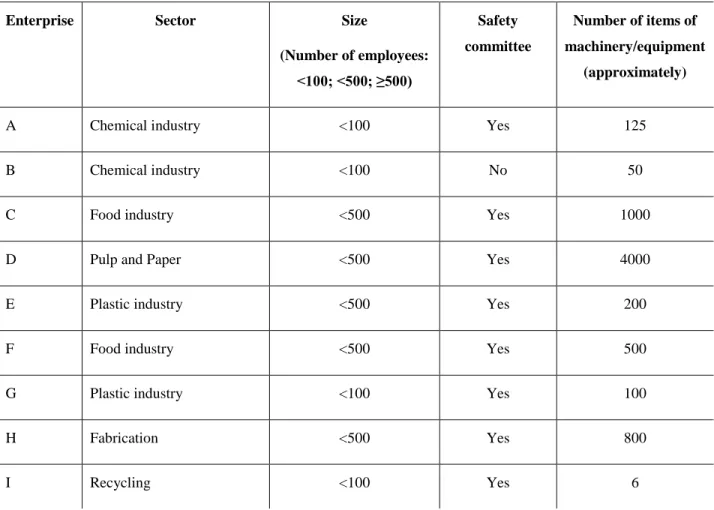
Table 4-2 General information of thirteen organizations in the study ... 42
Table 4-3 Items and sub-items of the questionnaire on the application of lockout ... 44
Table 4-4 Summary of elements found in general lockout programs ... 47
Table 4-5 Shortcomings observed and possible improvements concerning target equipment, lockout devices and hardware ... 50
Table 4-6 Shortcomings observed and possible improvements concerning the content and application of lockout procedures ... 55
Table 4-7 Shortcomings observed and possible improvements concerning alternative methods to lockout ... 60
Table 4-8 Shortcomings observed and possible improvements concerning the Training... 63
Table 4-9 Shortcomings observed and possible improvements concerning the subcontracting .... 65
Table 4-10 Shortcomings observed and possible improvements concerning the audits of lockout. ... 68
Table 5-1 Alternative methods to lockout in North American standards and regulations ... 74
Table 5-2 General information of 14 organizations in the study. ... 79
Table 5-3 Questions on alternative methods of control of hazardous energies in the questionnaire ... 81
Table 5-4 The main elements/steps of the general procedure (for alternative methods) found in the organizations’ general procedures. ... 84
Table 5-5 Other methods of controlling hazardous energies in the organizations studied ... 86
Table 5-6 Shortcomings observed and possible improvements concerning the alternative methods used in the organizations ... 91
Table 5-7 Shortcomings observed and possible improvements concerning alternative methods and risk assessment. ... 94
Table 5-8 Shortcomings observed and possible improvements concerning alternative methods and administrative factors (training/audits) ... 96
Table 6-1 Audits of lockout in North American standards and regulations ... 104
Table 6-2 Self-audit tool: Instructions and General information ... 107
Table 6-3 Questions used for testing content validity. ... 110
Table 6-4 General information about the six organizations in the study ... 110
Table 6-5 Self-audit tool: Pre-audit of the application of lockout ... 112
Table 6-6 Self-audit tool: Audit of the application of lockout ... 114
Table 6-7 Main feedback and comments by the organizations on the self-audit tool in terms of content validity and required modifications to the tool. ... 118
LIST OF FIGURES
Figure 2-1 Control of hazardous energies: lockout and alternative methods (adapted from the
standard ANSI/ASSE Z244.1 (2016)) ... 5
Figure 2-2 Structure and logic of the Quebec regulation (ROHS, 2017) concerning the section on lockout and other methods of energy control (adapted from Burlet-Vienney et al. (2017a)). . 7
Figure 2-3 Risk assessment and reduction process according to the standard ISO 12100 (2010). ... 17
Figure 4-1 Lockout station ... 51
Figure 4-2 Lockout placard posted on a machine ... 53
Figure 4-3 Safety curtain that could be locked in the activated position ... 58
Figure 4-4 Pad-lockable cap to an emergency stop button ... 59
Figure 5-1: Control system – with the use of a padlock. A: Pad-lockable cap to emergency stop button; B: Trapped key system; C: Moveable interlocked guards in an activated open position secured by a padlock; D: Safety curtain that could be locked in the activated position ... 88
LIST OF SYMBOLS AND ABBREVIATIONS
ANSI American National Standards Institute AS Australian Standard
BLS Bureau of Labor Statistics
CNESST Commission des normes, de l’équité, de la santé et de la sécurité du travail CSA Canadian Standard Association
CVI Content Validity Index DEU Deutsche Eislauf-Union
EN European Standards
HSE Health and Safety Executive I-CVI Content Validity Index for Items
IEC International Electrotechnical Commission INRS Institut National de Recherche et de Sécurité
IRSST Institut de recherche Robert-Sauvé en santé et en sécurité du travail ISO International Organization for Standardization
NFPA National Fire Protection Association NORA National Occupational Research Agenda OHS Occupational Health and Safety
OSHA Occupational Safety and Health Administration PPE Personal Protective Equipment
PUWER Provision and Use of Work Equipment Regulations ROHS Regulation Respecting Occupational Health and Safety RSST Règlement sur la santé et la sécurité du travail
S-CVI Content Validity Index for Scale
SEMI Semiconductor Equipment and Materials Institute SMED Single-Minute Exchange of Die
SS Singapore Standards Council SST Santé et de la Sécurité au Travail
LIST OF APPENDICES
Appendix A Questionnaire for data collection through interviews ... 145 Appendix B Certificate of ethical conformity ... 149 Appendix C Calculation of I-CVI and S-CVI for the initial Self-audit tool ... 150
INTRODUCTION
Exposure to different types of machinery hazards and hazardous energies (e.g. electrical, hydraulic, pneumatic, kinetic, potential, chemical, and thermal in nature) can result in injury or death (Chinniah, 2015). International standards and national regulations explain how to control hazardous energies in order that workers intervene safely on machinery. For example, the North American standards (i.e. CSA Z460 (2013) and ANSI/ASSE Z244.1 (2016)) and Quebec regulation (ROHS, 2017) explain the requirements for the control of hazardous energies on machinery as lockout or, failing that, other hazardous energy control methods (i.e. alternative methods). The control is essential to prevent the release of energy (unexpected energization) or the inadvertent start-up of an energy source during any non-production activities (e.g. installation, maintenance, troubleshooting, repairs, adjustments, set-up, production disruptions, cleaning, dismantling or repair of machinery). Lockout is defined as the installation of a lock, which has a unique key and only the authorized employee has access to it, on an energy-isolating device on machinery in accordance with a step-by-step procedure (i.e. general lockout procedure). The general lockout procedure requires: (i) preparation for shutdown, (ii) shutting down machine, equipment or process, (iii) isolating machine, equipment or process, (iv) application of lockout devices, (v) dissipating and controlling stored energy, (vi) verification of isolation (Chinniah & Burlet-Vienney, 2013; CSA Z460, 2013; Poisson & Chinniah, 2016; ROHS, 2017). On the other hand, applying lockout to a full zero energy state is impracticable in all situations. When lockout affects the tasks that are integral to the production process by design or traditional lockout prohibits the completion of specific tasks, for example, minor service or minor cleaning; alternative methods (e.g. electronically interlocked access, presence-sensing device, or other methods) can be used.
Moreover, organizations should establish a written hazardous energy control program (i.e. lockout program), which includes policies, procedures, and instructions in accordance with standards and regulations, for implementing lockout and alternative methods (ANSI/ASSE Z244.1, 2016; CSA Z460, 2013). The program should contain the following main elements: (i) hazardous energy sources, (ii) types of energy isolating devices, (iii) lockout materials and hardware, (iv) roles and responsibilities, (v) general lockout procedure; (vi) managing special cases (e.g. lockout removal and continuity of lockout); (vii) external services; (viii) risk
assessment; (ix) alternative methods; (x) training, and (xi) audits/inspections (Burlet-Vienney et al., 2009; Chinniah, 2010; ANSI/ASSE Z244.1, 2016; CSA Z460, 2013; Poisson & Chinniah, 2015; ROHS, 2017).
The absence of or ineffective lockout is one of the main causes of machinery-related accidents (Martin & Black, 2015; Bulzacchelli et al., 2008; Chinniah, 2015; Ruff et al., 2011). To prevent thousands of occupational injuries and save hundreds of lives, lockout must be carried out in compliance with related OHS (occupational health and safety) standards and regulations. While standards and regulations (e.g. North American standards and regulations) explain how to determine and select the appropriate method (i.e. lockout, alternative methods or a combination of these) to control of hazardous energy, decision making is not always easy since legal requirements on the control of hazardous energies vary from country to country or from province to province (Chinniah et al. (2008). Additionally, due to the rapid growth of technology, the need for different methods and techniques (i.e. alternative methods) for safeguarding workers from the unexpected release of hazardous energy is inevitable (ANSI/ASSE Z244.1, 2016). Applying alternative methods entails consideration of other requirements [e.g. risk assessment] (Chinniah & Burlet-Vienney, 2013; CSA Z460, 2013; Poisson & Chinniah, 2016; ROHS, 2017) that can pose new challenges for organizations. Moreover, organizations must monitor and assess their lockout practices against the normative and regulatory requirements, and organization’s expectations (Grund, 1995; Kelley, 2001; Johnson (1996). As such, the need for a valid and proper tool for audits of lockout is essential.
Despite the regulations and standards put in place to regulate the control of hazardous energies, failure to control hazardous energy is still one of the main causes of machinery-related fatal and serious injuries in North America (CNESST, 2016; OSHA, 2018). Thus, this raises the questions of how organizations apply lockout and alternative methods, to what extent they are in compliance with standards and regulations, and how organizations can tackle problems related to the control of hazardous energies.
This thesis aims at investigating the actual energy control (i.e. lockout and alternative methods) practices in different organizations through a robust method to find shortcomings and problems, and also at developing a valid and applicable self-audit tool (through a novel proposed approach) for monitoring and evaluating the application of lockout procedures. The study provides further
clarification on the use of the Canadian standard and Quebec regulation in terms of using alternative methods to lockout. The originality of this work is to investigate and evaluate the application of lockout and alternative methods in the organizations, which are diverse in terms of industry, size, and machinery through a group interview (by means of a comprehensive questionnaire), document review and site observation in each organization. Moreover, designing a valid, usable and complete self-audit tool for the application of lockout, which is developed based on the gaps and shortcomings found from the organizations and the requirements of the North American standards and Quebec regulation, represents another originality of this research. The rest of this dissertation is organized as follows: Chapter 2 reviews the literature concerning the control of hazardous energies: lockout and alternative methods; Chapter 3 describes the research objectives, process, and the methodology employed; Chapters 4 presents a study on the control of hazardous energy on machinery in organizations; Chapter 5 presents a study on understanding the use of alternative methods to lockout; Chapter 6 proposes a self-audit tool for the application of lockout. Chapters 4-6 present the fulfillment of the specific objectives of this thesis through the two articles published in Safety Science and one article published in Safety. Chapter 7 discusses the main findings of the dissertation, and finally, the conclusions of this research as well as limitations and recommendations for future research, are provided in Chapter 8.
LITERATURE REVIEW
This chapter provides a comprehensive review of the control of hazardous energies on machinery as well as a review of audits of lockout. In this regard, section 2.1 presents the control of hazardous energies in standards and regulations. Section 2.2 presents a review of accidents associated with failure to control hazardous energies. Sections 2.3 to 2.8 provide, respectively, a literature survey of (i) hazardous energy control program (i.e. lockout program); (ii) application of lockout procedures; (iii) application of alternative methods (i.e. other methods to lockout); (iv) training in the control of hazardous energy; (v) audits/inspections of controlling hazardous energy; and (vi) facilitating factors in the control of hazardous energy. Finally, the literature gaps on the basis of the literature review are presented in Section 2.9.
2.1 Control of hazardous energies in standards and regulations
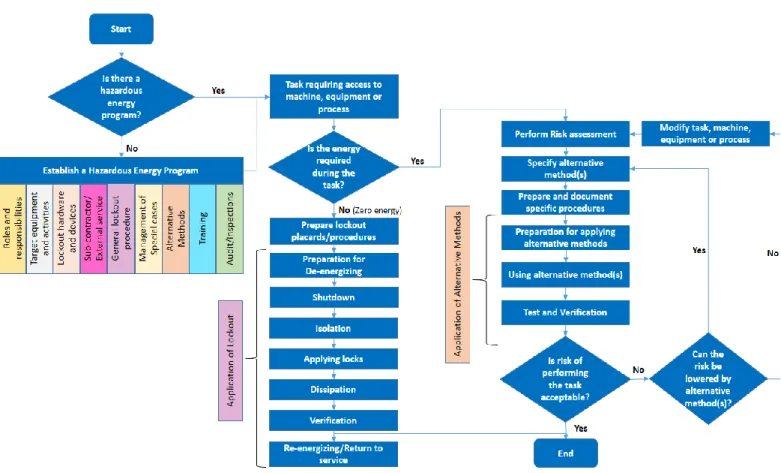
Workers performing a task that required access to moving parts of machinery must follow an approach to controlling hazardous energies. This is explained in standards and regulations as lockout generally when zero energy state must be verified before performing the task, and as alternative methods when the energy is required during performing the task. In most standards and regulations lockout is the primary method of hazardous energy control. The general lockout program and procedure were explained in Chapter 1. The process of the control of hazardous energy, including the application of lockout and alternative methods is presented in Figure 2-1. As shown in Figure 2-1, the hazardous energy program (i.e. lockout program) comprises the factors (e.g. audit, training, responsibilities, required devices, etc.) that are important in implementing the control of hazardous energies. The Figure also showed the steps of the application of lockout and alternative methods. For the application of lockout, lockout procedures must be prepared (in accordance with the general lockout procedure) for each machine, equipment or process so that the authorized employee (one who is trained on lockout) can implement lockout. The details about the lockout program and lockout procedures are explained in sections 2.3 and 2.4. Moreover, to apply alternative methods (as shown in Figure 2-1), risk assessment must be carried out in order to select and use proper methods. Risk assessment process and alternative methods are explained in sections 2.5.1 and 2.5.2.
Figure 2-1 Control of hazardous energies: lockout and alternative methods (adapted from the standard ANSI/ASSE Z244.1 (2016))
2.1.1 North American standards and regulations
The American National Standards Institute [ANSI] (ANSI/ASSE Z244.1, 2016) and the Occupational Safety and Health Administration [OSHA] (OSHA 29 CFR 1910.147, 1989) in the U.S. explain the requirements for the control of hazardous energies, including lockout, tagout (i.e. install a tag on an energy-isolating device on machinery), and alternative methods. However, the standard provides more detailed information about the control of hazardous energy program and alternative methods. Both the standard and regulation have been the main references to define other nationwide standards or regulations.
In Canada, the Canadian Standards Association [CSA] (CSA Z460, 2013) describes the requirements of control of hazardous energies (i.e. lockout and alternative methods) in detail, and it is almost identical to the standard ANSI Z244. The Canadian standard is not mandatory in different provinces (including the province of Quebec), but it represents the state of the art in
hazardous energy control. Moreover, in the province of Quebec, Quebec’s Regulation respecting Occupational Health and Safety (ROHS, 2017) explains regulations on the control of hazardous energy. The regulations were updated and strengthened in 2016 (ROHS, Art. 188.1-13). The previous version of Quebec regulation had mentioned lockout as the only approach of controlling hazardous energies and without any explanation of what to do. Obligations are now in line with Canadian standard (CSA Z460, 2013), and American standard and regulation, i.e. ANSI/ASSE Z244.1 (2016) and OSHA 29 CFR 1910.147 (1989). This current regulation on the control of hazardous energy contains 13 sections: (i) definitions, (ii) the tasks in which hazardous energy needs to be controlled and the exemptions, (iii) energy control and hazardous area requirements, (iv) risk analysis, (v) developing written procedures (placards) and auditing them periodically, (vi) the contents of the lockout/alternative method procedures, (vii) the steps for controlling energy sources, (viii) training, (ix) the authorization to remove a padlock during the absence the person who installed it, (x) managing external services, (xi) keeping records of lockout (i.e. installation locks and the person responsible), (xii) the procedure for removing the padlock and (xiii) the link with the lockout of the electrical installations (Figure 2-2). In addition to these sections, the regulation explains the situation where lockout can be exempted or not be applied (i.e. Art. 189 and 189.1). All these standards and regulations above advise on alternative methods to lockout but in different ways.
Figure 2-2 Structure and logic of the Quebec regulation (ROHS, 2017) concerning the section on lockout and other methods of energy control (adapted from Burlet-Vienney et al. (2017a)).
2.1.2 Other standards and regulations
The control of hazardous energy is also explained in worldwide standards like the international standard ISO 14118 (2017) and the European standard EN 1037:1995+A1 (2008) as well as in other nationwide regulations/standards such as the standard AS 4024.1603 (2006: R2014) in Australia; the standard SS 571 (2011) in Singapore; the PUWER (1998) regulation 19 in UK; the DEU (2015: R-101566) in Germany; and European directive European directive CEE 89/655 (1989). However, in comparison to standards, most regulations provide minimum requirements associated with the control of hazardous energy. For example, the standard SS 571 (2011), which is in line with North American standards (ANSI/ASSE Z244.1; CSA Z460), provides detailed information about the control of hazardous energy, while the European directive CEE 89/655 (1989) outlines minimum regulations. In additions to regulations and standards, guidelines (e.g. OSHA 3120 (2002) in the U.S. or PN10596 (2011 R:2019) in Australia) have been provided for
controlling hazardous energies in some countries. To illustrate, the Institut National de Recherche et de Sécurité (INRS) in France published two best practice documents (i.e. ED 6109 and ED 6129). The first contains an isolation procedure that explains what and how lockout devices can be used for isolation and return to service purposes during interventions. The latter document comprises alternative methods for performing the operation safely when interventions without energy cannot be carried out (INRS, 2014; INRS, 2015).
A study by Chinniah et al. (2008) on worldwide standards and regulations showed that the concept of lockout had different meanings or definitions in the regulations while definitions of lockout in standards had certain similarities. The authors found that the requirements for the application of lockout varied in regulation to regulation in different countries and also identified some differences in the standards studied concerning the elements of lockout programs.
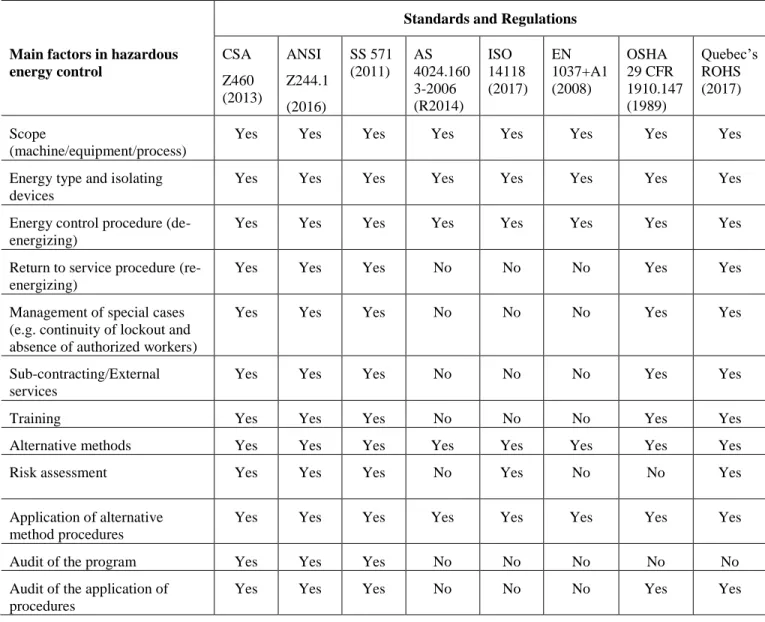
A brief comparison of some of these standards and regulations with regard to control hazardous energy is presented in Table 2-1. The table was adapted from Chinniah et al. (2008) and was also updated in terms of the standards and regulations. Table 2-1 presents whether the main factors in the control of hazardous energies (listed in each row) exist and are explained in the aforementioned standards and regulations (listed in each column). As shown in Table 2-1, the standards such as CSA Z460 (2013), ANSI/ASSE Z244.1 (2016), and SS 571 (2011) tend to have similar requirements, but, by contrast, AS 4024.1603 (2006: R2014), ISO 14118 (2017), and EN 1037:1995+A1 (2008) do not cover all the main factors in hazardous energy control, and also some discrepancies exist. The regulations (i.e. OSHA 29 CFR 1910.147 (1989) and ROHS (2017)) cover almost all the requirements. However, by comparison with the North American standard (i.e. CSA Z460 and ANSI Z244.1), these regulations provide less information about the control of hazardous energies.
Table 2-1 Control of hazardous energies in standards and regulations (adapted from Chinniah et al. (2008))
Main factors in hazardous energy control
Standards and Regulations
CSA Z460 (2013) ANSI Z244.1 (2016) SS 571 (2011) AS 4024.160 3-2006 (R2014) ISO 14118 (2017) EN 1037+A1 (2008) OSHA 29 CFR 1910.147 (1989) Quebec’s ROHS (2017) Scope (machine/equipment/process)
Yes Yes Yes Yes Yes Yes Yes Yes
Energy type and isolating devices
Yes Yes Yes Yes Yes Yes Yes Yes
Energy control procedure (de-energizing)
Yes Yes Yes Yes Yes Yes Yes Yes
Return to service procedure (re-energizing)
Yes Yes Yes No No No Yes Yes
Management of special cases (e.g. continuity of lockout and absence of authorized workers)
Yes Yes Yes No No No Yes Yes
Sub-contracting/External services
Yes Yes Yes No No No Yes Yes
Training Yes Yes Yes No No No Yes Yes
Alternative methods Yes Yes Yes Yes Yes Yes Yes Yes
Risk assessment Yes Yes Yes No Yes No No Yes
Application of alternative method procedures
Yes Yes Yes Yes Yes Yes Yes Yes
Audit of the program Yes Yes Yes No No No No No
Audit of the application of procedures
Yes Yes Yes No No No Yes Yes
In summary, standards and regulations address organizations’ concerns in order to determine which method (i.e. lockout, alternative methods or a combination of these) is proper to control hazardous energy as well as to describe the conditions surrounding alternative methods. Nevertheless, decision making is not always easy since the standards and regulations provide no identical guidelines, and thus interpretation can be very subjective. Taking the above into consideration, the control of hazardous energy is not only an issue in North America but also worldwide.
2.2 Accidents associated with failure to control hazardous energies
Contact with moving parts of machinery where workers intervene in the non-production phase of a machine (i.e. installation, operation, maintenance, troubleshooting, repairs, adjustments, set-up, production disruptions, cleaning, and dismantling) can induce serious injuries or fatalities (Chinniah, 2015; Yamin et al., 2016). The U.S. Bureau of Labor Statistics (BLS) revealed that a total of 723 fatal work injuries (approximately 14% of total fatalities) annually occurred owing to contact with objects and equipment in the period 2015-2018 (BLS, 2018).
Contact with moving parts of machinery was the main cause of 500 fatal accidents (approximately 29% of total fatalities) that occurred annually in Netherland (Bellamy et al., 2007). Likewise, the UK Health and Safety Executive (HSE) revealed that in the period 2013-2017, 22% of total fatal work injuries annually happened as a result of contact with and struck by moving objects (HSE, 2018). These serious injuries and fatalities can be as a consequence of, for example, the release of hazardous energies, unexpected energization or start-up of machines or equipment.
For example, Chinniah (2015) analyzed 106 accidents involving moving parts of machinery in the province of Quebec (Canada) and showed that several accidents happen during maintenance or during production activities when the operator entered the dangerous zone of the machine where mechanical hazards were present. The study found that 12.3% of accidents were related to the machine set-up phase of machinery, 19.8% of accidents were during production tasks, 34.9% of accidents were during maintenance tasks and 31.1% were linked to dealing with production disturbance (e.g. unjamming). The author showed that the main causes of machinery-related accidents were easy access to moving parts of machinery, lack of proper safeguards, inexperienced workers, circumvention of safeguards, absence of risk assessment, lack of supervision, poor machinery design, unsafe methods of working, absence of clear instructions linked to control systems, and absence of lockout procedures. Indeed, the study showed that in 33 accidents companies have no lockout programs and lockout procedures were not used during maintenance, repairs, and unjamming activities. In 21 accidents, lockout programs existed, but lockout procedures were not used during maintenance, repairs and unjamming activities. In two accidents, whereas lockout programs existed, there were no lockout procedures (placards) for the
machinery. The study identified the main causes of these types of accidents were: (i) absence of using lockout procedure; and (ii) incomplete or incorrect lockout procedure accidents. Similarly, the absence of or deficient lockout procedures, as one of the main causes of serious and fatal accidents, is found in studies on the analysis of machinery related accidents in the U.S. (Bulzacchelli et al., 2008; Martin & Black, 2015; Ruff et al., 2011), UK (Shaw, 2010), France (Blaise & Welitz, 2010), and Netherlands (Aneziris et al., 2013).
Furthermore, according to the OSHA, lockout was the fifth most cited OSHA violation in the period 2015-2018. For example, during 2017 and 2018, 3,131 and 2,944 citations, respectively, were issued for violations of the lockout/tagout standard OSHA 29 CFR 1910.147 (OSHA, 2017; OSHA, 2018). The lack of documented lockout procedures, the absence of periodical inspections, absence of a lockout program, lack of training for authorized employees, and neglect of notifying affected employees during the application of lockout were the most-cited sections in the lockout/tagout standard (OSHA, 2017; OSHA, 2018). Likewise, in the province of Quebec (Canada) on average, 10% of fatalities occurred annually due to poor or absent lockout procedures (CNESST, 2016). In Ontario (Canada), 17 % of orders issued by the Ontario Ministry of Labor to employers during 2013 were due to violations of lockout and machine guarding (Ontario Ministry of Labor, 2016).
Blaise and Welitz (2010) analyzed 88 accidents, which were linked to machinery during non-production phases (i.e. maintenance), occurring between 1998 and 2007 in France. The authors found that 69% of accidents were connected mainly to incomplete isolation/lockout procedures. Lind (2008) analyzed 33 Finnish accident reports of severe injuries and fatalities related to industrial maintenance. The author showed that organizational factors and unsafe actions (lockout method) were the main causes of serious and fatal accidents. Bulzacchelli et al. (2008) reviewed 592 lockout/tagout-related incidents that caused a total of 624 fatalities in the U.S. The study showed that in the most of cases (70%), absence of the application of lockout procedures were found. In a few incidents despite the attempt to apply lockout, a fatality occurred owing to human error (5.2%) or mechanical failure (1.2%). Shaw (2010) reviewed 100 incident investigation reports in the UK in the period 2002-2007 and revealed that failures to isolate (lockout) were major causes of the accidents. Martin and Black (2015) analyzed 457 incident reports from six multinational organizations in different industries. The authors found that incidents with the
potential to result in serious injuries and fatalities had a strong connection to deficiencies in management systems related to lifesaving policies, programs (e.g. lockout, machine guarding and barricades, etc.) and risk assessment. The study indicated that serious or fatal accidents occur during routine operation/production or maintenance/repair tasks when these management systems are either absent, ineffective, or not compliant with.
2.3 Hazardous energy control program (i.e. lockout program)
As mentioned in chapter one (Introduction), lockout program is the document that establishes the company’s general policies and instructions for implementing lockout and provides the instruction for regulatory compliance and it is obligatory in some regulations and standards. In 2009, a guide including listing main elements which need to be considered when preparing a lockout program was published (Burlet-Vienney et al., 2009). The main elements of a lockout program in the guide were as follows: (i) roles and responsibilities; (ii) audit; (iii) training; (iv) communication; (v) hazardous energy sources; (vi) equipment design characteristics; (vii) lockout hardware; (viii) lockout hardware utilization principles; (ix) target activities and work; (x) general lockout procedure; (xi) lockout of equipment in the immediate surroundings; (xii) general return-to-service procedure; (xiii) general lockout placard; (xiv) continuity of lockout; (xv) case of absence of the authorized individual; (xvi) external services or subcontractors. In addition to those elements, risk assessment and alternative methods should be considered when drafting a lockout program (ANSI/ASSE Z244.1, 2016; CSA Z460, 2013). The North American standards and regulations require that companies prepare instructions (described in the lockout program) for managing especial cases such as the absence of an authorized employee (specially when a padlock must be removed), and the continuity of during shift changes or forgotten/losing key). They also require that in the case of the outsourcing a task that was carried out by external employees (i.e. subcontractors), the determination of roles and responsibilities, coordination and communication between them and local employees must be described in the lockout program. The online guideline for hazardous energy control NORA (2018) states that a successful program contains four main activities: (i) energy control procedures; (ii) employee training; (iii) audits and periodic inspections; and (iv) lockout equipment and devices. Johnson (1996) mentioned that if the elements of the program are unclear or outdated (not accordance with the company
expectation), then the program will not be applicable or enforced. Kelley (2001) indicated that a lockout program required the participation of employees during its development in order to be more efficient and complete.
A review of lockout programs in 31 companies in the province of Quebec showed that most of the lockout programs were not fully compliant with the regulation and standard (Chinniah, 2010). The author showed that, for example, important elements such as the design characteristics of new or upgraded equipment were missing. Additionally, alternatives to lockout, training, and program application review were absent in many written lockout programs. The study showed that lockout programs obtained from large companies lacked fewer elements than those obtained from small companies (Chinniah, 2010). Similarly, Parker et al. (2015b) showed written lockout programs were more available and complete in larger companies (in terms of the number of employees) that had safety committees.
A study by Chinniah and Burlet-Vienney (2013) on developing a lockout program for the municipal sector in Quebec (21 municipal sites equipped with fixed and mobile equipment), showed that the programs were not drafted or incomplete in most municipalities. Poisson and Chinniah (2015, 2016) conducted a study on lockout programs in eight sawmills in Quebec. The authors mentioned that, although lockout programs were essential parts of lockout implementation in the sawmills, they were used more as the means of regulatory compliance than as prevention tools. The lockout program needs to be improved regarding the general lockout and return to service procedures. There were no date and signature found on lockout programs and indeed they were outdated and did not cover the requirement of the standard. The missing elements in most programs were: (i) role and responsibilities; (ii) audit; (iii) equipment design characteristics (iv) alternative methods (v) lockout hardware and utilization principles. The authors demonstrated that workers had little understanding of the documents (i.e. written lockout programs), and the lockout programs did not reflect the actual practice of the workers’ interventions on machinery. The study by Chinniah (2015) revealed that having a lockout program does not infer that lockout procedures are being used. In other words, the lockout program is not always an accurate measure of the actual lockout practice.
2.4 Application of lockout procedures
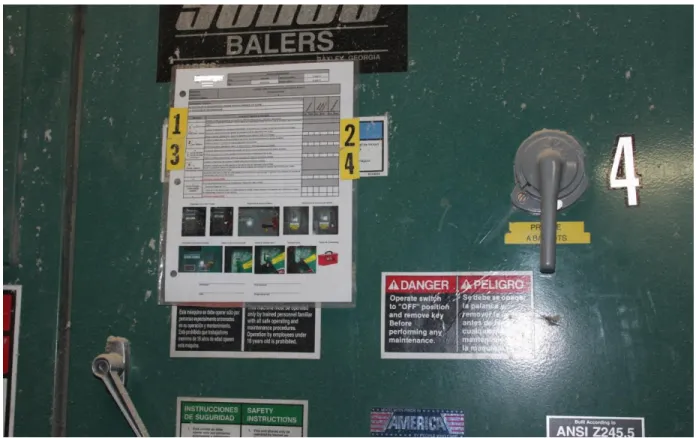
The North American standards and regulations provide a step-by-step approach to controlling hazardous energies (i.e. the general lockout procedure) that must be followed by authorized employees. The general lockout procedure comprises four steps: (i) preparation for shutdown, (ii) shutting down machine, equipment or process, (iii) isolating machine, equipment or process, (iv) application of lockout devices/material, (v) dissipating and controlling stored energy (de-energization), (vi) verification of isolation (start-up test or using measuring instruments (Chinniah & Burlet-Vienney, 2013; CSA Z460, 2013; Poisson & Chinniah, 2016; ROHS, 2017). According to the standard CSA and Quebec regulation ROHS, a specific lockout procedure/ placard must be prepared (based on the general lockout procedure) for each machine, equipment or process so that the authorized employees (who are trained on lockout) and external employees (sub-contractors) follow it to apply lockout properly and ultimately the related task (repair, service, maintenance, etc.) can be done safely. These procedures should be easily accessible to workers (i.e. authorized employees). A study by Parker et al. (2015a) on safety programs (including lockout/tagout and safeguards) in 221 small metal fabrication businesses in the U.S. showed that lockout procedures were posted on machines in only 9% of workstations. Bulzacchelli et al. (2008) stated that understanding problems in following the lockout/tagout procedures and finding ways to raise the use of them are important for preventing serious injuries and fatalities. Rutter (2005) stated that the use of placard with photos of energy isolating devices may be preferred to allow the worker to locate the exact location to padlock, and also the identification of the equipment with a number can simplify the procedure. Campbell (2003) argued that a wrong procedure is more dangerous than the absence of a procedure because the workers who follow a procedure rely on the instructions and may thus reduce their vigilance. Poisson and Chinniah (2016) recommended simplifying lockout procedures, thereby decreasing the time spent on them, and reducing the incentive to defeat them.
Poisson and Chinniah (2015, 2016) showed the absence of lockout procedures for some types of machinery as well as the difficulties in following lockout procedures in sawmills. They found that workers did not carry out the verification step in the general procedure during the application of lockout, and also return to service steps were carried out without notifying workers to ensure that nobody was in the danger zones of machinery. Moreover, the study showed that lockout
placards were not read by workers (mostly experienced workers), especially when isolating only one or two energy sources. The authors mentioned that it is problematic since the risk with such a practice can be high when, for example, switching off the wrong isolating device and not doing the verification step, or when some changes made in the machinery and workers are unaware of. Parker et al. (2016) evaluated lockout/tagout (i.e. the presence of program, procedures and isolation devices) in 160 small metal fabrication firms through baseline evaluation, two intervention visits (proposing the recommendations to shops), and a follow-up (12-month). The study found that only 8% of the total firms had lockout procedures at the beginning of the study. The authors showed that improvement in (i) the presence of lockout procedures from 8% to 33%; (ii) the development of a lockout program (by the company) from 55% to 76%; and (iii) the presence of lockable disconnects by 92% compared to 88%.
2.5 Application of alternative methods
In the following sub-sections, a review of the literature on risk assessment, which must be carried out before using alternative methods, and applying alternative methods are presented.
2.5.1 Risk assessment
The North American standards (ANSI/ASSE Z244.1; CSA Z460) and Quebec regulation (ROHS) require implementing risk assessment before applying alternative methods. To illustrate, the Quebec regulation requires that employers who intend to apply an energy control method other than lockout, must first ensure the equivalent safety of that method by analyzing the following: (i) the machine features; (ii) identification of the health and safety risks when using the machine; (iii) an estimate of the frequency and seriousness of the potential employment injuries for each risk identified; (iv) the description of prevention measures that apply for each risk identified; (v) the estimate of the level of risk reduction obtained and the assessment of residual risks; (vi) documentation of the results of the analysis (which must be recorded in a written document). Chinniah (2015) showed that a lack of risk assessment (or job hazard analysis) was one of the main causes of fatal accidents related to machinery.
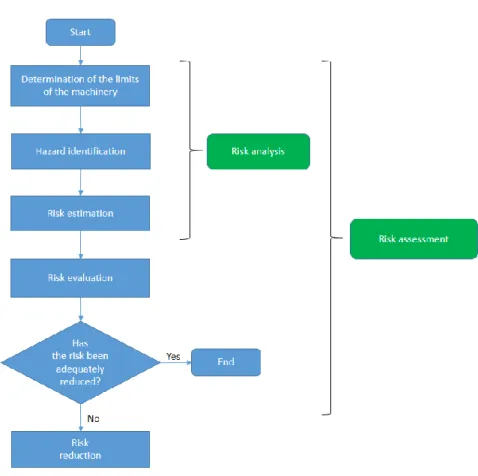
ISO 12100 (2010) explains that the risk assessment process comprises risk analysis and risk evaluation (as shown in Figure 2-3). Risk analysis is a combination of (i) the specification of the
limits of the machine, (ii) hazard identification and (iii) risk estimation. The risk estimation is carried out for each hazardous situation (by means of defining likely severity of harm and the probability of its occurrence) to provide information on the level of risk. Finally, risk evaluation is to make a judgment, based on the results of risk estimation, about whether the risk reduction objectives are achieved. Furthermore, some standards and studies present a method for risk assessment (Aneziris et al., 2013; Chinniah et al., 2011; Etherton et al., 2008; Gauthier et al., 2012; CSA Z1002, 2012; ANSI/ASSE Z10, 2012; ISO/IEC 31010, 2009; ISO 12100, 2010; ANSI B11.0, 2015).
Manuele (2005) mentioned that the process of determination of the severity of harm and the likelihood of occurrence is subjective and is carried out based on the knowledge of the people. Therefore, risk assessment is a subjective process and given that, ranking risks is also subjective. It should be mentioned that a risk estimation tool does not give an absolute value of a risk. Regardless of the methods used (e.g. matrix, checklist, risk graph), there will always be uncertainties related, for example (i) to the parameters used, (ii) to the model chosen, and (iii) to the completeness of the factors considered (Abrahamsson, 2002). Cox Jr (2008) and Duijm (2015) summarized the main criticisms associated with risk matrixes (e.g. subjective classification, limited resolution, and effectiveness). Chinniah et al. (2011) also listed recommendations for the construction of such tools (e.g. number of levels per parameter, definition of parameter levels, relative influence of each parameter, uniform distribution of levels).
Figure 2-3 Risk assessment and reduction process according to the standard ISO 12100 (2010)
Furthermore, as Figure 2-3 shows, if risk is unacceptable, then the process of risk reduction must be performed and risk must be reassessed and repeated. Indeed, implementing the risk reduction process is based on the results of the process of risk assessment. A hierarchical process shall be used in the selection of feasible risk reduction measures in the following order of preference: (i) eliminate the hazard through design or substitution; (ii) engineered safeguards and safeguarding devices (e.g. fixed guards, moveable guards with interlock, presence sensing devices, two-hand control devices and etc.); (iii) awareness devices and alerting techniques; (iv) safe work procedures and training; and (v) use of personal protective equipment (PPE) (Chinniah et al., 2007; Manuele, 2005; ANSI B11-TR3, 2000; CSA Z432, 2016; ISO 12100, 2010; Zoubek, 2015). However, Caputo et al. (2013) showed that in order for effective protection, the adequacy of a safety measure or selecting between the two measures is based on the analyst’ opinion and personal judgment.
In summary, selecting alternative methods to control hazardous energy will be based on the output of the risk reduction process, and for this reason, risk assessment is a vital process. However, uncertainty in risk assessment might produce an adverse effect on the effectiveness of alternative methods. The effectiveness of alternative measures was discussed in the literature (Backström & Döös, 2000; Booth, 1979; Caputo et al., 2013; ANSI/ASSE Z244.1, 2016; Gauthier & Charron, 2002).
2.5.2 Alternative methods
To apply alternative methods, the Canadian standard, CSA Z460 (2013) explains that appropriate tasks (to be considered integral to production) for other control methods shall exhibit most of the following characteristics: (i) of short duration; (ii) relatively minor in nature; (iii) occurring frequently during the shift or production day; (iv) usually performed by operators, set-up persons, and maintenance personnel; (v) represent predetermined cyclical activities; (vi) minimally interrupt the operation of the production process; (vii) exist even when optimal operating levels are achieved; and (viii) require task-specific personnel training (CSA Z460, 2013). Moreover, in Quebec, regulations on lockout ROHS (2017) explains lockout is the preferred method, but using alternative methods through a risk assessment (that ensures equivalent safety) is now possible when lockout cannot be applied. The articles 188.2 and 189.1 of the regulation explain that lockout is exempted where the machine is equipped with a specific control mode and that allows the machine to only be operated, for example, by using a control device requiring continuous action/a two-hand control device, or at reduced speed/under reduced tension [i.e. by using these alternative methods] (ROHS, 2017). Electronically interlocked access, trapped key system, presence-sensing device or remote lockout can be relevant alternatives to lockout (Burlet-Vienney et al., 2017b).
A qualitative study on the application of the Quebec regulation specifically article 189.1 was carried out at 15 machines in nine companies (Chinniah et al., 2017a). The study showed that companies had difficulties in applying this article of the regulation due to (i) some machines needed to be adapted on site based on the requirements of the article; (ii) workers who performed the tasks in the danger zone did not use a hold-to-run control or an inching/jogging advance mode; (iii) low level of workers’ knowledge; and (iv) the poor explanation of the article in the
regulation; (v) a lack of risk assessment. The authors also proposed recommendations for users and designers in order to use reduced-energy modes of operation, especially in terms of the determination of the most appropriate values for reduced speed, force, pressure, and temperature. Similar to lockout procedures, both the standard and regulation require that organizations provide procedures (or instructions) for applying alternative methods similar to lockout procedures. For example, Quebec regulation explains the steps of the general procedure for an alternative method as follows: (i) identification of the machine/equipment; (ii) identification of the person responsible for the energy control method; (iii) identification and location of every control device and of every energy source of the machine; (iv) identification and location of every cut-off point of every energy source of the machine; (v) the type and quantity of material required for applying the method; (vi) the steps required to control the energy; (vii) where applicable, the measures designed to ensure the continuity of application of the energy control method during a staff rotation, in particular, the transfer of required material; and (viii) where applicable, the applicable characteristics, such as the release of residual or stored energy, the required personal protective equipment or any other complementary protection measure (ROHS, 2017).
Poisson and Chinniah (2016) demonstrated that the alternative methods used in sawmills were not fully compliant with Canadian standard and Quebec regulation. The authors found: (i) permits as alternative methods were issued without a risk assessment for troubleshooting activities; (ii) whereas special tools (e.g., a gaff to unjam logs on conveyors or a belt as PPE) were used for situations that lockout was not feasible, risk assessment was not applied; (iii) absence of an electrical interlocking system to stop the machine when guards were opened; and (iv) absence of written procedures or instructions for alternative methods used.
Burlet-Vienney et al. (2017b) showed that although the main procedure for major tasks on mobile equipment should be lockout, it is important to identify types of work that will require a specific position for the equipment (e.g., raised bed), a specific energy source (e.g., for diagnostic purposes) or a specific procedure. Maintenance or service of this kind will require alternative methods. The authors also indicated that an alternative method for mobile equipment after risk assessment may apply to the following situations: (i) a need for an energy source to perform a task, such as diagnostic and verification steps, in the hazardous zone. In these situations, it may be necessary for some parts of the equipment to be in motion when a worker is nearby; (ii) short
duration and minor tasks in or outside of a workshop or garage. Inside a workshop or garage, it refers to the tasks such as changing windshield wiper blades, replacing headlight bulbs and conducting visual inspections. Out of a workshop or garage, it refers to the tasks that must be done to allow the machine to continue operating, such as unjamming or doing minor repairs. This is the case in particular for snow blower mechanisms (e.g., a drum or auger) that can get jammed several times during a shift. Besides, for minor repair activities where only one worker is involved, a safe shutdown with control of the ignition key and the display of work-in-progress signs may be sufficient.
Kay and Schuster (2018) concluded that effective alternative methods, which are compliant with standards and regulations, can improve both the safety and productivity of related operations in the forest industry. The authors stated that alternative methods can decrease the likelihood of bypassing (that is usually found in the application of lockout), reduce the needed time for maintenance tasks, and ultimately improve productivity.
2.6 Training
The standard CSA Z460 (2013) and Quebec regulation ROHS (2017) require that all authorized employees as well as affected employees (who are not directly involved in the work but located in the work area) must be trained before applying energy control methods (i.e. lockout or alternative methods). In addition to these employees, outside employees (i.e. external services or subcontractors) should receive training. The standard CSA Z460 explains that training must enable employees to implement all the steps of procedures for lockout and alternative methods. According to this standard, training on the control of hazardous energy must be a part of a lockout program (i.e. hazardous energy control) and must include (i) samples of machine-specific procedures (ii) the type and magnitude of the energy available in the workplace (iii) means to control and isolate energy and verify its controlled state. Furthermore, the standard requires periodic refresher training for authorized employees since training it is not a one-off action. It must be conducted at intervals not to exceed three years, to maintain an appropriate level of the worker’s knowledge. The content of this refresher training must be based on hazards and risk assessment for the task and working conditions. Training and re-training records of all employees must be kept and documented. According to the standard, outside employees should be trained
and possess the applicable qualifications to perform work covered by this Standard (CSA Z460, clause 7.3.6)
Additionally, Rutter (2005) noted that workers must be trained for specific tasks so that they can: (i) recognize sources of energy at risk, (ii) understand the type and power of energy; (iii) know the methods for isolating and controlling dangerous energies; and (iv) know the methods for neutralizing energies safely. Johnson (1996) mentioned that training must be based on the realities of enterprises and complex procedures. Wallace (2007) recommended that both groups of authorized and affected employees should receive training in lockout.
Kelley (2001) found that training/ retraining was an important factor in applying lockout. A study by Demirkesen and Arditi (2015) showed that the important factors in safety training were the use of visual aids, providing feedback from workers, and training assessment. In terms of the importance of the practical training, Ray et al. (1997) noticed an improvement in the safety behavior of participants (in the workplace) when feedback was provided and added in the training program.
2.7 Audit/Inspections
Audit is a systematic process to evaluate objective evidence against audit criteria through internal or external sources. Audits and specifically internal audits (which are carried out by organizations and internal auditors) help organizations determine whether their occupational health and safety (OHS) management systems are effectively implemented in compliance with standards (ISO 19011, 2018; ISO 45001, 2018). In the following sub-sections, a literature survey of the audits of controlling hazardous energies, and proper tools for audits are presented.
2.7.1 Audit of controlling hazardous energies
Audits of lockout can comprise the audit of lockout program (i.e. the elements of lockout program) and the audits of the application of lockout (or alternative method) procedures. According to the standard CSA Z460 (2013), auditing of the program elements should be conducted frequency and shall be at regular intervals of three years or less. Moreover, the employer shall be responsible for conducting the auditing plan (e.g. at least annually) through visual observations of authorized individuals (employees) implementing specific lockout