SEYED REZA MIRSALARI
DÉPARTEMENT DE GÉNIE INFORMATIQUE ET GÉNIE LOGICIEL ÉCOLE POLYTECHNIQUE DE MONTRÉAL
THÈSE PRÉSENTÉE EN VUE DE L’OBTENTION DU DIPLÔME DE PHILOSOPHIAE DOCTOR
(GÉNIE INFORMATIQUE) OCTOBRE 2017
Cette thèse intitulée:
A MODEL FOR SOFTWARE QUALITY EVALUATION USING THE USER'S POINT OF VIEWS
présentée par : MIRSALARI Seyed Reza
en vue de l’obtention du diplôme de : Philosophiae Doctor a été dûment acceptée par le jury d’examen constitué de :
M. GUIBAULT François, Ph. D., président
M. ROBILLARD Pierre N., D. Sc., membre et directeur de recherche M. KHOMH Foutse, Ph. D., membre
who have been a constant source of support and encouragement. I am truly thankful for having you in my life.
Besides my advisor, I would like to thank the rest of my thesis committee: Prof. François Guibault, Prof. Foutse Khomh, and Prof. Simon Hardy, for their insightful comments and encouragement, but also for the hard questions, which incented me to widen my research from various perspectives. Many thanks to Prof. Michel C. Desmarais for his valuable inputs during the survey conduction. My sincere thanks also go to the CTO and the employees at Technology Evaluation Canters, who provided me an opportunity to join their team as intern, and who gave access to the laboratory and research facilities. Without their precious support, it would not be possible to conduct this research. Last but not the least, I would like to thank my family: my wife Elham and to my two children Sonia and Parsa for supporting me spiritually throughout writing this thesis and my life in general. This thesis has been partially funded by Mitacs Canada project no. IT08408, IT04215, IT06440, and Technology Evaluation Centers.
fiabilité » ne sont généralement pas pris en compte. Les fournisseurs de logiciels parlent aussi rarement des aspects de qualité de leurs produits. Le défi principal est « comment susciter les attentes de qualité des utilisateurs ? », puis « comment déterminer les caractéristiques de qualité d'un produit logiciel ?». La comparaison de ces deux facteurs de qualité peut aider les acheteurs de logiciels à sélectionner le produit le mieux adapté et à ne pas gaspiller de budget supplémentaire pour des facteurs de qualité inutiles et ne pas acheter un produit qui ne couvre pas leurs exigences de qualité. Existe-t-il une méthode systématique pour rendre cette comparaison possible? Quels sont les facteurs qui influent sur la perception de l'utilisateur de la qualité du produit logiciel?
Objectif: Dans cette thèse, nous visons à aborder la qualité du produit logiciel du point de vue des
utilisateurs. L'objectif est de créer le profil de qualité attendu et observé du produit logiciel afin de démontrer les différences entre les qualités attendues par les utilisateurs et quelles qualités sont observées chez le produit logiciel. Méthode: Nous avons utilisé une stratégie empirique en utilisant une méthode basée sur un sondage pour créer le profil des caractéristiques de qualité attendues et observées. Après avoir développé un modèle de qualité standard, nous avons créé quatre types de questionnaires pour les utilisateurs finaux et les utilisateurs expérimentés, qui visent à susciter les facteurs de qualité. À titre d'étude de cas, nous avons mené trois enquêtes en deux phases dans l'industrie. Dans la phase I, nous avons demandé aux utilisateurs potentiels d'un produit logiciel en cours de développement, de répondre au questionnaire «qualité attendue». Dans la phase II, les utilisateurs d'un produit logiciel existant ont été invités à répondre au questionnaire «qualité observée». Résultats: Les résultats de la première phase montrent qu'il n'y a pas de différence significative entre les attentes de qualité de groupe d'utilisateurs final (end user) et d'utilisateurs expérimentés (power user). Dans la phase II, les résultats révèlent que les utilisateurs du département de développement, connus comme utilisateurs techniquement compétents, trouvent le logiciel plus performant que les utilisateurs d'autres départements de l'entreprise. Conclusion: Avec des profils de plan de qualité en main, il est possible d'effectuer un contrôle croisé utile entre les attentes de qualité spécifiques des utilisateurs et d'autres pilotes (exigences fonctionnelles et
about the quality aspects of their products. The primary challenge is “how to elicit the users’ quality expectations”, and then “how to determine the quality characteristics of a software product”. Comparing these two can assist the software buyers to select the best-fit product; not to waste extra budget for unnecessary quality factors, and not buy a product that does not cover their quality requirements. Is there any systematic method to make this comparison possible? What are the influencing factors that affect the user’s perception of the software product quality? Objective: In this thesis, we aim to address the quality of the software product from the users’ point of view. The goal is to create the expected and observed quality profile of the software product to demonstrate the differences between what qualities were expected from the users’ side, and what qualities are observed in the software product. Method: We employed an empirical strategy using a survey-based method to create the profile of expected and observed quality characteristics. After developing a standard-based quality model, we created four types of questionnaires for end users and power users, which aim to elicit the quality factors. As a case study, we conducted three surveys in two phases in the industry. In phase I, we asked the potential users of a software product which was under development, to answer the ‘expected-quality’ questionnaire. In phase II, the users of an existing software product were asked to answer the ‘observed-quality’ questionnaire. Results: The results of the first phase show that there is no significant difference between the quality expectations of the end and power user groups. In phase II, the results reveal that the users in development department who are known as technically knowledgeable users find the software as higher quality than the users in other departments of the company. Conclusion: With quality plan profiles in hand, it is possible to perform a useful crosscheck between users’ specific quality expectations and other drivers (functional and architecture/design requirements), before or during the software development process. The crosscheck should be aimed to guarantee that there are enough activities and sub-activities in the software development process to support the users’ quality expectations. Based on the conducted surveys, we conclude that the software quality from
RÉSUMÉ ... V ABSTRACT ...VII TABLE OF CONTENTS ... IX LIST OF TABLES ... XIII LIST OF FIGURES ... XVII LIST OF APPENDICES ... XIX
CHAPTER 1 INTRODUCTION ... 1
1.1 Software quality and software quality evaluation ... 2
1.2 Systematic scoping review ... 4
1.2.1 The goal of the scoping review ... 5
1.2.2 Identifying relevant studies ... 5
1.2.3 Select studies to include ... 6
1.2.4 Extract and charting data from included studies ... 6
1.2.5 Collate, summarize and report results ... 8
1.2.6 Conclusion ... 17
1.2.7 The position of the current thesis in the scope ... 18
1.3 Models, norms, and standards in software quality domain ... 19
1.4 Data collection for quality evaluation ... 21
1.5 Quality Profile: Expected vs. Observed quality ... 22
2.1.1 Goal ... 27
2.1.2 Data extraction: The targeted context values ... 27
2.1.3 Strategy ... 27
2.1.4 Search string ... 28
2.1.5 Libraries ... 28
2.1.6 The retrieved papers ... 28
2.1.7 The reported difficulties ... 38
2.1.8 Conclusion ... 40
2.2 The participants’ knowledge ... 41
2.2.1 Goal ... 41
2.2.2 Data extraction: The targeted context values ... 41
2.2.3 Strategy ... 42
2.2.4 Search string ... 42
2.2.5 Libraries ... 42
2.2.6 The retrieved papers ... 42
2.2.7 Conclusion ... 50
2.3 Conclusion of the literature review ... 50
2.4 Research motivation ... 51
CHAPTER 3 METHODOLOGY ... 52
3.5.1 Case #1: ... 59
3.5.2 Case #2: ... 59
CHAPTER 4 SYNTHESIS OF PUBLICATIONS ... 61
4.1 Article 1: Industrial Validation of an Approach to Measure Software Quality ... 61
4.1.1 The results ... 62
4.2 Article 2: Expected Software Quality Profile: A Methodology and a Case Study ... 65
4.2.1 The results ... 66
4.3 Article 3: Does Participants’ Knowledge Affect the Survey Results? A Systematic Literature Review in Software Engineering Domain ... 71
4.3.1 The results ... 71
CHAPTER 5 GENERAL DISCUSSION ... 81
5.1 Systematic outlier removal ... 81
5.2 Conclusion ... 85
5.3 Where the knowledge lacks ... 85
5.4 The indicators ... 86
5.5 Question Applicability vs. don’t know ... 90
5.6 The knowledge missing items ... 92
5.7 Correspondance with the reality ... 93
5.8 Threats to validity ... 94
5.9 Conclusion ... 96
Table 4 : Questionnaire / Interview per Paper ... 11
Table 5: The data capturing methods addressed in each paper ... 12
Table 6: Data analysis method in each paper ... 14
Table 7 : Compiling the papers to extract their goal and outcomes ... 16
Table 8: Number of retrieved papers for LR ... 29
Table 9 : List of 27 retrieved papers for the 1st phase of the LR ... 30
Table 10: List of 11 retrieved papers for 2nd phase of the LR ... 43
Table 11: Rating Scales ... 53
Table 12: Sample questions and rating scales ... 55
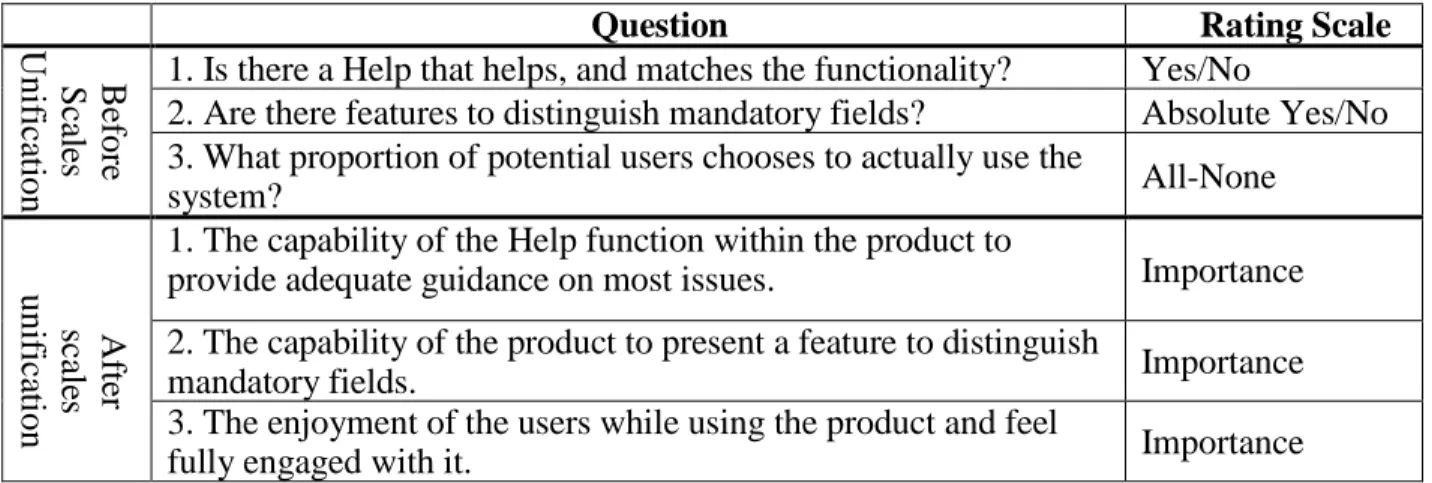
Table 13: Final Questions – sample ... 56
Table 14: Elements of a hypothetical Model matrix ... 57
Table 15: The Likert scales ... 60
Table 16: Number of comments per expert ... 62
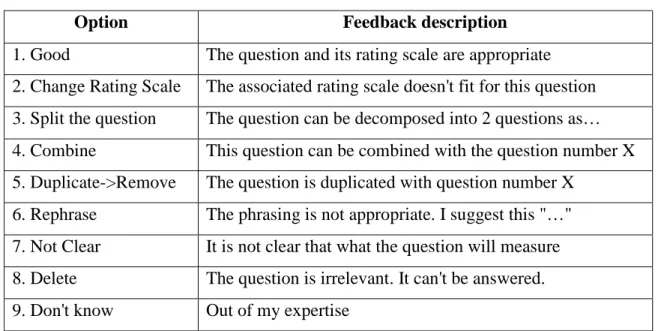
Table 17 : Feedback Types ... 63
Table 18: Number of identical feedbacks per Experts ... 64
Table 19: Element of a hypothetical Value Matrix ... 66
Table 20: Numbers and percentage of each rating scales: End user questionnaire – Quality in-use ... 67
Table 21: The p-value resulting from Fisher’s test ... 68
Table 26: The percentage of Xs received for each question in both questionnaires. The * denotes
the outliers ... 82
Table 27: The identified outlier questions based on the given thresholds ... 83
Table 28 : Justifications for outliers ... 84
Table 29: SharePoint Involvement Percentage (SPIP) ... 87
Table 30: Association of four sample questions with the departments. Y=Associated N=Not ... 88
Table 31: Applicability of the questions for the departments ... 89
Table 32: Involved Departments ... 90
Table 33: The Applicability-Data Matrix ... 91
Table 34: The questions with the number of 'X Yes' values categorized by 'Knowledge missing' and 'don't care' labels ... 93
Table 35: Tech-savvy departments at TEC ... 94
Table 36: SharePoint Involvement vs. Questions Involvement ... 95
Table 37 : Rating scales ... 113
Table 38: An example of weight determination ... 114
Table 39: Number of comments per expert ... 115
Table 40 : Feedback Types ... 115
Table 41: Number of identical feedbacks ... 116
Table 42: Rating scales ... 123
Table 43: Sample questions and rating scales ... 123
Table 48: The p-value resulting from Fisher’s test ... 126
Table 49: Search string for SLR ... 137
Table 50: Details of paper selection and elimination in the SLR ... 138
Table 51 : Descriptions: Paper’s context values ... 142
Table 52: The papers that report that participants’ knowledge AFFECTS the survey results ... 145
Table 53: The papers that report that there is NO effect of participants’ knowledge on survey results ... 146
Table 54 : The papers that do not care (NEUTRAL) about the effect of participants’ knowledge on survey results ... 147
Table 55 : The Likert scales ... 151
Table 56: The scales and their normalized values for Effectiveness in the 2nd questionnaire .... 153
Table 57: p-values obtained from Fisher's Test for three sample quality characteristics of both questionnaires ... 155
Table 58: the Quality Characteristics and the p-values ... 156
Table 59: Number of X's for each question in the both questionnaires – the reds are the outliers ... 157
Table 60: The percentage of X’s received for each question in both questionnaires. The * denotes the outliers ... 159
Table 61: The identified outlier questions based on the given thresholds ... 160
Table 62 : Justifications for outliers ... 162
Table 63: SharePoint Involvement Percentage (SPIP) ... 164
and 'don't care' labels ... 169 Table 69 :Tech-savvy departments at TEC ... 171 Table 70: SharePoint Involvement vs. Questions Involvement ... 172
Figure 4: The papers and the reported data analysis methods ... 14
Figure 5: Presentation Methods ... 15
Figure 6: The position of the thesis on the scope: the orange color pieces ... 19
Figure 7: Method to build quality deviation artifact; iterative and incermental ... 24
Figure 8: Research process to create the Quality Profile ... 52
Figure 9: Number of questions associated with quality in-use characteristics for end users ... 57
Figure 10: Questions and the number of associated quality characteristics ... 58
Figure 11: The average % of each received feedback type ... 63
Figure 12: Number of questions for each decision ... 65
Figure 13: Expected quality profile - End users - Quality in-use ... 69
Figure 14: Expected Quality profile – End users - Product quality ... 69
Figure 15: Pareto analysis for “Satisfaction” – End users ... 70
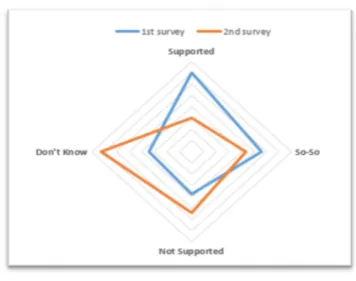
Figure 16: The scales in both surveys ... 72
Figure 17: Quality Profiles for 'Supported' scale ... 73
Figure 18: Quality Profiles for ‘So-So’ scale ... 74
Figure 19: Quality Profiles for ‘Not Supported’ scale ... 74
Figure 20: Quality Profiles for ‘Don’t know’ answers ... 75
Figure 21: Method to build quality deviation artifact ... 112
Figure 22: Software Quality Profile diagrams (QPD) for the planned quality and the observed quality (Actual) and quality deviation diagram between the two profile diagrams. ... 112
Figure 27: Number of questions associated with quality in-use characteristics for end users ... 125
Figure 28: Number of quality characterisitics related to each question – end user’s questionnaire ... 125
Figure 29: Expected quality profile - End users - Quality in-use ... 127
Figure 30: Expected Quality profile – End users - Product quality ... 127
Figure 31: Pareto analysis for “Satisfaction” – End users ... 127
Figure 32: Growth of questionnaire-based surveys in SE since 2007 ... 135
Figure 33: Research process to create the Quality Profile ... 149
Figure 34: The scales in both surveys ... 152
Figure 35: Quality Profiles for 'Supported' scale ... 153
Figure 36: Quality Profiles for ‘So-So’ scale ... 154
Figure 37: Quality Profiles for ‘Not Supported’ scale ... 154
... 121 Appendix C – ARTICLE 3: Does Participants’ knowledge affect the survey results? A systematic
literature review in software engineering domain ... 132 Appendix D – Questionnaire: Software Quality Profile – End users ... 183 Appendix E – Questionnaire: Software Quality Profile – Power users ... 188
may be unnecessarily machine dependent or hard to integrate with other organizational systems. A high-quality software is defined as what it provides value and avoids potential negative effects for the costumers. This requires the software to cover a wide spectrum of quality factors. However, because the quality factors are usually expressed in a qualitative form by the users, identifying and evaluating the software-specific quality factors form the users’ point of view is always challenging [1].
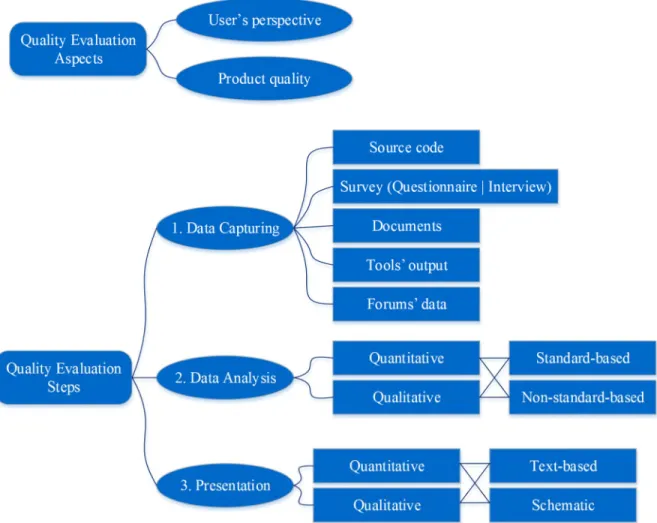
In this thesis, we have taken the subject of software quality evaluation into consideration. For this purpose, a scoping review has been performed to examine the range of research activities and to analyze the trends in the area of ‘software quality evaluation’ field, and to summarize and categorize the research findings. This goal is achieved by emphasizing on the aspects and the steps of the quality evaluation process that have been applied by the researchers.
One of the primitive steps of a quality evaluation process is to select the most appropriate quality model, norm, or standard. Experienced and academic expert have defined software quality standards decades ago. Standards bring positive advantages for enterprises when they need to acquire a software, or evaluate the quality of an existing software application. Although each quality model or quality standard represent its own specific quality characteristics and evaluation method, it is required for all of them to collect valid data correctly and efficiently. The literature emphasizes that collecting the right data items is necessary for quality evaluation process[2]. The quality evaluation process is easier when the source of the appropriate date and how to retrieve them are known.
In this thesis, we describe how we used the correct data to formulate our quality evaluation methodology and to perform our case studies. The next chapters explain how to create the Quality Plan Profile by eliciting the expected quality based on customer quality requirements, and to create the Product Quality Profile by quantifying the quality characteristics of the software products. In the last chapter, we briefly explain how the Quality Deviation Artifact can help the practitioners to evaluate the differences between expected quality and obtained quality.
1.1
Software quality and software quality evaluation
Since this thesis aims to address the software quality, it would be appropriate if we start with the definition of the term “quality”. However, the academia, as well as the industry, have not, and may never, come to a single definition of the term quality. For example, the ISO/IEC Systems and Software Engineering—Vocabulary (ISO/IEC/IEEE 24765:2010) [3] has the following set of definitions for “quality”:
1. “The degree to which a system, component, or process meets specified requirements.” 2. “Ability of a product, service, system, component, or process to meet customer or user
needs, expectations, or requirements.”
3. “The totality of characteristics of an entity that bear on its ability to satisfy stated and implied needs.”
4. “Conformity to user expectations, conformity to user requirements, customer satisfaction, reliability, and level of defects present.”
5. “The degree to which a set of inherent characteristics fulfills requirements.”
The definitions of software quality, held by the founders of modern quality assurance, Philip B. Crosby, and Joseph M. Juran reflect a different conception of software quality: “Quality means conformance to requirements” [4]. From the Crosby’s point of view, “quality consists of those product features which meet the needs of customers and thereby provide product satisfaction”. Juran [5] also believes that “quality consists of freedom from deficiencies” [5].
Almost in all definitions of quality, it is emphasized to achieve customer satisfaction and to view the fulfillment of customers’ real needs as the true goal of software quality. Although the term “quality” is widely used in various domains such as philosophy, economics, marketing, operations
• Manufacturing perspective: this perspective can be interpreted as conformance to the specifications. This perspective refers to the ability to produce a product to pre-defined specification over and over within accepted tolerances.
• User perspective: Quality can be seen as the robustness of the product or service for use. There are many stories told by software practitioners related to the software products that met their specifications but did not function adequately when deployed into operations. This reveals the importance of ‘context of use’. This perspective of quality not only considers the viewpoints of the individual users but also their context of use. For example, what a novice user might consider a “quality” user interface might drive a power user to distraction with pop-up help and warning messages that require responses.
• Product perspective: in the literature, the quality characteristics or the quality attributes, are also called the “ilities” of the software product, such as reliability, usability, availability, flexibility, maintainability, and portability. However, the quality factors do not all end in “ility.”, correctness, fault tolerance, integrity, efficiency, security, and safety are also examples of quality attributes. The more the software has high levels of these characteristics, the higher its quality is considered to be.
• Value-based perspective: How much is the customer willing to pay for Quality? This perspective reveals the notion of “good enough” software quality. Are people willing to pay as much for high-quality video game software as they are for high-quality software in biomedical devices or the high-quality software for airplane navigation systems?
Considering these varieties in the definition and the perspectives of software quality, evaluating the quality is also challenging. Evaluating the various aspects of software quality is considered to be an effective tool for the support of control activities and the initiation of process improvements during the development and the maintenance phases. These measurements apply to the functional
• Helpdesk and maintenance teams’ productivity • Software faults density
• Schedule deviations • User satisfaction
Since the quality factors are usually presented in a qualitative manner, evaluating the quality factors needs to apply appropriate data capturing methods and analyzing techniques. In the literature, several quality evaluation models have been introduced. In the next section, we briefly explain the main models and standards that address the quality evaluation notion.
1.2
Systematic scoping review
A scoping study is neither to address very specific research questions nor, consequently, to assess the quality of included studies. It tends to address broader topics where many different study designs might be applicable [7]. The Systematic Scoping Review (SSR) is defined as “a form of knowledge synthesis that addresses an exploratory research question aimed at mapping key concepts, types of evidence, and gaps in research related to a defined area or field by systematically searching, selecting and synthesizing existing knowledge” [8]. According to this definition, we set the objective for our scoping review to examine the range of research activities and analyzing the trends in the area of ‘software quality evaluation’ field, and to summarize and categorize the research findings.
The steps for performing a comprehensive scoping review has been addressed in the literature. In our scoping review, we follow the steps which are discussed in [7]. They are:
1. Identify the research goal 2. Identify relevant studies
software engineering field have addressed the quality evaluation subject. For this purpose, we emphasized on the aspects and the steps of the quality evaluation process that have been used by the researchers.
1.2.1.1 Quality Evaluation Aspects
The ISO/IEC 25010 standard looks at the product quality from two viewpoints: “quality in-use” model which is composed of five characteristics (Effectiveness, Efficiency, Satisfaction, Freedom from Risk, Context Coverage) that relate to the outcome of interaction when a product is used in a particular context of use, and “product quality” model which is composed of eight characteristics (Functional Suitability, Performance Efficiency, Compatibility, Usability, Reliability, Security, Maintainability, Portability) that relate to static and dynamic properties of the software product. Some of the characteristics are further decomposed into sub-characteristics [9]. According to what identified in ISO/IEC 25010, we set the goal of our SSR to categorize the studies based on the two standard aspects: quality in-use and product quality.
1.2.1.2 Quality Evaluation Steps
In ISO/IEC 25040 a comprehensive list for software quality evaluation is presented. We summarized the list in three main steps: 1) data capturing for quality evaluation, 2) analyzing the captured data, and 3) presenting the evaluation results. In this scoping review, we planned to review the reports and categorize them based on the above steps.
1.2.2 Identifying relevant studies
For retrieving the related studies for our systematic scoping review, we used five electronic databases: Compendex, Inspec, ACM Digital Library, IEEE Xplore, and Web of Science. A general search string was used to extract the most SSpossible related articles: “Software Engineering”
Database # of Papers
Compendex 205
Inspec 93
ACM Digital Library 30
IEEE Xplore 140
Web of Science 40
1.2.3 Select studies to include
Using our search string, we retrieved 508 records from the five databases. These databases cover a wide range of subjects in software engineering literature; we exclude the items that did not provide useful information for our review. In the next section, we explain our elimination procedure.
1.2.4 Extract and charting data from included studies
For selecting the most appropriate papers, it is needed to distinguish and eliminate the unrelated ones. The data in Figure 1 shows the steps and the results of the paper selection process. The steps are sequentially presented as below:
1. Removing the duplicates: 86 items were excluded.
2. Removing scientific papers: conference proceeding, announcements, posters, and non-peer reviewed scientific studies, books, and book chapters: 8 papers were excluded. 3. Removing non-English papers: 16 papers were excluded.
4. Removing before 2010 publications: we limited our review to the papers published since 2010 to 2017. 253 papers were excluded.
5. Removing based on Title: the papers based on non-related titles were removed. 50 papers were excluded.
6. Removing base on the abstract and the conclusion: reviewing the abstract and the conclusion of the remained papers resulted in excluding 30 papers.
9. Removing the short papers: to make our review more valid, we kept the papers with five pages and more. This step resulted in excluding 9 more papers.
After performing the above elimination steps, 13 articles remained. The steps are illustrated in Figure 1.
Figure 1: Retrieving the articles from electronic databases
The remained papers are listed in Table 2. The papers are identified as P1 to P13 as well as the
context [12]
P4 Analyzing the reliability of open source software projects [13]
P5 Are Comprehensive Quality Models Necessary for Evaluating Software Quality? [14]
P6 Behavioral economics in software quality engineering [15]
P7 Better Code for Better Apps: A Study on Source Code Quality and Market Success of
Android Applications [16]
P8 Empirical validation of website quality using statistical and machine learning methods
[17]
P9 Evaluation of academic website using ISO/IEC 9126 [18]
P10 Expected software quality profile: A methodology and a case study [19]
P11 Hybrid functional link artificial neural network approach for predicting maintainability
of object-oriented software [20]
P12 Quality evaluation of conceptual level object-oriented multidimensional data model [21]
P13 XML Schema metrics for quality evaluation [22]
1.2.5 Collate, summarize and report results
In this section, we explain the findings after reviewing the 13 papers. As it was discussed earlier, we retrieve the data in two categories: aspects and steps. Figure 2 illustrates a summary of what we extract from scoping review process. It shows the current state of the quality evaluation research in software engineering field in terms of aspects and steps. in the following sections we explain the results in more details.
Figure 2: Current state of the quality evaluation research in software engineering field
1.2.5.1 Quality evaluation aspects
Based on the quality model presented in ISO/IEC 25010, the software product quality can be viewed from the ‘quality in-use’ and from the ‘product quality’ aspects. The data in Table 3 shows the aspect of the papers that we found during our review. The coding procedure is performed based on the definitions in ISO/IEC 25010. If a paper addresses a quality characteristic or sub-characteristic related to Quality in-use, we coded as Quality in-use and the same way for Product Quality.
P5 X P6 X P7 X X P8 X P9 X P10 X X P11 X P12 X P13 X X
The data in Table 3 shows that there is a gap in addressing the quality in-use aspect in the literature for quality evaluation. All the retrieved papers are addressing the product quality aspect, while few of them address also the quality in-use.
1.2.5.2 Quality evaluation steps
We divided the steps of the quality evaluation in three parts: Data Capturing, Data Analysis, and Reporting. Repeatedly, we reviewed the papers and performed the coding procedure. In the following section, we explain the results that we obtain in each step.
1.2.5.2.1 Data capturing
In this step, we aimed to find out how the researchers capture data for the quality evaluation process. We look for the methods that the researchers employed to retrieve the data for quality measure elements. We found that these data are being retrieved by reviewing the:
1. Source code: Analyzing the source code of the software application under review is one the methods that is used by a number of the researchers. The reports that reviews source code to capture data are: P1, P2, P4, P5, P7, P8, P11, P12, and P13.
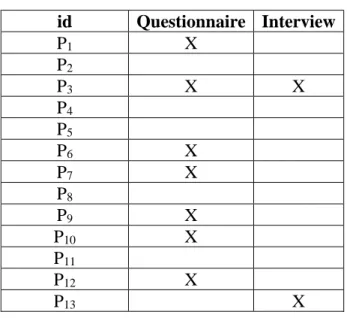
2. Surveys: In many cases, the authors reported that they asked the stakeholders to participate in a survey, or in an interview. The data in Table 4 shows which paper is using questionnaire or interview for data capturing. It shows that most researchers used the Questionnaire as a reliable tool for collecting data.
P6 X P7 X P8 P9 X P10 X P11 P12 X P13 X
3. Documents: Reviewing the documents is one of the methods that the researchers use to capture data. Our SSR shows that two papers used the documents for quality evaluation analysis. In the P2 the results of a readability test are presented. In P4 the authors presented
a quality evaluation model that analyses the documentations in addition to other aspects. 4. Tools or repositories: in some reports, we found out that the researchers are using the
output of tools or the data stored in the repositories to evaluate a software product. For example, three tools are taken into consideration for collecting data in P4 in a case study.
The tools are Sourceforge, Freshmeat, and Openhub. In P3 an experiment of software
quality evaluation, for storage tools in the audio-video preservation environment is reported.
5. Forums: using the data of the forums is another method for quality evaluation. For example, in P4 the data of the official forums are used as the resource for quality evaluation.
P6 X P7 X X P8 X P9 X P10 X P11 X P12 X X P13 X X
In Figure 3 the results of the data capturing step are presented. It shows that the majority of the papers have used a ‘survey’ for data capturing. Reviewing the ‘source code’ is also popular among the researchers. Each rectangle represents a data capturing method. The data in the figure are the papers IDs. For example, for the paper P4 the researchers have used the source
Figure 3: Data Capturing methods
1.2.5.2.2 Data analysis
The researchers use various approaches for analyzing the captured data. Because of the diversity of the methods, we categorized them in two high level approaches:
1. Quantitative data analysis: If a study uses mathematical or statistical modeling to analyze the captured data, we labeled that as a quantitative analysis study. In most cases in quantitative studies, absolute scales are being used for analyzing the data.
2. Qualitative data analysis. If a study uses unquantifiable information using ordinal scales such as Likert scales, we consider it as a qualitative study.
As illustrated in Figure 2, in both quantitative and qualitative methods, it is possible to use standard-based and nonstandard-standard-based methods. If a study employs a quality evaluation model according to an ISO or IEEE standard, or according to a local norm, we consider it as a standard-based study. Otherwise, it is considered as a nonstandard-based one. Table 6 shows the retrieved data analysis methods and the papers of each method. It shows that there are 12 papers that analyze the data by using a standard and quantitative approach.
P2 X X P3 X X X P4 X X P5 X X P6 X X P7 X X P8 X X P9 X X P10 X X X P11 X X P12 X X P13 X X X
In Figure 4 the results of the data analysis step are presented. It shows that the majority of the papers have used the quantitative and standard-based methods. The data in Figure 4 are the papers IDs. Each rectangle represents method while the green cloud shape includes the papers shared between quantitative, qualitative, and standard-based methods.
details, we identify the studies presenting the results in a text-based manner, such as a table of metrics and values, or in a schematic and illustrative manners such as diagrams, charts, or figures. Figure 5 shows the presentation methods and the number of papers of each method. It shows that 11 papers have used a text based or schematic method quantitatively.
Figure 5: Presentation Methods
1.2.5.2.4 Goal and Outcomes
We compiled the research objective and the outcome of the retrieved papers to check how, and in what extent, the researchers have employed the quality models and evaluation tools. The data in Table 7 presents the result of this compilation.
P2 This study verifies the applicability of the automatic quality evaluation. The paper
evaluates the results of the proposed quality evaluation, elaborates on the extent and scope of the available means, and discusses the applicability of the used quality evaluation system. The authors conclude that an automated quality evaluation system can identify weak points of web-based semantic interoperability specifications by measuring and scoring violations against the policies.
P3 In this paper, a software quality model customizable for the audio-visual context has been
performed. The authors highlighted the most important points: finding an agreement among stakeholder, groups for specializing the quality model, defining a common understanding of the characteristics and sub-characteristics, better expressing the requirements to avoid generic and non-quantifiable terms i.e. “some”, “optimal” “short”, etc., specializing the measurement plans starting from the suggestions of the international standards so to reduce effort due too much generic and abstract quality evaluations.
P4 This paper evolves a quality model for Free/Open Source Software projects, for including
reliability aspects. The authors concluded that it is important not only to consider the quality of the software, but also other distinctive features of the open source projects. P5 This paper investigates if it is possible to build a focused quality model with similar
evaluation results as a comprehensive quality model but with far less measures needed to be collected and reduced effort. The authors concluded that they can build focused quality models to get an impression of a system's quality similar to comprehensive models.
P6 This article proposes a simplified method to manipulate the observed. The proposed
experiment has been conducted among professional software evaluators. The results show the significant negative influence of negative experience of users on final opinion about software quality regardless of its actual level.
P7 The authors investigated the contribution of the code quality in the market success of
Android apps in the Google Play store. They determined whether there is a relationship between product quality and market success. The result show that the quality of the source code has a marginal impact into the indices that describe the market success.
P8 The paper, computes 22 metrics using a Matlab tool. Website quality prediction is
developed using statistical and some machine learning methods. The results show that hat quality models have a significant relevance with design metrics and the machine learning methods have a comparable performance with statistical methods.
P9 In this research, academic website quality evaluation is conducted using ISO 9126 in
Telkom University website. This evaluation is conducted to ascertain whether there is any characteristics of the website that need to be improved. Based on the evaluation results the authors obtained three characteristics that need to be improved, they are reliability, usability and functionality.
data model. The paper also describes the designer level and user level viewpoints of quality evaluation through the criteria like complexity, completeness, expressiveness and analyzability. Finally, the work focuses on the empirical validation of the set of metrics and measurements. The empirical validation process shows the usefulness of the proposed metrics for the assessment of operability factor of conceptual level multidimensional data model.
P13 This paper proposes a quality measuring approach, based on existing software engineering
metrics, additionally defining the quality aspects of XML Schemas. The results illustrate the influence of XML Schema’s characteristics on its quality and evaluate the applicability of metrics in the measurement process, a useful tool for software developers while building or adopting XML Schemas.
The data presented in Table 7, shows that the researchers have used the quality evaluation methods and tools for various objectives, and they obtained various outcomes.
1.2.6
ConclusionIn this scoping review, we employed a systematic approach understanding better how the researchers in the software engineering domain are capturing and analyzing data and how they report the results for software quality evaluation purpose. We started to get a set of software quality evaluation papers together, then through an elimination procedure, we came up with 13 empirical reports. The categorizations presented in ISO/IEC 25000 helped us to the make group and analyze our retrieved data.
Our findings showed that in all the selected papers the researchers performed their evaluation process from ‘product quality’ point of view. The results also showed that the researchers are mostly interested in capturing data by using the source code analysis and conducting the surveys. After capturing data, the researchers are using quantitative and standard-based methods for analyzing the captured data. For presenting the results, the researchers are mostly using quantitative and text-based presentations.
Our results also showed the gaps in the domain. The gaps are the data resources and the methods that rarely used by the researchers in the field. Addressing the quality in-use, using Forums’ data,
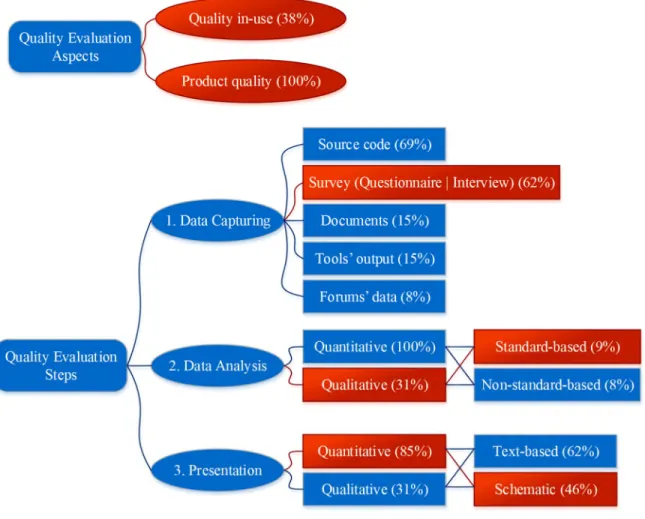
In this thesis, we addressed the quality evaluation from both aspects: quality in-use and product quality. For data capturing we conducted the surveys and the questionnaire as the instrument. We also had a quantitative and standard based approach for our data analysis. At the end, we presented the results using a quantitative approach. The orange shapes in Figure 6 schematically represent the pieces of the scope that have been touched within the current thesis. Since previously we have presented the quality evaluation methods, tools, research objectives, and outcomes in the literature, we have selected a combination of the elements that guarantees the novelty and originality of our thesis. Our goal in this stage was to obtain the results different than what have been obtained by previous researchers.
In Figure 6, the values in the parentheses represent the percentage that each item takes in comparison with other items in the same category. For example, 62% of the papers have used the ‘survey’. During the coding and labeling process, some papers were associated with multiple data capturing, analysis, or presentation methods. For example, the paper P1 claims that the researchers have used both ‘source code’ and ‘survey’ for data capturing. Because of these overlaps, the percentages in Figure 6 do not add up to 100 in each category.
Figure 6: The position of the thesis on the scope: the orange color pieces
1.3
Models, norms, and standards in software quality domain
Many publications in the literature demonstrate the various aspects of software quality assessment. Since 1970’s, several software quality models have been proposed such as McCall, Boehm, Dromey, FURPS, ISO/IEC 9126 and ISO/IEC 25000 (SQuaRE).
For easing the professionals to move between projects and products within the organization and reduce the effort required for training, software standards have been presented. A unified method for performing the software project tasks is only possible when all the stakeholders know and understand the standard way of developing and maintaining the software products.
In an industrial context, the standards increase the professionalism by providing access to good practices as defined by the experienced practitioners in the software industry. For example, many
9001 is the standard that organizations can be certified against [2]. The Software and Systems Engineering Standards Committee of the IEEE Computer Society develops and maintains a set of software engineering guidelines for organizations helping them to define their software processes. These standards can provide guidance that minimizes time and effort. The ISO 9001 standard and the SEI’s CMMI for Development provide road maps for what should occur in a good software engineering environment while the IEEE Software Engineering Standards provide more detailed “how-to” information and guidance.
A well-managed organization supported by technology is emphasized by SEI. The CMMI is a reference model that covers the evolution of software engineering from an ad hoc context to a disciplined high-performance organization. According to the SEI [23], principal areas of work include ‘management practices’ which focuses on the ability of organizations to predict and control quality, schedule, cost, cycle time, and productivity when acquiring, building, or enhancing software systems. Technical practices focus on the ability of software engineers to analyze, predict, and control selected properties of software systems. The staged representation SEI CMMI for Development is a five-level model that includes a four-level structure of best practices designed to be a roadmap to improving software quality and project performance [2].
The ISO/IEC 25000 Software Engineering—Software Product Quality Requirements and Evaluation (SQuaRE) standard series (transition from the previous ISO/IEC 9126 and 14598 series of standards) provides a reference model and definitions for external and internal quality attributes and quality-in-use attributes. This standards series also provides guidance for specifying requirements, planning, and managing, measuring, and evaluating quality attributes. It was shown that the international standard ISO/IEC 25000 [24] is capable of assessing the quality of a broad range of software applications; from traditional to new application classes such as smart mobile devices [25]. The quality model in ISO/IEC 25010 is designed to identify relevant quality characteristics for software products, which can be used to establish requirements, criteria for
elements.
1.4
Data collection for quality evaluation
The objective of the quality evaluation is to determine how well the final product meets the original requirements. Data analysis is pointless without good data. If the right data items are not collected, then the objectives of the measurement program cannot be accomplished [2].
Who should collect the data? Deciding who should collect the data is an important part of ensuring that good data is collected. In most cases, the best choice is the “owner” of the data. The data owner is the person with direct access to the source of the data and in many cases, is actually responsible for generating the data.
How should the data be collected? The best method is ‘automation’ [2]. The automatic data collecting methods use standardized forms at minimum expense since and maximum validity. In some cases, the data should be collected by asking questions from the stakeholders. In these cases also on-line questionnaire – which is a kind of automation – can be applied [28]. In the next sections, we explain more about the data collection methods and especially on-line questionnaires. Questionnaires and interviews are the most popular instrument for data collection. [29]. By definition, ‘questionnaire’ is a set of written questions formed for addressing a specific research question. There are many factors influencing the results of the questionnaires, such as questions wording, questionnaire formatting, the respondents, the generalizability of the results, etc. Pfleeger and Kitchenham presented a six-part series on principles of survey research [30]–[35]. They explained – in detail – how to design, construct, and conduct a survey in addition to the threats and pitfalls in survey administration and data analysis.
Questionnaire-based surveys are becoming popular in software engineering community. According to our simple search in Inspec digital library, in 2007 only 37% of the studies in software engineering have addressed a questionnaire-based survey, while this increased to 63% in 2016, i.e.
1.5
Quality Profile: Expected vs. Observed quality
Software quality is defined as the comprehensive set of characteristics that enable the product to satisfy the stakeholders’ needs. Accordingly, “software quality is fundamental to software success” [36]. Furthermore, evaluation of software quality is essential, since inadequate quality in a software product may lead to human or financial losses [37] while high-quality are fundamental to providing value, and avoiding potential negative effects for the stakeholders.
Taking a broader perspective, high-quality software is recognized as a product that has been specified correctly, and that meets its expected specifications. Software products meeting the stakeholder’s requirements are more likely to be accepted and utilized by the stakeholders [2]. Comprehensive specification and evaluation of the quality of software is an essential factor in ensuring value to stakeholders. This added value can be achieved by defining the desired quality characteristics associated with the stakeholders' goals and objectives. These features help to represent the quality of the software products from the perspective of that particular characteristic. The software quality is evaluated by a collection of relevant quality characteristics which are measured by applying a measurement method. A measurement method is a logical classification of operations applied to quantify attributes with respect to a specified scale. During this process, software quality measures turn into quantifications of the quality characteristics. Not every quality characteristics are of equal importance to a software product. A method will be used to identify the most important quality characteristics by means of a risk assessment, to establish achievement criteria, and to finally measure the quality characteristics using the ISO/IEC 25010 standard. The quality characteristics can be addressed at the beginning of a development process to discover the expected software quality, and at the end of the development process, that leads to software product quality. This can be achieved by interviewing stakeholders inside the project (such as the developers, product manager, the project manager, configuration manager, etc.) and outside the project (the various types of users are important) [38].
deviation between the planned and the observed software quality. Although the QDA was one of our objectives and we theorized the creation of that, unfortunately we could not have a chance to practically create and test it in form of a case study. It remains as a future work for other researcher to follow and improve our methodology in order to create and analyze the QDA.
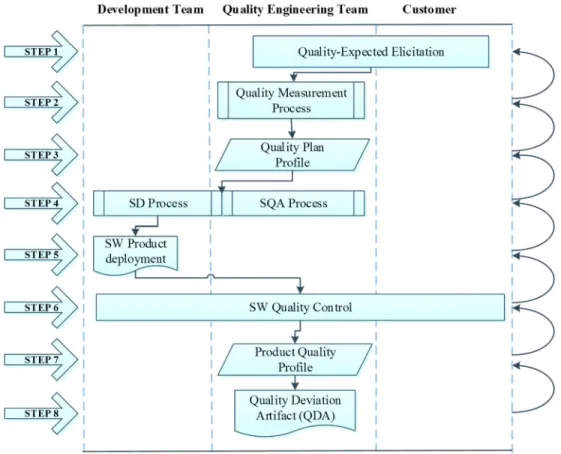
The iterative and incremental stepwise process illustrated in Figure 7 represents the steps and the roles in our quality engineering process. The process starts with eliciting the expected customer’s quality by the collaboration of quality engineering team and the customer. The next step is to quantify the elicited quality factors that is performed by applying the ISO/IEC 25000 approach. The ISO/IEC 25000 relates the preferences and requirements of stakeholders regarding the software product to the standard software quality characteristics. The stakeholders’ needs and requirements are investigated and identified using a structured questionnaire. The questionnaire consists of a number of questions regarding product and process quality characteristics. These characteristics are intended to be expressed in the stakeholders’ language. Instead of asking whether “usability” is important, one asks questions about the qualifications of the users that impact the usability requirements, for example, the quantity of users, their involvement with the product (or a similar one), and their educational level. Similar questions are asked about the other quality characteristics. The answers given are used to identify the most relevant quality characteristics and the related values. The detailed steps of the quality measurement process are explained in section III.
The aim of step 3 is to build the quality plan profile. The quality engineering team provides the quality plan profile that is a diagram showing the quantified values of elicited quality requirements.
Figure 7: Method to build quality deviation artifact; iterative and incermental
In step 4 in Figure 7 the actual development process takes place. The software developers form the team; the development method is selected, and project management considerations are taken into account. Concurrently the software quality assurance activities are performed by the quality engineering team.
The quality assurance includes the preventive activities that help the development process to come up with a product as flawless as possible. The result of development and quality assurance process is the executable software product that can be deployed on the customer’s site, which is shown as step 5 in Figure 7.
After the software product is delivered to the customer, the next step is to measure the product quality by performing the quality control actions, which is step 8 in Figure 7. The goal is to evaluate the expected quality elements that had been highlighted during the quality planning phases; i.e. step 1 through step 3 in Figure 7.
limited our project borders to empirical research since we conducted our case studies in industrial context using the real software users. “There are three major different types of strategies in empirical contexts: survey, case study, and experiment. A survey is a systemic method for collecting data and information from or about people to describe, compare or explain their knowledge, attitudes, and behavior. The primary means of gathering qualitative or quantitative data are interviews or questionnaires. These are done through taking a sample which is representative of the population to be studied. The results from the survey are then analyzed to conclusions. They are then generalized to the population from which the sample was taken [39]”
1.7
Objective of the Research
In this thesis, we aim to address the quality of the software product from the users’ point of view. The goal is to create the expected and observed quality profile of the software product. This can help to demonstrate the differences between what qualities were expected from the users’ side, and what qualities are observed in the software product. We employed an empirical strategy using a survey-based method to create the profile of expected and observed quality characteristics. After developing a standard-based quality model, we created four types of questionnaires for end users and power users, which aim to elicit the quality factors. As a case study, we conducted three surveys in two phases in the industry. In phase I, we asked the potential users of a software product which was under development, to answer the ‘expected-quality’ questionnaire. In phase II, the users of an existing software product were asked to answer the ‘observed-quality’ questionnaire.
1.8
Structure of the thesis
The following chapter presents the literature review that systematically shows how previous publications explain two subjects: the difficulties in the conducting the surveys in software engineering field, and the effects of the participants’ knowledge on the results of the surveys. Chapter 3 presents the methodological approaches used in our research. Chapter 4 presents a
challenges in evaluating the software quality using the surveys, since using the surveys is the most popular instrument of data capturing for quality evaluation projects. Analyzing the results of the first literature review led us to perform the second review focused on one of the found challenges: “participants’ knowledge”.
2.1
The difficulties in surveys for software quality evaluation
2.1.1 Goal
To know how the researchers in software engineering domain conduct the surveys and to know the difficulties that they faced with, and how they cope with the issues.
2.1.2 Data extraction: The targeted context values
Our literature review aims to extract the following context values from the selected papers: • Has any statistical test been applied to the hypothesis or to the survey results? • What is the research question (RQ) or the message of the paper?
• What validity analysis has been done in the report?
• Has the paper used the Likert scales for quality evaluation? • What is the number of the people who participated in the survey? • How many questions are there in the questionnaire?
• Was the questionnaire pre-tested before being published? • Were the participants cherry-picked for the survey? How?
• Was the "Knowledge of the participants" addressed in the survey process?
And other related data that may help us during our analysis. For each paper, we determined the data lacks. The lacks are the context values that have not reported in the paper.
2.1.3 Strategy
A literature review (LR) is performed to retrieve the related reports. We performed the LR in two styles: a systematic literature review and a wild literature review. In the systematic style, we define
2.1.4 Search string
We defined a search string base on the goal of the LR. Our search string is formulated as: ("Software engineering" WN KY)
AND
(("survey" WN TI) OR ("questionnaire") WN TI)
AND
(("problem" WN KY) OR ("difficulty" WN KY) OR ("difficulties" WN KY) OR ("issue" WN KY) OR ("issues" WN KY))
AND ({ca} OR {ja} WN DT) AND (2007 OR 2008 OR 2009 OR 2010 OR 2011 OR 2012 OR 2013 OR 2014 OR 2015 OR 2016 OR 2017 WN YR) AND ({english} WN LA)
As it can be seen we limited our search to English conference or journal papers that were published since the year of 2007.
2.1.5 Libraries
The search string was applied to the most famous digital libraries. The libraries are: • Compendex (14 million references),
• Inspec (16 million references),
• ACM (the most comprehensive collection of full-text articles),
• IEEE-Xplore (nearly 2 million full-text documents and 12K+ new papers every month), • Web of Science (90 million records).
2.1.6 The retrieved papers
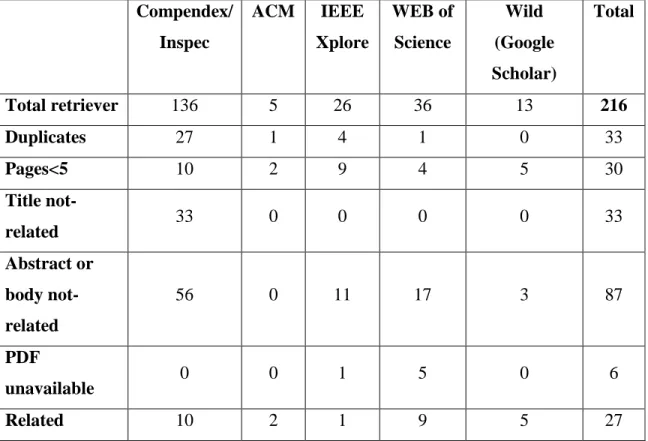
Applying the search string to the libraries resulted in retrieving 216 records. In the first step, we excluded the papers with the following conditions:
• duplicate papers • less than 5 pages
Table 8: Number of retrieved papers for LR Compendex/ Inspec ACM IEEE Xplore WEB of Science Wild (Google Scholar) Total Total retriever 136 5 26 36 13 216 Duplicates 27 1 4 1 0 33 Pages<5 10 2 9 4 5 30 Title not-related 33 0 0 0 0 33 Abstract or body not-related 56 0 11 17 3 87 PDF unavailable 0 0 1 5 0 6 Related 10 2 1 9 5 27
L1
A state-of-the-practice survey of risk management in development with off-the-shelf software components [40]
Li_2008
This paper presents the impacts of Off-the-shelf components on software quality. The questionnaire in this project, that includes 20 questions, uses the five-point Likert scales to collect background information about the participant company and the respondents. Questions are especially on risk management and process improvement. The researchers used stratified random sampling to select companies and convenience sampling to select projects inside a company. 133 projects from 3 countries were selected for the survey. The researchers contacted 1,087 companies in three countries. 39% were software companies and had experience with OTS component-based development. 55% companies declared a willingness to participate in the study and the remaining claimed that they were too busy to participate. They sent the questionnaire to these 234 companies. 54% of the companies (133) responded. The questionnaire was pre-tested using a paper version by 10 internal experts and eight industrial respondents before being published. The research process and the results are validated well. The hierarchical multiple regressions have been done on the results. Lack: It seems that the knowledge of the participants is not addressed in this survey. L2
A survey into the rigor of UML use and its perceived
impact on quality and productivity [41] Nugroho_2008
In this paper, the styles and rigor in UML modeling (i.e., completeness, the level of detail, and correspondence with implementation) and how software engineers perceive these, as well as the perceived impacts of using UML on productivity in various phases of software development are discussed. The 20-question questionnaire is aimed to collect data and investigate the opinions from professional software engineers about different styles used in modeling and their perceived impacts on quality and productivity in software development. 80 researchers participated in this survey. The research focused on a specific group of participants because the authors claim that “the main target of the survey was the software developer because they believe that they are the ones who are responsible for implementing UML models”. The research process and the results are internally and externally validated. Lack: It seems that the knowledge of the participants is not addressed in this survey.
L3
A Survey of Metrics Use in Finnish Software
“This paper uses the results of an empirical case study to examine how the measurement was implemented in practice from the perspective of the software process”. A questionnaire with 13 questions was submitted to 40 Finnish software companies. The questionnaire aimed to collect separate metrics of customer feedback information. Lack: statistical tests, validity checks, pilot conduction, and neglecting on how to select the participants and their related knowledge are the items that are lacking in this paper.
L4
A survey of software development with open source
components in Chinese software industry [43] Chen_2007
This paper addressed the issues in reusing open-source components. The questionnaire aims to collect information “on three main issues in reusing OSS components for software development in Chinese software industry, namely component selection, licensing terms, and system maintenance.” The survey conducted on 47 projects using a 35-questions questionnaire. The researchers conducted a pre-study to verify and refine the preliminary questionnaire (Individual interview + A group discussion). The survey is well validated in terms of Construct, Internal, and External validity. Lack: statistical tests, and neglecting on how to select the participants and their related knowledge are the items that are lacking in this paper.
L5
A survey on the business relationship between Chinese outsourcing software suppliers and their outsourcers [44]
Li_2007
This paper reviews the relationship between the Chinese suppliers and outsourcers. The questionnaire aims to collect data and “investigate how Chinese suppliers have built and maintained partnership or contract relationship with their outsourcers, and the effect of these relationships on the success of outsourcing”. The questionnaire includes 66 questions that were distributed to 53 projects. The results are statistically tested by ANOVA and the validity is checked in terms of Construct, Internal, and External validity. Lack: neglecting on how to select the participants and their related knowledge are the items that are lacking in this paper.
L6
Adoption of OSS development practices by the
software industry: A survey [45] Petrinja_2012
This paper aims to “collect data related to practices and elements in the development process of companies that influence the trust in the quality of the product by potential adopters”. The questionnaire consists of 53 questions that distributed to 56 projects managers. Lack: statistical tests, validity checks, pilot conduction, and neglecting on how to select the participants and their related knowledge are the items that are lacking in this paper.
L7
Applying mLearning in software engineering
education: a survey of mobile usage [46] Macphail_2012
This paper aims to show how mLearning is suitable for teaching. It uses a questionnaire that distributed to 321 participants. The results were tested by Mann-Whitney U test. Lack: validity checks, pilot conduction, and neglecting on how to select the participants and their related knowledge are the items that are lacking in this paper.
L8
Effort estimation in Agile software development: A
survey on the state of the practice [47] Usman_2015
This paper aims to “report on the state of the practice on effort estimation in agile software development”. The questionnaire aims to collect data on effort estimation techniques from agile teams. The results were validated in terms of Construct, Internal, External, and Conclusion validity. 63 responses were received from the participants. The questionnaire was piloted. It was “iteratively designed and updated by the authors”. Lack: statistical tests, and neglecting on how to select the participants and their related knowledge are the items that are lacking in this paper.
L9
Identifying research gaps in requirements engineering education: An analysis of a conceptual model and survey results [48]
Memon_2012
In this paper, a questionnaire was created to investigate lecturers’ perceptions of the Requirement Engineering Education problems presented in integrated viewpoint. The survey was conducted on 18 participants. “The data collection was aimed at lecturers who have taught RE course. The respondents had between 5-20 years teaching experience.” This study seems to take the knowledge of the participants into consideration. Lack: statistical tests, validity checks, pilot conduction are the items that are lacking in this paper.
L10
Towards understanding software change request
This paper reviews the impact of Change Request assignment on software development. Using 38 questions, 36 participants participated in the survey. A pilot survey was done since the researchers claim that “We constructed an initial version of the questionnaire and the resulting instrument was validated in three rounds: two rounds for critiques, and one round for a pilot survey”. Participants cherry picked and their knowledge has been taken into consideration because it is claimed that “As a condition to participate in the survey, the software developers should be involved with Change Request assignment in their daily activities”. Lack: statistical tests and validity checks are the items that are lacking in this paper.
L11
Requirements reuse and requirement patterns: a state
of the practice survey [50] Palomares_2016
This paper is “an exploratory study of the practices in requirements reuse that are currently being used in organizations and to study in more depth the possible benefits and drawbacks of the use of patterns as a requirement reuse technique”. 33 questions are created to collect data about requirements reuse and requirement patterns. 71 participants participated in the survey. Chi-Square exact test is used to validate the results. In addition, internal, external, construct validations have been performed. Using sampling validity, the participants were picked for the survey. Lack: the related knowledge of the participants is the item that is lacking in this paper.
L12
A survey on quality attributes in service-based
systems [51] Ameller_2016
This paper aims to review the quality attributes in service-based systems. The questionnaire collects the data about the significance of quality attributes when designing service-based systems and how quality attributes are addressed through design decisions. The Fisher Test is done to validate the results. The research process and results are also validated in terms of external, randomization, and exclusion validity. The questionnaire uses the Likert scales and has 30 questions. 56 responses have received for this survey. Selecting the participants have been done with care; “we included researchers with practical design experience”. The research was pre-tested since it is claimed that “we piloted the data collection instrument in multiple iterations until potential respondents understood our questions and intentions”. The knowledge of the participants is taken into consideration partially since it is claimed: “Our population was the global community of software engineering practitioners, as well as researchers that have practical experience with, and knowledge about, designing Service-based systems”. Lack: it seems that there no lack. L13
Questionnaire-based risk assessment scheme for