GRAESE
: Groupe de Recherches Asie de l’Est et du Sud EstETUDES ET DOCUMENTS DU
GRAESE
AGRICULTURAL LAND CONVERSION FOR
INDUSTRIALIZATION:
Livelihood along rural-urban continuum and mechanism of social differentiation in Hung Yen province, Vietnam
Nguyen Thi Dien (HUA, Vietnam) Philippe Lebailly (GxABT-ULg)
Vu Dinh Ton (HUA, Vietnam)
Centre d’Etudes du Développement, UCL, Louvain la Neuve
Unité d'Economie et Développement rural, Gembloux Agro-Bio Tech, ULG Centre for Interdisciplinary Research on Rural Development (CIRRD), Hanoi University of Agriculture (HUA)
CONTENT
ABSTRACT ... 3
INTRODUCTION ... 5
1 RESEARCH SITES AND METHODOLOGY ... 9
2 IMPACTS OF AGRICULTURAL LAND CONVERSION ... 11
2.1 Decline of agricultural land ... 11
2.2 Land value increase ... 13
2.3 Decline of farming jobs ... 16
2.4 Blossoming of informal employment ... 17
3 PEASANT LIVELIHOOD STRATEGIES ALONG RURAL-URBAN CONTINUUM ... 21
4 MECHANISM OF SOCIAL DIFFERENTIATION ... 25
4.1 Land alteration ... 25
4.1.1 Land concentration ... 25
4.1.2 Unauthorized conversion of agricultural land to non-agricultural land ... 28
4.2 Capital accumulation from lucrative non-farm activities ... 31
4.2.1 International migration ... 32
4.2.2 Rural manufacturing: food processing and waste recycling ... 33
4.3 Alternatives for accumulation ... 35
5 CONCLUSION ... 38
ABSTRACT
The high rate of agricultural land conversion for industrialization causes the complex agrarian transformation in current Vietnamese land regime. This research investigates the mechanisms of social differentiation by analyzing the ways in which different rural households construct their livelihood strategies along the rural-urban continuum to response to agricultural land conversion. The study shows that the spatial and sectoral interfaces generate the peculiar mechanisms of social differentiation which include: i. the land alternations caused by the boosting land market as the motivation for land concentration and informal land usage changes; ii. the possibilities of capital accumulation from lucrative economic activities. This paper discusses the growing diversity of surviving and accumulating means in the wider range of rural–urban and agriculture-industry linkages.
Key words: agricultural land conversion, industrialization, rural-urban linkages, social differentiation, livelihood, Vietnam
INTRODUCTION
In Vietnam, the fast-pace industrialization generates massive agricultural land conversion for industrial infrastructure. Statistical data issued by the Ministry of Natural Resources and Environment shows that 366,000 ha of agricultural land were lost between 2001 and 2005, which accounts for approximately 4% of all cultivated land. Annually, more than 73,000 ha of agricultural land are being converted to non-farming land, thereby directly affecting 2.5 million people (Lê Hân 2007; Vũ Hữu Sự 2008).
The Vietnam’s industrialization efforts and its correlated decline in agricultural land have complex consequences on peasant households. On the one hand, industrialization can be seen as an efficient strategy for income growth, infrastructure upgrading and poverty reduction. By creating employment prospects for the rural labour force and by optimizing resource use (Lê Du Phong 2007), land conversion for industrialization is providing a crucial impulse for economic growth. Land expropriation from peasant households also generates a labour supply for non-farm activities which was seen as the key for rural households to exit poverty (World Bank 2005; Ravallion and Walle 2008). On the other hand, land conversion remains tremendously challenging both for the State and for affected peasant households. The increase in landless and jobless peasantry (Nguyen Van Suu 2009), national and household food insecurity, population mobilization(Mai Hương 2007), environmental pollution(O'Rourke 2004), income disparity and social conflicts are among the most prominent issues arising from this process. Moreover, this happens in a land tenure system where land is State-owned and periodically allocated to farmers. The 1993 Land Law and its 2003 amendments allow five levels of rights over agricultural land to be granted to holders. Expiring in 2013, and with no certainty on what will occur afterwards, the current land law is an incentive for farmers to get ownership of the land. In many villages, a new trend is emerging among farmers who are sparing the effort to secure their possession by claiming long-term de facto ownership through informal changes in land use purpose. In this regard, land conversion is further compounding the issue by putting added pressure on the limited agricultural land available.
In the process of converting land to industrialization and the socioeconomic impacts thereof on peasant households, little attention is
usually paid to differentiation between peasant households. Does agricultural land conversion affect all peasant households in the same way? Why are some groups of households unable to profit from the opportunities while others are reaping huge benefits from land conversion? How does the household’s socioeconomic status affect its occupational choices, migration patterns and overall livelihood strategies? In the particular conditions of industrialization, landless households tend to establish and manage their livelihoods along rural-urban continuum and agriculture-industry interface. The livelihood strategies adopted by households testify to their capacity to face multiple challenges and risks in their daily lives and to take advantage of the opportunities provided by industrialization Although diversification is the usual strategy (Chambers and Conway 1991; Bebbington 1999; Ellis 2000; Ellis and Biggs 2001) greater attention must be paid to how the different groups of peasant households construct their own coping strategies. Further, by what mechanism is industrialization generating social differentiation in the Vietnamese countryside?
Although industrialization produces numerous non-farm income opportunities, these are not equally shared among households. Generating cash by providing accommodation, food and other services to workers in industrial zones and clusters is usually limited to a few households. The non-farm jobs types pursued by rich and poor households are also different. While well-to-do households can access more lucrative non-farm activities, poor ones have to choose low-return and unstable activities because of their limited capital. The type of migration and jobs available to farmers are indeed dependent on individual initial wealth. The better-offs have a better chance of being hired in country or overseas for high-salary jobs than the poor. Restricted to local, temporary or seasonal work, the poor can only access low-wage jobs that offer little security. The poor represent a small proportion of overseas migrants (World Bank 2005). Why members of poor households do not migrate overseas is mainly because of the unaffordable deposit required by labour export companies or because of their low educational level and weak social networks. Therefore, although migration is important to households dealing with livelihood risks (Winkels 2005), the patterns of migration that households pursue vary according to their
- 7 -
impacts on households in different ways. At the same time, household responses to these impacts also result in various livelihood strategies. It is noteworthy that the success or failure of these strategies matches the social differentiation process that is seizing the Vietnamese countryside. The environmental impacts of industrialization are drawing growing attention from both the academic and public audiences. However, the connection between household livelihood strategies and environmental pollution from industrialization has not been fully identified yet. In a context of loose environmental regulations such as those in Vietnam, it is argued that household livelihood strategies, choices and decisions are based not only on the socioeconomic impacts of industrialization but also on environmental problems arising from the industrialization process. The careless way in which well-to-do households accumulate their wealth is related to their ignorance of the environmental pollution caused by their economic activities. A household’s efforts to shift from annual crops to perennial crops or from agricultural land to non-agricultural land to claim long-term de facto land ownership are also fraught with environmental problems. Many households argue that they need to build guest houses for migrant workers on their fields because their crops were damaged by pollution from surrounding industrial factories. Therefore, it is necessary to further explore how peasant households design their livelihood strategies in response to current environmental problems.
This paper focuses on the socio-economic impacts of industrialization on peasant households and the agriculture-industry and rural-urban interfaces that shape their livelihood strategies. It analyzes also the mechanism that industrialization generates the social differentiation in Vietnamese countryside.
1 RESEARCH SITES AND METHODOLOGY
Hung Yen is one of the provinces that have the highest level of land conversion to industrialization in Red River Delta region, Northern Vietnam. Before 2000, Hung Yen was “pure-agricultural” province and there were few investment projects. Currently there are five provincial focal industrial zones (from100 to 500 ha) and seven industrial clusters (less than 100 ha) in Hung Yen. From 2000 to 2005, in average, each year the agricultural land in Hung Yen has decreased 870 ha as for industrialization, urbanization and infrastructure development. According to land use plan of Hung Yen, total land use for industrial zones reaches 4558 ha in 2010 (Hung Yen PPCs and Hung Yen DIP 2006). It is necessary to notice that the approved plan by the central government is always lower than the plan of the province and out of date in comparing to the practical development of industrialization in Hung Yen. It is always the area of cleared land for industrial companies over the approved plan of the central government. Moreover, the rate of used area in industrial zones is low. For example, until 2008, in Pho Noi A focal industrial zone, this rate is 37.3% and in Pho Noi B it is 59.9% (Bộ Kế hoạch và Đầu tư 2009).
In Hung Yen, almost industrial enterprises belong to non – state sector. These enterprises are under the form of private companies and small household businesses. Giving the high level of priorities for investors, Hung Yen has attracted a large number of both domestic and foreign investment projects. In 2010, there were 657 domestic and 193 foreign investment projects registered and granted the investment license in Hung Yen (Hoàng Linh 2010). Beside these formal enterprises, the small household businesses in informal sector occupy 96.9% in total industrial unit in Hung Yen province (Hung Yen DOS 2007). The household business units are unregistered, small size, using unpaid family labours or less than 10 hired labours. The activities in the informal sector are various, from manufacture, handicraft, trade, transportation, to hundred types of service.
The other characteristic of industrial enterprises in Hung Yen is low rate of operating factories. Until 2008, there were 42.1% domestic projects and other 70.7% foreign projects among registered projects have working (Hung Yen DOS 2010). There are many enterprises complete their land
conversion procedure but there is no activity. Some companies are waiting for the good price of land and they sell that land to others to get high profit.
In order to make a comparison within Hung Yen province, three target communes: Tan Quang, Vinh Khuc and Luong Bang were selected by its level of land conversion to industrialization as researched sites for this study. The 135 sampled households were selected in three targets villages in the researched communes. The sampled households are classified into two main groups based on their rate of agricultural land conversion, hereinafter referred to as group 1 (lost less than 50% of their agricultural land) and group 2 (lost more than 50% of their agricultural land). Within each group, the households were divided into two sub-groups based on their economic background (A for agricultural and B for semi-agricultural household). To easily follow the analysis and avoid ambiguities between the names of groups, they are hereinafter called 1A, 1B, 2A and 2B. To analyze the impacts of land conversion on households, two crucial productive resources—land and labour—were emphasized. The information and data are drawn from household surveys, in-depth interviews, group discussions and also participant observations during the study time from 2007 to early 2011.
2 IMPACTS OF AGRICULTURAL LAND CONVERSION 2.1 Decline of agricultural land
In 2001, land conversion for industrial zones and clusters started in researched communes. At the commune and village level, in six years from 2001 to 2007 the agricultural land of the target villages decreased by about 70%. Observations from fieldwork revealed that in these villages there are only small pieces of agricultural land surrounding the home settings.
Figure 1 shows the decrease of agricultural land from 2000 to 2007 in the sampled households. The average amount of agricultural land per household decreased from 2,002.6 m2 to 723 m2. In addition to State expropriation of agricultural land, industrialization is also causing other types of land transactions among individual households. Some households sold all that was left of their agricultural land or even their homestead in order to pay off debts, invest in their children’s education, make a deposit for international migration or finish building a new house. As for the fragmented land, since the 1993 Land Law and land clearance for industrialization, under the policy of merging land for better use by the State, some rich households in villages and also from cities are buying up left over agricultural land from households to set up large-scale farms. Thus, many households have become landless because of land conversion for industry but also because of their own making.
Figure 1: Decline of agricultural land
Source: Household survey, 2008
Regarding to the decline of landholdings of the different groups of household as expressed in the table 1, the average agricultural land before industrialization of households in group 1 was less than that of group 2 and similarly, the agricultural land of group A was less than that of group B. Family size was a possible reason for these differences. The land allocation according to the 1993 Land Law was equal and the information from group discussion and interviews during the fieldworks showed no evidence of an agricultural land market in the research sites during this time. Conversely, after industrialization, group 1 had a higher amount of agricultural land in which group 1A had the highest amount in comparison to the other groups. This feature is highlighted to because of its relevance to household decisions regarding jobs and livelihood strategies developed in the sections below. Also, this research was looking for the evidence to fuel the debate on the role of land and agricultural production in rural social differentiation.
19171850 2241 782683 704 0 500 1000 1500 2000 2500 m2/HH 2000 2007 Year
The decline of agricultural land
Tan Quang Vinh Khuc Luong Bang
- 13 -
Table 1: Changes in labor and agricultural landholdings of the surveyed households
Group 1 (n1=26) Group 2 (n2=109) 1A (n1a=15) 1B (n1b=11) 2A (n2a=55) 2B (n2b=54) Labour 2000 (Mean labour/hh) 2.3 2.7 2.8 3.0
Labour 2007(Mean labour/hh) 2.9 3.3 3.3 3.6
Agri. land 2000(Mean m2/hh) 1,766.5 1,843.6 2,048.0 2,054.2
Agri. land 2007(Mean m2/hh) 1,273.6b 1,160.7b 613.9a 592.1a
a,b
ANOVA test for statistically significant differences at 5% level Source: Household survey 2008
2.2 Land value increase
Land conversion is leading not only to the decline of household landholdings but also to changes in the value of land. Since government repossession of allocated land from peasant households, there has been an increasing demand for land in industrialized areas.
Firstly, local infrastructure was improved especially roads, local markets or supermarkets, schools and health care stations. This encourages urban people buy land in suburban areas. Meanwhile, this natural process of urbanization is in response to government efforts to set up new urban zones for development sites. The idea behind these urban zones is to “exchange land for infrastructure”. The provincial government has a policy of leasing agricultural land from peasant households to a company. This company is responsible for land clearance and building infrastructure. The land was subsequently auctioned to anyone who could afford to buy it. Land value therefore is boosted by the urbanization process.
Second, population increase in the villages also leads to a higher demand for land. Especially for households with many sons, having a piece of land for a house was a priority for getting married and separating from the
parental house1 The families having very small plots of land for homes and
families with two sons need to buy another piece of land when their sons get married.
1 In Vietnam, the patriarchal system is followed, in which the bride moves to live in the groom’s house after
Third, an increasing proportion of rich persons in rural areas are investing in land to for profit. They buy homesteads and the so-called “service land.” Some of them also buy agricultural land from other households in their villages. This increasing demand for land was facilitated by the government policy of liberating the land market. The legal framework of the 2003 Land Law in which households have the right to exchange land led to the emergence of the land use market in the countryside in general and in surveyed communes in particular.
The price of land, both agricultural and homestead, is increasing quickly. The boosting of the resident or homestead land price is presented in figure 2. Although since 2004, the inflation rate in Vietnam increased (GSO 2010), land prices increased faster. Moreover, the land market in Vietnam in general and in the studied communes in particular usually fluctuated according to planning information. Information about new roads, urban parks, new markets, new projects or new colleges pushes land prices up. This information is not always accurate. Sellers are not always the investors. From the informal interview with the land sellers in the study villages, we found that they tended to follow their neighbours in selling land. Land prices are therefore variable and sometime blown up by speculators.
Figure 2: Resident land prices in Tan Quang commune Source: Field notes and (GSO 2010)
Growth rate of resident land price
0 2000 4000 6000 8000 10000 12000 2003 2004 2005 2006 2007 2008 2009 Ye ar G ro w th r a te CPI Land
- 15 -
Agricultural land exchange is usually an informal exchange. The 2003 Land Law ensures the long-term land use right for agricultural land with the issuance of a land use certificate (LUC). In reality, not all households have this certificate. Moreover, the administrative procedure for land exchange takes a long time with many complicated documents. Therefore, in many cases, there is an illegal or informal agricultural land exchange since some households do not have approval from the local authority, only a written contract between the seller and buyer.
The legal rights of residential land owners are different to those of agricultural land holders. The owners of residential land have land ownership. This land can be considered as private land. Therefore, there is no State price for this type of land, but a market price came into being. The market price is set by consensus between seller and buyer. Besides, the location of the land—near a main road or centrally situated—and information related to planning play decisive roles in the price of resident land. The exchange of resident land is legal when it has the permission of the local authorities. The LUC ensures the rights of the seller and buyer. From the above descriptions about changes in land price, some key findings are noted here. Firstly, the changes of land price in the study sites demonstrate that the value of land, especially resident or homestead land, has increased many times from 2000 to 2010, especially from 2005 to the present. In certain years, for example, in 2009-2010, the price of land increased at a high rate. Investing in land therefore is a most profitable business and holding land is the most stable way to keep wealth. Secondly, there is a price fluctuation in agricultural land and resident land. A comparison of prices between agricultural land and resident land in Tan Quang in 2010, for example, showed it was worth over 20 times more than resident land. Meanwhile, from 2000-2010, the price of resident land increased 150 folds compared to 30 for agricultural land. This is causing what was observed in the study villages as well elsewhere. Peasant households make great efforts to transform their agricultural land to resident land or any type of non-agricultural land in general. I will elaborate on this in the next section.
2.3 Decline of farming jobs
One of remarkable features of jobs of household labourers after land conversion is the decrease of farm jobs and the increase of non-farm jobs in all of the groups of households. The study results show that the farm work decreased from 56.7% in 2000 to 31.8% in 2007 (Table 2). However, it must be emphasized here that non-farm jobs used to play an important role in household livelihoods before land conversion. Since 1986 and the inception of Renovation policies, the household economy was well developed and there was a diversity of jobs in both agricultural production and other non-farm activities. Non-farm activities became increasingly important sources of household income and many households no longer focused on agriculture production alone.
Table 2: Evolution of occupation structures of households
Jobs
Group 1 Group 2 Total
1A 1B 2A 2B n % n % n % n % n % 2000 Farm 23 67.6 16 53.3 102 65.4 76 46.6 217 56.7 Non- farm Worker 0 0.0 0 0.0 16 10.3 10 6.1 26 6.8 Other non-farm 11 32.4 14 46.7 38 24.4 77 47.2 140 36.6 Total labour 34 100.0 30 100.0 156 100.0 163 100.0 383 100.0 2007 Farm 16 36.4 8 22.2 63 34.6 58 29.9 145 31.8 Non- farm Worker 9 20.5 0 0.0 43 23.6 22 11.3 74 16.2 Other non-farm 19 43.2 28 77.8 76 41.8 114 58.8 237 52.0 Total labour 44 100.0 36 100.0 182 100.0 194 100.0 456 100.0
Source: Household survey, 2008
The decrease of farming job is obvious, not only because of the decline in agricultural land but also because agricultural production was not sufficient to generate employment for rural labourers. In addition to the low profit from agricultural production, other socioeconomic features of the labour force also contributed to the demise of farming jobs. Population increase is in fact the major cause of the increasing job demand due to for the larger number of young people entering the labour force compared to older people leaving the labour force.2 The new
- 17 -
labourers are normally young and very few among them choose farming jobs. The ambition of both parents and young people to climb the social ladder is a crucial factor in this dimension.
Relating to the changes in occupational structure, the crucial point to be noted here is the capacity of industrial enterprises to absorb the farming labour after land conversion. The survey data shows that the labour force
of the surveyed households increased from 383 labourers3 in 2000 to 456
in 2007. While the labour involved in agricultural production decreased by 24.9%, the labourer who finds a job as a worker in the formal sector (both factories and State institutions) increased by only 9.4%. Thus, the industrial sector did not absorb all the redundant farming labour. In fact, 51 households of a total of 135 households surveyed reported that their members have jobs as workers, equivalent to 16.2% of the total labour in the surveyed households in 2007. This reveals the lack of available job slots in industrialized areas for farmers who directly lease their land. It demonstrates the likelihood that the development of industrial enterprises alone does not absorb all the redundant labour from agricultural production. Especially in the initial years of land conversion when the industrial companies were in the process of construction, there was the emergence of jobless farmers. This is opposed to the main idea of industrialization that implies that setting up industrial enterprises through the industrialization process creates jobs for farming households (Lê Du Phong 2007).
2.4 Blossoming of informal employment
Many studies have shown the common trend of increasing informal employment in developing countries. Informal employment constitutes 57-75% of the non-farm employment available in developing countries (Kim 2004). In Vietnam, informal employment exists in the form of both farm and non-farm jobs. A household business is the most common informal employment (Cling, Huyen et al. 2010; Cling, Razafindrakoto et al. 2010). In this research, the survey results as presented in table 19 indicate that the various non-farm jobs available in the informal sector play a decisive role in providing work for farm labourers after land conversion. Thus, 52% of labourers in the surveyed households found jobs
3
in this sector. In the surveys and also in the focus group discussions, it was found that the most prominent non-farm job that labourers from households tended to find was the “nghề tự do” (freelance work, hired labourer or informal, unregistered employment). In the study communes, informal employment includes salaried labour in both the agricultural and non-agricultural sectors. It comes in the form of day jobs, short-term work contracts or seasonal jobs. Hired labourers may work for a household business, such as helpers in trading, restaurants, small shops, agro-processing, rural manufacturing, transportation, housemaids or providers of other services. There is also some work on family farms (rice transplanting, applying pesticides in the fields, harvesting, etc.).
Recently, a greater proportion of labourers in the researched villages are finding informal employment in industrial enterprises around their villages. They work as guards, cleaners, cooking helpers and the like for short periods. Working skills are more important than level of education in this sector. In this research, it was commonly noted for both groups of households that lost land that the majority of household members do not have a high level of education. Thus, jobs in the informal sector are much more suitable for members of the surveyed households. In addition to the workers, there are many other wage labourers working in factories with short-term contracts. Indeed, land conversion has created a cheap rural labour market in which informal jobs constitute the main part.
It is important to note the differences in occupational structure among the four groups. There is a greater proportion of informal non-farm jobs in the 1B (77.8%) and 2B (58.8%) sub-groups. These groups with their non-farm background in fact run their own informal household businesses. They use their family members for labour and some of them have hired workers. Most of them still have some agricultural land in the villages. Many of them do not practice agricultural production. They specialize in their business but keep their status as farmers. There is a dynamic linkage between the rural and urban sectors in the household. Many households take advantage of opportunities to increase their income in urban centres. In this way, they mitigate the serious impact of losing their agricultural land.
The study results also indicated that the proportion of farming jobs is greater in group 1A and 2A. Although the extent of farming jobs (nghề
- 19 -
households after land conversion. Many poor households continue farming by leasing agricultural land from other households in other villages. One female family head in Luong Bang commune reported that she has tried many jobs but no job can sustain her household’s livelihood
as well as farming. She returned to farming by renting 1 mẫu (3,600m2) in
a nearby village to grow rice and other cash crops such as cucumbers and flowers in the winter season.
3 PEASANT LIVELIHOOD STRATEGIES ALONG RURAL-URBAN CONTINUUM
In this research, the interface between the agricultural and industrial sectors was emphasized and strategies were categorized into three types: agricultural intensification, diversification and non-farm strategies. This classification is based on the relevance of livelihood activities in the studied households.
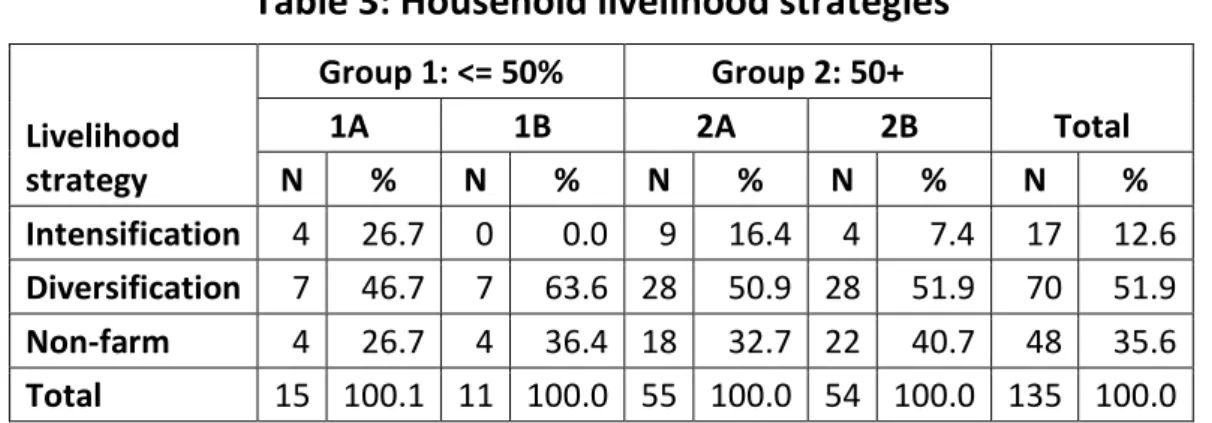
There are several salient aspects about the livelihood strategies adopted by households following land conversion. Firstly, among the three options, diversification definitely ranks first. As showed in table 3, more than half of the target households chose diversification, while agricultural intensification ranks last. In this research, the latter accounts for 12.6% of total surveyed households compared to 35.6% for a non-farm strategy. As rural development literature has shown, in a changing socioeconomic context, farmers in developing countries tend to turn to diversification both to meet subsistence needs and to increase their income (Barrett, Reardon et al. 2001; Torben, Pia et al. 2001; Ellis, Kutengule et al. 2003; Rigg 2006).
Table 3: Household livelihood strategies
Livelihood strategy Group 1: <= 50% Group 2: 50+ Total 1A 1B 2A 2B N % N % N % N % N % Intensification 4 26.7 0 0.0 9 16.4 4 7.4 17 12.6 Diversification 7 46.7 7 63.6 28 50.9 28 51.9 70 51.9 Non-farm 4 26.7 4 36.4 18 32.7 22 40.7 48 35.6 Total 15 100.1 11 100.0 55 100.0 54 100.0 135 100.0 Source: Household survey, 2008
Secondly, the household’s initial background is an important component of the livelihood strategy it will adopt. Group A present the highest number of households pursuing agricultural production. Thirdly, households had to consider the amount of land they lost in choosing their livelihood strategy. There are indeed interactions between landless rate and livelihood strategy. The results indicate that more households engage in agricultural intensification strategy in group 1 than in group 2.
Conversely, fewer households chose a non-farm strategy in group 1 than in group 2. It cannot be denied that land is fundamental in the decision made by the household.
Besides sectoral linkages, spatial linkages must be recognized to investigate the interdependency between the countryside and urban centre for peasant livelihood strategies. The complex ways that the researched households make a living indicate the importance of rural-urban linkages in the perpetuation of peasantry. In the researched communes, the urban sector contributes significantly to the prosperity of the peasant economy in a number of ways.
The contribution of urban-oriented activities toward agriculture and peasant livelihoods can be seen in secure access to land. The study results show that there are backward linkages with urban activities in household land use. The income from non-farm activities helps households maintain their small landholdings and prevent them from falling into a landless situation. As mentioned earlier, in the researched communes, selling agricultural land is a last-ditch strategy of households in the face of an unbearable situation. Peasant households want to own land albeit a very small area currently. Even when non-farm activities are lucrative, peasants are not likely to sell their land, but rather lease that land to others or even leave it fallow for certain crops. A study about migrants in Hanoi also showed that most migrants wished to go back to their villages where they owned a piece of land. They sought to maintain that land as insurance for their livelihoods because their jobs in Hanoi were temporary (Li 1996). In the context of land conversion and skyrocketing land prices, keeping land is not only a way to add security to one’s life and obviate the risks of non-farm jobs in cities, but it is also a good investment.
It is easy to find the contribution of urban activities to peasant households and agriculture in circular migration. In the surveyed households, there is no case of permanent migration. This is rooted in the State policy “li nông bất li hương” (leave the farm but not the village) to encourage circular migration and reduce burdens in cities. Moreover, the close distance from the researched villages to Hanoi and other nearby cities is also a reason. The common migration pattern in the study villages is that one or several members of a household may migrate to other districts or cities. Depending on the types of jobs in the cities they can live there or return
- 23 -
home areas. Normally, they send remittances back home and bring food from home to the city. This reduces the daily expenses of migrants in the cities so they can save more. The remittances play an important role in households, helping them round out their daily expenses. Moreover, remittances enhance the investment capacity of households. It allows households renting land from other nearby villages to expand their production. They also can invest in new crops and animals that require higher capital such as ornamental tree groves or mushroom farms.
The contribution of urban-based activities to agriculture and the community is expressed not only in financial capital but also in innovative projects. In Chieu Dong village, for example, noodle making and pig production have developed. Pig manure used to cause serious pollution for this village. Construction workers had learned the technique of building biogas tanks from their jobs as labourers. They applied the technique in their village. As a result, the environment pollution has improved and households in this village have cheap bio-energy. Further, skilled workers can earn their living by working as biogas tank builders. This peasant initiative in fact is at same time helping household improve their living environment and their agricultural production conditions. The implementing of such innovative projects is compatible with the goal of sustainable development.
Stronger urban-rural linkages also create greater urban demand for agricultural produce (Satterthwaite and Tacoli 2003). This market demand encourages farmers to identify the potential comparative advantages of their locality and intensifying their production. Longan and orange trees provide special fruits that are bringing prosperity to hundred households in Hung Yen province. Recently, due to urbanization in Hanoi, urban housing is occupying land once used to grow potted trees for the Lunar New Year (đào, quất – peach, kumquat). On the researched sites, farms for these trees and other flowers are well developed. These high-value crops have contributed substantially to household incomes. The development of rural-urban trading because of increasing urban demand also strengthens agricultural production since it facilitates marketing the agricultural outputs. The marketing of vegetables, rice, poultry, pork and many other agricultural products is not only profitable for the traders but also the producers. In this sense, this marketing has improved the market
position of peasant, something crucial for the perpetuation of the peasant economy.
4 MECHANISM OF SOCIAL DIFFERENTIATION 4.1 Land alteration
Land conversion and the liberalizing of economic institutions have introduced a mechanism of social differentiation that had not previously existed. Theories on social differentiation emphasize that control over resources and labour division widens the gaps between households. In rural economics, unequal access to land to make a surplus is considered to be a mechanism of social differentiation (Hart, Turton et al. 1989; White 1989). This research testifies to the importance of land in household livelihoods and social differentiation. In the research communes, the land alteration process has especially highlighted the two trends discussed below.
4.1.1 Land concentration
In the current land boom, both homestead land and agricultural land concentration must be looked at, along with their role in social differentiation.
For homestead land, there are two sources that the rich people can buy from. First, from households that have homestead land available. For various reasons, some households in the research communes sold part of their homestead land. Buyers may be other households in their village or outsiders. The market and private negotiation between the seller and buyer decide the price of the land. The second source is the so-called “service land”. Formerly this was land that was considered to be the common property of the village. In communes undergoing land conversion for industrialization, under provincial government guidelines, the local authorities (at the commune and district level) have permission to sell part of this communal land to anyone who can afford to buy it. The manner of selling “service land” is through auctioning. Persons who buy “service land” can ask for a land use certificate and thus enjoy private ownership for homestead land. In the first few years of industrialization, the price of this land was very low and villagers were given priority in this land transaction. Persons who bought service land are making a huge profit with the current surge in the price of land.
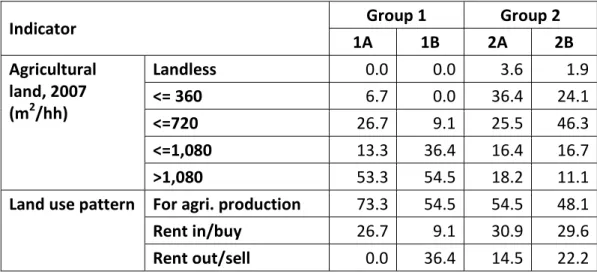
For agricultural land, there are two ways to concentrate land. The first is through renting land. The main approach is consolidating land by renting land from households. The interesting point here is that a large number of poor households are rent land. The results show that the incomes of group A are relatively lower than group B. However the percentage of households in group A that report renting land is higher than group B (table 4). The relatively poorer households do not have enough land for their subsistence production so they rent land from other households. Our analysis demonstrates that this is different from the land accumulation of capitalist farms according to Lenin’s idea of class differentiation (Bernstein 2009; Byres 2009). Households whose land is rented out are relatively well-off families. They have non-farm job opportunities so they are free to lease their land to others in their village. In many cases, agricultural land is leased for free. Its owners do not ask for a rent fee. This suggests that many peasant households leave agriculture but keep their peasant status through keeping land. Land plays a role in household livelihood security when risks arise in their non-farm activities. In other words, land ensures the security and long-term livelihood of households. So it is hard to consider renting land as land accumulation due to competition and the development of capitalist farms in the research communes.
The second way of agricultural land concentration is through buying land. A number of households in the villages lost interest in agricultural production because farming income is low or their crops were destroyed by disease. Some households agreed to sell their land because their remaining landholding was very small and difficult to farm. Other households were able to find off-farm jobs and not longer want to engage in agricultural production. Still other households sold their land because of the pressures of debt, health care or the need to put down a deposit for international migration. Meanwhile, some well-to-do households are trying to concentrate land. They usually buy land at a price equal to the price of land conversion paid by companies that year. However, in many cases they agree to pay a higher price.
The different purposes of buying agricultural land need to be underscored. In the research communes, many people buy agricultural land as a way to accumulate real estate. They invest in the land market
- 27 -
lease it to poor households. Thus, it is difficult to conclude that the liberated land market will have positive impacts on agricultural production. The agricultural land is used more efficiently by well-to-do farmers.
Table 4: Landholding and land use pattern after land conversion Unit: % of reporting household
Indicator Group 1 Group 2
1A 1B 2A 2B Agricultural land, 2007 (m2/hh) Landless 0.0 0.0 3.6 1.9 <= 360 6.7 0.0 36.4 24.1 <=720 26.7 9.1 25.5 46.3 <=1,080 13.3 36.4 16.4 16.7 >1,080 53.3 54.5 18.2 11.1
Land use pattern For agri. production 73.3 54.5 54.5 48.1
Rent in/buy 26.7 9.1 30.9 29.6
Rent out/sell 0.0 36.4 14.5 22.2
Source: Household survey, 2008
Regarding “large-scale farms” in the researched communes, the process of land accumulation to set up these farms in Hung Yen resulted from both government policy and the willingness of households. Before enactment of the 2003 Land Law, under the conditions of egalitarian agrarian and household economy in Vietnam, large-scale farms were not prominent because there was no State support and the land market did not develop in the countryside. Since 2003, under the policy of merging land, which aims at improving agricultural productivity, the State supports the exchange of land among households. Because each household may have many small pieces of land, the government feels that this prevents the application of modern technology and keeps agricultural productivity down. Thus, the State encourages households to merge their land by exchanging it with each other to form large-scale, more efficient farms. Under this legal guideline, the local authorities have permission to lease to individual households communal land or land belonging to cooperatives. Land concentration also occurs among the households. In the researched communes, land concentration under the policy to merge land occurred at the same time as the land conversion process
during the 2001-2007 period. Currently, the possibility to expand farm size is limited. Firstly, renting communal land is a regular process, once every five years (the same as the local leader’s electoral mandate). Local policies toward this kind of land vary according to the new leaders and depend on the particular conditions of the commune. Thus, communal land is not a stable option for large-scale farms to expand. Secondly, the agricultural land market is emerging but is still sensitive in the researched communes. The increasing demand for labourers due to growing non-farm activities might encourage peasant household to sell their land so they can go to work as full time labourers. However, the surveyed households report that selling agricultural land is the last choice of households. They prefer to rent out land rather than sell it. Even when earnings from agricultural production are very low and the opportunities of non-farm jobs are available, households decide to sell their labour to supplement their income, not their land. Meanwhile, the price of agricultural land increases year by year. Keeping agricultural land is good business.
4.1.2 Unauthorized conversion of agricultural land to non-agricultural land
It is not legal for households to change agricultural land to non-agricultural land. The 2003 Land law proclaims that the State has ownership of all land and that only the State can change the purpose of land use. The district government has been given authority to decide changes to the purpose of land use (Vietnamese National Assembly 2003). Agricultural land was allocated to households for agricultural production, not for non-agricultural activities, including housing, shops or factories. Thus, households are not legally allowed to change the purpose of land use. However, in some particular circumstances, a change from agricultural to non-agricultural purposes has taken place.
Firstly, there are two main reasons behind these unauthorized changes. On the one hand, in the context of land conversion, the value of land is increasing rapidly. The results in previous section show the rise of agricultural land prices from 2000 to 2010. There is also a huge difference between the price of agricultural land and that of non-agricultural land. That is the underlying reason why households want to change their
- 29 -
households claim de facto ownership of their land. According to the current law, the agricultural land allocation term will expire in 2013 (20 years from 1993). Difficulties in reallocating land for the next term have been foreseen. Moreover, there is too little land but too many people, so a redistribution of agricultural land would decrease the current landholdings of households, not increase it. Thus, households have surreptitiously sought to change the purpose of land, bringing a double advantage. It would be worth a higher price but also they would be ensured long-term ownership of their currently allocated land. The efforts of households to change land use purpose indicate ways that existing State institutions have shaped the response of peasant households toward land conversion.
Secondly, land conversion for industrialization associated with liberated economic institutions has loosened the legal regulations governing changes in land use. The policy of merging land, as mentioned earlier, allows households to concentrate land to set up large-scale farm. Those
farms were allowed to put up a small building (20 m2) on that land to take
care of their farm. They can dig ponds and change from annual food crops to other high-value perennial crops. Cash crops such as fruit trees, flowers and ornamental trees replaced rice production. They also combine cash crops with such activities as aquaculture and poultry and pig husbandry. In order to do that, they build walls around their farms. These activities open ways to change agricultural land to non-agricultural land without authorization. Instead of putting up a 20m2 building, they build a large house with modern conveniences in which to live. They also put up small buildings for their family business—tea and coffee shops, fast food shops, buildings for collecting recyclable waste, garages for motorcycles or trucks and the like. Little by little, these large-scale farms become venues for non-farm activities. So formally, the large-scale farm is for agricultural production, but informally for non-agricultural production. These activities are ways in which the owners try to keep their private ownership of that land. Even on the main part of a large-scale farm originating from the temporary five-year rental of communal land, the owners are prepared to pay a so-called “administrative punishment” or an “under-the-table fee” to extend their rental contract.
One very important element making it easy to change the purpose of land use is the environmental pollution occurring after land conversion.
Because fields surrounding industrial factories were damaged by polluted water or smoke, the households changed their crops from rice to fruit trees, such as orange, pomelo or other fruit. When the pollution increases, their trees bear no fruit or the fish in ponds they put in die. They request compensation from the local authorities and industrial companies. At the same time, some households in the village put up walls around their fields or built animal enclosures and even guest houses for workers. They claim that agricultural production is impossible because of the serious pollution so they had to change to non-farm activities. These unauthorized activities are carried out by increasing numbers of households. Confronted with high pressure from households, the local leaders had to ignore these clandestine activities. This behaviour on the part of local authorities bears further elaboration. They benefit personally from turning a blind eye. Their families or relatives may also be owners of large-scale farms. Similar to other households in the village, they may also have other pieces of agricultural land. They also feel the constraints of agricultural production compounded by environmental problems. Feigning ignorance of the unauthorized activities benefits their own families and builds wider acceptance from most households in the villages. The combination of the household’s efforts and the closed eyes of the local authorities, changing agricultural land to non-agricultural land has become a common occurrence in the studied communes.
We will not look at the special case of unauthorized changing of land usage. There is the factor of encouragement to set up large-scale farms under the State policy of “merging land,” plus the fact that environmental pollution induces the strategy followed by peasant households. In this case, the real motivation to set up a large-scale farm is to get de facto land ownership rather than to get profit from better agricultural production. Indeed, land security and ownership are the crucial issues in current land use alteration.
In the context of declining farm incomes, land has lost its relative importance in peasant livelihoods. Peasant households know the value of land ownership, even though it is not de jure ownership in the context of Vietnam’s land tenure regime. The growing evidence of peasant efforts to change the purpose of land use purpose, albeit unauthorized and sometimes punished by the local authorities. Buying agricultural land is a
- 31 -
agricultural production. All of these efforts in fact aim to achieve de facto ownership under the present conditions of a multi-tiered and unclear land policy. Many studies about rural social differentiation emphasize the farm size and land concentration, but in the context of land conversion, I would suggest that the greatest problem is not only how large the agricultural landholding is, but also with how much certainty that land belongs to households.
It is worthwhile to look at land alteration under industrialization from the aspect of land concentration alongside efforts to change land use purpose. It is obvious that the more one’s landholdings are consolidated, the more wealth is accumulated. Thus, those households who have larger landholdings enjoy a tremendous advantage. They are purported to be the richest households. At the other end of the spectrum, households that are landless or nearly landless because, of their own choices or because of land conversion, enjoy no advantage. Hired labour is their only means of survival. Limited resources prevent poor households from developing lucrative but risky jobs. Instead, they have to be content with temporary, precarious and exhausting jobs with low pay. It is difficult for them to ensure their own subsistence even though they are intensively involved in the non-farm sector.
4.2 Capital accumulation from lucrative non-farm activities
As often pointed out in literature on social differentiation, non-farm activities are playing an increasing role in household income (Rigg 2006) and have important implications for social differentiation (White and Wiradi 1989; Saith 1991; Luong 1998). Already before industrialization, non-farm activities had developed at different levels in the study communes. Commerce, construction, food processing and rural manufacturing were quite developed. Handicraft making was also done by a large number of households as an activity on the sidelines of agriculture. In the context of socialist equal land allocation, agriculture stimulated growth but brought little income inequality. Non-farm activities used to cause differences among households. Currently, the extent of non-farm activities is increasing in the studied communes. There is also a range of non-farm activities practiced by different groups of households. These non-farm activities vary from more lucrative ones to marginal and low-return undertakings. Thus, not non-farm activity as a whole, but the
extent to which non-farm activity makes capital accumulation and investment capacity possible, is determining the wealth status of households.
In this study, a wealth-ranking exercise was used to identify the criteria of wealth and poverty. On the basis of wealth ranking and the interpretation emerging from the interviews, it is seen that international migration, trading and manufacturing are wealth indicators. Such activities are likely to bring high returns and opportunities for capital accumulation.
4.2.1 International migration
International migration is by no means a new phenomenon in Vietnam and certainly is not in the study communes. Before land conversion and industrialization, international migration was encouraged by State “labour export programs.” Currently, in the researched communes, there are different patterns of migration in which circular migration is more prominent than international migration. Each studied village has on average 10 to 15 international migrants. In some communes, the rate of international migration is higher. In 2010 in Luong Bang commune for example, migrants accounted for 7% of total labourers in the commune (438 migrants out of 6,294 labours). This commune also has a high number of international migrants (82 persons in 2010). On average, each village in this commune has 20 international migrants.
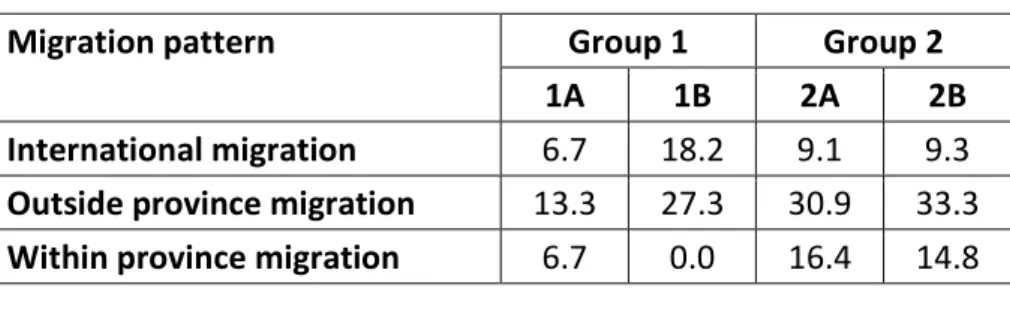
Table 5: Migration patterns in researched communes Unit: % of reported household
Migration pattern Group 1 Group 2
1A 1B 2A 2B
International migration 6.7 18.2 9.1 9.3
Outside province migration 13.3 27.3 30.9 33.3
Within province migration 6.7 0.0 16.4 14.8 Source: Household surveys, 2010
International migration and wealth are interrelated as to both causes and effects. International migration in the researched communes is a strategy employed by the relatively better-off households (table 5). The requirements of a high deposit, a high education level and good social
- 33 -
motivation for international migration in many cases is to improve the family’s livelihood, not simply to meet its survival needs. Obviously, international migration also involves also a trade-off between the cost and benefits of sending family members abroad. This study limits its analysis of the impacts of international migration to the process of wealth accumulation. To address adequately the significance of international migration on existing social differentiation, we need to take into account firstly the earnings of migrants that enable them to send remittances home. Although most international migrants observed in the researched communes achieved success, others have no savings or even failed to pay back the debt incurred for their migration. Earnings that decide the success or failure of an international migrant depend on the type of work, the country of destination and the duration of the overseas labour contract. In the researched communes, long-term migration to Japan, Korea or European countries has led to a higher number of successful migrants. Remittances from international migrants provide a substantial financial capital for starting a household business or investing in land or other real estate. The availability of financial resources at certain periods, for example, during the first few years of land conversion, during land mergers or auctioning of “service land,” has positive impacts on the wealth status of households. Moreover, international migration also provides trust and credit rating needed for further access to informal credit. In fact, some households with international migrant members became usurers. Besides broadening access to credit, in the context of land conversion and economic liberation, remittances from international migration have a positive impact on livelihoods. It is also easy to observe in the researched communes the big modern houses put up with international migrant money. These houses have become a symbol of success and themselves are wealth indicators.
4.2.2 Rural manufacturing: food processing and waste recycling
Presently, there are two main types of rural manufacturing developed in the researched communes: food processing and waste recycling activities. In Chieu Dong village, Vinh Khuc commune, noodle making is a source of household prosperity. In the harvest season, households buy rice from other districts in Hung Yen province. They store rice at home base and use it to make noodle. To illustrate: 1kg of rice can make 2.3 kg of noodles. On
average, for every kilogram of noodles made, the producer will make a profit equal to 1 kg of paddy rice. During the summer, a household can produce about 100 kg of noodles a day. Machines are used to mill rice
into flour and make the noodles. On days when a power blackout occurs,4
the household has to use an electricity generator (máy phát điện). They have to buy fuel, which costs more than electricity. However, they can produce a large volume of noodles to meet the higher demand for noodles during this time of the year. Also, noodle making also produces residues that are used for pig production. The size of pig production depends on the volume of noodles made and the family’s labour force. An intra-household labour division plays an important role in its ability to combine these activities. All noodle-making households use their own family labour. Many of them are no longer engaged in agricultural production, although they still have allocated agricultural land.
Before industrialization, most villagers in Chieu Dong made noodles in small volumes (from 15 to 20 kg/hh/day). Currently, only six or seven households do. Marketing skills, investment capacity and technological advantages decide the success of these households. For example, it cost about 30-50 MVND to buy the noodle-making equipment. It costs another 10-15 MVND for a biogas tank to reduce fuel and electricity costs through the breakdown of pig manure. This investment is normally shared by a number of poor households. Marketing skills are very important to sell noodles. Each noodle-making household has its own customers. Contracts are made to provide noodles for the clients. Lower price and a good name are necessary to keep this contract with customers. Competition is a sensitive term that is rarely uttered by the villagers but, in fact, having to give up this stable lucrative activity reveals weak competitive capacity on the part of poor households. Obviously, free-market institutions enhance capital accumulation for a few households. The rural labour market has had an enabling effect allowing increased opportunities for some households who can invest in these high-earning activities outside of agricultural production.
In the researched communes, waste recycling is a family business that also brings in high profits. This activity is new in the researched communes. The owners of these recyclable waste factories learn how to
- 35 -
run the business and buy waste recycling technology from other villagers. They buy recyclable waste materials from collectors who are poor and mainly women. They also buy these materials from surrounding industrial factories. Labourers are hired to sort and clean up the discarded items. The number of hired labourers depends on the size of the production. In
the researched communes, this number ranged from five to 20 labourers.5
Products of these factories can be used by footwear makers or sold to other wholesale traders who in turn sell them to Chinese clients.
We identified the features that are likely the source of the handsome profit made by waste recycling factories in the researched villages. Firstly is the entrepreneurial capacity of the owners. These factories have many different networks in their production operations. The networks are not limited to local markets, but extend to national or even international markets, which indicate the interaction and integration of rural society into a wider socioeconomic dimension. In these interactions, strong entrepreneurial capacities characterize the successful cases. The availability of a labour market brought on by land conversion strongly supports entrepreneurial capacity. Secondly, the State’s loose regulations and lack of control over the informal sector and over environmental pollution has facilitated the investment capacity in and acquisition of these waste recycling factories. In the form of family businesses, the owners of waste recycling factories pay no tax to the State except a very small fee collected by the village administration. Labourers in these factories have no insurance and raise no objection to the working conditions. These factories cause serious environmental pollution, consume much water and electricity and use low technology. Thus, in some instances, the profit and surplus from the business is not just labourer exploitation and self-exploitation, but also a trade-off of common benefits and welfare.
4.3 Alternatives for accumulation
Commerce and marketing of agricultural outputs, running guest houses, restaurants, shops and providing other services are also high-earning activities practiced in the researched communes. Trading, for example, is
5
All waste recycling factories in the researched villages are unregistered household businesses. As they belong to the informal sector, they are allowed to hire up to 10 laborers according to the enterprise law. However, some factories hire more than 10 laborers. Local officials have not made an issue about that.
well developed in Tan Quang and Luong Bang communes. In the Vietnamese countryside, a business used to be a sideline activity of the household rather than its main enterprise (Abrami 2002). Economic growth, urbanization and industrialization have led to an increase in commerce, especially rural-urban trade. In many of the surveyed households, trading is no longer “spare work,” but the “primary work” of their members. Hired labourers are rare; most households use their own family labour in their business. The earnings from trading and services are a significant contribution to household incomes. However, it is obvious that there are differences between rich and poor households involved in trading and service provision. Wholesale traders make more profit than sweets vendors or small retailers. Similarly, owners of bigger restaurants have more advantage than the very small ones. Thus, the degree to which the commercial and service activities provide opportunities to accumulate capital is very important in social differentiation.
Although politics is not the focus of this study, it is a fact that political position plays an important role in social differentiation in the researched communes. Local officials and high-ranking State officeholders likely have better access to information and news. The results of interviews and informal conversations reveal the probability that the privileged positions of village and commune leaders are turned into economic gain. In the many steps of land conversion, local officials received particular advantages from industrial companies who took the land of farmers. Their children or relatives can more easily be recruited in these factories. Migrant workers prefer to stay in their guest houses because of more security. Local leaders are the first persons to get information related to selling “service land” or to the local development plan. In the context of land conversion and high land prices, this information is crucial for investment decisions.
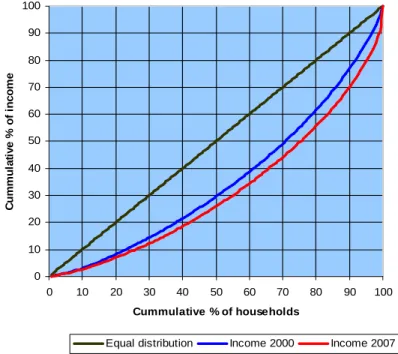
The process of land alteration and capital accumulation on the backdrop of the liberal rural labour market relates closely to local politics and institutions. Social differentiation is growing in the researched communes. While economic growth is obvious, the gaps between rich and poor households are wider. Figure 3 presents the Lorenz curves of income distribution of sampled households in 2000 and 2007. The Gini index in 2000 was 0.3 and it was 0.37 in 2007.
- 37 -
Figure 3: Income distribution before and after land conversion
Source: Household survey, 2008
Beside the household survey results, focus group discussions were used to understand wealth indicators on the research sites. These were concentrated to assess status, economic activities and jobs. Five groups of households were identified according to wealth status. The findings are qualitative but reveal the same trend as that of the household survey. Firstly, the general trend of all types of livelihood strategy is the household’s perception of growth and better earnings. However, the results of group discussions also show that non-farm livelihood strategies have a more positive impact on their income than other agriculture-based activities. Secondly, very well-to-do households all demonstrated strong entrepreneurial capacities. Small household businesses hiring labourers are also able to generate significant wealth. Meanwhile, very poor households are vulnerable in terms of human capital. Thirdly, the migration pattern is an important wealth indicator. International migration has been associated with well-to-do households, whereas domestic circular migration is linked to middle-class and poor households.
Income distribution 0 10 20 30 40 50 60 70 80 90 100 0 10 20 30 40 50 60 70 80 90 100 Cummulative % of households C u m m u la ti v e % o f in c o m e