UNIVERSITÉ DE MONTRÉAL
OCCURRENCE AND TREATMENT OF HORMONES IN DRINKING WATER SOURCES AND PLANTS
HADIS YARAHMADI
DÉPARTEMENT DES GÉNIES CIVIL, GÉOLOGIQUE ET DES MINES ÉCOLE POLYTECHNIQUE DE MONTRÉAL
THÈSE PRESENTÉE EN VUE DE L’OBTENTION DU DIPLÔME DE PHILOSOPIAE DOCTOR
(GÉNIE CIVIL) DÉCEMBRE 2017
UNIVERSITÉ DE MONTRÉAL
ÉCOLE POLYTECHNIQUE DE MONTRÉAL
Cette thèse intitulée :
OCCURRENCE AND TREATMENT OF HORMONES IN DRINKING WATER SOURCES AND PLANTS
présentée par : YARAHMADI Hadis
en vue de l’obtention du diplôme de : Philosophiae Doctor a été dûment acceptée par le jury d’examen constitué de :
M. COMEAU Yves, Ph. D., président
Mme PRÉVOST Michèle, Ph. D., membre et directrice de recherche M. SAUVÉ Sébastien, Ph. D., membre et codirecteur de recherche Mme BICHAI Françoise, Ph. D., membre
DEDICATION
“Yesterday I was clever, so I wanted to change the world. Today I am wise, so I am changing myself.” Rumi
ACKNOWLEDGEMENTS
I would like to give all my sincere gratitude to my Ph.D. supervisor, Michèle Prévost, for encouraging me from the first beginning days of my Ph.D. to the last weeks of redaction and submission of this thesis. Thank you Michèle, for being always encouraging and supportive. You never cease to amaze me with how dedicated you are to your students. Thank you for being patient with my life challenges, maternity leave, leaving Canada and then coming back. Thank you for your support and compassion during all those hard days. I cannot thank you enough for your generosity in teaching me, mentoring me and advising me.
I would like to thank my co-supervisor, Sébastien Sauvé, for accepting me as a member of his research lab and letting me profit from all the hi-tech analytical instruments in his lab. Thank you Sébastien, for your guidance, your advice, and your patience in coaching me through this project. I wish to thank Prof. Benoit Barbeau, for his invaluable advice during the realization of the ozonation part of my project. Thank you Benoit for indulging my spur of the moment questions with impromptu meetings or prompt responses through emails.
I wish to thank all other co-authors of my papers: Sung VO DUY, Arash Zamyadi, Sarah Dorner, and Mounia Hachad. Having you as co-authors was a great privilege to me. Thank you for sharing your knowledge and expertise. Thank you Sung for being patient with my ordinary questions on analytical methods and helping me to interpret my results. Thank you for all those off-hour times you stayed in the lab with me to make sure that analysis of my samples are well progressing.
I also would like to express my gratitude to the members of my examination committee, Eric Wert, Yves Comeau, and Francoise Bichai for taking their time to review my thesis.
I wish to thank the National Sciences and Engineering Research Council (NSERC) and the industrial chair partners, John-Meunier Inc., City of Laval, and City of Montréal, who made this Ph.D. project possible.
I would like to give special thanks to the Chair staff; I was privileged to work with such a highly qualified, friendly team during this time. Thank you Jacinthe and Julie for helping me integrate with other group members. Thank you for your expert advice in lab work and also in my life
dealing with the amazing Québec culture. Thank you Yves, for always being ready to help and smiling, even during our sampling from rivers in freezing weather. I also thank Mireille, Mélanie Rivard, Mélanie Bolduc, and Denis Bouchard for their endless help in the lab. I particularly want to thank Shokoufeh Nour, for sharing her experience with me which always helped me to better integrate with our group. I thank Laura for her patience dealing with our countless demands, her availability, help and support.
During my Ph.D. I had the chance to meet some of my best friends, Kim, Evelyne, Fatemeh, and Laleh. I am so happy to have you lovely friends, coming from different cultures. I admire all these differences and learned a lot from you. I always enjoyed our discussions. Thanks Kim, for being so kind and trustful. You taught me that we can always smile and be logic even after big failures in our research. Thank you Evelyne, for being always energetic, enthusiastic and spreading your energy throughout the lab. Thank you for correcting my French spelling faults very delicately during our discussion and emails. All my thanks to: Fatemeh and Laleh, thank you girls for being beside me during all those hard days of work. Thank you for your support and help.
I wish to thank my friend Celso. I will always remember you although you are no longer with us. Thank you for sharing your experience and exciting stories with us. Thank you for helping Sung with the last run of my analysis when I had to leave Montréal.
I also wish to thank my friends, Anne-Sophie, Céline, Émilie, Élise, Émile, Flavia, Félix, Isabelle, Ken, Samira, Mariam, Mounia, Milad, Mathieu, Nargess, Pirouz, Paul, Sanaz, Shifteh, Vanessa and all the students I met during my Ph.D. at Polytechnique and the University of Montréal.
I would like to thank my friends in Montréal and Toronto. Thank you: Ameneh, Donya, Hanifa, Hoda, Hoory, Mahsa, Shifteh, Ali KM, Ahmad, Mohammad Reza, Mohsen, Nima KM. Thank you for all the amazing time we spent together. I hope one day I come back to Montréal again and we make a lot of new memories together in chilly nights of winter. I’m grateful to have you as my friends.
There are no words that can express my gratitude to my family, my mom and dad, my beautiful and kind sisters, Hasti and Forough. Thank you for your unconditional support and love during
my whole life. Thank you for coming to Canada and taking care of Nickan when I had to stay in the lab too late and I was confident that you are taking care of Nickan better than me. I’m so proud of you.
Behind any successful job done, there is always a strong friendship and trust which made that success possible. My best friend and support during my Ph.D. and from 12 years ago is my Ali. Thank you for your patience and endless support during all of the ups and downs of my study. I am always so proud to have you as my best friend and my lovely husband.
RÉSUMÉ
Depuis les dernières décennies, de nombreuses préoccupations scientifiques et publiques ont émergé concernant les effets potentiels des hormones qui sont libérées dans l'environnement, causant des troubles sexuels, nuisant à la reproduction et au développement des organismes aquatiques. Les stations de récupération des ressources de l’eau (StaRRE) sont connues pour être une source majeure d'hormones dans l'environnement aquatique. Plusieurs études ont été publiées à l'échelle internationale au cours des dernières décennies, afin de documenter la présence d'hormones naturelles et synthétiques dans les eaux usées brutes, les effluents StaRRE et à des concentrations plus faibles dans les eaux de surface/ souterraines. La plupart de ces études se sont concentrées sur la quantification des hormones dans l'eau des rivières (fraction dissoute seulement) et dans les biosolides (hormones totales) des eaux usées ou dans les sédiments. Comme la phase particulaire est probablement dominante, la quantification la plus pertinente pour les usines de traitement de l'eau potable devrait inclure à la fois des mesures des phases dissoutes et particulaires. Les eaux de surface sont les principales sources d'eau potable au Canada en fournissant 89% de l'eau utilisée dans les municipalités. Par conséquent, la libération de stéroïdes par les StaRRE peut affecter la qualité de l'eau potable. Ce problème doit mieux être compris afin d'améliorer l'efficacité de l'élimination des stéroïdes dans les StaRRE et les usines de traitement d’eau potable (UTEP).
Les objectifs de la présente thèse étaient d'abord de générer plus de connaissances sur le sort global d'un groupe d'hormones stéroïdiennes à partir d’affluent et d’effluent d’eaux usées jusqu'à l'eau potable traitée. Les résultats de l'étude apportent des connaissances sur les variations saisonnières de l'occurrence et du devenir des stéroïdes dans les phases dissoutes et particulaires ainsi que dans les particules de boues et les sédiments fluviaux des StaRRE, des eaux de rivières, et les UTEP. Un échantillonnage exhaustif (10 échantillons d’UTEP, 3 de StaRRE, 24 d'eaux de rivière, 36 de sédiments de fond) a été réalisé dans trois campagnes de suivi pour quantifier les hormones naturelles (E1, E2, E3, progestérone et testostérone) et synthétiques (EE2, medroxyprogesetérone, noréthindrone et lévonorgestrel) dans la phase dissoute et particulaire de l'eau de la rivière et ensuite dans les sédiments. Les concentrations de stéroïdes dans la phase dissoute de tous les échantillons étaient inférieures à la limite de détection, sauf pour les
échantillons provenant des affluents à la StaRRE, ce qui montre clairement la prédominance de leur forme particulaire. Des niveaux plus élevés de stéroïdes ont été trouvés dans les matières en suspension dans les rivières durant les périodes les plus froides (total: 677 ng L-1) comparativement aux échantillons prélevés en été (total: 163 ng L-1). Les concentrations de stéroïdes totaux mesurées dans les sédiments variaient de 1651 à 4584 ng g-1 en été et en automne, respectivement. Dans les échantillons provenant de l’eau brute des usines de traitement d’eau potable, les particules contenaient des niveaux similaires de testostérone, de noréthindrone, d'estradiol et de 17α-éthinylestradiol comme dans les effluents des StaRRE, indiquant la persistance des hormones adsorbées depuis leur point de rejet dans la rivière jusqu'à la prise d'eau. Dans l'ensemble, cette partie de l'étude confirme la présence d'hormones stéroïdiennes dans les sources d'eau potable sous forme particulaire, ce qui soulève des inquiétudes quant à leur devenir dans les UTEP et leur potentiel dans le lit de boues des décanteurs.
Le deuxième objectif était de quantifier la capacité d'adsorption et la cinétique de sorption de 8 hormones stéroïdiennes sélectionnées sur quatre échantillons de sédiments provenant de la rive contenant une quantité variable de matière organique, à l'échelle du laboratoire pendant 95 heures. Les stéroïdes sélectionnés présentaient une sorption rapide sur les sédiments atteignant un quasi-équilibre en moins d'une heure. La progestérone et l'estrone (E1) présentaient une affinité de sorption plus élevée envers tous les sédiments que la testostérone et l'estradiol (E2). La sorption minimale et maximale dans S4 avec fOC =17% à t = 0 était de 14% pour E2 et de 56% pour la progestérone, respectivement. Alors que la sorption minimale dans S2 avec fOC =73% à t=0 était de 61% pour E2 et de 78% pour la progestérone.
Les constantes de vitesse de sorption de pseudo-second ordre ont été mesurées pour les stéroïdes sélectionnés dans des expériences à l’échelle de laboratoire dans la première heure du processus. La constante cinétique pour les stéroïdes variait entre 1,09E-03 (pour l'estrone) et 7,05E-02 g min μg-1 (pour l'estradiol) en S1 et de 5,38E-03 (pour le lévonorgestrel) à 1,94E-03 (pour l'estradiol) pour S2.
La quantité d'hormone adsorbée sur les sédiments à l'équilibre et les coefficients de distribution (Kd) entre l'eau et les sédiments ont été mesurés. Les valeurs de Kd variaient entre 5,05 et 19 L
9,8- 22,2 L kg-1 (échantillon de sédiment ayant la concentration de matière organique le plus élevé, S2). Ces résultats indiquent que la disponibilité des stéroïdes en phase solide est directement liée à la teneur en matière organique de l'échantillon de sédiments. Les coefficients de sorption ont été déterminés en utilisant le modèle isotherme linéaire. Le coefficient de sorption linéaire dans le modèle isotherme linéaire représente le coefficient de distribution (Kd).
Les valeurs de Kd obtenues expérimentalement étaient compatibles avec les coefficients
isothermes linéaires dans un intervalle de confiance de 95-percentile. Une linéarité plus élevée a été observée pour les isothermes de l'échantillon ayant la plus faible teneur en matière organique. Bien que les progestatifs synthétiques aient été reconnus comme étant des perturbateurs endocriniens, il existe encore plusieurs lacunes dans les données sur le devenir de ces composés dans les eaux de rivière. Cette partie de la thèse permet de mieux comprendre la capacité de sorption, les données cinétiques et les modèles isothermes des progestatifs moins étudiés et de la testostérone qui jouent un rôle important dans leur devenir dans l'environnement.
Le troisième objectif était d'évaluer le potentiel de l'ozone pour l'oxydation des hormones stéroïdiennes récalcitrantes à l'oxydation (testostérone, progestérone, médroxyprogestérone, noréthindrone et lévonorgestrel) pendant le traitement de l'eau et à différentes températures. À cette fin, les constantes de vitesse d’ordre de deux pour la réaction des hormones sélectionnées avec l'ozone (kO3) ont été déterminées dans des expériences en laboratoire utilisant de l'eau
ultrapure. Les taux d'élimination des composés sélectionnés avec de l'ozone ont été estimés dans l'eau de rivière filtrée et également dans l'effluent de StaRRE dilué en utilisant des constantes de vitesse de second ordre provenant d'expériences dans de l'eau ultrapure. A une température de 21 ° C et un pH de 6 ou 8 et en présence de piège à radicaux, les constantes de vitesse pour la progestérone, la médroxyprogestérone, la testostérone, la noréthindrone et le lévonorgestrel variaient de 590 <KO3 <2300 M-1s-1, démontrant la réactivité de ces composés avec l'ozone. Le
lévonorgestrel et la noréthindrone ont montré une plus grande réactivité vis-à-vis de l'ozone comparée aux trois autres composés avec des constantes de vitesse de 2233 et 2292 M-1 s-1. Pour tous les composés, une augmentation de la température de 5 à 35 ° C a entraîné une augmentation des constantes de vitesse du deuxième ordre de 3 fois pour la noréthindrone à 5,5 fois pour la progestérone. L'énergie d'activation requise a été estimée pour les cinq stéroïdes sélectionnés et allait de 30 kJ (noréthindrone) à 39 kJ (progestérone). Enfin, cette partie du projet
a montré que les processus d'ozonation à des doses typiques de traitement de l'eau (CtO3 = 2 mg
min L-1) étaient seulement capables d'éliminer 77% (progestérone) à 99% (lévonorgestrel) à 21 ° C et même moins (47 % médroxyprogestérone à 96% de noréthindrone) à 5 ° C des composés sélectionnés. Considérant qu'aucune source supplémentaire de radicaux hydroxyles n'a été ajoutée aux expériences d'oxydation, l'exposition aux radicaux hydroxyles (CtOH) a été trouvée
très faible et une réaction directe avec l'ozone a été suggérée comme étant le mécanisme régissant l'élimination des stéroïdes.
Les connaissances issues de cette étude peuvent servir de base à une estimation ultérieure des rejets de stéroïdes des StaRRE dans l'environnement aquatique et / ou être utilisées pour évaluer comment la conception et l'exploitation des StaRRE peuvent être optimisées en termes d'élimination de ces substances et ainsi minimiser la charge rejetée dans l'environnement.
ABSTRACT
During the last few decades, there has been considerable scientific and public concern about potential impacts of hormones that are released to the environment where they cause sexual disorders, impair reproduction and development of aquatic organisms. Wastewater treatment plants have been known to be a major source of hormone release into the aquatic environment. Several studies have been published internationally during the recent decades, to document the presence of natural and synthetic hormones in raw wastewater, WRRFs effluents, and at lower concentrations in surface/ground waters. Most of these studies have focused on hormone quantifications in river water (dissolved only) and in biosolids (total hormones) of wastewater or in sediments. As the particulate phase is likely dominant, the most relevant quantification for drinking water plants should include both dissolved and particulate measurements. Surface waters are the main sources of drinking water in Canada by providing 89% of water used in Canadian municipalities. Therefore, the release of steroids by WRRFSs may affect drinking water quality. This issue is needed to be better understood in order to improve the removal efficiency of steroids at WRRFSs and DWPs.
The objectives of the present thesis were first to generate more knowledge about the overall fate of a group of steroid hormones from their source raw and treated wastewater to treated drinking water. The results of the investigation provide knowledge about the seasonal variations in the occurrence and fate of steroids in the dissolved and particulate phases as well as in sludge particles and river sediments from WRRFSs, river water, and DWPs. Extensive sampling (10 samples from DWP, 6 from WRRFSs, 24 from river water, 36 from bed sediments) was undertaken in three monitoring campaigns to quantify natural (E1, E2, E3, progesterone, and testosterone) and synthetic (EE2, medroxyprogesterone, norethindrone, and levonorgestrel) hormones in the dissolved and particulate phase of the river water and then in sediments. The concentrations of steroids in the dissolved phase of all samples were below the limits of detection (LOD) except for samples from raw sewage showing the clear dominance of their particulate form. Higher levels of steroids were found in river suspended particles in colder periods (total: 677 ng L-1) compared to in samples taken in summer (total: 163 ng L-1). The total steroids measured in sediments ranged from 1651 to 4584 ng g-1 in summer and autumn,
respectively. In samples from DWPs source water particles contained similar levels of testosterone, norethindrone, estradiol and 17α-ethinylestradiol as in the WRRFSS effluents, indicating the persistence of adsorbed hormones from their discharge point in river to the water intake. Overall, this part of study confirms the presence of steroid hormones in drinking water sources under the particulate form which raises concerns about their fate in DWPs and their potential accumulation in sludge bed of clarifiers.
The second objective was to quantify the adsorption capacity and investigate the kinetics of the sorption of 8 selected steroid hormones on three samples of shore river sediments containing varying amount of organic matter in bench scale over 95 hours. The selected steroids showed rapid sorption onto sediments reaching quasi-equilibrium after less than an hour. Progesterone and estrone (E1) showed highest sorption affinity toward all sediments than testosterone and estradiol (E2). The minimum and maximum sorption in S4 with fOC= 17% at the t= 0 was 14 % for E2 and 56 % for progesterone, respectively. Whereas the minimum sorption in S2 with fOC= 73% at the t = 0 was 61 % for E2 and the maximum was 78 % for progesterone.
Pseudo second-order sorption rate constants were measured for the selected steroids in batch mode experiments within the first hour of process. Smaller rate constants were obtained for samples with higher organic content. The kinetic constant for steroids ranged between 1.09E-03 (for estrone) and 7.05E-02 g min µg-1 (for estradiol) in S1 and from 5.38E-03 (for levonorgestrel) to 1.94E-03 (for estradiol) for S2.
The amount of hormone adsorbed onto sediments at equilibrium time and the distribution coefficients (Kd) between water and sediment were measured. The Kd values varied in the range
5.05- 19 L kg-1 (lowest organic matter sediment sample, S4) and 9.8-61 L kg-1 (highest organic matter sediment sample, S2). These results indicate that availability of steroids in solid phase is directly related to the organic content of sediment sample. Sorption coefficients were determined using the linear isotherm model. The linear sorption coefficient in linear isotherm model represents distribution coefficient (Kd). The experimentally obtained Kd values were well
compatible with linear isotherm coefficients within the 95th confidence intervals. Higher linearity was observed for isotherms from sample with lowest organic content. Although synthetic progestogens have been found as endocrine disruptors, there are still several data gaps on fate of
these compounds in river waters. This part of thesis provides better understanding the sorption capacity, kinetics data and isotherm models of less studied progestogens and testosterone which play an important role in their fate in the environment.
The third objective was to assess the potential of ozone for the removal of oxidation recalcitrant steroid hormones (testosterone, progesterone, medroxyprogesterone, norethindrone, and levonorgestrel) during water treatment and also for the first time to evaluate the effect of temperature on reaction of steroids and ozone. For this purpose, second-order rate constants for the reaction of selected hormones with ozone (kO3) were determined in laboratory scale
experiments using buffered ultrapure water. The removal rates of the selected compounds with ozone were estimated in filtered river water and also in diluted WRRFS effluent using second order rate constants from experiments in ultrapure water. At a temperature of 21 °C and pH of 6 or 8 and in presence of radical scavenger, the rate constants for progesterone, medroxyprogesterone, testosterone, norethindrone, and levonorgestrel ranged from 590 < KO3 <
2292 M-1s-1, demonstrating the moderate reactivity of these compounds with ozone. Levonorgestrel and norethindrone showed higher reactivity towards ozone compare to three other compounds with rate constants of 2233 and 2292 M-1 s-1. For all compounds temperature increase from 5 to 35 °C resulted in the second-order rate constants increase from 3 folds for norethindrone to 5.5 folds for progesterone. The required activation energy was estimated for the five selected steroids and ranged from 30 kJ (norethindrone) to 39 kJ (progesterone). Finally, this part of project showed that ozonation processes at typical water treatment dosages (CtO3= 2 mg
min L-1) were only capable of removing 77% (progesterone) to 99% (levonorgestrel) at 21 °C and even less (47% (medroxyprogesterone to 96% norethindrone ) at 5 °C of the selected compounds. Considering that no extra source of hydroxyl radicals was added to any of the oxidation experiments, the hydroxyl radical exposure (Ct OH) was found very low and direct
reaction with ozone was suggested to be the governing mechanism for steroid removal.
The knowledge from this study can form the basis for later estimation of the discharges of steroids from the WRRFSs to the aquatic environment and/or be used to assess how the design and operation of WRRFSs can be optimised in terms of removal of these substances and thereby minimisation of the load on the environment.
TABLE OF CONTENTS
DEDICATION ... III ACKNOWLEDGEMENTS ... IV RÉSUMÉ ... VII ABSTRACT ... XI TABLE OF CONTENTS ... XIV LIST OF TABLES ... XIX LIST OF FIGURES ... XXI LIST OF SYMBOLS AND ABBREVIATIONS ... XXIV LIST OF APPENDICES ... XXVII
CHAPTER 1 INTRODUCTION ... 1
1.1 Problem under study ... 2
1.2 Structure of dissertation ... 3
CHAPTER 2 LITERATURE REVIEW ... 4
2.1 General characteristics of steroid hormones ... 4
2.2 Specific properties of steroid hormones related to their environmental fate ... 4
2.2.1 Water solubility and Octanol-Water partitioning coefficient (Kow)... 7
2.2.2 Vapor pressure, Henry’s law constant ... 8
2.2.3 Dissociation constant (pKa) ... 8
2.2.4 Soil (sediment) - water partitioning coefficient (Kd) ... 9
2.2.5 Organic carbon- water partitioning coefficient (Koc) ... 10
2.3.1 Wastewater treatment plants influent and effluent ... 13
2.3.2 Surface water ... 14
2.3.3 Groundwater ... 15
2.3.4 Sludge, sediments and biofilms ... 18
2.3.5 Drinking water ... 20
2.4 Fate of steroids in natural environmental systems ... 22
2.4.1 Volatilization... 22
2.4.2 Phototransformation ... 22
2.4.3 Biological degradation ... 23
2.4.4 Sorption of steroid hormones onto solid phase ... 24
2.5 Fate of steroid hormones during wastewater treatment ... 26
2.5.1 Primary treatment... 26
2.5.2 Secondary treatment... 26
2.5.3 Tertiary treatment... 27
2.6 Fate of steroid hormones during drinking water treatment ... 28
2.6.1 Ozonation during drinking water production ... 30
2.6.2 Chlorination in water treatment ... 31
CHAPTER 3 OBJECTIVES, HYPOTHESES AND RESEARCH APPROACH... 33
3.1 Objectives ... 33
3.2 Methodology ... 39
3.2.1 Selecting the target compounds ... 43
3.2.2 Identification and quantification experiments ... 45
3.2.3. Sorption of hormones onto river sediments ... 47
CHAPTER 4 ARTICLE 1: SEASONAL VARIATIONS OF STEROID HORMONES RELEASED BY WASTEWATER TREATMENT PLANTS TO RIVER WATER AND SEDIMENTS: DISTRIBUTION BETWEEN PARTICULATE AND DISSOLVED PHASES . 51
4.1 Introduction ... 52
4.2 Materials and reagents ... 55
4.2.1 Chemicals and standards ... 55
4.2.2 Description of the studied area ... 55
4.2.3 Sample collection and preparation ... 57
1.1. Analytical methods ... 59
4.3 Results ... 60
4.3.1 Steroids in WWTPs effluent and the receiving river water ... 60
4.3.2 Steroids in river sediment ... 66
4.3.3 Partitioning of steroids between water and sediments ... 69
4.3.4 Steroids in drinking water plants ... 69
4.4 Discussion ... 70
4.5 Conclusion ... 76
4.6 Supplementary materials ... 77
4.7 Acknowledgements ... 77
CHAPTER 5 ADSORPTION OF STEROIDS ON RIVER SEDIMENTS ... 78
5.1 Overview ... 78
5.2 Introduction to adsorption of steroids on solid particles ... 78
5.3 Experimental ... 80
5.3.1 Chemicals and standards ... 80
5.3.3 Sorption experiments: kinetics and isotherms ... 81
5.3.4 Sorption on sediments ... 81
5.3.5 Analysis and quantification of compounds ... 82
5.3.6 Data Analysis of sorption isotherms ... 83
5.3.7 Solid-liquid distribution coefficient calculation ... 84
5.4 Results and discussion ... 84
5.4.1 Sorption Experiments... 84
5.4.2 Solid- liquid distribution coefficients (Kd) ... 88
5.4.3 Pseudo-second order kinetics ... 91
5.4.4 Sorption isotherms Data ... 93
5.4.5 Environmental implications ... 95
CHAPTER 6 ARTICLE 2: IMPACT OF TEMPERATURE ON OXIDATION KINETICS OF TESTOSTERONE AND PROGESTOGENS BY OZONE ... 97
ABSTRACT ... 98
6.1 Introduction ... 99
6.2 Materials and methods ... 100
6.2.1 Standards and Reagents ... 100
6.2.2 Surface water and WWTP effluent samples ... 101
6.2.3 Dissolved Ozone Analysis ... 101
6.2.4 Quantification of Hormones and ρCBA ... 102
6.2.5 Ozonation Experiments ... 102
6.2.6 Determining the rate constants for the reaction of ozone with steroids ... 103
6.2.7 Activation energy of the reaction of the ozone-hormone ... 103
6.3.1 Rate Constants for the Reactions of the Hormones with Ozone ... 104
6.3.2 Impact of pH on oxidative transformation of steroids ... 107
6.3.3 Impact of Temperature on Kinetic Rate Constants ... 108
6.3.4 Oxidation of Hormones by Ozone in Real Water Matrices ... 112
6.3.5 Conclusion ... 117
6.4 Acknowledgments... 119
CHAPTER 7 GENERAL DISCUSSION ... 120
7.1 Estimation of the total concentration of steroid hormones in surface water... 122
7.1.1 Occurrence of dissolved and particulate steroids in raw sewage and treated wastewater... 123
7.1.2 Contribution of combined sewage overflows (CSOs) ... 125
7.1.3 Profile of steroid hormones concentration along the river... 125
7.1.4 Seasonal variations of concentration/loading of steroid hormones in the river water solids and sediments ... 127
7.1.5 Steroids present in drinking water plants ... 129
7.2 Adsorption of steroid hormones onto shore river sediments ... 130
7.3 Kinetic assessment of ozone oxidation of steroid hormones during water treatment. 131 7.3.1 Ozone oxidation kinetic constants of steroid hormones in ultra-pure water (KO3) . 132 7.3.2 Effect of pH, temperature, and organic matter on the oxidation rates of steroid hormones ... 133
7.3.3 Predicted rate constants for ozone oxidation of steroid hormones in natural water and wastewater ... 134
CHAPTER 8 CONCLUSION AND RECOMMENDATIONS ... 136
BIBLIOGRAPHY ... 140
LIST OF TABLES
Table 2-1: Natural and synthetic hormones produced in body or in hormonal therapy medications. ... 5 Table 2-2. Physicochemical properties of hormones affecting their environmental fate. ... 11 Table 2-3. Occurrence of steroid hormones in the dissolved phase of influents and effluents (ng
L-1) of WRRFSs in Canada. ... 14 Table 2-4. Occurrence of steroids in the dissolved phase of surface waters in different countries.17 Table 2-5. Occurrence of steroids in river sediments from different countries. ... 20 Table 2-6. Summary of studies on applied removal processes on steroid hormones during
drinking water production. ... 30 Table 2-7. Rate constants for the reaction of steroids with ozone, hydroxyl radicals, and chlorine.32 Table 3-1: Experimental approach, and expected results developed to validate (or invalidate) the
research hypotheses. ... 37 Table 4-1.Structure and properties of the selected compounds. ... 56 Table 4-2. River water and sediment characteristics; Reported values are mean value of 12
samples taken along the river ±STDV and values in parentheses are minimum and maximum values. ... 58 Table 4-3. Concentrations (ng L-1) of the detected steroids in dissolved (Diss.) and particulate
phase (Part.) of samples from Inf. (influent) and Eff. (effluent) of WWTPs during the spring; LOD is detection limit. ... 63 Table 4-4. Mean concentrations (ng L-1) and standard deviations of steroids detected in dissolved
and particulate phase of water samples taken along the river during 2 sampling campaigns. < LOD is below the detection limits. ... 64 Table 4-5. Mean concentration (ng g-1) of steroids adsorbed on shore river sediment from the river. The mean concentration represents the mean value of 12 sampling points per sampling campaign. < LOD is below the detection limits. ... 68
Table 4-6. Concentration (ng L-1) of the detected steroids in particulate phase of samples from DWP intakes during the spring and summer; LOD is detection limit. ... 70 Table 5-1.Properties of four sediment samples... 81 Table 5-2. Solid-liquid sorption coefficient (Kd ± SD) and organic carbon partitioning coefficient
(KOC) values measured at equilibrium time for eight steroids. C0 hormone= 100 µg/L, mass
of sediment= 1.0 g, volume of liquid= 5 mL. ... 88 Table 5-3. Kinetic parameters for adsorption of the steroids onto the sediment sample (S1), mass
of sediment = 1 g; volume of solution = 5 mL, hormones initial concentration = 100 µg L-1.92 Table 5-4. Sorption isotherm parameters for the steroids and sediment samples. ... 94 Table 6-1.Characteristics of DWTP filtered water and WWTP effluent. ... 101 Table 6-2. Kinetic rate constants for reaction of ozone with steroid hormones at T= 21°C and pH= 6 in ultrapure water. Errors show the standard errors from duplicate experiments and duplicate analyses. a) [130], b) [138]. ... 105
Table A-1. 1. Applied treatment processes and water quality of the five DWPs involved in this study ... 160 Table A-1. 2. Applied treatment processes, discharge flow and water quality of Inf. (influent) and
Eff. (effluent) of the five WWTPs involved in this study... 160 Table A-1. 3. Distribution of steroids between suspended particles and sediments of the river for
the three steroids detected in sediments ... 160
Table A-2 1. Kinetic parameters for adsorption of the steroids onto the sediment sample (S2), mass of sediment = 1 g; volume of solution = 5 mL, hormones initial concentration = 100 µg L-1. ... 165 Table A-2 2.Kinetic parameters for adsorption of the steroids onto the sediment sample (S3),
mass of sediment = 1 g; volume of solution = 5 mL, hormones initial concentration = 100 µg L-1. ... 165
LIST OF FIGURES
Figure 2-1. Routes of environmental exposure to hormones. Adopted from Kuster et al.2005
[37]. ... 12
Figure 3-1. Schematic of LDTD system [155]. ... 43
Figure 3-2. Sediment and water sampling points along the Mille-Iles River. ... 44
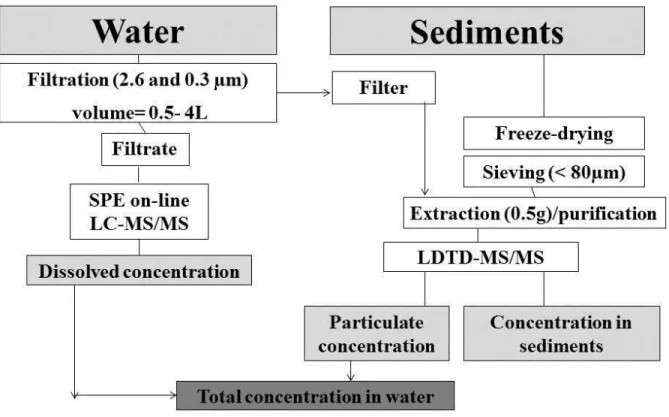
Figure 3-3.Schematically sample pre-treatment procedure. ... 45
Figure 3-4. On-line Solid-Phase Extraction-LCMS/MS [68]. ... 46
Figure 3-5. LDTD-APCI system. www.Phytronix.com. ... 47
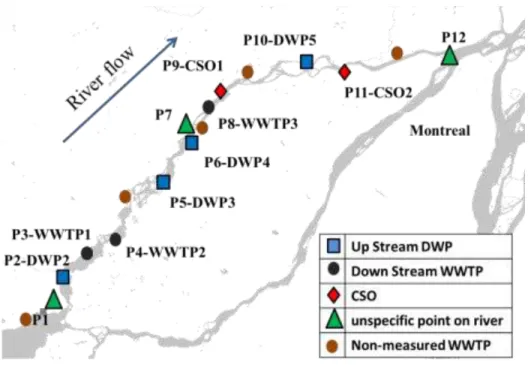
Figure 4-1. Sampling locations along the river. Points are numbered from upstream to downstream of the river and indicate whether sample was taken before DWP intake or after WWTP discharge points. ... 57
Figure 4-2. Total steroids detected in WWTPs influent and effluent. ... 61
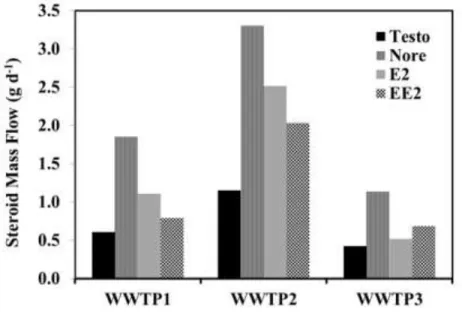
Figure 4-3. Mass flow of measured steroids in WWTP effluents. ... 62
Figure 4-4.Steroid pattern in particulate phase along the both shores of the river and WWTPs influent and effluents during the a) summer and b) spring sampling. ... 65
Figure 4-5. Distribution of total measured steroids between suspended particles (ng L-1) and sediment bed (ng g-1) along the river. a) Summer, b) Spring; Arrows indicate sampling points downstream of WWTP effluents. ... 67
Figure 4-6. Distribution of total steroids between dissolved and particulate phases of WWTPs influent and effluent. ... 71
Figure 4-7. Seasonal variation in total steroids levels in suspended particles from water samples taken along the river. Error bars represent the standard errors. ... 74
Figure 5-1. Sorption of steroids onto sediment samples at different organic carbon contents S1 fOC= 52%, S2 fOC = 73%, S3 fOC =57%, S4 fOC =17%. Conditions: mass of sediment=1 g; volume of solution= 5 mL; temperature= 25 °C; qt values from duplicate analysis of duplicate measurements. ... 87
Figure 5-2. Comparison of a) Kd and b) KOC values for 8 steroids in four sediment types.
Conditions: mass of sediment=1 g; volume of solution= 5 mL; temperature= 25 °C. ... 89 Figure 5-3. Relationship between sorption coefficients and octanol-water partitioning coefficients of selected steroids in sediment samples. ... 90 Figure 5-4. Modeled vs experimentally obtained qe values from pseudo second-order kinetics for
the steroids; dotted lines indicate the 95th prediction intervals. ... 93 Figure 5-5. Experimentally obtained Kd values vs Kd s from linear isotherm within 95%
confidence intervals. ... 95 Figure 6-1.Effects of temperature on the second-order decay of (a) testosterone, (b) progesterone, (c) medroxyprogesterone, (d) norethindrone, and (e) levonorgestrel, in ultrapure water at pH 6 and in presence of radical scavenger with 2 mg O3 L-1. Solid lines represent the linear
regression. ... 110 Figure 6-2. Impact of temperature on measured rate constants of progestogens and testosterone in ultrapure water at pH 6 and in presence of radical scavenger. Solid lines represent the linear regression of the measured data. Δ% removals represent the removal rate differences for steroids at 35 °C and 5 °C. ... 112 Figure 6-3. Predicted vs. observed removal rates for the five steroids in the filtered water (a) and WW effluent (b); Dotted lines indicate the 95th prediction intervals. ... 114 Figure 6-4. Predicted removal of steroids with direct reaction with ozone and combination of ozone and radicals from natural filtered water and WWTP effluent with the typical CtO3
values used in water treatment (CtO3= 2 mg min L-1 for natural filtered water and CtO3= 5
mg min L-1 for WWTP effluent at T=21 °C). ... 116 Figure 7-1. Summary of the research conducted. ... 121
Figure A-1. 1.Steroid levels in dissolved phase of samples from influent/effluent of a) WWTP1, b) WWTP2, and c) WWTP3 in spring. Data labels show concentration of each steroid in influent and effluent. ... 161
Figure A-1. 2. Steroid levels in particulate phase of effluent of WWTPs and DWP intakes in spring. River flow = 350 m3 s-1, T= 12 °C Points are in order of WWTP effluent or DW intake from upstream to downstream. ... 162
Figure A-2. 1. Comparison of amount of steroids sorbed on sediments at two different sediment/water (S:S) ratios. ... 163 Figure A-2. 2.Kd and Log KOC values for sediment/ water (S:S) ratio 1:1. ... 164
Figure A-3. 1. Oxidation of testosterone and progestogens at pH 6 and 8 at 21 °C with 2 mg L-1 ozone in ultrapure water... 167 Figure A-3. 2. Ozone decay in ultrapure water at pH 6 and different temperatures, applied O3
dose = 2 mg L-1. ... 168 Figure A-3. 3.Ozone decay in natural filtered water as a function of time at 21°C (□) and 5°C
(∆). Inset: first-order kinetic plots for the ozone decomposition indicating two phase depletion reaction. Applied O3 dose= 2 mg L-1. ... 168
Figure A-3. 4. Ozone decay in the diluted WW effluent at 21 °C with/without a radical scavenger; Inset: first-order kinetic plots for the ozone decomposition indicating two phase depletion reaction. Applied O3 dose= 10 mg L-1. ... 169
Figure A-3.5. RCt plots for the two phases of oxidation reaction in natural filtered water and
diluted WWTP effluent at T= 21 °C over the 10 min reaction time. Ozone dose= 2 mg L-1 for natural filtered water and 10 mg L-1 for diluted WWTP effluent. Concentration of ρCBA= 200 µg L-1
LIST OF SYMBOLS AND ABBREVIATIONS
AC Activated Carbon
AOPs Advanced Oxidation Processes
APCI Atmospheric Pressure Chemical Ionization APPI Atmospheric Pressure Photoionization A Frequency factor (M-1 s-1)
BOD Biological Oxygen Demand
CCL Contaminant Candidate List
CI Chemical Ionization
COD Chemical oxygen demand
CSOs Combined Sewage Overflows
CSTR Continuous Stir-tank Reactor
Ct Residual concentration of oxidant multiples time of contact DES Diethylstilbistrol
Diss. Dissolved
DOC Dissolved Organic Carbon DRM Distributed Reactions Model
DW Drinking Water
DWTP Drinking water treatment plant
Eact Activation energy (J.mol-1)
E1 Estrone
E2 17β-Estradiol
EE2 17α-ethinylestradiol
EDCs Endocrine disrupting compounds
EI Electron Ionization
ER Estrogen Receptor
ESI Electrospray Ionization
eV Electron volt
FeCl3 Ferric Chloride
FID Flame Ionization Detector FPD Flame Photometric Detector
GC Gas Chromatography
HOCl Chloric Acid
HPLC High performance liquid chromatography HRT Hydraulic Retention Time
kO3 Second-order rate constant with ozone (M-1s-1) k´ Pseudo-first-order ozone decay rate (min-1) Kow Octanol-Water Partition Coefficient
Kd Sediment-Water Partitioning Coefficient
KH Henry’s Constant (atm m3 mol-1)
Kbio Biodegradation Rate Constant
Koxy Oxidation Rate Constant
LC-MS-MS Liquid Chromatography-Tandem Mass spectrometry LDTD Laser Diode Thermal Desorption
LLD Liquid-Liquid Extraction
LOD Limit of Detection
Levo Levonorgestrel
MDRXY-Prog Medroxyprogesterone Milli-Q Ultra-pure Water
Nore Norethindrone
NOM Natural Organic Matter
NPD Nitrogen Phosphorous Detector % OC Organic Carbon content
OCl- Hypochlorite Ion
OECD Organisation for Economic Co-operation and Development
OH° Hydroxyl Radical
Part. Particulate
pKa/pKb Acid/Base Dissociation Constant
Prog Progesterone
qe Sorption Capacity
RCT Ratio of ozone exposure (CtO3) and hydroxyl radicals exposure (CtOH)
SPE Solid phase extraction SRT Sludge Retention Time (day) tertBuOH Tert-butyl alcohol
Testo Testosterone
THM Trihalomethane
TOC Total Organic Carbon
TS Total Solids
U.K. United Kingdom
USA United States of Amercia USE Ultrasonic Extracion
UV Ultra violet
VS Volatile Solids
WWT Wastewater Treatment
WWTP Wastewater Treatment Plant
WRRF Water Resource Recovery Facilities εHOMO Highest Occupied Molecular Orbital
εLUMO Lowest Unoccupied Molecular Orbital
Δε Energy difference between the HOMO of the nucleophile reactant and the LUMO of the electrophile oxidant
LIST OF APPENDICES
APPENDIX A. SUPPLEMENTARY INFORMATION, ARTICLE1: SEASONAL
VARIATIONS OF STEROID HORMONES RELEASED BY WASTEWATER TREATMENT PLANTS TO RIVER WATER AND SEDIMENTS: DISTRIBUTION BETWEEN PARTICULATE AND DISSOLVED PHASES ... 159 APPENDIX B. SUPPLEMENTARY INFORMATION, CHAPTER 5: ADSORPTION OF STEOIRDS ON RIVER SEDIMENTS ... 163 APPENDIX C. SUPPLEMENTARY INFORMATION, ARTICLE2: IMPACT OF
TEMPERATURE ON OXIDATION KINETICS OF TESTOSTERONE AND
CHAPTER 1
INTRODUCTION
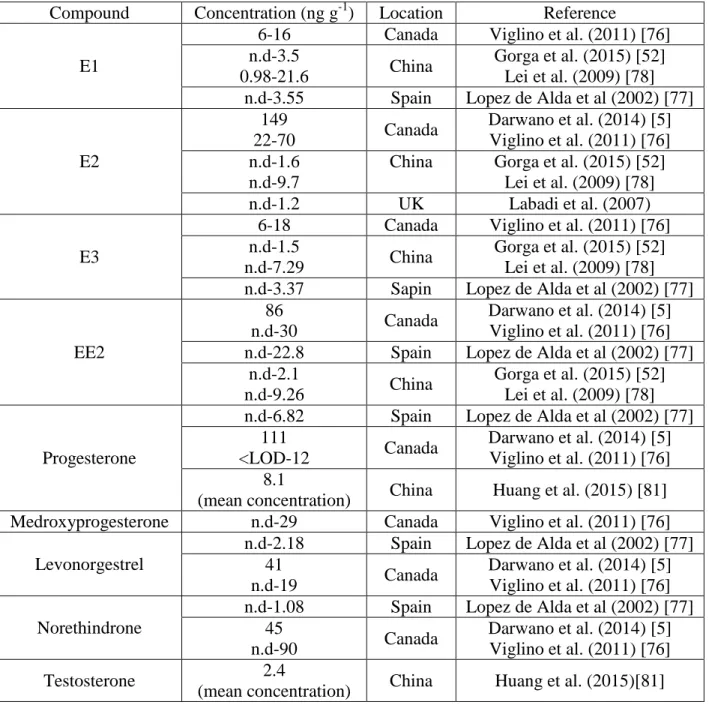
Steroid hormones are divided in two general categories, natural hormones which are excreted by humans and livestock; synthetic hormones which are extensively used as contraceptives and growth promoters. Both natural and synthetic steroids have been widely detected in aquatic environment. Pharmaceuticals containing synthetic hormones and also natural hormones excreted by human body undergo variety of transformations before their excretion in municipal sewage through urine or excrements and have to pass through wastewater treatment plant before entering water sources [1]. Steroid hormones have been detected in wastewater treatment plant effluents all over the world with concentrations ranging between few ng L-1 to µg L-1 [2, 3]. Contamination of water may be caused by incomplete removal of receiving compounds after sewage treatment. Additionally, from their physicochemical properties, they are expected to sorb on soil/ sediments or on sludge particles of clarification tanks and end up in soil and ground water by using sludge for agricultural uses. Estrone and estradiol have been found in WRRFS sludge at levels ranging between 1 ng g-1 and 48.9 ng g-1 [4]. Several studies were also reported the occurrence of steroid hormones in sediments at concentrations in range of 3-111 ng g-1 (progestogens), 86-149 (estrogens) [5, 6].
Despite their very low concentrations in the environment, natural and synthetic hormones are pollutants of high concerns because they are physiologically active and highly stable in aqueous media [7]. They may interfere with the reproduction of aquatic lives, livestock, and human [8] [9]. A complete feminization was observed between the fathead minnow when exposed to 4 ng L-1 of 17α-ethinylestradiol [10]. Progesterone and other synthetic progestogens, including levonorgestrel and medroxyprogesterone were found to make transcriptional effect in fish [11]. Knowing the ubiquitous presence of natural and synthetic hormones in the WRRFS effluents and their negative effect on aquatic life, advanced treatment processes would be essential for effective removal of such compounds. Quantification of hormones under different forms, including dissolved phase and attached to the suspended particles or sediments proved a perspective on their overall presence in the aquatic environment and the fate they are expected to follow during their journey from raw sewage to drinking water.
Since concentrations of hormones at highest levels in influent of WRRFSs are as low as ng L-1, specific analytical techniques are required for the detection and quantification of these
compounds in aqueous and solid matrices. Especially in the case of real water samples which contain several types of impurities and detection of such low concentrations becomes more difficult. Recently, modern analytical methods are in use to reduce the duration of analysis by liquid chromatography and off-line extraction processes. Online SPE coupled with LC/MS-MS and Laser Diode Thermal desorption tandem MS-MS (LDTD/MS-MS) have been used for quantification and identification of steroid hormones [12, 13].
1.1 Problem under study
Despite the fact that surface waters provide large part of drinking water in Canada (89%)1, few studies have been conducted on the occurrence of steroid hormones in different environmental systems [14-16]. Data are even more scarce on the effects of environmental conditions such as temperature variation and rainfall on steroid levels and the contribution of WRRFSs and CSOs in total steroids (dissolved and particulate phases) found in source and treated drinking water. Quantification of steroids in water systems without taking into account their fraction attached to the suspended particles would underestimate the total concentration of compounds. Therefore, investigation of the steroids profile in aquatic environments considering their concentration in both dissolved and particulate phases and also in sediments is necessary to provide realistic information on the occurrence and fate of these compounds. According to the physicochemical properties of steroid hormones, sorption to suspended particles in water or onto the sediments is fairly expected. Sorption onto solids and biological degradation are two main pathways for removal of steroids from aqueous phase. Steroid hormones are non-polar hydrophobic compounds that can be easily adsorbed onto river sediments or sludge particles. Hence, sorption to sludge particles might be an important way for steroid removal during wastewater treatment. Adsorption of steroids on aquatic sediments can directly affect their mobility, transformation, bioavailability and fate in the whole natural water systems. Studies of the sorption of steroids onto sediment and sludge are important, since these compounds have low solubility in water and high solid-water distribution coefficients which increase the chance of their removal through
1
wastewater treatment by sorption on sludge particles or from the other side their presence in suspended particles in wastewater effluent and their subsequent deposition in river sediments. Sorption of steroid estrogens (E1, E2, and EE2) onto sludge and sediment are comprehensively reviewed [17-19]. However, more investigations are still required on sorption kinetics of estrogens and also of the other groups of steroids such as progestogens and androgens.
From WRRFS effluent to receiving waters, steroids can reach drinking water treatment plants where many current drinking water treatment systems, such as ozonation, are expected to effectively reduce the trace concentrations of EDCs in drinking water to the below the detection levels. Ozonation is a multiuse advanced technology for water treatment and is applied in several countries such as the USA, Canada, Germany, and Switzerland. Beside the fact that ozonation appears among the most effective processes for micropollutant removal, it must be considered that there is limited information on the oxidation of recalcitrant compounds to oxidation such as progestogens and androgens, or the effect of different operationally relevant parameters such as pH and temperature on the removal efficiencies of such compounds.
1.2 Structure of dissertation
This dissertation consists of 8 chapters. Chapter 1 introduces the studied problem and explains the framework of research on occurrence and fate of steroid hormones in water treatment plants and receiving waters. Chapter 2 provides the literature review on the occurrence, functions, and environmental importance of hormones. The research objectives along with the methodology are presented in Chapter 3. Chapter 4 through 6 present research results in the form of two submitted scientific publications and also a chapter (chapter 5) on the adsorption kinetics of steroids in sediments. Chapter 4 covers the seasonal variations in general profile of steroid hormones in WRRFSs effluent, receiving river waters, and drinking water treatment plant intakes. The nature of sorption of steroid hormones to various sediments, the sorption isotherm and sorption kinetics of steroid hormones are determined in Chapter 5. Chapter 6 focuses on the ozone oxidation of 5 steroid hormones in natural water aimed to produce drinking water. Chapters 7 and 8 provide general discussion, conclusion, and suggestions for future work.
CHAPTER 2
LITERATURE REVIEW
2.1
General characteristics of steroid hormones
Natural hormones are secreted in human body and include progestogens, glucocorticoids (cortisol), androgens and estrogens[8]. A common structure for steroids is three hexagonal rings (A, B, and C) and one pentagonal ring (D). One of these rings is usually phenolic ring such as in estrogens [20]. Androgens and progesterones are less active than estrogens because these groups of steroids do not contain phenolic group. The phenolic group is usually linked to estrogenic activity and compounds with a phenolic group attached with OH group have strong estrogenic activities. 17β-estradiol (E2) is one of the most active estrogens with two OH groups at each end of its structure which are responsible of estrogen receptor (ER) binding. Any modification or substitution in these two OH groups can strongly affect E2 activity. Table 2-1 lists naturally produced and synthetic hormonal compounds used in hormonal therapy.
2.2 Specific properties of steroid hormones related to their
environmental fate
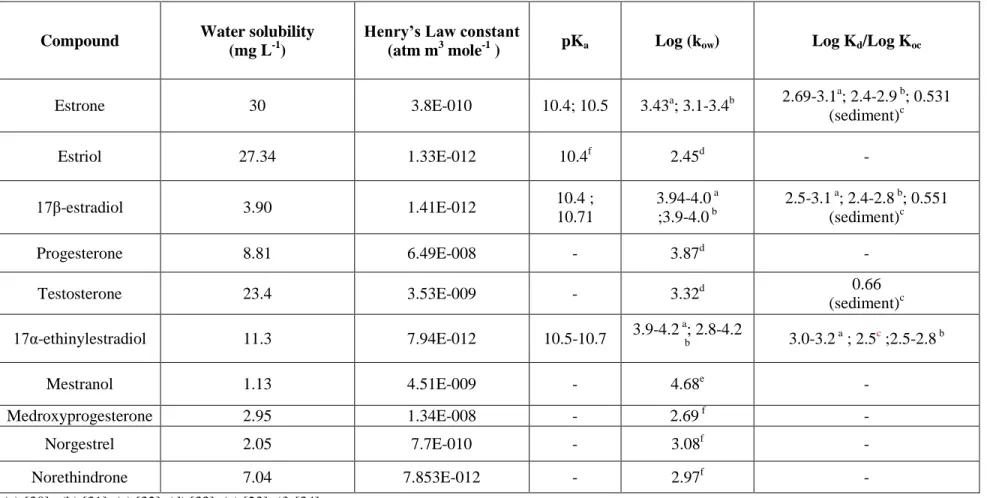
After their release in the environment, different fates such as photodegradation, vaporization and in higher extent biological degradation and sorption are expected for steroid hormones [21]. Their specific characteristics and physicochemical properties affect their pathway through the aqueous and solid environments. This part presents physicochemical properties of hormones determining their fate in the environment. Parameters which are used for different steps of this research project are discussed in more detail in the following sections. Properties of mostly detected natural and synthetic hormones in different environmental matrices are summarized in Table 2-3.
Table 2-1: Natural and synthetic hormones produced in body or in hormonal therapy medications.
Hormones Structure Molecular Weight
[g mol-1] Application
Androsterone 290.44 Weak androgen produced from metabolism of testosterone in
liver
Estrone (E1) 270.37 Reproductive female estrogen
Estradiol (E2) 272.39
Predominant sex hormone present in females. Also present in males, being produced as an active metabolic product of testosterone
Estriol (E3) 288.39
One of the three main estrogens produced by the human body. Levels in female are not significantly different from levels in men
Testosterone 288.39 Responsible of male reproductive tissues as well as
developing muscles, bone mass and body-hair
Progesterone
314.47 Steroid hormone involved in the female menstrual cycle and pregnancy of human and animals
HO OH H H H HO OH OH H H H O O H H H
Table 2-2(Continued): Natural and synthetic hormones produced in body or in hormonal therapy medications.
Hormones Structure Molecular Weight
[g mol-1] Application
Mestranol 310.44 Derivative of ethinylestradiol used in firstly produced
contraceptives
Ethinylestradiol
(EE2) 296.4
Biologically active estrogen used in almost all of oral contraceptives
Norethindrone 298.43
The first orally active progestin synthesized to treat premenstrual and menopausal syndrome. It is used in some combined contraceptives
Levonorgestrel 312.46
Progestin compound used in hormonal contraceptives. A mixture of two isomers which only one of them is biologically active
Medroxyprogesterone 344.5 Medroxyprogesterone or its derivative Medroxyprogesterone acetate is progestin used to treat menstrual disorders
2.2.1 Water solubility and Octanol-Water partitioning coefficient (K
ow)
Water solubility is the maximum amount of a dissolved substance in water at equilibrium (saturation) condition and at a given temperature and pressure. Water solubility is a good predictor of the mobility of the chemicals. The more soluble compound in water means, the more mobile in the environment is likely to be. Chemical compounds are divided in two groups according to their solubility in the water: polar compounds which are soluble and hydrophilic and non- polar compounds which are moderately soluble in water and hydrophobic. The solubility of steroids in water varies over a wide range from 1.13 mg L-1 for mestranol to 30 mg L-1 for E1.
Solubility in water is also correlated to another chemical property, the n-octanol/ water partitioning coefficient (Kow) which is defined as the ratio of the dissolved concentration of a test
compound in n-octanol and water at equilibrium. Kow refers to the potential of a chemical
compound to partition between water and organic phases such as the bioaccumulation in fatty tissue of microorganisms, or its potential to sorb to soil or sediments [22].
𝐾𝑜𝑤 = 𝐶𝑛−𝑜𝑐𝑡𝑎𝑛𝑜𝑙
𝐶𝑤𝑎𝑡𝑒𝑟 Equation 1
Where, Kow is the n-octanol/water partitioning coefficient, Cn-octanol is the concentration of test
compounds in n-octanol and Cwater is concentration of test compound in water.
A larger Kow corresponds to a higher tendency of the compound to adsorb onto the soil or
sediment’s organic phase. Compounds with Log Kow <1 are considered hydrophilic with low
tendency to adsorption onto soil and sediment and also bio-concentration. In opposition, compounds with 3 < Log Kow < 6 are highly hydrophobic and bioaccumulative [22]. pH also
plays a critical role for partitioning potential affecting the charge of the sorbent and sorbate. At different pH values, the degree of ionization will change then the amount of ionized group which seems more hydrophilic and non-ionized groups which tend to sorb into lipid phase will differ. Ionic groups are more hydrophilic and do not tend to sorb in organic phase. The pH of 7 is usually used for environmental risk assessments. Considering both water solubility and Kow is
useful to determine the fate of chemicals in the environment. The value of log Kow for hormones
EE2= 4.2) than natural estrogens (estrone=3.4, estriol=2.8) which increases their partitioning to the sediment and solid particles [23].
2.2.2 Vapor pressure, Henry’s law constant
Vapor pressure of organic compound is a key factor for its distribution in the environment. Tendency of chemical compound to the gas phase affects its partitioning between aqueous or solid phases and gas phase and then its type of removal during treatment [24]. Volatile or semi volatile compounds may exchange between rivers, lakes or any source of water and atmosphere. Henry’s constant (KH), as shown in Table 2-3, is defined as the ratio of the concentration of test
compound in gas phase (CG) and to that in the liquid phase (CL) at equilibrium.
𝐾𝐻 =𝐶𝐺 𝐶𝐿
Equation 2
In water treatment applications, Henry’s constants are commonly expressed as ratio of the mass of the volatile compound per unit volume of gas to the mass per unit volume of solution [25]. This form of Henry’s constant is useful to qualify the solubility and volatility of a compound. During wastewater treatment, aeration stripes volatile or semi volatile chemicals from the water phase into air. The transfer depends on the aeration rate of wastewater and the Henry coefficient. In some cases, using mechanical equipment accelerates the system equilibrium. Also, in membrane bioreactors which use higher amounts of air compare to activated sludge processes, small extents of some pharmaceuticals may be stripped into the air. The higher the constant, the easier the compound is removed by air stripping [26]. For KH more than 3*10-3 atm m3 mole-1,
air stripping could be observed during aeration of bioreactors, but in the case of steroid hormones which have KH values less than 10-8 no elimination via air stripping is expected. It is obvious,
because almost all of these compounds are meant to be effective in aqueous phase (human blood).
2.2.3 Dissociation constant (pK
a)
When a compound is dissolved in a solvent, depending on how strong acid or base it is, it will donate or receive protons to/from solvent. The acid or base dissociation constant (Ka or Kb)
defines solubility and degree of ionization of acids and bases in water and represents the value of pH at which 50% of the compound is ionized in the water [27]. When compound AH is dissociated to its ions H + and A- , the acid dissociation constant (Ka) is generally presented as
follow:
𝐴𝐻 ↔ 𝐻++ 𝐴− , 𝐾 𝑎 =
[𝐻+][𝐴−]
[𝐴𝐻] , 𝑃𝐾𝑎 = −𝑙𝑜𝑔[𝐾𝑎] Equation 3
pKa has significant effect on distribution of chemical compound in the environment. At
appropriate pH, ionized groups show higher water solubility than non-ionized groups and this will affect their partitioning between water phase and sludge or sediments phase during wastewater treatment. The degree of ionization depends on the pH of the solution. In the case of steroid hormones with different functional groups, the degree of ionization will be different for each group and also behavior of ionized or non-ionized groups is different.
2.2.4 Soil (sediment) - water partitioning coefficient (K
d)
The partitioning coefficient (Kp) or distribution coefficient (Kd) is the concentration of a
compound sorbed into the solid phase to its dissolved concentration. Both Kp or Kd values are
used for predicting the degree of hydrophobicity of compounds.
Shchwarzenbach [24] proposed an equation according to the ratio of the concentration in aqueous phase and in solid phase to assess the amount of a compound sorb into the solid phase at equilibrium condition.
𝐾𝑑 =
𝐶𝑠
𝐶𝑤 Equation 4
Where, Kd is the compound partitioning coefficient (L g-1), Cs (mg g-1) and Cw (mg L-1) are the
concentration of compound in solid (soil/sediment) and water, respectively. The reported Kd
2.2.5 Organic carbon- water partitioning coefficient (K
oc)
The estimation of Kd is rather difficult in real environmental samples because neutral
hydrophobic organic compounds have shown different sorption affinities depending on the carbon content of the sorbent [24]. Therefore, another normalized sorption coefficient, the organic carbon-water partitioning coefficient (Koc) is used for such compounds [29]. Koc is the
ratio of the mass of a compound adsorbed in the soil, sludge or sediment per unit mass of organic carbon content of the soil, sludge or sediment per concentration of compound in the solution at equilibrium. Koc values are useful in determining the mobility of contaminants in soil and
sediments. The higher Koc values, the less mobile compound and opposite. Koc values are usually
used for estimating distribution coefficient (Kd) according to equation below:
𝐾𝑂𝐶 = 𝐾𝑑
𝑓𝑂𝐶 Equation 5
Where, Kd is the distribution coefficient (L kg-1), Koc is the soil organic carbon- water
partitioning coefficient (mg L-1), and foc is the organic carbon fraction of sludge or sediment. Organic compounds containing hydroxyl or carboxyl groups dissociate by losing a proton and yield negatively charged groups. Groups with negative charge are more hydrophobic and then more mobile in soil compare to parent compound. Therefore, pH can directly affect the partitioning coefficient of compounds between the solid and liquid phases. Koc value varies with
several factors including, type of the soil or sediment, methods that have been used to measure Koc, and analytical method errors. Koc also varies between ionizing and non-ionizing compounds.
Table 2-3. Physicochemical properties of hormones affecting their environmental fate.
Compound Water solubility
(mg L-1)
Henry’s Law constant
(atm m3 mole-1 ) pKa Log (kow) Log Kd/Log Koc
Estrone 30 3.8E-010 10.4; 10.5 3.43a; 3.1-3.4b 2.69-3.1 a ; 2.4-2.9 b; 0.531 (sediment)c Estriol 27.34 1.33E-012 10.4f 2.45d - 17β-estradiol 3.90 1.41E-012 10.4 ; 10.71 3.94-4.0 a ;3.9-4.0 b 2.5-3.1 a; 2.4-2.8 b; 0.551 (sediment)c Progesterone 8.81 6.49E-008 - 3.87d - Testosterone 23.4 3.53E-009 - 3.32d 0.66 (sediment)c 17α-ethinylestradiol 11.3 7.94E-012 10.5-10.7 3.9-4.2 a ; 2.8-4.2 b 3.0-3.2 a ; 2.5c ;2.5-2.8 b Mestranol 1.13 4.51E-009 - 4.68e - Medroxyprogesterone 2.95 1.34E-008 - 2.69 f - Norgestrel 2.05 7.7E-010 - 3.08f - Norethindrone 7.04 7.853E-012 - 2.97f - (a) [30] ; (b) [31]; (c) [32]; (d) [33]; (e) [23]; (f) [34];
2.3 Occurrence of hormones in different aquatic environments
Natural and synthetic hormones are excreted from human and animal bodies and end up in the environment via discarding animal waste or direct discharge of municipal sewage [1, 8, 21]. Beside natural and synthetic estrogens, occurrence of androgens and progestogens are also of high importance, since they exert from human in higher amounts compare to estrogens [35, 36]. Additionally, synthetic progestogens are extensively used in human and veterinary drugs. Megestrole acetate, Medroxyprogesterone acetate, and Norgestrel are the main continents of contraceptive treatments associated with estrogens. Figure 2-1shows the main routes of hormonal compounds into the environment.Figure 2-1. Routes of environmental exposure to hormones. Adopted from Kuster et al.2005 [37].
The occurrence of hormonal compounds in the environment is of high environmental relevance because they can interfere with the reproduction systems of human, livestock, fish and wild living animals [38]. Synthetic estrogens are also used for livestock farming and fish farming as growth-promoters and are excreted through manure [39]. The manure is applied to agricultural fields as fertilizers then un-metabolized drugs present in the manure or their biologically active
metabolites can threaten groundwater or reach surface waters through run-off [29, 36]. For this reason, numerous studies have been conducted on the occurrence, fate and health risks of hormonal compounds in the environment [1, 35, 40-43]. Direct correlations have been found between the feminization of male fish and the presence of hormonal compounds in several studies around the world [1, 10, 38, 44].
The following subsections provide a critical review on the recent studies on the occurrence of steroid hormones in different aquatic matrices including wastewater, surface water, ground water, and DW.
2.3.1 Wastewater treatment plants influent and effluent
Many of drugs are not completely metabolized in the human body and usually leave the body in the form of conjugates (e.g. sulfides and glucoronides) [45]. Un-metabolized and conjugated hormones enter sewage and reach WRRFSs, where different treatment processes are applied. These conjugates may be cleaved and reproduce parent compounds during wastewater treatment [46]. It is complex to predict the dynamic transformation of these compounds during wastewater treatment due to their wide range of classification and differences between behavior of parent compounds and their metabolites or conjugates. In the case of more stable compounds (e.g. estrone and 17β-ethinylestradiol), conventional treatment processes are not completely removed and they may reach surface waters through WRRFS effluents [33]. Consequently, in order to accurately evaluate their occurrence and potential risks in the environment, sufficiently sensitive and reliable analytical methods are needed to analyze the different classes of hormones in surface water, wastewater and solid matrices [33].
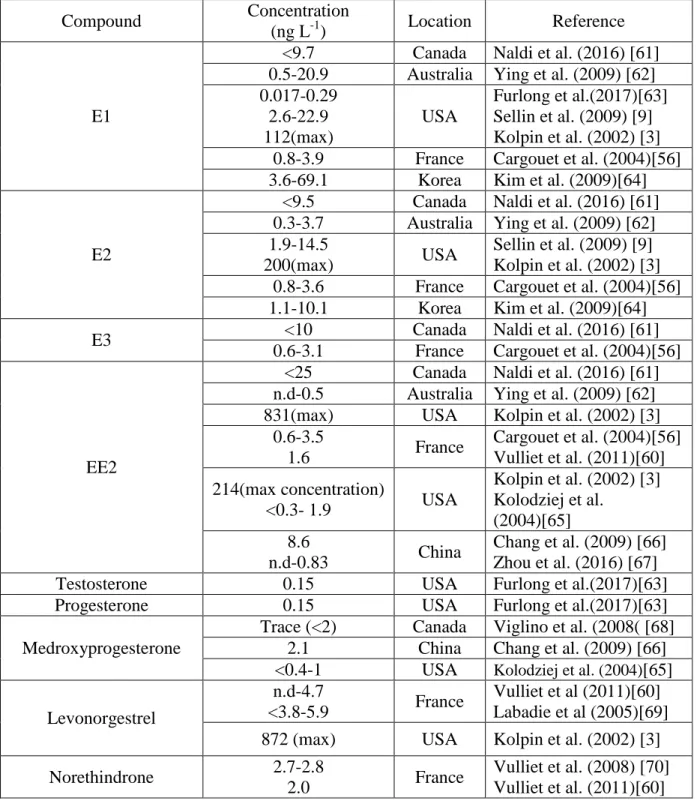
Steroid hormones have been detected in the influents and effluents of WRRFSs all around the world at concentrations up to hundred micrograms per liter [2, 4, 47, 48]. Table 2-3 presents the range on concentrations of detected steroids in the influents and effluents of WRRFSs by different researchers in Canada. Additionally, Chang et al. [35] analyzed the occurrence of estrogens, androgens and progestogens in seven WRRFSs and in the receiving waters in Beijing, China. Androgens were the most frequently detected hormones in all WRRFS influents and effluents followed by progestogens. Estrogens were found at lower concentrations as compared to two other groups of hormones. In surface water samples, androsterone, a natural androgen,
was the mostly abundant detected compound. Removal efficiency by wastewater treatment of androgens and progestogens were higher as compared to estrogens (91-100% versus 67-80%). A dominance of androgens in the WRRFS effluents and receiving waters has been also reported by Liu et al.[4]. The total concentration of androgens in the WRRFSs effluents was 2 folds greater than concentrations of estrogens and progestogens.
Table 2-4. Occurrence of steroid hormones in the dissolved phase of influents and effluents (ng L-1) of WRRFSs in Canada. Compound Applied treatment process Influent Effluent Removal Efficiency (%) Reference E1 AS 19-78 1-96 65 Servos et al. (2005)[49] AS 29.5 7.6 74 Lishman et al. (2006)[50] AS 11 14 -15 Fernandez et al. (2007)[51] AS 13.1-104 11.2-370 77- (-340) Atkinson et al. (2012)[47] E2 AS 2.4-26 0.2-14.7 88 Servos et al. (2005)[49] AS 8.3 ND 100 Lishman et al. (2006)[50] AS ND-66.9 ND-26.7 - Atkinson et al. (2012)[47] EE2 AS ND-5.5 ND-9.8 (-73) - 100 Atkinson et al. (2012)[47] Testosterone AS TF Lagoon 42-44 20 0 5 100 76 69 Fernandez et al. (2007)[51]
2.3.2 Surface water
A variety of hormonal compounds have been detected in sewage treatment plant effluents and the surface waters in which they were discharged by researchers in Europe and North America [45, 46, 52-54]. The concentrations of steroid hormones in surface water samples while generally at the low ng L-1 level can in certain cases exceed 100 ng L-1. Higher concentrations are reported in samples taken near the discharge of WRRFs effluents. Other factors affect their concentration in surface water including the sampling location (distance from point sources and mixing patterns), and the proportion of wastewater discharges in reference to the flow rate of the receiving river. Local mixing of the wastewater effluent in river flow reduces the concentration of contaminants through dilution, impacting the distribution pattern of micropollutants down flow of WRRFs discharges.

![Figure 2-1. Routes of environmental exposure to hormones. Adopted from Kuster et al.2005 [37]](https://thumb-eu.123doks.com/thumbv2/123doknet/2352183.36540/39.918.135.788.440.831/figure-routes-environmental-exposure-hormones-adopted-kuster-et.webp)