DOCTORAT DE L'UNIVERSITÉ DE TOULOUSE
Délivré par :Institut National Polytechnique de Toulouse (Toulouse INP)
Discipline ou spécialité :
Science et Génie des Matériaux
Présentée et soutenue par :
Mme NELLY WAHYUNI le lundi 12 novembre 2018
Titre :
Unité de recherche : Ecole doctorale :
Absorption and Luminescence Properties of beta-carotene with Antioxidant
and Modified Kaolinite and Its Application in OLED
Sciences de la Matière (SDM)
Laboratoire de Chimie Agro-Industrielle (L.C.A.)
Directeur(s) de Thèse :
M. ZEPHIRIN MOULOUNGUI M. GEORGES ZISSIS
Rapporteurs :
M. AMANE JADA, CNRS
M. DIVINE NDE BUP, UNIVERSITE DE BAMENDA
Membre(s) du jury :
Mme KATHLEEN MOINEAU, CNRS TOULOUSE, Président M. BELKACEM ZEGHMATI, UNIVERSITE DE PERPIGNAN, Membre
M. GEORGES ZISSIS, UNIVERSITE TOULOUSE 3, Membre M. THAMRIN USMAN, UNIVERSITAS TANJUNGPURA, Membre
M. ZEPHIRIN MOULOUNGUI, INRA TOULOUSE, Membre
i
My Husband, SARYUDI
Our Lovely Children, AYA FITRIA QOLBI and
TITAN ARRAYAN FIKRI
Thanks for all your love, understanding and support
My Parents, M. ALI MOCHTAR and ZUKIAH
SUKARJO and DALIYEM
Family of 101, LIANA AISYAH and ACHMAD NASRULLAH
AND ALL MY FAMILY
ii
First, I would like say Alhamdulillah, thanks to Allah SWT for your blessing from the beginning and the end of my PhD study.
I also would like say thank you to all of you who contribute in my PhD: Rector of Tanjungpura University Prof. Dr. Thamrin USMAN, DEA which is support me, especially at preparation stage of my study. His briliant idea and efford to realize ‘KEDAI PERANCIS UNTAN” was very inspiring and encourage us to continue our study at France. Also for BPPLN DIKTI which is support in financial of my study.
From deep of my heart, I would like say big thanks to my supervisor Dr. Zéphirin MOULOUNGUI and Pr. Georges ZISSIS for your kindness. Be part and involve in your team was a great experience for me. Your patience, friendly, dedicate, hard-work, visioner, become a inspiration for my profesional work. I can not finish my study without your kindness and undestanding. Thank you very much.
This PhD research mainly conducted at Laboratoire de Chime Agro-industrielle (LCA) at l’Ecole Natinale Superieure des Engenieur en Arts Chimique et Technologique (ENSIACET), Institut National Politechnique de Toulouse. Therefore, at this moment, I would say thank you very much to Dr. Gérard VILAREM and Pr. Carlos VACA-GARCIA as directeur and vice-directeur and Dr. Zéphirin MOULOUNGUI for give me a chance to do my research here. Also for all the staff whos very helpfull, Mirelle JUAN, Didier DANGLA, Emmanuelle DAO, Inggrid PELLETTIER and Romain ARMENGGO. I also doing my research at Laboratoire Plasma et Conversion d’Energie (LAPLACE), Universite Paul Sabatier. Thank you very much for Pr. Georges ZISSIS who is give me a chance to colaborate with your team.
I also want to say thanks for your helping in doing analysis of my samples and discussion, Cédric Charvillat (Centre Interuniversite de Recherche et d’Ingenierie de Materiaux, CIRIMAT), Gwénaëlle Raimbeaux, Christine Rey Rouch, Mari-Line de Solan Bethmale (Laboratoire de Genie Chimique, LGC). Dr. Alix Saquet (Laboraire de Chimie Coordination, LCC) who’s helping me in cyclic voltametry analysis and Dr. Manuel Lopes (LAPLACE) in fabrication OLED, also for the discussions.
And thanks to Mr. Divine NDE BUP (College of Technology, The University of Bamenda, Republic of Cameroon) and Mr. Amane JADA (Institut de Sciences Des Matériaux De Mulhause, Université Haute-Alsace, Mulhause-France). Thank you very much for your corrections and advices. It is very meaningfull for my thesis. Also, for the other member of jury: Mr. Thamrin
iii
Université Paul Sabatier, UPS Toulouse III, Toulouse-France), M. Zéphirin MOULOUNGUI (INRA, LCA, ENSIACET, Institut National Polytechnique de Toulouse, INPT, Toulouse-France), M. Georges ZISSIS (LAPLACE, INPT, UPS, Université de Toulouse, Toulouse-France) and M. Gérard VILAREM (LCA, ENSIACET, INPT, Toulouse-France).
Thanks to Dr. Rudiyansyah, Dr. Winda Rahmalia, Dr. Anis Shofiyani, Ridho, Risya for discussion and help me in preparing paper. Also for my friends, Dr. Pablo, Dr. Jesus, Dr. Romain, Francois, Monica, Lucero, Lonn, Douaa, Sidrine and Niki.
Finally, thanks for your support and togetherness to all the PhD student at LCA. To start is hard, but to finish is hardest. Keep on spirit and smile.
iv Summary
Energy crises, especially fossil fuel-based energy, lead to increased use of new energy and renewable energy. In addition, research is also directed towards more efficient energy use through the development of energy storage materials such as batteries, and the use of energy-efficient materials. An OLED (organic light-emitting diode) is a light-emitting diode (LED) and is known for their high potential in a display, signage, and lighting applications.
Carotenoids constitute an important class of linear π-conjugated molecules that exhibit a high degree of electronic delocalization and ultrafast dynamic. The dye that is used as a photosensitizer plays an important role in the operation of DSSCs or other bifunctional material.
In this research, we studied the photostability of the carotenoid compound (β-carotene and fucoxanthin) using natural antioxidant and modified kaolinite. In this work, the carotenoid stability by the carotenoid compound/antioxidant binary is studied for the first time. Photostability of β-carotene can be enhanced by antioxidant and modified kaolinite. Photoprotection efficiency of β-carotene by curcumin was higher than fucoxanthin. Modified kaolinite decreased photodegradation of β-carotene by shielded and protected from direct UV irradiation.
Antioxidant fucoxanthin and curcumin decreased the electrochemical gap of the binary material. The electrochemical gap of carotene/curcumin is -1.61 eV, carotene/fucoxanthin is -1.75 eV compare to the only β-carotene -2.04 eV. Fucoxanthin can keep the first oxidation stage of β-carotene. Therefore at the binary compound, electron was still reversible, but not for curcumin.
Fucoxanthin in OLED devices NPD/Fx/ETL reduced significanly the EQE (%) almost 80% in Alq3 and 76% in BAlq. OLED device:
NPD(50nm)/Fx(1nm)/Alq3(85nm) yielded an effeciency quantum external yield, EQE = 0.12% and CIE (0.4160, 0.5302). Fabrication OLED using β-carotene as HTL and curcumin as EL layer resulted yellow color , EQE = 0.02%, with the composition MoO3(15nm)/NPD(40nm)/Car(10nm)/
Cur(15nm)/Alq3(70nm)/Ca(100nm). For application of β-carotene in OLED
device, its perfomance can be improved by using curcumin at the fabrication
Keywords: antioxidant, beta-carotene, fucoxanthin, kaolinite, OLED, photostability
v
antioxydant et le kaolin modifié et son application dans les diodes électroluminescentes organiques (OLED)
Résumé
Les crises énergétiques, en particulier celles liées aux combustibles fossiles, conduisent à une utilisation accrue des nouvelles énergies renouvelables. De plus, les recherches visent également à utiliser des matériaux de stockage de l'énergie qui sont plus efficace, tels que les batteries, et à utiliser des matériaux économes en énergie. Une OLED (diode électroluminecente organique)) est une diode émettrice la lumière (LED) qui sont connues grâce leur potentiel élevé dans les applications d'affichage, de signalisation et d'éclairage.
Parmi ces matériaux organiques, les caroténoïdes constituent une classe importante de molécules linéaires conjuguées qui présentent un degré de délocalisation électronique élevé et de dynamique ultra-rapide. Le colorant joue un rôle important dans le fonctionnement des cellules solaires à pigment photosensible (CSPP) ou d'autres matériaux bi fonctionnels.
Dans cette recherche, nous avons étudié la photo stabilité des caroténoïdes (β-carotène et fucoxanthine) à l'aide du kaolin modifié et de l'antioxydant. La photostabilité du β-carotène et de la fucoxanthine peut être améliorée par la kaolinite modifiée et l'antioxydant.
La fabrication OLED utilisant la fucoxanthine n'est pas suffisante à cause de la bande interdite de la fucoxanthine (Fx) qui est très grande et peut être un isolant. NPD (50 nm) / Fx (1 nm) / Alq3 (85 nm) a un EQE de 0,12% et
un CIE (0,416 ; 0,5302). Les dispositifs OLEDs en utilisant le ß-carotene comme couche de transport du trou et la curcumine comme couche émettrice ont donné une couleur jaune avec un EQE de 0,02%.
Mots-clés: antioxydant, bêta-carotène, curcumine, fucoxanthine, kaolinite, OLED, photostabilité
vi Ringkasan
Krisis energi, terutama energi berbasis bahan bakar fosil, memacu pada penggunaan energi baru dan terbarukan. Selain itu, beberapa penelitian juga diarahkan untuk penggunaan energi yang lebih efisien dan penggunaan bahan hemat energi. OLED (organik light-emitting diode) adalah dioda pemancar cahaya (LED) dan sedang giat dikembangkan karena banyak diaplikasikan sebagai layar elektonik, sensor, dan lampu.
Karotenoid merupakan golongan organik terpenting dari molekul linear π-terkonjugasi karena delokalisasi elektroniknya yang tinggi dan dinamis ultra cepat. Pewarna yang digunakan sebagai fotosensitizer memainkan peranan penting dalam aplikasinya di solar sel berbasis photosensitizer atau bahan bifungsional lainnya.
Penelitian ini bertujuan untuk meningkatkan photostabilitas dari senyawa karotenoid (β-karoten dan fucoxanthin) menggunakan antioksidan dan kaolinit yang dimodifikasi. Hasil penelitian menunjukkan bahwa antioksidan dan kaolinit yang dimodifikasi dapat meningkatkan fotostabilitas β-karoten.
OLED dengan komposisi NPD(50nm)/Fx(1nm)/Alq3(85nm) menghasilkan EQE 0.12% dengan CIE (0.4160, 0.5302). Perakitan OLED menggunakan kombinasi β-carotene sebagai hole transport layer (HTL) dan kurkumin sebagai emitting layer (EL) menghasilkan emisi berwarna kuning dengan EQE sebesar 0.02%.
Kata kunci: antioksidan, karotenoid, beta-karoten, fucoxanthin, kaolinite, OLED, photostabilitas
vii
Summary... iv
Table of Contents ... vii
List of Figures ... x
List of Tables ... xiv
General Introduction... 1
Chapter I: Bibliography... 14
1. Organic light emitting diode (OLED)... 14
1.1. Principle of OLED... 15
1.2. Fabrication of OLED... 16
1.3. Effeciency of OLED... 21
1.4. Emitting layer... 21
1.4.1. General concept of absorption and emission of light by material... 21
1.4.2. Organic material as emitting layer in OLED... 24
1.4.3. Biomolecule organic diode (BIODE) and natural dyes in OLED... 26
2. Natural organic compound: β-carotene... 31
3. Antioxidant ... 35
3.1. General concept of antioxidant... 35
3.2. Fucoxanthin ... 35 3.3. Curcumin ... 38 4. Clay... 41 4.1. Kaolin ... 43 4.1.1. Kaolinite ... 45 4.1.2. Nacrite ... 46
4.2. Activation and modification of kaolin and its characterization ... 47
Chapter II: Methodology... 58
1. Preparation and modification the raw clay... 58
1.1. Kaolin from Indonesia... 58
1.2. Clay from Central Africa... 59
1.3. Modification nacrite with solution ammonium hidroxide.... 60
1.4. Modification kaolinite with solution zinc chloride... 60
2. Characterization of clay... 60
2.1. X-Ray diffraction (XRD)... 60
2.2. X-Ray fluoresence (XRF)... 61
2.3. Spectroscopy infra red (FTIR)... 62
viii
UV-spectrophotometer... 66
4. Photostability of β-carotene... 67
4.1. Photostability with antioxidant... 67
4.2. Photostability with modified kaolinite... 68
5. Electrochemical analysis... 68
6. Fabrication organic light emitting diode (OLED)... 70
Chapter III: Characterization of Natural Clay... 73
1. Introduction... 73
2. Characterization natural clay from Indonesia, Congo, and Gabon... 74
2.1. Physical properties... 75
2.2. Structural characterization (IR and XRD)... 75
2.3. Morphological and textural characterization (SEM-EDX Gas sorption analysis)... 82
3. Red clay from Gabon... 86
3.1. Characterization ... 86
3.2. Degradation of red kaolin ... 93
3.3. Electrochemical and photostability analysis ... 94
Chapter IV: Modification and Characterization Kaolin from Moubeyi in Congo Brazzaville and West Kalimantan Indonesia .. 99
1. Introduction ... 99
2. Characterization and modification natural clay from Congo Brazzaville in Centra Africa ... 100
2.1. Characterization with XRD ... 100
2.2. XRF characterization ... 102
2.3. FTIR characterization ... 103
2.4. TGA/DTA analysis ... 104
2.5. SEM analysis ... 105
2.6. BET surface area and pore analysis ... 107
3. Characterization and modification kaolin from West Kalimantan Indonesia ... 108
4. Characterization total acidity of kaolin ... 116
5. Conclusion ... 121
Chapter V: Photostability of Carotenoid ... 128
1. Instroduction ... 128
2. Photostability of β-carotene ... 131
2.1. Photostability of β-carotene with antioxidant ... 131
ix
with antioxidant ... 135
2.1.2.2. Electrochemical properties of β-carotene with antioxidant ... 141
2.2. Photostability of β-carotene with fucoxanthin ... 145
2.3. Photostability of β-carotene with curcumin ... 148
2.4. Photostability of β-carotene with modified kaolinite ... 156
3. Photostability fucoxanthin with curcumin ... 165
4. Conclusion ... 170
Chapter VI: Fabrication OLED Using Biomolecules ... 180
1. Introduction ... 180
2. Fabrication OLED ... 182
3. Fucoxanthin as emitter material ... 183
4. Biomolecules in OLED ... 189
5. Conclusion ... 191
General Conclutions and Future Work ... 194
General conclusions ... 194
Future work ... 196 Annex I: Publications
x
LIST OF FIGURES
Figure 1.1: Principle of electroluminescence ... 16 Figure 1.2: Typical OLED structure ... 17 Figure 1.3: Common OLED architectures with a hole-transport
material (HTM) and an electron-transport material
(ETM) ... 19 Figure 1.4: Electronic transition energy level diagram ... 23
Figure 1.5: The chemical structure of chromophores type... 25 Figure 1.6: The schematic view of the device structure an chemical
structure of hem c (iron porphyrin) in cytochrome c. (His:
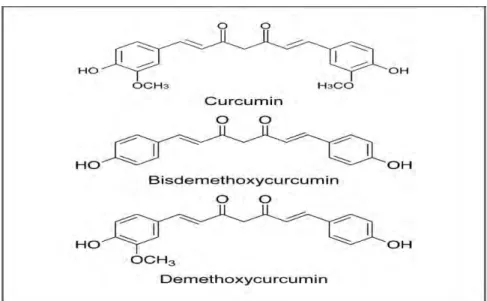
methionine, and His: histidine)... 26 Figure 1.7: Structure biomolecules using in BIODE ... 28 Figure 1.8: Structure of curcumin (a) and schematic energy level (in
eV) diagram of multi layer fabricated OLED using
curcumin (b) ... 29 Figure 1.9: The device configuration of the OLED (A) the EBL
contains NPB (reference device) or a nucleobase (A or T) and (B) molecular orbital energy levels for the EBL
materials and the levels of adjacent materials... 30 Figure 1.10: Molecular structure of β-carotene ... 31 Figure 1.11: Energy level of β-carotene... 33 Figure 1.12: Energy level diagram showing excitation of the PYR-3
chromophore with β-carotene... 34 Figure 1.13: Chemical structure and dimension of Fucoxanthin... 36 Figure 1.14: Absorption peaks of fucoxanthin standard... 37 Figure 1.15: Molecular structure of the main compound in
curcumin... 39 Figure 1.16: Absorption (ABS) and photoluminesence (PL) of
curcumin in methanol... 40 Figure 1.17: Models of a 1:1 (Kaolinite) and 2:1 (Smectite) sheet
structures... 41 Figure 1.18: The morphology of group kaolin halloysite (A), kaolinite
(B), dickite (C), and nacrite (D)... 45 Figure 1.19: Molecular simulation model of kaolinite structure (1 ×2 ×2
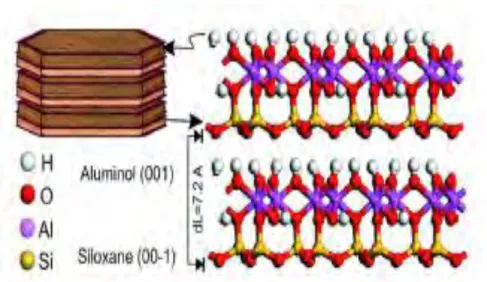
unit cells) showing siloxane and aluminol surfaces ... 46 Figure 1.20: Layer sequence in nacrite... 47 Figure 2.1: West Kalimantan, Indonesia... 58 Figure 2.2: Location map showing Loubomo region,
CongoBrazzaville and Gabon ... 59 Figure 2.3: Evaporation chamber and controller panel at OLED
xi
Figure 3.1: Clay from Indonesia, Congo Brazzaville and
Gabon... 75 Figure 3.2: Spectra infrared of natural clay ... 76 Figure 3.3: Spectra XRD of natural clay (Ms: muscovite; KIn:
kaolinite; Qz: quartz; Nct: nacrite; Ant; anatase; Gth:
goethite) ... 80 Figure 3.4: Ball and stick model of muscovite mica... 81 Figure 3.5: SEM of clay from Sintang (A, B), Capkala (C, D), Congo
(E, F), and Gabon (G, H)... 84 Figure 3.6: Two modes of topotactic transformation of chromian
muscovite (fuchsite) to kaolinite by stripping of tetrahedral sheets (Mode 1) and by the insertion of
octahedral sheets (Mode 2)... 85 Figure 3.7: Difratogram of kaolin from Gabon (inset: kaolin
powder)... 87 Figure 3.8: Spectrum infrared of kaolin ... 89 Figure 3.9 : Spectrum H-NMR of kaolin from Gabon ... 89 Figure 3.10: Kaolin from Gabon in different solvent: acetone (a),
chloroform (b), and methanol (c) ... 90 Figure 3.11: UV-Vis spectra of kaolin in different solvent ... 91 Figure 3.12: Percentage mass of the element in kaolin from SEM-EDS 92
Figure 3.13: Morphology of kaolin ... 92 Figure 3.14: Photostability of organic compound in Gabom’s kaolin in
acetone... 93 Figure 3.15: Cyclic voltammogram of organic compound in
kaolin... 95 Figure 4.1: XRD pattern of natural, calcined, and activated of clay
from Congo ... 101 Figure 4.2: Natural clay from Congo and their colour changing after
treated...
103 Figure 4.3: Spectra infrared of natural clay from Congo and treated
clay... 104 Figure 4.4: TGA of nacritic clay ... 106 Figure 4.5: Scanning electron photomicrographs of natural clay
from Congo (a), calcined (b), and activated (c) ... 107 Figure 4.6: XRD patterns of raw kaolin, metakaolinite, and modified
kaolinite... 110 Figure 4.7: Spectra infrared of kaolin (K), metakaolinite (MKaol) and
modified kaolinite (MK)... 111 Figure 4.8: SEM micrographs of the kaolin, metakaolinite and
modified kaolinite... 112 Figure 4.9: SEM-EDX of kaolinite, metakaolinite, and modified
kaolinite... 114 Figure 4.10: TGA of kaolin, metakaolinite and modified
xii
Figure 4.11: FTIR spectra of clay from Congo... 120 Figure 4.12: FTIR spectra of pyridine adsorbed on kaolin samples... 121 Figure 5.1: Schematic model of the β-carotene molecule, showing
the curved backbone of the polyene chain, the methyl groups attached to it, the asymmetric corrugation
attributed to π-electrons and the β-ionone rings... 130 Figure 5.2: Molecular structure of fucoxanthin and curcumin 133 Figure 5.3: Spectra infrared of β-carotene, fucoxanthin, and
curcumin... 134 Figure 5.4 : TGA biomolecules... 135 Figure 5.5: Absorption spectra of β-carotene (BC), fucoxanthin (Fx)
and curcumi (Cur)... 136 Figure 5.6: Stability of β-carotene without irradiation (a) and under
uv light of β-carotene (b) fucoxanthin (c), curcumin (d)...
137 Figure 5.7: Oxidation voltammogram of carotene and BC/Fx and
BC/Cur... 139 Figure 5.8: Reduction voltammogram of β-carotene and
carotene-curcumin... 140 Figure 5.9: Cyclic voltammograms of β-carotene (BC), fucoxanthin
(Fx), and curcumin (Cur) ... 142 Figure 5.10: Cyclic voltammogram of BC, BC/Fx and BC/Cur... 143 Figure 5.11: Spectra of β-carotene with different concentration of
Fx... 145 Figure 5.12: Spectra of BC (a) and and BC-Fx (b) under
UV-irradiation ... 146 Figure 5.13: The photodegradadation of β-carotene in acetone
solution (2.5 ppm) in the absence and presence of fucoxanthin 5 ppm as function of irradiation time with UV light 365 nm (a) and their first orde
photodegradation kinetics (b)... 147 Figure 5.14: Spectra of β-carotene with variation of curcumin
concentration... 149 Figure 5.15: Spectra BC-Cur under UV-irradiation ... 150 Figure 5.16: Spectra infrared solid BC, Cur and BC-Cur ... 151 Figure 5.17 : Spectra infrared of BC-Cur with different rasio
(mol:mol) = 1:1 (a) and 1:2 (b)... 151 Figure 5.18: DSC of BC, BC-Curcumin and Curcumin... 152 Figure 5.19: TGA of BC (a), BC-curcumin (b) and curcumin (c)... 153 Figure 5.20: Cis-trans isomerisation of all-trans-β-carotene prior to
formation of the biradical... 154 Figure 5.21: Stability of β-carotene without irradiation(a) and β-
carotene (b) and BC/MK under UV irradiation... 157 Figure 5.22: Kinetic photodegradation of β-carotene (BC) and
xiii
Figure 5.23: The mechanism of carotenoid adsorption on Bronsted
and Lewis acid sites... 161
Figure 5.24: Spectra infra red of β-carotene, modified kaolinite, and BC/MK ... 162
Figure 5.25: Photostability of β-carotene with different masses of modified kaolinite... 164
Figure 5.26: UV-spectra of Fx with variation curcumin concentration.. 165
Figure 5.27: UV absorption spectra of Fx without irradiation (a), under irradiation of Fx (b), Fx/Cur (c)... 166
Figure 5.28: Redox voltammograms of fucoxanthin and Fx/Cur... 168
Figure 5.29: Cyclic voltammogram of Fx and Fx/Cur... 169
Figure 6.1: Molecular structure of maetrials used in OLED ... 182
Figure 6.2: Schematic OLED fabrication using fucoxanthin... 184
Figure 6.3: The radiance spectra and CIE coordinate diagram Alq3 with fucoxanthin... 185
Figure 6.4: Radiance spectra and CIE coordinate diagram of OLED using BAlq with fucoxanthin... 186
Figure 6.5: Emission spectra of OLED deviceswith different ETL .... 187
Figure 6.6: The Current Density (J) versus voltage (V) for Fucoxanthin in OLED... 188
.Figure 6.7: HOMO-LUMO energy level of materials used (a) and Scheme desain OLED fabrication using biomolecules... 190
xiv
LIST OF TABLES
Table 1.1: Materials in OLED ... 20 Table 1.2: Extraction fucoxanthin from algae ... 38 Table 1.3: Classification of layered silicate minerals ... 42 Table 1.4: Some important properties of clay minerals that relate to
their applications ... 43 Tabel 1.5: The crystallographic of kaolin group ... 44 Table 3.1: Infrared band positions of the studied clay samples
compare to kaolin type ... 78 Table 3.2: The –OH stretching band of kaolin polimorph... 79 Table 3.3: Percentage mass of element... 83 Table 3.4 : BET surface area, total pore volume and mean pore
volume ... 86
Table 3.5: Characteristic infrared bands of aliphatic hydrocarbons
and oxygen containing compound... 87 Table 3.6: Kinetic reaction order of kaolin from Gabon in acetone 94 Table 4.1: Major oxide compositions of samples studied... 102 Table 4.2: Frequencies and assignment of IR transmittance band in
the 4000- 400 cm1 region for natural clay from Congo
refer to the references... 104 Table 4.3: BET spesific surface area, volume pore and mean pore
diameter of nacritic... 108 Table 4.3: BET surface area, total pore volume and mean pore
volume of kaolinite... 115 Table 4.4: Total acidity of modified clay from Congo and West
Kalimantan Indonesia ... 119 Table 5.1: First-order reaction data and photostablity of β-carotene
and mix compound... 138 Table 5.2: Redox potential (V/SCE) of β-carotene, fucoxanthin and
curcumin...
138 Table 5.3: HOMO-LUMO energy and solid-state ionization and
electron affinity... 144 Table 5.4: First-order reaction data of BC and BC-Fx... 148 Table 5.5: First-order reaction data of BC-Curcumin... 150 Table 5.6: Pseudo-first-order reaction data of β-carotene (BC) with
kaolin (BC/K), metakaolinite (BC/MKaol) and modified
kaolinite (BC/MK)... 159 Table 5.7: BET surface area, total pore volume and mean pore
volume of kaolinite... 160 Table 5.8: First-order reaction data of Fx and Fx-Cur... 167
xv
Table 5.9: Redox potential (V/SCE) of fucoxanthin and
Fx/curcumin ... 167 Table 5.10: Redox potential (V/SCE) of fucoxanthin and
Fx/curcumin ... 169 Table 5.11: HOMO-LUMO energy and solid-state ionization and
electron affinity of fucoxanthin and Fx/curcumin, and
BC/curcumin ... 170 Table 6.1: Absorption and fluoresence properties of biomolecules.... 182 Table 6.2: HOMO-LUMO materials used in fabrication OLED ... 183 Table 6.3: Characterization OLED devices using fucoxanthin ... 188 Table 6.4: Fabrication OLED using biomolecules ... 191
GENERAL
CONCLUSIONS
AND
1
GENERAL INTRODUCTION
Energy crises, especially fossil fuel-based energy, lead to increased use of new energy and renewable energy. This encourages researchers to develop new and renewable types of energy. In addition, research is also directed towards more efficient energy use through the development of energy storage materials such as batteries, and the use of energy-efficient materials. Organic electronics are still a young area of technology that comprises applications as diverse as illuminants, photovoltaics, printed electronics and batteries. Organic material converse light to electrical current (photovoltaics) and electrical current to light (light diodes). Organic light emitting diode (OLED)-based electronic devices are one that is developed today. An OLED (organic light-emitting diode) is a light-light-emitting diode (LED) in which the emissive electroluminescent layer is a film of organic compound that emits light in response to an electric current (Zissis and Bertoldi, 2014). OLEDs are known for their high potential in display, signage, and lighting applications (Zmija et
al., 2009; Kathirgamanathan et al., 2012; Karzazi, 2014., Scholz et al., 2015).
According to IDTechEx, the OLED display market grew from 6 billion U.S. $ in 2012 to over 10 billion U.S. $ in 2013. The market is expected to grow to about 17.5 billion U.S. $ in 2015 and 25 billion U.S. $ in 2017. Around 33% of electricity is utilized due to the present lighting system (Thejo Kalyania and Dhoble, 2012).
An OLED is a device that emits light under application of an external voltage. There are two main classes of OLED devices: those made with small organic molecules and those made with organic polymers. OLEDs have the unique properties of lightweight, flexible, transparent and colour tune ability, which makes them an ideal modern light source.
Natural electronics is an area of research that searches for naturally occurring or naturally derived biomolecules to replace traditional synthesized materials in solid-state organic electronics (Irimia-Vladu, 2014). Biomolecules
2
often have natural electrical and optical properties that are fine-tuned to improve device performance (Irimia-Vladu et al., 2011; Hagen et al, 2006; Steckl et al., 2011, Gomez et al., 2014; Soltani Rad et al., 2015). Using biomolecules also support renewable and environmentally responsible electronics, with potentially a concomitant reduction in cost (Muhl et al., 2014).
OLED displays are based on component devices containing organic electroluminescent material (made by small molecules or polymers) that emits light when stimulated by electricity. An OLED is a solid-state semiconductor device that is 100 to 500 nanometres thick and consists of a conducting layer and an emissive layer, all together sandwiched between two electrodes and deposited on a substrate. The conducting layer is made of organic plastic molecules that transport "holes" from the anode. The emissive layer is a film of organic compound that transport electrons from the cathode and emits light in response to an electric current. The conduction in organic layer is driven by delocalization of electrons caused by conjugation over all or part of the organic molecule (Kathirgamanathas et al, 2012).
Some researchers have developed organic materials for OLED as Tris-bipyridine ruthenium (II) complexes (Gao and Bard, 2000), Eu (III) complexes (Pietraszkiewicz et al., 2013 ). Lin et al, (2014) have studied the effect of functional groups sulfonyl, phosphine-oxide, and carbonyl to the stability of organic materials for OLED.
Organic materials which have carbonyl functional groups can improve the stability of the OLED. Among these organic materials, carotenoids constitute an important class of linear π-conjugated molecules that exhibit high degree of electronic delocalization and ultrafast dynamic (Vivas et al., 2011). The β-carotene is one of the potential natural organic compound used as biofunctional electronic, as organic field effect transistors (OFETs) and organic photovoltaics (OPVs) (Głowacki et al., 2011; Suryana et al., 2013). The
3
very promising candidates for this applications. Bouchouit et al (2015) studied the non linear optical properties of some caretonoid compound and concluded the nonlinear optical properties of the studied pigments decrease in the order of carotene > violaxanthin > xanthophyll. Such behaviour is becaused the β-carotene is a highly conjugated compound and possesses hydrocarbon lacking functional groups. The molecular structure of β-carotene does not consist of oxygen atoms. In comparison with β-carotene, xanthophyll is oxidized derivative of carotenes and it contains hydroxyl groups. Contrary to the carotenes, hydroxyl groups substitute some hydrogen atoms and/or oxygen atoms substitute some pairs of hydrogen atoms. Xanthophyll is also more polar than carotenes.
The long chain of alternating double bonds (conjugated) is responsible for the orange color of β-carotene. Their absorption of blue–green light corresponds to an electronic transition from the 1A-g ground state (S0) to the
1Bu state (S2) (Larsen et al., 2003). The π-electrons in the chain are
delocalized, loosely held and easily excited by low energy visible light.
The information about HUMO-LUMO is particularly important if we want to understand the modification of the S0 → S2 transition energies of
β-carotene as sensitizer. The highest unoccupied molecular orbital- lowest unoccupied molecular orbital (HUMO-LUMO) of β-carotene were 5.84 eV and 3.54 eV (Glowaski et al., 2011). These HUMO-LUMO energy changes provide important information about the various physical and organic reaction of β-carotene. The sensitizing dye which has the higher absorption coefficient and lower S0 → S2 transition energy will give higher photoelectric conversion
efficiencies of dyes sensitized solar cells (Ruiz-Anchondo et al., 2010).
The dye that is used as a photosensitizer plays an important role in the operation of DSSCs or other bifunctional material. The efficiency of the cell is critically dependent on the absorption spectrum of the dye and the anchorage of the dye to the surface of the semiconductor (El-Agez et al., 2012). Much work
4
has been concentrated on organic dyes and organic metal complexes. Life time of the sensitizer is on the other challenging in this research field.
Photostability of β-carotene has studied by some researchers. Its complexation with humic acids (as a π–π interaction) was able to strongly affect its chemical properties due the higher photostability (Martini et al., 2010). The thin layer of opaque minerals (Martian regolith) can protect the degradation of β-carotene caused directly by irradiation (Vítek et al., 2009). Barazzouk et al. (2012) reported that antioxidants increased photostability of Chlorophyll-a. The UV stability of β-carotene can be improved by the addition of a photostabiliser which absorbs light below 465 nm (Morabito et al., 2011; Sattar et al., 1977).
Light, in particular ultraviolet irradiation (UV), but also visible and near infra red irradiation (IR) are the major sources to generate reactive oxygen species (ROS) such as singlet oxygen, radicals or peroxides. (Photo) oxidative stress is a complex process. To a large extent it is linked to the presence of air oxygen, its transformation into reactive species and their chemical reaction with oxidation-sensitive compounds. Light in the presence of a sensitizer often initiates oxidative stress or autoxidation. It is well known that under light exposure β-carotene can form lipophilic ROS like peroxyl radicals and lipoperoxides that further degrade β-carotene itself (Rudolph et al., 2014). As an effect of UV irradiation the C=C and C-C bonds of the hydrocarbon chain break leading to a loss of colour (Morabito et al., 2011).
Antioxidants may be molecules that can neutralize free radicals by accepting or donating electron(s) to eliminate the unpaired condition of the radical. The antioxidant molecules may directly react with the reactive radicals and destroy them, while they may become new free radicals which are less active, longer-lived and less dangerous than those radicals they have neutralized. They may be neutralized by other antioxidants or other mechanisms to terminate their radical status. Many antioxidants have aromatic ring structures and are able to delocalize the unpaired electron (Lü et al., 2010).
5
Many natural and synthetic compounds have been investigated over the decades for their efficacy to protect against oxidative stress (Heo and Jeon, 2009). Antioxidants from natural sources are preferred by consumers due to the concerns about the toxic and carcinogenic effects of synthetic antioxidants.
Plants, including fruits, vegetables, and spices are already well known sources that contained a wide range of antioxidants. They contain a wide variety of antioxidant compounds, such as phenolics (phenol and polyphenols), flavonoids, carotenoids, steroids and thiol compounds (Lotito and Frei, 2006). Recently, there has been increased interest in the antioxidant capacity of algae. Seaweed was reported to contain a range of antioxidants that are highly beneficial such as fucoxanthin (Yan et al., 1999; Chuen Fung, 2012; Waghmode and Kumbar, 2015; Zaelani et al., 2015). Fucoxanthin is a major xanthophyll which exhibits potential antioxidant activity (Sudhakar et al., 2013) and an orange-color carotenoid (Beppu et al., 2012).
The other potential antioxidant compound is curcumin, the yellow pigment of turmeric and curry (Curcuma longa Linn) (Barzegar and Moosavi-Movahed, 2011). Curcumin has attracted much attention due to its significant medicinal potential and also its antioxidant properties (Silva-Buzanello et al., 2016). The contribution of each part of the curcumin molecule for the whole antioxidant activity has been subject of some debate. The predominant mechanism depends on the electron withdrawing character of the free radical itself and also on the solvent polarity or through the phenolic hydroxyl group.
West Kalimantan, Indonesia and Africa have abundances of minerals like quartz and kaolin clay (Mbaye et al., 2014; Destiarti et al., 2017). The application of kaolin a widely used industrial clay material, depend on its surface reactivity. Its common application e.g. filler in polymer, rubber, paper, cosmetic, medicines (Zsirka et al., 2015). Kaolin can also be used as adsorbents, catalysis, composites, nano-hybrids, and electrode coating (Araujo
et al., 2014; Dedzo and Detellier, 2014; Matusik et al, 2011; Matusik and
6
for Li-ion batteries was made from amorphous nacrite clay hybrid from Tunisia (Jaafar et al., 2014). These applications, however, require modifications of the surface and their structure.
The improvement of properties of kaolinite can be done by two main different treatment such as (a) physical modification, and (b) chemical treatment with acid, bases or organic compound. Physical modification with thermal/ microwave treatment, involved alteration of chemical composition and crystalline structure by the high temperature. In chemical modification with acid, bases, or organic compound, usually by alteration of structure, surface functional groups and surface area (Kumar et al., 2013).
Some researchers used thermal treatment and or chemical treatment to improved kaolinite properties. Thermal treatment, usually by calcination, produce metakaolinite which is more reactive than the origin ones. Calcinating kaolin at 600°C continuing activating by HCl has material with specific surface area 219 m2/g (Belver et al., 2002). Other activation condition are using H2SO4
(Hattab et al., 2013), CH3COOH, H3PO4, HCl, HNO3 and base NaOH (Kumar
et al., 2013). Acid activated with H2SO4 of metakaolinite increased their
dielectric permittivity. It can be used for filling the plastic or rubber-coating material on wires (Izci, 2014).
Based on the background described, the aim of this PhD research are : (1) Characterization of natural clay from Congo, Gabon and Indonesia (2) Modification and characterization of kaolin clay
(3) Study photostability of β-carotene with antioxidant and modified kaolinite
(4) Fabrication of OLED using biomolecules In general, this thesis is consist of eight part:
General Introduction : decribe the background, purposes and goal of this research.
7
Chapter I : this chapter decribed fabrication OLED, state of the art of research using biomolecule, photostability of β-carotene using antioxidant and modified kaolin. This chapter also give information about clay, especially kaolin clay: structure, properties, modification and application.
Chapter II : chapter methodology consist of the procedures were done in this research, analysis and characterization of the materials. The main concept of the instrumentation, also described.
Chapter III : this is the first chapter of the result. This part is focus on the characterization of natural clay from West Kalimantan, Indonesia and from Gabon and Congo, Africa.
Chapter IV : this chapter decribed the modification of two types of kaolin; nacritic from Congo and kaolinite from Indonesia. Nacritic kaolin was modifed by NH3
(NH4OH base) and kaolinite using ZnCl2.
Chapter V : this part discussed about photostability of carotenoid molecules with antioxydant (fucoxanthin and curcumin) and modified kaolinite from West Kalimantan, Indonesia.
Chapter VI : this chapter described fabrication OLED using biomolecules.
Conclusions and
Future work : this part give the whole conclusions and the perpectives base on the results.
8 References
Araujo, F.R., Baptitta, J.G., Marcal, L., Ciuffia, K.J., Nassara, E.J., Calefi, P.S., Vivcente, M.A., Trujilano, R., Rives, V., Gilc, A., Korilic, S., and De Faria E.H. (2014) Versatile heterogeneous dipicolinate complexes grafted into kaolinite: Catalytic oxidation of hydrocarbons and degradation of dyes.
Catalysis Today, 227, 105-115.
Barazzouk, S., Bekalé, L., and Hotchandani, S. (2012) Enhanced photo stability of chlorophyll-a using gold nanoparticles as an efficient photoprotector. Journal of Materials Chemistry, 22, 25316-25324.
Barzegar, A. and Moosavi-Movahedi, A.A. (2011) Intracellular ROS protection efficiency and free radical-scavenging activity of curcumin. PLoS
ONE, 6 (10), 26012.
Belver, C., Banares., Munoz. M.A., and Vicente, M.A. (2002) Chemical activation of kaolinite under acid and alkaline conditions. Chemical Materials, 14, 2033-2043.
Beppu, F., Hosokawa, M., Niwano, Y., and Miyshita, K. (2012). Effects of dietary fucoxanthin on cholesterol metabolism in diabetic/obese KK-Ay mice.
Lipid and Health Diseases, 11 (112), 1-8.
Chong, M.N., Vimonses, V., Lei, S., Jin, B., Chow, C., and Saint, C. (2009) Synthesis and Characterisation of Novel Titania Impregnated Kaolinite Nano-Photocatalyst. Microporous and Mesoporous Materials, 117, 233–242.
Chuen-Fung, A.Y. (2012) The Fucoxanthin content and antioxidant properties of undaria pinnatifida from Marlborough Sound, Auckland University of Technology University, New Zealand,Thesis.
Dedzo, G.K. and Detellier, C. (2014) Intercalation of two phenolic acids in an ionic liquid-kaolinite nanohybrid material and desorption studies. Applied Clay
Science, 97-98, 153-159.
Destiarti, L., Wahyuni, N., and Yani, A. (2013) Synthesis of zeolite A from Capkala kaolin by varying mass of aluminium oxide: XRD spectrum and CEC.
The 2nd Proceeding the 2nd International Conference of the Indonesian Chemical Society, 77-82.
Destiarti, L. Wahyuni, N., Prawatya, Y., and Sasri R. (2017) Synthesis and characterization of mangan oxide coated sand from Capkala kaolin.
International Conference on Chemistry, Chemical Process and Engineering (IC3PE) AIP Conf. Proc. 1823, 020023-1–020023-5.
9
El-Agez, T.M., El Tayyan, A.A., Al-Kahlout, A., Sofyan, A., Taya, S.A. and Abdel-Latif, M.S. (2012) Dye-Sensitized solar cells based on ZnO films and natural dyes. International Journal of Materials and Chemistry, 2 (3), 105-110. Gao, F.G. and Bard, A.J. (2000) Solid-State Organic Light-Emitting Diodes Based on Tris(2,2‘-bipyridine)ruthenium(II) Complexes. Journal of American Chemical Society, 122, 7426-7427.
Głowacki, E.D., Leonat, L., Voss, G., Bodea, M., Bozkurt, Z., Irimia-Vladu, M., Bauerf, S. and Sariciftci, N.S. (2011) Natural and nature-inspired semiconductors for organic electronics. Proceeding of SPIE 8118.
Gomez, E.F., Venkatraman, V., Grote, J.G., and Steckl, A.J. (2014) DNA bases thymine and adenine in bio-organic light emitting diodes. Scientific Report, 4, 7105.
Hagen, J.A., Li, W., Steckl, A.J., and Grote, J.G. (2006) Enhanced emission efficiency in organic light-emitting diodes using deoxyribonucleic acid complex as an electron blocking layer. Applied Physical Letters, 88, 171109. Hattab, A., Bagane, M., and Chlendi M. (2013) Characterization of Tataouinen’s raw and activated clay. Chemical Engineering & Process
Technology, 4 (4), 1-5.
Haq, A., Iqbal, Y., and Khan M.R. (2009) Phase and microstructure characterization of kaolin clays from North Western Pakistan. Journal of
Pakistan Materials and Society, 3 (2), 77-90.
Hiendro, A., Hadary, F., Rahmalia, W., and Wahyuni, N. (2012) Enhanced Perfomence of bixin sensitized solar cells with activated kaolinite.
International Journal of Engineering Research and Innovation, 4, 40-44.
Heo, S-J. and Jeon, Y-J. (2009) Protective effect of fucoxanthin isolated from Sargassum siliquastrum on UV-B induced cell damage. Journal of
Photochemistry and Photobiology B Biology, 95 (2), 101-107.
http://www.oled-info.com/idtechex-sees-10-billion-oled-display-market-2013-will-reach-25-billion-2017 (accesed 6th February 2018)
Irimia-Vladu, M. (2014) ‘‘Green’’ electronics: Biodegradable and biocompatible materials and devices for sustainable future. Chemical Society
Reviews, 43, 588–610.
Irimia-Vladu, M., Sariciftci, N.S., and Bauer, S. (2011) Exotic materials for bio-organic electronics. Journal Materials Chemistry, 21, 1350–1361.
10
Izci, E. (2014) Structural and dielectric properties of acid activated metakaolinite. Abstract for 11th GeoRaman International Conference, June 15-19 St. Louis, Missouri, USA.
Jaafar, N., Naamen, S., Ben Rhaiem, H., and Ben Haj, A.A. (2014) Elaboration of amorphous-clay hybrid: (Al2Si2O7. 1/2Li2O) designed as a single ion
conducting solid electrolyte for Li-ion batteries. American Journal of
Chemistry, 5, 1261.
Karzazi, Y. (2014) Organic light emitting diodes: devices and applications.
Journal of Materials and Enviromental Science, 5 (1), 1-12.
Kathirgamanathan, P., Surendrakumar, S., Antipan-Lara, J., Ravichandran, S., Chan, Y.V., Arkley, V., Ganeshamurugan, S., Kumaraverl, M., Paramswara, G., Partheepan, A., Reddy, V.G., Bailey, G., and Blake, A.J. (2012) Lithium schiff-base cluster complexes as electron injectors: Synthesis, crystal structure, thin film characterisation and their performance in OLEDs. Journal of
Materials Chemstry, 22, 6104.
Kumar, S., Panda, A.K., and Singht, R.K. (2013) Preparation and characterization of acids and alkali treated kaolin clay. Bulletin of Chemical
Reaction Engineering & Catalysis, 8 (1): 61- 69.
Larsen, D.S., Papagiannakis, E., Van Stokkum, I.H.M., Vengris, M., Kennis, J.T.M., and Van Grondelle, R. (2003) Excited state dynamics of β-carotene explored with dispersed multi-pulse transient absorption. Journal of Applied
Physic, 109, 103529.
Lin, N., Qiao, J., Duan, L., Wang, L., and Qiu, Y. (2014) Molecular understanding of the chemical stability of organic materials for OLEDs: A comparative study on sulfonyl, phosphine-oxide, and carbonyl-containing host materials. Journal of Physical Chemistry C, 118, 7569−7578.
Lotito, S.B., Frei, B. (2006) Consumption of flavonoid-rich foods and increased plasma antioxidant capacity in humans: cause, consequence, or epiphenomenon. Free Radical Biology and Medical, 41, 1727–1746.
Lü, J.M., Lin, P.H., Yao, Q., and Chen, Q. (2010) Chemical and molecular mechanisms of antioxidants: experimental approaches and model systems.
Journal of Cellular and Molecular Medicine, 14 (4), 840-860.
Matusik, J., Stodak E., and Baranowski, K. (2011) Synthesis of polylactide/clay composites using structurally different kaolinites and kaolinite nanotubes. Applied Clay Sciences, 51, 102-109.
11
Matusik, J. and Matykowska, L. (2014) Behavior of kaolinite intercalation compounds with selected ammonium salts in aqueous chromate and arsenate solutions. Journal of Molecular Structure, 1071, 52-59.
Mbaye, A., Diop, M.A.K., Miehe-Brendle, C.A.K., Senocq, J., Maury, F., and Francis. (2014) Characterization of natural and chemically modified kaolinite from Mako (Senegal) to remove lead from aqueous solutions. Clay Minerals, 49, 527-539.
Morabito, K., Steeley, K.G., Shapley, N.C., Mello, C., Li, D., Calvert, P., and Tripathi, A. (2011) Proximal effects of ultraviolet light absorbers and polymer matrix in the photostability of β-carotene. Dyes and Pigments, 92, 509-516. Mühl, S. and Beyer, B. (2014) Bio-organic electronics–Overview and prospects for the future. Electron, 3, 444-461.
Pietraszkiewicz, M. Maciejczyk, M.I. Samuel, D., and Zhang, S. (2013) Highly photo and electroluminescent 1,3-diketonate Eu(III) complexes with spiro-fluorene xantphos dioxide ligands: Synthesis and properties. Journal of
Material Chemistry C, 1, 8028.
Rahmalia W. (2016) Paramètres de performances de photo-électrodes de
TiO2/Kaolinite et d’Electrolyte à base de carbonates biosourcés dans la cellule Sensibilisée par la bixine. Institut National Polytechnique de Toulouse (INP
Toulouse).These, 188 pp.
Rudolph, T., Eisenberg, S., Grumelard, J., and Herzog, B. (2014) State-of-the-art light protection against reactive oxygen species. International Journal for
Applied Science, 3, 10-14.
Ruiz Cruz, M.D. (1996) Dickite, nacrite, and posible dickite/nacrite mixed-layers from the Betic Cordilleras (Spain). Clay and Clay Minerals, 44 (3), 357-369.
Ruiz-Anchondo, T., Flores-Holguín, N., and Glossman-Mitnik, D. (2010) Natural carotenoids as nanomaterial precursors for molecular photovoltaics: A computational DFT study. Molecules, 15, 4490-4510.
Samyn, P., Schoukens, G., and Stanssens, D. (2015) Kaolinite nanocomposite platelets synthesized by intercalation and imidization of poly(styrene-co-maleic anhydride). Materials, 8, 4363-4388.
Sattar, A, de Man, J.M., Alexander, J.C. (1977) Wavelength effect on light-induced decomposition of Vitamin A and β-carotene in solutions and milk fat.
12
Scholz, S., Kondakov, D., Lussem, B., and Leo, K. (2015) Degradation mechanisms and reactions in organic light-emitting devices. Chemical Reviews, 115, 8449−8503.
Silva-Buzanello, R.A., Souza, M.F., Oliveira, D.A., Bona, E., Leimann, F.V., Cardozo, L.F. Araújo, P.H.H., Ferreira, S.R.S., and Gonçalves, O.H. (2016) Preparation of curcumin-loaded nanoparticles and determination of the antioxidant potential of curcumin after encapsulation. Polímeros, 26 (3), 207-214.
Soltani Rad, M.N., Sharbati, M.T., Behrouz, S., and Nekoei, A. R. (2015) Fabrication of non-doped red organic light emitting diode using naturally occurring curcumin as a donor-acceptor-donor (D-A-D) emitting layer with very low turn-on voltage. Iranian Journal of Science & Technology, 39A3, 297-304.
Steckl, A.J., Spaeth, H., You, H., Gomez, E., and Grote, J. (2011) DNA as an optical material. Optical Photon News, 22, 34–39.
Suryana, S., Khoiruddin., and Supriyanto, A. (2013) Beta-carotene dye of Daucus carota as sensitizer on dye-sensitized solar cell. Materials Science
Forum, 737, 15-19.
Thejo Kalyania, N. and Dhobleb, S.J. (2012) Organic light emitting diodes: Energy saving lighting technology—A review. Renewable and Sustainable
Energy Reviews, 16, 2696-2723.
Tonlé, I.K., Letaif, S., Ngameni, E., Walcarius, A., and Detellier, C. (2011) Square wave voltammetric determination of lead (II) ions using a carbon paste electrode modified by a thiol-functionalized kaolinite. Electroanalysis, 23, 245-252.
Vítek, P., Jehlička, J., Bezděk, J., Franců, E. (2009) Degradation of β-carotene under uv-rich irradiation conditions: implication for martian environmental. 40th Lunar and Planetary Science Conference.
Vivas, M.G., Silva, D.L., de Boni, L., Zalesny, R., Bartkowiak, W., and Mendonca, C.R. (2011) Two-photon absorption spectra of carotenoids compounds. Journal of Applied physics, 109, 103529.
Waghmode, A.V. and Kumba, R.R. (2015) Phytochemical screening and isolation of fucoxanthin content of Sargassum ilicifolium. International
13
Wong, I.Y.H., Koo, S.C.Y., and Chan, C.W.N. (2011) Prevention of age related macular degeneration. International Journal of Optic and molecules, 31, 73-82.
Yan, X., Chuda, Y., Suzuki, M., and Nagata, T. (1999) Fucoxanthin as the major antioxidant in Hijikia fusiformis a common edible seaweed. Bioscience,
Biotechnology and Biochemistry, 63 (3), 605-607.
Yip, W.H., Joe, L.S., Mustapha, W.A., Maskat, M.Y., and Said, M. (2014) Characterisation and stability of pigments extracted from Sargassum binderi obtained from Semporna, Sabah. Sains Malaysiana, 43 (9), 1345–1354.
Zailanie, K., Kartikaningsih, H., and Kalsum, U. (2015) Effect of sargassum
filipendula fucoxanthin against HeLa cell and lymphocyte proliferation. Journal of Life Science and Biomedical, 5 (2), 53-59.
Zissis, G. and Bertoldi, G. (2014) Status Report on Organic Light Emitting Diodes (OLED). 2014 Status Report on Organic Light Emitting Diodes (OLED). JRC Science and policy Report, 1-33.
Zsirka, B., Horvath, E., Mako, E., Kurdi, R., and Kristof, J. (2015) Preparation and characterization of kaolinite nanostructure: Reaction pathways, morphology and structural order. Clay minerals, 50, 329-340.
Zmija, J. and Maachowski, M.J. (2009) Organic light emitting diodes operation and application in displays. Archives of Materials Science and Engineering, 40 (1), 5-12.
CHAPTER I
14
CHAPTER I
BIBLIOGRAPHY
This chapter will describe the OLEDs concept, natural organic compound as a dyes, antioxidant, clay and kaolin. In this research we use two antioxidants : fucoxanthin and curcumin. Antioxidants and modified kaolin were used to improve the photostability of β-carotene.
1. Organic light emitting diode (OLED)
OLED is a cutting edge technology of using organic materials (small molecular or polymeric) to generate light (Zhou, 2007). The basic structure of an OLED consists of a stack of organic layers sandwiched by a transparent conducting anode and a metallic cathode. With suitable driving voltage applied to the diode, holes are injected from the anode and electrons from the cathode. Both holes and electrons are driven by the electric field and meet in the recombination zone, and their recombination results in electroluminescence (EL).
Organic electroluminescent materials have been the subject of intense research for use in light emitting diodes (LEDs). When compared with liquid crystal displays (LCDs), OLEDs require lower energy input, have a wider viewing angle with improved color contrast, and can be made much thinner.The electroluminescence (EL) of organic compounds was first demonstrated in 1953 by Bernanose but was not significantly developed until 1987 when Tang and Van Slyke constructed a device employing aluminum tris(8-hydroxyquinoline) as the luminescent material. The first example of a polymer-based OLED was published by Friend et al in 1990 in which poly(p-phenylene-vinylene) (PPV) was used as the emissive layer. Since this discovery, many conjugated polymers have been developed for use in LEDs including poly(1,4-phenylene) (PPP), poly(thiophene), and polyfluorene.
Organic LEDs have a more complex structure than inorganic ones for two main reasons. Firstly, the low-carrier mobility and the electrical
15
conduction process impose a new device structure; secondly, the much different carrier mobility between electron transport material (n-type) and hole transport material (p-type), the last being several orders of magnitude higher. In turn, the benefits of using an organic-based self-emissive layer that allows very thin film devices (in some cases below 100 nm), the much sought after flexibility result in devices with unique properties that move the interest of the scientific community.
Chauhan et al (2014) resumed the advantages of OLED, such as: (1) large area diffuse light, source, (2) thin, flat, lightweight, (3) form freedom in design, (4) fast switch-on, fully dimmable, (5) many colors, includes whites, (6) robust source (no wires inside), (7) transparent, mirror-like, black or white appearance, (8) low voltage technology, (9) potentially high efficiency, (10) green product (energy efficient, recyclable), and (11) potentially cheap fabrication. Therefore, OLED devices using in many application such as, light (Pang et al., 2014), display (Ammermann et al., 1995), sensor (Shinar and Shinar, 2008), and organic printed electronics (Sekine et al., 2014).
1.1 Principle of OLED
OLEDs are carrier injection devices, where organic thin film sandwiched between electrodes. If direct-current voltage is applied, holes and electrons recombine in the light emitting layer, and light will be emitted. The basic device structure includes a glass substrate on which a transparent electrode (ITO, etc.) is formed (Figure 1.1).
16
Figure 1.1: Principle of electroluminescence (Shimizu, 2014) 1.2 Fabrication of OLED
The OLED device is of interest not only for the practical use but also for the basic research. By fabricating this device, we can study the electrical behavior of the insulating organic compounds and measure their electro-luminescence (EL) spectra (Tajima et al., 2003).
The traditional LED from inorganic semiconductors is typically a p-n junction, were a hole injected from anode and an electron injected from cathode diffuses in the respective semiconductor type to recombine at the interface resulting in light emission. In this kind of semiconductors, the carrier mobilities are relatively In a similar way to that we found for inorganic semiconductors, the organic LEDs performance depends on the injection/transport and recombination of electrical charge. For this, the general structure is usually comprised by a hole transport material (also called hole
17
transport layer-HTL) and an electron transport material (electron transport layer-ETL), needed to deliver the charge to an active material between them (in a ―sandwich‖ structure), usually called emissive layer-EL. The choice of HTL and ETL is clearly dependent on the physical and electronic properties of the EL, in particular the location of the HOMO and LUMO levels. In fact, we expect that the interface between HTL and EL will also act as an electron blocking region, and, of course, that the interface between ETL and EL can act as hole blocking region. This strategy is not surprising because increasing the carrier concentration inside the EL helps the electron– hole recombination and therefore the efficiency. This simple system addresses the so-called carrier confinement and is one of the most important configuration issues in organic-LEDs developments. Figure 1.2 shows a schematic of this general architecture.
Figure 1.2: Typical OLED structure
Figure 1.2 represented the typical OLED structure with the hole transport layer (for hole injection/transport), electron transport layer (for electron injection/ transport), and emissive layer. The ideal cathode and anode levels, in respect to the materials LUMO and HOMO levels, are shown. The interfaces at HTL/EL and EL/ETL act as electron and hole barriers, respectively, as desired for a correct carrier confinement inside the EL.
Composed of two substrate layers on the outside emissive and conductive layer lie between the cathode and the anode layers. A current is applied across the LED, where electrons move from cathode to anode. The cathode gives
18
electrons to the emissive layer, where the anode withdraws these electrons from the conductive layer. The emissive layer becomes rich innegative charge while the conductive layer becomes more positively charged .The two charges recombine in the emissive layer, creating a drop in energy levels of the electrons. The drop in energy levels results in radiation that is on the visible spectrum, emitting light.
For a basic understanding of organic electroluminesence phenomena, as well as for the fabrication of efficient organic LEDs, a division in low-molecular-weight and high-low-molecular-weight organic materials is useful. There are no sharp limits for the molecular weight for organic molecules to be classified as either a low or a high-molecular-weight material. Usually, the term high molecular- weight materials refers to polymers made up of molecules that exceed the length other molecules by a factor of about 102. Well resolved molecules formed from tens of monomer units, termed oligomers, stand for the intermediate category between low- and high-molecular-weight materials. The main advantages of low-molecular-weight materials for electroluminesence organic devices include a high fluorescent quantum yield, ease of film formation by vacuum vapour deposition, high purification and crystal growth capability and a wide election of material design. Crystallization of initially amorphous samples, production of exciplexes with other materials, and often high chemical reactivity create serious problems in their application to stable electroluminesence systems. On the other hand, high-molecular-weight materials allow for the easy preparation of thin films by casting, and show a high resistance to crystallization. The difficulties in purification procedures and, mostly, a low fluorescent quantum yield, in addition to a complex structure, are drawbacks in their application to organic electroluminesence devices (Jan Kalinowski, 1999).
One of the key challenges on the path to developing the next generation of high-performance OLEDs is the design and synthesis of readily processible and thermally robust emissive and charge transport materials with improved
19
multifunctional properties. OLEDs are double charge injection devices, requiring the simultaneous supply of both electrons and holes to the electroluminescent material sandwiched between two electrodes. ((Kulkarni et
al, 2004). Most highly fluorescent or phosphorescent organic materials of
interest in OLEDs tend to have either p-type (hole-transport) or n-type (electron transport) charge transport characteristics (Figure 1.3). In terms of the device-fabrication process, solution-processible small molecular luminescent materials which ia possess the advantages of high purity (vs. polymers) and low procession cost (vs. vacuum deposition) (Yu et al., 2015).
Figure 1.3: Common OLED architectures with a hole-transport material (HTM) and an electron-transport material (ETM)
In general, material which are usually used in oled fabrication are anode, cathode, HIL, HTL, EL, ETL, and substrate (Thejo Kalyania and Dhobleb, 2012). Some material are usually used in OLED fabrication are listed inTable 1.1:
a. Substrate: this is usually clear plastic, glass, or metal foil, which is a transparent and conductive substrate with high work function (ϕw ≈ 4.7– 4.9 eV).
b. Anode: this is as a transparent electrode to inject holes into organic layers. Important requirement of this layer is that it must have low roughness and with high work function.
20
c. Hole injection layer (HIL): The materials with high mobility, electron blocking capacity and high glass transition temperature can be used as HIL.
d. Hole transport layer (HTL): Hole transporting layer plays an important role in transporting holes and blocking electrons, thus preventing electrons from reaching the opposite electrode without recombining with holes. e. Emissive layer (EML): The layer in between HTL and ETL is a good
emitter of visible photons, generally known as emissive layer (EML). This layer can be a material made of organic molecules or polymers with high efficiency, lifetime and color purity.
f. Electron transport layer (ETL): This layer should have good electron transporting and hole blocking properties.
Table 1.1: Materials in OLED (Thejo Kalyania and Dhobleb, 2012). Layer of OLED’s Materials generallly used in different layer of
OLED’s
Anode High work function: ITO, IZO, ZNO; TCP (PANI, PEDOT); Au, Pt, Ni, p-Si; ITO; Surface treatment; Plasma (O2, NH3); Solution (Aquaregia); Thin
insulator AlOx, SiOx; RuOx
Cathode Low work function: Mg:Ag; Li:Al; Ca, etc; Thin insulator: LiF; MgOx
HIL HOMO level: TPD, NPD, PPV, PVK, etc ETL LUMO level: Alq3, PBD, BCP, etc
EML: Dopants Alq3, CPB, Balq, coumarin, Ir (ppy)3, etc
OLED devices/displays can be fabricated in two ways namely vacuum deposition technique and solution techniques including spin coat technique, ink jet technique, casting, etc. Vacuum deposition is the widely used technique, but it is time consuming as high vacuum state is to be obtained and is difficult to deposit over large area. In contrast solution techniques have currently gained momentum as they consume less time easy to deposit thin layer thin film can be deposited over a large area (Thejo Kalyania and Dhobleb, 2012)
21 1.3 Efficiency of OLED
Organic electroluminescence (OEL) is the emission of light from organic materials in an electric field. The luminescent materials that are the most important elements in OLEDs devices include small molecule materials and polymer materials. The main requirements for OLEDs luminous materials are high photoluminescence quantum yields (PLQYs) in the solid state, high carrier mobility (both n and p type), excellent film-forming property (pinhole-free), good thermal and oxidative stability, and good color purity (adequate CIE coordinates) (Yu et al., 2015).
The EL quantum efficiency is the most essential parameter for an OLEDs device, regardless of the distinct visual sensitivity of different emission color. Of particular importance is the external quantum efficiency (ηext), which is
defined by the ratio of the number of emitted photons outside the device to an apparent number of charges injected into the device. It is expressed by the following equations (Tsutsui, 1997):
ηext = γ ηr Фf χ (1.1)
(1.2)
where γ is the charge balance factor (i.e., the number of excitons formed within the device per injected charge carrier) ηr is the efficiency of production
of radiative transition excitons; Фf is the solid-state photoluminescence
efficiency of the emitters; and χ is the light out-coupling efficiency in which n is the refractive index of the emitting organic materials, which usually assumed to be ~1.5.
1.4 Emitting layer
1.4.1 General concept of absorption and emission of light by material To account adequately for the processes of absorption and emission of light, it is necessary to assume that radiant energy can only be absorbed in definite units, or quanta. The energy, E, carried by any one quantum is proportional to its frequency of oscillation, that is:
22
E = hν = hc/λ
where ν is the frequency, λ the related wavelength and h = Planck's constant (6.624 x 10⁻²⁷ ergs/seconds).
The energy of a single quantum is too small for convenience and it is usual to talk of the energy associated with N quanta (where N = 6.023 x 10²³ the number of single molecules in a gram molecule), which is called an Einstein. Thus, if in a photochemical reaction one molecule reacts for each quantum absorbed, then the absorption of one einstein is sufficient energy for the reaction of one gram mole. Since the amount of energy per einstein is proportional to the frequency of the radiation, it varies enormously over the range of the electro-magnetic spectrum.
At room temperature most molecules occupy the lowest vibrational level of the ground electronic state, and on absorption of light they are elevated to produce excited states. The simplified diagram below shows absorption by molecules to produce either the first, S1, or second S2, excited state (Figure 1.4).
Luminescence is the emission of light from any substance, and occurs from electronically excited states. Luminescence is formally divided into two categories—fluorescence and phosphorescence—depending on the nature of the excited state. In excited singlet states, the electron in the excited orbital is paired (by opposite spin) to the second electron in the ground-state orbital. Consequently, return to the ground state is spin allowed and occurs rapidly by emission of a photon. The emission rates of fluorescence are typically 108 s–, so that a typical fluorescence lifetime is near 10 ns (10 x 10–9s).. It is valuable to consider a 1-ns lifetime within the context of the speed of light. Light travels 30 cm, or about one foot, in one nanosecond. Many fluorophores display subnanosecond lifetimes (Lakowicz, 2006)
Fluorescence is a spectrochemical method of analysis where the molecules of the analytes are excited by irradiation at a certain wavelength and emit radiation of a different wavelength. The emission spectrum provides