Optimisation de la production hors-sol de fraise à jours
neutres sous abris
Mémoire
Nicolas Watters
Maîtrise en sols et environnement
Maître ès sciences (M.Sc.)
Québec, Canada
© Nicolas Watters, 2017
Optimisation de la production hors-sol de fraise à
jours neutres sous abris
Mémoire
Nicolas Watters
Sous la direction de :
Jean Caron, directeur de recherche
Steeve Pepin, codirecteur de recherche
iii
Résumé
Au Canada, les producteurs de fraise doivent faire face à plusieurs enjeux majeurs. La période de production est courte, la compétition est forte et la production de plein champ doit composer avec la rémanence d’importants agents pathogènes telluriques. La production hors-sol de fraises pourrait permettre de pallier à ces problématiques. Afin d’optimiser la productivité de la production hors-sol, un dispositif expérimental a été mis en place en 2013 et 2014 à la ferme Onésime Pouliot, sur l’île d’Orléans dans la province de Québec. Ce projet tente de démontrer qu’en production hors-sol, les abris de type parapluie permettent de produire plus de fruits vendables en plus de diminuer les risques de maladie foliaire tout en évaluant certaines méthodes de culture qui pourraient permettre d’allonger la période de production (forçage en serre) ou d’optimiser l’utilisation de l’eau et des fertilisants (matelas capillaire, substrat alternatif). Cinq traitements ont été testés, les quatre premiers sous abri de type parapluie (T1-T4) et le dernier sans couverture (C). Le traitement T1 a été cultivé sur de la tourbe (PE) et T2 sur un mélange de sciure de bois et de tourbe (PS25). Pour T3, c’est le démarrage forcé en serre de plants à racines nues qui a été testé pour allonger la récolte. Le traitement T4 était cultivé en substrat PE et était déposé sur un matelas capillaire. Lorsque comparés avec le témoin, les traitements sous parapluie ont mené à une incidence significativement plus faible du mildiou [Sphaerotheca macularis (Wall. ex Fries)] et un rendement supérieur en fruits vendables. En conditions de croissance protégée, les plants forcés en serre ont permis d’atteindre un pic de production au moment de la période la plus rentable pour les fraises fraîches au Québec pour l’été 2013. Le matelas capillaire (T4) s’est avéré intéressant puisque pour un rendement en fruit semblable, il a permis d’utiliser moins d’eau et de fertilisants. Nos résultats mettent donc la lumière sur le potentiel des abris parapluies en production de fraises hors sol au Québec et offrent des recommandations appropriées quant aux méthodes de production les plus rentables et les plus durables pour les producteurs locaux.
iv
Abstract
In Canada, the strawberry producers are facing several major challenges. The production period is short, the competition is strong and the production has to deal with important telluric pathogens. The soilless production could help overcome these problems. To maximize productivity, experimental device was set up in 2013 and 2014 to Onésime Pouliot farm on the island of Orleans in the province of Quebec. This project seeks to demonstrate that in soilless production, the umbrella like rain shelter can produce more marketable fruit and decrease the risk of foliar disease. The project also aimed to evaluate some methods of culture that could help to extend the production period (greenhouse forcing) or optimize the use of water and fertilizers (capillary mat, alternate substrate). Five treatments were tested, the first four under umbrella like rain shelters (T1-T4) and the last one without coverage (C). The treatments T1 was grown on peat (PE) and T2 on a mixture of sawdust and peat (PS25). For T3, plants forced greenhouse were tested to extend the harvest. T4 treatment was cultivated on PE substrate and deposited on a capillary mat. When compared with the control, umbrella covered treatments led to a significantly lower incidence of late blight [Sphaerotheca macularis (Wall. Ex Fries)] and a higher yield of marketable fruit. In protected growing conditions, the plants forced in greenhouses achieved peak production at the most profitable period for fresh strawberries in Quebec for the summer of 2013. The capillary mat (T4) proved interesting since for a similar yield fruit, it had to use less water and fertilizer. Our results put lights on the potential of using umbrella production above ground strawberries in Quebec and offers appropriate recommendations as to the most cost-effective and sustainable production methods for local growers.
v
Table des matières
RÉSUMÉ ... III ABSTRACT ... IV TABLE DES MATIÈRES ... V LISTE DES TABLEAUX ... VII LISTE DES FIGURES ... VIII LISTE DES ABRÉVIATIONS ... IX REMERCIEMENTS ... X AVANT-PROPOS ... XI
INTRODUCTION GÉNÉRALE ... 1
CHAPITRE 1 : REVUE DE LITTÉRATURE ... 2
LA CULTURE DE LA FRAISE SOUS ABRIS ... 2
LES SUBSTRATS DE CULTURE ... 3
RÉGIE D’IRRIGATION ... 4
HYPOTHÈSES ET OBJECTIFS ... 6
CHAPITRE 2: MANAGEMENT PRACTICES FOR FALL STRAWBERRY PRODUCTION IN NORTHERN CANADIAN CLIMATE: RAIN SHELTER PROTECTION AND EARLY FORCING ... 8
RÉSUMÉ ... 9
ABSTRACT ... 10
INTRODUCTION ... 11
2. METHODOLOGY ... 13
2.1. Growing media composition and preparation ... 13
2.2. Physical characteristics of growing media ... 14
2.3. Chemical characteristics of substrates ... 15
2.4. Treatments ... 15
2.5. Plant growth conditions and experimental design ... 15
2.6. Precision irrigation and fertigation management ... 17
2.7. Growth parameters, crop yield and fruit quality ... 17
2.8. Evaluation of disease incidence ... 17
2.9. Statistical analysis ... 18
vi
3.1. Irrigation management ... 18
3.2. Changes in physical characteristics of the substrates ... 20
3.3. Plant growth, fruit quality and yields ... 21
3.4. Powdery mildew and gray mold infections ... 22
4. DISCUSSION ... 23
4.1. Using umbrella shelter to improve yields and control diseases ... 23
4.2.PEAT-SAWDUST MIXES AS ALTERNATIVE GROWING MEDIA TO PEAT-BASED SUBSTRATE IN CANADA ... 24
4.3.FORCING BARE-ROOT PLANTS TO ENHANCE STRAWBERRY YIELDS: MANAGEMENT DIFFICULTIES AND ECONOMICAL CONSIDERATIONS ... 24
CONCLUSIONS ... 25
ACKNOWLEDGEMENTS ... 27
BIBLIOGRAPHY ... 28
CHAPITRE 3 : CONCLUSION GÉNÉRALE ... 43
vii
Liste des tableaux
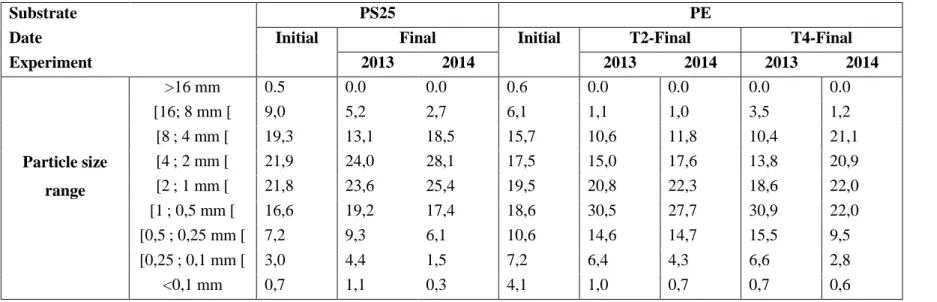
Table 1. Initial and final particle-size distribution of the two substrates. Means are presented (n=4). ... 35
Table 2. Physical properties of the substrates for the five treatments tested in this study. Parameters such as total and air-filled porosity, water availability as well as water buffering capacity were estimated after fitting final water retention curves (WRC) to the van Genuchten model for the T1, T2 and T4 treatments. For clarity, initial physical properties of PE are reported for the Control treatment only. The PE-PS25 contrast which is reported for final values of the different parameters tested is corresponding to the T1-T2 contrast. -: variable not measured. . 36
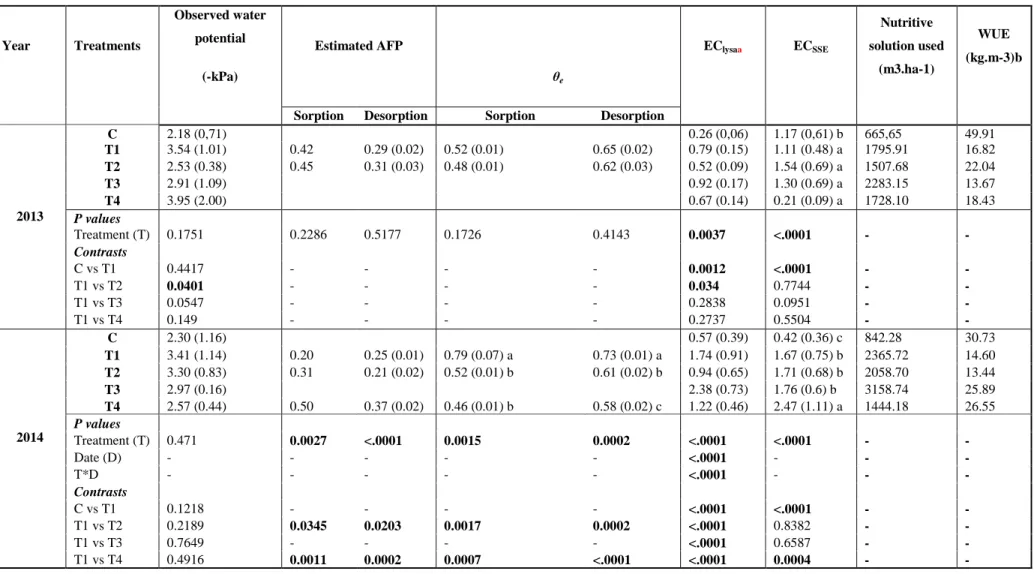
Table 3. Observed water potentials, water use, salinity and predicted aeration levels during the growing seasons. Seasonal average of the estimated water contents (θe) and the corresponding air contents (AFP, air-filled porosity) in the substrates are presented (mean of 2-3 blocks). Salinity was measured in the root zone during the growing season (EClys) and in substrate material (ECSSE) at the end of the experiments (Means with SD, n=3). ... 37 Table 4. Effect of treatments on growth parameters, seasonal yields, percentage of
unmarketable yields and seasonal fruit quality parameters during the two growing seasons. ... 38
Table 5. Seasonal disease incidences for Sphaerotheca macularis f.sp. Fragariae and Botrytis cinerea. nd : non detected. ... 39
viii
Liste des figures
Figure 1. Illustration de l’évolution de l’activité des plantes en fonction de l’eau
disponible dans le substrat (Tirée de Lemay, 2006) ... 5
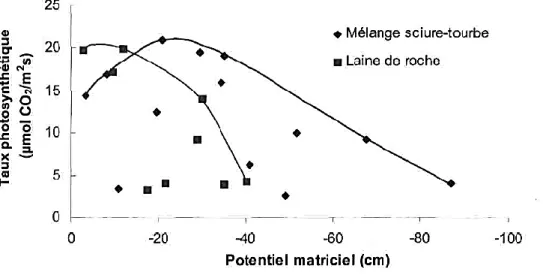
Figure 2. Photosynthèse maximale mesurée en fonction du potentiel matriciel (Tirée de
Lemay, 2006) ... 6
Figure 3. Unsaturated hydraulic conductivity measurements for the peat substrate (A)
and the peat-sawdust mixture (B) tested in this study. ... 41
Figure 4. Evolution of marketable yield for strawberry plants grown in open-field
(Control treatment) and under umbrella shelters (T1, T2, T3 and T4 treatments) during the 2013 (A) and 2014 (B) growing seasons. The P-values obtained from the generalized linear m ixed model (GLMM) used to fit the data are reported for the treatment (T) and date (D) effects as follows: ns : no significant; (*)=P<0,05 ; (**)= P<0,01 ; (***)
ix
Liste des abréviations
AFP : porosité remplie d’air ; Ksat : conductivité hydraulique saturée ; K (θ) : conductivité hydraulique non saturée ; BD : densité apparente ; CE : conductivité électrique ; ET :
évapotranspiration ; h : potentiel matriciel ; PS25 : mélange tourbe et sciure de bois ; θ : teneur en eau volumétrique ; θr : teneur en eau résiduelle ; θs : teneur en eau à saturation ; θe : capacité de rétention d’eau ; WHC teneur en eau ; WP : Potentiel de l’eau ; WRC : courbes de rétention d’eau
x
Remerciements
La préparation, la mise en place et la valorisation d’un projet de cette ampleur n’ont pu être possibles qu’avec le support et la collaboration d’une équipe nombreuse. Pour commencer, j’aimerais remercier l’équipe de la ferme Onésime Pouliot pour leur confiance et leur soutien constant. Sans leur ingéniosité et leur dévouement, il aurait été difficile de mettre en place un dispositif d’une telle importance. Merci MM. Daniel et Guy Pouliot, propriétaires de la ferme, mais aussi Valérie, Sara-Anne, Marine, Juan, Freddy, et tout le reste de l’équipe.
Ensuite, j’aimerais remercier l’équipe de recherche du Dr Jean Caron ; les chercheurs associés (Sylvio Gumiere, Steeve Pépin, etc.) les professionnels de recherche (Carole Boily, Claire Depardieu, Benjamin Parys, etc.) mes collègues étudiants-chercheurs (Julien, Lélia, Vincent, Yan, etc.) les différents auxiliaires de recherche (Amélie, Philippe, Marie-Ève, Gabriel, Alexandre, Audrey, etc.) merci pour votre dévouement et vos précieux conseils.
Un merci tout particulier à Mme Carole Boily qui a été d’une aide précieuse à toutes les étapes du projet, et ce autant au niveau professionnel que personnel, merci Carole. Merci également à mon codirecteur, Dr Steeve Pépin, pour sa disponibilité et son support. Je souhaite aussi remercier ma conjointe Marie-Élise Samson. Finalement, je tiens à remercier le Dr Jean Caron pour sa confiance, sa patience et son soutien. Merci, Jean, de m’avoir donné cette opportunité.
xi
Avant-Propos
Le présent mémoire est constitué de trois chapitres. Le premier chapitre présente une revue de littérature générale sur la culture abritée de la fraise en Amérique du Nord. À l’issue de ce chapitre, la problématique, les hypothèses et les objectifs de maîtrise seront posés. Le chapitre 2 présente l’ensemble des résultats obtenus durant ces deux ans de travail sous la forme d’un article scientifique visant à être soumis à Scientia
Horticulturae, dont je suis l’auteur principal. Le chapitre 3 reporte les conclusions
générales des travaux de recherche, en en présentant les applications pratiques possibles pour les producteurs canadiens.
1
Introduction générale
La culture de la fraise est une importante culture horticole au Canada. Issu d’une hybridation entre deux espèces du genre Fragaria, ce petit fruit est apprécié autant pour ses propriétés organoleptiques que pour ses qualités nutritionnelles. Le Québec est reconnu comme étant le leader de la production nationale. Toutefois, même si la production québécoise fait bonne figure à l’échelle canadienne, il n’en reste pas moins que les producteurs d’ici doivent composer avec une rivalité féroce. En effet, les producteurs américains, et plus particulièrement de la Californie, sont les leaders mondiaux de la culture de la fraise et leur important volume de production leur permet d’écouler à bas prix d’importante quantité de fruits sur tout le marché nord-américain. Présentement, la production locale jouit d’un préjugé favorable au sein des consommateurs, mais pour demeurer compétitifs, les producteurs doivent s’assurer de produire des fruits de grande qualité. Les défis sont majeurs, outre la compétition étrangère, les producteurs doivent notamment faire face à la rémanence d’importants pathogènes telluriques, à une courte période de production ainsi qu’à la difficulté d’offrir une production étendue sur toute la saison. En réponse à ces problématiques et face à une pénurie de personnel, les Européens se sont retournés vers des systèmes de production hors-sol plus complexes que la production de plein champ. Les producteurs locaux cherchent donc à vérifier le potentiel des systèmes de production hors-sol afin de valider leur viabilité sous les conditions québécoises.
2
Chapitre 1 : Revue de littérature
La culture de la fraise sous abris
Dans la production de fraise, l’utilisation d’abris de plastique pour protéger la production a déjà démontré qu’elle permettait de diminuer l’impact des intempéries climatiques sur la qualité des fruits (Sistrunk et Morris, 1995 ; Van Sterthem et al, 2013). De plus, les abris permettent de protéger les plants de certaines maladies, dont l’anthracnose et la pourriture du collet qui sont liées aux éclaboussures de pluie sur le sol (Madden et al, 1992). La production de fraise sous abris semble donc offrir des possibilités fort attrayantes. Par contre, il a été démontré que certains pathogènes dont l’agent de la moisissure grise (Botrytis cinnerea), étaient présents également en culture sous abris (Rowley et al, 2010). De plus, le blanc du fraisier (Sphaerotheca macularis f. sp. Fragariae) est reconnu comme un problème important dans la culture de fraise en serre et sous tunnel (Van Sterthem et al, 2013). Cette situation pourrait être attribuable à une humidité relative trop élevée et à un écoulement de l’air inefficace qui pourrait créer un microclimat favorable aux pathogènes. Des essais réalisés récemment, mais qui ne sont pas encore publiés, ont d’ailleurs permis de valider le fait que le blanc des fraisiers pouvait devenir un problème majeur dans la culture de fraise sous tunnel. Il semble pertinent de croire que des abris de type parapluie, qui permettent un meilleur écoulement de l’air tout en conservant les avantages liés à la protection de la pluie, puissent représenter un intermédiaire idéal pour produire de la fraise.
Présentement, le système de production le plus répandu au Canada chez les producteurs spécialisé dans la culture du fraisier est un système de plasticulture sur butte en plein champ. Par contre, il a été démontré que dans la culture de fraise en pleine terre, certaines maladies du sol deviennent d’importants facteurs limitants la productivité et qu’elles peuvent amener d’importantes pertes économiques (Koike, et. al., 2010). En plus de rendre ces productions dépendantes de l’utilisation de fumigants, comme le bromure de méthyle, dont on cherche à limiter l’utilisation (Neri et al., 2012). Certaines études ont
3
déjà démontré qu’une culture en substrat organique pouvait éliminer le recours aux fumigants (Paranjpe at al., 2003), réduire les pertes économiques liées aux maladies (Reed, 1996) en plus de faciliter la récolte des fruits (Jensen, 1999). La culture hors-sol est plus courante du côté européen où elle se développe rapidement depuis les années 80 alors qu’elle tarde à prendre de l’ampleur en Amérique du Nord. Pourtant, plusieurs études ont fait ressortir le fait que la culture hors-sol de la fraise représente une alternative durable à long terme en Amérique du Nord (Kempler, 2002 ; Paranjpe et. al, 2008) mais qu’il était nécessaire d’étudier la façon d’introduire ce système de production à l’échelle commerciale.
Les substrats de culture
Initialement, la culture hors-sol était surtout associée à la serriculture et les substrats utilisés étaient essentiellement d’origine minérale comme la laine de roche (Peet et Welles, 2005). Les coûts et l’impact environnemental de ce type de substrats a mené l’industrie à chercher des alternatives plus soutenables à long terme. À la fin des années 80, il avait déjà été démontré que des mélanges de tourbe offraient des caractéristiques intéressantes pour la production horticole (De Rouin et coll., 1988). De plus, des mélanges de sciure de bois et de mousse de tourbe ont offert des rendements en fruit supérieurs ou égaux à la laine de roche dans plusieurs études réalisées sur la tomate (Allaire et al, 2005 ; Lemay, 2006 ; Bégin, 2008). Par contre, des travaux récents on fait ressortir que l’accumulation de sels nécessite une attention particulière pour ce type de substrat surtout que la fraise est une espèce reconnue pour sa sensibilité à une salinité excessive (Létourneau et al, 2010) De plus, certaines études ont prouvé que l’utilisation de sciure de bois pouvait restreindre les rendements en fruit vendable étant donné qu’elle a un impact négatif sur les propriétés physiques du substrat (risques d’asphyxie, immobilisation des nutriments, accumulation d’éléments toxiques ; Vano et al, 2011 ; Dorais et al., 2007 ; Jarozs et al., 2010) Toutefois, pour arriver à démontrer que la production hors-sol puisse être durable à long terme, il importe de diminuer la pression sur les tourbières qui représente une ressource difficilement renouvelable. Or, l’utilisation de sciure de bois permet de diminuer cette pression, et heureusement, certains travaux ont démontré qu’en optimisant l’irrigation et les propriétés physiques des mélanges de sciure
4
–tourbe, il est possible d’obtenir des résultats prometteurs autant chez la tomate (Lemay et al. 2012) que chez la fraise (Depardieu et al., 2016).
De façon générale, on divise les propriétés des substrats de culture en trois classes : les propriétés physiques, chimiques et biologiques. Les milieux de culture doivent être en mesure de fournir un support structurel aux cultures, mais également des composantes essentielles (eau, air, nutriments) au développement des plantes, et ce en offrant un milieu dépourvu d’agents pathogènes (Caron, 2001, Létourneau, 2010). Au bilan, les mélanges de tourbe avec et sans sciure de bois pourraient être appropriés pour la production de fraise puisqu’ils sont relativement peu coûteux, qu’ils sont recyclables, qu’ils ont déjà offert des rendements intéressants pour d’autres types de culture hors-sol et qu’ils présentent des propriétés physiques chimiques et biologiques intéressantes.
Régie d’irrigation
Lorsqu’elle n’est pas laissée au hasard, la gestion de l’irrigation s’articule autour de deux grandes façons de faire. Le premier type de méthode est lié à l’estimation de l’évapotranspiration associée à une culture en fonction de différents paramètres (précipitation, ensoleillement, ruissellement, etc.) on parle ici de la méthode du bilan hydrique. Or, cette méthode est relativement complexe et peu précise en plus de nécessiter des ajustements en cours de saison pour limiter les erreurs (Jones 2004). Le deuxième type de méthode est lié à l’acquisition de données directes (teneur en eau) ou indirectes (potentiel matriciel), mais toujours en lien avec la teneur en eau du sol. L’utilisation du potentiel matriciel, c’est-à-dire une gestion de l’irrigation par la tensiométrie, est souvent décrite comme étant plus adaptée à l’agriculture étant donné qu’elle offre une estimation assez précise de la réserve d’eau utilisable par la plante (RFU) ((Taylor, 1965 ; Kramer et Boyer, 1995)
D’ailleurs, l’utilisation de la tensiométrie comme outil de gestion de l’irrigation a permis des augmentations de rendement ou une meilleure utilisation de l’eau dans différentes cultures dont : la tomate de serre (Lemay, 2006), la canneberge de plein champ (Bonin, 2006), la laitue romaine en terre organique (Plamondon-Duchesneau,
5
2011) et même dans la fraise à jours neutres en plein champ (Bergeron, 2010). Les lectures du potentiel matriciel permettent d’évaluer la force avec laquelle l’eau est retenue à travers la matrice « sol ». Cette information permet de définir une plage de tension à l’intérieur de laquelle l’eau demeure disponible pour la plante en quantité suffisante pour emplir ses besoins tout en permettant des périodes d’assèchement du milieu de culture suffisant pour prévenir l’asphyxie des racines (Figure 1).
Figure 1. Illustration de l’évolution de l’activité des plantes en fonction de l’eau disponible dans le substrat (Tirée de Lemay, 2006)
Dans leurs travaux sur la tomate, Lemay et coll. (2006) ont mis en relation l’activité photosynthétique des plants de tomate avec le potentiel matriciel mesuré dans le substrat. Les résultats, présentés à la figure 1 permettent de bien illustrer cette idée voulant qu’il existe, pour les substrats organiques, une plage de potentiel matriciel qui soit optimale. Ainsi, on voit bien sur la figure que la photosynthèse est relativement faible autour de 5 à 10 cm, qu’elle est plus forte de 20 à 40 cm puis qu’elle descend ensuite rapidement.
6
Figure 2. Photosynthèse maximale mesurée en fonction du potentiel matriciel (Tirée de Lemay, 2006)
Toutefois, les auteurs de cette étude insistent sur le fait que la consigne de déclenchement des irrigations doit être adaptée au substrat de culture en fonction de ces propriétés hydrodynamiques et de l’espèce végétale en culture
Hypothèses et Objectifs
Le projet ici présenté s’inscrit dans une perspective de virage potentiel vers la production hors-sol. L’objectif principal est d’optimiser la productivité d’un système de culture hors-sol en améliorant les rendements en fruit vendable et en diminuant l’incidence des maladies foliaires.
Premièrement, il est proposé d’évaluer l’effet de l’utilisation d’abri de type parapluie en termes de rendement en fruit vendable, de qualité des fruits ainsi qu’en termes d’incidence des maladies foliaires. L’objectif étant, de démontrer que les abris de type parapluie permettent (1) d’augmenter les rendements en fruit vendable en plus (2) de diminuer le risque associé avec Sphaerotheca macularis et Botrytis cinerea, deux maladies importantes dans la production sous abri.
7
Dans un second temps, cette étude vise à optimiser l’utilisation de l’eau et des fertilisants dans un système de production hors-sol sous abris en (1) utilisant un mélange local de sciure de bois et de tourbe (2) en recyclant la solution nutritive avec du matelas capillaire ou (3) en forçant des plants en serre.
8
Chapitre 2: Management practices for fall strawberry production in
northern Canadian climate: rain shelter protection and early forcing
Nicolas Watters1, Carole Boily1, Steeve Pepin1, Jean Caron1*
1
Département des sols et de génie agroalimentaire, Université Laval, 2480 boulevard Hochelaga, Québec, G1V 0A6 Canada
*Corresponding author
E-mail : [email protected]
Abbreviations
AFP : air-filled porosity; Ksat: saturated hydraulic conductivity; K(θ): unsaturated hydraulic
conductivity; BD : bulk density; EC : electrical conductivity; ET : evapotranspiration; h: matric potential; PS25 : peat-sawdust; θ: volumetric water content ; θr: residual water
content; θs: water content at saturation; θe: estimated water content WHC: water holding
9
Résumé
L’effet des abris parapluies sur les performances du fraisier à jours neutres (Fragaria
×ananassa) du cultivar Monterey a été étudié sur une période de deux ans dans la province
de Québec. L’objectif principal de cette étude était de conceptualiser et d’optimiser l’utilisation d’un système d’abris parapluies en termes de qualité des fruits, de rendement, de sensibilité aux maladies et de bénéfices économiques pour la production de fraises hors-sol. Les cinq traitements étudiés incluaient quatre traitements cultivés sous abris parapluies (T1-T4) et un traitement sans abris (C). Les traitements T1 et T2 étaient respectivement cultivés sur de la tourbe (PE) et sur un mélange de sciure de bois et de tourbe (PS25). Le traitement T4 consistait en un substrat PE déposé sur un matelas capillaire, pour tester le potentiel d’une technologie de rétention d’eau, dans le but d’optimiser l’utilisation d’eau et des fertilisants. Le démarrage forcé en serre de plants à racines nues (T3) a également été testé afin de tenter de devancer la récolte au mois de juillet. Lorsque comparés avec le témoin, les traitements sous parapluie ont mené à une incidence significativement plus faible du mildiou [Sphaerotheca macularis (Wall. ex Fries)] et un rendement supérieur en fruits commercialisables. En conditions de croissance protégée, les plants forcés en serre ont permis d’atteindre un pic de production au moment de la période la plus rentable pour les fraises fraîches au Québec pour l’été 2013. En prenant en compte les considérations environnementales, le traitement T4 s’est avéré intéressant puisque pour un rendement semblable, il permettait d’utiliser moins d’eau et de fertilisants. Nos résultats mettent donc en lumière le potentiel des abris parapluies en production de fraises hors sol au Québecet offrent des recommandations appropriées quant aux méthodes de production les plus rentables et les plus durables pour les producteurs locaux.
Keywords: Fragaria ×ananassa ; sciure de bois ; tourbe ; abris parapluies ; mildiou,
10
Abstract
The effect of rain shelters on the performance of the day-neutral strawberry (Fragaria
×ananassa) Monterey cultivar was studied in Northern Quebec, over 2 years of trials. The
main objective of the study was to design and optimize a rain shelters system in terms of fruit quality, yields, disease incidence and economic benefits for soilless strawberry production. The five treatments tested included four treatments under umbrella-type shelters cultivation (T1-T4) and one open-air production (C). The T1 and T2 treatments consisted of plants grown in peat (PE) and peat-sawdust (PS25) substrates, respectively. To test the potential of the subsurface water retention technology to minimize water use for pure peat growing media, PE substrate was laid on a capillary mat under T4 conditions. Early forcing of bare-root plants (T3) has also been tested in an attempt to generate consistent early yields by the end of July and capture the niche market in Quebec. In comparison to Control, protected cultivation led to significantly lower incidence of powdery mildew [Sphaerotheca macularis (Wall. ex Fries)] and consistently higher marketable yields that compensated the initial costs associated to rain shelters. Under protected culture conditions, greenhouse-forced plants gave a significant production peak during the period of high prices for fresh strawberries in Quebec in 2013. Balancing environmental considerations, the T4 treatment was found to be the most relevant cultural practice by generating consistent water savings. Taken together, our results highlight the potential of rain shelters for soilless strawberry production in Quebec, and provide appropriate recommendations for the more profitable and environmentally friendly production method for local producers.
Keywords: Fragaria ×ananassa; sawdust; peat; rain shelter; Powdery mildew, botrytis
11
Introduction
From 18 to 20 thousand metric tons of fresh strawberries (Fragaria ×ananassa) are produced each year in Canada (Statistical overview of the Canadian fruit production, 2013). Quebec is the top producing province within Canada, representing 23 percent of the entire commercial strawberry production (Statistics Canada, Catalogue no. 22-003-X, 2012). Strawberries are generally produced in open-field system on raised beds. However, soil-born strawberry diseases are currently a major limiting factor that severely impacts the plant agronomic performance and generates economic losses in conventional production fields (Koike, et. al., 2010). Recently, and in response to the increasing regulatory constraints on all fumigants, soilless culture has been dramatically increased in Europe (Neri et al., 2012). While many studies showed that soilless strawberry production may be a suitable alternative growing system in northern America (Kempler, 2002; Hochmuth and Hochmuth 2003; Paranjpe et al., 2008), there is still a need to introduce this crop production system on a commercial scale.
For decades, peat has been widely marketed in Northern America due to its great productivity potential and lower price than inorganic substrates (Parent and Ilnicki, 2002). In spite of its high availability in Canada, peat is not readily renewable, which is a problem in a long-term perspective of sustained use of this major substrate. With respect to peatland conservation, researchers are trying to develop a rational use of this resource, by developing and testing horticultural mixes made of peat and wood industry by-products (Clarke and Rieley, 2010; Aubé et al., 2015). The great performance of bark-based substrates and peat-bark mixes has been previously demonstrated for soilless strawberry production (Jarosz and Konopinska, 2010; Depardieu et al., 2016a). In contrast, even added in small proportions in peat-based growing media, sawdust can restrict strawberry plant growth (Jarosz and Konopinska, 2010). Recent studies showed that appropriate precise irrigation and fertigation strategies should be defined to reveal the full productivity potential of peat-sawdust mixes (Lemay et al., 2012 ; Depardieu et al., 2016a). In Quebec, a locally produced peat-sawdust mixture (PS25 ; 75:25 vol:vol) was found to be a suitable growing media for strawberry production under greenhouse and high-tunnels conditions
12
(Depardieu et al., 2016a). However, the performance of this specific growing media needs to be further confirmed in a context of open-air fruit production.
In northern areas where the season for strawberry production is especially short, expanding the berry production season is particularly important and can be achieved by forcing an early spring crop (Demchak, 2009; Kadir et al., 2006), by day-neutral varietal innovation, or by using high tunnels (Ballington et al., 2008 ; Medina et al., 2009 ; Rowley et al., 2011). Although several studies have reported attempts to force strawberries in greenhouses, until now a successful summer commercial production has never been reported in North America (Deyton et al., 2009; Paparozzi, 2013; Takeda, 2000; Neri et al., 2012). At present, there is a lack of adapted cultivars suitable for winter climate in Quebec (Khanizadeh, 2002) and most marketed day-neutral cultivars are highly susceptible to several destructive and economically important pathogens including Botrytis cinerea,
Phytophthora fragariae, Mycosphaerella fragaria, Sphaerotheca macularis and Phytophtora cactorum (Elmhirst, 2005 crop profile for strawberry in Canada).
Protected culture systems such as greenhouses and tunnels are becoming more popular for frost protection (Neri et al., 2012; Maughan, 2013), extension of the harvesting period and increased yields (Lieten, 1991; Grijalba et al., 2015), fruit quality improvement (Kadir et al., 2006; Xiao et al., 2001) as well as control of several major plant diseases (Xiao et al., 2001; Evenhuis and Wanten, 2006). However, as a result of warm and dry climates and the lack of free water in these production systems, conditions are favorable for the development of powdery mildew [Sphaerotheca macularis (Wall. ex Fries)] (Xiao et al., 2001; Amsalem et al., 2006; Maas, 1998). Until now, protected strawberry production remains highly dependent on an intensive use of chemicals to control this plant disease (Pertot et al., 2007). Numerous trials have shown that powdery mildew was persistent under tunnels in Quebec (Daugaard, 2008; Prémont, 2015) and may have an increased economic impact for soilless strawberry production in this province. Botrytis fruit rot caused by Botrytis cinerea is another major limiting factor in berry production under high-tunnel environment (Grijalba et al., 2015). Even with weekly applications of fungicides, up to 15% of fruit losses have been observed on susceptible cultivars to Botrytis cinerea (Legard et al., 1998). Alternatively, crop cultivation under rain shelter has the potential to achieve economic
13
benefits due to the low cost of these structures combined with the better fruiting performance of crops than in open-field (Latifah et al., 2014 ; Xu et al., 2013). These protected structures effectively reduce fruit damage due to rain, frost and disease occurrence, while creating a more favorable microclimate in terms of ventilation and relative humidity than greenhouses and tunnels (Okayama, 1993; Inada et al., 2005). In particular, this growing system is likely to be a viable growing system in northern America where significant rainfalls occur during the production season.
The main purpose of this study was to design and optimize an umbrella-like shelters system in terms of fruit quality and marketable yield, disease incidence as well as economic benefits for soilless strawberry production in Quebec. The first objective was to evaluate the effect of covering the crop with umbrella shelters on yield, fruit quality and disease incidence. We hypothesize that this unheated protected structure may have the potential to (1) increase marketable yield and (2) reduce infection risks associated to the Sphaerotheca
macularis and Botrytis cinerea pathogens. The second objective was to further optimize the
seasonal fruit yields as well as fertilizer and water use under the umbrella-like system by using (1) a locally produced peat-sawdust mixture, (2) a capillary mat on peat substrate, or extending the fruit production period by forcing plants in the greenhouse. As a final step, an economic analysis of the experimental results was performed to define the most profitable management alternative for fall strawberry production in Canada.
2. Methodology
2.1. Growing media composition and preparation
A peat-sawdust substrate (PS25) and a commercial peat substrate (PE) were tested in this study. The peat-sawdust substrate was a mixture of 30% of white spruce sawdust [Picea
glauca (Moench) Voss.] sieved to less than 6 mm, and 70% of brown sphagnum peat
(FIBRO MOSS®; Fafard et Frères ltée., Saint-Bonaventure, QC, Canada). Because nutrient immobilization was previously observed for this particular mixture (Depardieu et al., 2016a), PS25 received an initial fertilizer load to fulfil initial plant requirements (Supplementary Table 1 ; 12:5:20 N:P : K, Fafard et Frères ltée., Saint-Bonaventure, QC, Canada). The commercial substrate PE was a mixture of peat, gypsum and limestone
14
(AGRO MIX® G10 ; Fafard et Frères ltée., Saint-Bonaventure, QC, Canada). In the manufacturing sequence, the substrates were pH adjusted to 5.8 and saturated with nutritive solution.
2.2. Physical characteristics of growing media
2.2.1. Bulk density and particle-size distribution
The initial bulk density was determined based on the volume of the substrate after drainage and the dried mass of the substrate (105 °C for 24 h), whereas the final bulk density was determined according to the core method. Particle-size distribution (PSD) was obtained by hand sieving particles (sieve openings: 16, 8, 4, 2, 1, 0.5, 0.25 and 0.1 mm) and weighing the material retained by each sieve.
2.2.2. Hydraulic conductivities, water retention curves and oxygen levels during plant growth
Both saturated and unsaturated hydraulic conductivities (Ksat andK(θ) respectively) were
determined on initial substrate material using the Laval tension disk method, for water potential values ranging from 0 to -15 kPa (Caron and Elrick, 2005). In parallel, Ksat was
also determined according to the method described by Conseil des productions vegetales (1997). Subsequently, K(θ) was determined using the instantaneous profile method for water potential in the range of -15 to -80 kPa (Naasz et al., 2005). Water retention curves (WRC) were generated as previously described by Depardieu and collaborators (2016a). For T1, T2 and T4 treatments, final measurements of Ksat and WRC were determined using
extracted blocks of final substrate material. Curve-fitting parameters including the air volume content or air-filled porosity (AFP ; corresponding to water losses between 0 and -1 kPa) and the water holding capacity (WHC; defined for the range of h from -1 to -10 kPa) were then estimated with the van Genuchten model (van Genuchten et al., 1980).
To estimate oxygen levels and water contents during plant growth, values of water content (θe) and AFP were deduced from observed water potential values in each block (one data
per hour) using final WRC data. Minimum and maximum values of these parameters were deduced using sorption and desorption curves, respectively.
15
2.3. Chemical characteristics of substrates
During cultivation, substrate solution was extracted in triplicate at mid-height of a container using a suction lysimeter (Model Soil water sampler 1905, Soilmoisture Equipment Corp., Santa Barbara, CA, USA). Subsequently, the pHlys and EClys of the collected solutions were
measured using a pH meter (Symphony SB70C ; VWR, Mont-Royal, Quebec, Canada) and a conductivity meter (Symphony, 11388-382 Epoxy: VWR, Mont-Royal, QC, Canada). Final pHSSE and ECSSE values were measured on Substrate Saturated Extracts of the
growing media which was divided into three equal parts along the containers’ depths (CPVQ, 1988). pHSSE and pHlys values obtained during the two trials remained in an
acceptable range for strawberry plant growth (data not shown).
2.4. Treatments
The five treatments tested in this study consisted of one group of strawberry plants cultivated under open-field conditions (C, control treatment) and four different treatments with strawberry plants grown using the rain-shelter cultivation technology (T1, T2, T3, T4). Treatments T1 and T2 corresponded to bare root plants grown in PE and PS25, respectively. Under T4 conditions, the PE substrate was laid on a capillary mat (AQUAMAT®, Soleno Textiles, Laval, QC, Canada) to minimize water use (Caron et al., 2005). The T3 treatment was corresponding to bare root plants that were forced in the greenhouse during spring and then transferred under shelters at the time of plants implantation under T1-T4 conditions.
2.5. Plant growth conditions and experimental design
2.5.1 Greenhouse-forced plants growing conditions
Bare root strawberry plants were grown from March 14th to May 21th in 2013 and from March 31th to May 16th in 2014, in the high performance EVS greenhouses at Université Laval, Quebec City, Canada (lat. 46 ° 77’56” N, long. 71°28’29” W). Five bare root plants cultivar “Monterey” were transplanted into troughs (8 L; 50 cm x18 cm x16 cm ; Bato Plastics B.V., Zevenbergen, Netherlands) containing the commercial PE substrate. In the greenhouse, a PRIVA system (Priva B.V., Vineland Station, ON, Canada) controlled the climate, with a day/night temperature of 19/15 °C and a relative humidity of 43/58 % in 2013 and a day/night temperature of 18/14 °C and a relative humidity of 41/56 % in 2014.
16
Daily, artificial lighting provided by high vapour pressure sodium lamps (600 W; PL Light Systems Canada Inc., ON, Canada) was automatically switched on at 10:30 and switched off at 16:00. However, supplemental lighting was turned off when the photosynthetically active radiation (PAR) exceeded 1200 µmol m-2 s-1. To maximize root development, the first flowers were cut until April 23th and April 25th in 2013 and 2014 respectively. Flowers were hand-pollinated with a hair dryer set at the cool setting. Irrigation events started one day after plant transplantation. The irrigation solution was distributed using a drip-tape system (RO-DRIP™ Drip Tape, Dubois Agrinovation Inc., Saint-Remi, Quebec, Canada) with drippers of nominal discharge at 2.27 L h-1 installed at a space of 10.16 cm between them. One hundred and sixty-five healthy plants having a homogeneous developmental stage were chosen and transferred to the study site under umbrella-like shelters.
2.5.2. Plant growth conditions under rain shelters
The two-year study (2013 and 2014) was conducted in an umbrella-like structure (100 m x 620 m) located at the Onésime Pouliot farm on the Orleans Island in Quebec (d° d' d" 06,1" N d° d' d" 13,7" W). The experimental design consisted of 4 blocks and a total of 20 experimental units (EU). Within each block, 5 EU were randomly assigned to the 5 treatments. Each EU was composed of 33 containers (8 L; 50 cm x 18 cm x 16 cm ; Bato Plastics B.V., Zevenbergen, Netherlands) with a total of 165 plants. Five bare root plants cultivar “Monterey” were transplanted (in May 22th
2013 and May 10th 2014) into troughs that were supported by wooden structures at 1.5 m above ground and arranged in rows of 100 m with a spacing within containers’ rows of 1.4 m. The final planting density was 10 plants m-1. Shelters were built along with containers’ rows before berries coloration, and were 1.8 meter high and covered with transparent polyethylene film of 1.7 meter wide. Poles with an arc structure were spaced 3 m apart, for a final pole density of 243 poles ha-1. Plants were micro-irrigated using a drip-tape system (RO-DRIP™ Drip Tape, Dubois Agrinovation Inc., Saint-Rémi, Quebec, Canada). Containers were individually irrigated by one line of drip tape, with a discharge rate of 2.27 L h-1. All cultural operations (planting, harvest, management of pest and diseases, weed control, pruning of flowers and runners as well as general maintenance) were performed according to the local producer’s procedures.
17
2.6. Precision irrigation and fertigation management
Irrigation scheduling was based on substrate moisture measurements using tensiometers inserted vertically in the rooting zone. For each treatment, three tensiometers were installed into three independent blocks. Real time acquisition of matric potential measurements was allowed by the IRROLIS 3 wireless system (Hortau, Lévis, QC, CA). Irrigation was manually triggered once the matric potential threshold was reached. Fertigation was conducted as previously described by Depardieu and collaborators (2016). During the plant establishment period, an irrigation threshold (IT) of -1.5 kPa was applied to all blocks during the first 15 days after planting, under greenhouse and rain shelters conditions. During the fruitening and fruit production periods, a progressive decrease in IT at a rate of 0.2 kPa per day was applied to strawberry plants until -5 kPa was reached. Independent irrigation systems were used to provide a nutrient solution adapted to plant growth for each treatment. Water consumption was measured weekly by water meters.
2.7. Growth parameters, crop yield and fruit quality
Plant vegetative growth was evaluated weekly by measuring collar diameter on three plants per treatment. Every 3 - 4 days, fresh fruits were harvested and classified into marketable or unmarketable groups to determine yields. For each treatment, final leaf dry masses of 5 plants per bloc were determined after drying in a thermo-ventilated oven at 60°C until constant dry mass was reached. The average fruit size was calculated as the ratio of the marketable fruit weight by the fruit number. Fruit quality parameters including firmness (penetrometer FT02, QA Supplies LLC) and total fructose level (Brix index ; refractometer PAL-1, Atago) were measured weekly on two randomly chosen fruits per EU.
2.8. Evaluation of disease incidence
Disease incidence (number of infected plants, percentage of infection) for botrytis fruit and powdery mildew has been evaluated four times on a total of 15 plants per treatment during plant growth. At the end of the harvest season, the proportion of roots affected by root rot was evaluated by three independent experimenters according to Zhang and Tu (2000). The root systems did not show any symptoms of soil born diseases (data not shown).
18
2.9. Statistical analysis
Data were analysed with the MIXED procedure of SAS 9.3 (SAS Institute, Inc., Cary, NC). As a first step, normality of raw data was tested using a Shapiro-Wilk test. Non-normally distributed data were further transformed to normality by applying a Boxcox transformation. Following statistical analysis, normality of residuals was further tested by visual inspection Q-Q residuals plots and Shapiro-Wilk test (P>0,05). The least square means were compared when the ANOVA model was significant at P=0.05.
3. Results
3.1. Irrigation management
3.1.1. Predicting critical irrigation threshold from initial unsaturated hydraulic conductivity profiles of the substrates
Knowledge of initial substrate hydraulic properties is essential to perform an effective irrigation and fertilization management. In this study, a transient-state laboratory method was used to determine the unsaturated hydraulic conductivity as a function of matric potential, in the aim to further estimate the critical irrigation thresholds (Figure 3). Evapotranspiration values of 1 mm d-1 (average ET observed for strawberry plants at early growth stage), 4 mm d-1 and 6 mm d-1 (maximum ET observed for mature plants), were used to determine the critical irrigation thresholds. These values were chosen based on previous observations at Laval University (unpublished data), considering a reference period of 6 hours of active transpiration per day. As a first step, water fluxes in the growing media were calculated using the Buckingham-Darcy equation:
The critical irrigation thresholds were then deduced from K(θ)curves, for each replicate (Supplementary Table 3). Figure 3 allowed determining the respective critical thresholds of -4.0 and -4.4 kPa for PE and PS25 respectively, when considering an ET of 6 mm d-1. By applying an irrigation threshold of -5 kPa during the fruit production period, the substrate water flux within the root zone necessary to compensate the plant water uptake was of 3.0 x 10⁻⁵cm s-1 for PE and 6.0 x 10⁻⁵cm s-1 for PS25 in our experiments. Previous studies performed at Laval University showed that applying irrigation thresholds from -2 to -5 kPa
19
had no significant impact on strawberry plants growth in PE (Supplementary Table 2). Taken together, these results demonstrate that ET values of 4-6 mm d-1 can provide a reasonable estimation of irrigation thresholds for mature strawberry plants under protected culture.
3.1.2. Water potential variations, estimated aeration levels during cultivation and water use
Table 3 presents average water potentials observed over the course of both experiments. Remarkably in 2013, the peat substrate was overall maintained drier than the peat-sawdust growing media, with water potential that averaged -3.54 kPa for T1 compared with -2.53 kPa for T2. The larger variations in water potential observed for PS25 than PE (Supplementary Figure 3) may be attributed to a greater variability of water transfer in peat-woody products mixtures than in pure peat, as previously observed for these substrate types at container scale (Caron et al., 2005). In 2013, seasonal estimated AFP ranged 0.31-0.45 cm3 cm-3 for PS25 and 0.29-0.42 cm3 cm-3 for PE. These values fall in the range of (1) adequate air-filled porosity levels generally reported for substrates (0.20-0.30 cm3 cm-3; De Boot and Verdonck, 1972); and (2) recommended values of 0.30-0.45 cm3 cm-3 at container capacity (-0,3 kPa) for growing medium constituents with intense microbial activities (Naaz et al., 2009). In 2014, similar average water potentials were observed among all treatments that exhibit adequate air-filled porosity levels ranging 0.20-0.50 cm3 cm-3. Interestingly, the presence of the capillary mat allowed maintaining significantly higher oxygen levels in T4 than T1.
As expected, amount of nutritive solution used under C conditions was overall 63 % lower than treatments under rain shelters cover (Table 3). By laying a capillary mat on peat substrate (T4 treatment), we expected to save significant amount of water. In 2013, the water used under T4 treatment was 3.8 % less than the T1 treatment, with an increased WUE by 9.6 % (Table 3 ; Supplementary Table 4. These water savings were substantially lower than those reported under nursery conditions using the Aquamat System TM (Colombo et al., 2005). The low efficiency of the capillary mat was explained by a low drainage rate of the irrigation water combined with short irrigation events. In 2014, we corrected this situation by irrigating plants over longer periods than the other treatments to
20
fill the capillary mat efficiently. As a result, T4 conditions generated 39.0 % of water savings and increased WUE by 81.9 % in 2014 (Table 3 ; Supplementary Table 4).
3.1.3. Salinity control
During the two cropping seasons, the EClys was in an acceptable range for plant growth
under protected culture (Table 3 ; Guérineau, 2003). Lower values of EClys and ECSSE were
observed for open-air treatment which is attributed to rain precipitation causing nutrient leaching, thus decreasing the amount of nutrients in the substrate. Higher values of EClys
under T3 conditions are explained by higher amounts of fertilizers supplied to forced plants during the cultivation period under shelter cover (Table 3, Supplementary Table 4). While similar values of ECSSE and EClys were observed between T1 and T4 during the first trial,
the highest values of ECSSE for T4 the next year may be explained by an effective retention
of fertilizers in the capillary mat and improved capillary rise properties of the peat substrate. By contrast, lower EClys observed for T4 is likely to indicate a less intense
nutrient leaching due to less frequent irrigation events than T1.
3.2. Changes in physical characteristics of the substrates
Particle-size distributions (PSDs) as well as initial and final specific physical properties are presented in Table 1 and Table 2, respectively. In the specific aim to compare substrate specificities (T1 versus T2) and evaluate the effect of using a capillary mat (T4) on final physical characteristics of PE, the final PSD and hydraulic parameters associated to the T1, T2 and T4 treatments are reported in Table 1. Additional information can be found in Supplementary Table 5. Initial AFP values were in the range of 0.12 to 0.38 cm3 cm-3 with higher aeration levels in pure peat than the sawdust/peat mixture (Table 2), consistent with previous observations (Caron et al., 2010). Since the bulk density (BD) remained unaffected after cultivation for T1, , the decreased AFP is most likely the result of root growth in peat macropores, leading to a decrease in pore numbers thus restricting aeration in the growing media. In 2014, a marked increase in AFP was observed after cultivation for PS25, as previously observed for this mixture (Depardieu et al., 2016). Recent studies have demonstrated that gas diffusivity is a better indicator of the substrate performance than AFP (Nkongolo and Caron, 2006; Caron et al., 2010), with optimal relative gas diffusivity observed in peat-based substrates containing a large proportion of 2-4 mm particles (Caron
21
et al., 2010). The lower initial percentage of particles of 2-4 mm in PE than PS25 (17.5 % versus 21.9 %, respectively) suggests higher relative gas diffusivity in PS25. Root growth and leaching following irrigation events resulted in an increased proportion of 0.25-4 mm particles in both substrates (Table 1) with consistent changes in 2-4 mm particles. The proportion of 2-4 mm particles in PS25 increased by 9-22 % after cultivation. By contrast, this particle size range remained unaffected (2014 growing season) or even decreased (2013) for PE. These results may indicate a better gas diffusivity in PS25 than PE. In contrast to PE, a significant decrease in water holding capacity combined with an increased bulk density was observed for PS25 after the two cultivation periods.
In contrast with T2, the presence of the capillary mat resulted in (1) the maintenance of the total and air-filled porosity; and (2) limited changes in particle distribution and water hydraulic properties in 2014 (Table 1, Table 2, Supplementary Figure 4). These results demonstrate that, when properly used, the capillary mat can limit the extent to which the substrates physical properties can be affected during cultivation, by significantly reducing the wetting and drying cycles induced by irrigation events.
3.3. Plant growth, fruit quality and yields
Plant growth characteristics, seasonal yields as well as fruit quality parameters are reported in Table 4. Covering strawberry plants with shelters improved the seasonal total and marketable yields by 15-24 %, in comparison with the unprotected culture. These results are in line with previous studies under northern Canadian climate where increases in marketable yields for raspberries have been attributed to more favorable environmental conditions under cover than in open-air cultivation (Xu et al., 2013). Fruit quality parameters remained unaffected by the growing system type which is also consistent with previous observations for the “Clery”, “Elsanta”, “Darselect” and “Sonata” strawberry cultivars (Klein and Linnemannstöns, 2011). Under protected culture, plants grown in PS25 (T2) exhibited lower crown diameter and final leaf dry mass in 2013 than plants grown in PE (T1). Among all treatments, the plants grown in PS25 gave the lowest seasonal yields during this growing season. Given that (1) the number of fruits and (2) the seasonal average fruit size were not significantly affected under T2 conditions, the lowest yields obtained in this study may be explained by smaller fruits produced during the plant establishment
22
period. In line with these observations, strawberry plant growth limitations have been previously reported during plant establishment (Depardieu et al., 2016), that were attributed to nutrient immobilization by microorganisms in sawdust. Starting from these observations, the initial fertilizer load was doubled in 2014 to obtain similar seasonal total yield for T2 than T1, with no differences in terms of fruit quality among those treatments. These results demonstrate the productivity potential of the peat-sawdust mixture for soilless strawberry production, once appropriate fertigation and irrigation management are defined. Regarding the T4 treatment, the presence of the capillary mat on the PE substrate had no impact on plant growth, yields and fruit quality for the two cropping seasons. In opposition, greenhouse-grown strawberries gave the highest cumulative yields, with marketable yields that were multiplied by 2.1-3.0 in 2013 and by 1.3-1.6 in 2014. This result is explained by significant higher production peaks under T3 conditions compared to the other treatments tested (Figure 4). In particular, one significant production peak occurred from July 16th to August 15th in 2013 while several and smaller peaks were obtained in 2014 during the two first weeks of August (Figure 4A and B). Forced plants gave greater yields in 2013, but to a less extent in 2014. As previously reported in several studies on strawberry, differences in plant performance between the two years may be explained by the different time of planting (Hassel et al., 2007), plant size (Menzel and Smith, 2012) at time of transfer under rain shelters conditions and different cultural operations. In our study, the presence of several production peaks in 2014 may be attributed to the fact that the first flowers were not cut after 25 days of cultivation, unlike in 2013. Regarding fruit quality parameters, forced plants exhibited a lower sugar content for the two trials as well as an increased fruit
firmness in 2013.
3.4. Powdery mildew and gray mold infections
Rain shelter (T1 treatment) significantly reduced the severity of powdery mildew by 69 % in 2013 and by 61 % in 2014 compared to unprotected treatment (Table 5). Similarly, the severity of powdery mildew on gravepines was reduced by 75-85 % when combining rain shelter technology with the application of fungicide sprays at 20 days intervals (Du et al., 2015). In 2013, a similar infection by Sphaerotheca macularis was observed under C and T3 conditions. While gray mold was not detected for plants transplanted under rain shelter conditions, a low proportion of infected plants were observed among forced plants. These
23
results indicate that both diseases developed under greenhouse conditions in 2013. A significant increase in severity and occurrence of gray mold was observed in 2014, with a more pronounced infection for T1 and T3 conditions (Table 5).
4. Discussion
4.1. Using umbrella shelter to improve yields and control diseases
In our study, the exclusion of weather events and decreased disease pressure afforded by rain shelters was expected to have a positive impact on marketable yields. In contrast with a recent study performed in Norway on drip-irrigated strawberries (Rohloff et al., 2004), the present work report an improved marketable berry yield when cultivated under rain cover. These divergent results may be explained by a more intense nutrient leaching due to rainfall events in northern Canadian climate, thus restricting plant growth under open-air conditions. The percentage of cracked or other unmarketable fruits was not significantly reduced under protected cultivation, probably resulting from a negligible impact of rain splash on developing and mature fruits in our specific experimental conditions. However, our findings suggest that sheltering of strawberries efficiently slowed disease development of gray mold and powdery mildew, consistent with previous observations made for anthracnose (Inada et al., 2005; Huo et al., 2009). In addition, this growing system type can also extend the shelf-life of some strawberry cultivars thus allowing more profit potential for growers (Klein and Linnemannstöns, 2011).
In an attempt to minimize water use under rain cover, a capillary mat was laid on the PE for the T4 treatment. Even though the application of a capillary mat on PE did not improved fruit production and quality, substantial water savings were generated. By significantly reducing leaching losses of fertilizers into groundwater (Mpelasoka et al., 2001; Guber and Smucker, 2013), the use of this subsurface water retention technology is expected to have a considerable positive environmental impact for large-scale production systems. This method also appears promising in a perspective of substrate reuse for soilless cultivation, by maintaining appropriate physico-chemical characteristics of peat substrates during long-term cultivation periods.
24
4.2. Peat-sawdust mixes as alternative growing media to peat-based
substrate in Canada
Nutrient management guidelines for strawberry plants grown in PS25 and fertilized by fertigation using liquid fertilizers have been previously reported (Depardieu et al., 2016a). By providing a gradual nutrient release, the granular fertilizers used in the present study allowed to reduce nutrient losses between irrigation events and uptake by the plants, while being less affected by microbial activity when compared with liquid fertilizers. In 2013, plant growth restrictions in PS25 have been attributed to initial nutrient immobilisation by microorganisms, as reported by Depardieu and collaborators (2016a). During the second trial, the initial load of granular fertilizer was doubled and successfully counter-balanced the initial nutrient immobilization. In the aim to further improve fruit production in this type of growing media, alternative approaches with the potential to promote healthy plants and enhance beneficial substrate microorganisms may be considered. For instance, using tray plants instead of bare-root plants led to increased amounts of readily available nutrients derived from microbial activity in PS25 (Depardieu et al., 2016b). In addition, the potential of mycorrhiza in promoting healthy strawberry plants grown in peat-sawdust mixes would deserve more investigation.
Each year in Canada, pulp mills and sawmills are producing over 16 million dry tons of bark, sawdust and shavings with considerable surpluses in each province (Bradley, 2007). Given the high availability and low cost of these by-products coming from traditional forestry processes, the development and commercialisation of new woody-based horticultural mixes is likely to boost the economic sustainability of the forest industry in Canada. Mill residues being cheaper than Sphagnum peat, the price of sawdust-peat horticultural mixture is expected to be lower than pure peat material. Being more-environmental-friendly while having a similar productivity potential to PE, PS25 can be used as alternative growing media to pure peat for soilless strawberry production.
4.3. Forcing bare-root plants to enhance strawberry yields: management
difficulties and economical considerations
In this study, plants were forced under greenhouse condition in the aim to (1) extend the strawberry production period and to (2) generate early and consistent marketable yields to
25
capture local niche markets for farmers in Quebec. In fall months and more specifically the two last weeks of July, the domestic strawberry supply is low while demand is high, and unit price for strawberries is at its highest point for the fall production season in this province (Supplementary data). Strawberry harvesting season was not significantly prolonged by forcing the day-neutral cultivar “Monterey”. Indeed, forcing increased earliness of production by 13 and 6 days in 2013 and 2014, respectively (data not shown). However, production peaks of greenhouse-grown strawberries obtained in this study (from July 15th to August 7th) coincided with the period of high demand of fresh day-neutral strawberries in Quebec, thus providing the opportunity for farmers to generate significant increases in net income (Isabelle Sauriol, personal communication).
Given that the performance for fruit production is highly dependent on plant size (Menzel and Smith, 2012), growers should consider planting bare-root strawberry plants in late March or early April to obtain large plants to further optimize fruit production under rain shelter conditions. The present study also highlights technical difficulties related to early forcing in a greenhouse such as the infestation of plants by powdery mildew and gray mold, in spite of preventive measures to control them. Taken together, our results show that forcing plants require a high degree of technical expertise on the part of the grower, to ensure the product quality associated to this cultural practice.
Conclusions
Faced with climate change, environmental considerations regarding the use of fertilizers as well as the persistence of diseases causing severe restrictions of strawberry yields, there is a critical need to develop alternative management practices that are technically applicable and environmentally friendly to maintain or improve yields under protected culture. We have demonstrated that the application of a capillary mat on PE allowed reducing the amount of applied fertilizers to plants under rain cover while maintaining consistent marketable yields. Based on the above findings, the subsurface water retention technology under rain shelter cover appears to be a promising cultural practice for soilless strawberry production in northern Quebec.
26
In spite of significant decreases in major plant diseases under plastic cover, persistent problems were encountered during the second trial under protected culture and even more for greenhouse-forced strawberry plants. Thus, future research should explore (1) screening the strawberry species and cultivars for disease resistance, and (2) the potential of antagonistic substrate microorganisms (fungi, bacteria) to enhance disease suppression for strawberry production under protected culture.
27
Acknowledgements
The authors wish to thank the Natural Sciences and Engineering Research Council of Canada and the project partners: Hortau Inc., Ferme Onésime Pouliot Inc. Authors are embedded to Dr. for critical revision of the English grammar of the manuscript.
28
Bibliography
Amsalem, L., Freeman, S., Rav-David, D., Nitzani, Y., Sztejnberg, A., Pertot, I., and Elad, Y. (2006). Effect of Climatic Factors on Powdery Mildew Caused by Sphaerotheca
macularis f. sp. Fragariae on Strawberry. European J Plant Path 114 (3), 283-292.
Aubé, M., Quenum, M., and Ranasinghe, L.L.(2015). Characteristics of Eastern Canadian cultivated Sphagnum and potential use as a substitute for perlite and vermiculite in peat-based horticultural substrates. Mires and Peat, 16, Article 03, 1–18. ISSN 1819-754X. International Mire Conservation Group and International Peat Society.
http://www.mires-and-peat.net/.
Ballington JR, Poling EB, Olive K (2008) Day-neutral strawberry production for season extension in the midsouth. HortScience 43: 1982-1986.
Bradley D.(2007) Canada- sustainable forest biomass supply chains. Climate change solution. Available: http://www.canbio.ca/upload/documents/.
Bradley, D. 2010. Canada report on bioenergy 2010. Climate change solutions. Sponsors : Canbio, Nat. Resources Can.–Canadian Woodfibre Centre, Woodpellet Assoc. of Canada. www.canbio.ca/upload/documents/canada-report-on-bioenergy-2010-sept-15-2010.pdf
Caron, J., and Elrick, D.E. (2005). Measuring the unsaturated hydraulic conductivity of growing media in pots with a tension disc. Soil Sci. Soc. Am. 69 : 794-806.
Caron J, Morel P, Riviere LM, Guillemain G. Identifying appropriate methodology to diagnose aeration limitations with large peat and bark particles in growing media. J Soil Sci. 2010 ; 90 (3) : 481–494. doi : 10.4141/cjss09015
Clarke, D., and Rieley, J. (eds.) (2010) Strategy for Responsible Peatland Management. Second edition, International Peat Society, Jyväskylä, 39 pp.
Colombo, A., Rizzi, A., Tosca, A., D’Angelo, G., 2005. Rationalization of the use of water in vegetable and nursery crops. Fondazione Minoprio.
Conseil des Productions Végétales du Québec (1988). Détermination de la conductance d’un sol. Méthode CO-1. p1. Dans Méthodes d’analyse des sols, des fumiers et des tissus végétaux. AGDEX 533.