A CASE STUDY ON DESIGN FOR DISASSEMBL Y, ITS APPLICATION IN BUILDING DESIGN
AND POTENTIAL
FOR COMPONENT REUSE AND MATERIAL RECYCLING TO MITIGA TE CONSTRUCTION WASTE
THESIS PRESENTED AS PART OF
THE MASTER'S IN ENVIRONMENTAL DESIGN
BY
SUSAN SADRAEE
UNIVERSITÉ DU QUÉBEC À MONTRÉAL
ÉTUDE DE CAS SUR DESIGN FOR DISASSEMBLY:
SON APPLICATION DANS LA CONCEPTION DES BÂTIMENTS ET SES POTENTIELS POUR
LA RÉUTILISATION ET LE RECYCLAGE DES MATÉRIAUX
EN VUE DE RÉDUIRE LA QUANTITÉ DES DÉCHETS DE CONSTRUCTION
MÉMOIRE PRÉSENTÉ
COMME EXIGENCE PARTIELLE
DE LA MAÎTRISE EN DESIGN DE L'ENVIRONNEMENT
PAR
SUSAN SADRAEE
Avertissement
La diffusion de· ce mémoire se fait dans le respect des droits de son auteur, qui a signé le formulaire Autorisation de reproduire et de diffuser un travail de recherche de cycles supérieurs (SDU-522 - Rév.07-2011 ). Cette autorisation stipule que «conformément à l'article 11 du Règlement no 8 des études de cycles supérieurs, [l'auteur] concède à l'Université du Québec à Montréal une licence non exclusive d'utilisation et de publication de la totalité ou d'une partie importante de [son] travail de recherche pour des fins pédagogiques et non commerciales. Plus précisément, [l'auteur] autorise l'Université du Québec à Montréal à reproduire, diffuser, prêter, distribuer ou vendre des copies de [son] travail de recherche à des fins non commerciales sur quelque support que ce soit, y compris l'Internet. Cette licence et cette autorisation n'entraînent pas une renonciation de [la] part [de l'auteur] à [ses] droits moraux ni à [ses] droits de propriété intellectuelle. Sauf entente contraire, [l'auteur] conserve la liberté de diffuser et de commercialiser ou non ce travail dont [il] possède un exemplaire.»
ACKNOWLEDGEMENTS
I would like to give particular thanks to my supervisor, professor Carlo Carbone, for his guidance and support. Thank you Carlo, for ail the long discussions, your patience, encouragement and advice ail along the project.
Special thanks to my parents for providing me with the means to fulfill my goal. I am so thankful for your endless and unconditional support and love. Thank you for encouraging me to follow my dreams even ifthey have separated us far apart for many years. I owe you everything.
Thanks to my sister, Laleh, for your useful advice and positive words. Y ou took all the steps along with me and gave me so much energy and hope. Thank you for sharing your experiences. Y ou are a great inspiration to me.
Thanks to Samantha Traves, for reviewing the project with me word by word and for all your helpful directions and advice. I certainly wouldn't have been able to prepare the project without your help.
Finally, thanks to my partner, Antoine, for your great support and patience ail along the journey. Thank you for staying by my side during the hard moments, tolerating my bad moods and giving me love. For hearing me and letting me share my thoughts and words with you. You encourage me to move forward. To many more projects together.
world. I am deeply grateful for your words of wisdom and wish you could have seen the end of the journey.
TABLE OF CONTENTS
LIST OF FIGURES ... vii
LIST OF TABLES X
RÉSUMÉ XI
ABSTRACT ... xii
INTRODUCTION INFLUENCE OF MODERN ARCHITECTURE ON
CONSTRUCTION WASTE, FROM DESIGN FOR ASSEMBL Y TO DESIGN FOR
DISASSEMBL Y 1
BACKGROUND AND PROBLEM STATEMENT 3
CHAPTER I WASTE MANAGEMENT IN THE CONSTRUCTION,
RENOVATION AND DEMOLITION INDUSTRY ... 9
1.1 CRD waste management in Quebec
1.1.1 Type and amount of residual materials 1.1.2 Legal framework for waste management 1.1.3 Waste management methods and facilities
12
13 16 21
CHAPTER II LITERA TURE REVIEW AND CONCEPTUAL FRAMEWORK. 31
2.1 Design for disassembly; towards changeable systems and waste mitigation .... 32
2.1.1 Benefits of DfD during the service life of a building 2.1.2 Flexibility and adaptability in building design
35 37
2.3 DfD in Canada ... .
CHAPTER III METHODOLOGY AND CASE STUDIES 3 .1 Introduction
3.2 Methodology: case studies 3.3 Limits of the study
3 .4 Analytical grid for case studies
50 53 53 53 54 56
3 .4.1 Theoretical background for the analytical grid ... . 56
60
64
75 85 97 3 .5. Selection of cases 3 .5 .1 Office Building 3.5.2 ICEhouse 3.5.3 Cellophane House 3.5.4 DIRTT ... . 3 .5 .5 Mountain Equipment Co-op - Montreal store ... . CHAPTER IV DISCUSSION AND CONCLUSION 4.1 Discussion ... . 4.2 Conclusion ... . 4.3 Recommendations ... 111 ... 132 ... 132 ... 136 ... 139 REFERENCES ... 141LIST OF FIGURES
Figure Page
1.1 Order of priority in waste management 12
1.2 Destination of CRD debris sorted in sorting facilities 25
1.3 Proportion of materials sent for recycling or energy recovery, and
proportion of two types of wood valorization 26
2.1 Shearing layers of change by Stewart Brand ... 40
2.2 Conceptual framework for DtD ... 43
3.1 Analytical grid framework for the case study part ... 57
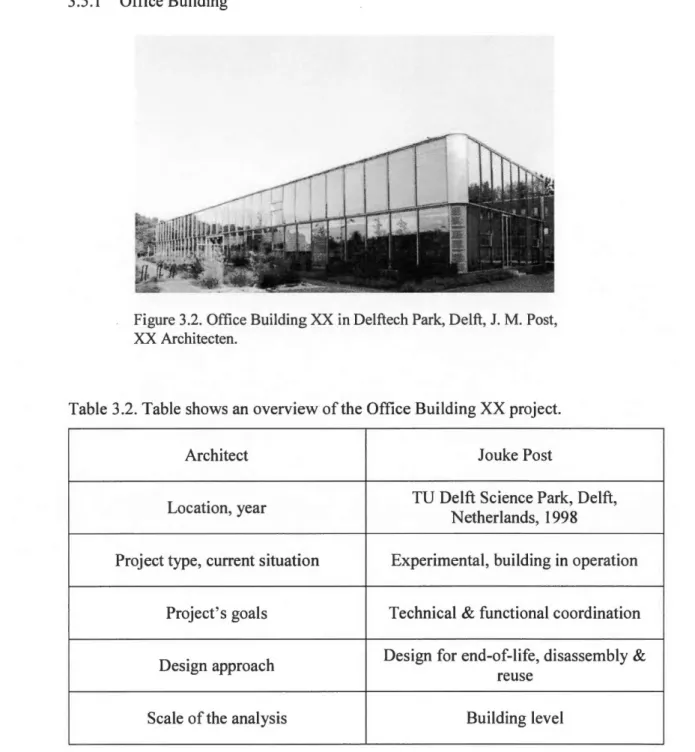
3.2 Office Building XX in Delftech Park ... 64
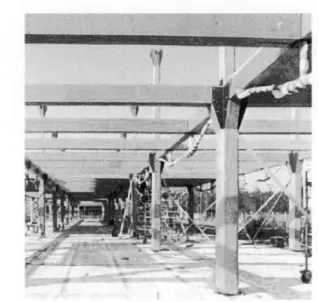
3.3 Columns and beams in Office XX ... 70
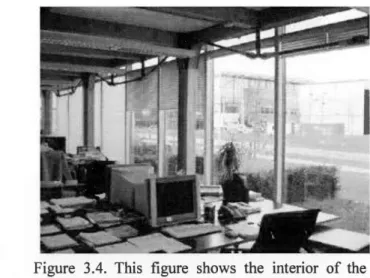
3.4 Interior of the completed Office XX ... 71
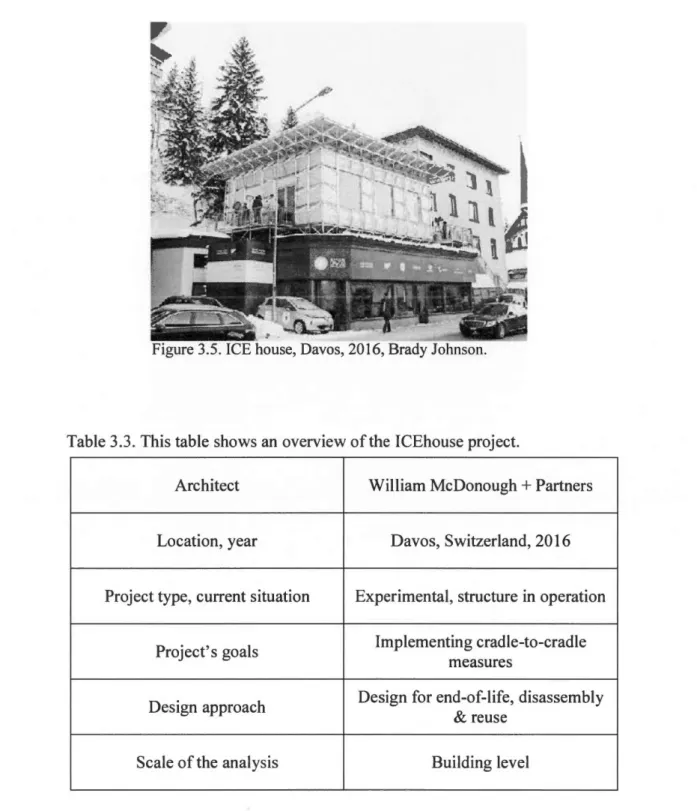
3.5 ICE house, Davos ... 75
3.6 Outside and inside view of ICEhouse, Davos ... 80
3.7 Basic components ofICEhouse, Davos ... 81
3.8 ICEhouse can be assembled rapidly in different climate conditions ... 82
3 .12 Aluminum members connected with gus sets and T-bolts ... 93
3 .13 Connection detail at upper and lower corner ... 94
3 .14 Wall partition and floor panels are taped to the aluminum frame ... 94
3.15 DIRTT partitions in an interior in Salk Lake City ... 97
3 .16 Prefabricated modules ready to be assembled on-site in the Gaz Métro office in Montreal ... 100
3.17 Basic components of the DIRTT partition system, Burovision, Montreal .. 102
3 .18 Fabric tiles, MDF tiles and glass panels installed on the metal framing ... 103
3.19 Wiring, cabling and plumbing incorporated in the partition system ... 103
3 .20 Aluminum frame slide into a stud attached to the dropped ceiling ... 104
3.21 Screw jacks fix the aluminum frame on horizontal studs ... 105
3.22 Connector that attaches the parts of the aluminum frame ... 105
3.23 Prefabricated and preassembled transparent laths in Gaz Métro, Montreal 106 3.24 Mountain Equipment store, Montreal.. ... 111
3 .25 Different materials used as separating panels in MEC store Montreal ... 117
3 .26 Different types and combination of strut channels ... 119
3.28 Spring nut is fixed to a channel by a bolt ... 120
3 .29 The 1 518" strut channel used in MEC partition system ... 120
3.30 Two types of Unistrut fittings observed the MEC partition system ... 121
3 .31 Strut system fixed to the concrete slabs by bolts and fittings ... 121
3 .32 Fittings attach the separating panels to the metal frame ... 122
3.33 Exploded isometric view of the MEC partition system ... 123
3.34 Identification of components of the partition system ... 124
3.35 Connection between several components ... 125
3 .36 Connection between metal structure and panels ... 125
3 .3 7 Material damage in the MEC partition system ... 127
3.38 Exploded isometric view of the DIRTT partition system ... 128
3.39 Interaction between components of the DIRTT's partition and the floor ... 129
3 .40 Identification of components of Cellophane Ho use' s partitioning ... 130
Table Page
1. 1 Characteristics of waste form CRD activities in the building sector ... 10
1.2 Approximate proportion of different types of construction and demolition de bris generated in Que bec ...
15
3.1
Two categories of cases based on their life span ... ; ...61
3.2
Overview of the Office Building XX project ...64
3.3
Overview of the ICEhouse project. ...75
3.4
Overview of the Cellophane House project.. ...85
3.5
Overview of DIRTT manufacturing company ...97
RÉSUMÉ
Cette recherche examine l'application de l'approche Design for disassembly (DfD) dans la conception des bâtiments. Différents aspects de cette approche seront étudiés afin d'explorer les possibilités qu'elle offre pour conserver les matériaux et composantes d'un bâtiment, faciliter leur réutilisation et recyclage, et diminuer la quantité de déchets de construction. Cette étude analyse les méthodes actuelles de gestion des déchets dans l'industrie de la construction, identifie les écarts existants, et propose des mesures que les designers peuvent intégrer dans la conception de leurs projets.
Afin de faciliter la réutilisation et le recyclage des matériaux et composantes d'un bâtiment, design for disassembly offre des stratégies pour éviter la démolition. Nous aborderons comment DfD peut éviter la démolition, conserver les matériaux et diminuer la quantité de déchets en intégrant des mesures de flexibilité et d'adaptabilité dans la configuration des systèmes.
Actuellement, les méthodes de conception conventionnelles, le manque de motivations économiques pour la réutilisation et le recyclage des matériaux, ainsi que l'absence de cadre standard pour DfD constituent les obstacles à la mise en œuvre de cette approche comme méthode dans la conception des bâtiments. Malgré de nombreuses barrières,
les designers peuvent identifier les limitations à la réutilisation et au recyclage des matériaux issus des activités de construction, de rénovation ainsi que de démolition, et les prendre en considération dans la conception de leurs projets afin de contribuer ainsi à la transition vers une économie circulaire dans l'industrie de construction.
La revue de littérature de gestion des déchets de construction au Québec, une revue d'une série d'exemples, et une étude de cas nous permettront d'identifier le potentiel pour l'intervention des designers afin de mettre en œuvre l'approche design for disassembly, d'optimiser l'utilisation des ressources et de réduire la quantité des déchets dans l'industrie de construction.
Mots clés: Design de l'environnement, Design for assembly, Design for disassembly, construction, fin de vie, adaptabilité, réutilisation, recyclage, réduction de déchets
This research project examines the application of the design for disassembly (DID) approach in building design. Different aspects of DID are studied to explore possibilities to preserve materials and mitigate construction waste by facilitating component reuse and material recycling. This study reviews current waste management methods in the construction industry to identify existing gaps and determine the potential for designers to consider material efficiency in the planning phase of projects. To facilitate the reuse and recycling of materials and components, design for disassembly suggests strategies to prevent demolition. This study will discuss how DID can prevent demolition, preserve materials and reduce the amount of waste through flexibility and adaptability of systems during a building's life span and at the end of its life.
Currently, anchored traditional methodologies in building design, lack of economic incentives for reuse and recycling, and lack of a standard framework for DtD are obstacles to the implementation of DID as a method. Despite these obstacles, designers can identify gaps and limitations in the waste management sector and design to address these gaps and contribute to move towards a circular economy in the construction industry. Through a review of literature on construction waste management in Quebec, a review of a set of examples and a specific case study, this project presents potential interventions for designers to implement DID principals to reduce construction waste. Keywords: Environmental design, Design for assembly, Design for disassembly, Building construction, End-of-life scenario, adaptability, flexibility, Reuse, Recycling, waste reduction
INTRODUCTION
INFLUENCE OF MODERN ARCHITECTURE ON CONSTRUCTION W ASTE, FROM DESIGN FOR ASSEMBL Y TO DESIGN FOR DISASSEMBL Y
This research project focuses on the concept of design for disassembly (DfD) in the building industry. DfD aims to mitigate the negative environmental impacts of buildings by facilitating the recovery, reuse and recycling of their materials and components. The recovery, reuse and recycling of materials and components keep them in use cycles and preserve their physical and economic value and their embodied energy.
The starting point for this project is the author's previous research undertaken as part of the one-year graduate pro gram, Diplôme d 'Études supérieures Spécilisées (DESS) en Architecture Moderne et Patrimoine, offered by the School of Design at the
Université du Québec à Montréal. The DESS en Architecture Moderne et Patrimoine
pro gram' s framework follows the Docomomo international' s 1 goals to document, preserve and enhance buildings designed and constructed during the Modern movement in the twentieth century. This program covers the history of Modern architecture and studies the cultural and social contexts of the early twentieth century which led to the evolution in construction technologies. These evolutions consist of the innovative construction methods, modular design, prefabrication and standardization of building components, on-site assembly of factory-made components, and the use of new industrialized materials. These technologies, developed from industrialization, were basically solutions to the early twentieth century and post-war housing crisis.
1Docomomo, the abbreviated acronym for The International Working Party for Documentation and Conservation of Buildings, Sites and Neighborhoods of the Modern Movement, is "an international organization established in 1988 out of concern for the increasing demolition of buildings not deemed 'historie' by age" (Carroon, 2010, p. 364).
They contributed to optimize time and cost of construction and were integrated in the framework of the approach design for assembly in building design. Today, these technologies can be discussed in the framework of the emerging appraoch of design for disassembly to address the issues related to material consumption and construction waste. " Given the vast inventory of twentieth-century buildings, the challenges and importance of reuse or preservation for both cultural and environmental reasons is immense" (Carroon, 2010, p. 364). Construction, renovation and demolition activities are some of the largest contributors to environmental degradation as they consume large amounts of raw materials and produce large amounts of waste. The choice between demolishing and conserving buildings and their systems is sometimes related to the construction methods used in the original buildings. In most cases, conservation processes are costly and laborious because construction techniques do not favour the adaptation and maintenance of buildings and systems, or replacing or repairing oftheir parts (Gorgolewski, 2017). Design for disassembly, developed form design for assembly, suggests strategies and construction techniques to facilitate the adaptation and maintenance of buildings and systems during their operation life and the recovery of their materials and components at the end of their operation life. This approach contributes to preserve materials for reuse or recycling to reduce the quantity of construction waste and harvest fewer raw materials. In this project we examine how the innovations of Modern architecture integrated into the DfD's framework can contribute to the preservation of building materials and components through subsequent reuse, repair and recycling. We also discuss how extending buildings' life spans through resilience, flexibility and adaptability can reduce the negative environmental impacts of buildings.
3
BACKGROUND AND PROBLEM ST A TEMENT
Population growth, economic developrnents and technological evolution lead to constant urbanization and change in the built environment (Lehmann & Crocker, 2012). Rapid evolution in the built environrnent through the increasingly large nurnbers of construction, renovation and dernolition activities causes severe stresses on the environment. After food production, the construction industry is the largest consumer of raw materials and the biggest producer of waste worldwide (Berge, 2009). In the U.S., "no other sector of the industry uses more materials, produces more waste and contributes less to recycling than the construction sector" (US EPA, 2009 as cited in Lehmann & Crocker, 2012, p. 324). Based on estirnates frorn multiple sources, the construction industry uses approximately 40% of the total raw materials in North America and 50% of European resource extraction (Carroon, 2010; Ruuska & Hakkinen, 2014; Gorgolewski, 2017; USGBC, 2019). Moreover, in developed countries, 25-30% of the total amount of waste produced in all industries is from construction, renovation and demolition projects (Gorgolewski, 2017). This amount rises to 35% in Quebec and 47% in Canada (Morneau, 2009; Giroux, 2014).
The overconsurnption of raw materials and the generation of large amounts of waste in the construction industry is the result of the current linear rnodel of material tlow (ARUP, 2016; Gorgolewski, 2017). A linear model in the construction industry consists of extraction, transport, production, construction, demolition and disposai of residual rnaterials in landfills. The constant extraction of raw rnaterials and the landfilling of products with high ernbodied energy present three issues with important negative impacts on the natural environment; 1) the depletion of natural resource
reserves, 2) the emission of significant amount of greenhouse gases (GHG), and 3) the pollution of waters and soils (Lehmann & Cracker, 2012; Kibert, 2013; ARUP, 2016;
Gorgolewski, 2017; USGBC, 2019).
The first issue caused by a linear model of material flow is the depletion and scarcity of natural resources. Resource scarcity is highlighted by a global consensus that the consumption of natural resources is growing at an alarming rate (Lehmann & Cracker, 2012; Kibert, 2013; Gorgolewski, 2017). Worldwide metal and minerai use has increased by 66%, from 19 billion tons in 1980, to 31.5 billion tons in 2010 and it is estimated that this amount will grow to 53.7 billion tons by 2030 (Friends of the Earth Europe, n.d. as cite in Gorgolewski, 2017; Mckinsey & Partners, 2015 as cited in Gorgolewski, 2017). "The Worldwatch Institute2 has estimated that by the year 2030, the world will have run out of many raw building materials "(Brown, 1990 as cited in Gorgolewski, 2017, p.10). It is believed that we have already consumed most of the easily accessible material supplies and in the near future, material markets will compete with energy markets for resources (Gorgolewski, 2017; Lehmann & Cracker, 2012). Ruuska & Hakkinen (2014) emphasize that materials such as coal, oil, and metallic minerais have more limited reserves, and some materials like oil are approaching their production peaks while others have already passed their peak. Lehmann & Cracker (2012) point out that iron ore, lithium and copper are already much rarer than oil.
Unlike the global consensus on the rate of resource depletion, the condition of material reserves used in the construction industry remains undefined (Lehmann & Cracker, 2012; Ruuska & Hakkinen, 2014; Gorgolewski, 2017). There are still large reserves of the most common building materials such as aggregates, clay lime, stone, gypsum and quartz (Ruuska & Hakkinen, 2014). However, there are doubts about the production
2 The Worldwatch Institute works to accelerate the transition to a sustainable world that meets human needs through research and outreach that inspire action (Worldwatch Institute, 2019).
5
capacity of oil, which is needed for manufacturing polymer-based building materials (Ruuska & Hakkinen, 2014 ). There is also a continuous decrease in ore grades which are the sources of some other common building materials such as metals and ceramics (Ruuska & Hakkinen, 2014).
Resource scarcity is not only linked to the physical exhaustion of supplies, but also to their availability which can be limited by the financial resources needed to extract, process or transport materials (Gorgolewski, 2017). There are materials that are still abundant in nature but are considered scarce as economically and environmentally they are becoming less accessible (Gorgolewski, 2017).
Two other issues related to the linear model of consumption in the construction industry are gaseous emissions and soil and water pollution. The extraction, manufacturing, processing, transportation, construction, demolition and disposai are energy-intensive activities that emit a high amount of greenhouse gases (Kibert, 2013). In addition to gaseous emissions, waste disposal in landfills and waters causes soil contamination and water pollution, which present serious problems for future generations (Jackson, 1996; Carroon, 2010). Large cities generate huge amounts of waste and nearby landfill sites have already reached or are reaching their capacity (Melnyk, 2016). Since 1978, three-quarters of North America's landfill sites have been filled to capacity and are now closed (Carroon, 2010; Melnyk, 2016). The U.S. is rapidly running out oflandfill space (McCarthy, 2018). Due to the decrease in landfill capacity, areas are expanding near cities and consequently, the nearby environment is becoming contaminated (WRAP, 2009).
The awareness of the negative impacts of the linear model of material flow in the construction industry has led to constant evolution in waste management perspectives. Over the past few decades, new strategies, methods and policies have been implemented to protect the environment and the population from the negative impacts of waste disposai (Thormark, 2001; Durmisevic, 2006). Governments and
policymakers have been implementing regulations to divert materials from landfills. One of the most effective measures that have been implemented are tax increases for material disposai in landfills and for incineration to reduce the number of residues in elimination facilities (Gorgolewski, 2008; Jeffrey, 2011 ).
Ruuska & Hakkinen (2014) highlight that there are man y potential ways for the building industry to reduce waste. The reuse and recycling of residuals from construction, renovation and demolition activities are the most significant practices developed and implemented in the construction industry to reduce waste (Gorgolewski, 2008; Zelechowski, 2012). These two practices help to divert materials from landfills and convert a linear model of material flow to a closed-loop material flow (Thormark, 2001 ). Reuse and recycling of materials are more effective if building materials and components are recovered without damage and contamination. Deconstruction is an alternative to demolition that prevents the damage of materials and contributes to reuse and recycling. During the last 15 years, the U.S. Environmental Protection Agency (US EPA) has initiated a series of deconstruction pilot projects and created several deconstruction manuals. It conducted and documented a residential DID pilot project in 2006 to examine the impact of the approach on reducing construction waste (US EPA, 2018). The results show that disassembly potentials integrated into different parts of the ho use would favour the recovery and reuse of several parts, such as interior walls, that may considerably reduce the amount of waste (EPA, 2010).
Deconstruction and disassembly of buildings or their systems for reuse show a growing recognition of the benefits that deconstruction and material reuse provide (Zelechowski, 2012). In some places in the world, reuse is an evolving industry in the building sector with social and economic benefits (Zelechowski, 2012).
Despite a significant evolution in waste management, reuse and recycling, studies show that the conventional methods in building design provide limited possibilities for the deconstruction of buildings, and the reuse and recycling of their components and
7
materials (Durmisevic, 2006). The chemical complexity of composite and engineered products that are increasingly used in the building industry makes recycling and reuse difficult as it is energy-intensive to break down composite components into their constituent parts (Guy & Ciarimboli, 2007). Currently, most buildings are demolished with little or no attempt to recover their materials for reuse or recycling.
Durmisevic & Yeang (2009) relate demolition and the lack of material reuse to current building design scenarios that are based only on easy assembly but not disassembly. Conventional building design scenarios do not consider changes during the life cycle
of a building or the end of its life span in the planning phase. Although assembly
methods evolved and improved to optimize efficiencies in the construction phase, there have been limited attempts for the deconstruction phase. As such, components and materials are designed and prefabricated in a way to be assembled rapidly on-site, but not designed to be separated easily for reuse.
Recently, the issue of solid waste from construction activities has become an area of interest for developing methods and strategies to relate building design to waste management. To make the connection, designers and architects suggest approaches that plan the management of residual materials at the end of a building's life.
Design for disassembly is an approach that considers waste mitigation with a focus on the architecture of components, methods of connection between components and material selection (Rios, Chong, & Grau, 2015; Durmisevic & Yeang, 2009; Guy & Ciarimboli, 2007). One of the DfD's goals is to make the components and parts of a building accessible and flexible. Flexibility and accessibility allow for spaces to be adapted to the needs of a building's occupants, prevent demolition and contribute to preserve materials and reduce waste.
Through a review of the literature and a series of examples and case studies, this research study investigates the following questions to explore the impact of design for disassembly to mitigate waste in the construction industry.
First, this review will investigate how policies and regulations contribute to diverting residual materials from landfills and to promoting reuse and recycling? and what are the existing gaps in the reuse and recycling practices that can be addressed by design for disassembly to reduce construction waste? Second, a discussion of design for disassembly and its different aspects will explore how design for disassembly considers the waste mitigation in the planning stages of a project? Third, a series of examples will look at what aspects of design for disassembly promote the reuse and recycling of components and materials?
Following a series of examples, an in-depth analysis of the interior partition assembly system of a local building is presented to assess the literature and identify the limitations of current design practices for material recovery and reuse. It will also discuss how the implementation of DfD in the same system could allow for the reuse of a large number of materials.
CHAPTERI
W ASTE MANAGEMENT IN THE CONSTRUCTION, RENOVATION AND DEMOLITION INDUSTRY
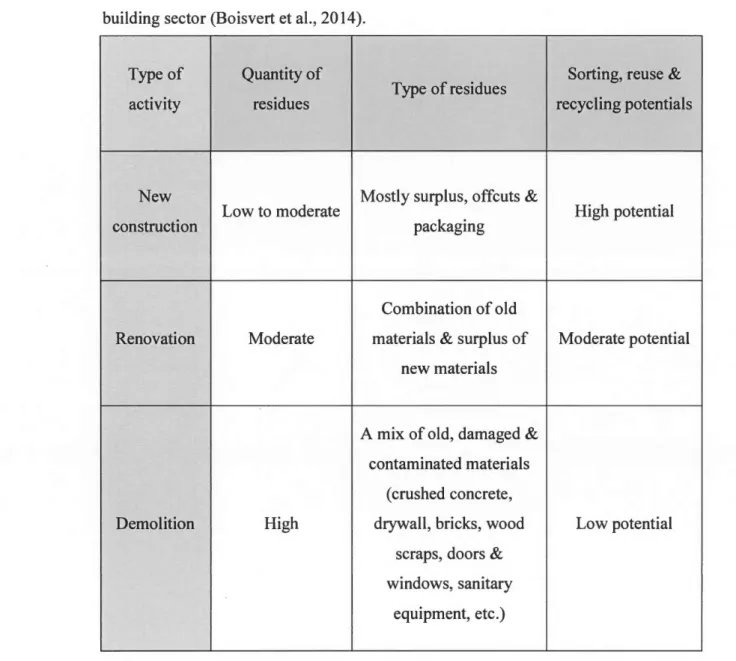
In the construction industry, waste cornes from three major activities; new construction, renovation, or demolition and is associated with two sectors; civil engineering and building (Boisvert, Bosniak, & Dallaire, 2014). lt is known as C&D waste (construction and demolition) or CRD waste (construction, renovation, demolition) (Jeffrey, 2011 ). CRD waste is essentially composed of asphalt, concrete, cernent, stone, brick, ferrous and non-ferrous metals, wood, plasterboard, asphalt shingles, paper, plastic and cardboard packaging (Jeffrey, 2011; Boisvert et al., 2014). This chapter reviews the material flow and waste management strategies in the building sector. The amount and type of waste from buildings differs depending on the context (residential, industrial, commercial, institutional) and the type of activities ( construction, renovation, demolition) (Boisvert et al., 2014 ). Table 1.1 shows the characteristics of CRD waste generated in different types of activities in the building sector.
Table 1.1. This table shows the characteristics of waste form CRD activities in the building sector (Boisvert et al., 2014 ).
Type of Quantity of
Type of residues Sorting, reuse &
activity residues recycling potentials
New Mostly surplus, offcuts &
Low to moderate High potential
construction packaging
Combination of old
Renovation Moderate materials & surplus of Moderate potential new materials
A mix of old, damaged & contaminated materials
( crushed concrete,
Demolition High drywall, bricks, wood Low potential scraps, doors &
windows, sanitary equipment, etc.)
11
In general, a significant amount of CRD waste is generated from renovation and demolition activities. Environment Canada (2014) estimated that in Canada, 89% (about 3,562,100 tons) of the total waste generated in the CRD sector came from renovation and demolition activities in 201 O. A demolition project produces 20 to 30 times more waste than a new construction or renovation project. However, since renovation projects outnumber demolition projects, the renovation sector is considered more wasteful (Boisvert et al., 2014 ). According to a study by Environment Canada (2014 ), the amount of waste from the renovation sector was two times higher than the waste from the demolition sector in 201 O. In the U.S., the Rebuilding Exchange, a Chicago company that recovers building materials for reuse announced that its major source of supply, about 80%, is from renovations (Zelechowski, 2012). This is due to the far larger number of renovations compared with full deconstructions or demolitions.
There have been various attempts to address the large volume of waste generated from the construction industry. The current management strategy for CRD waste is based on the 4R-D principle. 4R-D stands for 'reduce, reuse, recycle, recovery for energy, and disposai.' This waste management hierarchy, generally illustrated in the form of a pyramid, indicates the order of priority for processes first to reduce waste production, and then to divert waste. Landfill disposai is the last option in the pyramid for materials that cannot be reused, recycled or used for energy recovery (Figure 1.1 ).
Reduce
Figure 1.1. This pyramid shows the order of priority in waste management. Created by S. Sadraee.
4R-D remains a complex strategy in the waste management sector associated with social, economic, organizational and technical challenges (Boisvert et al., 2014 ). These challenges make waste disposai in landfills more economically beneficial than recovery practices (Boisvert et al., 2014). However, there is a growing interest in directing waste management from elimination to recovery.
Design for disassembly can be implemented as a part of the 4R-D strategy as bath, DfD and 4R-D, emphasize the reduction of resource use and waste generation. Introducing the DfD approach to the 4R-D process can address gaps resulting from inefficiencies in the 'reduce' process and present opportunities for a design approach to reduce the amount of construction waste. In the following section, current waste management policies and practices in the CRD sector in Quebec will be reviewed.
1.1 CRD waste management in Quebec
This section covers three tapies related to the CRD waste stream in Que bec; 1) the types and amounts of residual materials, 2) the le gal framework for waste management,
13
and 3) the current methods and facilities that sort, recover, recycle or eliminate residual materials.
1.1.1 Type and amount of residual materials
The construction, renovation and demolition industry generates approximately a third of the total waste produced in Quebec (Morneau, 2009; RECYC-QUÉBEC, 2016;
RECYC-QUÉBEC, 2018). In 2008, this industry produced 4.57 million tons ofresidual
materials in both the civil engineering and building sectors in the province
(RECYC-QUÉBEC, 2018). In 2008, 3.22 million tons (74%) ofCRD debris were recovered and
revalued (Momeau, 2009; RECYC-QUÉBEC, 2018). The high recovery rate for CRD
debris in Quebec is widely related to the increased recovery of aggregates notably concrete, asphalt, brick and stone and to a lesser extent, the recovery ofwood (Boisvert et al., 2014). Aggregates, mostly from the civil engineering sector, represent 2.72 million tons of the total CRD debris that were recovered and revalued
(RECYC-QUÉBEC, 2018). The high recovery rate of aggregates is due to the implementation of
a standard by the Bureau de normalization du Québec (BNQ)3 in 2002 for the development of markets for recycled concrete (Vachon, Beaulne-Bélisle, Rosset, Gariépy, & McGrath, 2009). In Quebec, concrete is recovered from renovation or demolition sites and is recycled and used as road base, and if free of contamination, it is used as dry aggregate to produce new concrete (Gagné, 2008). Apart from aggregates, various types of other materials such as wood, metals, shingles and gypsum, representing 500,000 tons, were recovered and revalued in the CRD industry
in 2008 (Morneau, 2009; RECYC-QUÉBEC, 2018).
There is a lack of precise information regarding the composition of the total CRD de bris generated in Quebec as there is not a system that tracks materials from CRD sites to
3 This standard classifies and characterizes recycled materials, a mixture of concrete, bituminous coated and brick in order to contrai and encourage their use to replace new granular materials (Bureau de normalisation du Quebec (BNQ), n.d.)
management facilities (Vachon et al., 2009). The most relevant data that is available is from an exhaustive study of the Quebec waste management sector in 2009 carried out by Vachon et al. (2009). This study presents an estimation of the composition of CRD waste by the Regroupement des récupérateurs et des Recycleurs de Matériaux de Construction et de démolition du Québec (3R MCDQ). This data has been referenced in several research projects and is presented in Table 1.2.
15
Table 1.2. This table, designed by Vachon et al. (2009, p. 7) and based on the 3R MCDQ's estimations and data from the Institut de la statistique du Québec. It shows the approximate proportion of different types of construction and demolition debris generated in Quebec.
Approximate composition Equivalent quantity Type of waste
(after 3R MCDQ) (metric ton)
Stone, brick, concrete &
40 to 60% asphalt 1,75M to 2,63M Wood ( treated or 10 to 20% 0,44M to l,lM untreated) Metals 3 to 15% 0,lM to 0,7M
Paper & cardboard 3 to 10% 0,lM to 0,44M
Soil 2 to 10% 0,09M to 0,44M
Others (plastics, asphalt
10 to 20% 0,44M to 0,88M shingles, gypsum)
1.1.2 Legal framework for waste management
In 1989, the Ministère del 'Environnement du Québec adopted the Politique de gestion
intégrée des déchets solides. This policy set a target for a 50% reduction in the disposai of residual materials by the year 2000 (Ménard, 2008). In 1995, the Bureau d'audiences publiques sur l'environnement (BAPE) established a committee and a public
consultation on waste management at the request of the Ministère de l'Environnement
et de la Faune (BAPE, 1997). In 1997, the committee presented a report entitled
Déchets d'hier, Ressource de demain in which it analyzed the opinions of more than
one hundred stakeholders. Following this report and based on the results of the
consultation, the Quebec government created the Plan d'action québécois sur la gestion
des matières résiduelles 1998-2008 (BAPE, 1997). In 2000, the Quebec National
Assembly adopted the action plan and introduced it as the Politique québécoise de
gestion des matières résiduelles 1998-2008 (Mi Ilette, 2010). Within the context of the
policy's principles, the Quebec government aims to implement measures to reduce waste at source and create a zero-waste society. lt seeks to maximize added value through sound waste management and to make end-waste the only residual material
sent for disposai (Q-2, r. 19, 2005; Q-2, r.43, 2006). The policy outlines and discusses
the following 11 principles:
• 4R-D,
• Social equity and solidarity,
• Environmental protection,
• Economie efficiency,
• Participation and commitment,
• Access to knowledge
• Subsidiarity,
• Prevention,
17
• Polluter pays, and
• Internalization of costs (Légis Québec, 2019).
The Politique québécoise de gestion des matières résiduelles is accompanied by a plan
that describes initiatives, sets intermediate goals, and establishes deadlines for a period of five years. RECYC-QUÉBEC is the association for the recovery and recycling of residual materials that sets a series of activities to achieve the intermediate goals of each action plan and to ensure that a maximum quantity of residual materials is recovered and revalued. The performance of each action plan is reviewed and assessed during its operation, and the Minister may readjust the acts and make recommendations for a future action plan (Légis Québec, 2019). For example, the 1998-2008 Action Plan set the goal to di vert 60% of CRD residual materials from landfills (Millette, 2010). In the 2011-2015 Action Plan, the goal has been increased to recycle or reclaim 80% of concrete, brick, and asphalt residuals (addressing mostly the civil engineering sector); and to sort at source or send 70% of CRD residuals from the building sector to sorting facilities (Ministère du Développement durable, de l'Environnement et des Parcs (MDDEP), 2011).
Included in the policy, the Quebec Environment Quality Act calls for a Plan de gestion de matières résiduelles (PGMR) for each regional municipality (Vachon et al., 2009). Each regional plan benefits from governmental financial aid and includes directives for the management of all domestic, industrial, commercial, institutional or CRD residual materials produced on the concerned territory (RECYC-QUÉBEC, 2018). Act 32 of the 2011-2015 Action Plan requires that each PGMR controls the sorting of residual materials from the building sector on site or in recovery sorting facilities. This can be demanded when delivering CRD permits to contractors with projects that generate significant quantities of debris in the building sector (MDDEP, 2011). In addition to regional municipalities, industries, businesses; institutions and CRD companies are responsible for materials they generate on the territory covered by the related PGMR.
This responsibility consists of paying the costs of their management and fulfilling the
goals as determined by the PGMR (MDDEP, 2011).
The execution of two important regulations in Quebec contributed to the goal set by the Politique québécoise de gestion des matières résiduelles. First, since 2006, the Règlement sur les redevances pour l'élimination de matières résiduelles has airned to
reduce the amount of residual material in landfills and incinerators (Légis Québec, 2019). This regulation demands that elirnination facility owners pay for each metric ton of residual materials they eliminate. As of 2019, the cost of elimination for each metric ton of material is $12.48 (Légis Québec, 2019). Second, Act 13 of the 2011-2015 Action Plan has set the goal to progressively exclude ail types of wood from elirnination in landfills, beginning with virgin wood. As defined in the action plan, by the end of 2014, all types of wood should have been recovered for reuse, recycling and valorization (Boisvert et al., 2014 ).
In addition to each five-year action plan, RECYC-QUÉBEC has been developing plans each focusing on a specific measure with the aim of reducing the amount of waste disposed of in landfills. The 2016-2017 Action Plan exclusively addressed the reduction of waste at source. Regarding the CRD sector, RECYC-QUÉBEC presented the eco-management of CRD sites in the building sector as a necessary measure to implement. In 2016, the Quebec governrnent called for proposais to fond a project to suggest a methodology for the eco-managernent of construction sites (RECYC-QUÉBEC, 2016). The selected project had to include one or several of the following rneasures in the proposition:
• Maintenance of buildings during their whole life cycle and a plan for waste management at the end of the life cycle of buildings,
• Promotion of sustainable interior design,
• Use of eco-materials,
19
• Reconversion and recycling buildings,
• Life cycle assessment, and
• Selective deconstruction (RECYC-QUÉBEC, 2016).
In contrast to conventional methods of waste elimination, in general, waste management policies in Quebec are evolving toward methods of recovery and reuse. The next section will caver suggestions for waste management at the municipal level. 1.1.2.1 Municipal programs
To fulfil Quebec's policy goal on waste reduction, regional municipalities support government regulations by setting specific requirements for construction, renovation or demolition permits. Since 2009, the City of Montreal requires the Gold LEED4 certification for every new municipal building over 500 m2 and the Silver LEED certification for all major renovations in municipal buildings (Boisvert et al., 2014). Since the application of this program, a police station, a soccer stadium and a library have been constructed based on Gold LEED criteria and the Montreal Planetarium has also received a Platinum LEED certification (Boisvert et al., 2014). According to LEED
Canada for New Construction and major renovations 2009, The LEED Canada rating
system offers points for the responsible use and management of materials in two of its seven categories. The first category is the 'Responsible materials and resources
management' which offers a maximum of fourteen points. The second category is the
'Regional Priority' that includes criteria for a building's durability and requires the development and implementation of a Building Durability Plan in accordance with the principles in the Guideline on Durability in Buildings -CSA S4 78-95 (R2007)- (Canada
44 Leadership in Energy and Environmental Design (LEED) was created in 2000 by the US Green Building Council (USGBC), for rating design and construction practices that would define a green building (Vierra, 2016). There are four levels of LEED certification; Certified, Silver, Gold, and Platinum, which are given based on the credits that buildings can obtain in seven categories as defined by LEED.
Green Building Council (CaGBC), 2010). One of the directives is to consider and predict the service life of components and assemblies to adapt the predicted service life to the designed service life of a building (CaGBC, 2010). The points that a building obtains in the 'Responsible materials and resources management' and 'Regional Priority' categories along with other points contribute to a building being awarded Gold or Platinum LEED certification (CaGBC, 2010). It is assumed that buildings which are Gold or Platinum LEED-certified have managed their residual waste responsibly and have used their resources efficiently.
Sorne municipal programs also encourage contractors and architects to use reclaimed materials in their projects. As an example, the City of Montreal has accelerated construction permit procurement for projects which integrate the application of a certain quantity of reclaimed materials (Boisvert et al., 2014). Two programs in the City of Gatineau offer grants or additional discounts for the construction of housing that has obtained LEED certification. The first program offers an additional grant of $2500 per house for a LEED-certified project. The second program offers a 75% discount on the municipal taxes for a period of two years for a LEED-certified construction (Boisvert et al., 2014 ).
1.1.2.2 Non-governmental guidelines
Besides the governmental framework for the management of CRD materials, few
non-governmental organizations are actively improving the performance of the 4R-D approach in Quebec. The most significant of these organizations is the Regroupement des récupérateurs et des recycleurs de matériaux de construction et de démolition du Québec (3R MCDQ). 3R MCDQ is an association that represents companies and
stakeholders from all regions of Quebec and has 150 active members who share activities such as collecting, transporting, sorting, reclaiming, recycling and reusing
21
offering solutions to promote the recovery, recycling and reclaiming of non-putrescible products and materials (3R MCDQ, 2019).
Residual materials from construction, renovation and demolition sites are sent to different types of facilities, and through different methods, sorted materials will be reused, recycled, repurposed, used for energy recovery or disposed of in landfills.
1.1.3 Waste management methods and facilities
In Quebec, waste management in the CRD sector is based on the 4R-D approach, which is the first principle of the Politique québécoise de gestion des matières résiduelles and presents two major methods of waste disposai; elimination and recovery. CRD residues are either recovered for reuse, recycling, energy recovery or eliminated in landfills.
1.1.3 .1 Elimination
Disposai or elimination of waste is the final stage of the 4R-D process. Elimination generally concerns all residues from recycling or repurposing processes that cannot be reused for any purpose or includes products or materials for which there is no market. The end waste is generally eliminated either in incinerators or in landfills. According to Boisvert et al. (2014) and Vachon et al. (2009), there are two types of landfills for CRD residual materials in Quebec:
1) Lieu d'enfouissement de débris de construction et de démolition (LEDCD) (construction and demolition disposai sites), previously called Dépôts de matériaux secs (dry materials disposai sites), are the most common facilities used for burying CRD debris. They have different capacities in rural and urban regions. Because of the beneficial rates they offer for non-putrescible materials, these facilities are the major obstacle to the recovery of CRD debris in Que bec
(Vachon et al., 2009). In 2016, 12 LEDCDs were identified by
RECYC-QUÉBEC (RECYC-RECYC-QUÉBEC, 2018).
2) Lieux d'enfouissement technique (LET) ( engineered landfills) have the
highest capacity of disposai and are designed to conform to the requirements of the Règlement sur l'enfouissement et l'incinération de matières résiduelles
(REIMR) (Vachon et al., 2009). These requirements consist ofusing waterproof
landfilling units, controlling liquid and gaseous emissions from landfilled materials, and testing soil for eventual contamination by biogas (RiDR, 2016).
1.1.3 .2 Material recovery
The 13 million tons of waste produced in Que bec annually presents great potential for reuse, recycling and recovery for energy (Légis Québec, 2019). A survey showed that, in 2006, 2.5 million tons of residual materials such as metals, plastic, cardboard, paper and glass were recovered in Quebec (Lé gis Québec, 2019). These materials represented a value of 550 million dollars and their management provided about 10,000 job opportunities (Légis Québec, 2019). Three major organizations responsible for the
recovery and repurposing of CRD waste in Quebec were identified; eco-centers, CRD
waste sorting facilities and CRD retail companies. The high recovery rate of CRD debris is partly attributable to 260 eco-centers and 48 CRD waste sorting facilities, and partly to 18 CRD retail companies (Vachon et al., 2009).
A. Eco-centers
Eco-centers or eco-parks are open areas with containers that accept non-putrescible voluminous residual materials of all types that are not collected during the regular waste collection (Ville de Montréal, 2019). These centers normally receive household waste (hazardous waste, home appliances ), electronic devices, recyclable materials (paper, cardboard, glass, plastic, metal), wom-out tires and small loads of CRD debris
23
(Ville de Montréal, 2019). Eco-centers provide containers to small contractors or citizens with construction, renovation or demolition projects who do not have space for a container on the construction site (Vachon et al., 2009). In 2015, RECYC-QUÉBEC identified 260 eco-centers in Quebec. Of these centers, 75% be long to municipalities, regional municipalities or the inter-municipal administrations and some private companies, non-profitable organisms or mixed (public-private) organizations manage the other 25% of eco-centers (Vachon et al., 2009). Each eco-center has a method to manage the debris it receives. Most of the eco-centers require that contractors and citizens manually sort their debris by category (wood, aggregates, shingles, gypsum) before leaving them in containers (RECYC-QUÉBEC, 2018). Eco-centers refuse voluminous products that are larger than the containers (Ville de Montréal, 2019). There is no data available that shows the total amount of residual materials that all eco-centers receive. However, according to the RECYC-QUÉBEC survey for the revaluation of the 2011-2015 Action Plan, 185 eco-centers that serve 75% of the Que bec population, accepted 405,000 tons of residual mate rials from ail sectors in 2015. 66% of this amount came from the CRD sector. According to Vachon et al. (2009), wood, aggregates ( concrete, brick, stone) and metal are the most common CRD materials that eco-centers receive. Due to lack of market, eco-centers do not revalue asphalt shingles, gypsum and treated wood and they are generally sent for disposai (Vachon et al., 2009).
B. CRD waste sorting facilities
In the 2011-2015 Action Plan, the Quebec government intended to allocate 3 million dollars for making recycling more efficient. The government has planned to modernize the processing and sorting plants for CRD residual materials and to develop markets for reclaimed materials (MDDEP, 2011).
CRD waste sorting facilities, also called material recovery centers, receive several types of materials. Sorted materials are sent for valorization or elimination. Most of the sorting facilities have limited capacity and receive less than 20,000 tons of materials annually (RECYC-QUÉBEC, 2018). Sorting centers are categorized based on the equipment they use for sorting and the mechanization level (Vachon et al., 2009). Although they share several similarities, none of these centers are identical. Each of them has its own sorting method, physical characteristics, equipment and market (Vachon et al., 2009).
In general, there are three types of sorting facilities; 1) centers where materials are sorted manually without using any equipment, 2) centers where basic equipment is used to sort materials, and 3) centers where technologically advanced equipment are used to sort materials (Vachon et al., 2009). RECYC-QUÉBEC identified and addressed 48 sorting facilities for the revaluation of the action plan in 2015. 37 sorting facilities participated in the survey and announced to have received 1.63 million tons of CRD residual materials and sent out 1,49 million tons of sorted materials.
This quantity of materials had three major destinations; 1) 53% (794,000 tons) were sent for recycling and energy recovery, 2) 24% were sent to landfill sites to be used as alternative landfill liner and cover materials, and 3) 23% (343,000 tons) were rejected and sent for disposai in landfills (RECYC-QUÉBEC, 2018) (Figure 1.2).
53% Recycled
or
u
se
d
for e
n
ergy recovery
24% Used as alternative landfill liner and cover material
■23'%
Disposed of
i
n
la
n
dfil
l
s
Figure 1.2. This figure shows the destination of CRD debris sorted in sorting facilities. This figure cornes from a report prepared by RECYC-QUÉBEC in 2018.
25
Sorting facility operators have confirmed that these centers generally reject treated wood, fiberglass, insulating materials, carpets, window glass, porcelain, vinyl base materials (tubes or PVC outdoor coatings), composite products (wood-alurninum window frames) and send thern to elirnination facilities. Generally, these materials are not accepted because there is no market for them (RECYC-QUÉBEC, 2018). Figure 1.3 shows that wood and aggregates constitute high proportions of all sorted materials that enter the recycling strearn or energy recovery facilities. This confirrns the effectiveness of regulations that pro hi bit landfilling of all types of wood and encourage the recovery and recycling of aggregates. However, as shown in Figure 1.3, a greater proportion of wood is used for energy recovery and cannot be reused. The lack of interest for the valorization of wood is due to several factors; critical
63% 1 1 [ 56% Wood Energy recO've1y ,- 22% Aggregates 1 .__ 7% Metals 37% 1 Recycling
r
4% Shingles Et] 1% Cardboard ■ B·'Ô Gypsum 9% OthersFigure 1.3. This figure shows the proportion of materials sent for recycling or energy recovery, and the proportion of two types of wood valorization. This figure is presented in a report prepared by RECYC-QUÉBEC in 2018.
transport of materials to appropriate recycling and valorization installations, low capacity of sorting, recycling and valorization installations for wood, lack of appropriate method of sorting for different types of wood debris, and the lack of markets for the revalued residues (Boisvert et al., 2014)
The results from the survey of 37 sorting centers helped RECYC-QUÉBEC estimate the total amount of sorted residue from all the 48 existing sorting facilities in Quebec to be 1.85 million tons. Based on this estimation and considering the amount of eliminated residues from all sources of the construction industry (building sector and civil engineering sector), RECYC-QUÉBEC estimates that 71.5% of the total CRD residuals were diverted from elimination facilities through sorting, reusing and recycling in 2015. The provincial goal that set the recovery rate at 70% in the 2011-2015 Action Plan was slightly surpassed according to the RECYC-QUÉBEC estimation.
27
C. CRD retail companies
CRD retail companies acquire used building materials through demolition and selective deconstruction contracts or buy them from contractors, individuals or receive them as charity donations (Vachon et al., 2009). There are three categories of businesses that have retail stores that offer reclaimed materials in Que bec; 1) demolition contractors who also specialize in reselling materials, 2) social economy enterprises that recover and resell building materials and have the mission of reintegration, hiring and training workers, and 3) family-owned business that buy and sell used construction materials (Vachon et al., 2009).
In Montreal, Restore and Éco-Réno are two well-known retail companies which recover and sell reclaimed materials with a high capacity of storage and high turnover (Habitat pour l'humanité, 2019; ÉcoRéno, n.d.). However, companies located in urban areas offer limited varieties of compact reclaimed materials. This is due to the limited space they have for storage (Vachon et al., 2009). Stores located in cities mostly offer products like doors, windows, bathtubs, sinks, plumbing, lighting or electrical tools from residential renovations or demolitions (Vachon et al., 2009). Retail companies located outside of urban zones offer beams, roofing, floors, windows, doors, steel structures and other outdoor materials in addition to the previously mentioned products (Vachon et al., 2009). Most retail companies offer demolition and deconstruction services, as they need to guarantee the quality of the materials they offer for sale (Zelechowski, 2012). By offering selective deconstruction, these companies can recover large amounts of woodwork as a whole, doors with their frames, and do less damage to components and materials (Zelechowski, 2012).
A connection between retail companies and contractors who have CRD projects is needed to set the practice of reusing of reclaimed materials. In that regard, Éco-Réno has developed a pilot project in collaboration with the Rosemont-La Petite-Patrie borough in Montreal. The borough provides a list of local applicants of construction,
renovation and demolition permits to Éco-Réno, so that the company can offer its services to numerous contractors and can recover some quality materials from buildings under construction (Vachon et al., 2009).
In addition to retail companies, a few online platforms have been developed to connect buyers and sellers of CRD reclaimed materials. Voirvert, a platform for sustainable building in Quebec, has a section entitled Carrefour 3RV that is dedicated to buyers and sellers of reclaimed materials. La Bourse des résidus industriels du Québec (BRIQ), an exchange platform established in 2005 and taken down in 2016, was a collaboration between the Centre de Transfert Technologique en Écologie Industrielle (CTTEI) and RECYC-QUÉBEC that offered free access to 3R MCDQ members to a service to find markets for CRD sector materials ( (RECYC-QUÉBEC, 2018). Since 2016, CTTEI adopted other initiatives to connect suppl y and demand in the sector.
The l iterature review on the waste management in the CRD sector in Que bec shows that policies, regulations, and municipal initiatives along with programs implemented by non-governmental organizations have led waste management toward recovery, reuse and recycling approaches to divert more materials from landfills. Among others, two regulations have increased the recovery rate of CRD debris; the implementation of the Règlement sur l'enfouissement et l'incinération de matières résiduelles (REIMR), and the Règlement sur les redevances exigibles pour l'élimination de matières résiduelles. These regulations have resulted in the closure of several landfills and the establishment of taxes for disposai ofresidual materials in elimination facilities (Lé gis Québec, 2019; Lé gis Québec, 2019).
In addition to the aforementioned regulations, the implementation of a standard for the recovery of aggregates by the Bureau de normalization du Québec (BNQ) and the Act, banning wood from disposai in landfills, has contributed to the increase in the recovery rate of residual materials in the CRD sector in Quebec. In general regulations and standards have provided significant incentives for the establishment and development
29
of recovery facilities. RECYC-QUÉBEC's report on waste management in the CRD sector in 2018, shows an increase in the number of eco-centers, sorting facilities and local retail businesses for reclaimed materials during the past decade.
Despite the evolution in the waste management sector toward more recovery, reuse and recycling, several sources confirm that there is an inadequate application of the 4R-D approach and several barriers still exist in Quebec. Time and cost are two determinant factors in managing residual materials. Demolition is still a common practice as it is cost-effective and less labor-intensive than deconstruction. Recovery facilities and valorization installations require considerable investment to equip (Boisvert et al., 2014 ). Space constraints are another barrier to the recovery of materials, particularly in dense urban areas (Boisvert et al., 2014). Building materials need large amounts of space for sorting and storage. In most cases, there is not enough space on site for containers to sort debris. Therefore, materials and components should be transported to sorting facilities or storage areas which is costly for contractors (Mamfredis, 2017). Moreover, the high cost of transportation influence material prices. It has been mentioned that there is also a lack of inventory of available reclaimed materials and a system to link supply and demand (Mamfredis, 2017). Accordingly, there is still nota stable market for materials reclaimed by eco-centers or sorting facilities (Boisvert et al., 2014). Drywall, metals, asphalt shingles, carpet, insulation and cardboard too often end up in disposai sites due to the lack of a market for these materials (Boisvert et al., 2014).
As of 2009, in Quebec, there were many rural areas or small towns that lack eco-centers or sorting facilities (Vachon et al., 2009). During this project, no new studies were found, and therefore, no new information on the number of rural eco-centers is available.
Another barrier to the recovery of materials for repurposing, reusing, or recycling is conventional building design. The recovery of materials from buildings designed
within conventional methods is costly, laborious and results, in many cases, in material or component damage. These methods do not include measures for the preservation of materials and components during the operation life of a building, and for their easy recovery at the end of life of the building.
A discussion of design for disassembly and its different aspects will explore how DfD as a method of radical change to conventional building design plan to preserve materials for reuse and recycling and reduce the amount ofwaste generated. In the next
chapter, the literature review will explore how waste management can be connected to
CHAPTER II
LITERATURE REVIEW AND CONCEPTUAL FRAMEWORK
The amount of landfilled waste can be reduced by keeping materials in use in continuous life cycles. This requires that materials are physically well-maintained so they can be reused or recycled in a closed-loop system. In the construction industry, a closed-loop system demands reform in the design of buildings (Gorgolewski, 2008; Keeler & Burke, 2009; Smith, 2010; Lehmann & Cracker, 2012; Kibert, 2013). It has been highlighted that conventional design scenarios are generally based on a linear flow of materials. Recovering materials from buildings built within conventional design scenarios only reduces the amount of waste to a limited extent (Lehmann & Cracker, 2012). According to Gorgolewski (2017), by adapting our design approach, we can change our treatment of waste. Designers can account for, model, and predict the deconstruction of buildings and their systems early in the design process to increase the recovery rate of components and materials for reuse and recycling (Lehmann & Cracker, 2012).
The idea of designing to eliminate waste through the constant reuse of materials in a closed-loop was extensively argued by William McDonough and Michael Braungart in the theory of Cradle to Cradle in 2002. This theory argues for a change in the way we make things. McDonough and Braungart' s argument can be summarized by the expression, "waste equals food" (McDonough & Braungart, 2002, p. 102). In this theory, they assert that that in an industrial ecology, ail the debris and refuse from production and construction processes should one day return to the use stream for new production and construction (McDonough & Braungart, 2002; Smith, 2010). In the cradle-to-cradle concept, buildings are considered part of an industrial metabolism and their components and materials are presented as industrial or technical nutrients. To
shift to a closed-loop flow, buildings should be recognized as raw material storage facilities to be harvested for the reuse of their materials and components (Gorgolewski,
2008; Lehmann & Cracker, 2012).
Lending support to the concept of buildings as a collection of nutrients, Smith (2010) highlights that designing buildings for assembly and disassembly is a strategy for the ultimate cradle-to-cradle cycle. In this strategy, the factory-made components assembled on-site may be disassembled, reused and recycled at the end of their useful life for rebuilding elsewhere (Brand, 1994; Guy & Ciarimboli, 2007; Smith, 2010). In this vision, "buildings become organisms of growth, change, decay, and re-growth"; designed with components that can be reused (Smith, 2010, p. 223). Unlike conventional building design strategies, design for disassembly (DfD) consists of
designing for the whole life cycle of a building. As DfD considers the value of materials, it suggests strategies for maintaining components during occupancy and strategies for reuse that continue post-occupancy. Reusing components and materials that extend their useful life saves their embodied energy, reduces the need for raw materials to manufacture the same products, and reduces waste (Durmisevic & Y eang,
2009).
2.1 Design for disassembly; towards changeable systems and waste mitigation
Severa! aspects of design for disassembly are rooted in Modernity. "The Modernist expression emphasized materials and forms without decorative embellishment, and Modern architecture often expressed a structure's assembly through materials and methods of connection" (Guy & Ciarimboli, 2007, p.4-5). U sing connections such as bolts and what Guy & Ciarimboli (2007) call 'pure materials'5 are key ingredients of Modern architecture. These features were further defined as principles of design for