République Algérienne Démocratique et Populaire
Ministère de L'Enseignement Supérieur et de la Recherche Scientifique
UNIVERSITÉ FERHAT ABBAS - SÉTIF1
FACULTÉ DE TECHNOLOGIE
THESIS
Submitted to the Process Engineering Department
for the degree of:3
rdcycle PhD
Field : Sciences and Technology Option : Polymeric Materials
By
Khitas Nesrine
Elaboration and characterization of biobased blends
poly lactic acid/poly (ɛ-caprolactone)
(PLA/PCL)-Citrates
Defended on 22/06/2019 in front of the Committee Members:
Benachour Djafer Professor Univ. Ferhat Abbas Sétif 1 President
Aouachria Kamira M.C.A. Univ. Ferhat Abbas Sétif 1 Advisor
Benaniba Mohamed Tahar Professor Univ. Ferhat Abbas Sétif 1 Co-Advisor
Djellali Souad M.C.A.
Univ. Mohamed El Bachir El Ibrahimi de Bordj Bou Arreridj
Examiner
Hellati Abdelhak M.C.A.
Univ. Mohamed El Bachir El Ibrahimi de Bordj Bou Arreridj
i
Many research groups have investigated the biodegradable polymer blends based on poly(lactic acid) (PLA) and poly(ε-caprolactone) (PCL), revealing that these blends were thermodynamically immiscible, which results in a multiphase structure with poor dispersion [1–10]. However, other studies revealed partial miscibility and some interfacial adhesion between the two phases [11–14]. Thus, the present study aimed to investigate the effect of citrate plasticizers and to reveal the performance of some compatibilizing agents on the miscibility of the biodegradable PLA/PCL polymer blends.
In this thesis, two different approaches were examined to enhance the miscibility of PLA/PCL blends by keeping the best attributes of these biodegradable blends. The first approach is dedicated to the plasticization of the binary blends with the addition of low molecular weight compounds such as citrate esters. The second one is dedicated to the microstructure and properties of these blends through the reactive blending. The compositions were selected from preliminary literature review. The melt blending process and the plasticization of the binary blends with Tributyl O-acetylcitrate-98% (ATBC) and Triethyl 2-acetylcitrate-99% (TEC) were carried out in an internal mixer (plastograph Brabender®). The reactive blending was performed using the aromatic isocyanate (PMDI), dicumyl peroxide (DCP), and maleic anhydride (MA). These three compatibilizing agents were found to be among the most efficient components to promote good polar interaction between PLA and PCL. The blend ratio was fixed to (80/20) and the blends were prepared under the same processing conditions.
The first part of this thesis reports on the study of blending and plasticizing effects on PLA/PCL crystallinity and miscibility. The rigid and plasticized blends at various ratios were analyzed by differential scanning calorimetry (DSC), thermogravimetric analysis (TGA), and X-ray diffraction (XRD). The results revealed a slight increase in the degree of crystallinity and a significant decrease in the glass transition temperature of PLA due to the addition of PCL. The citrate plasticizers were shown to lower the glass transition temperature and have much more enhanced the crystallization of PLA; however, a decrease in thermal stability of the blends has been promoted. Moreover, the rigid and plasticized blends were shown to be partially miscible.
The second part of this thesis is with the same aim of enhancing the miscibility between PLA and PCL as well as to investigate the effectiveness of the different
ii
thermogravimetric analysis (TGA), fourrier transform infrared (FTIR), X-ray diffraction (XRD), and by scanning electron microscopy (SEM). The results indicated that some chemical interaction occurred through the formation of carbamate bond between the –NCO groups of PMDI and the –OH group end-groups of PLA and PCL. The addition of DCP slowed down the performance of PMDI when both additives were used as a compatibilizing agent for the PLA/PCL blend. DSC results revealed significant variations in the crystallization and melting of PLA by the addition of PMDI. DCP slightly affected both melting and cold crystallization of PLA. The compatibilizing agents have promoted a slight decrease in the thermal stability of the blends. While the combination of PMDI and DCP has shown an antagonism effect on thermal stability. Enhanced thermal stability was observed with the addition of PMDI. XRD results revealed that the degree of crystallinity of the studied blends has decreased by the addition of the different compatibilizing agents. The effective interfacial reactions accomplished between the isocyanate functionalities of PMDI and carboxyl, hydroxyl end groups of the PLA/PCL blend was confirmed by SEM. The compatibilized blends exhibited smaller dispersed phase particle sizes and more occupied interface. However, the particle sizes of the compatibilized blends differ somewhat. More effective compatibilization was achieved by the addition of PMDI and (DCP + PMDI).
iii
[1] L. Zhang, C. Xiong, and X. Deng, “Biodegradable polyester blends for biomedical application,” J. Appl. Polym. Sci., vol. 56, no. 1, pp. 103–112, 1995.
[2] T. Takayama and M. Todo, “Improvement of impact fracture properties of PLA/PCL polymer blend due to LTI addition,” J. Mater. Sci., vol. 41, no. 15, pp. 4989–4992, 2006.
[3] K. Chavalitpanya and S. Phattanarudee, “Poly(lactic acid)/polycaprolactone blends compatibilized with block copolymer,” Energy Procedia, vol. 34, pp. 542–548, 2013.
[4] T. Patrício and P. Bártolo, “Thermal stability of PCL/PLA blends produced by physical blending process,” Procedia Eng., vol. 59, pp. 292–297, 2013.
[5] L. Gardella, M. Calabrese, and O. Monticelli, “PLA maleation: an easy and effective method to modify the properties of PLA/PCL immiscible blends,” Colloid Polym. Sci., vol. 292, no. 9, pp. 2391–2398, 2014.
[6] Y. Y. Chen, L. M. Geever, C. L. Higginbotham, and D. M. Devine, “Analysis of the mechanical properties of solvent cast blends of PLA/PCL,” Appl. Mech. Mater., vol. 679, pp. 50–56, 2014.
[7] J. Urquijo, G. Guerrica-Echevarría, and J. I. Eguiazábal, “Melt processed PLA/PCL blends: effect of processing method on phase structure, morphology, and mechanical properties,” J. Appl. Polym. Sci., vol. 132, no. 41, p. n/a–n/a, 2015.
[8] P. F. M. Finotti, L. C. Costa, and M. A. Chinelatto, “Effect of the chemical structure of compatibilizers on the thermal, mechanical and morphological properties of immiscible PLA/PCL blends,” Macromol. Symp., vol. 368, no. 1, pp. 24–29, 2016.
[9] Q. Lv, D. Wu, H. Xie, S. Peng, Y. Chen, and C. Xu, “Crystallization of poly(ε-caprolactone) in its immiscible blend with polylactide: insight into the role of annealing histories,” RSC Adv., vol. 6, no. 44, pp. 37721–37730, 2016.
[10] F. K. Molavi, I. Ghasemi, M. Messori, and M. Esfandeh, “Design and characterization of novel potentially biodegradable triple-shape memory polymers based on immiscible poly(l-lactide)/poly(ɛ-caprolactone) blends,” J. Polym. Environ., vol. 27, no. 3, pp. 632–642
,
2019.[11] C. L. Simões, J. C. Viana, and A. M. Cunha, “Mechanical properties of poly(ε-caprolactone) and poly(lactic acid) blends,” J. Appl. Polym. Sci., vol. 112, no. 1, pp. 345–352, 2009.
[12] R. V. Castillo, A. J. Müller, J.-M. Raquez, and P. Dubois, “Crystallization kinetics and morphology of biodegradable double crystalline PLLA- b -PCL diblock copolymers,” Macromolecules, vol. 43, no. 9, pp. 4149–4160, 2010.
iv J., vol. 49, no. 3, pp. 706–717, 2013.
[14] M. Derakhshandeh, N. Noroozi, L. L. Schafer, D. Vlassopoulos, and S. G. Hatzikiriakos, “Dynamics of partially miscible polylactide-poly(ε-caprolactone) blends in the presence of cold crystallization,” Rheol. Acta, vol. 55, no. 8, pp. 657–671, 2016.
v
ACKNOWLEDGEMENTS
All the praises and thanks be to Allah Almighty for giving me the strength,
patience and courage to accomplish this study.
Undertaking this PhD has been a truly life challenging and a changing
experience for me and it would not have been completed without the
contribution of many people, to whom I would testify all my recognition.
First of all, I would like to express my sincere gratitude to my supervisor, Dr.
Aouachria Kamira, and my co-supervisor, Prof. Benaniba Mohamed Tahar, for
their continuous guidance during these last 4 years, for their patience, motivation,
and constant feedback.
I extend my gratitude to the committee members, Prof. Benachour Djafer,
Dr. Hellati Abdelhak, and Dr. Djillali Souad for their valuable time, and
insightful comments throughout the review of this thesis.
A special thanks goes to Prof. Bentouhami Embarek and Dr. Tabti
Redouane from the Laboratory of Chemistry, Materials Engineering and
Nanostructures from Chemistry Department at University Ferhat ABBAS Sétif 1,
to whom I shall forever remain deeply indebted for their endless support,
guidance, timely help, and warm care during my stay in Strasbourg.
My sincere thanks also goes to Dr. Boulmedais Fouzia, Dr. Parpaite
Thibault, Dr. Bouquey Michel, and Dr. Ibarra-Gómez Rigoberto from the
Institute of Charles SADRON in Strasbourg for providing me the opportunity to
perform my traineeship by giving me access to the laboratory and research
facilities. Without they precious support it would have not be possible to conduct
a part of this study.
Last but not least, my warm thanks for the love and support provided by my
family, my friends, to all who have contributed either directly or indirectly to the
fulfillment of this study, and to anyone, who has meant more to me than I can
ever put into words.
vi
DEDICATION
“
This thesis work is dedicated to my late father who could not share the
joy of my success, for his good example who has taught me to work hard for the
things I aspire to achieve
To my dear mother for her ongoing love and unconditional support
To my precious brothers and sister, to my brother in law, my sisters in law and to
my dearest niece
To my beloved grandparents
To all my family members for their constant support and encouragement during
the challenges of graduate school and life
To my best friends
”
vii
TABLE OF CONTENTS
Introduction ... i
References ... iii
Acknowledgements and Dedication ... v
Table of Contents ... vii
List of Figures ... x
List of Tables ... xii
List of Abbreviations and Symbols ... xiii
Chapter I: Literature Review
I.1. Introduction ... 1I.2. Generalities about biodegradable polymers ... 2
I.3. Biodegradation ... 3
I.4. Classification of biodegradable polymers ... 4
I.5. Applications and market of biodegradable polymers ... 6
I.6. Poly(lactic acid): synthesis, structure, properties, and applications ... 8
I.6.1. Poly (lactic acid) (PLA) ... 8
I.6.2. Synthesis and stereoisomers of lactic acid ... 8
I.6.3. Synthesis and stereoisomers of lactide ... 9
I.6.4. Poly(lactic acid) production techniques ... 10
I.6.4.1. Direct condensation polymerization ... 11
I.6.4.2. Azeotropic dehydrative polycondensation ... 12
I.6.4.3. Ring-opening polymerization (ROP) ... 13
I.6.5. Comparison and new trends of poly(lactic acid) synthesis and modification development ... 14
I.6.6. Properties of PLA... 15
I.6.6.1. Crystallinity ... 15
I.6.6.2. Optical properties ... 16
I.6.6.3. Thermal properties ... 17
I.6.6.4. Rheological properties and processing ... 18
I.6.6.5. Solubility in solvents ... 19
I.6.6.6. Barrier properties ... 19
I.6.6.7. Physical and mechanical properties ... 20
I.6.6.8. Degradation ... 22
I.6.7. PLA applications ... 22
I.6.7.1. Medical, biomedical and pharmaceutical applications ... 23
I.6.7.2. Packaging applications ... 23
I.6.7.3. Fiber and textiles ... 24
I.7. Poly(ε-caprolactone) (PCL) ... 25
I.7.1. Polymerization of poly(ε-caprolactone) ... 25
I.7.2. Properties of PCL ... 27
viii
I.8. Modification approaches ... 28
I.8.1. Plasticization ... 29
I.8.2. Physical blending ... 29
I.8.3. Chemical approaches ... 29
I.9. Polymer blends and miscibility ... 29
I.10. Factors affecting the miscibility of polymer blends ... 31
I.10.1. Polarity ... 31
I.10.2. Specific group interaction ... 31
I.10.3. Molecular weight ... 31
I.10.4. Crystallinity ... 31
I.10.5. Blend Ratio ... 31
I.11. General strategies for compatibilization of immiscible polymer blends ... 31
I.11.1. Non-reactive compatibilization ... 32
I.11.2. Reactive compatibilization ... 32
References ... 33
Chapter II: State of Art
II.1. Introduction ... 42II.2. Addition of chain extenders ... 44
II.3. Addition of peroxide ... 46
II.4. Maleic anhydride-functionalized compatibilizer ... 47
II.5. Addition of other reactive chemicals ... 47
II.6. Addition of copolymers ... 48
II.7. Composites/ nanocomposites... 50
II.8. Plasticization ... 52
II.9. Other strategies ... 52
References ... 53
Chapter III: Materials and Methodology
III. Introduction ... 61III.1. Materials ... 61
III.2. Blends preparation procedure ... 62
III.3. Melt blending process ... 65
III.3.1. Blends with and without the addition of citrate esters... 65
III.3.2. Compatibilization of the blends through reactive blending ... 65
III.4. Compression molding process ... 65
III.5. Characterization techniques ... 65
III.5.1. Differential Scanning Calorimetry (DSC) ... 66
III.5.2. Thermogravimetric Analysis (TGA) ... 66
III.5.3. X-ray Diffraction (XRD) ... 66
III.5.4. Scanning electron microscopy (SEM) ... 67
III.5.5. Fourier Transform Infrared (FTIR) ... 67
ix
Chapter IV: Blending and plasticizing effects on PLA/PCL
crystallinity and miscibility
IV.1. Introduction ... 69
IV.2. Differential Scanning Calorimetry (DSC) ... 71
IV.3. X-ray diffraction (XRD) ... 75
IV.4. Thermogravimetric analysis (TGA) ... 77
IV.5. Conclusions ... 79
References ... 81
Chapter V: Microstructure and thermal properties of PLA/PCL
blends through reactive blending
V.1. Introduction ... 86V.2. Fourier Transform Infrared Spectroscopy (FTIR) ... 87
V.3. Differential Scanning Calorimetry (DSC)... 91
V.4. Thermogravimetric Analysis (TGA)... 93
V.5. X-Ray Diffraction (XRD) ... 95
V.6. Scanning Electron Microscopy (SEM) ... 96
V.7. Conclusion ... 98
References ... 100
Chapter VI: General Conclusions and Recommendations
VI. General Conclusions ... 103x
LIST OF FIGURES
Figure I.1. Lifecycle of synthesized biodegradable polymers derived from renewable resources
3
Figure I.2. Classification of the biodegradable polymers 5
Figure I.3. Global production capacities of biopolastics in 2018 (by market segment)
6
Figure I.4. Estimated global bioplastics production capacity (2017-2023) 7
Figure I.5. Structure of L-, D- and DL-lactic acids 8
Figure I.6. Synthesis route to lactide from lactic acid via oligolactide 9
Figure I.7. Chemical structures of three stereoisomers of lactide 9
Figure I.8. Synthesis routes of poly(lactic acid) 11
Figure I.9. Synthesis of low-molecular-weight PLA via direct polycondensation of lactic acid monomer
12
Figure I.10. Synthesis of high-molecular-weight PLA via azeotropic dehydrative polycondensation according to Mitsui process
12
Figure I.11. Schematic of PLA production via ring opening polymerization using lactide monomer
13
Figure I.12. Nonsolvent process to prepare poly(lactic acid) 14
Figure I.13. Percent transmission versus wavelength for PLA, PS, LDPE, PET, and cellophane films
16
Figure I.14. Comparison of glass transition and melting temperatures of PLA with other thermoplastics
17
Figure I.15. Rheological properties of linear and branched NatureWorks PLA 19
Figure I.16. A Typical stress-strain curve of PLA 21
Figure I.17. Ring-opening polymerization of ε-caprolactone to polycaprolactone (PCL)
25
xi
Figure I.19. Possible mechanism of cationic living ring opening polymerization of ε-caprolactone by Sc(OTf)3 as a catalyst
26
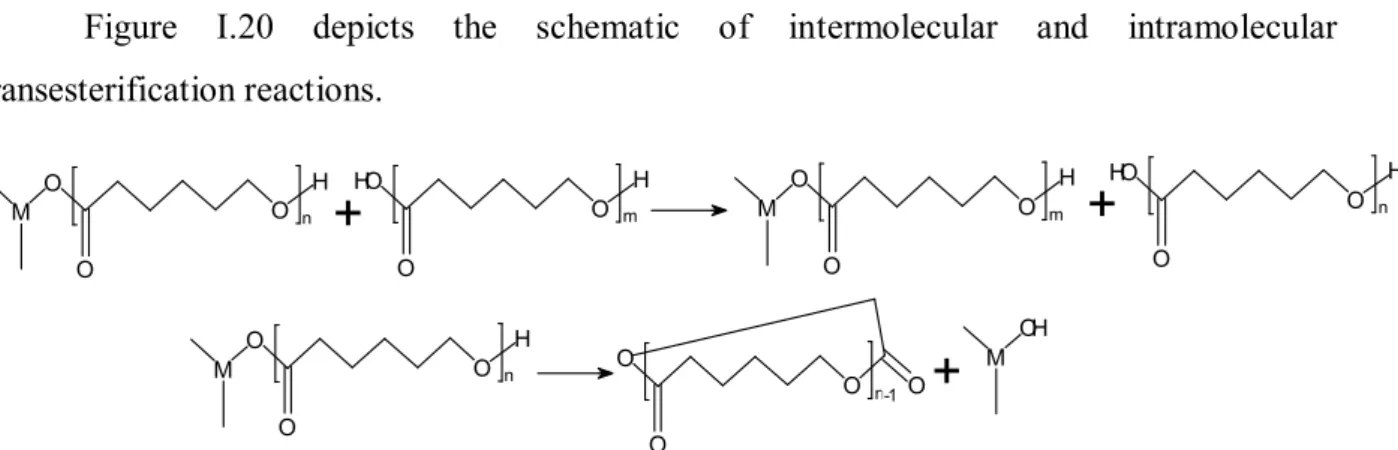
Figure I.20. Intermolecular and intramolecular transesterification reactions in the PCL polymerization process
27
Figure III.1. Flowchart of the experimental work 64
Figure IV.1. DSC thermograms of (a) rigid PLA/PCL blends and (b) plasticized PLA/PCL blends at various concentrations
71
Figure IV.2. XRD spectra of (a) rigid PLA/PCL and (b) plasticized PLA/PCL blends at 30 (wt.%)
76
Figure IV.3. TG/DTG thermograms of rigid and plasticized PLA/PCL blends at various concentrations
78
Figure V.1. FTIR spectra of PLA, PCL, and PMDI 87
Figure V.2. Comparison of FTIR spectra of PLAPCL20 blends with and without PMDI
88
Figure.V.3. Expected reaction of PLA, PCL, and PMDI 89
Figure V.4. Comparison of FTIR spectra of PLAPCL20 blends with and without the addition of the different compatibilizing agents
90
Figure V.5. Proposed reaction for PLA/PCL crosslink formation 90
Figure V.6. Proposed reaction of PLA and MA 91
Figure V.7. Expected reaction of PLA-g-MA and PCL 91
Figure V.8. DSC thermograms of PLAPCL20 blends with and without the addition of the different compatibilizing agents
92
Figure V.9. TG/DTG thermograms of DCP, PMDI, MA, and PLAPCL20 with and without the addition of the different compatibilizing agents
94
Figure V.10. XRD spectra of PLAPCL20 blends with and without the addition of the different compatibilizing agents
95
Figure V.11. SEM images of cryo-fractured of (a) PLAPCL20, (b) PLAPCL20 2, (c) PLAPCL20 D, (d) PLAPCL20 D 2, (e) PLA-g-MA PCL20 blends
xii
Table.1.1. Advantages and disadvantages of different polymer synthesis methods 15
Table I.2. Primary transition temperatures of selected PLA copolymers 17
Table I.3. Comparison of typical PLA properties with several petroleum-based commodity thermoplastic resins
21
Table I.4. Main applications for PLA 23
Table I.5. Thermophysical mechanical properties of PCL 28
Table III.1. Summary of physical properties of PLA, PCL, ATBC, TEC, and the compatibilizing agents
62
Table III.2. Summary of compositions of PLA/PCL rigid and plasticized blends with citrate esters
63
Table III.3. Summary of compositions of PLA/PCL (80/20) blends through reactive compatibilization
63
Table IV.1. Thermal properties and crystallinity of neat PLA, neat PCL, and rigid and plasticized PLA/PCL blends with ATBC and TEC at various concentrations
73
Table IV.2. Crystallinity of rigid and plasticized PLA/PCL blends 76
Table IV.3. Thermal properties of PLA/PCL blends at various concentrations 79
Table V.1. Thermal properties and crystallinity of neat PLA, neat PCL and PLAPCL20 blends with and without the addition of the different compatibizing agents
92
Table V.2. Thermal properties of DCP, MA, PMDI, and PLAPCL20 blends with and without the addition of the different compatibilizing agents
94
xiii
LIST OF ABBREVIATIONS AND SYMBOLS
ATBC Tributyl O-acetylcitrate-98%
DCP Dicumyl peroxide
DSC Differential scanning calorimetry
FTIR Fourier transform infrared
MA Maleic anhydride
PCL Poly(ε-caprolactone)
PDMI Aromatic isocyanate
PLA Poly(lactic acide)
PLA-g-MA Maleic anhydride grafted poly(lactic acid)
SEM Scanning electron microscopy
TEC Triethyl 2-acetylcitrate-99%
TGA Thermogravimetric analysis
Tonset Extrapolated start temperature of degradation
Tg Glass transition temperature
Tm Melting temperature
T1max Maximum degradation temperature in the first stage
T2max Maximum degradation temperature in the second stage
T5% Temperature corresponding to 5 % of weight loss
T50% Temperature corresponding to 50 % of weight loss
Chapter I
1
Chapter I. Biodegradable polymers and blends
I.1. Introduction
Over the last decades, plastics have been taken a great proportion in the packaging market due to their great performance of flexibility, transparency, stability, and lightweight. In spite of their good properties, plastics also cause a series of environmental problems. Being derived from nonrenewable fossil fuel and gas resources, these plastics are persistent to chemical, physical, and biological degradation. Therefore, once discarded in nature after their service life, their wastes, are not biodegraded but accumulated in landfills owing to increasing difficulties of these wastes disposal [1, 2]. The overuse of all kinds of plastics has resulted in the pollution of air, land, ground water and oceans, which adversely affect humans and wildlife. According to the 2015 Fact Sheet reported by the United States Environmental Protection Agency, the recycling rate of plastic was only 9.1%, whereas more than 75% of plastic was landfilled [3]. At the same time, it is stated that 63% of the plastic waste came from the packaging applications. Thus, it is essential to find out an effective way to reduce the plastic packaging waste and to find alternative “environmentally-friendly” substitutes to the conventional plastics which satisfy the requirement of sustainability and degradability to low-toxic degradation products [4, 5]. With the raising awareness of sustainability, biodegradable plastics are taking place of conventional petroleum-based plastics globally, serving as an alternative solution to alleviate the over-loaded landfills by reducing plastic waste [6]. Being produced from renewable resources and also because of their desirable properties, recyclability, compostability and natural abundance, the use of biodegradable polymers is viewed as an ultimate solution for reducing the over dependency of plastic industry on fossil fuels. Furthermore, these also help in reducing environmental pollution since these are recycled by biological processes [7–9]. More and more researchers and industries have focused on the development of biodegradable plastics. A recent research announced that the global biodegradable plastics (such as poly(lactic acid) (PLA), polycaprolactone (PCL), starch blends, regenerated cellulose, polybutylene succinate (PBS), and poly(butyl acrylate) (PBA)) market was 19.54 billion USD in 2016, and it is estimated to reach 65.58 billion USD in 2022 [10].
2 I.2. Generalities about biodegradable polymers
According to the International Standardization Organization (ISO) and the American Society for Testing and Materials (ASTM), there are different definitions and criteria for compostable and biodegradable polymers and biodegradability. ASTM D6400, D6868 and D7081 specify that compostable polymers undergo degradation by biological processes during composting to yield carbon dioxide, water, inorganic compounds, and biomass at a rate consistent with other known compostable materials and leaves no visually distinguishable or toxic residues [5, 11]. It is also specified that biodegradable polymers are the materials that undergo biodegradation and change in chemical structure through the action of enzymes and active microorganisms such as bacteria, fungi, and actinomycetes. Biodegradation happens in the temperature range of 20 to 60°C and in a neutral or slightly acidic environment [12]. Full biodegradation corresponds to the full transformation of polymer into the low-molecular-weight molecules of water, carbon dioxide, and microbial biomass. Based on ASTM D6400, 90% degradation of the polymer in less than 180 days is required as a criterion for a polymer to be accepted as a biodegradable material [13]. The products of biodegradation are nontoxic and integrate into the living cycle of other organisms as a survival resource [14]. The biodegradation process or erosion of polymer chains into short fragments includes hydrolytic or enzymatic cleavage of selected bonds in the polymer chain and also physical bond break down [15]. Polymer characteristics such as crystallinity and molecular weight affect the biodegradation significantly [16].
In general, biodegradable polymers can be divided into two groups based on the difference of their origin: those derived from petroleum resources and those from renewable resources. Biodegradable polymers derived from petroleum resources are mainly synthetic plastics with hydrolyzable functions, such as urethane, amide, and ester. Compared with those derived from renewable resources, these polymers display better performance and lower cost but poorer biodegradability. The latter group, especially agro-polymers, which includes protein and polysaccharide, normally display poor mechanical properties and high cost, but better biodegradability compared with those derived from petroleum [17].
The life cycle of synthesized biodegradable polymers derived from renewable resources is shown in Figure I.1. Under the conditions of bacteria, water, and oxygen, polymer products will gradually biodegrade to biomass, carbon dioxide, and water, which will eventually become part of the agricultural feed stocks under the mechanism of photosynthesis, thus completing the cycle [17].
3
Figure I.1. Lifecycle of synthesized biodegradable polymers derived from renewable resources [17]
I.3. Biodegradation
As mentioned above biodegradation is a degrading process caused by biological activity, especially by enzymatic action, leading to a change in the chemical structure of the material. Depending on the degrading environment, the biodegradation could be divided into two categories: aerobic biodegradation and anaerobic biodegradation. Where CPolymer
represents either a polymer or a fragment from any of the degradation processes defined earlier. The reacting processes are as follows:
Aerobic biodegradation:
CPolymer + O2 => CO2 + H2O + CResidue + CBiomass + salts (1)
Anaerobic biodegradation:
CPolymer => CO2 + H2O + CH4 + CResidue + CBiomass + salts (2)
Biodegradation is a long-lasting process (from a few months to years), and due to its biological nature, there are many factors that would affect the degradation rate. Some of them are environment-related factors, like microorganisms, temperature, moisture, and oxygen availability [18].
Microorganisms, as the major element in the biodegradation process, are the first important factor which is to ensure the breakdown of the molecular structure of plastics, and then the plastic could be fully assimilated by the environment. Regarding this, the other
4
factors, like temperature, moisture, and oxygen, are crucial to support the bioactivity of microorganisms. In general, a higher temperature could accelerate the reacting process. However, temperatures above 60°C might kill some bacteria and reduce the moisture, and then affect the biodegradation rate. It is recommended that a temperature between 54 ~ 60°C is good for boosting the process of biodegradation [18].
Moisture is another essential factor for the biodegradation process since it is one of the basic living elements for the microorganisms. Proper percentage of moisture (50 ~ 60%) helps in the microbial development and metabolic activity and strengthen the further biodegradation of plastics. At the same time, excess water should be avoided in an aerobic biodegradation process because it may influence the air circulation and decrease oxygen availability [18].
For the aerobic biodegradation, the proper amount of oxygen is helpful for the respiratory action of microorganism. Thus, it is important to control the air flow rate. A low air flow rate can impede the microbial respiration and then affect their biological activity. Conversely, too much air would decrease the moisture and temperature of the degrading environment and then slow down the degrading rate [18].
I.4. Classification of biodegradable polymers
As shown in Figure I.2 biodegradable polymers can be classified into two main categories based on their origin (natural and synthetic) and into four categories, depending on their synthesis. Natural biodegradable polymers can be subclassified into the natural polymers and modified natural polymers. Synthetic biodegradable polymers can be synthesized from monomers obtained from petroleum products or monomers with natural origin [11, 19–21].
(a) polymers from biomass such as the agro-polymers from agro-resources which are also known as natural polymers, e.g., starch, cellulose, proteins like gelatin, casein, and silk, chitin, and chitosan, etc;
(b) polymers obtained by microbial production, e.g., the polyhydroxyalkanoates (PHA), polyhydroxybutyrate (PHB), polyhydroxyvalerate (PHV), and bacterial cellulose etc;
(c) polymers chemically synthesized using monomers obtained from agro-resources, e.g., poly(lactic acid);
(d) polymers whose monomers and polymers are both obtained by chemical synthesis from fossil resources, like aliphatic polyesters (polybutylene succinate (PBS) and copolyesters poly(butylene succinate-co-adipate) (PBSA)), polycaprolactone (PCL), and aromatic
5
polyesters (poly(vinyl alcohol) (PVA) and copolyester (poly(butylenes adipate‐co‐terephthalate) (PBAT)).
Figure I.2. Classification of the biodegradable polymers [20]
Currently, several different types of biodegradable polymers have been developed and entered the marketplace with a prediction of an increasing share in the next years. Among the most important biodegradable polymers that have attracted interest are PLA, PCL, PHA, PBAT, etc... [22]. Animal: Casein Whey Collagen/ Gelatin Plant: Zein Soya Gluten Polyhydroxylbutyrate (PHB) Polyhydroxylbutyrate-co-hydroxyvalerate (PHBV) Starches: Wheat Potatoes Maize Lignocellulosic products: Wood Others: Pectines Chitosan/Chitin Polyesteramides Aromatic copolyesters Aliphatic copolyesters Polysaccharides Proteins, Lipids Polyhydroxylalkano
ates (PHA) Polylactides Polycaprolactones (PCL) Poly(lactic acid) (PLA) Biodegradable polymers Biomass products From agro-resources Agro-polymers From micro-organisms (obtained by extraction) From biotechnology (conventional synthesis from bio-derived monomers) From petrochemical products (conventional synthesis from synthetic
6
I.5. Applications and market of biodegradable polymers
Biodegradable polymers present a wide range of promising properties in a number of applications. Because of their biodegradability, bioresorbability, and compatibility and also due to their initial high price, biopolymers such as PLA, poly(glycolic acid) (PGA), poly(lactic-co-glycolic acid) (PLGA) and PHA first found use exclusively in the biomedical and pharmaceutical domains. In these high added value fields, biodegradable polymers were involved as implants (vascular and orthopedic), bone fixation devices, various pins and screws, absorbable surgical sutures and drug delivery systems [5]. During the last decades of the last century, breakthrough and technical innovations in the synthesis of biopolymers led to their mass production which helped to decrease their price. This coupled with advanced knowledge of how biopolymers properties can be modified and tuned to meet market and end-use requirements have fueled interest in these materials to be end-used in other fields. Becaend-use of their good competitiveness, they are establishing themselves as alternatives to petrochemical polymers in a number of different markets such as biomedical, agriculture and packaging applications. In the packaging industry, biopolymers continue to attract more and more attention [5]. They are used as food and nonfood packagings, composting and carrier bags and food-service applications [5, 23]. In the agricultural application, biodegradable polymers are used as agricultural mulch film, planting containers and controlled release of agricultural chemicals, and in the textile sector, they are used as woven and nonwoven fabrics, and in some personal hygienic products such as disposable diapers [5].
7
Bioplastics are used in an increasing number of markets, from packaging, catering products, consumer electronics, automotive, agriculture/horticulture and toys to textiles and a number of other segments. Packaging remains the largest field of application for bioplastics with almost 65% (1.2 million tonnes) of the total bioplastics market in 2018 [24].
The increase in the use of bioplastics in all market segments is driven by the increasing demand for sustainable products by consumers and brands alike due to a growing awareness of the impact on the environment and the need to reduce the dependency on fossil resources as well as the continuous advances and innovations of the bioplastics industry in new materials with improved properties and new functionalities. Currently, there is a bioplastic alternative for almost every conventional plastic material and corresponding application. Depending on the material, bioplastics have the same properties as conventional plastics and offer additional advantages, such as a reduced carbon footprint or additional waste management options, such as industrial composting [24].
Figure I.4. Estimated global bioplastics production capacity (2017-2023) [24]
Currently, bioplastics represent roughly 1% of the 335 million tonnes of plastic produced annually. But as demand is rising, and with more sophisticated biopolymers, applications and products emerging, the market is continuously growing. According to the latest market data compiled by European Bioplastics in cooperation with the research institute nova-Institute (Hürth, Germany), global bioplastics production capacity is set to increase from around 2.19 million tonnes in 2019 to approximately 2.62 million tonnes in 2023 [24].
8
I.6. Poly(lactic acid): synthesis, structure, properties, and applications
I.6.1. Poly(lactic acid) (PLA)
Poly(lactic acid) or polylactide (PLA) is extracted from renewable resources such as starch, corn, sugars, potato, and other natural products. It is a hydrophobic polymer that can be degraded in the presence of enzymes and via a hydrolytic degradation process of the ester backbone [15]. PLA is one of the most extensively investigated biobased and biodegradable polymers due to its attractive mechanical strength, high melting temperature, sustainability, and relatively low cost. Therefore, biodegradability combined with the excellent properties of PLA, make it a promising material for short lifecycles applications such as packaging and electronics [25, 26].
I.6.2. Synthesis and stereoisomers of lactic acid
Lactic acid (2-hydroxypropanoic acid), CH3CH(OH)COOH, was first isolated from
sour milk by the Swedish chemist Carl Wilhelm Scheele in 1780 and first commercially available in 1881 [27, 28]. As shown in Figure I.5, the structure of lactic acid is characterized by a chiral carbon atom and exists in two optically active stereoisomers, namely L and D enantiomers. Racemic D,L-lactic acid consisting of the equimolar mixture of D- and L-lactic acid is produced via chemical synthesis.
O H OH O CH3 O H OH O CH3 O H OH O CH3 O H OH O CH3 L-lactic acid D-lactic acid D,L-lactic acid
Figure I.5. Structure of L-, D- and DL-lactic acids [29]
L- and D-lactic acids are generally synthesized by fermentation using suitable micro-organisms. The commercial fermentative batch process, which takes from three to six days to complete is preferred because it allows producing optically pure L- (99.5%) and D-lactic acid (0.5%) and is environmentally benign bioprocess which uses low-cost renewable (biomass) feedstock as carbon source for the fermentation at low temperature and consumes low energy. Because of these advantages, approximately 90% of the total lactic acid produced worldwide is made by bacterial fermentation and the remaining portion is produced synthetically by the hydrolysis of lactonitrile by a strong acid. However, lactic acid from the microbial process is
9
difficult to recover and its purification is a long multi-step process (ultra-filtration, nano-filtration, electrodialysis and ion exchange) which makes lactic acid more expensive.
Depending on the type of bacteria strain, two fermentation methods can be distinguished. The first is the hetero-fermentative process and the second known as the homo-fermentative method is the more extensively used in the industry which gives lower levels of by-products and greater raw material conversion (~90%). The raw materials (carbon source) for the fermentation can be refined sugar (glucose and sucrose) or any carbohydrates containing sugar from agricultural production and residues. For example, NatureWorks®, the worldwide leading producer of PLA, exclusively uses corn starch as raw material for lactic acid production via lactic fermentation [30].
I.6.3. Synthesis and stereoisomers of lactide
Lactide is obtained by distilling water from lactic acid, under mild conditions and vacuum without solvent, through a combined process of oligomerization and cyclization achieved by the catalytic depolymerization of the corresponding low-molecular-weight oligo (lactic acid) (OLLA) under reduced pressure, as shown in Figure I.6.
O H OH CH3 O O H O H O CH3 n O O O C H3 CH3 O O O O O CH3 C H3
Lactic acid OLLA Crude lactide Pure lactide
Figure I.6. Synthesis route to lactide from lactic acid via oligolactide [29]
Again, owing to the stereoisometric nature of the lactic acid, three stereo-forms of lactide are generated: D,D-lactide (D-LA), L,L-lactide (L-LA), and D,L-lactide (meso-LA) as shown in (Figure I.7). The physical properties including melting temperature, crystallization behaviors, and mechanical properties of PLA depend strongly on the stereochemical compositions [31, 32]. O O CH3 O C H3 O O O CH3 O C H3 O O O CH3 O C H3 O D,L-lactide (meso-LA) L,L-lactide (L-LA) D,D-lactide (D-LA)
10 I.6.4. Poly(lactic acid) production techniques
PLA was first synthesized by polycondensation, by Théophile-Jules Pelouze, in 1845 [33]. In 1932, Wallace Hume Carothers et al. developed a method to polymerize lactide into low-molecular-weight PLA. This method was later patented by Du Pont in 1954 [34]. Until late 1970, PLA was developed as biomedical material based on its bioresorbable and biocompatible nature. Its low-molecular-weight limited its application to therapeutic and pharmaceutical applications, protein encapsulation, and delivery systems [35–38]. Recently, the biomedical application of PLA has been extended to tissue engineering [39] including scaffold materials [40] as well as to biocompatible materials for sutures and prostheses [41] in which high- and low-molecular-weight PLA are used, respectively. In early 1990, Cargill Inc. succeeded in polymerizing high-molecular-weight poly(L-lactic acid) (PLLA) by ring-opening polymerization of L-lactide in industrial scale and commercialized the PLLA polymer in the mid of 1990s. Showing high mechanical properties in addition to a biodegradable nature, PLLA was thought to provide large opportunities to replace non-biodegradable oil-based polymers, such as poly(ethylene terephthalate) (PET) and polystyrene (PS), for short-term use such as food packaging and other consumer products [29, 42].
As shown in Figure I.8, the conversion of lactic acid monomer to high-molecular-weight PLA can be accomplished either by direct condensation polymerization or azeotropic dehydration and condensation. The ring-opening polymerization (ROP), as a third synthesis method, uses the lactide (lactic acid cyclic dimer) as the monomer, therefore it requires an intermediate step necessary for the preparation of the monomer. All of these three methods are discontinuous, and none of these is simple or easy to conduct; they all require rigorous control of conditions (temperature, pressure, and pH), the use of catalysts and long polymerization times, which implies high energy consumption [43].
Nowadays, direct azeotropic dehydration and condensation polycondensation and ROP are the most used production routes [44]. Lactide ROP is the most common way to produce high-molecular-weight PLA in the market due to its cost [45]. Depending on the stereo purity of the starting monomer, a family of polymers may be synthesized: pure poly-L-lactic acid (PLLA), pure poly-D-poly-L-lactic acid (PDLA), and poly-D, L-poly-L-lactic acid (PDLLA) [44]. Poly(lactic acid) and polylactide describe the same chemical product. Poly(lactic acid) defines polymers obtained from direct polycondensation reaction of the lactic acid monomer and polylactide those derived from the ROP of the intermediary lactide monomer, while the abbreviation (PLA) is used to describe both.
11
Figure I.8. Synthesis routes of poly(lactic acid) [43]
I.6.4.1. Direct condensation polymerization
Polycondensation of lactic acid to obtain PLA is possible by the reaction of the hydroxyl and carboxylic acid groups of lactic acid. By removing the water formed during this condensation reaction, the reaction proceeds toward the product side, PLA, as shown in Figure I.9. Due to the difficulty in removing byproducts completely from the highly viscous reaction mixture, the polymer produced through direct polycondensation is usually of low-molecular-weight (<50,000 g.mol-1) and low quality. Even though it is the least expensive method involving solvents under high vacuum and high temperature, it is not common in the commercial manufacture of PLA because only low (to intermediate)-molecular-weight polymers (oligomers) can be obtained arising from the presence of impurities, viscosity build-up during polymerization and mainly from the difficulty to remove water from the condensation equilibrium reaction responsible for decrease in conversion and depolymerization [46, 47]. To increase the molecular weight, esterification-promoting adjuvants (bis(trichloromethyl) carbonate, dicyclohexylcarbodiimide, and carbonyl diimidazole) or chain extenders (epoxides such as butyl glycidyl ether, or isocyanates) are used, which obviously increase the steps and complexity of the production and also the cost of the final product [20, 44, 47]. In addition to these disadvantages, the final polymer may contain impurities and unreacted chain extenders which may be nonbiodegradable or nonbioresorbable additives [47].
12 O H OH O CH3 O H O O CH3 CH3 O O OH CH3 O n Lactic acid Polycondensation -H2O
Low molecular weight PLA
Figure I.9. Synthesis of low-molecular-weight PLA via direct polycondensation of lactic acid monomer [48]
I.6.4.2. Azeotropic dehydrative polycondensation
The azeotropic dehydrative polycondensation is a solvent-based technique developed and patented by Mitsui Toatsu Chemicals (Japan). In this process, schematically illustrated in Figure I.8, high-molecular-weight PLA is obtained by direct condensation of lactic acid without the use of chain extenders, coupling agents or esterification-promoting adjuvants and their associated drawbacks [20]. Because the polymerization takes place in solution, water of condensation is continuously and readily removed by azeotropic condensation of the lactic acid and the catalyst (Sn compounds: Sn, SnO or SnCl2) in a refluxing, high boiling, aprotic
solvent (diphenyl ether) under reduced pressure [20, 47, 49]. However, this technique gives considerable catalyst residues because of its high concentration needed to reach an adequate reaction rate. This can cause many drawbacks during processing, such as degradation and hydrolysis. For most biomedical and packaging applications, the catalyst toxicity is a highly sensitive issue. The catalyst can be deactivated by the addition of phosphoric acid or can be precipitated and filtered out by the addition of strong acids such as sulfuric acid. Thus, residual catalyst contents can be reduced to some ppm. In addition, the excess use of a solvent (fresh and dehydrated) during polymerization and non-solvent to collect the final polymer, makes this technique sound non-environmental, involving different steps, thus laborious and expensive [20, 49]. O H OH O CH3 O H O O CH3 CH3 O O OH CH3 O n Lactic acid Azeotropic dehydrative condensation -H2O
High molecular weight PLA
Figure I.10. Synthesis of high-molecular-weight PLA via azeotropic dehydrative polycondensation according to Mitsui process [50]
13 I.6.4.3. Ring-opening polymerization (ROP)
As previously stated, the first ring-opening polymerization of lactide produced low-molecular-weight PLA. After improvements in lactide purification, high-low-molecular-weight PLA was then obtained. At the early stage of PLA discovery, its high cost confined its application only to the biomedical field. This method produces pure high-molecular-weight PLA ( ˃100 000 g.mol-1) but necessitates first the preparation of the lactide and then its purification by vacuum distillation accomplished at high temperature without the use of a solvent which increases the overall cost of the polymerization [11, 51].
ROP, schematically shown in Figure I.11, can be carried out on a large scale by melt polymerization, which is the most used technique due to its simplicity and reproducibility, but bulk, solution, and suspension polymerization techniques are also possible. The polymerization mechanism can be cationic, anionic, or coordination-insertion type, depending on the catalyst and initiator concentration system. The polymerization is generally catalyzed by organo-metallic compounds such as the most used stannous octoate, as it provides high reaction rate, high rate of transformation, high-molecular-weight, and relatively mild reaction conditions [52]. Many nontoxic catalysts derived from magnesium, calcium, zinc, alkali metals, and aluminum, have been developed for the ROP of lactides to solve pollution problems caused by heavy metal catalysts [51, 53].
O H CH3 OH O O H CH3 O O O CH3 O CH3 O OH n O O C H3 O CH3 O O H CH3 O O O CH3 O CH3 O OH n Lactic acid Condensation -H2O Depolymerization ROP
High molecular weight PLA
Prepolymer
Figure I.11. Schematic of PLA production via ring-opening polymerization using lactide monomer [49, 54, 55]
14
A low-cost continuous process that allows the production of lactic acid based polymers had been developed by Cargill Dow LLC in the ’90s. This environmentally friendly process involves synthesizing both lactide and PLA in the melt rather than in solution. Firstly, lactic acid is fermented from dextrose and condensed to produce the PLA prepolymer. Then the prepolymer is converted into lactide isomers through the use of a catalyst to increase the reaction rate. Finally, the lactide is purified through distillation and the high-molecular-weight PLA is produced through a ROP in the melt, completely eliminating the use of costly and environmentally unfriendly solvents as seen in Figure I.12. After the polymerization is complete, any remaining monomer is removed under vacuum and recycled to the beginning of the process [54–57].
Figure I.12. The nonsolvent process to prepare poly(lactic acid) [54, 55]
I.6.5. Comparison and new trends of poly(lactic acid) synthesis and modification development
In summary, polycondensation is mostly used to produce PLA with low-molecular-weight using basic equipment and process, while ROP aims for the production of a wider range of molecular weight polymer by controlling the purity of lactide and its polymerization. Since each approach has its unique advantages and limitations, the selection of a specific method should be based on the application. For instance, drug release materials favor low-molecular-weight PLA as it could be degraded quickly while high-low-molecular-weight PLA is suitable for food packaging applications and textile products [46]. In light of current
15
development, the advantages and disadvantages of different methods are summarized in Table.I.1.
Table.I.1. Advantages and disadvantages of different polymer synthesis methods [46]
Method Advantages Disadvantages
Azeotropic polycondensation
Low cost Low yield
Basic equipment
Low purity (usually with residual solvent and byproducts in polymer)
Moderate temperature (<180°C) Solvent waste and pollution
Solid state
polycondensation
High purity (suppression of side reactions) Low yield
High-molecular-weight Long duration
Moderate conditions Complicated operation
Ring-opening polymerization
High purity Low overall yield
Wide range of molecular weight Long duration
Availability in high-molecular-weight Demanding condition Controlled polymer properties Complicated operation I.6.6. Properties of PLA
The properties of PLA, as those of other polymers, depend strongly on the stereochemical composition. By varying the chemical composition in terms of L- and D-enantiomers during synthesis, many important properties of PLA can be tailored to match the performance requirements for various applications. Furthermore, as for other polymers, the properties of PLA are significantly dependent on other factors such as molecular weight, annealing time, and processing temperature [5, 58, 59]. In this section, the PLA polymer crystallinity, optical, thermal, rheological, processing, solubility, barrier, physical, mechanical, and degradation properties are discussed.
I.6.6.1. Crystallinity
The crystallization kinetics of PLA has been extensively studied and found to be rather slow, as for PET [50]. The crystallization rate increases with a decrease in molecular weight and it is strongly dependent on the copolymer composition [60]. PLLA can crystallize in the presence of D-lactide [61]; however, as the structure becomes more disordered, the rate of crystallization decreases. Furthermore, the latter is essentially determined by the decrease in the melting point of the different copolymers. PDLA/PLLA stereo complexes are very efficient nucleating agents for PLLA, with increases in both crystallization rate and crystallinity, the latter of up to 60% [42, 58, 62].
16
PLA can be produced as totally amorphous or with up to 40% crystallinity, depending on the stereochemistry and thermal history [20]. The crystallinity, as a determinant factor in PLA performance, can be modified by adjusting the stereochemical composition of the polymer to produce semi-crystalline or amorphous PLA [50, 59]. The crystallization ability of polylactides decreases with chain stereo-irregularity, accordingly PLA derived from greater than 93% L-lactic acid are semicrystalline and, from between 50 and 93% L-lactic acid is strictly amorphous [20, 58, 60]. Macromolecular imperfections are responsible for the decrease in both the rate and the extent of PLLA crystallization. In practice, most PLAs are made up of L-and D,L-lactide copolymers, since the reaction media often contain some meso-lactide impurities. Depending on preparation conditions, PLLA crystallizes in three different forms (α, β, and γ) with the more stable one being the α-form [62].
I.6.6.2. Optical properties
Optical properties are very important in protecting and preserving products that are sensitive to visible and UV light until they reach the consumer. Compared to other traditional packaging materials, LDPE shows the highest transmission of UV light followed by PLA as shown in Figure I.13. Therefore, additives to block UV light transmission are needed in the case of PLA. Effective UV stabilizers are able to absorb UV light and thus prevent damage to light-sensitive packaged foods, resulting in retention of taste, extension of shelf life and improvement of product quality [59, 60].
Figure I.13. Percent transmission versus wavelength for PLA, PS, LDPE, PET, and cellophane films [59, 60]
17 I.6.6.3. Thermal properties
As for any semicrystalline polymer, PLA exhibits both glass transition temperature (Tg) and melting temperature (Tm) but with relatively high Tg and low Tm as compared to
other thermoplastics (Figure I.14). The Tg and Tm of PLA are dependent on both the Mw and the optical purity of the polymer (Table I.2). The typical value of Tg reported in the literature ranges from 50°C to 80°C which also depends on thermal history, quenching, and annealing. The reported Tm is in the range 130°C to 180°C, and 93J/g is the most referred PLA melt enthalpy for 100% crystallinity used to estimate the degree of crystallinity by differential scanning calorimetry (DSC) [42, 56, 63]. The presence of a double melting point in PLLA is generally found and attributed to slow rates of crystallization and recrystallization [50].
Figure I.14. Comparison of glass transition and melting temperatures of PLA with other thermoplastics [42]
Table I.2. Primary transition temperatures of selected PLA copolymers [42]
Copolymer ratio Glass transition temperature (°C) Melting temperature (°C)
100/0 (L/D,L)-PLA 63 178
95/5 (L/D,L)-PLA 59 164
90/10 (L/D,L)-PLA 56 150
85/15 (L/D,L)-PLA 56 140
80/20 (L/D,L)-PLA 56 125
PLA also suffers from low heat distortion temperature (HDT) and Vicat softening point mainly due to its low Tg. HDT values of PLA are influenced neither by the molecular weight nor by crystallinity. However, those of the Vicat softening point, are influenced by crystallinity. HDT values of amorphous and crystalline PLA are in the ranges 55-57°C and
18
60-66°C, respectively, while those of Vicat penetration are in the intervals 59-60°C and 157-165°C for amorphous and crystalline PLA respectively [59]. In terms of thermal stability, PLA is considered a less stable polymer, exhibiting rapid loss of molecular weight during processing in the molten state. The ester linkage of PLA tends to degrade during thermal processing under hydrolytic conditions. The decomposition temperature of PLA lies between 230°C and 260°C attributed to various reactions of different mechanisms including (a) hydrolysis by trace amounts of water, (b) zipper-like depolymerization, (c) oxidative, random main chain scission, (d) intermolecular transesterification to monomer and oligomeric esters, and (e) intramolecular transesterification resulting in formation of monomer and oligomer lactides of low-molecular-weight [11, 30, 32, 36]. Thermal degradation of PLA is reported to be affected by the process temperature, residence time, presence of impurities of residual catalysts, moisture, crystallinity, % isomer, residual lactic acid, and distribution [11]. The decomposition of PLA leads to the formation of CO, CO2, acetaldehyde and to volatile
lactide which can result in fuming and/or fouling the processing equipment [64].
I.6.6.4. Rheological properties and processing
The actual commercial PLA resins can be processed, like all other thermoplastics, into various products using conventional technologies of processing including extrusion, injection molding, blow molding, thermoforming, fiber spinning and film forming [2, 51]. The properties of the polymer will, therefore, depend on the specific conditions during the processing steps. The main parameters during the melt processing are temperature, residence time, moisture content, and atmosphere. But the major problem in the manufacturing of PLA-based products is the limited thermal stability during the melt processing. To overcome such a drawback or to give PLA new properties, a large number of multiphase materials have been developed, mainly by mixing PLA with other products [65].
For processing and for the corresponding applications, the knowledge of PLA melt rheology is of particular interest. The shear viscosity of PLA polymers affects thermal processing, such as injection molding, extrusion, film blowing, sheet forming, fiber spinning and thermoforming. Polylactide melt behavior is similar to polystyrene [47]. PLA is characterized by low melt strength and poor shear-sensitivity of its melt viscosity, which can be overcome by introducing branching into its backbone either during compounding by adding peroxides or during polymerization by introducing monomers or multifunctional initiators [49]. Branched PLA displays high viscosity at low shear rates, making it more
19
suitable for operations such as extrusion coating, extrusion blow molding, and foaming (Figure I.15) [49, 59].
Figure I.15. Rheological properties of linear and branched NatureWorks PLA [49]
I.6.6.5. Solubility in solvents
Polylactides are soluble in dioxane, acetonitrile, methylene chloride, 1,1,2-trichloroethane, and dichloroacetic acid, but chloroform is the good solvent for PLA and for most of the corresponding copolymers. Ethylbenzene, toluene, acetone, and tetrahydrofuran only partly dissolve polylactides when cold, though they are readily soluble in these solvents when heated to boiling temperatures. Amorphous PLA is soluble in organic solvents, while crystalline PLA is soluble in chlorinated solvents and benzene at elevated temperatures and not soluble in acetone, ethyl acetate or tetrahydrofuran. Poly(rac-lactide) and Poly(meso-lactide) are soluble in many other organic solvents like acetone, pyridine, ethyl lactate, tetrahydrofuran, xylene, ethyl acetate, dimethylformamide, methyl ethyl ketone. All polylactides are insoluble in water, some alcohols and alkanes [20, 50, 58, 59].
I.6.6.6. Barrier properties
Because PLA finds a lot of applications in food packaging and medical applications, its barrier properties (mainly to carbon dioxide, oxygen, and water vapor) have been largely investigated [60]. PLA has good barrier properties to flavors and aromas with permeation properties to all gases similar to those of PS [11, 49, 66]. The CO2 permeability coefficients
for PLA polymers are lower than those reported for crystalline PS at 25°C and 0% relative humidity (RH) and higher than those for PET. Since diffusion takes place through the
20
amorphous regions of a polymer, an increase in the extent of crystallization will inevitably result in a decrease in permeability. PET and PLA are both hydrophobic and the corresponding films absorb very low amounts of water, showing similar barrier properties, as indicated by the values of their water vapor permeability coefficient determined from 10°C to 37.8°C in the range of 40-90% RH [62]. In addition, PLA has good crease-retention and crimp, excellent grease and oil resistance, easy low-temperature heat sealability making it appropriate for numerous packaging applications and a good candidate to replace traditional polymers used in this area [49, 59].
I.6.6.7. Physical and mechanical properties
Physical and mechanical properties of PLA are dependent on a range of parameters, such as crystallinity, polymer structure, molecular weight and material formulation (plasticization, blending, reinforcing, etc.) [5, 20, 50, 67]. The density of PLA is 1.25 g.cm-3 and 1.29 g.cm-3 for amorphous and crystalline PLA which is lower than that of PET (1.34 g.cm-3), but higher than that of other conventional polymers with densities in the range of 0.8-1.1 g.cm-3 [5, 43, 58, 59]. PLA is a clear, colorless and glossy polymer showing good appearance and transparency with a high gloss (105-200%) compared to PET (60-110%) and PP (75-90%) [58]. Because of its high Tg (above room temperature), PLA behaves as a glassy polymer just like PS. When subjected to tensile testing, PLA exhibits poor plastic behavior and fails in a brittle fashion with little strain softening (Figure I.6) [68]. Concerning its resistance to impact, PLA is notch sensitive and its impact strength is greatly affected by crystallinity. For low crystallinity (3-9%), the notched Izod impact strength of PLLA is in the range 2.0-3.0 kJ.m-2 while at higher crystallinity (45-70%) it is in the interval 3.0-7.0 kJ.m-2. PDLA exhibits lower impact resistance in the range 1.5-2 kJ.m-2. The unnotched impact strength for PLLA of low and high crystallinity in the range 13-20 kJ.m-2 and 18-35 kJ.m-2, respectively, indicating higher differences than those observed for the notched counterparts [59].
21
Figure I.16. A Typical stress-strain curve of PLA [68]
The mechanical properties of polylactides can vary to a large extent, ranging from soft and elastic materials to stiff and high strength materials [67]. Overall, PLA has good mechanical properties which are comparable to other commodity thermoplastics like PS and PET. As shown in Table I.3, PLA has high modulus (3-4 GPa) and tensile strength (45-60 MPa) but suffers from low Tg, low elongation (ductility) (4-10%) and impact strength, which are even lower than those of its homologous glassy polystyrene [50, 59].
Table I.3. Comparison of typical PLA properties with several petroleum-based commodity thermoplastic resins [43]
PLA PET PS HIPS PP
Tg (°C)a 55 75 105 - -10
Tensile strength at break (MPa)a 53 54 45 23 31
Tensile modulus (GPa)a 3.4 2.8 2.9 2.1 0.9
Elongation at break (%)a 6 130 7 45 120
Notched Izod IS (J.m-1)a 13 59[66] 27 123 27[69] (i-PP)
Gardner impact (J)a 0.06 0.32 0.51 11.30 0.79
Cost ($/lb)b 1-1.5 0.70-0.72 0.99-0.72 1.01-1.03 1.15-1.17 PET: poly (ethylene terephtalate); PS: polystyrene; HIPS: high-impact polystyrene;
PP: polypropylene; i-PP: isotactic polypropylene homopolymer; IS: impact strength.
a
Data mainly cited from ref. [70].
b
22 I.6.6.8. Degradation
The primary mechanism of PLA degradation is the hydrolysis of the ester bond, followed by a bacterial attack on the fragmented residues. This process can be associated with thermal or biotic degradation and can be affected by various parameters such as the PLA structure, its molecular weight and distribution, its morphology (crystallinity), the shape of its samples and its thermal and mechanical history including processing, as well as, of course, the hydrolysis conditions [71]. In the environment, PLA degrades within several months of exposure to moisture, whereas in compost under high temperature and high humidity conditions, it may degrade within several weeks [43, 54]. The environmental degradation of PLA is a two-step process. First, the high-molecular-weight molecules are reduced to lower-molecular-weight species by, random chain scission of the ester bonds. In the second stage, the molecular weight reductions proceed until lactic acid and low-molecular-weight oligomers are formed which are then metabolized by microorganisms to yield carbon dioxide and water [43]. The degradation has been found to be an auto-catalyzed process due to the increasing amount of compounds containing carboxylic end-groups [43, 54].
I.6.7. PLA applications
In spite of its excellent properties, the commercial use of PLA has been historically confined in the biomedical applications owing to its high production cost [49]. Breakthrough and new innovations accomplished in the production of lactide monomer and the change of polymerization technique from batch to continuous process, helped to decrease the PLA price [51, 66]. In addition, the joint venture between Cagill LLC and Dow Chemical Company in 1997 allowed the large scale production of PLA under the trade name NatureWorks LLC which permitted PLA to change status from an engineering resin to a commodity plastic [52]. The cost performance balance helped PLA to compete well with general purpose petrochemical-based plastics [51, 66] and to forge roles in a wide range of end-use applications namely, packaging and the textile sectors and even in the automotive, building sector, cosmetics, and electronics which require more durable PLA products [1, 59]. Table I.4 summarizes some of the application sectors for PLA together with some examples.
23 Table I.4. Main applications for PLA [72]
Sector Examples
Packaging
Food packaging, films, rigid thermoformed food and beverage containers, carrier bags and labels, coated papers and boards, battery packaging, windows for envelopes.
Agriculture Sheet or molded forms for time-release fertilizers, plant clips.
Transportation Parts of automobile interiors (head liners, upholstery, spare tyre covers).
Electric appliances and electronics SC, computer keys, cases for Walkmans, wrappers for CD.
Houseware Carpets
Other (fibers and fabrics) Textiles and non-wovens
I.6.7.1. Medical, biomedical and pharmaceutical applications
Due to the bioresorbability and the biocompatible properties in the human body as well as the ability to degrade both in vivo and in vitro, PLA and its copolymers have been extensively employed to manufacture tissue engineering scaffolds, delivery system materials, or covering membranes, different bioabsorbable medical implants, as well as in dermatology, pharmaceutical, and cosmetics [73]. The main reported examples on medical or biomedical products are bone fracture internal fixation devices in surgery like screws, resorbable prostheses, and resorbable surgical sutures which do not need to be removed with a second operative procedure, degradable implants and tissue engineering porous scaffolds as reconstructive matrices for damaged tissues and organs [20, 52]. Recently, these biomedical applications have been extended to pharmaceutical and medical fields as microspheres and microcapsules which have been widely applied in drug delivery systems for the prolonged administration of a wide variety of medical agents [8, 11].
I.6.7.2. Packaging applications
PLA complies with most requirements for packaging applications and provides excellent physical and mechanical properties at a low price. When plasticized, PLA mimics and challenges conventional polymers used in this field such as PP, PET, LDPE, PVC and PS, and is considered as their main alternative and as one solution to alleviate solid waste disposal problems from this application stream which is, up to now, considered as the main source of environmental concerns due to the use of these non biodegradable polymers [54, 58]. Low toxicity, clarity, high gloss and transparency, reasonable barrier properties, good heat
![Figure I.1. Lifecycle of synthesized biodegradable polymers derived from renewable resources [17]](https://thumb-eu.123doks.com/thumbv2/123doknet/3419499.99038/18.892.197.726.116.452/figure-lifecycle-synthesized-biodegradable-polymers-derived-renewable-resources.webp)
![Figure I.4. Estimated global bioplastics production capacity (2017-2023) [24]](https://thumb-eu.123doks.com/thumbv2/123doknet/3419499.99038/22.892.157.730.545.846/figure-i-estimated-global-bioplastics-production-capacity.webp)
![Figure I.8. Synthesis routes of poly(lactic acid) [43]](https://thumb-eu.123doks.com/thumbv2/123doknet/3419499.99038/26.892.132.755.128.495/figure-i-synthesis-routes-poly-lactic-acid.webp)
![Figure I.9. Synthesis of low-molecular-weight PLA via direct polycondensation of lactic acid monomer [48]](https://thumb-eu.123doks.com/thumbv2/123doknet/3419499.99038/27.892.208.688.109.219/figure-synthesis-molecular-weight-direct-polycondensation-lactic-monomer.webp)
![Figure I.11. Schematic of PLA production via ring-opening polymerization using lactide monomer [49, 54, 55]](https://thumb-eu.123doks.com/thumbv2/123doknet/3419499.99038/28.892.170.716.695.1042/figure-schematic-production-opening-polymerization-using-lactide-monomer.webp)
![Figure I.13. Percent transmission versus wavelength for PLA, PS, LDPE, PET, and cellophane films [59, 60]](https://thumb-eu.123doks.com/thumbv2/123doknet/3419499.99038/31.892.250.695.747.1058/figure-percent-transmission-versus-wavelength-ldpe-cellophane-films.webp)
![Figure I.14. Comparison of glass transition and melting temperatures of PLA with other thermoplastics [42]](https://thumb-eu.123doks.com/thumbv2/123doknet/3419499.99038/32.892.240.704.445.767/figure-comparison-glass-transition-melting-temperatures-pla-thermoplastics.webp)
![Figure I.15. Rheological properties of linear and branched NatureWorks PLA [49]](https://thumb-eu.123doks.com/thumbv2/123doknet/3419499.99038/34.892.255.681.191.512/figure-i-rheological-properties-linear-branched-natureworks-pla.webp)
![Table I.3. Comparison of typical PLA properties with several petroleum-based commodity thermoplastic resins [43]](https://thumb-eu.123doks.com/thumbv2/123doknet/3419499.99038/36.892.93.808.749.955/table-comparison-typical-properties-petroleum-commodity-thermoplastic-resins.webp)