The nosology of hereditary cerebellar ataxias:
Development of a classification for recessive ataxias
and phenotypical description of Spinocerebellar ataxia
34
Mémoire
Marie Beaudin
Maîtrise en épidémiologie - épidémiologie clinique - avec mémoire
Maître ès sciences (M. Sc.)
The nosology of hereditary cerebellar ataxias
Development of a classification for recessive ataxias and
phenotypical description of Spinocerebellar ataxia 34
Mémoire
Marie Beaudin
Sous la direction de :
Nicolas Dupré, directeur de recherche
Danielle Laurin, codirectrice de recherche
Résumé
Les ataxies cérébelleuses héréditaires causent une atteinte progressive de l’équilibre et de la marche. Malgré l’amélioration de la performance et de l’accessibilité des tests génétiques, environ la moitié des patients demeurent sans diagnostic précis, ce qui a un impact sur la prise en charge. Dans ce mémoire de maîtrise, nous abordons l’enjeu du sous-diagnostic chez les patients atteints d’ataxie cérébelleuse via l’élaboration d’une nouvelle classification pour les ataxies récessives et la caractérisation détaillée de l’ataxie spinocérébelleuse 34.
Le premier chapitre est une revue systématique de la littérature concernant les ataxies récessives. Au total, 2354 références et 130 articles complets ont été révisés afin d’identifier un groupe de 45 pathologies récessives où l’atteinte cérébelleuse est au cœur du phénotype et 29 pathologies multisystémiques additionnelles où l’ataxie est un élément secondaire, mais qui devraient être incluses dans le diagnostic différentiel du patient ataxique.
Le deuxième chapitre présente les résultats d’un groupe de travail dédié à la classification des ataxies récessives. En se basant sur les résultats de la revue systématique, 12 experts internationaux se sont entendus sur des critères d’inclusion ainsi que sur deux classifications basées sur la symptomatologie clinique et les mécanismes cellulaires impliqués. Une approche clinique au patient ataxique est proposée.
Le troisième chapitre présente une caractérisation en profondeur de l’ataxie spinocérébelleuse 34, causée par des mutations du gène ELOVL4. Nous avons étudié une famille multi-générationnelle présentant un syndrome cérébelleux tardif associé à des déficits exécutifs et une possible atteinte visuospatiale, attentionnelle et psychiatrique. L’analyse immunohistochimique de fibroblastes dermiques a démontré la délocalisation et l’agrégation de la protéine.
Un système de classification basé sur des descriptions phénotypiques étoffées est essentiel pour les cliniciens et les chercheurs afin d’organiser adéquatement les groupes de maladies complexes. Le travail présenté constitue une avancée concrète pour améliorer l’approche diagnostique aux patients avec ataxie héréditaire.
Abstract
Hereditary cerebellar ataxias are neurodegenerative disorders associated with progressive motor incoordination and gait imbalance. Despite significant progress in the availability and performance of genetic tests, around half of patients remain without a molecular diagnosis, which has major counselling and management consequences. In this master thesis, we address the issue of underdiagnosis in patients with hereditary ataxias through the development of a novel classification system for recessive cerebellar ataxias and the in-depth characterization Spinocerebellar ataxia 34.
The first chapter is a systematic review of the literature regarding recessive cerebellar ataxias. We revised 2354 references and 130 full-text articles to identify a group of 45 recessive disorders in which cerebellar ataxia is at the core of the clinical phenotype and 29 additional complex or multisystem disorders where ataxia is a secondary feature and which should be included in the differential diagnosis of ataxia.
The second chapter presents the work of a dedicated task force on the classification of recessive cerebellar ataxias. Based on the results of the systematic review, 12 international ataxia experts agreed on revised inclusion criteria and on classifications based on clinical symptoms and pathogenic cellular mechanisms. We also propose a general clinical approach to the ataxic patient.
The third chapter shows the clinical and biochemical characterization of a rare dominant ataxia, Spinocerebellar ataxia 34 caused by ELOVL4 mutations. We studied a multi-generational family with a late-onset cerebellar syndrome associated with executive deficits, and apparent visuospatial, attention, and psychiatric dysfunction. Immunohistochemistry of dermal fibroblasts showed the first evidence of ELOVL4 protein pathology in this disorder with mislocalization and aggregation of the protein.
Classification systems based on detailed phenotypic descriptions are essential for both clinicians and researchers to understand complex groups of disorders. The work presented here advances our understanding of hereditary ataxias and constitutes a pragmatic diagnostic tool for clinicians.
Table des matières
Résumé ... ii
Abstract ... iii
Table des matières ... iv
Liste des abréviations ... vi
Remerciements ... x
Avant-propos ... xi
Introduction ... 1
Chapter 1 Reviewing the evidence: a systematic scoping review of the literature on recessive cerebellar ataxias ... 7
1.1 Résumé ... 7
1.2 Abstract ... 8
1.3 Background ... 9
1.4 Methods ... 10
1.5 Results ... 11
1.6 Discussion ... 12
1.7 Conclusion ... 14
1.8 Tables ... 14
Table 1.1 Proposed new list of autosomal recessive ataxias ... 14
Table 1.2 Other complex movement or multisystem recessive disorders that have prominent ataxia ... 16
Table 1.3 Recessive disorders that may occasionally present with ataxia, but where ataxia is a secondary feature ... 18
1.9 Figures ... 19
Figure 1.1 Flow diagram ... 19
Figure 1.2 Clinical algorithm of autosomal recessive ataxias ... 20
1.10 Supplementary material ... 20
Search strategy for MEDLINE/Pubmed ... 20
1.11 References ... 21
Chapter 2 Building a conceptual framework: a new classification for recessive cerebellar ataxias . 30
2.1 Résumé ... 30
2.2 Abstract ... 31
2.3 Introduction ... 31
2.4 Methods ... 33
2.5 Results ... 34
2.6 Discussion ... 39
2.7 Conclusion ... 41
2.8 Tables ... 41
Table 2.3 Other metabolic or complex recessive disorders that have ataxia as an associated
feature ... 45
2.9 Figures ... 48
Figure 2.1 Clinical classification of autosomal recessive ataxias ... 48
Figure 2.2 Graphical summary of the clinical approach to a patient presenting with ataxia ... 49
Figure 2.3 Classification of autosomal recessive ataxias according to molecular pathogenesis50
2.10 References ... 51
Chapter 3 Contributing to the evidence: the phenotypical description of a cerebellar ataxia in the French-Canadian population ... 64
3.1 Résumé ... 64
3.2 Abstract ... 65
3.3 Introduction ... 66
3.4 Methods ... 68
3.5 Results ... 70
3.6 Discussion ... 73
3.7 Conclusion ... 75
3.8 Tables ... 76
Table 3.1 Detailed neurological findings in affected individuals with ELOVL4 mutations ... 76
Table 3.2 Results of the clinical evaluation in SCA34 patients and controls ... 76
Table 3.3 Clinical and paraclinical characteristics of patients with mutations in ELOVL4 in present and previous studies ... 77
3.9 Figures ... 78
Figure 3.1 Pedigree of a French-Canadian Family with the c.504 G>C mutation in ELOVL4 . 78
Figure 3.2 Dermatologic lesion in a SCA34 patient ... 78
Figure 3.3 Neuroimaging findings in patients with the c.504 G>C mutation in ELOVL4 ... 79
Figure 3.4 Impaired copy of the RCFT in three patients with the c.504 G>C mutation in ELOVL4 ... 80
Figure 3.5 Immunofluorescence staining of dermal fibroblasts from a SCA34 patient compared with fibroblasts from a healthy control ... 81
3.10 Supplementary Material ... 82
3.11 References ... 83
Conclusion ... 86
Liste des abréviations
ACPHD ataxia, combined cerebellar and peripheral with hearing loss and diabetes mellitus ALS Amyotrophic lateral sclerosis
AOA ataxia with oculomotor apraxia; ARCA autosomal recessive cerebellar ataxia ARSACS autosomal recessive spastic ataxia of Charlevoix-Saguenay
AT ataxia-telangiectasia
ATLD ataxia-telangiectasia-like disorder AVED ataxia with vitamin E deficiency
BVVLS2 Brown-Vialetto-Van Laere syndrome type 2 CA Cayman ataxia
CAMOS cerebellar ataxia mental retardation optic atrophy and skin abnormalities CAMRQ cerebellar ataxia mental retardation with or without quadrupedal locomotion CCAS cerebellar cognitive-affective syndrome
CDG congenital disorder of glycosylation CI confidence interval
CLN neuronal ceroid lipofuscinosis CMT Charcot-Marie-Tooth
COACH cerebellar vermis hypoplasia, oligophrenia, congenital ataxia, ocular coloboma, and hepatic fibrosis
DCMA dilated cardiomyopathy with ataxia DES disequilibrium syndrome
DTR deep tendon reflexes
EAOH early-onset ataxia with oculomotor apraxia and hypoalbuminemia EKV erythrokeratodermia variabilis
EPM progressive myoclonic epilepsy
FAHN fatty acid hydroxylase-associated neurodegeneration
FDG-PET [18F]-fluorodeoxyglucose positron emission tomography FRDA Friedreich ataxia
GMS Galloway-Mowat syndrome
IMNEPD infantile-onset multisystem neurologic, endocrine, and pancreatic disease IOSCA infantile onset spinocerebellar ataxia
LIKNS Lichtenstein-Knorr syndrome
MC3DN2 mitochondrial complex III deficiency, nuclear type 2 MGCA5 3-methyglutaconic aciduria type 5
MIRAS mitochondrial recessive ataxia syndrome MCSZ microchephaly seizures developmental delay MMSE Mini-Mental State Examinsation
MMYAT mitochondrial myopathy and ataxia MoCA Montreal Cognitive Assessment MSS Marinesco-Sjogren syndrome
MTDPS7 mitochondrial DNA depletion syndrome 7 NBIA neurodegeneration with brain iron accumulation PBD peroxisome biogenesis disorder
PC Purkinje cell
PCH pontocerebellar hypoplasia
PEOA3 progressive external ophthalmoplegia with mitochondrial DNA deletions, autosomal dominant 3
PHARC polyneuropathy hearing loss ataxia retinitis pigmentosa and cataract RCFT Rey complex figure test
SANDO sensory ataxic neuropathy with dysarthria and ophthalmoparesis SCA spinocerebellar ataxia
SCAE spinocerebellar ataxia with epilepsy
SCAN1 spinocerebellar ataxia with axonal neuropathy 1 SCAR spinocerebellar ataxia, autosomal recessive SPAX spastic ataxia
SeSAME seizures sensorineural deafness ataxia mental retardation and electrolyte imbalance SNVs single nucleotide variants
SPAX spastic ataxia SPG spastic paraplegia UMN upper motor neuron WES Whole exome sequencing WGS Whole genome sequencing
À Hugo, qui me pousse à me dépasser tous les jours À Isabelle, qui m’apprend à grandir de chaque revers
Every patient you see
is a lesson in much more
than the malady from which he suffers.
- Sir William OslerRemerciements
Je tiens à remercier de tout cœur mon directeur de recherche, Dr Nicolas Dupré, qui m’a accompagnée dans tout le cheminement de ma maîtrise, depuis le début de mon implication en recherche jusqu’à la révision de mes articles et de ce mémoire. Merci de m’avoir guidée sur plusieurs aspects de la conciliation médecine et recherche et d’avoir été un véritable mentor pour m’initier à la recherche et à la neurologie. Un immense merci également à ma co-directrice de recherche, Dre Danielle Laurin, pour son appui soutenu et généreux dans la progression de ma maîtrise ainsi que pour ses conseils judicieux et opportuns. Merci de m’avoir accompagnée dans les imprévus de ce long processus et merci de votre grande compréhension face à mon parcours atypique. Finalement, merci à tous les collaborateurs avec lesquels j’ai travaillé pour la réalisation des projets qui composent ce mémoire de maîtrise, ce fut un grand plaisir de travailler et d’apprendre avec vous.
Avant-propos
Les travaux de ce mémoire de maîtrise ont été rendus possible grâce à une Bourse d’études supérieures du Canada au niveau de la maîtrise Frederick-Banting et Charles-Best octroyée par les Instituts de Recherche en Santé du Canada.
Le premier article inséré dans ce mémoire « Systematic review of autosomal recessive ataxias and proposal for a classification » a été soumis au journal Cerebellum & Ataxias le 22 novembre 2016, a été accepté le 17 février 2017 et a été publié dans ce journal le 23 février 2017. La version intégrée de l’article est identique à la version publiée. J’étais première auteure sur cet article et mon rôle a été de définir la méthode en élaborant la stratégie de recherche et les critères d’inclusion, de réaliser la revue systématique et d’écrire l’article. Les co-auteurs étaient Dr Christopher J. Klein, Dr Guy A. Rouleau et Dr Nicolas Dupré, qui ont tous contribué par un apport intellectuel à l’orientation de l’article et à la révision du manuscrit final. L’article est présenté tel que publié. Une bourse pour publication comme première auteure a été octroyée par la Faculté des études supérieures et postdoctorales suite à la publication de cet article.
Le deuxième article inséré dans ce mémoire « The Classification of Autosomal Recessive Cerebellar Ataxias: A consensus statement from the Society for Research on the Cerebellum and Ataxias Task Force » a été soumis au journal The Cerebellum le 30 décembre 2018 et est toujours en processus de révision. J’étais première auteure sur cet article et mon rôle a été de compléter la revue systématique jusqu’à la période d’octobre 2018 en utilisant la méthodologie préalablement développée, d’extraire les données cliniques, épidémiologiques et moléculaires, de développer les classifications et d’écrire l’article en intégrant les apports intellectuels des autres co-auteurs. Les autres co-auteurs étaient Dr Antoni Matilla-Dueñas, Dr Bing-Weng Soong, Dr Jose Luiz-Pedroso, Dr Orlando G. Barsottini, Dr Hiroshi Mitoma, Dr Shoji Tsuji, Dr Jeremy D Schmahmann, Dr Mario Manto, Dr Guy A. Rouleau, Dr Christopher Klein et Dr Nicolas Dupré qui ont tous fourni un apport intellectuel au contenu et commenté l’article final. L’article est présenté tel que soumis.
Le troisième article inséré dans ce mémoire « Characterization of the phenotype with neurocognitive impairment and protein mislocalization in ELOVL4-associated Spinocerebellar ataxia 34 » a été soumis au journal JAMA Neurology le 4 avril 2019 et est toujours en processus de révision. J’étais première auteure sur cet article et mon rôle a été de réviser la littérature pertinente, de participer à l’évaluation des patients et à la collecte de données, de réaliser les analyses statistiques portant sur les analyses cognitives, et d’écrire l’article. Les co-auteurs étaient Dre Leila
Sellami et Dr Robert Laforce qui ont réalisé les évaluations cognitives des patients, Christian Martel, Lydia Touzel-Deschênes et Dr François Gros-Louis qui ont réalisé les analyses immunohistochimiques sur les fibroblastes, Gabrielle Houle et Dr Guy A. Rouleau qui ont procédé aux analyses génétiques, ainsi que Dre Laurence Martineau, Dr Kevin Lacroix, Dre Andréane Lavallée, Dr Nicolas Chrestian qui ont contribué à l’évaluation des participants. Dr Nicolas Dupré a recruté les participants et supervisé la réalisation du projet. Tous les auteurs ont donné leurs commentaires sur le texte final. Le texte, les tableaux et les figures contenus dans le matériel supplémentaire de la publication ont été intégrés à l’article pour la présentation dans ce mémoire de maîtrise et des corrections mineures au contenu du texte ont été effectuées suite à la révision.
Introduction
Ataxia comes from the greek a-, meaning not or absence of, and taxis, meaning order or arrangement. It refers to the loss of balance and coordination affecting gait and limb movements that results from lesions to the cerebellum or, occasionally, to the sensory or vestibular pathways. Cerebellar ataxia may result from a variety of acute and chronic insults to the cerebellum, including stroke, tumor, infection, toxin, trauma, vitamin deficiencies, hypothyroidism, auto-immune processes, and hereditary genetic mutations. Hereditary cerebellar ataxias present with progressive onset of gait imbalance leading to falls, incoordination of hands and feet, eye movement abnormalities, slurred speech, and difficulty swallowing. In addition to these frequent motor symptoms, patients may present with a wide variety of neurologic and multisystem involvement, depending on the mutated gene. Hereditary ataxias are divided according to the mode of inheritance based on family history, with autosomal dominant and recessive ataxias as the most frequent forms, while X-linked and mitochondrial mutations are much rarer (1, 2).
Hereditary cerebellar ataxias are individually rare diseases, but their pooled prevalence represents a significant number of affected patients. A recent systematic review with meta-analysis of international prevalence studies evaluated the global prevalence of hereditary ataxias at 9,8 per 100 000 population (95% confidence interval (CI) 6,7 - 12,8/105) (3). Specifically, the estimated prevalence for autosomal dominant ataxias was 2,7 per 100 000 population (95% CI 1,5 - 4,0/105), and for recessive ataxias, 3,3 per 100 000 (95% CI 1,7 - 4,9/105). These global estimates were limited by high heterogeneity between studies with an I2 value over 98,5% for all estimations. This heterogeneity was manifest in the very large range of prevalence estimates across studies, which varied between 0,0 to 5,6 per 100 000 population for dominant ataxias with highest prevalence in Portugal, Norway, and Japan, while for recessive ataxias, the prevalence varied between 0,0 to 7,2 per 100 000 population, with highest estimates in Cantabria and Alsace. This heterogeneity was attributed to different genetic backgrounds across geographical areas as well as different case ascertainment methods and inclusion criteria across studies. Hence, the prevalence of hereditary ataxias appears highly variable with clusters of higher prevalence in specific geographical areas or founder populations, but the global prevalence does represent a significant health concern.
Hereditary ataxias lead to considerable morbidity and mortality for affected patients. Studies of patients affected with dominant ataxias have shown that health-related quality of life is significantly impaired and deteriorates with time based on measurements with the EuroQol Five Dimensions Questionnaire and SF-36 General Health Questionnaire. Of interest, the severity of lost quality of
life was associated with the severity of the clinical involvement and depended on the presence of a carer (4, 5). Other studies in patients with Friedreich ataxia, the most prevalent recessive ataxia, have also shown lower health-related quality of life in children and adults affected with ataxia (6, 7). As regards to mortality, according to the World Health Organization data for the European Union, the age-adjusted mortality rate attributable to hereditary ataxias was 0,50 per 1 000 000 population (95% CI 0,42 - 0,57) in the time period between 2000 and 2012. This rate was slightly superior for men than for women, and appeared to increase over the time period studied (8).
Hereditary ataxias also represent a significant economic burden for society, the health and social care sector, caregivers and patients. A recent economic analysis from the United Kingdom and Germany of patients living with Friedreich ataxia estimated that the total annual cost was 18 774 € (≈28 500 $) (9). This included direct medical expenses for prescription medications, outpatient consultations, and hospitalisations, along with direct non-medical costs, notably for professional caregiver support, and finally long term adaptation of accommodation and mobility. The most important cost associated with the disorder was that associated with long-term unemployment or work loss since Freidreich ataxia typically begins in teenage or young adulthood.
Despite major genetic advances in the last decades that led to the discovery of over 40 mutated genes involved in dominant ataxias (10), and as many in recessive ataxias, a large number of patients remain without a specific genetic diagnosis. In the systematic review of prevalence studies by Ruano et al. (3), 20 to 92% of patients with a suspected dominant hereditary ataxia and 37 to 60% with a suspected recessive ataxia remained without a molecular diagnosis after extensive evaluation and genetic testing. This proportion varied according to geographical areas, possibly secondary to clusters of specific disorders and variability in the depth of the investigation method. For example, in a population-based study from Norway with multisource ascertainment and that included only patients with a positive family history, a precise genetic diagnosis was achieved in only 25% of patients with a standard clinical and genetic evaluation (11). In a Canadian study of 69 hereditary ataxia patients from 60 different families identified through a movement disorders clinic, a genetic diagnosis was obtained in only 26,7% of families, with higher yield in patients with a positive family history (12). Finally, in a more recent genetic study of 319 undiagnosed European cerebellar ataxia patients that had undergone previous extensive work-up, whole-exome sequencing led to a molecular diagnosis in only 28,5% of patients, leaving 71,5% patients with an undefined diagnosis (13). The diagnostic yield was better for patients with certain specific clinical features and those with earlier onset.
The absence of a specific molecular diagnosis has major impacts for patients, which will receive a tentative diagnosis of familial or sporadic ataxia with early or late onset, depending on the presence of a family history and age at symptom onset (14). Although no study has specifically evaluated this phenomenon in the ataxia population, the results of a recent nationwide survey of 462 Australian children living with a rare disease provide evidence as to the impact of absent or delayed diagnosis on patients and families (15). In this study, 37% of respondents believed that diagnosis was delayed, 27% initially received a wrong diagnosis, and 7% remained undiagnosed. The most common reported consequences included anxiety, frustration, and stress. Respondents also reported worsening of symptoms, disease progression, delays in treatment and intervention, inappropriate treatments received, additional medical costs, impact on family relationships and siblings, and extra unnecessary diagnostic tests. In adult patients, data regarding the impact of a long diagnostic odyssey come from the analysis of delayed diagnosis in patients with amyotrophic lateral sclerosis (ALS), another neurodegenerative disorder associated with severe functional impairment and for which no cure is available. Patients with delayed diagnosis in ALS have reported protracted periods of uncertainty, impression of lack of knowledge by physicians, and additional costs (16). In contrast, diagnosed patients reported satisfaction at having a label for their condition as opposed to diagnostic uncertainty, easier coping mechanisms once they knew their diagnosis, clarified expectations, and facilitated help demands with a precise diagnosis (17). We can conclude that undiagnosed patients with hereditary cerebellar ataxias are faced with major uncertainty regarding the expected evolution and risk of premature death, which may cause anxiety and frustration. They may experience anguish regarding the existence of disease-modifying treatment options from which they are denied. They may be subjected to additional invasive testing or inadequate treatments. They may engage additional costs for medical opinion, tests and treatments. Finally, they cannot have adequate genetic counselling and prenatal testing when applicable.
In order for physicians to be able to diagnose effectively patients with hereditary cerebellar ataxias, they must have access to an adequate knowledge base of the individual disorders and a systematic organization that enable non-expert clinicians to navigate this complex group of diseases. In the previously discussed study by Kurynski et al. of Australian children with rare diseases, the most frequent perceived reason for delayed diagnosis was the lack of knowledge among health professionals regarding the patient’s rare condition (15). Hence, it is essential to better define the typical and atypical phenotypic presentations of rare disorders, but also to develop useful classification systems for both physicians and researchers to gain a better understanding of these disorders.
There are different ways to define and categorize disorders. Before the development of molecular genetics, most disorders were defined according to clinical syndromes or pathogenic enzymatic defects. With the discovery of the underlying genetic mutation in a growing number of patients with hereditary disorders, the diseases are now defined according to the mutated gene and compiled in large online databases. This gene-based definition of disorders offers important advantages: it can be tested in a standardized manner for the presence of a mutation and is directly related to the pathogenic defect. Nevertheless, it is important to highlight that there are important variations in the clinical presentation and penetrance among patients with different mutations in the same gene, and even among patients with the same mutation. What is more, genetic variations of unknown significance are often identified in genes associated with hereditary disorders and their clinical relevance is difficult to clarify for the clinician. With the multiplication of genes involved in complex categories of disorders such as hereditary ataxias, it has become strenuous for the non-expert and even the non-expert clinician to maintain sufficient mastery of each disorder to adequately order and interpret test results in order to obtain a precise molecular diagnosis. To facilitate this, clinical or phenotypical classifications categorize gene-defined disorders in a meaningful way according to the presence of specific clinical and paraclinical features to give structure to the diagnostic approach of a group of disorders. Finally, as many of these disorders are individually rare, it is difficult to obtain funding and recruit adequate numbers of patients for the development of disease-modifying therapies. Hence, a pathophysiological classification that regroups disorders with common treatment targets is useful to develop adequately powered clinical trials or drug repurposing strategies. Hence, each of these classification systems presents important advantages, serves a specific purpose, and is in fact complementary to the others.
Previous classification systems have been proposed for hereditary cerebellar ataxias. In dominant ataxias, disorders have been regrouped according to the mutation type, distinguishing polyglutamine repeat expansion and conventional mutations (18), or according to clinical presentation, separating pure cerebellar phenotypes from those with associated features (19). On the opposite, the classification of recessive ataxias has proven to be a significant challenge owing to several reasons. Indeed, contrarily to their dominant counterparts who were named in a systematic numerical pattern – with SCA 1 to 47 listed to this day (20)– that defined the included disorders, recessive ataxias remained an ill-defined group of disorders that were named according to physicians’ surnames, areas of high prevalence, or dominant clinical signs. Moreover, recessive ataxias present with complex phenotypes and frequent multisystem involvement, showing partial overlap with other disease categories that may present with ataxia, such as hereditary spastic
paraplegias or inborn errors of metabolism. Finally, many recessive congenital disorders that present with cerebellar malformations may or may not be included depending on the goal and criteria of the classification. Hence, previous tentative classifications of recessive ataxias presented only the most prevalent disorders with incomplete assessment of the literature and underrecognition of rare or geographically circumscribed disorders (21-23). Isolated tentative classifications presented a variable list of included disorders and were not uniformly adopted owing to the absence of a consensus among experts in this field. This highlighted the need for a consensus on a recessive ataxia classification that would be useful for clinicians, researchers, and learners alike.
The other central issue for adequate diagnosis of hereditary ataxias is that several disorders remain with an incomplete or partial phenotypic characterization. Indeed, some are described only in rare families with superficial characterization, such that the range of clinical involvement remains unknown and that different phenotypes with atypical features are underrecognized. There exist many examples in the literature of disorders that were described with an initial typical phenotype, but where subsequent data showed that other clinical pictures were as prevalent if not more. For example, autosomal recessive cerebellar ataxia 1 associated with SYNE1 mutations, was initially described as a pure cerebellar ataxia (24), but subsequent data showed that motor neuron involvement was found in a majority of patients and associated with very severe neuromuscular involvement in some (25). Hence, proper phenotypic characterization is essential to facilitate diagnosis and to adequately manage patients by answering questions regarding expected evolution and symptomatic involvement, searching for subtle involvement that may be amenable to treatment, and addressing symptoms that patients may not associate with their neurological disease. It also provides additional elements to understand the underlying disease mechanism with the ultimate objective to develop disease-modifying therapies.
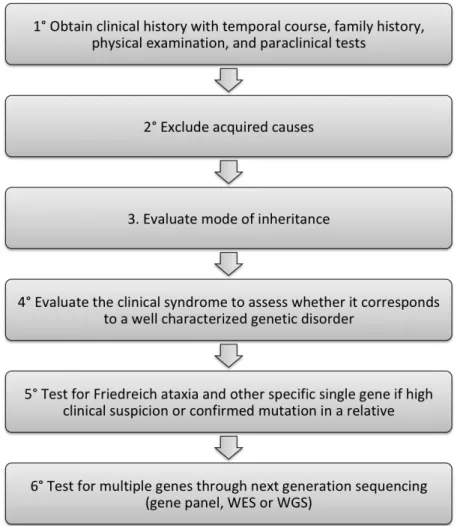
My perspective in completing the work that composes this master’s thesis was to address the complex issue of underdiagnosis in patients with hereditary ataxias. Hence, the general objective of this master’s thesis is to expand our understanding and knowledge of the presentation of hereditary ataxias through the development of a classification for recessive cerebellar ataxias and the phenotypical characterization of a specific ataxia in the French Canadian population. More specifically, I will present three articles that have been published or that are currently under review. The first one is a systematic scoping review of the literature on recessive cerebellar ataxia that aimed to identify all cerebellar disorders that should be included in a recessive ataxia classification. The second one presents a new classification of recessive cerebellar ataxias that was endorsed by a dedicated international Task Force. Finally, the third one aims at defining the phenotypical
description of a specific cerebellar ataxia in the French-Canadian population with new atypical features and in-depth cognitive assessment.
Chapter 1 Reviewing the evidence: a systematic scoping
review of the literature on recessive cerebellar ataxias
Original title
Systematic review of autosomal recessive ataxias and proposal for a classification
1.1 Résumé
Introduction
La classification des ataxies cérébelleuses autosomiques récessives représente un défi particulier vu l’hétérogénéité génétique importante et les phénotypes complexes des pathologies rencontrées. Nous avons réalisé une revue systématique de la littérature pour identifier l’ensemble des ataxies récessives préalablement décrites afin de proposer une classification clinique de ce groupe de pathologies et de mieux définir ce champ de recherche à l’ère des technologies de séquençage de nouvelle génération.
Méthodes
Nous avons interrogé Pubmed et Embase afin d’identifier les articles originaux portant sur la description d’ataxies à transmission autosomique récessive chez l’humain pour lesquelles un gène avait été identifié. Nous avons également révisé les listes de références des articles sélectionnés ainsi que les bases de données publiques, notamment OMIM et GeneReviews. Pour chaque pathologie considérée, nous avons révisé la description clinique pour déterminer si l’ataxie cérébelleuse était un élément central du phénotype et avons évalué la qualité de l’évidence supportant l’association avec le gène impliqué. Les pathologies incluses étaient regroupées en trois catégories : les ataxies récessives primaires, les maladies complexes ou multisystémiques fréquemment associées à l’ataxie, et les maladies pouvant occasionnellement présenter un tableau ataxique.
Résultats
Après le retrait des doublons, 2354 références ont été révisées sur la base du titre et du résumé pour évaluer leur éligibilité. Au final, 130 articles ont été révisés en entier et inclus dans cette analyse qualitative. La nouvelle liste des ataxies récessives primaires inclut 45 pathologies génétiques pour lesquelles l’ataxie cérébelleuse est au cœur du phénotype clinique. Vingt maladies complexes ou multisystémiques fréquemment associées à l’ataxie ont également été identifiées, ainsi que neuf maladies pouvant occasionnellement présenter un tableau ataxique. Un algorithme clinique basé sur les symptômes associés est également proposé.
Conclusion
Cette revue systématique de la littérature des ataxies cérébelleuses récessives a permis de définir et de classifier ce groupe de maladies tout en mettant en évidence la complexité des phénotypes et la diversité des atteintes associées. Cette revue systématique devrait être instrumentale dans le développement d’un consensus sur la classification des ataxies récessives.
1.2 Abstract
Introduction
The classification of autosomal recessive ataxias represents a significant challenge because of high genetic heterogeneity and complex phenotypes. We conducted a comprehensive systematic review of the literature to examine all recessive ataxias in order to propose a new classification and properly circumscribe this field as new technologies are emerging for comprehensive targeted gene testing.
Methods
We searched Pubmed and Embase to identify original articles on recessive forms of ataxia in humans for which a causative gene had been identified. Reference lists and public databases, including OMIM and GeneReviews, were also reviewed. We evaluated the clinical descriptions to determine if ataxia was a core feature of the phenotype and assessed the available evidence on the genotype-phenotype association. Included disorders were classified as primary recessive ataxias, as other complex movement or multisystem disorders with prominent ataxia, or as disorders that may occasionally present with ataxia.
Results
After removal of duplicates, 2354 references were reviewed and assessed for inclusion. A total of 130 articles were completely reviewed and included in this qualitative analysis. The proposed new list of autosomal recessive ataxias includes 45 gene-defined disorders for which ataxia is a core presenting feature. Twenty complex or multisystem recessive disorders that have prominent ataxia were also identified along with nine recessive disorders that may occasionally present with ataxia, but where ataxia is a secondary feature. We propose a clinical algorithm based on the associated symptoms.
Conclusion
We present a new classification for autosomal recessive ataxias that brings awareness to their complex phenotypes while providing a unified categorization of this group of disorders. This review should assist in the development of a consensus around a classification useful in both clinical and research applications.
1.3 Background
The classification of the hereditary ataxias has represented a challenge for decades due to the large heterogeneity of clinical presentations and the important overlap between different pathologies (1). The first to propose a global classification for this group of disorders was Greenfield in 1954, whose classification was based on pathoanatomical findings (2). This was followed by Harding’s classification in 1983, which regrouped the ataxias according to age of onset, as a proxy for mode of inheritance, and clinical findings (3). Although this clinical classification had merit, it quickly became overshadowed by a nomenclature based on gene discoveries within each specific type of ataxia starting with ATXN1 in Spinocerebellar ataxia 1 in 1993 (4) and FXN in Friedreich ataxia (5). Since then, over 40 genes have been discovered in the dominant ataxias and as many in recessive ataxias (6).
One of the main challenges in the study of recessive ataxias is the difficulty to properly circumscribe which disorders belong to the field of hereditary ataxias and which belong to other disease categories. Indeed, ataxia is a cardinal symptom in cerebellar disorders, but may also be a presenting symptom of hereditary spastic paraplegias, hereditary polyneuropathies, neurodevelopmental disorders, and mitochondrial diseases, for example. Concurrently, recessive ataxias often manifest with complex phenotypes, even more so than their dominant counterparts, and may present diverse associated features including neuropathy, pyramidal and extrapyramidal involvement, oculomotor abnormalities, cognitive involvement, seizures, retinopathy, hypogonadism, and many others. This explains the high variability in the list of included disorders in recent literature reviews on recessive ataxias(7, 8).
Nevertheless, the advent of next generation sequencing techniques requires to properly determine which disorders belong to each disease category in order to design thoughtful targeted panels and facilitate the interpretation of whole exome and whole genome sequencing data. Indeed, targeted panel sequencing is a highly effective method for the diagnosis of neurological disorders, but it requires insightful categorization of disease phenotypes to respond to the specific needs of clinicians (9, 10). Similarly, the interpretation of unknown variants in the analysis of whole exome
or whole genome sequencing data poses a significant challenge for clinicians who must determine if the gene is associated with the suspected disease category and if the phenotype correlates with what has previously been described. As next generation sequencing techniques become increasingly available and the ability to detect DNA repeat expansion diseases improves (11), the proper classification of diseases will represent a useful tool in the interpretation of test results. Hence, this calls for a systematic effort to review recessive diseases in which ataxia is a prominent feature in order for experts in the field to collectively determine which disorders should be included in a recessive ataxia classification.
Therefore, the purpose of this article is to review the literature on recessive diseases presenting with ataxia in order to present a new classification. The goal is to bring together experts for the development of a much-needed consensus that fulfills research and clinical needs.
1.4 Methods
We conducted a systematic scoping review to identify articles relevant to the classification of autosomal recessive ataxias. We searched Pubmed and Embase from inception to September 2016 in order to identify original articles on disorders presenting with ataxia. The search strategy was large and targeted both recessive and sporadic ataxias, since recessive inheritance may appear sporadic in certain circumstances (full search strategy is provided in Additional file 1). We also reviewed reference lists of relevant articles and public databases including OMIM and GeneReviews to identify other relevant articles.
We reviewed the titles and abstracts of all identified references to select original articles on recessive forms of ataxia in humans for which a causative gene was identified. We evaluated the articles from a clinical perspective to determine if cerebellar ataxia was a prominent feature in the reported patients or rather a secondary finding in other movement or multisystem diseases. Diseases reporting only on cerebellar atrophy or cerebellar malformations without any clinical correlate were not included. For each listed disorder, we reviewed the evidence for a genotype-phenotype association using the US National Human Genome Research Institute guidelines (12). Major considerations included the exclusion of previously described genes, the number of unrelated individuals described with similar genotype-phenotype correlations, the evidence of segregation with the disease, the absence of the variant in large control cohorts, and the presence of biochemical or animal-model functional validation. For the primary ataxias, we identified two relevant references from different research groups when possible. All relevant articles were fully reviewed to be included in this classification of recessive ataxias.
Identified disorders were classified in three categories: the first included the primary autosomal recessive ataxias, the second included other movement or multisystem recessive diseases that have prominent ataxia, and the final group was composed of recessive disorders that may occasionally present with ataxia, but where ataxia is a secondary feature.
We also developed a clinical algorithm for the primary recessive ataxias based on the most frequent phenotype and cardinal symptoms associated with each disorder. The objective of this algorithm is to rapidly summarize the main discriminatory features between different ataxias to serve in a clinical setting, but also as a pedagogical and research tool.
1.5 Results
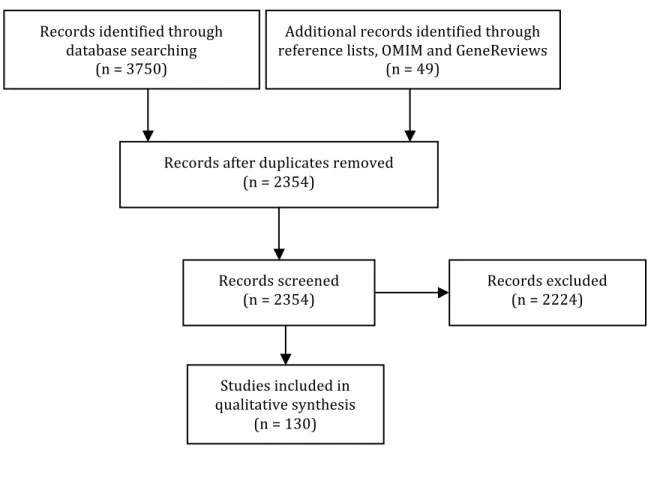
3750 references were identified through the literature search in Pubmed and Embase, and 49 additional references were identified through reference lists or public databases. After removal of duplicates, 2354 references were reviewed on the basis of title and abstract. Finally, 130 articles were selected on the basis of the aforementioned criteria and completely reviewed to be included in this qualitative analysis (Figure 1.1).
Figure 1.1 Flow diagram
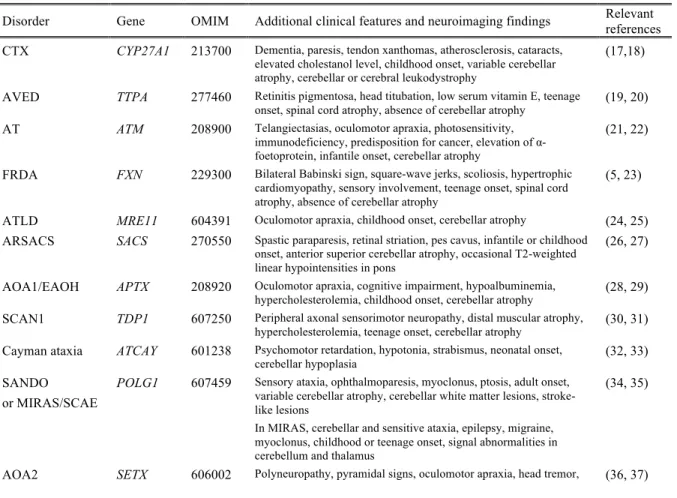
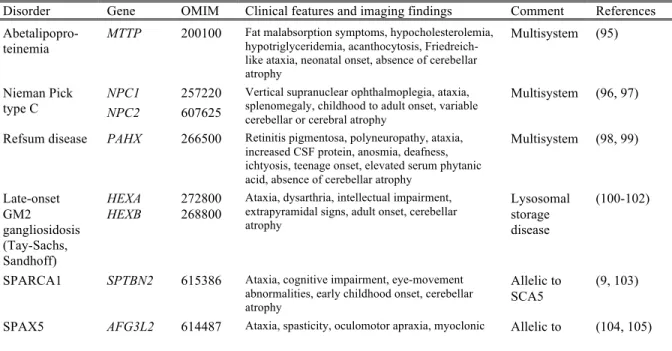
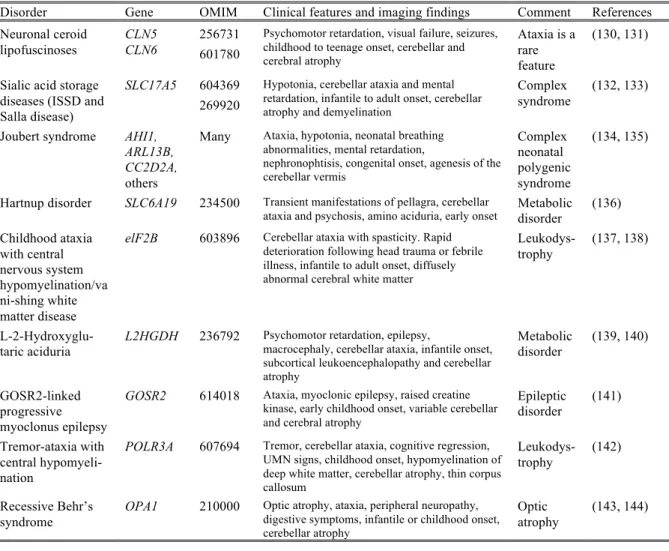
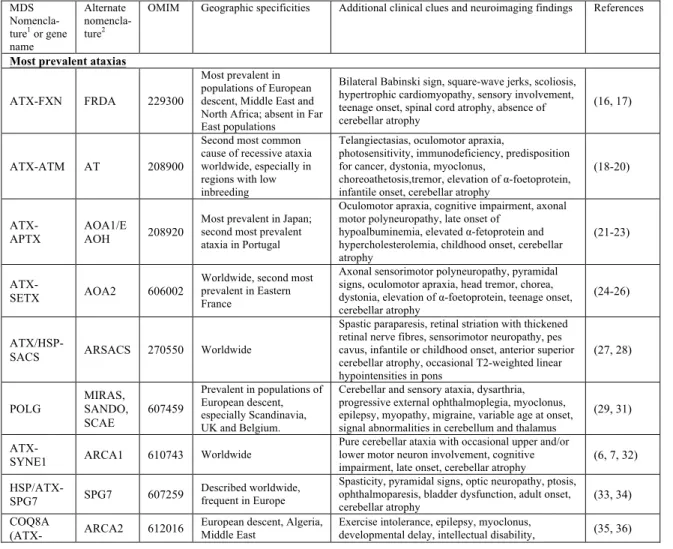
The proposed new list of autosomal recessive ataxias is presented in Table 1.1 in chronological order of gene discovery. The disorders included in this list were evaluated as having a relatively predominant cerebellar involvement compared to the involvement of other neurologic and non-neurologic systems. Table 1.2 presents the other complex motor or multisystem disorders that have prominent ataxia. Finally, Table 1.3 presents disorders that may occasionally present with ataxia, but where ataxia is a secondary feature. Certain decisions were made in the elaboration of this classification. Notably, abetalipoproteinemia (ABL) and Refsum disease were not included in the list of primary recessive ataxias, but rather in the list of complex disorders that have prominent ataxia. Indeed, despite their important Friedreich-like neurological picture, these disorders are primary lipid metabolism disorders with multisystem involvement. Moreover, ataxic disorders that are allelic to other movement disorders, especially spinocerebellar ataxias and hereditary spastic paraplegias, were assigned to the second category to avoid any confusion with the primary recessive ataxias. The MARS2-linked autosomal recessive ataxia with leukoencephalopathy (ARSAL/SPAX3) was not included because the genetic evidence was deemed insufficient (13). Finally, some disorders described only in single families were included, despite this being a factor for weaker genetic evidence, if other major considerations were met; this was indicated in the list.
Table 1.1 Proposed new list of autosomal recessive ataxias
Table 1.2 Other complex movement or multisystem recessive disorders that have prominent ataxia
Table 1.3 Recessive disorders that may occasionally present with ataxia, but where ataxia is a secondary feature
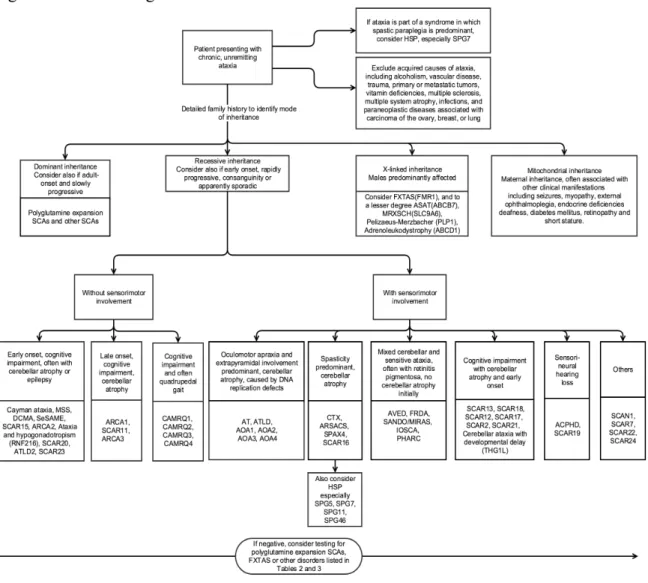
The primary recessive ataxias were also organized in a clinical algorithm (Figure 1.2) according to the presence of key clinical clues, which include the presence of sensorimotor involvement, cognitive impairment, spasticity, and oculomotor abnormalities.
Figure 1.2. Clinical algorithm of autosomal recessive ataxias
Other disorders have been reported with ataxia, but the authors evaluated that these disorders did not need to be included in the differential diagnosis of recessive ataxias. However, clinicians may bear in mind that the following may have ataxia as an associated feature: Lafora disease (EPM2A, EPM2B), megalencephalic leukoencephalopathy with subcortical cysts (MLC1), COL18A1-linked ataxia epilepsy cognitive problems and visual problems, Perrault syndrome (HSD17B4), Zellweger-spectrum disorders (PEX2), Wolfram syndrome (WFS1), Canavan disease (ASPA), metachromatic leukodystrophy (ARSA), Galloway-Mowat syndrome (WDR73), and GLUT-1 deficiency (SCL2A1).
1.6 Discussion
We present a new classification for the autosomal recessive ataxias. This classification should allow for better categorization of recessive disorders presenting with ataxia with a clear separation between the primary recessive ataxias and disorders that may present with ataxia as an associated feature but belong to other disease categories. We also provided a clinical algorithm as a tool for diagnostic, learning, and research purposes. This comprehensive classification will allow for improved genetic diagnosis by targeted next generation sequencing applications as the ability to detect DNA repeat expansion diseases is quickly becoming a reality with prospects of treatment in the future (11, 14, 15).
As compared to previously published reports on this subject (7, 8), we systematically reviewed the literature to evaluate the available evidence on the disease-associated genes in order to include all disorders presenting with a predominant cerebellar ataxia phenotype. The systematic review methodology with a structured data search and comprehensive evaluation of all references allowed
for a complete evaluation of the literature regarding disorders presenting with ataxia to ensure that all potentially relevant disorders were included in this classification. Nevertheless, some methodological elements were not applicable to the task at hand. For example, two references were selected for each primary recessive ataxia, and articles that provided evidence for a separated genetic basis with a clinical corollary of ataxia were preferred. Therefore, some articles that provided only detailed clinical description were not included. Moreover, inclusion criteria were clearly defined but there remained a large place for interpretation to determine if cerebellar ataxia was a core feature of the phenotype and if the genotype-phenotype association was convincing. Thus, the classification of individual disorders between the three groups, i.e. as a recessive ataxia, a complex disorder with predominant ataxia or a disorder where ataxia is a secondary feature, remains a subjective appreciation and is open for discussion by a dedicated task force in order to reach a consensus. Finally, the search strategy was designed to be as sensible as possible, but ataxia is a frequent symptom in neurology, and it is possible that other ataxia-associated disorders could be considered for inclusion.
Important challenges remain to be addressed. First, the nosology of recessive ataxias is still highly confusing. Contrary to the dominantly inherited spinocerebellar ataxias, no universal acronym was adopted in the field of recessive ataxias, such that disorders were named based on the author who first described them, on regions of high prevalence, or according to clinical presentation. In the last few years, the term spinocerebellar ataxia, autosomal recessive (SCAR) was used to designate novel recessive ataxias, but this nomenclature did not include the previously described and most frequent ataxias. Moreover, as SCAR assignation was based on locus discovery, some of the included SCARs do not correspond to an identified gene. The term SPAX has also been used to designate ataxias with a strong spasticity component, irrespectively of their mode of inheritance. Recently, the International Parkinson and Movement Disorder Society Task Force for Nomenclature of Genetic Movement Disorders recommended a nomenclature with a gene suffix in order to overcome the shortcomings of the numbered locus system, which include erroneously assigned loci, the mingling of causative and risk factor genes, unconfirmed causative associations, and inconsistent phenotypic correlations (16). These concerns are justified, although numbered naming systems present definite advantages for ease of use and proper delineation of the field. The nomenclature of recessive ataxias should be discussed by a dedicated task force of international experts in order to develop a naming system that reflects the complexity of the recessive ataxia phenotypes while allowing convenient clinical use.
Finally, large phenotypic variability exists between patients from different families and even from a single family with the same mutated gene, depending on the type of mutation and on its location in the gene. Other factors that affect age at onset and clinical course probably include the presence of modifier genes and environmental exposures. Hence, one could argue that the paradigm of one gene-one disease presented here does not reflect all the phenotypic variability observed, and could as well be replaced by the concept of one patient-one disease as we identify new genetic and environmental prognostic features that characterise more precisely the age at onset, evolution, and response to treatment. Such developments are likely to modify our understanding of genetic disorders and of their classification.
1.7 Conclusion
We present herein a classification of the autosomal recessive ataxias based on a systematic scoping review of the literature. This work should serve as a framework for scientific discussion in order to bring together experts for the establishment of a much-needed consensus in this field.
1.8 Tables
Table 1.1 Proposed new list of autosomal recessive ataxias
Disorder Gene OMIM Additional clinical features and neuroimaging findings Relevant references CTX CYP27A1 213700 Dementia, paresis, tendon xanthomas, atherosclerosis, cataracts,
elevated cholestanol level, childhood onset, variable cerebellar atrophy, cerebellar or cerebral leukodystrophy
(17,18)
AVED TTPA 277460 Retinitis pigmentosa, head titubation, low serum vitamin E, teenage
onset, spinal cord atrophy, absence of cerebellar atrophy (19, 20)
AT ATM 208900 Telangiectasias, oculomotor apraxia, photosensitivity, immunodeficiency, predisposition for cancer, elevation of α-foetoprotein, infantile onset, cerebellar atrophy
(21, 22)
FRDA FXN 229300 Bilateral Babinski sign, square-wave jerks, scoliosis, hypertrophic cardiomyopathy, sensory involvement, teenage onset, spinal cord atrophy, absence of cerebellar atrophy
(5, 23)
ATLD MRE11 604391 Oculomotor apraxia, childhood onset, cerebellar atrophy (24, 25) ARSACS SACS 270550 Spastic paraparesis, retinal striation, pes cavus, infantile or childhood
onset, anterior superior cerebellar atrophy, occasional T2-weighted linear hypointensities in pons
(26, 27)
AOA1/EAOH APTX 208920 Oculomotor apraxia, cognitive impairment, hypoalbuminemia,
hypercholesterolemia, childhood onset, cerebellar atrophy (28, 29)
SCAN1 TDP1 607250 Peripheral axonal sensorimotor neuropathy, distal muscular atrophy,
hypercholesterolemia, teenage onset, cerebellar atrophy (30, 31)
Cayman ataxia ATCAY 601238 Psychomotor retardation, hypotonia, strabismus, neonatal onset,
cerebellar hypoplasia (32, 33)
SANDO or MIRAS/SCAE
POLG1 607459 Sensory ataxia, ophthalmoparesis, myoclonus, ptosis, adult onset, variable cerebellar atrophy, cerebellar white matter lesions, stroke-like lesions
In MIRAS, cerebellar and sensitive ataxia, epilepsy, migraine, myoclonus, childhood or teenage onset, signal abnormalities in cerebellum and thalamus
(34, 35)
chorea, dystonia, elevation of α-foetoprotein, teenage onset, cerebellar atrophy
CAMRQ1, DES VLDLR 224050 Non-progressive cerebellar ataxia, mental retardation, hypotonia, strabismus, occasional quadripedal gait, congenital onset, inferior cerebellar hypoplasia, cortical gyral simplification
(38, 39)
IOSCA/MTDPS7 (Allelic to PEOA3)
C10orf2 271245 Athetosis, hypotonia, optic atrophy, ophthalmoplegia, hearing loss, epilepsy, hypogonadism, liver involvement, infantile onset, moderate atrophy of brainstem and cerebellum with advancing disease
(40, 41)
MSS SIL1 248800 Cataracts, mental retardation, myopathy, short stature, childhood
onset, cerebellar atrophy (42, 43)
DCMA/MGCA5 DNAJC19 610198 Dilated cardiomyopathy, non-progressive cerebellar ataxia, mental retardation, testicular dysgenesis, anemia, increased urinary 3-methylglutaconic acid, infantile onset
(44, 45)
ARCA1 SYNE1 610743 Pure cerebellar ataxia, cognitive impairment, occasional pyramidal
signs, late onset, cerebellar atrophy (46, 47)
ARCA2 ADCK3 (CABC1)
612016 Exercise intolerance, epilepsy, myoclonus, cognitive impairment, childhood onset, cerebellar atrophy, occasional stroke-like cerebral lesions
(48, 49)
SeSAME syndrome
KCNJ10 612780 Epilepsy, sensorineural deafness, mental retardation, tubulopathy and
electrolyte imbalance, infantile onset, absence of cerebellar atrophy (50, 51)
CAMRQ3 CA8 613227 Mild mental retardation, occasional quadrupedal gait, congenital
onset, cerebellar atrophy, white matter abnormalities (52, 53)
Salih ataxia/ SCAR15 (1 family)
KIAA0226 615705 Epilepsy, mental retardation, childhood onset, absence of cerebellar
atrophy (54, 55)
PHARC ABHD12 612674 Sensorimotor neuropathy, cataract, hearing loss, retinitis pigmentosa,
teenage onset, variable cerebellar atrophy (56, 57)
SPAX4 (1 family)
MTPAP 613672 Spastic paraparesis, optic atrophy, cognitive involvement, infantile
onset (58, 59)
ARCA3 ANO10 613728 Cognitive impairment, downbeat nystagmus, teenage or adult onset,
cerebellar atrophy (60, 61)
SCAR11 (1
family) SYT14 614229
Psychomotor retardation, late onset, cerebellar atrophy (62) CAMRQ2 WDR81 610185 Occasional quadrupedal gait, cognitive impairment, congenital onset,
hypoplasia of cerebellum and corpus callosum (63, 64)
AOA3 (1 family) PIK3R5 615217 Oculomotor apraxia, sensorimotor involvement, teenage onset,
cerebellar atrophy (65)
SCAR13 GRM1 614831 Cognitive impairment, mild pyramidal signs, short stature, seizures,
congenital onset, cerebellar atrophy (66, 67)
CAMRQ4
(1 family) ATP8A2 615268
Cognitive impairment, occasional quadrupedal gait, congenital onset, cerebellar and cerebral atrophy (68)
SCAR7 (Allelic to CLN2)
TPP1 609270 Pyramidal signs, posterior column involvement, tremor, childhood
onset, atrophy of the cerebellum and pons (69, 70)
Ataxia and hypogonado-tropism
RNF216 212840 Hypogonadotropic hypogonadism, dementia, occasional chorea,
childhood to young adult onset, cerebellar and cerebral atrophy (71, 72)
SCAR18 GRID2 616204 Tonic upgaze, psychomotor retardation, retinal dystrophy, infantile
onset, cerebellar atrophy (73, 74)
SCAR16 STUB1 615768 Pyramidal signs, neuropathy, occasional hypogonadism, variable age
at onset, cerebellar atrophy (75, 76)
SCAR12 WWOX 614322 Tonic-clonic epilepsy, mental retardation, spasticity, neonatal to
childhood onset, variable cerebellar or cerebral atrophy (77, 78)
ATLD2 (1 family)
PCNA 615919 Telangiectasias, sensorineural hearing loss, photosensitivity, cognitive impairment, short stature, childhood onset, cerebellar atrophy
(79)
SCAR20 SNX14 616354 Mental retardation, sensorineural hearing loss, macrocephaly,
dysmorphism, infantile onset, cerebellar atrophy (80, 81)
SCAR17 CWF19L1 616127 Mental retardation, congenital onset, cerebellar hypoplasia (82, 83) ACPHD DNAJC3 616192 Diabetes mellitus, UMN signs, demyelinating neuropathy, (84)
(1 family) sensorineural hearing loss, childhood to adult onset, generalized supra- and infratentorial atrophy
LIKNS/SCAR19 (1 family)
SLC9A1 616291 Sensorineural hearing loss, childhood onset, variable vermian
atrophy (85)
AOA4 (Allelic to MCSZ)
PNKP 616267 Dystonia, oculomotor apraxia, polyneuropathy, cognitive
impairment, childhood onset, cerebellar atrophy (86, 87)
SCAR2 PMPCA 213200 Non-progressive cerebellar ataxia, cognitive impairment, pyramidal
signs, short stature, congenital or infantile onset, cerebellar atrophy (88, 89)
SCAR21 SCYL1 616719 Liver failure, peripheral neuropathy, mild cognitive impairment,
childhood onset, cerebellar vermis atrophy, thinning of optic nerve (90)
SCAR22 (1 family)
VWA3B 616948 Cognitive impairment, pyramidal signs, adult onset, cerebellar
atrophy and thin corpus callosum (91)
SCAR23
(1 family) TDP2 616949
Tonic seizures, cognitive impairment, dysmorphism, childhood onset (92) SCAR24
(1 family)
UBA5 617133 Cataracts, peripheral neuropathy, childhood onset, cerebellar atrophy (93) Cerebellar ataxia
with
developmental delay (1 family)
THG1L - Psychomotor retardation, pyramidal signs, childhood onset, vermis
hypoplasia (94)
ACPHD Ataxia, combined cerebellar and peripheral with hearing loss and diabetes mellitus; AOA ataxia with oculomotor
apraxia; ARCA autosomal recessive cerebellar ataxia; ARSACS autosomal recessive spastic ataxia of Charlevoix-Saguenay; AT ataxia-telangiectasia; ATLD ataxia-telangiectasia-like disorder; AVED ataxia with vitamin E deficiency; CA Cayman ataxia; CAMOS cerebellar ataxia mental retardation optic atrophy and skin abnormalities; CAMRQ cerebellar ataxia mental retardation with or without quadrupedal locomotion; DCMA Dilated cardiomyopathy with ataxia;DES
Desequilibrium syndrome; EAOH Early-onset ataxia with oculomotor apraxia and hypoalbuminemia FRDA Friedreich ataxia; IOSCA infantile onset spinocerebellar ataxia; LIKNS Lichtenstein-Knorr syndrome; MGCA5 3-methyglutaconic aciduria type 5; MIRAS mitochondrial recessive ataxia syndrome; MCSZ Microchephaly seizures developmental delay;
MSS Marinesco-Sjogren syndrome; MTDPS7 mitochondrial DNA depletion syndrome 7; PEOA3 progressive external
ophthalmoplegia with mitochondrial DNA deletions, autosomal dominant 3; PHARC polyneuropathy hearing loss ataxia retinitis pigmentosa and cataract; SANDO sensory ataxic neuropathy with dysarthria and ophthalmoparesis; SCAE spinocerebellar ataxia with epilepsy SCAN1 spinocerebellar ataxia with axonal neuropathy 1; SCAR Spinocerebellar
ataxia, autosomal recessive; SeSAME Seizures sensorineural deafness ataxia mental retardation and electrolyte imbalance;
SPAX spastic ataxia; UMN upper motor neuron.
Table 1.2 Other complex movement or multisystem recessive disorders that have prominent
ataxia
Disorder Gene OMIM Clinical features and imaging findings Comment References
Abetalipopro-teinemia MTTP 200100
Fat malabsorption symptoms, hypocholesterolemia, hypotriglyceridemia, acanthocytosis, Friedreich-like ataxia, neonatal onset, absence of cerebellar atrophy Multisystem (95) Nieman Pick type C NPC1 NPC2 257220 607625
Vertical supranuclear ophthalmoplegia, ataxia, splenomegaly, childhood to adult onset, variable cerebellar or cerebral atrophy
Multisystem (96, 97)
Refsum disease PAHX 266500 Retinitis pigmentosa, polyneuropathy, ataxia, increased CSF protein, anosmia, deafness, ichtyosis, teenage onset, elevated serum phytanic acid, absence of cerebellar atrophy
Multisystem (98, 99) Late-onset GM2 gangliosidosis (Tay-Sachs, Sandhoff) HEXA HEXB 272800 268800
Ataxia, dysarthria, intellectual impairment, extrapyramidal signs, adult onset, cerebellar atrophy
Lysosomal storage disease
(100-102)
SPARCA1 SPTBN2 615386 Ataxia, cognitive impairment, eye-movement abnormalities, early childhood onset, cerebellar atrophy
Allelic to SCA5
(9, 103)
epilepsy, neuropathy, dystonia, optic atrophy,
childhood onset, cerebellar atrophy SCA28
Boucher-Neuhauser/ Gordon Holmes syndrome
PNPLA6 215470 Ataxia, hypogonadotropic hypogonadism, chorioretinal dystrophy or brisk reflexes, childhood onset, atrophy of cerebellum and pons
Allelic to HSP39
(106, 107)
Gillespie syndrome
ITPR1 206700 Non-progressive cerebellar ataxia, iris hypoplasia, cognitive impairment, neonatal onset, progressive cerebellar atrophy
Allelic to SCA15/29
(108)
SPAX2/ SPG58 KIF1C 611302 Spastic paraparesis, cerebellar ataxia, childhood or teenage onset, white matter changes in the internal capsule
Spasticity predominant
(109, 110)
SPG7 SPG7 607259 Spasticity, pyramidal signs, cerebellar signs, optic neuropathy, ptosis, teenage or adult onset, cerebellar atrophy
HSP (111, 112)
SPG5 CYP7B1 270800 Spasticity, cerebellar and sensory ataxia, childhood
or teenage onset, white matter lesions HSP (113, 114)
SPG11 KIAA1840 604360 Spasticity, ataxia, cognitive impairment, sensorimotor neuropathy, childhood or teenage onset, thin corpus callosum, signal abnormalities in cervical cord
HSP (115, 116)
SPG46 GBA2 614409 Cerebellar ataxia, spastic dysarthria, mild cognitive impairment, hearing loss, cataracts, childhood onset, cerebellar and cerebral atrophy, thin corpus callosum HSP (117, 118) Congenital disorders of glycosylation type 1A
PMM2 212065 Psychomotor retardation, axial hypotonia, abnormal eye movements, peripheral neuropathy, congenital onset, cerebellar hypoplasia
Neonatal onset, complex syndrome
(119, 120)
LBSL DARS2 611105 Cerebellar ataxia, tremor, spasticity, dorsal column dysfunction, axonal neuropathy, childhood to adult onset, signal abnormalities in cerebral white matter and specific brainstem and spinal cord tracts
Leukoence-phalopathy (121, 122) Mitochondrial complex IV deficiency
COX20 220110 Cerebellar ataxia, dystonia, sensory axonal neuropathy, variable, childhood or teenage onset, cerebellar atrophy Dystonia predominant (123) Aceruloplas-minemia
CP 604290 Diabetes, dementia, movement disorder, cerebellar ataxia, retinal degeneration, late onset, decreased signal intensity in thalamus, basal ganglia and dentate nucleus Metabolic disorder (124) Neurodegene-ration with brain iron accumulation 2A and 2B
PLA2G6 256600 Cerebellar ataxia, psychomotor retardation, psychiatric features, axonal sensorimotor neuropathy, infantile or teenage onset, cerebellar atrophy and variable iron accumulation in globus pallidus Neurodege-neration with brain iron accumula-tion (125, 126) Poretti-Botshauser syndrome
LAMA1 615960 Nonprogressive ataxia, oculomotor ataxia, psychomotor retardation, early childhood onset, cerebellar dysplasia with cysts
Dystrogly-canopathy (127) Posterior column ataxia with retinitis pigmentosa
FLVCR1 609033 Posterior column degeneration and retinitis pigmentosa, childhood onset, signal abnormalities in cervical spinal cord
Sensory
ataxia (128, 129)
HSP hereditary spastic paraplegia; LBSL leukoencephalopathy with brainstem and spinal cord involvement and lactate
elevation; SPARCA1 spectrin-associated autosomal recessive cerebellar ataxia type 1; SPAX spastic ataxia; SPG spastic paraplegia.
Table 1.3 Recessive disorders that may occasionally present with ataxia, but where ataxia is
a secondary feature
Disorder Gene OMIM Clinical features and imaging findings Comment References Neuronal ceroid lipofuscinoses CLN5 CLN6 256731 601780
Psychomotor retardation, visual failure, seizures, childhood to teenage onset, cerebellar and cerebral atrophy
Ataxia is a rare feature
(130, 131)
Sialic acid storage diseases (ISSD and Salla disease)
SLC17A5 604369 269920
Hypotonia, cerebellar ataxia and mental retardation, infantile to adult onset, cerebellar atrophy and demyelination
Complex syndrome
(132, 133)
Joubert syndrome AHI1, ARL13B, CC2D2A,
others
Many Ataxia, hypotonia, neonatal breathing abnormalities, mental retardation,
nephronophtisis, congenital onset, agenesis of the cerebellar vermis Complex neonatal polygenic syndrome (134, 135)
Hartnup disorder SLC6A19 234500 Transient manifestations of pellagra, cerebellar
ataxia and psychosis, amino aciduria, early onset Metabolic disorder (136)
Childhood ataxia with central nervous system hypomyelination/va ni-shing white matter disease
elF2B 603896 Cerebellar ataxia with spasticity. Rapid deterioration following head trauma or febrile illness, infantile to adult onset, diffusely abnormal cerebral white matter
Leukodys-trophy
(137, 138)
L-2-Hydroxyglu-taric aciduria
L2HGDH 236792 Psychomotor retardation, epilepsy,
macrocephaly, cerebellar ataxia, infantile onset, subcortical leukoencephalopathy and cerebellar atrophy Metabolic disorder (139, 140) GOSR2-linked progressive myoclonus epilepsy
GOSR2 614018 Ataxia, myoclonic epilepsy, raised creatine kinase, early childhood onset, variable cerebellar and cerebral atrophy
Epileptic disorder (141) Tremor-ataxia with central hypomyeli-nation
POLR3A 607694 Tremor, cerebellar ataxia, cognitive regression, UMN signs, childhood onset, hypomyelination of deep white matter, cerebellar atrophy, thin corpus callosum Leukodys-trophy (142) Recessive Behr’s syndrome OPA1 210000
Optic atrophy, ataxia, peripheral neuropathy, digestive symptoms, infantile or childhood onset, cerebellar atrophy
Optic
atrophy (143, 144)
1.9 Figures
Figure 1.1 Flow diagram
Records identified through database searching (n = 3750) Additional records identified through reference lists, OMIM and GeneReviews (n = 49) Records after duplicates removed (n = 2354) Records screened (n = 2354) Records excluded (n = 2224) Studies included in qualitative synthesis (n = 130)
Figure 1.2 Clinical algorithm of autosomal recessive ataxias
1.10 Supplementary material
Search strategy for MEDLINE/Pubmed
1. recessive[TIAB] OR sporadic[TIAB]
2. ataxi*[TIAB] OR “spinocerebellar degenerations”[MeSH Major topic] OR “cerebellar ataxia”[MeSH Major topic]
3. gene[TIAB] OR genes[TIAB] OR locus[TIAB] 4. animals[MeSH] NOT humans[MeSH]