Université de Sherbrooke
BIOLOGICAL ACriVITIES OF PHTHALOCYANINES : Effects of human sérum components on the in vitro uptake
and photodynamic activity of zinc phthalocyanine.
By
Modestus O.K. Obochi
Department of Nuclear Medicine and Radiobiology, Faculty of Medicine, University of Sherbrooke,
Sherbrooke, Québec, Canada JIH 5N4
Mémoire présenté à la Faculté de Médecine en vue de l'obtention du grade de
maître ès sciences (M.Sc.)
1^1
National Library of CanadaAcquisitions and
Bibliographie Services Branch 395 Wellington Street
Ottawa, Ontario K1A0N4
Bibliothèque nationale
du Canada
Direction des acquisitions et des services bibliographiques 395, me Wellington
Ottawa (Ontario)
K1A0N4
Your file Votre référence Our file Notre référence
The author has granted an
irrévocable non-exclusive licence
aiiowing the National Library of
Canada to reproduce, loan,
distribute or seli copies of
his/her thesis by any means and
in any form or format, making
this thesis availabie to interested
persons.L'auteur a accordé une licence
irrévocable et non exclusive
permettant à la Bibliothèque
nationale
du
Canada de
reproduire, prêter, distribuer ou
vendre des copies de sa thèse
de quelque manière et sous
quelque forme que ce soit pour
mettre des exempiaires de cette
thèse à ia disposition des
personnes intéressées.
The author retains ownership of
the copyright in his/her thesis.
Neither the thesis nor substantiel
extracts from it may be printed or
otherwise reproduced without
his/her permission.
L'auteur conserve la propriété du
droit d'auteur qui protège sa
thèse. Ni la thèse ni des extraits
substantiels de celle-ci ne
doivent être imprimés ou
autrement reproduits sans son
autorisation.ISBN 0-315-81885-9
"AU men hy nature desire to know " (Aristotle, 384-322 B.C.)
To :
Romanus, Ben-Basil, Marcel; for their support,
and Mum; for her love.
COMMUNICATIONS/PUBLICATIONS
1. Obochi, M.O.K., R.W. Boyle and J.E. van Lier (1992) Biological Activities of Phthalocyanines XIIL Effects of human sérum components on the in vitro uptake and photodynamic activity of Zinc Phthalocyanine. Photochem. Photobiol. (in press, accepted June, 1992).
2. Ross W. Boyle, Jacques Rouseau, Modestus O.K. Obochi and Johan E. van Lier (1992) Biological Activities of Phthalocyanines XVI. Fluorinated zinc phthalocyanines
- photodynamic activity, mechanism of action and biodistribution in tumor-bearing Balb/c mice. Cancer Res. (Communicated).
3. Obochi, M.O.K., H. Ali, S.D. Watts and J.E. van Lier (1992) Biological Activities of Phthalocyanines. The effects of halogenation on the photodynamic activity of sulfonated metallophthalocyanines in V-79 cells and tumor-bearing Balb/c mice. (in préparation).
4. Obochi, M.O.K., S.D. Watts, R.W. Boyle and J.E. van Lier (1992) Biological Activities of Phthalocyanines. Photosensitization pathways of hydrophobic, amphiphilic and hydrophilic phthalocyanines used in the photodynamic therapy of cancer, (in préparation).
5. Obochi, M.O.K., B.P. Ruzsciska and J.E. van Lier (1992) Fluorescence quenching of phthalocynines by amino acids and nucleic acid bases, (in préparation).
6. Margaron, P., M.O.K. Obochi, R. Ouellet, S.D. Watts and J.E. van Lier (1992) Influence of central métal ligand on the phototoxicity, cell uptake and in vitro fluorescing properties of BSA-bound phthalocyanines. (in préparation).
PRESENTATIONS
1. Effect of human sérum components on the in vitro cell uptake and
photodynamic activity of zinc phhtalocyanine. M.O.K. Obochi. R.W. Boyle and J.E. van Uer. Presented at the 20th Annual Meeting of the American Society for
Photobiology, June 20-24,1992, Marco Island, Florida, U.S.A.
2. Mechanisms of actions of phthalocyanines in photodynamic therapy of cancer. Modestus O.K. Obochi. Ross W. Boyle, Sean D. Watts and Johan E. van Lier.
Presented at the Free Radicals and Oxygen Reaction Forum, University of Nigeria, Nsukka, Nigeria, August 28, 1992.
3. L'Effet des composantes du sérum humain sur l'accumulation cellulaire in vitro et sur l'activité photodynamique du zinc phtalocyanine. M.O.K. Obochi. R.W. Boyle et J.E. van Lier. Presented at the 21st Edition of "Journée Scientifique" of the Faculty of Medicine, University of Sherbrooke, Sherbrooke, Québec,Canada, May 20, 1992.
List of Figura.
1. Schematic diagram illustrating the main steps involved in PDT 5
2. Structure and absorption spectra of HpD 7
3. Structures of some 2nd génération photosensitizers 8
4. Structure and absorption spectra of ZnPc 9
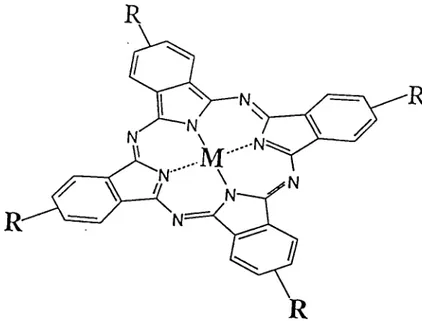
5. Structure of Phthalocyanine 10
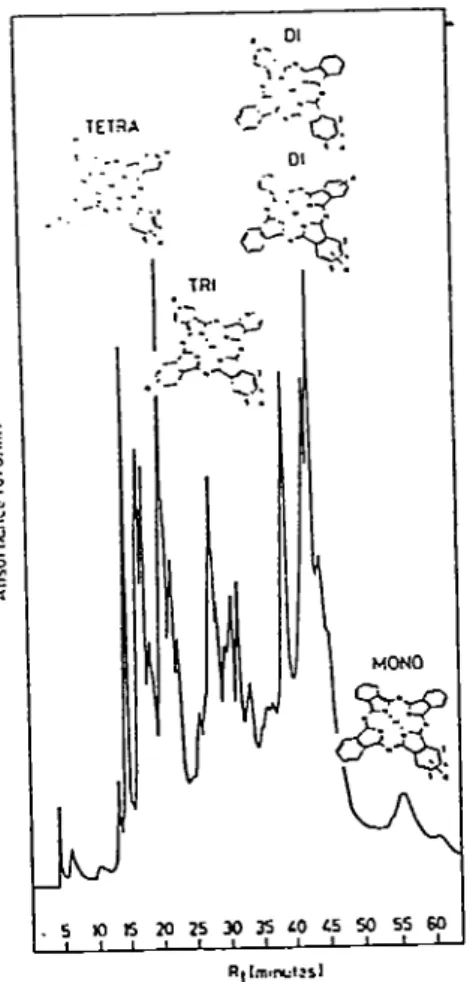
6. Reverse phase HPLC of SAlPc 12
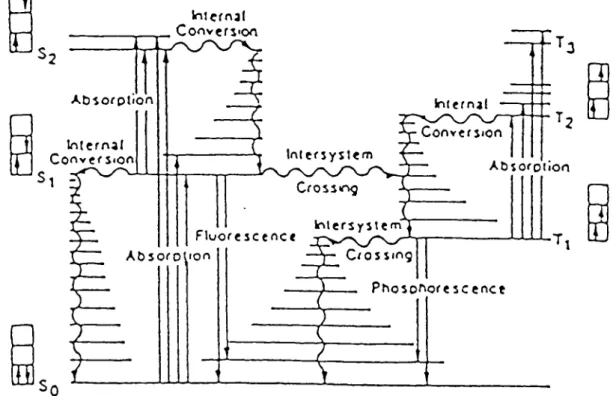
7. Jablonski diagram 14
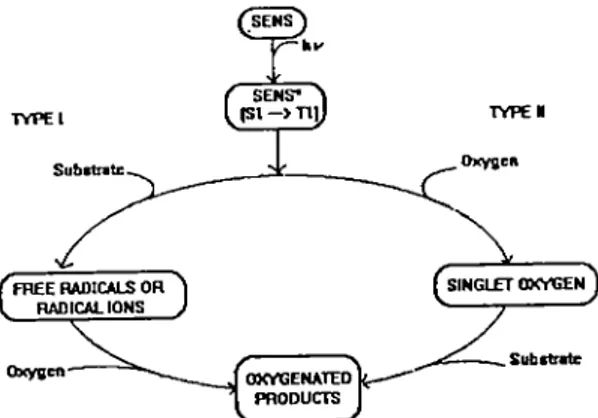
8. Mechanisms of photodynamic action : Types I & II Pathways 16
9. Mechanism of tumor destruction in vivo 18
10. Structure of human albumin 20
11. Schematic diagram of plasma lipoproteins 22
12. Influence of unfiractionated human semm on the uptake by V-79 cells of
[®®Zn]ZnPc
34
13. Survival of V-79 cells as a function of ZnPc concentration : Effect of
unfractionated sérum 35
14. Uptake of [®®Zn]ZnPc as a fimction of time : Effect of human sérum
components 36
15. % Survival of V-79 cells as a function of ZnPc concentration : Effect of human
sérum components 37
List of Tables
1. Characteristics of plasma lipoproteins 21
Abbreviations and Symbols.
ZnPc Zinc phthalocyanine
[^Zn]ZnPc Gamma-emitting Zn-65 labeled zinc phthalocyanine.
PDT Photodynamic therapy.
VLDL Very Lx)w Density Lipoprotein. LDL Low Density Lipoprotein. HDL High Density Lipoprotein.
HSA Human sérum albumin.
HG Human globulins.
aMEM Alpha minimum essential médium. PBS Phosphate buffered saline.
DMF N,N-Dimethyl formamide.
Hp Hematoporphyrin.
HpD Hematoporphyrin Derivative. DHE Dihematoporphyrin ether (or ester). HPLC High pressure liquid chromatography. SAlPc Sulfonated aluminium phthalocyanine. EDTA Ethylene diamine tetra acetic acid. LD90 90 % lethal dose
Maximum absorption wavelength.
e molar absorption œefficient.
Xy lifetime of triplet state of sensitlser.
<j>T quantum yield of triplet state of sensitizer. singlet oxygen.
Sen* excited state of sensitizer.
Si singlet excited state of sensitizer. Ti triplet excited state of sensitizer.
TABLE OF CONTENT Dedication i Communications/Publications ii Présentations iii Ust of figures iv List of tables .v Abbreviations &Symbols vi
Table of content .vii
Résumé xi
Abstract xii
CHAPTER ONE : INTRODUCTION.
1. Introduction 2
1.1 Historical background 3
1.2 Photodynamictherapy 4
1.3 Photosensitizers : Ist & 2nd génération 6
1.4 Photophysics & Photochemistry of phthalocyanines 10 1.5 Photodynamic action. Mechanisms & Photodynamic damage 12
1.6 Hypothesis of tumor destruction in vivo. 17
1.7 Blood Transport of drugs 19
1.8 Drug-Carrier complexes for the delivery of phthalocyanines into tumor
cells 23
AIM OF RESEARCH 25
CHAPTER TWO : MATERIALS AND METHODS 2.1 Cell culture 27 2.2 Photosensitizers 27 2.3 Drug formulation 27 2.4 Sérum components 28 2.5 Phototoxicity test 29 2.6 Light source 30 2.7 Celluar uptake 30
CHAPTER THREE : RESULTS
3. Results 33
3.1 Effects of unfractionated human sérum on cell uptake and survival 33 3.2 Effects of human sérum components on cell uptake and survival 36 3.3 Cell/Medium distribution ratio and photodynamic efficiency corrected for dye
uptake 38
CHAPTER FOUR : DISCUSSION
4. Discussion 41 4.1 Sérum 42 4.2 VLDL 42 4.3 LDL 43 4.4 HDL 44 4.5 Albumin 45 4.6 Globulins 46 IX
Acknowledgements 49 CHAPTER FIVE : REFERENCES
5. Référencés 51
APPENDIX
Appendix 1 : Formulae 64
Résumé
Nous avons étudié l'effet des composantes du sérum humain sur l'activité photodynamique de la phtalocyanine de zinc (ZnPc) sur des fibroblastes de hamster chinois (lignée V-79). Nous avons d'abord montré que les activités photodynamiques sont correlées à l'accumulation cellulaire
de ZnPc marquée au ®^Zn, ce qui nous a permis d'estimer la quantité de sensibilisateur présent
dans les cellules au moment de l'irradiation et d'exprimer les efficacités photodynamiques sur la base de la concentration intracellulaire du pigment. Toutes les composantes sériques, à l'exception des HDL (lipoprotéines de haute densité), inhibent la pénétration de ZnPc dans les cellules V-79 en comparaison avec l'accumulation dans les même cellules de ZnPc délivrées dans du milieu sans sérum. Les HDL ont pour effet d'augmenter de 23 % l'accumulation de ZnPc, sans affecter cependant l'efficacité photodynamique calculée à partir de la concentration
cellulaire. Les VLDL (lipoprotéines de très faible densité) et les globulines ont diminué l'accumulation cellulaire également sans affecter l'efficacité photodynamique du produit. En revanche, les lipoprotéines de faible densité (LDL) et l'albumine, tout en inhibitant l'accumulation cellulaire de ZnPc, ont augmenté l'efficacité photodynamique cellulaire de ZnPc, ce qui suggère que ces protéines facilitent la localisation du produit vers des cibles subcellulaires vitales sensibles aux dommages photodynamiques. A partir de ces résultats, nous concluons que l'association de ZnPc avec les composantes sériques peut entraîner des effets importants et largement variés sur le degré de pénétration et la distribution cellulaire du photosensibilisateur.
Abstract
The effect of human sérum components on the photodynamic activity of zinc phthalocyanine
(ZnPc) towards Chinese hamster fibroblasts (line V-79) was studied. Photodynamic activities
were correlated with cellular uptake of radiolabeled [®^Zn]ZnPc which allowed corrections to be
made for the amount of sensitizer présent in the cells at the time of irradiation and to express
photodynamic efficiencies on a cellular dye concentration basis. Ail sérum components, with the
exception of high density lipoproteins (HDL), inhibit uptake of ZnPc by V-79 cells, when
compared to incubation of ZnPc with the same cells in sérum free médium. HDL
increased ZnPc
uptake by 23%, but the photodynamic efficiency corrected for the cellular ZnPc concentration
was unaffected. Very low density lipoprotein (VLDL)
and globulins decreased ZnPc cell uptake,
but likewise did not affect the cellular photodynamic efficiency of the dye. In contrast low
density lipoprotein (LDL) and albumin, while inhibiting ZnPc cell uptake, increased the cellular
photodynamic efficiency of ZnPc, suggesting that these proteins facilitate localization of the dye
at cellular targets sensitive to photodynamic damage and vital to cell survival. We
conclude from
these results that association of ZnPc with sérum components can have important, and widely
dif-fering, effects on both degree of uptake and cellular distribution of the photosensitizer.
CHAPTER ONE
1. INTRODUCTION
Why is grass green?
Why not black, red or any other color? Corne to think of it, why is blood red?
The answer to these puzzles hovers over one family of pigments. They are called
tetrapyrrolic macrocycles - examples of which are at the core of haemoglobin, the red pigment
of blood, and of chlorophyll, which puts the green in plants. "Without tetrapyrrolic macrocycles,
life, as we know it, would be impossible. Plants use chlorophyll to collect sunlight, which they
harness for the conversion of carbon dioxide into carbohydrates. Ail animal life is ultimately
dépendent on this process. And without the haem in haemoglobin, there could be no oxygen
transport round the human body. So where there is life, there are tetrapyrrolic macrocycles. As if to emphasize our utter dependence on these pigments of life, strange disorders, known as
porphyrias, afflict those with faulty tetrapyrrole metabolism" (Milgrom,1984). These same
pigments are used in photodynamic therapy for the transduction of photon energy into chemical
and biochemical manifestations ultimately leading to the destmction of cancer cells. These dyes
can sensitize an organism, cell or tissue to the influence of light in the presence of oxygen. They
are called photosensitizers and this is the basis of photodynamic therapy of cancer.
1.1 Historical background of PDT
The principles of photodynamic therapy were established long time ago. Phototherapy is attributed to the ancient Egyptians (Dougherty,1990) and to the ancient cultures of India and China (Spikes and Straight, 1990). But in terms of mordem history, we can certainly trace the discovery of photodynamic effects to 1900 when Oscar Raab and others in Germany laid the foundation for the science of photobiology by demonstrating the photodynamic cell killing of Paramecia using acridine orange and sunlight in the presence of oxygen (Raab, 1900). Few years later, von Tappenier and Jesionek (1903) treated skin cancer with eosin and sunlight. In 1942, Auler and Banzer described uptake of hematoporphyrin (HP) in neoplastic tissue. Figge et al. later confirmed this by fluorescence (Figge et_al.,1948). The recent impetus began in the 1960's with the pioneering work of Lipson using hematoporphyrin derivative (HpD) (Lipson etal.,1961). Lipson not only recognized the potential therapeutic benefit of the photodynamic action of HpD but, indeed, treated a patient with metastatic chest wall breast cancer (Lipson,1966). Unfortunately, the significance of this report was not recognised at the time. Interestingly, around 1972 two groups, Dougherty (Dougherty,1974) and Diamond (Diamond et al..19721. independently picked up this topic again. Though their results were not particularly successful from day one, it began the process to the présent state of PDT. Since the mid 1980's, comparative trials and clinical trials with HpD as a photosensitizer have been receiving serions attention. Many people have also become interested in developing new photosensitizers for PDT, improving light delivery to tumor cells and exploiting PDT's unique aspects in other clinical endeavours (Dougherty, 1990).
1.2 PHOTODYNAMIC THERAPY
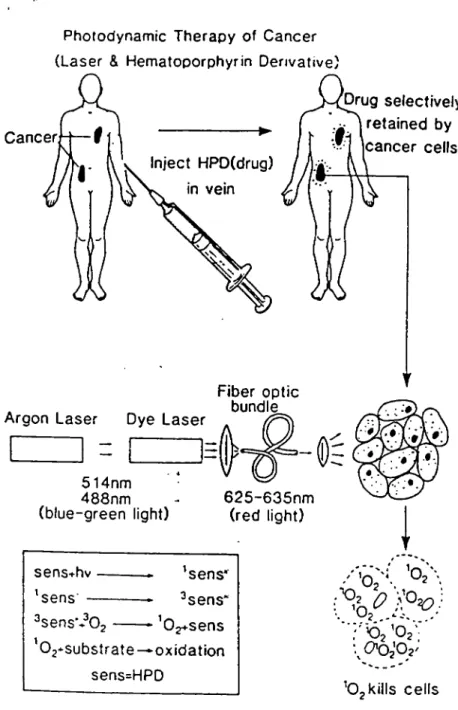
Photodynamic therapy is a new cancer treatment modality that selectively destroys malignant cells by an interaction between absorbed visible light and retained photosensitizing agent (Manyak et al.. 1988). This therapy requires the presence of three components : light, sensitizer and oxygen (Kongshaug, 1992) for chemical destruction of cellular components. Though a new modality for therapy of neoplastic disease, it shows promise in other therapeutic methods as well (Kessel, 1990) such as inactivation of viruses. Tumor cell kill dépends on both a degree of sélective rétention of the excited photosensitizer within or around malignant tissue and an ability to deliver light to this tissue (Manyak et al.. 1988). An efficient light delivery may be achieved by use of laser light. A systematic explanation of the modality of PDT using HpD is shown in figure 1.
The photosensitizer is administered intravenously. The tumor mass is illuminated afler a waiting period of 24-48 h (to allow for sélective rétention of the dye by cancer cells). Light delivery is facilitated by coupling the argon-dye laser light source to an optical fibre which allows for entry into areas which are not easily accessible. Excitation of the dye leads to oxidative destruction of the cellular components. PDT has an edge over chemotherapy and radiotherapy in that it is safe and effective with no significant adverse effect and it may be used before, during or after chemotherapy, radiotherapy or surgery (Dougherty et al.. 1990; Moan and Berg, 1992).
Photodynamic Therapy of Cancer (Laser & Hematoporphyrin Derivative)
Cancer Inject HPD(drug) in vein Drug seiectively retained by cancer ceils
Argon Laser Dye Laser
FIber optic bundie
514nm 488nm
(blue-green light) 625-635nm(red light)
sensfhv — 'sens* 'sens' — ^sens'
^sens'i'Oj —
Oj+sens'02--substrate
—oxidation sens=HPD'Ojkiils ceils
Figure 1. Schematic diagram illustrating the main steps involved in PDT (Adapted from M.W. Bems (ed), 1984).
13 Photosensitizers: First & Second Génération
The idéal photosensitizer for photodynamic therapy should bave certain basic properties namely:
a), it should be a single, non toxic, stable compound of known chemical
structure.
b). it should be retained with high degree of selectivity in malignant tumors in comparison with the adjacent normal tissues in which the tumor arose.
c). is should have a strong absorption peak in the part of the spectrum where light penetrates living tissue best and where the photon energy is still high enough to produce singlet oxygen (600-1100nm)
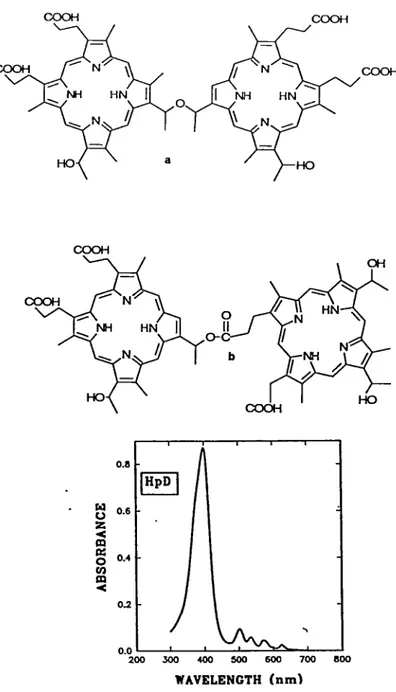
The first génération photosensitizer préparation widely used in clinical trials of photodynamic therapy of cancer (Dougherty,1987) consists of mixtures of hematoporphyrin derivatives (HpD) obtained via alkaline hydrolysis of hematoporphyrin acetate (Lipson et al.. 1961; Bonnet et al..19811. The active components of HpD consist of a mixture of dihematoporphyrins and oligomers containing 2-5 hematoporphyrin (Hp) units (Kessel,1987) linked via ether and ester bonds (Dougherty et al.. 1984; Kessel,1986a) (Fig.2). HpD, like the parent molecule Hp, absorbs weakly above 600 nm (Fig.2) (Dougherty, 1987; van Lier,1988; van Lier, 1990a) and may be retained in the skin for a period of 1-2 months. This consequently leads to an increased risk of skin photosensitization (Dougherty et al.. 1984). The selectivity of HpD for malignant tissues as well as its tumor rétention is generally weak (Traulau et al..l990L
COOH COOH COOH NH HN m HN HO HO COOH COOH COOH OH HN NH HN O-C NH HO HO COOH I 1 1 0.8 HpD 0.6 0.4 0.2 200 300 400 SOO 600 700 800 WAVELENGTH (nm)
Figure 2. Structure and absorption spectra of HpD a = Dihematoporphyrin ether, b = Dihematoporphyrin ester
Although ils main absorption is around 400 nm, for therapy the dye is activated by red light (X. = 630 nm ) where a minor absorption exists, because of the increased
Above ail, HpD, as well as HpD fractions enriched in the biologically active dimers and
oligomers, are not ideally compatible with the laser Systems presently available for light delivery
in PDT
(Cassen, 1991). As a resuit, a number of porphyrin and porphin analogues with improved
photophysical properties within the therapeutic light range have been advanced over the years
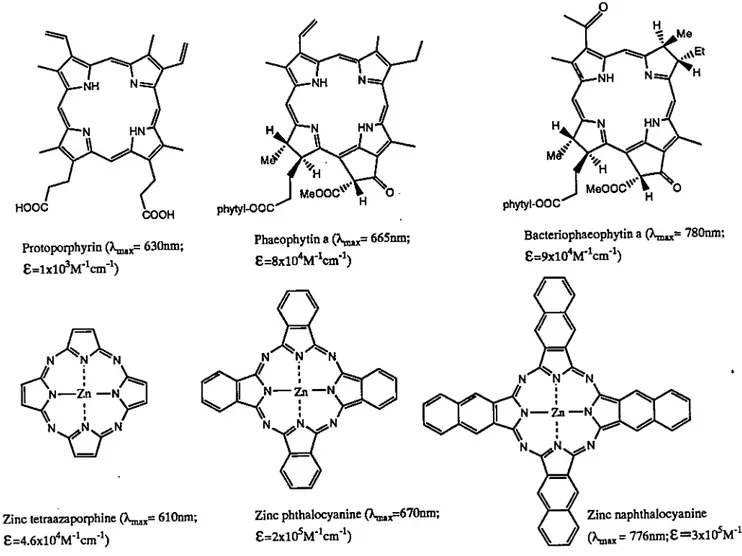
(van Lier, 1988). Figure 3 shows those analogues that are potential second génération
photosensitizers. HOOC NH HN COOH Protoporphyrin 630nm; e=lxl0'M-^cm-^) N—Zn —N
Zinc tetraazaporphine (X,nax= 610nm; e=4.6xlO''M"'cm"^) phytyl-OOC NH HN MêP MeOOC^ » G H Phaeophytin a (X„i,x= 665nm; E=8xlO'*M-W^) Zinc phthalocyanine (X^^670nm; e=2xlO^M"'cm"^) c .Me \Et NH HN MeOOC^ » 0 H phytyl-OOC Bacteriophaeophytin a 780nm; e=9xlO'*M'W^)
/\
' \ N N ^N N N ^N I N Zn—N N Zn—N N- .N. ^N N. >,N^^N \ // Zinc naphthalocyanine(\n«= 776nm; 8=3x1 O^M"W^)
The top row of structures presented in figure 3 are analogues of natural occuring tetrapyrrolic macrocycles: porphyrin, chlorophyll a and bacteriochlorophyll a. Removal of their central metals and the exocyclic double bonds results in a progression from lower to higher values of and e thereby leading to improved photophysical and photochemical properties. The bottom row of structures (Fig. 3), on the other hand, are synthetic analogues of porphyrin in which the carbon bridges have been replaced by nitrogen atoms. Aza substitution and fusion of the pyrrole units with benzene rings resuit to higher and e values thus improving the capacity to absorb light. Phthalocyanines are included in these second génération photosensitizers. They have received a
great deal of attention and their potential use has been reviewed from time to time (Spikes, 1986;
Ben-Hur, 1987; van Lier et al.. 1988; Rosenthal & Ben-Hur, 1989; van Lier &. Spikes, 1989; van Lier,1990a,b). Zn ta u z < CQ 0.1 K O co .m < ZnPc 200 300 400 500 600 700 800
WAVELENGTH (nm)
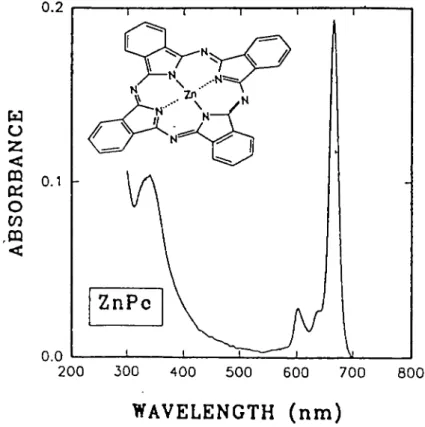
Phthalocyanines have attractive photophysical and chemical propertlÊs including strong absorption
maxima at wavelengths (650-860 nm)
where tissue provides optimal light transmission (Wilson,
1989) (Fig.4), good capacity to generate singlet oxygen and facile chemical accessibility (van
Lier,1990a). Phthalocyanines have higher molar absorption coefficient (e « 10® M"Vm'') and thus
better capacity to absorb light compared to HpD (e — 10^ M'^cm'^).
1.4 PHOTOPHYSICS AND PHOTOCHEMISTRY
OF PHTHALOCYANINES
..-'N -M"
N'
Figure 5. Structure of phthalocyanine. M
= métal, R = substituents.
A schematic diagram of the général structure of phthalocyanine is shown in figure 5.
Différent kinds of metals or metalloid atoms can be inserted into the central ring of
phthalocyanines in place of the two hydrogens présent in non-metallo phthalocyanines yielding
dark blue or green dyes with absorption maxima around 670 nm (e -
10®
(Paquette and
van Lier, 1992). Most phthalocyanines are usually stable chemically and photochemically (Spikes,1986). Their photophysical properties are mainly determined by the nature of the central
métal ion, and particularly diamagnetic ions, such as Al®^ and Zn^^ give complexes with both
high triplet yields (<|»t > 0.4) and long lifetimes (ti- > 0.1 msec)
(Darwent et al.. 1982) whereas
ring substituents and axial ligands modulate solubility, tendencies to aggregate or associate with
biomolecules, cell penetrating properties and the pharmacokinetics of the dyes (van Lier, 1990b).
Most métal free and métallo phthalocyanines are insoluble in water and the usual organic
solvents. But several types of water soluble derivatives can be prepared by adding substituents
such as amino, carboxylic acid, nitro and sulfonic acid groups to phthalocyanines (Darwent et
al.. 1982; van Lier et al.. 1984).
The only flaw in the derivitization of phthalocyanines is that this may yield complex
mixtures of products. The métallo sulfophthalocyanines are prepared either via direct sulfonation
of the non-sustituted macrocycle, or by condensation of phthalic/sulfophthalic acid mixtures.
Purifaction yields fractions containing isomeric products (Fig. 6) with varying degrees of
homogeneity (Ali et al.. 1988; Margaron et al.. 1992). In général, underivatized phthalocyanines
can be obtained with a high degree of purity and display a good efficiency in the génération of
activated oxygen species (Maillard et al.. 1980: Wu et al.. 1985). Such water-insoluble dyes can
be solubilized by incoporating them into carriers and emulsions and thus an efficient targeting
of expérimental tumors may be achieved (Kessel, 1986b; Korbelik and Hung, 1991).
• o: TETSA ^ S,
<y-^.
TRI - -'v-' MONO "^rrP . 5 W e 20 25 30 35 40 45 50 55 60 « « I t ._! 1 1 L 1 1 1 LFigure 6. Reverse-phase HPLC proHles of the mono- through tetrasulfonated AlPc
1.5 PHOTODYNAMIC ACTION.
MECHANISMS AND PHOTODYNAMIC DAMAGE
The major components of cellular Systems - amino acids, pyrimidine and purine bases and
phospholipids - do not absorb electromagnetic radiation of wavelengths longer than ca 350 nm.
Visible light in itself, therefore, bas no biochemical significance in photodynamic cell killing
(Rodgers, 1985). Other molécules, containing chromophores that are excitable by visible (400-700
nm) light, must also be présent to transduce the photon energy into chemical and biochemical
manifestations. In photodynamic therapy, this rôle is played by porphyrin-like molécules.
Photodynamic action in biological Systems refers to the induction of cell death or
disfunction by visible light in the presence of a photosensitizer and oxygen (Rodgers, 1985).
Initiation of photodynamic activity is caused by excitation of the sensitizer by light that falls
within its absorption band. Although the cytotoxic mechanisms of photodynamic action are not
completely clear, photodynamic therapy does require the presence of oxygen (Lee et al.. 1984;
Gibson and Hilf, 1985; Manyak et al.. 1988; Mitchell et al.. 1985; Moan and Sommer, 1985).
Singlet oxygen, a reactive and short-lived excited state of oxygen produced during
photodynamic therapy by irradiation of photosensitizers, is postulated to be responsible for
cytotoxicity (Langlois et al.. 1986) and this assumption is supported by both in situ chemical
trapping and direct détection of singlet oxygen in tissue (Weishaupt et al.. 1976; Parker and
Stanboro, 1984)
The first step of photodynamic action is absorption of light by a sensitizer (Sens) to
produce an excited state (Sens*). The electronically excited molecule formed by photon
absorption bas a high tendency to lose its energy. Several intramolecular pathways such as
fluorescence, internai conversion, intersystem crossing, exist for this and are illustrated in a
Jablonski diagram (Fig. 7)
(Rodgers,1985). These photophysical processes in an isolated
chromophore dispersed in a fluid médium are in a kinetic equilibrium.
Internai Conversion Inicrnal Conver sion Si
Qï
Absorption Iniernal Conversion Abîorpiion Intcfsystem CrossirsQ Inlersysteml Fluorescence -i-^^ /-v ^ Cros sinç Ab sorotion Phoso^ore se enctï
c
7DC
Figure 7. Jablonskl Dlagram showing excited state levais and transitions (S„,Sj^2 = ground state, first excited singlet state and second excited singlet state; = first, second and third triplât state).
On absorbing light of the appropriate wavelength, the sensitizer is converted from a stable
electronic structure (S^,, the ground state) to an excited state known as the singlet state (Sj), whlch
is short-lived and may undergo a conversion to a longer-lived excited state known as the triplet
state (Ti). A
summary of the competing processes for Si are outlined below (MacRobert et ah.
1989) :
1. S„ + hv -*-* S*i : Absorption 2. S*i —*■—> Sq + hv : Fluorescence
3. S*i Sq + beat : Internai conversion 4. S*i + Q -»-» So + Q : Physlcal quenchlng 5. S*i T*i : Intersystem crosslng.
The lifetime of the singlet state ( Sj ) is generally less than 1 and the main rôle of this
state in the photosensitization mechanism is to act as a precursor of the longer-lived triplet state.
However, its involvement cannot be overlooked because if quenching occurs (équation 4), the
overall excitation efficiency from the ground to triplet state is correspondingly reduced and the
quenching reaction may lead to sensitized damage. The lifetime of the excited triplet states can
be several hundred microseconds in the absence of quenching co-solutes and thus are much more
efficient in sensitizing damage to substrate species than the corresponding excited singlet states.
Interaction of the triplet state with tissue components may proceed either via a Type I
or II
mechanism or a combination of both (Schenck,1960, Gollnick 1968 and Foote, 1976). The Type
I reaction results in either proton or electron transfer, yielding radicals or radical ions. Transfer can occur in either direction, but more commonly, the excited sensitizer acts as an oxidant. The
Type II reaction leads mainly to singlet molecular oxygen (^Oj) by energy transfer. Electron
transfer from sensitizer to molecular oxygen can also occur in'some cases giving oxidized
sensitizer and superoxide anion (Oj") (Lee and Rodgers, 1987) but is far less efficient (van Lier,
1991). Fig. 8 shows a schematic représentation of the two types of reaction.
SENS ( SENS- ^ TYPE! TYPtl Oxygen Substrete SINGLETOXVGEN FREE RADICALS OH RADICAL IONS OXVGENATED PRODUCTS Oxygen
TYl'E 1 (FREE RADICAL OR REDOX)
PATI IWA Y
S(T,) + SUB S* + SUB OR
S(T,) + SUB S + SUB^ OR
S(T,) + Oj s^- +
o,-TYPE II (ENERGY TRANSFER)
PATHWAY
S(T,) + SUB S + SUB(T,) OR
S(T,) + O, ^S + 'O,
Figure 8. Mechanisms of photodynamic action.
In some Systems, Type I and II can occur simultaneousiy and the contribution of each pathway dépends on the concentrations of oxygen and substrates as well as the characteristics of the sensitizers.
1.6 HYPOTHESISOF TUMOR DESTRUCTION IN VIVO
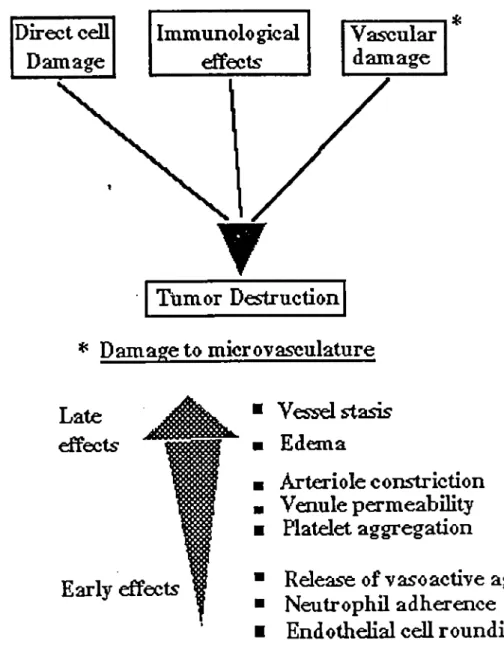
The mechanism of PDT-induced tumor destruction in vivo is complex and may include damage to the neoplastic cells, microvasculature and non-vascular stroma in the tumor. It seems that, in most cases of PDT with HpD, direct tumor cell damage is secondary to the perturbation of tumor microvasculature. The vascular endothelium is thus probably the main target of tumor photosensitization by HpD (Henderson et al.. 1984; Nelson et al.. 1988; Zhou, 1989).
PDT-induced tumor necrosis may be due to an acute inflammatory reaction. The early injury to
endothelial cells, circulating platelets and erythrocytes causes physicochemical changes in the vascular wall, reducing the rate of blood flow and initiating the processes of hemostasis and thrombosis. The increased permeability of endothelial cells leads to escape of sérum proteins and
fluid from blood and to the ready appearance of edema around the injured vessels. The rapid
réduction of blood supply coupled to the onset of edema and hemorrhage in the tumor leads to
hypoxia or even anoxia of the photoinjured neoplastic cells which eventually undergo necrosis.
The overall damaging process is further enhanced by the release of some vasoactive or
lysing substances such as histamine, proteases, thromboxanes "and acid phosphatases from
photodamaged mast cells and neutrophils in the stioma (Fingar et al., 1990; Fingar et al. 1991).
A schematic diagram correlating the processes involved in PDT destruction of tumor is shown
in figure 9 .
Direct cell
Immunological
VaseularDamage
effectsdamage
Ttimor Destruction
* Damage
to microvasculature
Lateeffècts-Early effects
■ Vesselstasis ■ Edema■
Arlerioleconstriction
■
Venule permeability
■
Platelet aggregation
■
Rdease of v aso active agents
■
Neutrophil adhérence
■
End
othelial cell r ounding
Figure 9. Mechanisms of tumor destruction in vivo.
1.7 BLOOD TRANSPORT OF DRUGS
Several binders may be involved in blood transport of drugs. These include drug interactions with the main plasma proteins, red cells, specifîc carriers (e.g. transcortin), and sometimes spécifie circulating carriers (Tillement et al.. 1991). Ail of these complexes act as drug carriers fi'om blood to tissues. Some drugs may bind exclusively to one plasma protein but many drugs bind to several proteins in the blood. In général, the association and dissociation rates of drug-protein complexes are very high.
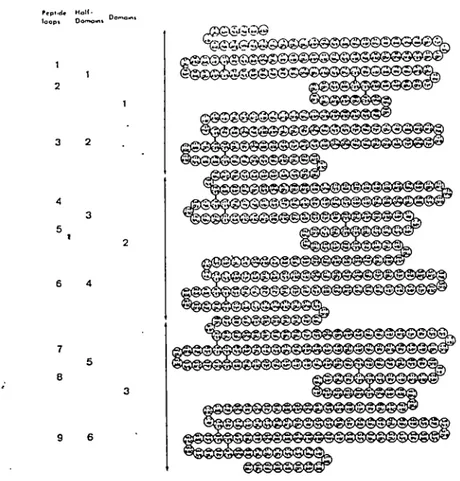
Human plasma contains about 100 différent proteins of which 13 have a concentration higher than Ig/liter. Among these, five macromolecules can bind noticeable amounts of dmgs: sérum albumin (HSA), acid glucoprotein (AAG), and very low-density, low-density and high-density lipoproteins (VLDL, LDL, HDL, respectively). HSA makes up about 60 % of total plasma proteins. Drug binding to human sérum albumin occurs in plasma as well as other tissues
where albumin exists. The conformational structure of HSA (Figure 10) is flexible owing to its
17 disulfide bonds, which cause the formation of sbr large loops. This property may explain why
HSA is able to bind many drugs.
HoU*
loopt Do^noxit
3 2
6 4
y5&s&
Figure 10. Structure of human sérum albumin. (Modified from
Pharmacology &
Toxicology Supplément, vol. 66 (II), 1990. © Nordic
Pharmacological Society. Ali rights reserved).
Plasma lipoprotelns, which carry fatty acids, triglycérides, phospholipids, and cholestérol,
may also be responsible for the binding of drugs. Nearly ail types of drugs are able to bind to
lipoprotelns provided they exhibit a certain degree of lipophilicity (Innerarity, 1991).
Lipoprotelns can be divided into 6 major classes and two specialized classes (Table 1). Figure
11 shows a schematic drawing of plasma lipoprotelns.
Table 1. Characteristics of Plasma Lipoproteins. (From Encyclopedia of Human Biology,
vol. 6, 1991. © Académie Press, Inc. AU rights reserved).
N)
Molecular weight
Plasma (number of amino Chromosomal
concentration acids of the mature Major sites location Clinical disorders due to Apoprotein (mg/dl) protein) of synthesis of the gene Fonctions genetic variants or mutations
A-I 100-130 28,100 Small intestine, liver llq Structural protein of HDL; Apo A-I-C-III deficiency
(243) LCAT activator; tissue Apo A-I deficiency
cholestérol efflux A-I multiple mutants
A-Il 30-50 17,400 Small intestine, liver iq Structural protein of HDL Tangier disease
(77)
A-IV 15 43,000 Small intestine llq Associated with triglycéride
B-lOO 80-120
(376) transport in chylomicrons
550,000 Liver 2p Necessary for VLDL biosyn- Abetalipoproteinemia
(4536) thesis and sécrétion; ligand Familial hypobetalipoproteinemia
B-48 <5 250,000 Small intestine 2p Necessary for chylomicronfor the LDL receptor Familial defective apoB-100Abetalipoproteinemia
(2152) biosynthesis and sécrétion Chylomicron rétention disease
C-1 5-7 6,600 Liver 19q Modulâtes LCAT activation
(57)
C-Il 3-7 8,000
(79)
Liver 19q Activâtes LPL Familial hyperchylbmicronemia
C-III 9-13 8,750 Liver llq Modulâtes receptor uptake of
D
(79) chylomicron remuants
6-7 33,000 Adrenal, kidney. 3q Unknown
(169) brain, liver, small intestine, etc.
li 3-6 34,200 Liver, macrophages 19q Ligand for lipoprotein receptors Type II! hyperlipoproteinemia
(299) in various organs. Isoforms correlated with plasma
astrocytes in the cholestérol levels
brain
(;i) 0-100 350,000-750,000 Liver 6q Binds to plasminogen receptors Levels and phenotypes of Lp(a)
(4,529) on endothelial cells are correlated with coronary
HDL V 7 B100 B100 VLDL CholesUrol Shell Phosphollpid LDL LIpoproteIn Core
fcy
yCr'-^y
r r r r 'l ^ f r B100 n ii/r{,cf .
'
/ r / DL r r / . f C'/ y / r f ChylomicronFigure 11. Schematic drawing of the plasma lipoproteins.
(Modlfied from Scientific American Medicine, Section 9,
Subsection 11. © Scientific American, Inc. Ail rights reserved)
Globuiins represent another class of sérum proteins. Some, especially y-globulins (composed
almost entirely of immunoglobulins) show high specificity as carrier Systems for drugs.
1.8 DRUG-CARRIER COMPLEXES FOR THE
DELIVERY OF PHTHALOCYANINES INTO TUMOR CELLS
Many investigators have studied the possibilities of associating anti-tumor drugs with carriers which selectively recognize tumor cells, thus minimizing their interaction with normal cells (Jori et al.. 1984; Moan et al.. 1985; Barel et al.. 1986; Zhou et al.. 1988; Cohen and Margalit, 1990; Jori and Reddi, 1990; Reddi et al.. 1990; Sinn et al.. 1990; Vitols et al.. 1990; Korbelik and Hung, 1991). This selectivity may enhance direct cell kill and minimize inflammatory reactions and breakdown of normal and tumor tissue microvasculature, as reported by Zhou (1989) and Fingar et al. (1991) ail of which affect neighbouring tissue integrity. In both cell culture System and expérimental tumor models, certain carrier-linked drugs have been found to exert enhanced chemotherapeutic effects relative to the free drugs (Rudling et al..19831. however, no drug-carrier System has yet proven to be of definite clinical value in PDT. There are many problems involved in this approach, e.g. stability of the drug-carrier complex and rapid clearance by the reticuloendothelial system of exogenous macromolecules and particles when used as carriers. In addition immunological reactions may resuit (Vitols et al.. 1990) with drugs acting as haptens in drug-carrier interactions. Many of these problems could be reduced by the use of endogenous carriers. Chromatographic and ultra-centrifuge séparations of serum-associated photosensitizers suggest that the majority of sensitizers tested for an application in PDT associate with HDL and albumin, while there is generally less association with LDL and VLDL. The affînity of sérum albumin and sérum lipoproteins for porphyrins indicates a rôle for these proteins
as endogenous carriers of photosensitizers for PDT (Kongshaug et al.. 1989; Manyak et al.. 1988; Cohen and Margalit, 1990). It has been suggested that the binding of photosensitizers to certain plasma proteins may enhance their tumor localization (Reyftman et al.. 1984; Barel et al.. 1986; Kessel, 1986b; Kessel et al.. 1987; Korbelik and Hung, 1991). Two main modes of photosensitizer localization in tumor tissues have been proposed depending on the nature of the carrier protein (Kessel, 1987). In the first, albumin delivers bound drugs primarily to the vascular stroma, while for the second, lipoproteins, especially LDL, efficiently transport the dye to malignant cells. The high concentration of sérum albumin in whole sérum (Rotenberg et al.. 1987) coupled with its affinity for porphyrins is an added advantage in exploiting the use of albumin as a carrier of drugs for PDT. The rationale for using LDL as a carrier System of photosensitizers stems from the fact that neoplastic cells express a particularly large number of receptors at the level of the cytoplasmic membrane, which selectively recognize the apoprotein B and E moieties of LDL (Brown et al.. 1980; Gai et al.. 1981). Hydrophobic photosensitizers readily partition in the lipid région of LDL (Reyftman et al.. 1984; Candide et al.. 1986; Beltramini et al.. 1987) and do not perturb the endocytotic process of internalization of LDL (Reddi et al.. 1990). Hence, associating photosensitizers with différent sérum proteins may enhance tumor cell localization (Korbelik and Hung, 1991), increase direct tumor cell damage upon light exposure (Milanesi et al.. 1990), and improve the rétention of hydrophobic drugs. Allison et al. (1990) found that LDL and HDL influence the accumulation of benzoporphyrin
derivative in tumor cells.
AIM OF RESEARCH
In order to study the relative contributions of sérum components to uptake and
photosensitized cell kill by ZnPc, we have associated this dye with différent human sérum
proteins (VLDL,
LDL, HDL,
albumin and globulins) and assayed the effect of each on the
clonogenicity of V-79 Chinese hamster cells following incubation and irradiation. Using ZnPc
labeled with gamma-emitting "Zn, the uptake of ["Zn]ZnPc by cells was determined and
expressed in molar units. This latter technique is especially advantageous as it is independent
of aggregation state and physical quenching of fluorescence by cellular components, both of
which are problems which can complicate the measurement of cellular uptake of photosensitizer
by extraction and fluorescence measurement. Using these data, intracellular molar photodynamic
efficiencies were calculated. From these values inferences conceming the relative contribution
of uptake and intracellular distribution of sensitizer to PDT were drawn. Effects of varying the
concentrations of unfractionated sérum on the photodynamic efficiency of ZnPc were also
investigated.
CHAPTER TWO
MATERIALS
AND METHODS
MATERIALS AND METHODS
Cell culture. Chinese hamster lung fibroblasts (line V-79) were used throughout this ex-periment. Cells were maintained in regular growth médium (a MEM) supplemented with 10% human sérum, 1% I^glutamine, and 1% MEM vitamin solution (Gibco Laboratories, N.Y., USA).
Photosensitizers
Zinc phthalocvanine (ZnPcl. ZnPc was purchased from Eastman Kodak Company (N.Y., USA) and used as such.
[^Zn]ZnPc. ^ZnClj (t^j = 245 days, y = 1.115 MeV)
(300 fiCx) (Amersham, Oakville,
Ontario, Canada) in 0.3 ml 1 M HCl was dried under a stream of nitrogen; aqueous sodium acetate buffer (1 ml; 10 mM, pH 7.0) and zinc acetate dihydrate (0.35 mmol) were added and the solution was again dried under nitrogen. 1,2-Dicyanobenzene (224 mg; 1.75 mmol) was added to the resulting solid and the mixture was heated at 180°C for 3.0 h to give a blue/green product, which was purified by dissolving it in concentrated sulfuric acid (10 ml) and reprecipi-tated by pouring into water (20 ml). The phthalocyanine was recovered by centrifugation, washed with water (30 ml), then ethanol (30 ml), and dried to a purple/blue powder. The
washings removed any trace of free ®®Zn from the product.
Dmg formulation
ZnPc. A solution was prepared by first dissolving the drug (30 mg; 52 //mol) in pyridine (20 ml). 1 ml Cremophor EL (Sigma) and 0.3 ml propan-l,2-diol (Sigma) were added to the
solution and the solvent was removed by evaporation in vacuo. Finally, stérile aqueous NaCl
(8.7 ml; 0.154 M)
was added and the mixture sonicated. Precipitated ZnPc was removed by
centrifugation followed by filtration of the supernatant through a 0.45 /mi filter (Millipore) to
give a homogeneous emulsion. The final ZnPc concentration was estimated by sériai dilution of
sample in DMF and reading the absorbance of the monomeric ZnPc at 670 nm, e = 2.5 x 10®
M'^cm
The absorption spectrum (Fig. 4) was measured with a Varian UV-Vis
spectrophotometer (Techtron Pty. Ltd, Springvale, Australia).
[^Zn]ZnPc. The radioactive ZnPc was formulated as described above for ZnPc but the
concentration was adjusted with the non-radioactive ZnPc to achieve a spécifie activity of 0.5
Concentrations were determined spectrophotometrically as described above.
Sérum components. Human sérum components : very low density lipoprotein (VLDL),
low density lipoprotein (LDL), high density lipoprotein (HDL), human sérum albumin (HSA)
and
human globulins (HG, Cohn fraction III) were purchased fi-om Sigma Chemical Company (St.
Louis, USA). They were adjusted to 1 mg/ml in buffer solution containing 0.154 M NaCl and
0.1% EDTA; pH 7.4-7.5 except for VLDL where a concentration of 0.46 mg/ml was used. Dye
emulsions were diluted in growth médium supplemented with 1 %
of the selected sérum
component and incubated at room température for 0.5 h before use. Unfi-actionated human sérum
was prepared fi"om blood sample collected from the author. The blood was centrifuged for sérum
at 600 g for 10 min. The sérum was stored at -20*'C before use. Dye emulsions were diluted in
growth médium supplemented with 1 % of the unfractionted sérum and incubated at room
température for 0.5 h before use.
Photocytotoxicity test
Cell survival of Chinese hamster lung fibroblasts (line V-79) was determined using colony forming assay as described by Brasseur et al. (1985). Cells (1 ml) were plated in 60 mm pétri dishes containing 4 ml regular growth médium and incubated in a dark humid atmosphère
containing 5% COj for three hours at 37°C to allow for cell attachment. Later the cells were
rinsed with 2-3 ml PBS and incubated for 1 h in the dark at 37°C with 1 ml of growth médium
containing 1% human sérum and dye concentrations of 5-200 nM. The dye solution was
aspi-rated off and the cells washed with 2-3 ml PBS and exposed at room température for 4 min to
red light resulting in a fluence of 2.4 J/cm^ (Appendix 2)
(Paquette, 1990). After the
phototreatment, the cells were refed with 5 ml regular growth médium supplemented with 0.28%
insulin and incubated at 37°C in a dark humid atmosphère containing 5%
COj
for 6 days to allow
colony formation.
Experiments were repeated 3-4 times using 3 dishes per concentration point. Control
plates were set ont to test for the dark toxicity of the drug and sérum and possible phototoxicity
of semm without drug.
Effect of sérum components on photocytotoxicity
To test for the effects of VLDL, LDL, HDL, HSA and HG on the photocytotoxicity of
ZnPc on V-79 cells, drug dilutions were made with growth médium supplemented with 1% of
the sérum component in question. The effect of increasing unfractionated human sérum was
assayed by using drug dilutions in growth médium supplemented with 1 % or 10% human sérum or without added sérum.
Light source
The illumination of the cells was performed using red light from two 500 W
tungsten/halogen lamps (GTE Sylvania, Drummondville, Quebec, Canada) fitted with a
circulating refrigerated filter containing aqueous Rhodamine B
(Sigma)
(ODjgo = 1.25), and a red
filter (X, > 590 nm)
(26-4390, Ealing, St-Laurent, Québec, Canada). The fluence rate was
measured aslOO W/m^.
Cellular uptake
V-79 cells in log phase were incubated in disposable, stérile polypropylene round bottom
culture tubes (with caps) (Becton Dickinson labware, Lincoln Park, New Jersey, USA) for 5 h
in a dark, humid atmosphère containing 5% COj until -10® cells were obtained. The cells were
trypsinized and counted using a hemacytometer counting chamber (American Optical, Buffalo,
N.Y., USA). [®®Zn]ZnPc (0.08 /imol; spécifie activity, 0.5 //Ci//miol) diluted in a MEM regular
growth médium supplemented with 1% human sérum, 1% L-glutamine and 1% MEM vitamin
solution (Gibco Laboratories, N.Y., USA)
were added to the tubes. They were incubated at 37°C
in dark humid atmosphère containing 5% COj for 0-6.0 h. After différent times, the tubes were
centrifuged (600 g x 5 min) and the drug dilution aspirated off. The cells were carefully washed
three times using 2
ml PBS for each washing. Both the cells and the washings were counted for
radioactivity using an automatic microcomputer controlled universal gamma counter, the 1282
Compu Gamma(LKB-Wallac, Turku, Finland). The radioactivity (jiCx) was converted to
concentration units using the spécifie activity of the stock solution and a standard formula (Saha,
1984). The experiment was repeated three times using three tubes for each time interval.
["ZnJZnPc uptake by the cells was expressed as the total amount in nmoles/10® cells, the average
cellular concentration in molarity based on a V-79 cell volume of 1.2 x 10
"
1 (Paquette, 1990),
and the distribution ratio (DR) between the cells and the incubation médium based on the
respective concentrations (Appendix 1 ).
Effect of sérum on dve uptake
The effects of VLDL, LDL, HDL, HSA and HG on the uptake of ['^ZnJZnPc by V-79
cells were studied using drug dilutions in growth médium supplemented with 1% of each of the
sérum components under study. The experiments were also carried out using serum-free growth
médium and growth médium supplemented with 10% human sérum.
CHAPTER
THREE
RESULTS
RESULTS
Control V-79 cells incubated in growth médium without added dye, but containing complété human sérum, semm components, or no sérum, showed no significant effect on growth
at the fluence used (2.4 J/cm^. Their plating efficiencies were taken as 100% cell survival. The
dye showed no toxicity in the dark at the concentrations used for this experiment.
Effects of unfractionated human sérum on cell uptake and survival.
Fig. 12 shows the effect of unfractionated human sérum on the cell uptake of [®®Zn]ZnPc
as a fiinction of incubation time (0-6 h). Cellular radioactivity was counted after removing the
médium at each time point. The uptake of labeled dye was reduced when unfractionated sérum
was présent in the growth médium used to incubate cells. The inhibition of the dye uptake was
proportional to the percentage of unfractionated sérum in the growth médium. This inhibition
of uptake was accompanied by a diminution in the phototoxicity of the dye (Fig. 13). Thus based
on the extracellular dye concentration, ZnPc in serum-free médium (LDgo = 22 nM)
gives greater
photodynamic efficiency than médium containing 1 %
sérum (LDgo = 60 nM)
or 10 %
sérum
(LDgo = 110 nM).
0.5
SERUM FREE
1% SERUM
10^ SERUM
0 0-^ o c o — 0.3 O
E
c 0.2 -0.1 0.5Time (h)
Figure 12. Influence of nnbnctionated human sérum on tfie uptake by V-79 cells of [^n]ZnPc as
a fiinction of incubation time. 10* y-79 cells were exposed for 0-é h to 10 /iM of the labeled dye in growth
médium supplemented with varying concentrations of semm. The médium was removed at each time point,
cells washed 3 times with PBS and the uptake determined hy the radioactivity associated with the cells.
Uptake is expressed in nmoles/10* cells. Expérimental points represent single détermination and these data
are représentative of 3 independent experiments.
10^ 0
1 10'
v_ D co 10 T 0Sérum free
1 %
Sérum
10 %
Sérum
20 40 60 80 100 120Drug concentration (nM)
Figure 13. Survival of V-79 cells as a function of ZnPc concentrations after exposure for 4 min to red light
(k > 590 nm; 100 W/m^. 5-200 nM of Zn-Pc in growth médium supplemented with varying concentrations of unfractionated human senim were exposed to cells for 1 h. The cells were washed with PBS prior to
illumination with red light. Error bars represent standard déviations for three différent experiments using 3 dishes per concentration point.
Effect of human sérum components on cell uptake and survival 0.5 en <u O.* o c o — 0.3 E o 0.2 E c 0.1 0.5 w "Ô) 0.4 o c o ' 0.3 E X' "5 0.2 E c ^ hdl SF 'A i: VLDL 0 0.5 1 TIME IN HOURS LDL, g ;îS SF HG HSA
Figure 14. Uptake of [*®Zn]ZnPc as a function of time. 10* V-79 cells were exposed for 0-< h to 10 fiM
labeled dye dilution supplemented with 1% pure human sérum components. The cells were washed 3 times with PBS prior to counting of radioactivity. Uptake is expressed as nmoles/10* cells. These data are
représentative of 3 différent experiments.
The V-79 cell uptake of [^^ZnJZnPc in growth médium containing 1 %
of différent pure
sérum components is presented in Fig. 14. The activity was counted after the cells were exposed
for 0-6 h to 10 fM solution of [®^Zn]ZnPc and expressed in ternis of uptake of dye in nanomoles
per million cells. VLDL, LDL, HSA, HG inhibited dye uptake by the cells relative to serum-free
conditions. Conversely, HDL promoted ZnPc uptake by the cells. The effect of ZnPc in médium
containing 1 %
of différent pure sérum components on the survival of V-79 cells after exposure
to red light is presented in Fig. 15.
10 0
1 10'
D tn ^ ' 10" VLDL LDL HDL HSA HGDrug concentrotion (nM)
Figure 15. % survival of V-79 cells as a function of ZnPc concentration after exposure for 4 min to red light (X > 590 nm; 100 W/m^. Cells were exposed for 1 h to 5-200 nM ZnPc in growth médium supplemented with 1% pure human sérum components. The cells were washed with PBS and exposed to red light for 4 min. Error bars represent standard déviations for three différent experiments using 3 dishes per concentration point.
The presence of VLDL and HG resulted in increased drug concentration required to achieve 90% mortality (extracellular LDçq's of 25 and 29 nM respectively) when compared to serum-free con ditions (LDqo 22 nM). The promotion of cellular uptake by HDL resulted in enhanced photosensitized cell kill, with an extracellular LDgo value of 19 nM. However, association of LDL and HSA with ZnPc which resulted in reduced dye uptake, also resulted in increased cell photosensitivity with extracellular LDgo's of 12 and 20 nM respectively. LDL, therefore, exhibits the largest enhancement of phototoxicity of ail the components studied.
Cell/medium distribution ratio and photodvnamic efficiencv corrected for dve uptake
Table 2 shows the calculated cell/medium distribution ratio and the effect on photody-namic efficiency of each of the pure sérum components based on the dye concentration in the incubation médium (extracellular LDgo) ^^d corrected for dye uptake by V-79 cells (cellular LDgo based on the average concentration of the dye at the cellular level). ZnPc associated with LDL results in a cellular LDgo of 0-22 //M and thus is photodynamically more efficient than ail other human sérum components, and is more than twice as efficient as ZnPc incubated with cells in the absence of sérum. HSA bas a similar effect although to a lesser extent (cellular LDgo = 0.3 //M). Added HDL results in the highest ZnPc uptake and cell/medium distribution ratio of ail the sérum components, yet the addition of HDL, VLDL or HG has no effect on the cellular LDgo (" 0.5 juM). Addition of whole sérum not only inhibits cell uptake of the dye, but also substantially diminishes the photodynamic efficiency of the ZnPc associated with the V-79 cells (Table 2).
Table 2. Cell uptake and photodynamic efficiency of' ZnPc in the presence of varions sérum components.
Sérum' LD,o' Cell uptake'
LD«,' 1
components extracell. nmol fM DR intracellular 1
nM lO'cells /M VIJDL 25 0.24 200 20 030 ± 0.020 LDL 12 0.21 175 18 0.22 ± 0.018 HDL 19 032 267 27 031 ± 0.022 HSA 20 0.18 150 15 030 ± 0.015 HG 29 030 167 17 0.49 ± 0.015 10% Sérum 110 0.15 125 13
1.43 ± 0.016 1
1% Sérum 60 0.22 183 181.08 ± 0.022 1
Serum-free 22 0.26 n 217 220.48 ± 0.026 1
Chinese hamster fibroblasts (line V-79) were incubated for 1 h with varions concentrations of ZnPc in the presence of 1% of the différent sérum components.
After removal of the dye solution cells were exposed to red light and survival was measured via colony formation. The extracellular LD^o ZnPc concentration in the incubation médium required for 90%
cell kill. Standard déviations represented by error bars are as shown in figures 13 & 15.
ZnPc uptake per 10® V-79 cells. Cells were incubated with 10 fêA [^'ZnJZnPc for 1 h, washed and counted for radioactivity. Uptake is expressed as nmol/10® cells, /zM, taking a single cell volume of 1.2 X 10"'^ 1, and as the distribution ratio (DR) representing the ratio between cellular and extracellular ZnPc
concentrations. Standard déviations represented by error bars are as indicated in figures 12 & 14. The intracellular LD^o 'S the ZnPc concentration associated with the V-79 cells required for 90% cell kill, i.e. the extracellular LD^o times the DR. Standard déviation was calculated using error propagation
formula as described in appendix 3.
CHAPTER FOUR
DISCUSSION
DISCUSSION
The effect of différent human sérum components on the distribution of photosensitizers and their implications for différent mechanisms of action of phthalocyanines in POT are not fiilly understood. We anticipated that the use of différent pure sérum components would give important information regarding the spécifie contributions of each component to the photo-inactivation of V-79 cells. This data may help in understanding better the mechanisms of drug delivery and photodynamic inactivation of cancer cells in vivo. The solubilising agent, Cremophor EL, was used in our drug formulation to promote the dispersion of the photosensitizer in the growth médium (Kessel et ah. 1991). In this study, cells were washed prior to illumination therefore any phthalocyanine not taken up by the cells could not participate in photodynamic cell
killing. Also, the use of ZnPc labeled with gamma-emitting ®®Zn gave an absolute value of
sensitizer concentrations in the cells, obviating the problems commonly associated with fluorescence measurement of sensitizer uptake, namely aggregation, physical quenching and
inefficient extraction techniques. Centrifiigation prior to washing of cells exposed to [^ZnJZnPc
prevented any significant loss of cells during the course of the assay.
In relation to serum-free samples, we found, with the exception of HDL, that associating ZnPc with complété human sérum or pure sérum components resulted in a réduction in the amount of dye taken up by the cells. Based on the extracellular ZnPc concentration, the decreased ZnPc uptake found with human sérum, VLDL, and globulins resulted also in
diminished photodynamic activity, whereas HDL enhanced photosensitized cell kill. However, it is interesting to note that associating ZnPc with either LDL or HSA led to greater cell kill than with ZnPc in serum-free médium. This suggests facilitated sélective transport by LDL and HSA to sensitive cellular targets essential for the survival of the cells.
Sérum
The addition of 1% or 10% sérum inhibited ZnPc uptake by the V-79 cells and strongly reduced the photosensitized cell killing potential of ZnPc. The substantial increase in the cellular LDgo upon the addition of whole sérum (Table 2) suggests either that :
i). unfractionated sérum contains components which promote binding of ZnPc to photodynamically insensitive sites; or
ii). unfractionated sérum contains components which inhibit cellular uptake resulting to reduced photosensitized cell kill.
Furthermore, the effect of unfractionated sérum on uptake and photoefficiency of ZnPc may also be due to other factors not considered in this work. Such factors as intracellular pH, retention/rate of efflux, other plasma components, différences in the physiological level of the sérum components and différences in affinity for ZnPc may contribute to the uptake and photodynamic efficiency of the dye.
VLDL
In relation to serum-free samples, VLDL inhibited the uptake of [®^Zn]ZnPc by V-79 cells
and consequently decreased photodynamic efficiency based on the extracellular dye concentration.
However, after correcting the LD90 for the amount of dye taken up by the cells, the photodynamic potential of ZnPc associated with VLDL or without sérum was found to be the same (cellular LD90 ** 0.5 //M) as described in Table 2,
LDL
There was no increase in dye uptake seen despite the hypothesis of selective accumulation of photosensitizers associated with LDL (Kessel, 1986b). Lipids contained in LDL may, upon incoporation into the cell membrane, change the membrane fluidity thus affecting the uptake of
ZnPc (Salzberg et al.. 1985). This finding is supported by similar findings by Korbelik et al.
(Korbelik et al..1990: Korbelik and Jung, 1991). However, the ZnPc uptake increased steadily
with time of exposure (0-6 h). Added LDL results in a dye uptake value similar to that obtained with drug dilutions containing 1% sérum. However, the presence of LDL enhanced the
photosensitized cell kill of V-79 cells with ZnPc more than any other sérum component. Hence,
both the cellular and extracellular LDgg were the lowest measured (Table 2). ZnPc associated
with LDL
was also photodynamically more efficient than serum-free dye dilutions. The enhanced
cellular photodynamic efficiency of ZnPc suggests that LDL delivers ZnPc to cellular targets
which are both sensitive to photodynamic damage and vital to the survival of the cell.
The mechanism of delivery of ZnPc associated with LDL could be via attachment to
spécifie receptors located at the cell surface (Shireman et al.. 1977). This is because :
i). animal cells obtain cholestérol for synthesis of cell membrane by the receptor-mediated
endocytosis of the cholesterol-carrying LDL
(Goldstein et al.: 1979); and
il), hydrophobic drugs readily partition in the lipid région of LDL
(Beltramini et al.. 1987)
without perturbing the endocytic process of interaalization of LDL (Reddi et al., 1990).
When cells are in need of cholestérol, they synthesise oeil surface receptors, a transmembrane protein, that bind the protein component of LDL (Innerarity, 1991). Bound LDL are intemalized via coated pits/coated vesicles which are degraded at the lysosome level. On the other hand, LDL may be trapped in plasmalemmal vesicles which are taken up through the invagination of noncoated région of cell membrane (Goldstein et al.. 1979). This suggests that the primary targets of ZnPc intemalized by LDL may be lysosomes and the cell membrane. On phototreatment, the excited ZnPc initiâtes chain reaction of oxidative destmction at the levels of lysosomes and cell membrane (lipid peroxidation). This destmction may spread rapidly to other intracellular organelles such as mitochondria, nucleus and golgi apparatus. This hypothesis, however, is open to question; further experiments such as use of intracellular organelle markers and laser scanning confocal microscopy may be needed to test it.
HDL
Association of the dye with HDL led to an enhanced uptake of ZnPc by V-79 cells and increased photosensitized cell kill based on the extracellular dye concentration. However, the LDgo corrected for the amount of ZnPc taken up by V-79 cells (Table 2) is only slightly différent from those obtained for either VLDL, HG or without added semm. This suggests that HDL delivers ZnPc to cellular sites which are either relatively résistant to photodynamic damage or of lesser importance to cell viability compared to the same dye intemalized with LDL or HSA. The mechanism by which HDL intemalises ZnPc is not clear. HDL receptor is yet to be isolated or characterised (Innerarity, 1991).
Albumin
Association of the dye with HSA resulted in a marked réduction in the uptake of the ZnPc throughout the period of study. This is in line with the strong binding of photosensitizers to albumin which in tum inhibits cellular uptake. Cozzani et al. (19841 have shown that association of porphyrin with bovine sérum albumin (BSA) interfères with the uptake by cells in vitro. However, HSA enhanced the cellular photodynamic efficiency of ZnPc when compared to ail other sérum components except LDL (Table 2). HSA, as is the case with LDL, thus seems to promote the distribution of the dye in cells to photodynamically sensitive sites.
However, the mechanism for the intemalization of albumin-bound photosensitizers in vitro is not fully understood. Weisiger et al.. (1981) found that receptor for albumin on the liver surface may médiate uptake of fatty acids and other albumin-bound substances. It may be possible that albumin receptor may participate in the uptake of wide variety of albumin-bound substances, including drugs, hormones and carcinogens. Whether V-79 cells contain similar receptors for albumin is not yet known. This may be a point to be addressed in future experiments.
But, a contribution to increased photodynamic potency resulting from inefficient transfer of ZnPc from Cremophor to albumin, thus causing pseudo serum-free conditions cannot be ruled ont. Ginevra et al. (1990) reported that in whole sérum only a minor fraction of liposome-delivered ZnPc was transfered to nonlipoproteins such as albumin. In spite of that, had enhanced cell killing efficiency been caused solely by poor dye to albumin transfer , we would have ex-pected sensitizer uptake values similar to serum-firee conditions. On the contrary, HSA decreased dye uptake by approximately 30 % relative to serum-free conditions. More detailed studies are
however required to déterminé the efficiency of the transfer of Cremophor-bound dyes to albumin.
Globulins
The celi uptake of ZnPc was reduced in the presence of HG relative to serum-free conditions, and the extracellular LDgo increased accordingly. The cellular LDgo of HG-associated ZnPc was, however, identical to that found for the serum-free samples suggesting that localization of the dye at the cellular level is not affected by HG.
Generally, our findings underline the contributions of différent individual sérum com-ponents to the uptake and distribution of ZnPc in V-79 cells, and emphasize the influence of both these parameters on the overall phototoxicity of this dye. The concentration of the sérum components used for this experiment is solely for comparative purposes as it does not reflect their
physiological levels. The concentration of albumin in human plasma (40-50 g/1; MW = 66,290) is by far more than that of other major plasma proteins such as y-globulins (8-18 g/1; MW IgG = 150,000), HDI^Apo A-I (1.3 g/1; MW = 28,016), LDL-Apo B (0.8 g/1; MW B-48 = 264,000; MW B-lOO = 550,000) (Gotto et al.. 1986; Kongshaug, 1992). The variation in photodynamic efficiencies of ZnPc caused by these sérum components is presumably not only an indication of their diffèrent affinities for the dye, but may also be due to différences in cellular distribution or the uptake of the différent sérum components may change properties of cell membranes and other vital targets. Alternatively, it may also reflect différences in the aggregation state of the photosensitizer, thus influencing the primary photophysics of the dye. The use of distribution
ratio (DR) obtained at 10 fjM. to calculate the cellular LDgo (Table 2) is based on the work of Remsen and Shireman (1981) who found that the incorporation of benzo(a)pyrene by cultured cells was linear with respect to concentration of the carcinogen in culture médium. We therefore, assumed that DR, in the presence of sérum or individual sérum components and in serum-free conditions, is independent of the total dmg concentration added to the médium. The possibility of V-79 cells having high affinity but low capacity receptors for the sérum components is acknowledged. However, as the concentration of the separated components used for the assay were constant, we believed this factor did not affect our results. HDL enchanced the uptake of ZnPc more than any other sérum component studied, but bas one of the lowest cellular photodynamic efficiencies suggesting an inefficient distribution mechanism to vital targets for cell survival. Conversely VLDL, which exhibited a lower extracellular LDgo, cell uptake, and distribution ratio in comparison to HDL, differed only slightly firom the values of cellular LDgo (photodynamic efficiency) obtained for HDL. Both VLDL and HDL may, therefore, have similar cellular distribution pattems. Globulins give the same cellular photodynamic efficiency as for serum-free samples, suggesting little or no binding of ZnPc to the protein. LDL and HSA enchanced the photodynamic efficiency of ZnPc. These proteins seem to deliver the dye to vital cellular targets, thereby increasing the photoinactivation of V-79 cells even with reduced cellular uptake of the dye.
However, in vivo, the effects of ZnPc preincubated with sérum proteins, especially LDL, may be reduced. This is because endogeneous LDL receptors in the circulation will compete for LDL receptors on malignant cells and consequently reduce the anti-tumoral effect of the complex. Above ail, there may be problems of redistribution of the pre-complexed dye to other blood
components such as plasma proteins and erythrocytes. To overcome this,
i). the sérum proteins may be modified/derivatized prior to compiexation. Sinn et ai.. (1990) found that aibumin iinked compounds, especiaiiy those derivatized with a deoxysorbitoi
residue, showed considérable accumulation in neopiastic tissue.
ii). the compiexation techniques of phthaiocyanines with plasma proteins need to be improved. Covaientiy iinidng phthaiocyanines to plasma proteins may reduce their dissociation in vivo.
In conclusion, the association of photosensitizers to semm proteins, especiaiiy LDL and HSA improves their photodynamic efficiency for the inactivation of V-79 Chinese hamster ceiis. Attachment of the dyes to such proteins might prove to be an interesting, simple, and efficient System of administering phthaiocyanines for photodynamic therapy of cancer.