HAL Id: tel-02406344
https://pastel.archives-ouvertes.fr/tel-02406344
Submitted on 12 Dec 2019HAL is a multi-disciplinary open access
archive for the deposit and dissemination of sci-entific research documents, whether they are pub-lished or not. The documents may come from teaching and research institutions in France or abroad, or from public or private research centers.
L’archive ouverte pluridisciplinaire HAL, est destinée au dépôt et à la diffusion de documents scientifiques de niveau recherche, publiés ou non, émanant des établissements d’enseignement et de recherche français ou étrangers, des laboratoires publics ou privés.
hardwood as structural material
Citra Yanto Ciki Purba
To cite this version:
Citra Yanto Ciki Purba. Characterization and valorization of secondary quality hardwood as structural material. Vegetal Biology. AgroParisTech, 2019. English. �NNT : 2019AGPT0002�. �tel-02406344�
AgroParisTech UMR Silva, INRA 54280 CHAMPENOUX présentée et soutenue publiquement par
Citra Yanto Ciki PURBA
le 12 Avril 2019
Characterization and valorization of secondary quality hardwood as
structural material
Doctorat AgroParisTech
T H È S E
pour obtenir le grade de docteur délivré par
L’Institut des Sciences et Industries
du Vivant et de l’Environnement
(AgroParisTech)
Spécialité : Sciences du Bois et des Fibres
Directeur de thèse : Mériem FOURNIER Co-directeur de thèse : Julien RUELLE
Jury
M. Rémy MARCHAL, Professeur, LaBoMaP, ENSAM Président M. Frédéric DUBOIS, Professeur, GEMH, Université de Limoges Rapporteur Mme Sandrine BARDET, Maître de conférences, LMGC, Université de Montpellier Rapporteur Mme Jana DLOUHA, Chargé de recherche, SILVA, INRA Examinateur Mme Mériem FOURNIER, Professeur, SILVA, AgroParisTech Directeur de thèse M. Julien RUELLE, Ingénieur de recherche, SILVA, INRA Co-directeur de thèse M. Louis DENAUD, Maître de conférences, LaBoMaP, ENSAM Invité
Characterization and valorization of secondary
quality hardwood as structural material
Caractérisation et valorisation des feuillus de
qualité secondaire comme matériau structurel
Acknowledgement
First of all, I would like to express my sincere gratitude to Julien RUELLE for allowing me to conduct this research under his supervision. I am particularly grateful to him for his trust, his advice and the freedom he has given me to do this work. As a thesis director, he supported me in all the stages of this work. Thanks to all those who have participated in this thesis work, to those who have been able to advise me and accompany me in the various works: Mériem Fournier, Jana Dlouha, Thiéry Constant, Pierre Gelhaye, Emmanuel Cornu, Louis Denaud, Joffrey Viguier, Jean-Claude Butaud, Robert Collet, Cyril Deharbe, Pierre-Jean Meausoone and Marc Oudjene.
I would also like to express my sincere gratitude to my wife, Regina Simanjuntak, and my daughter, Theoneanie Purba, for their support throughout the whole process.
This PhD manuscript is the fruit of a collaboration
between different research teams:
The first and second years were devoted to characterizing the wood surface and testing the bonding quality of glued laminated beech and oak wood. The tests were mainly carried out at the Laboratoire d'Études et de Recherche sur le Matériau Bois (LERMAB), ENSTIB, Épinal, France. Due to the development and results of the preliminary test, the doctoral thesis committee and I decided to reorganize the research and this required a new log material. This wood material was provided by the National Forestry Office (ONF) under a contract of purchase of firewood, which is a proof of the quality of the roundwood used in this research.
The preparation of samples and the characterization of structural, physical and mechanical properties were carried out at UMR Silva, formerly known as LERFOB (Laboratoire d'Etude des Ressources FOrêt-Bois), INRA Grand-Est, France. Half of the logs were transported to the LaBoMaP (Laboratoire Bourguignon des Matériaux et Procédés), ENSAM, Cluny, France where they were rotary peeled. The characterization of the veneer, the fabrication of the LVL and all mechanical tests were also performed in this laboratory.
This PhD manuscript was under the financial support of:
1. Indonesia Endowment Fund for education The main financial supporter
2. EFEUR5, ANR-15-CE08-0027
Travel expenses between laboratories and conferences 3. GDR3544 Science du Bois
Travel expenses between laboratories and WCTE conference 2018
4. Laboratory of Excellence ARBRE (Advanced Research on the Biology of TRee and Forest Ecosystems)
iii
Table of contents
General introduction ... 1
1.1. Overall context of the study ... 1
1.2. Hardwood vs softwood: Paradox of French forest resources and timber production ... 1
1.3. Wood quality ... 3
1.4. Factors affecting the wood quality ... 4
1.5. The wood characteristic affecting the mechanical and physical properties ... 4
Wood density ... 4
Growth ring ... 5
Microfibril Angle (MFA) ... 5
1.6. Wood defects and abnormalities: Relationship with wood characteristic, mechanical properties and physical properties ... 6
Grain angle ... 6
Knot ... 7
Juvenile wood ... 7
Reaction wood ... 8
1.7. Secondary quality hardwood and its potential for structural application 9 1.8. Objectives of the PhD ...11
Radial variation of wood properties of hardwood recovered from thinning 15 2.1. Introduction ...15
2.2. Materials and methods ...16
Wood material...16
Measurement of radial growth component using X-ray ...17
Measurement of MFA ...18
Non-destructive evaluation of wood stiffness ...18
Shrinkages ...18
Data analysis ...19
2.3. Results & Discussion ...20
Variation of structural and physical properties related to wood radial position inside the trunk ...24
iv
Variation of mechanical properties related to wood radial position inside the
trunk ...25
Effect of wood radial position on the relation between wood density and dynamic MOE ...26
2.4. Conclusions ...27
Characterization of mechanical and physical properties of secondary quality hardwood issued from thinning in relation with structural parameters ...31
3.1. Introduction ...31
3.2. Material and Method ...32
Tree selection and specimen preparation ...32
Measurement of mechanical properties using static and dynamic methods on small specimen. ...33
Measurement of physical properties ...19
Measurement of grain angle ...33
Data analysis ...33
3.3. Results and discussion ...34
Structural and mechanical properties ...34
Characteristics affecting the mechanical properties ...35
Characteristics affecting the physical properties ...38
3.4. Conclusions ...39
The Influence of Veneer Thickness and Knot Proportion on the Mechanical Properties of Laminated Veneer Lumber (LVL) Made from Secondary Quality Hardwood ...43
4.1. Introduction ...43
4.2. Materials and methods ...44
Wood material...44
Veneer preparation ...44
Measurement of veneer lathe checks and weighted knot proportions ...45
LVL production ...45
Measurement of LVL mechanical properties ...46
Data analysis ...47
4.3. Results and discussion ...48
Veneer quality ...48
v
The influence of veneer radial position on LVL mechanical properties ...50 The influence of veneer thickness on mechanical properties of LVL made of secondary quality hardwood ...52 The relationship between veneer quality and LVL mechanical properties 55 4.4. Conclusions ...57 General discussion ...62 5.1. The properties of secondary quality hardwood ...62 Radial variation of wood properties and the influence of juvenile woods ...62 5.2. The effect of wood density and ring width on physical and mechanical properties...64
5.3. Influenced of veneer thickness and wood properties on the quality of LVL ...65 5.4. Perspective ...66 Valorization of secondary quality hardwood as Glulam. ...66 Modeling the effect of knot proportion on the log surface to the quality of LVL ...66 References ...71 Appendix A-Radial variation of wood properties from pith to the bark: patterns on individual tree ...83 Appendix B-Improvement bonding quality through slight degradation on wood surface
...95 Appendix C- Growth stresses in old beech poles after thinning: distribution and relation with wood anatomy ... 103 Appendix D - Contract for the purchase of firewood (roundwood) ... 111 Résumé élargi de la thèse ... 119
List of figures
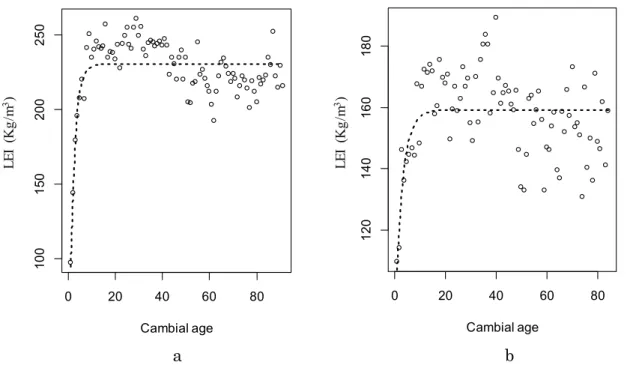
Figure 1.1. Distribution of forest stand composition in France (IGN 2016) ... 2 Figure 1.2. Forest resources and production of softwood and hardwood timber in France (Ministère de l’Agriculture et de l’Alimentation 2017) ... 3 Figure 1.3. The structure of wood cell wall (Rowell 2012) ... 6 Figure 1.4. Determination of the transition point between juvenile (white) and mature wood (gray) based on (a) The position of the live crown; (b) Cambial age. Transition after 9 years where each sheath of the tree representing 3 years growth. At any stage of tree growth, juvenile wood is produced at cambial age of 9 years and mature wood is produced after (arrow); (c) Cambial age. Shown schematically for transition age of 9 years for a slow-grown and a fast-grown tree; (d) Stem diameter (Meinzer et al. 2011). ... 7 Figure 1.5. a) Diagram of rotary peeling b) Measurement of lathe check depth and interval using SMOF device ...10 Figure 2.1. Samples extraction from the tree and its corresponding measurements ...17 Figure 2.2. Specimen preparation for the measurement of radial variation of wood properties ...17 Figure 2.3. Measurement of dynamic MOE using Bing method ...18 Figure 2.4. Extraction of specimens for measurement of longitudinal shrinkage (Ls), radial shrinkage (Rs), and tangential shrinkage (Ts) ...19 Figure 2.5. Modelling the transition between juvenile and mature wood (Grzeskowiak 1997) ...19 Figure 2.6. Radial variation of radial growth component, wood density component and MFA from the pith to the bark as a function of the cambial age of a) Oak and b) Beech. The solid line and the light color area around each solid line represent the mean value and the standard error measured on each ring from all measured tree. ...21 Figure 2.7. Fitting logistic model with the variation of LEI (difference between the density of LW and EW) of a) Oak, and b) Beech ...22 Figure 2.8. Comparison between internal and external wood in terms of average values of mechanical properties. Different letters above the numbers signify statistically different populations, based on posthoc Tukey’s HSD tests (p < 0.05). ...25 Figure 3.1. Measurement of grain angle using Image-J ...33
Figure 3.2. Correlation between MOE static (MOES) and MOE dynamic (MOED) on Oak, and b) Beech ...37 Figure 4.1. Scheme of the factor of correction applied to knot proportion according to the knot position along the veneer. ...45 Figure 4.2. Test arrangement for the 4-point bending test to measure local MOE. ...47 Figure 4.3. Knot proportion of (A) oak veneer and (B) beech veneer according to different peeling thicknesses and veneer position inside the trunk. ...49 Figure 4.4. Mean knot size and frequency of (A) oak veneer and (B) beech veneer according to different peeling thicknesses and veneer position inside the trunk. ...50
List of tables
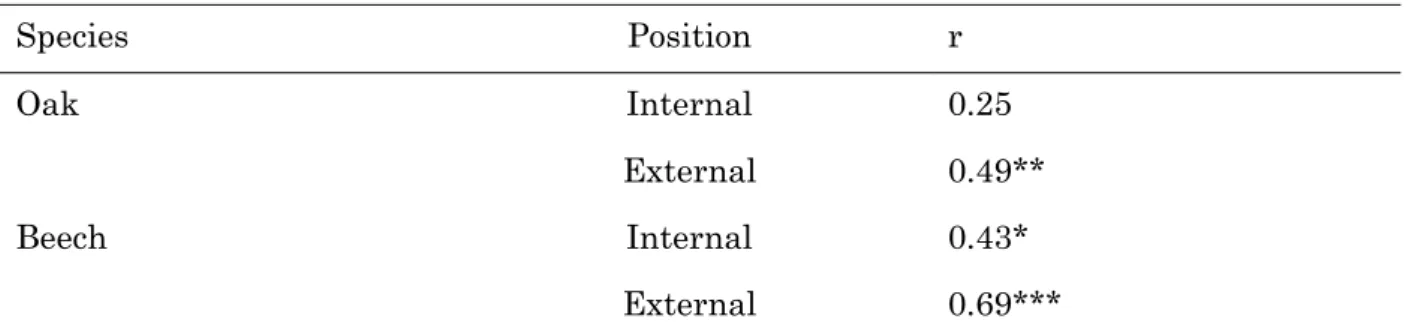
Table 2.1. Demarcation point of juvenile and mature oak and beech wood based on model ...22 Table 2.2. Comparison between internal and external wood in terms of average values of structural and physical properties ...24 Table 2.3. Correlation between wood density and stiffness on the wood recovered from internal and external position of oak and beech ...26 Table 3.1. Mean values of measured wood structural and mechanical properties ...34 Table 3.2. Mean values of the physical properties ...35 Table 3.3. Correlation among measured characteristic on selected samples of beech (lower triangle) and oak (upper triangle). ...36 Table 3.4. The correlation between structural and physical properties of oak (upper triangle) and beech (lower triangle). ...38 Table 4.1. Peeling setup, number of panels, and number of test specimens prepared for the mechanical test of LVL made of secondary quality hardwood. ...46 Table 4.2. Effect of peeling thickness on the mean lathe check depth and lathe check interval on oak and beech veneer surfaces. ...48 Table 4.3. Comparing density, MOE and MOR of LVL made of internal veneer and external veneer. ...51 Table 4.4. Comparing local MOE, global MOE and the specific MOE measured using destructive methods on beech and oak LVL made of different veneer thicknesses. ...52 Table 4.5. Mechanical properties of LVL made of some hardwood species ...53 Table 4.6. Comparing the mechanical properties measured using a nondestructive test according to different veneer thicknesses and loading direction. ...54 Table 4.7. Correlation between lathe check properties and LVL mechanical properties in edgewise (upper triangle) and flatwise (lower triangle) ...55 Table 4.8. The correlation between weighted knot proportion of all of the veneers and the outer veneer with SMOE in the flatwise and edgewise direction. ...56 Table 4.9. The correlation between weighted knot proportion of all of the veneer and the outer veneer with SMOR in the flatwise and edgewise direction. ...57 Table 5.1 Summary of the significant results ...61
List of abbreviation, acronym, and symbols
ɣ : Specific gravity
D : Density
DP : Demarcation point
Em,g : Global modulus of elasticity
EW : Earlywood
Ew : Edgewise
EWd : Earlywood density EWw : Earlywood width
F2 - F1 : The increment of load on the regression line with a correlation coefficient of 0.99 or better (N)
fm : Modulus of rupture (MOR) FSP : Fiber saturation point Fw : Flatwise test
GA : Grain angle G-layer : Gelatinous layer Glulam : Glue laminated timber
HSD : Honestly Significant Difference I : The second moment of inertia (mm4)
l : Length of the test piece between the testing machine grips (mm) l1 : Gauge length for the determination of the local MOE
LEI : Difference between the density of LW and EW LRT : Longitudinal, radial, tangential
Ls : Longitudinal shrinkage LVL : Laminated veneer lumber
LWd : Latewood density LWw : Latewood width MC : Moisture content MFA : Micro Fibril Angle MOE : Modulus of Elasticity
MOED : Dynamic modulus of elasticity MOES : MOE Static
MOR : Modulus of Rupture MOR ns : Model is not significant PVAc : Polyvinyl Acetate Rd : Ring density Rs : Radial shrinkage Rw : Ring width SMOE : Specific MOE
SMOF : Systeme de Mesure d'Ouverture des Fissures SMOR : Specific MOR
T : t-1, where t is the ring number from the pith Ts : Tangential shrinkage
V2-V1 : The increment of displacement of the loading tools corresponding to F2 -F1 (mm)
Vs : Volumetric shrinkage
w2 - w1 : The increment of local deflection corresponding to F2-F1 (mm). XRD : X-Ray Diffractometer
Yi : The value of the first ring
Ym : The final value of the variation curve before the constant value is achieved
List of publication and presentation
Publications
Purba C., Pot G., Viguier J., Ruelle J., Denaud L. (2019) The Influence of Veneer Thickness and Knot Proportion on the Mechanical Properties of Laminated Veneer Lumber (LVL) Made of Secondary Quality Hardwood. European Journal of Wood and Wood Product (Under Review)
Purba C., Dlouha J., Ruelle J., Fournier M. (2019) Wood properties of suppressed-growth oak and beech: The radial variation and the impact on the physical and mechanical properties (Project article)
Purba, C. Y. C., Noyer, E., Ruelle, J., Dlouhá, J., Karlinasari, L., & Fournier, M. (2015). Growth stresses in old beech poles after thinning: distribution and relation with wood anatomy. Journal of the Indian Academy of Wood Science, 12(1), 37-43.
Husein, I., Sadiyo, S., Purba, et al. (2014). Electrical properties of Indonesian hardwood case study: Acacia Mangium, Swietenia Macrophylla and Maesopsis Eminii. Wood Research, 59(4), 695-704.
Presentation
Radial variation of wood properties on hardwood recovered from thinning, Poster presentation at Journées Scientifiques Du GDR 3544 Sciences Du Bois 2018, Cluny, France.
The mechanical properties of laminated veneer lumber (LVL) made of secondary quality oak and beech: the effect of veneer thickness. Poster presentation at wood conference on timber engineering (WCTE) 2018 Seoul, Republic of Korea.
Mechanical Properties of Laminated Veneer Lumber (LVL) Made from Secondary Quality Oak and Beech, Poster presentation at Journées Scientifiques du GDR 3544 Sciences du Bois 2017, Nantes, France.
Characterization and Modelization of Mechanical Properties on Free Defect Hardwood, Poster presentation at Séminaire Annuel Ecole Doctorale RP2E 2017, Nancy, France Qualification, Characterization and Valorization of Secondary Quality Beech from Thinning, Poster presentation at Journées Scientifiques Du GDR 3544 Sciences Du Bois 2015, Clermont Ferrand, France.
1
General introduction
1.1. Overall context of the study
Hardwood dominates not only the standing stock but also the surface area of the French forests. As opposed to available forest resources, wood harvested and timber produced are dominated by softwood resource due to the lack of tested practices and information about the quality of hardwood. On the other hand, the new forest management system with intensive silviculture tends to produce secondary quality hardwood that is not suitable to be used directly as a construction material since they contain high proportions of defects. In addition, due to climatic risk mitigation and to the market demand in industrial wood products and fuelwood, there has been a shift toward harvesting trees much younger than in the past, and an increase in the utilization of small trees that are removed during thinning operations. Improving the added-value of these abundant hardwood with secondary quality is essential. The presence of various wood defects such as knots, grain deviation, juvenile wood, and reaction wood restrict the utilization of secondary quality hardwood as a material for construction. To achieve a better valorization of small and suppressed growth hardwood trees, it is important to have a better understanding regarding the variation of wood properties. The valorization of this resource as a structural material also requires optimization of its mechanical properties through the reconstitution into an engineered wood product such as laminated veneer lumber (LVL). LVL is a wood-engineered product made of veneers that are glued together with the grain orientated mainly parallel to the panel length. LVL is commonly used for structural and nonstructural applications such as flooring, furniture, and construction. Compared to solid wood, the production process of LVL allow homogenization of resource defects, thus an improvement for mechanical properties and dimension stability. Moreover, LVL is available in a large dimension and can provide higher stiffness and strength than solid wood.
1.2. Hardwood vs softwood: Paradox of French forest resources and
timber production
Based on the plant reproduction and the wood structure, trees are divided into hardwoods and softwoods. Hardwoods are mostly deciduous trees that shed their leaves during the autumn and winter. The hardwoods are angiosperms, which means that their seeds are enclosed in the ovary of the flower. From an anatomical point of view, hardwoods are porous because they contain vessel elements. Hardwoods have a more complex structure than softwood as they have a greater number of cell types.
On the other hand, softwoods mostly have needle like leaves which are evergreen. Botanically, softwoods are gymnosperm meaning that the seeds are not enclosed in the ovary
2
of the flower. An important similarity in the anatomy of hardwood and softwood trees is that when they reached maturity, the cells died even in the sapwood. The only cell remaining alive that can be found on both softwoods and hardwoods are known as parenchyma.
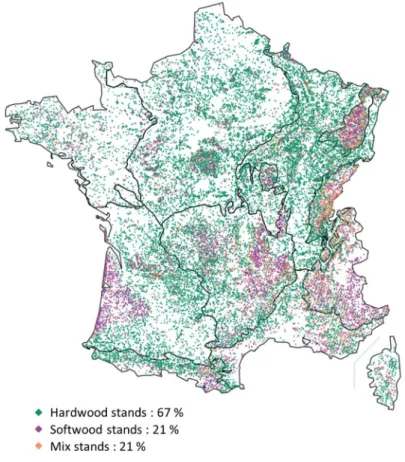
France has the largest hardwood forest in the European Union, where the forest resource is mainly composed of softwoods (FAO 2015). Figure 1.1 illustrates that 67% of the French forest area is covered by hardwood species, which is the equivalent of 9.9 million hectares. Latest forest inventory data shows that the hardwood standing stock is almost two times higher than the softwood, with the hardwood volume at about 1.725 million m3 whereas softwood at around 971 million m3 (IGN 2016).
Figure 1.1. Distribution of forest stand composition in France (IGN 2016)
Two hardwood species, namely oak and beech, already represent 42 % of total France standing stock which includes both hardwood and softwood species. Oak dominates by 31 % and beech by 11% of total volume (IGN 2016). While the volume of standing hardwoods has continued to increase over the last 25 years, there is a decline in the harvest of hardwoods and they are becoming less and less used in the field of wood construction. Figure 1.2 describes the paradox between the availability of wood in the forest and the timber harvested in France.
3
Figure 1.2. Forest resources and production of softwood and hardwood timber in France (Ministère de l’Agriculture et de l’Alimentation 2017)
If this resource in the upstream is not found in the downstream, it is not because of lack of availability, processing technology, or the quality of French hardwoods but because of low demand for hardwoods. All specialists and professionals agree that the current market does not solicit and encourage the use of hardwoods sufficiently. As an indication, in the field of construction 95% of the sawn timber used is softwood species, compared with only 5% of oak. As such, in the field of construction, glued structural elements feed a market of over €1100 M. At the same time, demand for French hardwoods from China continues to increase but remains in the form of roundwood (Ministère de l’Agriculture, de l’Agroalimentaire et de la Forêt 2016). The construction sector remains far from the dominant market in Europe in the use of solid wood, and it is undergoing major changes under the constraints of sustainable development. For this reason, the French government has initiated several research projects to develop the product and the innovative solution to valorize local hardwood resources in the construction sector.
1.3. Wood quality
Mitchell (1961) explained the quality of wood as a result of the physical and chemical characteristics of a tree or its parts which enabled it to meet the properties required for different end products. Wood quality is very much related to perception and is therefore difficult to measure. For example, at various levels of the production of wood-based products, there are different perceptions of good quality wood. For forest managers, wood quality is related to stem diameter, stem form, growth rate, and tree resistance to diseases. For sawn timber production, the quality of wood can be associated with defects, size, and straightness. In the pulp and paper industry, the chemical composition is an important factor that influences pulp yield and quality. Accordingly, in the end, consumers have a perception of the quality of wood that depends on the end use because each final product has a unique set of requirements.
Wood produced by hardwood trees such as oak and beech can be used in various types of applications. But compared to softwoods, hardwoods have a lower proportion of stems than softwoods. For example, the proportion of stems for spruce is about 90% while beech is only about 50% (Pöhler et al. 2006). In addition, due to the presence of red hearth on beech, there are a large number of beech fall into class C (Huss and Manning 2003; Petráš et al. 2016). The color of the wood is also important for end users, thereby affecting the prices.
0% 20% 40% 60% 80% 100%
Forest surface Standing stock
volume production/yearForest Volume logHarvested productionTimber
Hardwood Fir/Spruce Pinus
4
High-quality roundwood is mainly used as a raw material for veneer, whereas some of the secondary quality of wood can be used for sawn wood and the remainder used for firewood, particleboard, fiberboard, and pulp and paper. High quality oak is easy to work with but the relatively hard to find (Croisel and Collet 2016). Hardwood resources are undoubtedly dominated by secondary quality wood (Luppold and Bumgardner 2003).
Clearly, it is the final use that determines the characteristics of the timber required and therefore the quality of the material. In the production of wood for structural applications, available dimensions, dimensional stability, and mechanical performance are important for ensuring good performance and safety. These properties are controlled by the wood structures at the cellular level. There are numerous internal and external factors influencing the quality of wood.
1.4. Factors affecting the wood quality
Macdonald and Hubert (2002) classified the factors affecting wood quality into three categories: differences in genetics, location factors, and silvicultural practices. Selection of genotypes for seed and breeding populations based upon diameter, height, and stem traits directly affect the quality of wood produced. Such genetic characteristics are moderate to highly heritable. Tree adaptation to the environmental condition like well drained soils, good fertility, and a low exposure results in increase of the volume growth and reduces the risk of damages due to wind exposure (Johnson and Gartner 2006; Cherry et al. 2008).
Indeed, silvicultural practices such as initial spacing, thinning and pruning also influence the wood quality. Larger initial distances between trees reduce the competition with adjacent trees and therefore increase the access to light and nutrients. Consequently, previous studies show that the initial distance correlates positively with the stem diameter, ratio of the live crown and crown diameter (Fabris 2000; Briggs et al. 2007; Hein et al. 2008). Thinning, another silvicultural practice aimed to reduce tree competition by removing some low quality trees, before the crown enclosed has the same effect as the initial distance. Thinning after the crown enclosed, however, allows the production of knot free wood at the lower part of the stem (Macdonald and Hubert 2002). Pruning, removal of three branches, reduces the knot on the stem surface. In addition, some studies also suggest that pruning accelerates the transition from young to mature wood (Briggs and Smith 1986; Macdonald and Hubert 2002).
1.5. The wood characteristic affecting the mechanical and physical
properties
Wood density
Wood density is widely regarded as one of the most important wood quality characteristics, having a major effect on both yield and quality of fibrous and solid wood products (Panshin and Zeeuw 1980; Zobel and Buijtenen 1989). Wood density influences wood physical and mechanical properties. Generally, wood with higher density is associated with higher mechanical properties. But high wood density also leads to higher shrinkage and swelling. In many cases, high density, particularly in hardwoods, is also known to be a problem in wood gluing. The cell wall density is more or less constant, the variation of wood density is mainly regulated by the amount of open spaces in its structure, i.e., lumen size of tracheids
5
or fibers, voids on the cell wall and the occurrence of vessels in hardwoods. There are only a few studies on the effect of wood density on the mechanical and physical properties of oak and beech. However, the results of these studies are inconsistent from one study to another (Polge 1973; Cibecchini et al. 2016).
Generally, in oak, there is no close relationship between density and mechanical properties (Nepveu 1990; Neusser et al. 1975; Zhang and Zhong 1992). For sessile oak, low density is generally considered as an indicator of high quality wood (Polge 1973). Accordingly, higher wood density causes problems as it tends to shrink and swell more than the lower one thus results in more significant drying defects (Nepveu 1981; Zhang et al. 1994a).
Growth ring
The growth ring is a collection of cells produced in the same period and composed of two parts which are called earlywood and latewood. Earlywood is formed at the beginning of the growing season while latewood is formed during the latter growing season. In the temperate forests, earlywood formed over spring season whereas latewood over summer. There are two main types of growth rings structure in hardwood species, which are ring porous and diffuse porous. For ring porous woods, the transition between earlywood and latewood is abrupt where the vessels number and diameter is lower in latewood. In contrast, the transition of vessel number and diameter from early to latewood is gradual in diffuse porous woods. It is, therefore, more challenging to separate earlywood from latewood in the case of diffuse porous wood.
Previous studies on oak show that wood density is positively correlated with growth components such as ring width. This means that rapid growth is favorable for obtaining high density wood (Nepveu 1990; Zhang et al. 1993, 1994b; Guilley et al. 2004). An increase of growth ring width in ring porous species such as oak is generally associated with higher latewood percentage, denser earlywood and latewood, and consequently higher mean ring density (Zhang et al. 1993). On the other hand, for diffuse porous hardwoods such as beech and maple, Hakkila (1989) reported that the variation of the ring width hardly affects the variation of wood density. Nevertheless, a recent study by Bouriaud et al. (2004) shows that the correlation between wood density and ring width was quite low (r = - 0.139) but statistically significant. Therefore, the variations of wood density can be difficult to understand, since it is not a single property but a combination of several ring components such as earlywood and latewood densities, and the proportion of latewood.
Microfibril Angle (MFA)
The cell wall of wood is mainly constructed by three regions, which are middle lamella, the primary wall, and the secondary wall as described in Figure 1.3. Each region is mainly composed of crystalline cellulose (microfibrils), amorphous hemicellulose and lignin. The adhesion of the individual cells is ensured by the middle lamella which is primarily made up of pectin and lignin. The primary wall consists of randomly oriented cellulose microfibrils. All individual microfibril is inclined around 00 -900 relative to the long axis of the cell. The secondary wall, on the other hand, is more regular and parallel. The secondary layers are divided into three different layers called S1, S2, and S3. The S2 layer is the most crucial layer as it is the thickest layer accounts for 75 to 85% of the wall thickness which makes the most
6
significant contribution to the overall properties of the cell wall. The S2 is characterized by high lignin content and low microfibril angle (5° to 30°).
Figure 1.3. The structure of wood cell wall (Rowell 2012)
In addition to wood density, MFA, i.e. the microfibril angle of the S2 layer of the secondary wall, is also considered as a key variable explaining the numerous variations in physical and mechanical properties of wood (Cave 1968; Yamamoto and Kojima 2002; Rowell 2012). Lichtenegger et al. (1999) reported that the MFA variation observed from pith to the bark was generally higher in the softwood species like spruce and pine than in the hardwood species like oak and beech. For softwood species like black spruce, the MFA alone explains 72% of the MOE variation, while the combination with wood density increases it to 90% (Alteyrac et al. 2007). As a consequence of a smaller MFA variation on beech and oak, MFA would only marginally affect the mechanical and physical properties of the two hardwood species.
1.6. Wood defects and abnormalities: Relationship with wood
characteristic, mechanical properties and physical properties
Grain angle
Due to the highly anisotropic nature of wood, a small misalignment between the fiber direction and the longitudinal axis of a wood piece can lead to significant changes in the mechanical properties of wood. This misalignment, referred to as grain angle, can result either from the way the wood is cut from the log or from the natural spiral along the life of the tree. The natural spiral grain is caused by the internal stresses in the tree including the geotropic response and the environmental conditions like winds (Harris 1969). High grain angle on timber induces lower mechanical properties (Pope et al. 2005; Brännström et al. 2008; Viguier et al. 2015, 2017a). In addition, high grain angle also causes warping and twisting of the wood during the wood drying process (Harris 1969). Previous studies have reported low variation of grain angle on oak and beech (Birot et al. 1980, Guilley et al. 1999).
7
Knot
Wood knots are remnants of branches. It appears as round and brown pieces of wood in flatsawn timber and can be cut along the length in quarter sawn timber (known as spike notes). Knots can be classified into loose knot or tight knot. Loose knot are formed when a dead branch is embedded in the forming growth ring. Tight knot, on the other hand, is formed by a living branch.
Knots are the single most important defect related to the mechanical properties. The strength reducing effect of knot is influenced by the form, size, number, position of knot, and the load subjected. Grain angle is also the main reason why knots are considered as the most strength reducing defects (Viguier et al. 2015, 2017a). The fiber disturbance around a knot rather than the knot itself often causes the failure. Loose knots generally disturb the grain angle less than tight knots (Forest Product Laboratory 2010).
Juvenile wood
Juvenile wood is the wood located in the area close to the pith created at the beginning of the radial growth that can be characterized by a large gradient of wood properties and relatively lower mechanical properties compared to mature wood (Moore et al. 2009; Zobel and Sprague 2012). Juvenile wood is not only characterized by inferior wood properties compared to mature wood, but it is also often associated with a higher degree of knottiness (Panshin and Zeeuw 1980). The presence of juvenile wood causing problems such as warping, excessive shrinking or swelling, and fuzzy grain when sawing, veneering, and drying the wood. Intensive forestry tends to increase the proportion of juvenile wood relative to the mature wood that results in reduced lumber strength, and a decrease of pulp yields.
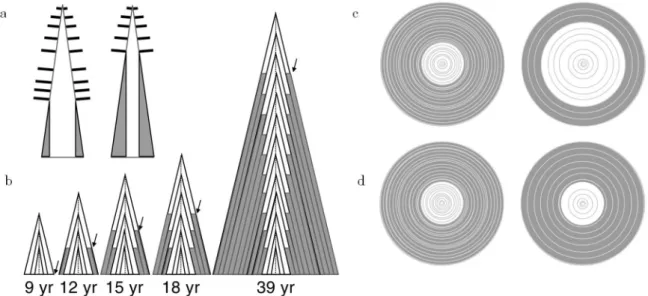
Figure 1.4. Determination of the transition point between juvenile (white) and mature wood (gray) based on (a) The position of the live crown; (b) Cambial age. Transition after 9 years where each sheath of the tree representing 3 years growth. At any stage of
tree growth, juvenile wood is produced at cambial age of 9 years and mature wood is produced after (arrow); (c) Cambial age. Shown schematically for transition age of 9 years for a slow-grown and a fast-grown tree; (d) Stem diameter (Meinzer et al. 2011).
8
There is no universal position where wood properties reach a constant value. The changes of wood properties are gradual from the pith to the mature wood where it reaches a relatively constant value. This constant value and its pattern themselves highly varied between wood properties, trees, and growing sites (Cown et al. 1991; Fabris 2000). As a consequence, the separation point between juvenile and mature wood also vary between species, the method used, and the characteristic under consideration (Zobel and Sprague 2012). Several mechanistic hypotheses on the location of juvenile wood are existing and are based on the position of the live crown, cambial age or by diameter as described in Figure 1.4 (Meinzer et al. 2011).
The number of rings and distance from pith have been used to separate the juvenile from mature wood. The identification was based on visual assessments on the pattern of latewood percentage, densitometry, fiber or tracheid length, and microfibril angle from the pith to the periphery of the trunk (Cown 1973; Shiokura 1982; Abdel-Gadir and Krahmer 1993; Fabris 2000; Larson et al. 2001; Mansfield et al. 2009). There have been some reports on the variation of wood properties and the juvenile wood of beech and oak (Helińska-Raczkowska and Fabisiak 1991; Helińska-Raczkowska 1994; Guilley et al. 2004; Bouriaud et al. 2004).
Reaction wood
Trees control the spatial position of their axes (stem or branches) by generation of asymmetrical stress (Fournier et al. 1994; Clair et al. 2013). Asymmetry of maturation stresses induces a bending moment which maintains (growing branches) or corrects (accidentally tilted stem) the spatial position of axes (Alméras et al. 2006). To achieve an important bending moment, trees are pushed to produce an unusual level of maturation stresses. Tissues with the unusual level of maturation stresses is called reaction wood. While hardwood trees generate highly tensile stressed tissues called tension wood on the upper side of leaning axes, conifers produce so called compression wood on the lower side of leaning axes (Fang et al. 2008; Abasolo et al. 2009). In many species of hardwoods such as beech, poplar, oak and chestnut, tension wood contains fibers with a special morphology and chemical composition due to the development of gelatinous layer (Fang et al. 2008; Clair et al. 2010). This layer usually used as a tool to identify the presence of tension wood in hardwoods.
Occurrence of reaction wood is most often associated with branches or tilted trees. However, it is also frequently reported in straight stems in a number of species including Beech (Gartner 1997; Washusen et al. 2003). The presence of reaction wood generally reduces the quality of wood products. At the tree level, the presence of tension wood increases the log end cracks in hardwood as the gradient of stress in the stem periphery increase in the case of hardwood. Moreover, tension wood also associated with higher longitudinal shrinkage and lumber twisting. For some hardwood species, the wood density of tension wood is higher than normal wood which is associated with the thickening of cell wall by the gelatinous layer (Jourez et al. 2001; Christensen‐Dalsgaard et al. 2007; Ruelle et al. 2007). Despite this, the MFA of tension wood is generally lower than that of normal wood (Clair et al. 2006).
The literature studies show contrasting results on the effect of thinning on the growth stress level on tree periphery (Evans and Jackson 1972; Polge 1981; Ferrand 1982; Mitchell 2000).
9
Nevertheless, our recent study on the growth stresses in old beech poles shows that there was no effect of thinning on the value and intensity of the growth stress (Purba et al. 2015). On the other hand, our study also demonstrated the positive correlations between the proportion of gelatinous layer and the growth stress index. Furthermore, a negative correlation was found between the growth stress index and the vessel proportion which was due to the decrease of vessel frequency.
1.7. Secondary quality hardwood and its potential for structural
application
High-quality hardwoods for furniture and veneers generally come from natural forests or traditional silviculture in semi-natural forests. Such forests cannot produce high quality wood without also producing a significant proportion of low quality wood. At the same time, new forest management systems based on intensive silviculture tend to produce wood with lower quality. In addition, in order to mitigate climate risks and to fulfill the market demand for industrial wood products and fuelwood, there has been a shift towards harvesting much younger trees than in the past and using smaller trees that are removed during thinning operations. In addition to the small log dimension, this low quality wood contains various wood defects including the high presence of knots, grain deviation, juvenile wood, and growth stress which are restricting its utilization as structural materials.
Even with the latest sawing technologies, the production of sawn timber from low quality wood has shown persistent problems related to log recovery rate, wood drying, stability, durability, appearance quality, and profitability (Leggate et al. 2000; Washusen et al. 2009; Blackburn et al. 2011; McGavin et al. 2014). Therefore, the valorization of this resource as structural material requires better knowledge of the wood properties and improvements of the mechanical properties through the reconstitution into engineered wood products in the form of glue laminated timber (Glulam), laminated veneer lumber (LVL), or cross laminated timber (CLT). These three kinds of engineered wood product are the main products used for the construction of the modern high rise timber building.
Multi-storey timber construction offers an attractive solution to meet the rapidly growing human population and the growing number of people living in the cities. The modern constructions are dominated by steel and reinforced concrete, but these materials are non-renewable resources and consume high amounts of energy while also generating a lot of carbon emissions. In recent years, multi-storey wood building has gained global attention. The government of some countries such as Japan even enact a law in order to promote large wooden building (Inoue et al. 2018). Other countries like Canada and France also actively promote the development of tall timber building (Ministère de l’Agriculture, de l’Agroalimentaire et de la Forêt 2016; Mohammad et al. 2018).
Apart from the high recovery rate wood processing like fiberboard and particle board, the processing of low quality hardwood into veneer shows a high recovery rate especially compared to the conversion into sawn timber (McGavin et al. 2006, 2014; Hopewell et al. 2007). Sawn products are used to make CLT and Glulam, while veneers are used to make LVL. This means that lower quality hardwoods will be better converted to LVL where the biomass will be optimized. Compared to solid wood, LVL has several advantages: it has greater dimensional stability, can be manufactured in large dimensions, contains fewer wood
10
defects as it is dispersed during the manufacturing process, and therefore provides higher mechanical properties.
LVL is made of veneer glued together by adhesives. However, unlike plywood where the layers are perpendicular, LVL veneer layers are mainly parallel to the grain direction. LVL is suitable for both structural and non-structural applications. Structural applications of LVL include headers and beams, roof rafters, and long-span trusses whereas non-structural applications include door, window frames, and furniture components.
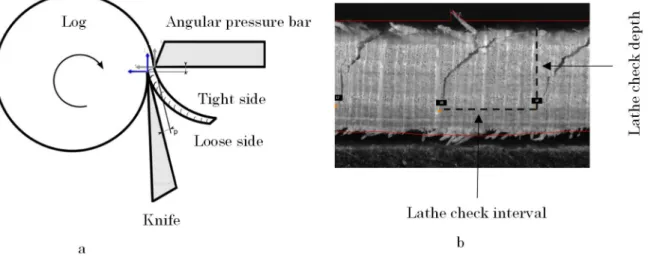
The mechanical properties of LVL are affected by the quality of its components, which are veneers and adhesives (Daoui et al. 2011; Pot et al. 2015; Viguier et al. 2017b, 2018). During the veneering process, the wood tends to split along the grain. This splitting, referred as lathe check in Figure 1.5, occurs due to the tension force of the lathe knife which pulls the veneer away from the peeler block and flattens the veneer from its natural curvature (DeVallance et al. 2007). In addition to the presence of knots on the surface of the veneer made of secondary quality wood, the formation of lathe checks on the loose side of the veneer surface caused by the peeling operations also defines the veneer quality (Thibaut 1988).
Figure 1.5. a) Diagram of rotary peeling b) Measurement of lathe check depth and interval using SMOF device
Thicker peeling thickness generally leads to deeper lathe checks and larger lathe checks interval (Denaud et al. 2007; Pałubicki et al. 2010). This is one of the reasons why the thickness of the veneer shows some influences on the mechanical properties. It is also generally accepted that a lower veneer thickness distributes defects better and consumes more adhesives, which leads to higher mechanical properties (Ebihara 1981). Nevertheless, the results of previous studies have shown conflicting results (Schaffer et al. 1972; Hoover et al. 1987; Kilic et al. 2006; Daoui et al. 2011; Rahayu et al. 2015).
The use of thicker veneer for the manufacture of LVL will help to reduce the glue consumption, shorten the production time and ultimately increase the profitability. In more recent studies on LVL made from hardwood species, it has been reported that increasing veneer thickness causes only slight weakening on the MOE and MOR of the LVL (Daoui et al. 2011; Pot et al. 2015; Rahayu et al. 2015). Pot et al. (2015) further state that increasing veneer thickness influences mechanical properties by lowering the shear modulus of LVL. The report of the authors cited, however, is only based on numerical studies and has not yet been clarified on a large number of experimental measurements.
11
1.8. Objectives of the PhD
The French forests are dominated by hardwood in terms of available resource. In addition, low-quality or secondary quality wood is the major part of these resources. Young thinning, top wood and early harvested wood are secondary quality resources that have great potential for high-value applications (Eckelman 1993; Marchall 1995; McKeever 1997; Knudson et al. 2007). Such resources have not been sufficiently exploited and have been widely used only for firewood and composite wood including fiberboard and particleboard. Finding an alternative way to use these abundant resources is therefore essential.
Secondary quality hardwoods are not suitable to be used directly as a construction material as they contain various defects. The use of this resource as a structural material requires a better understanding of its wood properties and an optimization of its mechanical properties. Based on the problems mentioned above, this PhD thesis was aimed to:
1. Better understand the wood properties of secondary quality oak and beech which are the two most important hardwood species in France and understand how to use this material based on the measured parameters related to wood quality.
2. Understand the relationship among measured parameters related to wood quality and their influence on the wood physical and mechanical properties in order to find an optimal utilization for structural application.
3. Optimize the properties of a chosen final product, i.e., LVL based on the wood properties previously measured, veneer thicknesses, and knottiness.
This PhD thesis consists of 6 chapters. The first chapter presents the context and state of the art concerning the French forest, wood production, wood quality, wood properties, veneer quality, and LVL. Chapters 2, 3 and 4 provide the results in the form of a set of draft articles. The second chapter discusses the radial variation of wood properties from the pith to the bark. The third chapter establishes the relationship between the structural properties of wood and its physical and mechanical properties. Chapter four explains the influence of veneer thickness and the proportion of knots on the veneer surface in relation to the mechanical properties of LVL. In chapter five, all the results explained in the previous articles are discussed and the conclusion and perspectives are presented.
15
Radial variation of wood properties of hardwood
recovered from thinning
2.1. Introduction
Beech and oak are the two most abundant hardwood species in Europe and particularly in France (IGN 2016). The even aged beech stand is normally harvested around 100 - 140 years while oak around 150-250 years (Pardé 1978; Von Wühlisch 2008; Schall et al. 2018). New forest management systems based on intensive silviculture, however, commonly favored shorter rotation through the use of faster growing breed that typically produce lower wood quality (Zell et al. 2004; McLean et al. 2016). In addition, there has been an increase of the utilization of wood from young trees removed during the forest management practice. During the development of the tree stands, the number of trees per hectare is often reduced, thus allowing trees with a higher potential to grow faster thanks to the increase of space and a better access to nutrients, water and sunlight. This operation, called as thinning, involves felling many young and small diameter trees that may contain high proportion of juvenile and tension wood. Consequently, due to its smaller diameter, higher knottiness, and higher proportion of juvenile and tension wood, the wood removed from thinning generally categorized as low quality wood. These characteristics are limiting the utilization of this material. Therefore, finding an alternative use of these abundant resources is essential as they have been insufficiently explored and commonly sold for firewood and pulp industry. To achieve a better valorization of the wood issued from small and suppressed broadleaved trees, it is important that the wood properties and its variations are better characterized.
Juvenile wood, the wood located in the region close to the pith created at the beginning of the radial growth, can be characterized by a large gradient of wood properties and relatively lower mechanical properties compared to mature wood or outerwood (Moore et al. 2009; Zobel and Sprague 2012). It has been less described in hardwoods and in semi-natural forests of long cycles (120-220 years) as oak or beech. There is no universal position within a stem at which wood properties reach a quasi-steady state value; the progression from juvenile and mature wood is usually gradual, and the steady-state values as well as the pattern themselves can vary between wood properties, as well as between individual trees and sites (Cown et al. 1991; Fabris 2000). The separation point between juvenile and mature wood is depended on the species, the method used, and the characteristic under consideration (Zobel and Sprague 2012). There are several mechanistic hypotheses on the location of the juvenile wood which are based on the position of the live crown, cambial age or by diameter (Meinzer et al. 2011).
16
Number of rings and distance from pith has been used to separate the juvenile from mature wood where the identification was based on visual assessments of latewood percentage, densitometry, fiber or tracheid length, and micro fibril angle (Abdel-Gadir and Krahmer 2007; Cown 1973; Fabris 2000; Larson et al. 2001; Mansfield et al. 2009; Shiokura 1982). Consequently, the separation point between juvenile and mature vary according to the wood properties under consideration.
In the present study, beech and oak represents two type of ring distribution in hardwoods i.e. ring-porous and diffuse-porous. In the ring-porous hardwoods the changes of basic density are influenced by ring width, while basic density of diffuse-porous hardwoods is almost independent of ring width. From the standpoint of wood density, juvenile wood is poorly delimited if ring-porous hardwoods have vigorous growth, but it is clear in diffuse-porous hardwoods in all cases (Fukazawa 1984).This study aimed to understand the radial variation of wood properties in beech and oak remove during thinning operation. The properties of cell wall material (specifically MFA) and the amount of cell wall (density) both affect the mechanical properties of wood (MOE longitudinal). The microfibril angle (MFA), earlywood and latewood density, and ring width were measured from the pith to the bark. As the final utilization of this wood is for the structural purpose, it was interesting to understand the effect of different wood radial position on the wood mechanical properties. We divided the sample into two categories based on the radial position inside the trunk. The first category called internal originated from the position nearest to the pith while the second category from the nearest position to the bark. The wood density, MOE, and shrinkage of both radial positions were compared.
2.2. Materials and methods
Wood material
The wood material used for the present study were beech (Fagus sylvatica), and oak (Quercus petraea) issued from a mixed forest stand in Lorraine (48.893622 N, 6.741478 E), Grand-Est region, France. Trees were removed during a thinning operation and corresponded therefore to suppressed trees. Five trees per species were cut. Oak ages ranged between 61 and 90 years old while beech ages ranged between 57 and 84 years. In total, the round wood material comprised of 20 logs of 150 cm long with diameters between 21 and 30 cm. The extraction of samples from the tree is described in Figure 2.1. Two logs of 2 m in length were cut from the upper part of the trunk and generally contained knots. Log grading using a visual method based on EN 1316 classified the round woods into the grade C and D based on logs diameter and the presence of knot.
17
Figure 2.1. Samples extraction from the tree and its corresponding measurements
Measurement of radial growth component using X-ray
3 cm-thick disc was extracted from the central part of each log (part c) as described in Figure 2.1. A radial strip (2.5 cm x 5 cm, T x L) was cut in a defect-free zone and conditioned during one month at 12% relative humidity at ambient temperature. A radial slice (1 x 0.2 cm2, T x L) was then cut for X-ray micro-densitometry measurements as described in Figure 2.2. Using the CERD software, the limit between two adjacent rings were manually assigned as described in Figure 2.2. Each ring was divided into 20 intervals of equal length, with each representing 5% of the ring's width. The mean density was calculated for each interval. More details of the microdensitometer analysis are explained in Mothe et al. (1998b, a).
Figure 2.2. Specimen preparation for the measurement of radial variation of wood properties
18
Measurement of MFA
The remaining part of the radial strip was then cut in 1-cm thick samples from pith to bark as described in Figure 2.2. The MFA was measured on each ring by using an X-ray diffractometer (XRD) from Oxford Diffraction. The X-ray generator operating at 50 keV/0.8 mA with beam diameter around 300 µm generates CuK_α radiation. To reach the optimum noise, 60 seconds of exposure time was employed. The T parameter was used to calculate The MFA according to Cave’s equation (Yamamoto et al. 1993).
Non-destructive evaluation of wood stiffness
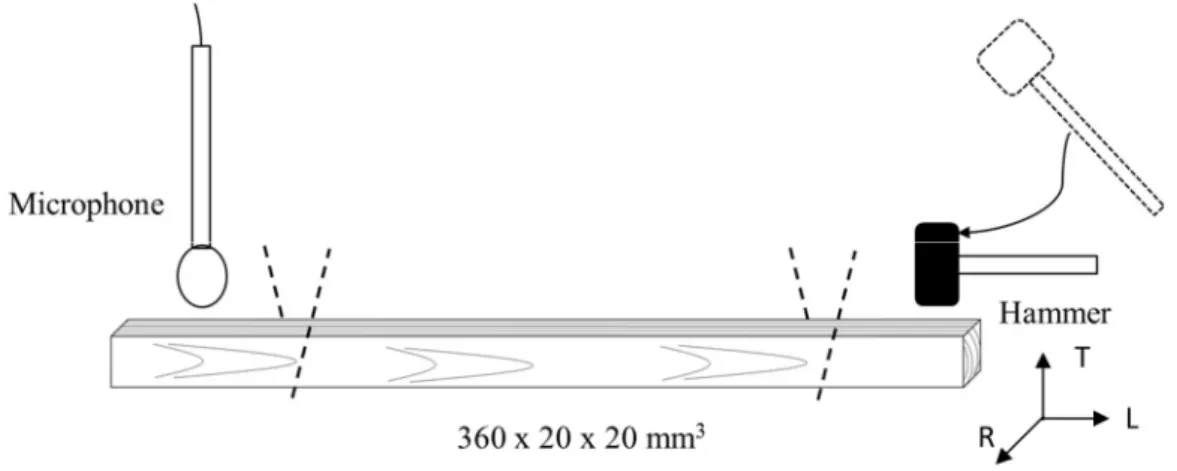
Each log was cut into 8 wood specimens with a dimension of 380 x 20 x 20 mm3 from part b of the log as described in Figure 2.1. These wood specimens were extracted from 8 different positions where 4 specimens were in internal position and the remaining in external position. Specimen for the internal position was extracted from the nearest area to the pith while the specimen for the external position was extracted from the nearest area to the bark. The wood samples were dried into 12% of moisture content. The dynamic MOE was measured using a nondestructive test (Bing) which based on vibration method (Brancheriau and Bailleres 2002; Ruelle et al. 2007). Measurement of vibration is performed by positioning the samples on highly elastic supports. Vibrations are produced by an impact at one end and recorded by a microphone at the other end. The setup for Bing measurement is described in Figure 2.3. The wood density was calculated by dividing their mass by their volume in the air-dry state.
Figure 2.3. Measurement of dynamic MOE using Bing method
Shrinkages
Longitudinal shrinkage was evaluated on the specimen of 50 x 20 x 20 m3 (LRT) while the radial and tangential shrinkage were measured on the specimen of 10 × 20 × 20 mm3 (LRT). The specimens from shrinkage were extracted from the Bing specimen from part b of the log as described in Figure 2.1. The volumetric shrinkage was calculated by using the data of the three-dimensional shrinkage (LRT) measured on two different samples as illustrated on Figure 2.4. The fiber saturation point (FSP) was evaluated using the intersection point of surface shrinkage calculated using radial and tangential shrinkage only.
19
Figure 2.4. Extraction of specimens for measurement of longitudinal shrinkage (Ls), radial shrinkage (Rs), and tangential shrinkage (Ts)
Measurement of physical properties
For the measurement of shrinkage, 70 wood specimens with dimension of 380 x 20 x 20 mm3 were prepared. The shrinkage samples were then cut from these wood specimens. Longitudinal shrinkage was evaluated on the specimen of 50 x 20 x 20 m3 (LRT) while the radial and tangential shrinkage were measured on the specimen of 10 × 20 × 20 mm3 (LRT). The volumetric shrinkage was calculated by using the data of the three-dimensional shrinkage (LRT). The fiber saturation point (FSP) was evaluated using the intersection point of surface shrinkage calculated using radial and tangential shrinkage only. The number of rings was also recorded. The wood specific gravity was calculated as the oven-dry weight of the specimen divided by the volume of the specimen in the saturated condition.
Data analysis
Descriptive analysis such as mean value, standard error and standard deviation were calculated for each measured wood properties. Radial variation of measured properties from the pith to the bark was presented graphically. Radial variation of measured properties from pith to bark was fitted by a logistic model described in Figure 2.5 and Equation 2.1 which is suitable to model a transition between juvenile and mature wood (Grzeskowiak 1997):
Figure 2.5. Modelling the transition between juvenile and mature wood (Grzeskowiak 1997)
Ym= the final value of the variation curve before the constant value is achieved; Yi= the value of the first ring; T= t-1, where t is the ring number from the pith;
τ = the time characteristic of
Ym
Yi
20
the kinetics of the transition from juvenile to mature wood. Using this model, it is assumed that
95% of the variation in measured properties due to age is accomplished.
𝑌 = 𝑌𝑚 − (𝑌𝑚 − 𝑌𝑖) /𝛕 (2.1)
(𝑌 − 𝑌𝑖) = 0.95 (𝑌𝑚 − 𝑌𝑖) (2.2)
As a result T= 3τ and thus t= 3τ + 1.
To evaluate the influence of wood radial position on the wood structural, physical, and mechanical properties, multi-factor analysis of variance (ANOVA) and Tukey’s HSD (Honestly Significant Difference) multiple comparison tests were carried out. ANOVA and Tukey’s HSD were performed at a level of significance of 0.05 using R-software. Furthermore, the coefficient of correlation was analyzed in order to evaluate the relationship between measured parameters.
2.3. Results & Discussion
Figure 2.6 shows radial variation of all measured parameters. Mean values for all samples are displayed together with the standard error. Figures for individual measurements are provided in the appendix A of the PhD manuscript. Juvenile wood of both species, oak as well beech has higher density and higher MFA. Some differences may be however observed between species. In oak, the difference in density is due to high density of earlywood, while in beech, the denser juvenile wood is mainly due to higher latewood proportion. Ring width varies significantly more in oak than in beech.
21
Figure 2.6. Radial variation of radial growth component, wood density component and MFA from the pith to the bark as a function of the cambial age of a) Oak and b) Beech. The solid line and the light color area around each solid line represent the mean value
and the standard error measured on each ring from all measured tree.
To find the limit of juvenile wood, we fitted the logistic model to each parameter measured and assessed if the model and all its parameters were significant. First, we used all data available and in the second run, we used only the data up to 40 years supposing that juvenile transition was finished and that variation in properties we observed were not related to ontogenetic transition but to climate and/or changes in environmental conditions. Figure 2.7 shows the fitting of logistic model with the variation of the difference between the density of LW and EW.
22
Figure 2.7. Fitting logistic model with the variation of LEI (difference between the density of LW and EW) of a) Oak, and b) Beech
Table 2.1 presents the demarcation point or limit of juvenile wood as predicted for each parameter. Considering oak, the best predictor of the juvenile wood limit seems to be the EW width followed by the LEI (difference between the density of LW and density of EW) when data are limited to first 40 years. Definitely, better fits are achieved when data are limited to first 40 years. It’s interesting to note that all parameters do not stabilize at the same time, for example the LW width in oak wood take two much longer to stabilize than EW width. Table 2.1. Demarcation point of juvenile and mature oak and beech wood based on model
DP, Demarcation point of juvenile and mature wood; Rd, Ring density; Rw, Ring width; EWw,
Earlywood width; LWw, Latewood width; EWd, Earlywood density; LWd, Latewood density; LEI, LWd
- EWd; Stars show that model is significant at level 0.001***, 0.01**, and 0.05* whereas ns means that
the model is not significant.
0 20 40 60 80 10 0 1 50 2 0 0 2 5 0 Cambial age a 0 20 40 60 80 1 20 14 0 16 0 18 0 Cambial age b LE I (K g/ m 3) LE I (K g/ m 3)
Species Oak Beech
Data All ring Data ≤ 40 rings All ring Data ≤ 40 rings
Predictor DP R2 DP R2 DP R2 DP R2 Rd 26.06* 0.38 ns - ns - ns - Rw 24.45*** 0.71 23.58*** 0.89 ns - ns - EWw 14.46*** 0.74 17.07*** 0.95 25.50* 0.25 62.78* 0.74 LWw 43.67*** 0.57 17.07*** 0.61 ns - ns - EWd 10.18*** 0.59 13.21*** 0.91 61.22* 0.23 ns - LWd ns - ns - ns - 12.25** 0.54 LEI 10.23*** 0.43 10.48*** 0.92 8.86* 0.2 14.78*** 0.67 MFA 40.80** 0.76 ns - 38.10* 0.69 ns -
23
In case of beech, ring width as well as ring density do not show any clear transition in the juvenile region. The best predictor of the juvenile transition seems to be the LEI. Again, EW width is stabilizes much later than LEI. Considering the MFA, the stabilization comes later than EW width in oak or LEI in beech however the resolution of the MFA measurements was lower (we measured sections of 1 cm) and transition of other parameters (EW width for oak and LEI for beech) comes often between first and second or second and third MFA sample so that we need to measure more samples in the first three cm which was not possible in time because the diffractometer was out of service. It is also interesting to note that while ring density in both species first linearly decreases up to a minimum followed by an increase, MFA does not follow this pattern indicating that the tree may be able to modify both parameters independently.
Several studies have quantified the radial variation of wood properties of beech and oak (Helińska-Raczkowska 1994; Lebourgeois 1999; Bouriaud et al. 2004; Skomarkova et al. 2006; Tulik 2014; Longuetaud et al. 2017). Higher earlywood density on oak juvenile wood indicated the lower porosity on juvenile wood compared with the mature one which is consistent with the literature reporting a higher amount of vessel in mature wood rings of oak (Helińska-Raczkowska 1994; Leal et al. 2006). The ring properties are more or less stable after this point. Furthermore, the demarcation point found in the present work closely corresponds with the one indicated by Guilley et al. (2004) on dominant trees of oak which shows that the ring width decrease from pith to ring 20-25 and increase larger after this point. In addition, other report by Leal et al. (2006) on 40 years old oak also indicated that the vessel dimeter is stabilizing after 15-20 years. Nevertheless, both studies mentioned above were not aimed to determine the separation point between juvenile and mature wood. None of them also had mentioned that their values refer to juvenile or mature wood. For the sake of comparison, the separation point was interpreted based on the descriptive analysis on the graphical data whereas the present study used a model to predict this separation point.
A study on the dominant trees of beech by Bouriaud et al. (2004) shows that the ring density tends to decrease from pith to the bark. Those authors added that the ring width is decreasing from the pith to the cambial age of fewer than 20 years and rise larger up to 4.5 mm after this point which is three times larger than ring width found in this study. The turning point indicated on that work fits well to the demarcation point found for beech in our paper. However, after the demarcation point, the ring width is somewhat stabilized unlike what has been observed in dominant trees which probably related to limited resources of suppressed beech trees. Dissimilar trends of radial variation of oak and beech ring witdh after the demarcation point found between the present work and the literature may be due to the contrast in tree status.
The variation of MFA on oak found in our study was lower compared to the previous study by Lichtenegger et al. (1999) which reported that on oak, the MFA is decreasing from pith to the periphery where the MFA on oak decrease from 200 to 00 after 40 mm of distance from the pith and then stays constant. Moreover, Lichtenegger et al. (1999) also has reported that the MFA on the near pith is 00 and stays constant to the bark which is contradicted with our results. Nevertheless, the variation of MFA on both hardwood was much lower compared
24
with softwood. The MFA of Picea abies varies from 300-00 and the MFA of Pinus sylvestris can even go up to 500 (Lichtenegger et al. 1999).
Variation of structural and physical properties related to wood radial
position inside the trunk
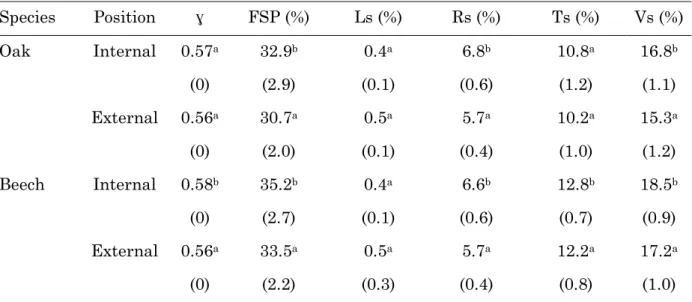
Further analysis on the difference of wood from internal (close to the pith) and external (close to the bark) position are presented in Table 2.2. We compared both position in order to observe the evolution of wood structural and physical properties between the two positions. The wood specific gravity in internal position was slightly higher than external position. The difference was statistically significant at 0.05 level for beech but not statistically significant for oak. Correspondingly, the fiber saturation point was higher in wood from the internal position where the difference was also statistically significant. Furthermore, the volumetric shrinkage along with radial and tangential shrinkage was higher in the internal position. Longitudinal shrinkage showed no significant difference between the two positions.
Table 2.2. Comparison between internal and external wood in terms of average values of structural and physical properties
ɣ, specific gravity; FSP, fiber saturation point; Ls, Rs, Ts, Vs, longitudinal, radial, tangential, and volumetric shrinkage from green to the oven-dry condition. Different letters above the numbers signify statistically different populations, based on posthoc Tukey’s HSD tests (p < 0.05). Values in parenthesis are standard deviations.
The higher values observed for radial and volumetric shrinkage and FSP in the internal position could be related to its higher specific gravity. Previous study on oak shows that wood density has positive correlation with Ts and Vs, negative correlation with Ls, and no correlation with Rs (Deret-Varcin 1983). More recent study on beech also shows positive correlation between wood density and Vs (Gryc et al. 2008a). FSP is important as it shows the point where the mechanical properties increase and the wood volume decrease with the decrease of moisture content below this point (Babiak and Kúdela 1995). Further analysis is needed to explain the variation of the shrinkage and FSP as it is not only influenced by wood density but also affected by the wood structure itself and the extractives content inside the wood (Babiak and Kúdela 1995; Hernández 2007).
Species Position ɣ FSP (%) Ls (%) Rs (%) Ts (%) Vs (%) Oak Internal 0.57a 32.9b 0.4a 6.8b 10.8a 16.8b (0) (2.9) (0.1) (0.6) (1.2) (1.1) External 0.56a 30.7a 0.5a 5.7a 10.2a 15.3a (0) (2.0) (0.1) (0.4) (1.0) (1.2) Beech Internal 0.58b 35.2b 0.4a 6.6b 12.8b 18.5b (0) (2.7) (0.1) (0.6) (0.7) (0.9) External 0.56a 33.5a 0.5a 5.7a 12.2a 17.2a (0) (2.2) (0.3) (0.4) (0.8) (1.0)