Worl
Region Sebasti Institut Latin A Rajah R Transa valuati Jacque Merit R Ronald Basel I "it" wil Bernard Decons Reinha The Em Egmont Book R Deniz K World E Publishld Econo
nal Monetary ian Dullien, Ba tional Suppor America and A Rasiah and Je acting Withou on function f s-Olivier Char Regulation via J. Colombo II and the Str l happen aga d Vallageas structing the rd Schumache mergence of P t Kakarot-Han Review: Why N Kellecioglu Economic Rev hed by the Woomic Rev
Cooperation arbara Fritz an rt and Techno Asia ebamalai Vinan ut Pricing, Pri from the exchrron a the Suitabil rengthening o ain Theory of Co er
Profit and Int
ndtke Nations fail - t view ISSN: 204 rld Economics
view - Iss
: Lessons fro nd Laurissa M ological Upgr nchiarachi cing Without hange functio ity Rules of Capital Req omparative A erest in the M the origins of p 49-3517 s Associationsue 2
om the Euro C Mühlich rading: Evide t Transacting on of financia quirement: T Advantage Monetary Circ power, prospeCrisis for Dev
ence from Dy
g: A case for d al markets
The obstinacy
cuit
erity and pover
veloping Area ynamic Cluste disconnectin y in mistake o rty as? ers in ng the or why 1 24 48 54 67 83 106 118
Regional Monetary Cooperation: Lessons from the Euro
Crisis for Developing Areas?
Sebastian Dullien
HTW Berlin, Germany
Barbara Fritz
Freie Universität Berlin, Germany
Laurissa Mühlich
Freie Universität Berlin, Germany
Abstract
The euro crisis has highlighted the problems of the undertaking of an ambitious regional monetary integration project with only limited economic policy cooperation backing it up. We thus ask what lessons regional monetary cooperation schemes in other world regions can draw from this experience? This paper identifies three aspects as being crucial for the Euro crisis: first, the need for fiscal cooperation, including the enforcement of sovereign state insolvency; second, the need for a mechanism to extend lender of last resort facilities to solvent yet illiquid sovereign member states; and, third, the need for prudent financial regulation at the supranational level. Against this background, the paper analyzes monetary cooperation schemes in Latin America and Southeast Asia, namely the Latin American Reserve Fund and the Chiang Mai Initiative Multilateralization, together with the Asian Bond Markets Initiative. While the euro zone faces the alternatives of either deepening or breaking up, the study reveals that the cooperation schemes in Latin America and Southeast Asia – while less ambitious in scope – show surprisingly stable institutional settings, despite little economic policy coordination underpinning them. However, the euro experience shows that the need for more extensive economic policy coordination increases as financial integration becomes more profound. Key words: euro crisis, regional monetary integration, lender-of-last-resort, intra-regional asymmetries, fiscal policy, financial regulation
1. Introduction
Does the current European sovereign debt crisis put a question mark over the entire project aimed at establishing a common currency among the sovereign states of Europe? Further and more importantly, does it demonstrate a crisis of economic integration in general, with it being inherently vulnerable to failure as long as it is not supplemented by the political unification of its members? And, therefore, should developing countries – who are actively engaged in monetary cooperation schemes in all regions of the world – refrain from participation in such initiatives, in order to avoid themselves ending up in such a crisis?
A widespread consensus with regard to the euro crisis holds that the paucity of fiscal coordination that exists among the sovereign member states constitutes an unstable institutional arrangement for the common monetary area. The survival of the euro as a common currency would, therefore, seemingly depend on decisive steps being taken towards intricate policy cooperation, including a clear shift in fiscal sovereignty from the national to the supranational level. However, the de-nationalization and centralization of not only monetary but also fiscal policies would leave no significant instruments with which sovereign member states could pursue national policies for the enhancement of the economic and social well-being of their citizens.
Such questions remind us of the neo-functionalist approach of Ernst Haas in “The Uniting of
process – one evolving towards an ‘ever closer union’. Haas sought to develop a theory that explained why, once an initial commitment had been made, the forward momentum of integration was inevitable. Endogenous ‘natural spillovers’ were seen as creating incentives to move forward from one form of regional integration to another. From a political economy perspective, he focused on organized economic interests and the pressure they exerted on governments to manage economic interdependence. Successful trade integration, for instance, would create incentives for entrepreneurs engaged in intra-regional cross-border trade to push for monetary cooperation endeavours – such as exchange rate cooperation – as a way to eliminate the disturbances in trade stemming from volatile exchange rates.
Based on the neo-functionalist approach, some scholars went on to argue that if integration dynamics ceased the European project would collapse – colloquially known as the ‘bicycle theory’ (Moravcsik 2005): as the rider slows down or stops, the bike loses its equilibrium and will eventually fall down. In the context of the current euro crisis, by this logic this would mean that unless the member countries move towards further political integration the European integration project is bound to perish. The application of the neo-functionalist approach to regional cooperation projects in emerging areas is obvious: if a lasting equilibrium short of political union cannot even exist in the euro zone, with its creation of a common currency and the European Central Bank (ECB) as the lender of last resort (LOLR) (at least for the private financial sector), then regional monetary cooperation schemes (RMCs) in emerging areas will surely find it even harder to keep the bicycle upright without constant pedalling – that is, without significantly deepening their regional ties in terms of economic policy cooperation.
In this paper, we call into question the validity of the neo-functionalist approach, on the grounds that such a theory may be too simplistic both for the European case (Moravcsik 2005, p. 250) as well as for other
RMCs.1 Rather, to a certain extent we refer to the ‘bicycle theory’ as a framework that may supply key
regarding the institutional arrangement and other requirements necessary for achieving stable and long-lasting equilibrium. We define a regional cooperation and integration scheme as stable when exogenous economic shocks that arise can be absorbed by the institutional mechanisms of the region, instead of resulting in the breakup, scaling back or necessity-driven deepening of the respective form of regional integration.
In the case of the euro crisis, the German government has long argued that it is mainly a fiscal crisis and has hence suggested measures such as the fiscal compact to limit national government’s borrowing beyond what has already been legislated for in the Stability and Growth Pact.2 Against this official German view, we detect a core problem in the incompleteness of the regional LOLR function, posited along the line of de Grauwe’s (2011) arguments. Despite the existence of the ECB and the absence of public or private debt in currency denominations other than the euro, we argue that the lack of LOLR facilities for solvent yet illiquid sovereign member states is deeply intertwined with problems of inefficient fiscal surveillance, on the one hand, and the lack of region-wide oversight and regulation of the financial sector on the other.
What lessons, then, can emerging markets and developing countries engaged in RMCs draw from this crisis? Are there also lessons for the handling of the euro crisis to be learnt from financial crises that have occurred in emerging markets during the last two decades? Various RMCs in Southeast Asia and Latin America have as their aim an increase in the liquidity of member countries. This is especially true for foreign exchange pooling agreements and financial market integration efforts being undertaken at the regional level. The aim of this paper is, therefore, to detect stable institutional settings for specific forms of regional monetary cooperation and integration short of political union, both in the case of European integration as well
1 From a comparative perspective, the idea of a standardized path to increasing levels of regional integration, with predefined
sequencing such as trade integration before financial integration, is, in fact, inadequate when looking at RMCs and integration both in Europe and in other areas of the world. Hence, we will not follow the rationale of the neo-functional approach as such, but rather take from it the perspective of there being moments of institutional equilibrium and stability.
2
as of RMCs among developing countries.3 We first discuss in detail concepts of liquidity provision and LOLR functions – in the cases of both advanced as well as developing economies – and the specific challenges of liquidity provision in the regional context (Section II). Next, we offer a synthesized analysis of the euro crisis (Section III), and analyze the stability of the institutional settings of three regional mechanisms in Asia and Latin America: the Chiang Mai Initiative Multilateralization (CMIM), the Latin American Reserve Fund (FLAR, according to its Spanish acronym) and the Asian Bond Market initiative (ABMI) (Section IV).
2. Liquidity provision and LOLR functions in a regional context
Within monetary approaches to economics, there is wide-ranging consensus about the key relevance of a LOLR for ensuring monetary and financial stability. Since the seminal work of Walter Bagehot (1873) on the emergence of the Bank of England as the first central bank in the modern world, this has been defined as the provision of unlimited liquidity for the banking system at a penalty rate.
However, in the actual provision of unlimited liquidity it is important to distinguish between illiquid and insolvent entities, in order to avoid moral hazard problems and any subsequent distortionary effects on the economy. This has not only been the experience of the recent global crisis, wherein central banks and governments were often forced into providing huge bail-outs and liquidity for banks without being able to make this distinction clearly. The occurrence of enormous financial crises in emerging markets during the 1990s already had revealed the necessity to distinguish between illiquid and insolvent entities. The latter are defined as being unable to serve their obligations in the medium- and long term, even if provided with additional short-term liquidity. The necessity to distinguish between these two concepts is an important lesson from crisis experiences in emerging markets. The case of Argentina shows that falsely treating a case of sovereign insolvency as a temporary liquidity problem actually deepens the problem, by prolonging the possible time to default and by increasing the level of debt. After a series of adjustment programmes which were implemented by the International Monetary Fund (IMF) as pre-condition for international liquidity provision from 1998 on, Argentina defaulted on its external debt at the end of 2001. Having learnt from such experiences, the IMF came out with a programmatic paper that puts forward a clear definition of solvency and liquidity:
An entity is solvent if the present discounted value (PDV) of its current and future primary expenditure is no greater than the PDV of its current and future path of income, net of any initial indebtedness. […] An entity is illiquid if, regardless of whether it satisfies the solvency condition, its liquid assets and available financing are insufficient to meet or roll over its maturing liabilities. (IMF 2002, p. 5)
The distinction between a liquidity and a solvency crisis is vague in many cases because a liquidity crisis will, if not solved immediately, usually lead to rising financing costs and thus to an increase in the present value of debt. Any change in key parameters – especially growth rates, the interest rate and, in the case of foreign exchange-denominated finance, the exchange rate – is immediately reflected in changes in the liquidity and solvency status of the debtor.
From the literature on financial crisis and currency crisis (Obstfeld 1996), we learn that self-fulfilling debt or fiscal crisis is a possible outcome when there are multiple equilibria (Cole & Kehoe 1996). The logic here is simple: for an entity with a moderate, yet not extremely high, level of debt whether it is able to service its debt or not depends on the expectations of market participants. If investors believe that a country in debt is able to service their claims, they accept lower interest rates and the debt may therefore be sustainable. If in the case of a sovereign debtor they believe that the state in question might not be able to service the debt, they demand higher interest rates and the debt becomes unbearable – leading to a default. The catch in these models is that if a third party can guarantee continued access to loans at sensible interest rates,
3
In contrast to traditional Optimal Currency Area (OCA) theory (Mundell 1961, 1963), our aim is not to identify optimality criteria for efficient regional monetary cooperation and integration. While traditional OCA theory weighs the costs and benefits of forming a currency union against the alternative of a flexible exchange rate regime, we aim instead at the identification of both the stabilizing and destabilizing elements of regional monetary cooperation and integration in the context of different forms of cooperation.
expectations will permanently stabilize in the ‘good’ equilibrium and a self-fulfilling fiscal crisis is thus no longer possible. The action of this third party would help in the avoidance of huge costs for the economy, in case of successful crisis prevention.
Another lesson from the experiences of crisis of emerging markets is the one of Southeast Asia: in the Asian crisis of 1997 external liquidity provision by the IMF was clearly insufficient, both in terms of timing and of the conditionality involved – which together caused the deepening of recession and economic depression in the affected economies (Stiglitz 2002). In South Korea in 1997, for example, the IMF commenced activities only one month after the crisis had diffused. In the face of drastically depreciating exchange rates – dropping by more than 80 per cent in one year, as was the case in South Korea – the IMF insisted on continuously low inflation rates that required up to a doubling of short-term interest rates – thus choking off economic growth. The conditions placed upon drawing liquidity had a strong focus on fiscal balances, with a disregard for the negative effects thereof on domestic markets and economic growth. In light of this exposure to sudden stops and strong regional financial contagion, the Association of Southeast Asian nations (ASEAN), together with China, Japan and South Korea, initiated in 2001 regional financial and monetary cooperation in the form of regional swap arrangements intended to provide short-term regional liquidity provision – this was termed the Chiang Mai Initiative (CMI) and later CMIM, which will be discussed in greater detail in due course (see Section IV).
In contrast to the shortcomings in its reaction to the crisis in Southeast Asia, the IMF intervened rather successfully in Brazil in 2002. In this third example of emerging market experience with external liquidity provision, the IMF correctly classified the situation not as a case of clear insolvency but rather as one of temporary illiquidity – with an associated risk of it quickly turning into one of insolvency, due to mistrust of the market by investors. In 2002, such mistrust led to a speculative attack that provoked a currency crisis and a subsequent devaluation of the Brazilian real by more than 50 per cent. The IMF stepped in with a standby credit of US$ 30 billion to be made available over a period of 15 months, which eventually stopped the speculative attack and stabilized the Brazilian currency.
The provision of the LOLR function faces two different sets of challenges at both the domestic and regional levels: First, liquidity provision for the financial system; and, second, for sovereign states. With regard to the first aspect, the question is whether insolvency can be imposed on individual institutions without generating any systemic risks. This is discussed as the ‘too-big-to-fail’ syndrome of large financial institutions that should be adequately addressed by prudential financial regulation. With regard to regional schemes, especially those with a high level of integration, an additional problem is faced in the form of financial institutions with intensive cross-border activities – therein potentially prompting spillovers to other financial systems, while regulation is usually restricted to the national level.
It is equally challenging to maintain an adequate level of liquidity within the public sector (in order to prevent a spillover into a solvency crisis), again an issue relevant at both the domestic and regional levels. The critical importance of public sector liquidity for the stability of the financial sector has come to the forefront of awareness in the current global financial crisis, as well as in the euro zone. Yet, agreement is a long way from being reached over central banks acting as LOLR, especially for governments. It is true that the guiding principles of central banking are clearly shifting away from a narrow orientation towards price stability (through inflation targeting) and towards achieving the overall goal of financial stability (Blanchard et al. 2010; Eichengreen et al. 2011). However, if this includes clearly defined efforts to maintain the liquidity of national governments and involves it being done irrespective of market expectations then it is an issue of great debate (Eichengreen et al. 2011, p. 24). This is not only due to the fear of fuelling inflation by monetizing public expenditures. Given that there is no legal orderly procedure for enforcing bankruptcy rules for insolvent sovereign debtors, both in the regional and international contexts, it might also encourage free-rider behaviour – especially among smaller member states, who are likely both to overspend and to expect a bail-out at the regional level.
In the case of developing economies, LOLR provision is faced with additional problems – as the LOLR functionality of the domestic central bank is beset by severe limitations. These countries are unable, to varying degrees, to borrow abroad in their own currency (see Eichengreen & Hausmann 2005; Hausmann & Panizza 2010). In most developing countries, the net foreign currency debt and the lack of long-term
financial instruments lead to their exposure to balance-sheet effects that increase the risk of currency, debt and to financial crises. The associated risks are exacerbated by the fragility of the countries’ financial markets – caused by their insufficient size and a lack of diversification, capitalization and liquidity in them, as compared with the more advanced financial systems of industrialized countries (Aghion et al. 2009). Financial fragility may only partially be compensated for by the accumulation of foreign exchange reserves. Weaknesses in the financial market undermine economic stability and macroeconomic development, as financial crises are associated with short-term disruptions in economic growth and the long-term loss of economic output (see, for example, Bordo et al. 2009). Typically, financial crises also cause the severe regressive redistribution of wealth and income at both the global and domestic levels, leading to an increase in poverty (Halac & Schmukler 2004). Smaller developing countries in particular lack sufficient scales to enable the development of the mature, diversified and liquid financial markets that would allow them to achieve longer lending maturity and reduce foreign currency borrowing (Borensztein et al. 2008).
The issue of liquidity provision for these countries is thus twofold: on the one hand it is a question of foreign exchange liquidity, and on the other it is one of the restricted scope of the domestic central bank in acting as a LOLR – due to the limited volume of financial contracts that are denominated in the domestic currency. Both aspects are at the heart of the regional cooperation efforts coordinated between developing and emerging market countries. Regional schemes are seen as being supplementary to global and domestic mechanisms of liquidity provision, which appear to be either insufficient or inefficient (Bird 2010). One possibility is to pool foreign exchange reserves among neighbouring countries, to be used as insurance during periods of sudden stops and capital outflows. Even this – in most cases – does not substitute for a ‘full’ LOLR. Undoubtedly, a LOLR in a key international currency would be an effective way to increase
liquidity.4 Another option at the regional level for augmenting the domestic LOLR function would be to
increase the geographical size and reach of the financial systems of the countries in a region, achieved by financial market cooperation and integration and done so as to enhance domestic currency-denominated financial contracts in the region (Panizza 2006). Ceteris paribus, this would lead to an enlargement of the domestic LOLR function, thus reducing the risks attached to currency mismatches.
In the following sections, we analyze the euro crisis as a case of inadequate institutional arrangements – one which is thus confronted with the problem of an incomplete LOLR functionality in the regional context. These inadequate institutional settings are found to be especially challenging with regard to the prevention of the insolvency of financial institutions and states, as well to the lack of enforceability of insolvency for both of the aforementioned entities. Based on this analysis, we study the respective cooperation requirements for RMCs coordinated among developing economies with the aim of increasing international or domestic liquidity.
Based on the theoretical analysis of liquidity provision in the European regional context, and
considering empirical evidence from the experience of both the euro zone as well of developing economies5,
we will focus on:
a) the requirements for fiscal cooperation, including for the ability to enforce sovereign state insolvency;
b) the extension of the LOLR function to solvent yet illiquid sovereign member states; and, c) the requirements for financial regulation at the regional level.
3. The euro crisis
While the euro crisis is often portrayed as being simply a case of sovereign debt crisis, only a small part of the crisis has actually been a solvency issue for each particular national government involved. The spread and depth of the crisis can only be explained by the shortcomings regarding regional financial market
4 On the problems of the global monetary ‘non-system’, as well as its asymmetries with respect to developing economies, see
Williamson (1976) and Mateos y Lago et al. (2009).
5
For a systematic overview on the variety of regional monetary cooperation schemes among developing countries and emerging markets, see Fritz/Mühlich (2012).
regulation, as well as by the inadequate provision of LOLR liquidity. Thus, in essence, the combination of an increasingly deep process of financial integration with an insufficient institutional framework has been at the root of the crisis.6
To understand this argument, one needs to be aware of the specific institutional features of the European integration project and of the European monetary union. Three points are especially important in this regard:
a) First, the EU treaty has a specific ‘no-bail-out’ clause (Art. 125 TFEU). This provision prohibits either other countries or the EU as a whole from taking over the liabilities of other member countries. Such a clause was incorporated at the behest of certain countries who feared that the EU would morph into a transfer union. Moreover, it was believed that this clause would provide incentives for national governments to run prudent fiscal policies, as markets would punish high deficits with higher interest rates. This clause was seen to be credible, as it was believed that the fallout from a default in one country of the euro area could be contained.7 b) Second, the EU treaty prohibits the ECB from directly financing government budgets (Art. 123
TFEU). While the article specifically prohibits the ECB from buying debt instruments ‘directly’ from member governments, there has been a debate about whether this provision also prohibits any large-scale purchases of sovereign debt in the secondary market. In particular, the German government has maintained a position that such purchases would be problematic. Up until the beginning of 2012, the ECB had been careful to emphasize that its limited purchases, under the ‘securities market programme’, of government bonds of the euro zone periphery were done in order to ‘address the malfunctioning of securities markets and restore an appropriate monetary policy transmission mechanism’ (ECB 2010, p. 1) – instead of to simply bring down yields on euro zone periphery debt.
c) Third, financial market oversight and financial sector supervision has been exercised at the national level by implementing the stipulated EU guidelines and regulations for financial services. There has been only a loose coordination of national supervisors and no EU rule formulated for the liquidation of insolvent national or cross-border financial institutions. This set-up has been the outcome of secondary EU legislation. As will be described in more detail in due course, it has led to the outcome which one could expect if the arguments brought forward in the theory of fiscal federalism are applied: as financial sector regulation and oversight in a monetary union has a public goods character, the provision of these at a lower level of the federal structure has consequently led to a significant under-provision of effective regulation and supervision.
These three elements have interacted so as to first cause the inception of the euro crisis in Greece, and also to then spread it to other countries located on the eurozone periphery, such as Ireland, Portugal and Spain. From there, it has impacted on core countries such as Italy and France.
Greece has been the simplest case – namely one of clear and simple insolvency. Over a long period of time it has run an irresponsible and unsustainable fiscal policy, even if this reality was not openly visible at first. This is in contrast to other euro zone crisis countries, some of which (like Ireland and Spain) had been running budget surpluses prior to the onset of the global economic and financial crisis of 2008–9. Interestingly, some countries like Spain are being put under a fair amount of EU pressure at the present
6 A number of authors have emphasized the fact that the euro crisis also has elements of a balance-of-payment crisis, and also
that underlying intra-regional divergences in competitiveness have additionally played a crucial role (cf. Giavazzi & Spaventa 2010). Given that regional trade imbalances are without doubt a crucial problem in the euro crisis (Dullien 2009), it is important that other RMCs learn the lessons of the European experience. Having this in mind, we believe that one can analytically focus on the issues specified above without covering the question of intra-regional current account imbalances. Specifically, there are empirical indications that the problems of a liquidity squeeze, the lack of a LOLR for governments as well as the problems related to the insufficient coordination of financial oversight and regulation are serious problems in themselves even if there are no regional imbalances. Ireland, for example, ran a rather modest current account deficit in the late 2000s and had already corrected that deficit by 2010. Yet, the country still has to live with a IMF–EU programme. In 2012, bond spreads for Austria and the Netherlands were increasing, while there was a talk of those governments having problems to finance their deficits – even as they were running current account surpluses. While not all problems of the euro zone would disappear if the question of fiscal surveillance, liquidity provision for governments and financial oversight were tackled, it would certainly remove important elements of its vulnerability.
7 In fact, even in early 2010 the view that contagion from a Greek default would be limited was widely shared by German
juncture – even though their debt-to-GDP ratio has not been particularly high as compared to other OECD countries like Japan, the UK or the USA.
Table 1: Budget balance and debt to GDP ratios in 2007 and 2011
Budget Balance as % of GDP Gross Government Debt as % of GDP 2007 2011 2007 2011 Austria -1.0 -3.4 63.4 79.9 Belgium -0.3 -3.5 88.0 100.3 Estonia 2.4 0.1 7.3 12.3 Finland 5.3 -2.0 41.4 61.2 France -2.7 -5.7 73.0 98.6 Germany 0.2 -1.2 65.6 86.9 Greece -6.8 -9.0 115.0 165.1 Ireland 0.1 -10.3 28.7 112.6 Italy -1.6 -3.6 112.1 127.7 Japan -2.4 -8.9 167.0 211.7 Luxembourg 3.7 -1.2 11.3 28.2 Netherlands 0.2 -4.2 51.5 72.5 Portugal -3.2 -5.9 75.4 111.9 Slovak Republic -1.8 -5.9 32.9 49.8 Slovenia 0.0 -5.3 30.7 53.7 Spain 1.9 -6.2 42.3 74.1 United Kingdom -2.8 -9.4 47.2 90.0 United States -2.9 -10.0 62.1 97.6 Euro Area -0.7 -4.0 71.8 95.6
Source: OECD Economic Outlook, November 2011
While Greece had actually seen a decrease in its debt-to-GDP ratio from 119 per cent in 2001 to 113 per cent in 2005, the underlying public finances were unsustainable. Greece had been violating the Stability and Growth Pact in any given year since its accession to the euro area (from 2001 onwards), with deficits always being clearly above 3 per cent of GDP. This problem was not detected, however, due to a number of incidents of misreporting by the Greek statistical authorities. Moreover, Greece experienced a benign debt-to-GDP trend in the 2000s as the nominal growth rate was artificially pushed up by high domestic inflation, which resulted in an artificially inflated nominal GDP (and hence mathematically in a lower debt-to-GDP ratio). As this high inflation also led to huge external imbalances these circumstances were simply unsustainable. When the global financial and economic crisis hit in 2008, Greece was in the position that the subsequent recession would push its public finances clearly and noticeably into unsustainable territory.8
While the no-bail-out rule was clear on paper, the euro area member states were nevertheless not willing to execute it in practice. As Greek government bonds were largely held abroad (and a significant share of them by banks of the euro area outside Greece, especially French ones), they quickly came to realize that a Greek default would have significant externalities for the other member countries even though
the sha they de that a f agreem of sove Figure Source Figure Source
are of the Gree ecided to put t
fiscal framewo ment cannot be reign debt and
1: Euro zone : OECD Econ 2: Fiscal def : OECD Econ ek economy in together a res ork that defer e stable if the d/or large cros
e government
omic Outlook,
icit in the eur
omic Outlook, n EMU GDP w scue package rs deficits and financial sect ss-border inter t debt as per , November 20 ro zone as pe , November 20
was rather tiny for Greece in d debts mainly tors are integ r-bank lending
cent of GDP
011
er cent of GD
011
y and trade lin n early 2010. y to the natio rated, and if t g. P 1998-2011 nkages were ra The lesson fro nal level in a here is large c
ather limited. rom that count a regional inte cross-border Hence, try was egration holding
The Irish case is more complicated and is linked to the lack of efficient regional financial regulation: Ireland had solid public finances prior to the crisis, with a surplus of 0.1 per cent of GDP in 2007 and a debt-to-GDP ratio of only 28.7 per cent. As the global economic and financial crisis hit Ireland, its domestic real estate bubble burst – alongside the same event happening in the United States – even though the country had ample fiscal space for standard counter-cyclical fiscal policies. However, the problem in Ireland was that the domestic banking system had expanded its balance sheet to several hundred per cent of GDP in the years prior to the crisis, with lending to the non-financial private sector alone having reached more than 200 per
cent of GDP (Connor et al. 2010).9 Underpinning domestic borrowing was, to a large extent, the real estate
and construction boom – which was in Ireland several times larger than it was in the US. In contrast to the US, however, securitization did not play a significant role in the Irish banking crisis. In 2008, the banks’ net foreign liabilities amounted to more than 60 per cent of the Irish GDP (Honohan 2009), with a large share of them coming from other banks in the euro area (Connor et al. 2010). It is safe to say that the opportunities for Irish banks to borrow abroad to such an extent had only been made possible by the financial market integration that followed European integration and the establishment of the European monetary union.
When real estate prices in Ireland started to drop and problems in the banking sector began to emerge a bank run was inevitable. At the same time, the Irish banks’ financing of the euro area inter-bank market dried up. In late 2008, when the Anglo Irish Bank was unable to roll over its foreign debt and ran out of collateral eligible for ECB refinancing, the government issued a blanket guarantee to all banks – virtually covering all liabilities. This guarantee has been estimated to have amounted to €370 billion, or 240 per cent of the Irish GDP (McGowan 2011). In the following months the government tried to resolve insolvent banks, but did so only slowly – and it turned out that the Irish banking system had significant solvency problems. The initial guarantee in the end came with genuine costs to the Irish government.
While the initial problem was a national one and the guarantee issued was aimed at calming a national bank run, it was soon accepted and actively supported by European partners who feared losses and potential bank failures in their own national banking systems should the Irish government renege on its guarantee. However, the banking guarantee ruined Ireland’s fiscal position. With direct fiscal costs being estimated at more than 40 per cent of GDP (hence making the Irish banking crisis one of the most expensive to have ever hit a developed country; see McGowan 2011), the country has seen its debt-to-GDP ratio be catapulted up to more than 100 per cent of GDP. The sustainability of the Irish debt itself is now in question (Wheelan 2011).
In hindsight, it is now undisputed that Irish supervisors had not only been lax in their regulation of the offshore financial sector but also of the national banking sector (McGowan 2011), to such an extent that
The New York Times even called Ireland the ‘Wild West of European Finance’ (Lavery & O’Brian 2005).
Trying to attract financial business from the rest of Europe, Ireland developed a large offshore banking sector. From a rational choice perspective, such a policy makes sense for a small country as it can benefit from the additional business while at least part of the potential costs of insufficient regulation will effectively be borne by the rest of the monetary union. The Irish case can thus be seen as a sovereign debt crisis evolving out of the specific incentives offered to under-regulate a national financial system within a monetary integration agreement that has integrated financial markets.
The Irish case – with a banking system that had grown disproportionate to the country’s economic size – is only the tip of the iceberg with regard to the problems of financial market regulation in the EU. As became evident during the crisis, in some countries individual financial institutions had not only grown too big to fail (since they had achieved a systemically important role in the financial system governing the euro area as a whole), but they had reached a size where it had become increasingly difficult for them to be saved by their national governments alone. One example is the financial group Dexia, which resulted from the merger in the late 1990s of French and Belgian financial institutions listed both in Brussels and Paris. With total
9 In addition to the domestically active banks, prior to the global crisis Ireland had developed a large offshore banking sector and
assets of approximately €560 billion it can be said to be rather large. When Dexia got into trouble during the global crisis, it was not initially clear which of the two countries was responsible for the resolution of the problem and for capital injection. Finally, a deal was brokered between the governments of Belgium, France and Luxembourg to share the burden of providing financial assistance to this group.
Compared to Belgium’s national GDP of roughly only €350 billion, Dexia’s balance sheet is huge. Moreover, Belgium already in 2011 was heavily indebted, with a debt-to-GDP ratio of 100 per cent – so that any potential rescue packages for Dexia carried the risk of taking Belgium’s public finances outside of the realm of sustainability. Compared to Dexia’s huge balance sheet, the Belgian government could actually inject a relatively small amount of capital in 2009, to the tune of €6 billion. The public guarantees issued at the same time – to the tune of €150 billion, of which Belgium provided slightly more than 60 per cent – have the potential to make Belgium a second Ireland.
Hence, the lack of a common resolution framework and a fiscal authority that would be able to pay in times of debt crisis explains some aspects of the euro crisis. However, only in conjunction with the second element mentioned above – namely the lack of a LOLR for governments in the euro area – can the further spread of the euro crisis to countries such as Italy or Spain be explained. While the ECB, in principle, acts as a LOLR for illiquid yet solvent banks, and has demonstrated its willingness to do so with the large volume of long-term financing operations undertaken in late 2011 and early 2012, there is still no LOLR for sovereign debtors.
Yet governments can, similar to banks, be subject to a liquidity crisis that then leads to solvency problems, as explained in multiple equilibria models (see Part II). In countries such as Japan, the UK or the US, despite having much higher debt-to-GDP-ratios than countries in the euro area, the yields on government bonds have in general remained low. These countries all possess a congruity between their monetary authorities, their legislative bodies and their fiscal authorities. In addition, the governments in these countries are all predominantly indebted in their own currencies. In their case, it is generally expected that the central bank would lend to the national government in times of liquidity problems (possibly after a change in the central bank’s legal framework). Hence, investors do not have to fear a liquidity squeeze that could turn into a solvency problem. Just by the mere existence of the option of liquidity provision, expectations are stabilized in the good equilibrium and a self-fulfilling fiscal crisis becomes unlikely or even impossible.
This is not so in the euro area: the ECB has explicitly declined to take on the role of LOLR for national governments, as a result of which a self-fulfilling fiscal crisis becomes a genuine possibility. In fact, the mechanism explained above has most likely been at play in the spread of the euro crisis to Italy and Spain. While the latter has also experienced a real estate bubble burst, its banks have remained much healthier than the Irish ones have. Moreover, Spain has had a very moderate debt-to-GDP ratio throughout the crisis years, yet spreads on its government bonds have risen strongly – fuelling doubts about the sustainability of Spain’s debt.
The case of Italy has been similar: the country previously had a high level of government debt. Yet its deficit has remained moderate, even during the financial crisis. It is easy to envision an adjustment path that would quickly stabilize and reduce the debt-to-GDP ratio. Market mistrust of Italy erupted only in July 2010 in the wake of a relatively minor dispute between then Prime Minister Silvio Berlusconi and his Finance Minister. At some point, however, spreads reached alarmingly high levels, and it was only then that sustainability was called into question.
In the euro area, however, the pre-crisis integration approach has not only led to the current euro crisis, but has also caused institutional change. Relatively early on, and already during the financial crisis of 2008–9, it became apparent that the framework of European financial sector regulation and supervision was not sufficient. With the increasing integration of financial markets, the earlier regulatory framework in the EU now seemed outdated. As a consequence, the EU revamped its regulatory and supervisory structure with the intention of creating a pan-European system of supervisory agencies for financial markets, banks and insurances. Moreover, a systemic risk board for the European Union has been created. In principle, this new system is supposed to also be responsible for coordinating the oversight and resolution of cross-border financial institutions. An additional element that was decided upon at the Euro Area Summit in June 2012 – when European leaders committed to form a ‘banking union’, under the auspices of which the ECB will be
given the right to supervise at least systemically important institutions and the possibility of bank recapitalization from a pan-European level. While the new system is far from being perfect (and important details remain open at the time of writing), it shows at least some strong institutional dynamics in the direction of the centralization of financial market regulation and oversight.
The sovereign debt crisis has led to further institutional changes: with the new Fiscal Compact Treaty (or formally Treaty on Stability, Coordination and Governance in the Economic and Monetary Union) negotiated in 2012, which place much stricter limits on national budget deficits than the old Stability and Growth Pact did, and the so-called ‘six-pack regulation’ (a set of secondary pieces of EU legislation tightening the Stability and Growth Pact and providing specific rules for fiscal and macro-economic policy coordination), which aims at the much closer coordination and monitoring of fiscal policies among euro member states, the EU has reacted to the challenges posed by the virtual absence of fiscal policy coordination. Of course, this solution might in future prove to be dysfunctional as it forces the euro area to synchronize austerity – which will most likely dampen economic growth and worsen the debt problem. However, the passage into law of these new rules demonstrates the endogenous dynamics driving the EU towards further integration, and hence underlines the instability of the current institutional set-up.
Finally, Europe has started to tackle the problem of a missing LOLR. While euro member states have not altered the legal foundations of the ECB, they have created nonetheless the European Financial Stability Facility (EFSF) and the European Stability Mechanism (ESM). Both mechanisms are designed to work with cash deposits from members and guaranteed loans from financial markets, and will be able to give loans to countries with liquidity problems. Together with the IMF, these two mechanisms now provide a framework for liquidity provision. Within the typical adjustment programmes, such as those implemented in Greece, Ireland and Portugal, the IMF as well as the European institutions have lent funds, while the former has directed the technical implementation of the programme as the EU commission was seen to lack the necessary technical expertise to do so.
Of course, the EFSF and the ESM cannot fully substitute for a LOLR as their resources are limited to the cash injections and guarantees provided by member states. However, they do offer a variation on some key LOLR services and can be expected to at least prevent the emergence of self-fulfilling fiscal crises for smaller euro member states. Whether they are large enough to solve the simultaneous crises of confidence of several larger EMU member states – such as the one being experienced at the moment – remains to be seen however.
Should the EFSF and the ESM fail to provide the necessary means, an introduction of euro bonds still seems to be a feasible possibility and is one currently under discussion. In this way, euro countries could issue bonds with joint and several liabilities.10 If these bonds were adequately constructed, one could expect the interest rates on them to be below the current average for euro bonds. While self-fulfilling crises could, of course, still be possible, they would be less likely given that the overall fiscal position of the euro area is more stable than that of the individual crisis countries. Moreover, the ECB’s President Mario Draghi’s announcement in the summer of 2012 to intervene in government bond markets for countries with an ESM programme if necessary also vastly increases the possible impact of liquidity provision by the latter.
In sum, the experience of the euro area over the past years has clearly shown, therefore, that the current level of integration – a full monetary union with integrated financial markets, but without a centralized financial oversight structure, without stronger fiscal policy coordination or centralization and without a LOLR for sovereign states – is not a suitable proposition for long-term stability.
4. Liquidity pooling and regional financial market initiatives in Asia and Latin America
4.1 Regional liquidity pooling
Regional self-insurance mechanisms, such as swap arrangements or regional liquidity pooling, hold a strong appeal as efficient ways of self-insuring against short-term liquidity shortages (Ocampo 2006) during periods
10 For an overview of the different proposals, see EU Commission (2011). The debate is made more complicated, however, by the
limits that the German constitutional court has spelt out for such euro bonds, meaning that it might be necessary to amend the German constitution in order to be able to introduce them.
of massive private capital outflows. In this context, mechanisms such as the Chiang Mai Initiative Multilateralization (CMIM) (Sachs et al. 2010) and the Fondo Latinoamericano de Reservas (FLAR) (Imbs & Mauro 2007) have increasingly gained attention, particularly during the recent global financial crisis.
A regional liquidity pool is usually coordinated through a common regional fund to which member countries subscribe and dedicate a previously agreed amount of their reserve holdings. Once agreement on the volume, maturity, fees, interest rate payments and conditionality of the financing has been reached, member countries gain access to immediate, short-term or medium-term financing, depending on the volume and structure of the fund. Alternatively, liquidity pooling can be realized by regional bilateral swap arrangements concluded between the participating central banks of a region.
Regional and global liquidity provision mechanisms supplement each other (Henning 2011). In this context, regional reserve funds may on the one hand constitute a more flexible tool for reserve provision – one that can be more easily and rapidly accessed than can international mechanisms of assistance. On the other hand, regional reserve funds are relatively small compared to those of global mechanisms like the IMF. In addition to its comparatively small size, for example, the CMIM partly failed to prove itself as a strong institution capable of providing an insurance mechanism during the recent crisis (ADB 2010; Aizenman et al. 2011; Sussangkarn 2011).
In regional liquidity pooling mechanisms, the coordination requirements in terms of fiscal policies and financial market regulation are rather low – as compared not only to the case of monetary integration projects such as the euro, but also to other forms of regional monetary cooperation. This leads to a more fundamental question about the kind of coordination required with regard to fiscal policies, liquidity provision and financial regulation in order to create a liquidity pool at the regional level.
First, in a regional reserve pooling mechanism monetary policy is independently formulated by each of the member countries, and hence regional fiscal policy coordination does not seem necessary. At the same time, a regional reserve pooling mechanism requires an incentive structure and transparent conditionality criteria that ensure sustainability. Along with Ocampo and Titelman (2009), who point out that regional ownership of the common liquidity pool facilitates the enforcement of conditionality criteria, one may consider such an ownership structure a de facto substitute for fiscal coordination.
Second, when evaluating the stability of regional liquidity pooling schemes, the liquidity provision in foreign exchange (typically the US dollar) to solvent yet illiquid sovereign states, through the pooling of reserves, represents the core feature of this form of regional monetary cooperation. In contrast to a regional central bank in a common monetary area such as the euro, these schemes can be described as a kind of ‘quasi-LOLR’. In the context of our analysis of the fallacies in the design of the ECB and revealed by the current euro crisis, whether such a mechanism is able to prevent a self-fulfilling crisis from unfolding strongly depends on three factors: (i) the absolute size of the regional pooling; (ii) the relative size of liquidity available for single member countries; and, (iii) the symmetry between the reactions of member countries to the crisis.
The question regarding absolute size (i) is easy to address: the higher the amount of shared liquidity, the higher its potential stabilization effect. Yet, especially with regards to the relative size of liquidity available to individual member countries (ii), the effectiveness of regional liquidity sharing for each member country varies according to the size of the member: smaller member countries usually benefit more. At the same time, while a regional reserve pool requires the existence of diversified and financially strong members of a large size who can substantially contribute to the volume of the pool, larger countries benefit less since the amount of funds available are likely to be too small relative to their liquidity needs. Regarding the symmetry of the member countries’ reaction to shocks (iii), regional self-insurance mechanisms only work if the pooled resources are not drawn on by all member countries at the same time (Eichengreen 2006; Imbs & Mauro 2007). On the one side, asymmetric business cycles and crisis reactions provide for an effective use of the regional pooling mechanism, while on the other they may endanger further regional monetary cooperation if the member countries develop too disparately – as has been correctly identified by OCA approaches.
Finally, as regional liquidity pooling of foreign exchange reserves does not per se create an incentive for regional financial integration, this mechanism does not necessarily require any efforts to be
made in Fondo The FLA – Bolivi with a s 2010). T to their countrie less str US$ 5.3 crises o 2009). while V the rece the FLA 2009). perform fiscal ru that exi regiona Even th been lim size (i) provisio absenc disburs ratios o provisio Figure Source n terms of coo Latinoameric AR was found ia, Colombia, subscribed ca The FLAR op r capital contr es defines the ict conditional With regard 3 billion betwe of 1998–1999 Bolivia and Ec Venezuela – th ent financial c AR too, since In terms of mance rates a ules. The FLA
sts among me We will now al liquidity poo hough it is able mited in terms is very small. The small s on, a feat whi ce of conditio ements – to t of the member on – at least fo 3: The FLAR : FLAR (2011 ordinating finan cano de Rese ded in 1978, a Ecuador, Pe pital of US$ 2 perates as a tr ribution in five eir borrowing c ity associated d to balance o een 1978 and ; in these peri cuador draw m he largest eco crisis the afore
only Ecuado f the aforem re based on s AR has a zero embers of the w look for the ols and their a e to counter-c s of the total v size of the F ch has been onality, the F the liquidity de r countries the or the smaller R – Approved ) ncial regulatio ervas (FLAR) and currently h ru, Uruguay a .3 billion and rust where cen e differently d capacity from d with borrowin of payment su 2007. The lar iods, FLAR fin most funds as nomy among ementioned on r relied on FL entioned con strong enforce o default rate regional fund case of the F ability to preve cyclically provi olume taken ( LAR may eve
repeatedly pr LAR was ab emands of me e mechanism ones (see Fig
Credit
on beyond the
has six memb and Venezuel paid-in capita ntral banks fro designed cred
the fund. The ng than the IM upport and liq
rgest share wa nancing was l s recipient cou the member ne-sided bene LAR borrowing nsiderations f ement conditi that Ocampo (FLAR 2011) FLAR at the t ent a liquidity de liquidity to (see Figure 3) entually be c raised by its m ble to react q ember countri seems to pro gure 4). multilaterally ber countries o a plus Costa al that did not r om member c dit facilities. T FLAR is a qu MF does (Ocam uidity provisio as disbursed i arger than tha ntries (above countries – is efit for smaller
g to counter p for fiscal coo ons that appe o (2006) links ). three aforeme crisis from tu member coun ). One reason compensated member coun quickly – as ies. However, ovide a stable agreed standa originating from Rica,. It is of reach US$ 2 b ountries may he paid-in ca uickly disbursin mpo 2006). on, the FLAR
n the 1980s, a at of the IMF ( 50 per cent o a non-borrow r countries wa potential crisis operation, the ear to be a de to the strong entioned criter urning into a d ntries, overall
for this is tha for by its hig ntries (Ocamp compared to given the mo mechanism o ards. m the Andean f a rather sma billion in 2010 borrow in pro apital of the m ng institution, disbursed cre as well as dur (Ocampo & T of all disbursem wing member. as true in the c s contagion (M e FLAR’s ex e facto substi sense of own ria for the sta deep solvency borrowing has at the fund’s a gh speed of l po 2006). Due o most kind oderate debt-t of temporary l n region all size, (FLAR oportion member having edits of ring the itelman ments), During case of Moodys xcellent tute for nership bility of y crisis. s so far bsolute iquidity e to the of IMF to-GDP iquidity
Figure Source externa governm With re disburs FLAR fo the larg Table 2
Tim
197
198
198
199
199
199
200
200
Source Regard sufficien Titelma Chiang In 2000 expand swaps 4: FLAR Mem : Reinhart & R al) gross centrment debt was egard to its ements to tho or the small m gest member c 2: Credit prov
me Period
78–1981
82–1985
86–1989
90–1993
94–1997
98–2001
02–2005
06–2010
: Machinea & ding the symm ntly uncorrela an 2007; Ocamg Mai Initiative
0 the original ded their origin
between each mbers: gover Rogoff (2009). al governmen s used). relative weig ose of the IM member count country – wou vided by the F
FLAR
90
1382
1372
860
267
994
737
480
Titelman (200 metry between ted, providing mpo & Titelmae Multilateral l ASEAN-5 c nal bilateral sw h of these five rnment debt a Note: govern t debt/GDP (w ght for single F for Bolivia ries (see Figu ld draw on the
FLAR and the
IMF
626
1005
1494
3228
1012
305
342
0
07) (translated n the reactions g for certain st n 2009). ization (CMIM ountries – In wap arrangem e countries an as a per cent ment debt as where gross c e member co and Ecuador ure 4). This wo e fund and hene IMF to FLAR
FLA
0.1
1.2
0.9
0.3
0.3
3.3
2.2
N/A
d into English s of member tability in this M) ndonesia, Mal ments (ASEAN d China, Japa of GDP per cent of G entral governm ountries (ii), shows the re ould be differe nce quickly ex R member coAR/IMF
2
9
3
3
3
2
A
by ourselves) countries to c regional coop aysia, Philipp N Swap Arran an and South DP defined as ment debt is n the comparis elative importa ent if, for insta xceed the latteountries (in U
crisis (iii), the eration arrang pines, Singap ngement, ASA Korea (the ‘p s total (domes not available, g son of FLAR ance and use nce, Venezue er’s volume.
S$ million)
business cyc gement (Mach
pore and Tha A) to include b plus-three’ cou stic plus general R credit e of the ela – as cles are hinea & iland – bilateral untries),
known collectively as the Chiang Mai Initiative (CMI). At this point, the ASEAN member countries – Brunei, Cambodia, Laos, Myanmar and Vietnam – who had joined more recently were not involved. The funding underpinning the CMI was later expanded and increased in size to US$ 90 billion. The CMI was
multilateralized in 2010 (known as CMI Multilateralization, CMIM).11 Meanwhile, reserve accumulation in
Southeast Asia boomed – with about half of total world reserve holdings and a total amount of more than US$ 3 trillion being held in China alone by the end of 2011. The perceived need for a regional liquidity pool has hence diminished in light of these developments (ADBI 2011).
First, with regard to fiscal cooperation, one needs to take into account the link between the CMIM and the IMF. A core conditionality of the CMIM, similar to the CMI set-up, is that only 20 per cent of the swap amount can be used without it being done under an IMF-supervised programme. This IMF-linked conditionality can be considered as a de facto substitute for regional fiscal cooperation. On the one hand, this may significantly increase the stability of the mechanism. On the other, however, following Ocampo and Titelman (2009), IMF involvement has a detrimental effect in that it reduces regional ownership and thus weakens the enforceability of the regional cooperation arrangement. In addition, the IMF’s involvement in the lending facilities for disbursements of more than 20 per cent of the country’s drawing rights involves an inevitable time lag that has to be seen as a major hindrance to speedy short-term liquidity provision, and may thus need to be discussed again regarding future use by the CMIM. During the global financial crisis, CMI swaps were not yet useable since a surveillance unit was still missing, and hence countries were unwilling to participate in currency swaps. While the process of setting up the CMIM is ongoing, the AMRO is supposed fill this gap (Rana 2011).
Second, regarding the efficiency of liquidity provision to illiquid yet solvent sovereign states, the absolute size (i) of the CMI has been growing substantially over time. Yet, there is an intense debate currently taking place about the adequate size of regional liquidity pooling in Asia (see ADBI 2011a).
During the global financial crisis, most emerging economies were in the position to draw on their own accumulated foreign reserves to counterbalance the consequential reduction in foreign financing. In addition, however, rather than relying on existing regional mechanisms such as the CMIM or international mechanisms of liquidity provision channelled through the IMF, some countries were offered the possibility to draw on bilateral swap arrangements with the Federal Reserve Bank of the US (Brazil, Mexico, South Korea and Singapore). It was South Korea that, in addition to drawing on its own foreign exchange reserves, made use of this swap arrangement with an amount of US$ 30 billion. Yet, it needs to be taken into account that such bilateral swap arrangements are provided in the economic and political interests of the offering country, in this case the US – and hence two important aspects should be borne in mind. First, bilateral swap arrangements are a viable option of liquidity provision only for well-developed emerging markets, while, second, ad hoc bilateral swap arrangements cannot be considered a satisfactory medium- to long-term strategy in response to liquidity crises (see also Aizenman et al. 2011). Hence, reconsidering the core design and set-up of regional mechanisms such as the CMIM remains important (see also Volz 2012).
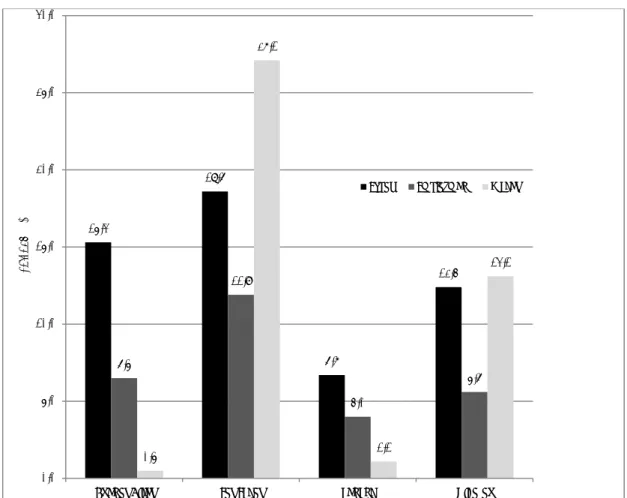
With regard to the relative size of the CMIM for its member countries (ii), it is the role of China and Japan in particular that gives the mechanism a very high level of stability. Both countries participate with very high shares in liquidity provision, yet de facto are not expected to draw on these funds – due to their domestically accumulated foreign reserves which far exceed the volume of the CMIM. On the contrary, and especially for the more recent ASEAN members such as Brunei and Vietnam, the current level of CMIM liquidity would be more than sufficient. As the debt-to-GDP ratios of ASEAN+3 countries illustrate, smaller member countries in particular do not endanger the mechanism as a whole and therefore benefit the most from it as borrowers (see Figure 5). If China and Japan were to draw on the CMIM, however, the mechanism certainly could not be considered a stable arrangement.
11
The CMIM’s financial size is currently US$ 120 billion, with ASEAN countries contributing 20 per cent while China, Japan and South Korea provide the remaining 80 per cent – wherein China and Japan each share 40 per cent of the burden. The Executive Level Decision Making Body (ELDMB) – the deputy level of the member countries’ finance ministers – is entitled to decide upon lending, renewal and default by a two-thirds majority. The ASEAN+3 Macroeconomic Research Office (AMRO) is responsible for managing the CMIM.
Figure Source *Note: governm used). At the s outlined as the exceed 4.1 Re One po knock-o especia exampl China, expans for enha means for mem market, develop position issuanc and reg develop of the n requirem markets of bala 5: ASEAN+5 : Reinhart & R Government ment debt/GD
same time, hig d in more deta member coun the fund’s ac egional financ ossible way th on effect of f ally with respe e through the Japan and S ion of issuanc ancing financi Regional fin for commenc mber countrie , and can be pment bank o n than individu ce of LCBs bu gional financia ped through th necessary infra Such region ments regardi s provide an o nce-sheet mi members: go Rogoff (2009). Debt as per DP (where gro gh business cy ail below, may ntries tend to tual volume. cial market in hat developing financial insta ect to bond ma e Asian Bond South Korea ( ce and the de al developme nancial market cing and/or int es. Such initia e established or a regional f ual countries a ut also the inc al markets (Bir he collaborativ astructure and nal financial m ing financial s opportunity to smatches and overnment de r cent of GD ss central gov ycle synchron y de facto limi demand inter nitiatives g countries co ability – is by arkets. Such a Markets Initi (ASEAN 2008 emand for loca nt and providi t developmen tensifying regi tives hence f through a re fund. A region are to attract creased dema
dsall & Rojas-ve creation of d funding at th market develop stability and m introduce add d financing c ebt as a per c DP defined as vernment debt nization (iii) du it the effective rnational liquid ould avoid de y working to a strategy has iative (ABMI) 8). Creating r al currency bo ing financial st t initiatives aim ional and inte focus on both egional multila nal multilatera international i and for them, -Suarez 2004) a regional ma he regional lev pment initiative market sophist ditional innova costs for the
cent of GDP*
s total (dome t is not availab
e to far-reach eness and sta dity in a rathe ependence on foster region received a de of the ASEA egional financ onds (LCBs) r tability (Boren m to provide m ernational loca the supply a ateral financia al financial ins nvestments – thereby bridg ). Additionally arket for LCBs vel. es can be tailo tication (UNCT ative financial issuing count
estic plus exte ble, general g
ing trade and bility of this re er synchronize
costly foreig al financial m egree of attent
N and its thre cial markets t represents one
sztein et al. 20 market infrast al currency len and the dema
l institution – stitution is like
and thus to f ing the gap b , regional finan s – achieved t
ored to the pa TAD 2007). F
instruments t ries (Lee & P
ternal) gross government de financial integ egional mecha ed manner th gn finance – a market develo tion within RM ee partner co through the r e promising s 008). tructure and fi
nding and bor and side of th – be it a mult ely to be in a facilitate not o between intern ncial markets through the pr articipating co Furthermore, r that involve le Park 2010). F central ebt was gration, anism – at may and the opment, MCs, for ountries egional strategy nancial rrowing e bond tilateral a better only the national can be rovision untries’ egional ess risk For the
majority of smaller developing economies in particular, the creation of financial markets at the regional level is more likely to result in success than if each country were to individually try to establish a market for local currency, debt instruments or other financing mechanisms (Eichengreen et al. 2006).
The coordination mechanisms required for regional financial market development initiatives to be stable in the aforementioned sense may be best understood as a process that increasingly gains importance with stronger cross-border financial links between the member countries’ currencies.
First, fiscal coordination is increasingly required to the extent that rising regional cross-border holdings of government bonds increase the danger of regional spillovers of liquidity and solvency crises among neighbouring sovereign states, as the case of the euro area demonstrates. Hence, the destabilizing effects of national sovereign debt crises at the regional level increase with more successful initiatives. In case of a successfully developed financial market initiative, fiscal coordination may not only be a supporting factor for developing regional markets but may also become a crucial ingredient in the medium- to long-term survival of the initiative.
Second, the likelihood of a liquidity crisis turning into a solvency crisis depends on the economic size and strength of its member countries and the success of the initiative. Financial market initiatives aim to increase liquidity provision in local currencies, thus increasing the regional central banks’ capacity to act as a LOLR. Again, intra-regional asymmetries seem to play a crucial role in the degree of stability that regional financial market initiatives experience. Stability may increase substantially if at least one financially strong member country exists that is in a position to act as a benchmark for the development of market standards and infrastructure – and as a market maker in the establishment of LCB markets. Such mechanisms gain additional stability if smaller member countries indebt themselves in the currency of such an ‘anchor’ country, and are thus able to service their debt through intra-regional trade surpluses against it. Furthermore, the anchor country provides for the financial endowment of either a regional multilateral institution or a regional fund that can help to develop the demand for LCBs.
Third, the design of the initiatives’ approach to regional financial market regulation is important in order to prevent the stagnation or break-up of the arrangement upon increasingly successful cross-border financial integration. Regional LCB issues are intended to decrease risks linked to unhedged foreign currency debt/foreign exchange exposure. Depending on the degree of success and sophistication of the arrangement, as mentioned above cross-border LCB issues may increase the risks associated with domestic financial crises if the national and/or regional financial markets are under-regulated. With a highly integrated regional financial market, such dangers of contagion – in terms of a lack of surveillance and of prudential regulation – exist especially if individual financial institutions develop a regional systemically important size whose bail-out may affect the financial stability of other member countries. Hence, with the advent of increasing success, regulatory oversight is needed to prevent the arrangement from collapsing in the event of an external shock.
Asian bond market initiatives I+II
Apart from regional liquidity pooling, the second major field of regional cooperation in the ASEAN/ASEAN+3 is the development of financial market initiatives (Ma & Remolona 2006). Three major initiatives are currently in place to enhance regional financial market development. The first of these is the Asian Bond Market Initiative (ABMI) that was launched in 2002, with the aim of developing liquid primary and secondary bond markets and of recycling external surpluses into financing investment within the region (ASEAN+3 2008).
Within the framework of the ABMI, the Asian Development Bank (ADB) plays a crucial role: first, as a market maker for regional financial markets; second, as a facilitator of regional policy dialogue; and, third, as a promoter of the dissemination of information. The ADB’s market-making role in financial market development primarily reveals itself in the provision of credit and political risk guarantees and bond issues denominated in regional currencies. Also, the ADB provides technical assistance to strengthen market infrastructure for regional bond markets. The bank’s triple-A credit rating and diversified risk-structure of its portfolio play a crucial role as they enable the bank to raise funds in international financial markets at more favourable conditions than most of the member countries themselves. They also allow the ADB to attract extra-regional market participants to regional financial markets.