2,,
ti.3Y ‘Université de Montréal
Persistence and adherence of combination therapy among adult asthmatic patients
par
Claudine Marceau
Faculté de pharmacie
Mémoire présenté à la Faculté des études supérieures en vue de l’obtention du grade de maître en sciences
en sciences pharmaceutiques évaluation et pharmacoéconomie
Avril 2006
j’]
Ljgg
G
o
Jc2
Université
çftrde Montréal
Direction des bibliothèques
AVIS
L’auteur a autorisé l’Université de Montréal à reproduire et diffuser, en totalité ou en partie, par quelque moyen que ce soit et sur quelque support que ce
soit, et exclusivement à des fins non lucratives d’enseignement et de recherche, des copies de ce mémoire ou de cette thèse.
L’auteur et les coauteurs le cas échéant conservent la propriété du droit d’auteur et des droits moraux qui protègent ce document. Ni la thèse ou le mémoire, ni des extraits substantiels de ce document, ne doivent être imprimés ou autrement reproduits sans l’autorisation de l’auteur.
Afin de se conformer à la Loi canadienne sur la protection des renseignements personnels, quelques formulaires secondaires, coordonnées ou signatures intégrées au texte ont pu être enlevés de ce document. Bien que cela ait pu affecter la pagination, il n’y a aucun contenu manquant. NOTICE
The author of this thesis or dissertation has granted a nonexciusive license allowing Université de Montréal to reproduce and publish the document, in part or inwhole, and in any format, solely for noncommercial educational and research purposes.
The author and co-authors if applicabte retain copyright ownership and moral rights in this document. Neither the whole thesis or dissertation, nor substantial extracts from it, may be ptinted or otherwise reproduced without the author’s permission.
In compliance with the Canadian Privacy Act some supporting forms, contact
information or signatures may have been removed from the document. While this may affect the document page count. it does flot represent any loss of content from the document
II
Université de Montréai Faculté des études supérieures
Ce mémoire intitulé:
Persistence and adherence of combination therapy among aduit asthmatic patients
présenté par: Ciaudine Marceau
a été évalué par un jury composé des personnes suivantes: Lyne Lalonde président-rapporteur Lucie Biais directrice de recherche Catherine Lemière co-directrice de recherche Yoia Monde membre du jury
III
RÉSUMÉ
Introduction: La persistance et l’adhésion aux traitements de l’asthme combinant les
corticosteroïdes inhalés (CSI) et les béta2-agonistes à longue action (BALA) dans le
même inhalateur (traitement de combinaisons) comparativement aux thérapies
concommitantes avec les deux médicaments inhalés séparément (traitement
concommittant) sont peu documentées.
Objectif: Comparer la persistance et l’adhésion entre les patients asthmatiques âgés
entre 16 et 44 ans débutant un traitement combiné de BALA et de CSI et ceux débutant une thérapie concommitante des deux médicaments.
Méthode: Étude rétrospective de cohorte appariée, reconstruite à partir des banques
de données de la Régie de l’assurance-maladie du Québec en sélectionnant des patients débutant l’une des deux thérapies entre janvier 1999 et décembre 2002. Les patients sous combinaisons ont été appariés un à un aux patients sous traitement concommitant en fonction de marqueurs de contrôle et de sévérité de l’asthme dans
l’année précédant le début du traitement. La persistance est déterminée par des
analyses Kaplan-Meier et par un modèle de régression de Cox ajusté (variables socio démographiques et marqueurs de sévérité et de contrôle) alors que l’adhésion est évaluée chez les patients persistants selon le pourcentage de jours sous traitement en relation avec la quantité de médicament dispensée, en comparant les deux traitements
à l’aide d’un modèle de régression linéaire.
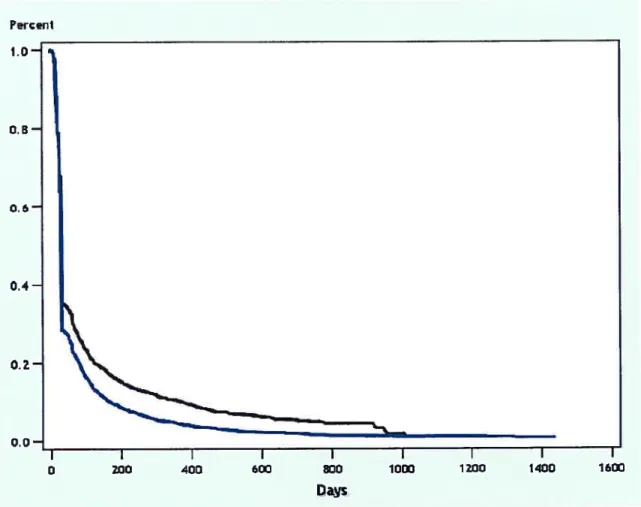
Résultats: La persistance diminue à 10% et 5% 12 mois après l’initiation du traitement,
puis à 5% et 2% sur une période de 24 mois chez les utilisateurs de produits de combinaisons et de traitement concommitant, respectivement. Les utilisateurs d’une thérapie combinée ont 17% moins de chance de cesser leur traitement (taux relatif: 0,83; 95%Cl: 0,78-0,88) et comptent en moyenne 0,9 plus de prescriptions renouvelées
iv
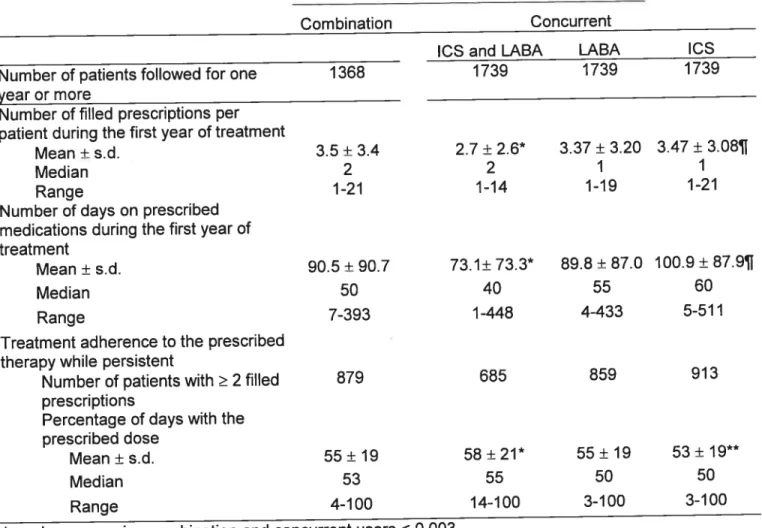
utilisateurs de thérapie concommitante cessaient leur traitement au BALA sensiblement plus que les CSI (p <0,0001). Le nombre de jours sous traitement pendant la première année était significativement supérieur chez les utilisateurs d’une thérapie combinée (90,4 vs. 73,1; p<0,0001). L’adhésion au traitement était sensiblement inférieure chez les patients sous thérapie combinée comparativement à celle des patients sous thérapie concommittante (55% vs. 58%; p=0,003l).
Conclusion: Les patients sous thérapie combinée étaient sensiblement plus persistants que les utilisateurs de thérapie concommittante, mais relativement moins adhérants. La persistance aux traitements inhalés de maintenance est très faible chez les patients asthmatiques d’âge adulte.
Mots clés Asthme, corticostéroïdes inhalés, béta2-agonistes à longue durée d’action, base de données administratives, pharmaco-épidémiologie, produits de combinaison, cohorte.
V
ABSTRACT
Background: Limited evidence exists on persistence and adherence with asthma combination regimens including both inhaled corticosteroids (ICS) and long-acting f32-agonists (LABA) within the same inhaler (combinations) compared to these medications inhaled separately (concurrents).
Objective: To compare persistence and adherence between 16-44 years old asthmatic patients, starting a single-inhaler combination of ICS and LABA or a concurrent regimen of both medications.
Methodology: This retrospective one-to-one matched cohort is based upon daims data. Newly treated asthmatics with either a combination or concurrent therapy were selected from the Régie de l’assurance maladie du Québec (RAMQ) database between ]anuary 1999 and December 2002. Combinations were one-to-one matched to concurrents using markers of asthma severity and control in the year prior to treatment initiation. Persistence was determined by a Kaplan-Meier analysis and a Cox Regression model, adjusting for socio-demographics and markers of asthma severity and control. Adherence was estimated according to the number 0f filled prescriptions in relation to the time patients persisted on the prescribed therapy and compared between the two drug regimens using a linear regression model.
Resuits: Persistence feU to 10% and 5% 12 months after treatment initiation, and to 5% and below 2% over 24 months for combination and concurrent users, respectively. Overall, combination users were found to be 17% less likely to stop their treatment (adjusted hazard ratio 0.83; 95%Cl: 0.78-0.88) and filled on average 0.9 more prescription per year than concurrent users (p-value0.0001). Concurrent users ceased their LABA treatment stightly more than ICS (p-value <0.0001). Average days under treatment during the first year was significantly higher with combinations (90.4 vs. 73.1;
C
vip<O.0001). Treatment adherence was slightly Iower for patients taking combinations vs. concurrents (55% vs. 58%; p=O.003l).
Conclusion: Combination users were slightly more persistent than concurrent therapy
users, but reativeIy Iess adherent. Persistence to inhaled controller therapies is very Iow among aduit asthmatic patients.
Key words Asthma, inhaled corticosteroids, long-acting beta2-agonists, administrative database, pharmacoepidemiology, combination, cohort.
VII
TABLE DES MATIÈRES
LISTE DES TABLEAUX viii
LISTE DES FIGURES ix
LISTE DES ABBRÉVIATIONS x
INTRODUCTION 1
OBJECTIFS 3
RECENSION DE LA LITTÉRATURE 4
MÉTHODOLOGIE 30
ARTICLE 44
DISCUSSION GÉNÉRALE DES RÉSULTATS 65
CONCLUSION 79
VIII
LISTE DES TABLEAUX MÉMOIRE
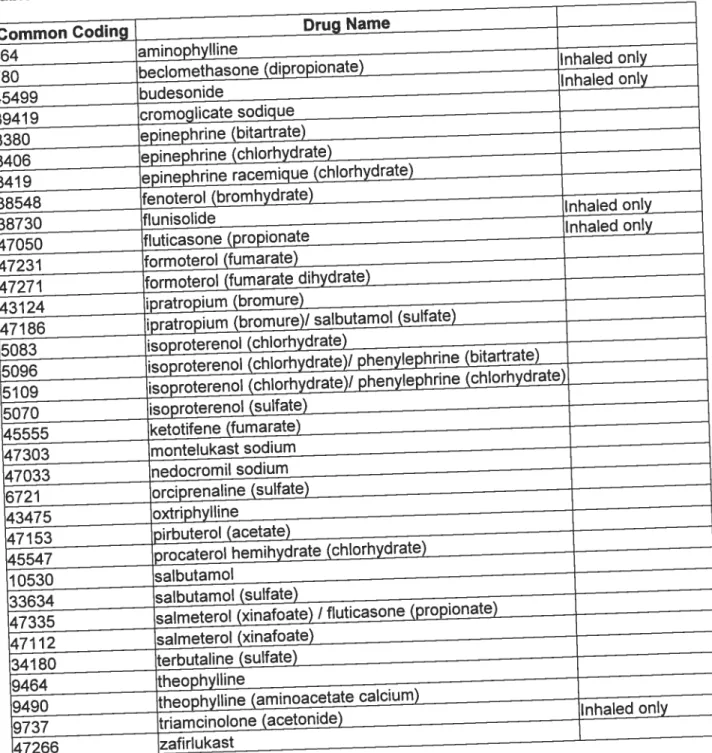
Table 1. RAMQ anti-asthmatic medications list with drug codes 80
Table 2. Canadian Consensus: Asthma Control Criteria 81
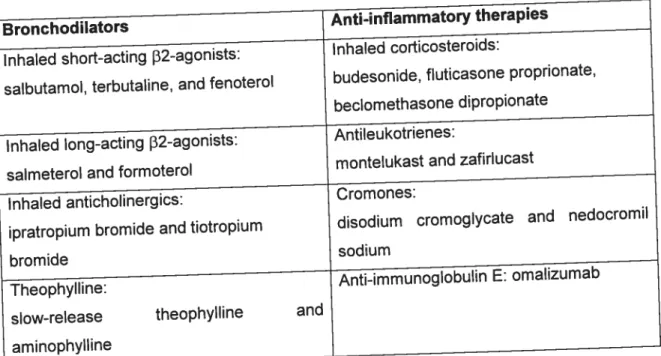
Table 3: Canadian Consensus: Therapies currently used in asthma 81
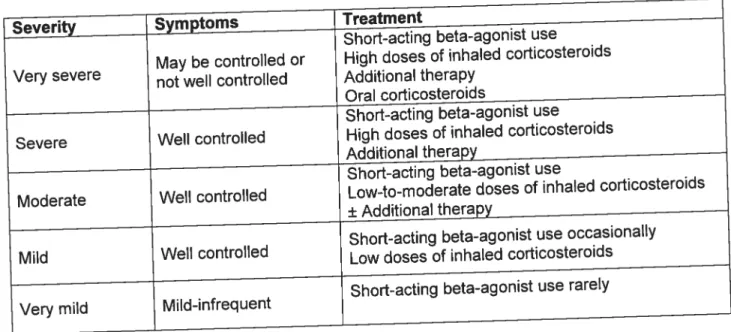
Table 4. Canadian Consensus: Classification ofAsthma Severity 82
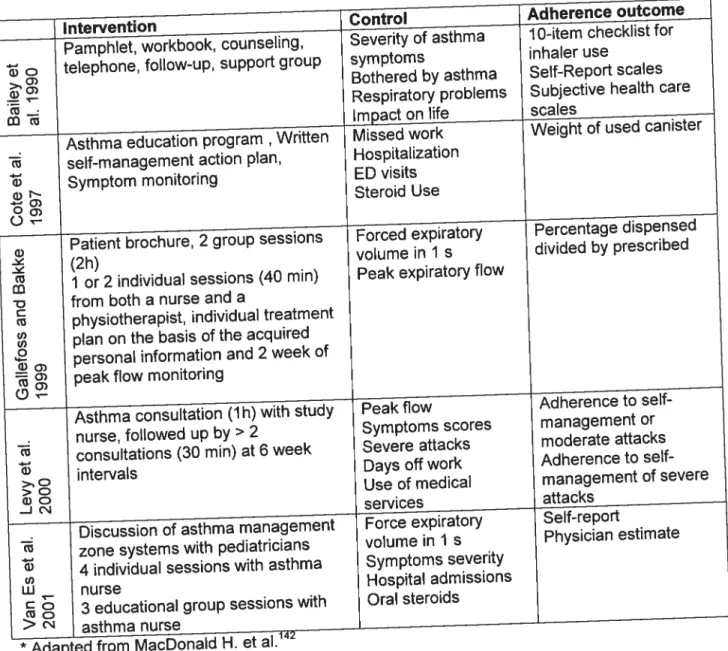
Table 5. Asthma Interventions and Adherence Outcome 83
ARTICLE
Table 1. Patients characteristics for new users of a combination or a concurrent
therapy 60
Table 2. Crude and adjusted hazard ratios of treatment discontinuation comparing new
users of combination (n=2559) and concurrent therapy (n=2559) 61
ix
LISTE DES FIGURES MÉMOIRE
Figure 1. Continuum of treatments for asthma management 84
ARTICLE
Figure 1. Kaplan-Meier curves comparing persistence over time between both study
groups 58
Figure El. Kaplan-Meier curves: persistence over time for ICS and LABA separately
X
LISTE DES ABBRÉVIATIONS
FEV1 Forced Expiratory Volume GINA Global Initiative for Asthma
ICS lnhaled Corticosteroids
LABA Long-Acting Beta 2 (32)-Agonists
MEF Maximum Expiratory Flow
MPR Medication Possession Ratios
NAEPP National Asthma Education and Prevention Program
PASS Power Analysis and Sam pie Size (NCSS Statistical Software)
PEF Peak Expiratory Flow
PEFR Peak Expiratory Flow rate
PEFI Peak Expiratory Flow in one second PEFam Morning Peak Expiratory Flow PEVF Peak Expiratory Volume Flow
RAMQ Régie de l’assurance maladie du Québec RCT Randomized Controlled Trial
SABA Short-Acting Beta 2 ([32)-Agonists SAS Statistical Analysis System Software US United States (cf America)
INTRODUCTION
The international guidelines (GINA)1 and latest Canadian consensus2 uphold the concept of asthma management as a continuum, contingent on underlying symptoms severity and pulmonary tests resuits. When asthma is not optimally controlled with inhaled corticosteroids (ICS) alone, the addition of long-acting 32-agonists (LABA) to
ICS is accepted as the most effective therapy to control moderate to severe asthma.3 This therapeutic approach is also supported by NAEPP guidelines4 for the treatment of uncontrolled persistent asthma. ICS and LABA have a complementary effect,5’6’7’8 treating both components of asthma: underlying airway inflammation and obstruction, respectively 3,9,10• It has been shown that this regimen provides greater asthma control than increasing the dose of ICS 11,12 and may also improve outcomes (lung function, exacerbation rates, and quality of life) in asthmatics who remain symptomatic on ICS.13
The administration of both ICS and LABA concurrently with different inhalers or using a single inhaler combining both medications may not be equivalent. Concurrent’ administration entails the manipulation of two different inhaling devices (one for each drug) whereas combination’ involves a single inhaling device which contains both agents.14 Two combination products are presently available in Canada: one combining fluticasone (ICS) and salmeterol (LABA) into the same inhaler, known as Advair/Seretide, and another combining budesonide (ICS) and formoterol (LABA) into the same inhaler, known as Symbicort.
Average medication compliance, an essential component of a successful health outcome, has been shown to be lower in patients with respiratory disorders, most of which require inhaled medications.15 Although inhaled corticosteroids are the most effective treatment for asthma, historically they have elicited poor compliance, likely because patients may flot perceive the medication to be working.15 lt has been shown that adherence to asthma treatments declines as the regime becomes more
2
complicated, either by increasing the number of medications and/or the number of daily
doses.16’17
Systematic reviews of compliance literature18’19 have shown that simplet, less ftequent dosing regimens resulted in better compliance across a variety cf therapeutic classes. Intuitively, a combination regimen of corticosteroid/beta2-agonist in one inhaler is likely to improve patient compliance by simplifying the treatment tegimen and providing noticeable symptom relief while alleviating the underlying inflammation. Consequently, it has been hypothesized20’21 that the use cf combination inhalers can improve patient’s adhetence and consequently overail asthma control.22’23’24 However, limited evidence exists on persistence and adherence with asthma combination tegimen including bath ICS and LABA within the same inhaler compared to these medications inhafed separately. Sa far, we found two published studies25’26 in which this hypothesis was tested in usual care clinical practice settings in the US. We thus performed a population-based cohort study to compare treatment persistence and adherence between 16-44 years old asthmatic patients starting a combination and a concurrent therapy, using data collected in the Régie de l’assurance maladie du Québec database.
C
OBJECTIVES
The objectives of this study were the following:
1. To estimate treatment persistence and adherence with combination therapy
(LABA plus ICS in one device) among asthmatic patients aged between 16-44
years old;
2. To estimate treatment persistence and adherence with LABA prescribed
concurrently with ICS (in two devices) among asthmatic patients aged between 16-44 years old;
3. To compare treatment persistence and adherence between the two drug
reg imens.
This study was conducted to provide significant real-life information for asthma patients and their treating physicians on the hypothesized adherence and persistence benefits that would be expected from the ease of administration of combination therapy reg i mens.
C
LITERATURE REVIEW
Asthma definitïon
Inflammation and its resultant effects on airway structure are considered to be the main mechanisms leading to the development and maintenance of asthma.27 In the recent Global Initiative for Asthma (GINA) Guidelines1, asthma is defined as a chronic inflammatory disorder of the airways in which many cells and cellular elements play a role. The chronic inflammation causes an associated increase in airway hyperresponsiveness that leads to recurrent episodes of wheezing, breathlessness, chest tightness, and coughing, particularly ai night or in the early morning. These episodes are usually associated with widespread but variable airflow obstruction that is often reversible either spontaneously or with treatment.1
Burden of Asthma
Despite advances in understanding the disease and the availability of more effective treatments, asthma still places a heavy burden on the quality of life of those suffering from it. This is often a resuit of under-diagnosis, under-treatment, lack of understanding and knowledge about the disease, and inadequate asthma supervision.28 Asthma Worldwide
Worldwide, the rate 0f asthma is increasing significantly, rising by 50 percent
every decade.29 Currently, approximately 300 million people (or about 5% of the global population) suifer from asthma and this figure is expected to increase by an additional 100 million people by 2025.29 It is estimated that asthma accounts for about one in every 250 deaths worldwide.29
Asthma in the US
A 1998 document from the United States Department of Health and Human Services reported a sharp increase in the rate of self-reported asthma among ail age groups between the years 1980 and 1994, from 30.7 to 53.8 per 1,000(3.1% to 5•4%)•30
C
5In 2003 t was estjmated that 20 million Americans had asthma. 0f these, 11 million Americans had an asthma attack and it is estimated that about 30 million Americans or about 10 percent of the U.S. population, have been diagnosed with asthma in their lifetime, according to the American Lung Association and the National Center for Health Statistics.4 In the United States alone, asthma was estimated to result in 10 million missed school days, over 1.5 million emergency department visits, approximately 500,000 hospitalizations, and over 5,000 death annually.31’3233’34
Asthma in Canada
In Canada, the number of people with asthma has been incteasing over the Iast
15 years.35 Currently, Canada has one of the highest incidences 0f asthma in the world,
with an estimated 2.2 million Canadians (8.4 per cent of the population) over the age of
12 currently diagnosed with asthma.36 As of March 2005, an estimated five per cent of
adults have taken medications for asthma or have experienced symptoms in the past 12 months.37 According to the 1996-1997 National Population Health Survey (NPHS) Asthma Supplement, 35% 0f individuals with current asthma have been restricted in their daily activities by asthma; 22% for one to five days and 13% for more than five days in the previous year. The number of hospitalizations due to asthma may be a more serious sign of poor disease control; 5.3% of those diagnosed with asthma in Canada require hospitalization each year.38 In Canada, direct costs of asthma, which include medical/nursing care and medication, are estimated at $600 million per year39. In 1994, the cost of hospitalization as a result of asthma was $135 million in Canada.37 Visits to emergency rooms may also be a sign of poorly controlled asthma. The NPHS Asthma Supplement survey found that 18% of individuals with active asthma had visited an emergency department at Ieast once in the previous 12 months.38 With 146,000 emergency room visits every year due to asthma attacks40, asthma is the leading cause of emergency room visits29 and the third leading cause of work Ioss in Canada.41
6
Asthma mortality rates in Canada increased from 1970 to the mid-1980s; however by 1995 they had decreased to below the 1970 level, except in young aduits where increases had been more important in the 1970s.35 While the death rate from asthma has slowly decreased since 1990, there are stiil approximately 10 asthma deaths per week in Canada; asthma is the cause of deaths cf 20 children and 500 adults each year.4° It is estimated that more than 80 per cent of deaths due to asthma could be prevented with proper education.41
Asthma disease management and treatment goal
It has been shown that an underassessment cf asthma severity resuits in ineffective treatment and suboptimal outcomes.4243 In Canada, clinical practice guidelines te diagnose and establish treatment plans for patients with asthma are provided by the Canadian Asthma Consensus Guidelines27. According to the Canadian Consensus, the primary goal cf asthma therapy is to obtain the best possible resuits for each patient, which include: fewest symptoms, least interference with daily living, least need for “rescue medications” and best lung function test 0f forced expiratory volume (FEV) or peak expiratory flow, and fewest side effects from medications. Overall, the therapy should lead to adequate control of the disease in order to reduce the consequences of asthma and, ideally, its severity over time.27’32 However, a conceptual concern about the different approaches to asthma severity categorization is that these methods are based on the concept cf asthma control rather than asthma severity.44 We need to distinguish underlying severity from current control severity.
Canadian Consensus
The overail approach advocated by the Canadian Consensus27 for the management cf asthma clearly distinguishes asthma control and asthma severity assessments. Asthma severity is more difficult to assess and may only be determined after asthma control is achieved.2
C
Optimal control of asthma is characterized by the absence of respiratory symptoms and of the need for rescue bronchodilator, as well as normal pulmonary function27. This is difficult to achieve in ail patients with asthma, so treatment needs are based on acceptable’ asthma control, defined using clinicai and physiologic parameters (Table 2 — page 81)27. Optimal management of asthma requires adequate evaluation of
the patient and his or her environment; a clinician should also evaluate new patients’ asthma using the asthma control criteria (Table 2).2 Asthma control may be achieved
through apprapriate environmental measures, adequate patient education and pharmacatherapy tailared ta the individual. Once contrai of asthma has been maintained for at ieast several months, an attempt should be made ta reduce medicatian within the baunds of acceptable contrai27.
The severity of asthma in a patient is judged by the frequency and duration of respiratory symptams, the presence of persistent airfiow limitation and the medicatian required ta maintain contrai.27 Signs of severe or pooriy controlled asthma combine features of: lung functions (forced expiratory volume in one second (FEV1) or peak expiratory flow (PEF) below 60% of predicted values); symptoms contrai (limitation of daily activities, night-time symptoms; need for an inhaied 32-agonist several times a day or at night); histary af hospital admissions or emergency department visit(s); and the occurrence cf a prior near-fatal episode (loss of consciousness, need for intubations). 27
The iatest issue of the Canadian guidelines2 uphold the concept of asthma management based on a stepwise continuum (Figure 1 — page 84), commensurate with
underlying symptoms and puimonary function tests resuits, ta determine the appropriate therapeutic regimen which are listed in Table 3 on page 81. If contrai is inadequate, the reason(s) should be identified and maintenance therapy modified according ta the continuum2 (Figure 1). When asthma is well controlled, one of the best ways to judge severity s to determine the level cf treatment needed to maintain acceptable control.27
C
8Moreover, since asthma severity is likely to vary over time,27 any new treatment should be considered a therapeutic trial and its effectiveness should be re-evaluated after4—6 weeks according to the asthma management continuum.2
In a recent 3-year observational database study of asthmatic patients, Stempel et aL45 documented that asthma control - on the basis of medical and pharmacy daims
-might change over time, itrespective of age, sex, and prior asthma control status. That study emphasized the need to address asthma control both in patients with initially weII controlled disease and in those patients who present with evidence of uncontrolled asthma since both groups continue to be at risk for asthma symptoms as well as for asthma exacerbations. This finding is of particular relevance to highlight the value of using database to monitor asthma control variations from the pre-initiation period, at index date, as well as throughout the analysis of prescribing trends and medication refill rates used as a proxy for drug utilization over time.
Other Asthma Guidelines
The asthma severity and control assessments proposed by the Canadian
Consensus27 combine features that are also supported by other widely known
guidelines. For instance, the American guidelines (NAEPP Expert Panel Report 2)32
also recommend an assessment of asthma based on symptoms (diurnal and nocturnal)
as well as lung function prior to the initiation of a treatment. Within each of these three variables, levels of gradation in severity established by the NAEPP lead the physician to classify a patients asthma into one of four separate categories, and overall asthma severity is then determined according to the worst individual variable. The British Guidelines on the Management of Asthma46, also recommend an individual assessment of severity based on diurnal and nocturnal symptoms, and include physical activity limits, exacerbations, absence from school or work, use of rescue SABA, and lung function. The National Asthma Campaign in Australia47 stipulates that asthma severity
9
should be assessed while the patient is clinically stable, and that severity categorization would rest on a history cf either hospitalization or near-fatal asthma attacks. The inclusion cf historical features differs from the NAEPP approach to severity categorization in that aspect; the US recommendations concenttate on current symptoms and lung function abnormalities. As shown in Table 4 on page 82, the Canadian Consensus guidelines2 combine aspects from both the British and the Australian methods: five disease severity categories like the British Guidelines, and three separate categories cf control based on symptoms as defined above, similar to the Australian guidelines.
Asthma treatments
There are several types cf current therapies in asthma, which could mainly be grouped as either bronchodilators or anti-inflammatory therapies (Table 3 — page 81),
also referred te as relievers or controllers respectively. Bronchodilators relax airway smooth muscles and provide immediate relief from asthma symptoms such as wheezing and shortness cf breath, whereas anti-inflammatory therapies are used as a maintenance treatment cf the underlying inflammation which characterizes asthma. The bronchodilators ccnsist cf inhated short-acting 32-agonists (SABA), inhaled long-acting Ç32-agonists (LABA), inhaled anticholinergics, and thecphyline. In the Canadian Consensus2, anti-inflammatory therapies include inhaled corticosteroids (ICS), antileukotrienes and cromones.
Recommendation ICS first-Iine
‘Reliever’ medications such as SABAs provide rapid relief cf acute bronchoconstriction and it has been shown that patients tend te take mcre as-needed medication as their asthma control declines.48 Based upon the recognition that asthma
10
thrust of therapy should be controlled using anti-inflammatory therapy. lnhaled beta2-agonists may therefote only be used infrequently; SABAs are only recommended for use as-needed.
It has been well established that inhaled corticosteroids (ICS) relieve persistent symptoms very effectively, improve lung function, decrease bronchial hyperresponsiveness and reduce morbidity caused by asthma.495051’525354 Several randomized clinical trials in adults with asthma concurred that ICS might be the most effective available medication in improving forced expiratory volume in one second (FEV1).55’56 Observational study resuits showed that regular use of low dose ICS could reduce asthma hospitalizations by as much as 80%, both early and later on in the course of the disease.54’5758 In addition, it had previously been shown that compliance with ICS therapy reduces the risk 0f asthma exacerbations as well as the risk of death
from asthma by 21% for each additional ICS canister used.59 Not surprisingly, ICS constitute the preferred controller medication in the treatment of persistent asthma because they are the most effective with the least side effects anti-inflammatory medications available for treating the underlying inflammation.260 This is reflected in current practice, where the use of controller medication increased 8-fold between 1978 and 2002, inhaled corticosteroids (ICS) manifesting the biggest increase.61
Therefore, on the basis of substantive Level 1 evidence - defined as randomized
controlled trials (RCTs) or meta-analysis 0f RCTs of adequate size to ensure a low risk
of incorporating false-positive or false-negative results2 - several guidelines, including
the Canadian Consensus, recommend ICS as first-line agents in the tteatment of patients with persistent asthma.462 Studies have shown that the early initiation of anti inflammatory therapy (i.e. within 2 years of the onset cf symptoms) with ICS is believed to improve the prospects of achieving good long-term asthma control63’64’65. In addition,
11
there is evidence ta suggest that this approach may reduce airway remodeiling66. In previous reports, the Canadian Consensus positioned ICS as the mainstay of asthma therapy and as ciearly indicated in ail but the mildest cases.27 The iatest update of the Consensus recommend ICS as the optimal intervention even for patients with mild persistent asthma.2 Inhaled corticosteroids tICS) should therefore be introduced as the
initial maintenance treatment for asthma, even in subjects who report asthma symptoms
less than three times per week.2 Daiiy iong-term contrai with ICS is therefore recommended ta prevent exacerbations and chronic symptoms for ail patients with persistent asthma, whether the persistent asthma is miid, moderate, or severe.
Recommendations ICSILABA
However, when a patient’s asthma is flot well controlled with first-line inhaied corticosteroids therapy alone, the use of both ICS and Iong-acting Ç3-agonist (LABA) therapy is accepted as the most effective treatment regimen ta contrai moderate and severe asthma.3 As part 0f their stepwise approach for asthma management, both
International (GINA)1 and Canadian guidelines22762 recommend the use of iow dose ICS coupled with inhaled LABA, based on the physician’s assessment of the patient’s underlying severity 0f asthma symptoms. This therapeutic approach is also supported by NAEPP4 guidelines as the most convenient and effective regimen for uncontroiled
persistent asthma.
ICSILABA - Improved Outcomes
ICS and LABA have a compiementary effect,56’7’8 treating both components of asthma: underlying airway inflammation and airway obstruction, respectiveiy.3’91° In an eariier landmark triai, Greening et al. demonstrated that treatment with both ICS and LABA provides greater asthma control for patients not optimally controiied on a moderate-dose iCSJ It has aiso been shown that the maximal effect of this regimen could be obtained when the added LABA (salmeterol) dose was 5Oug twice daiiy.67 The
Ç
12 lesser effect of higher dose ICS on lung function is likely to be a reflection of the plateauing dose-response curve of ICS, particularly when responses such as PEFR, FEV1, and bronchial responsiveness are measured.68’69ICS/LABA vs. Increased dose of ICS
In an extensive metaanalysis including several clinical trials, the addition of LABA to tow-dose fluticasone was superior to increasing the dose of fluticasone in patients with moderate to severe persistent asthma.’2 This regimen lead to improvements in spirometry, and in symptoms score as well as to a decreased number of exacerbations.7° Other trials involving the ICS/LABA combination also confirmed that LABA plus low-dose ICS (88ug twice daily) was more effective than higher-dose ICS alone in reducing asthma exacerbations in patients with persistent asthma,71 in improving morning peak expiratory flow, and in leading to a 26% decrease in symptom free days72. The Gaining Optimal Asthma ControL (GOAL) study has also shown the superiority of a combination cf salmeterol/fluticasone propionate (SEC) compared with fluticasone propionate alone (EP) in terms cf improving guideline-defined asthma control.73
The FACET trial showed reduction in asthma exacerbations and increase in morning PEF with the addition of formoterol irrespective of the budesonide dose. The addition of formoterol to low dose budesonide was more effective than a fourfold higher dose of budesonide alone.74 Similar conclusions could also be reached according to the results of the OPTIMA trial75. In that study, a first group of 698 patients was randomly assigned to receive a 10w dose lCS (100 pg budesonide twice daily) and a LABA (6 pg formoterol twice daily), an ICS alone (100 pg budesonide twice daily) or placebo. The addition of 6 pg of formoterol to the ICS resulted in improved lung function. However, no additional benefit was found with this combined regimen when compared with budesonide alone (100 pg twice daily) in that mild asthma patients group. Compared
13
with placebo, even in patients with mild asthma, the addition of an ICS resulted in a 68% reduction in severe exacerbations, In the second OPTIMA study group (n = 1272)
composed of patients previousfy been treated with ICS and having slightly wotse lung function (mean FEV1 predicted value 86% compared with 90%), the addition of formoterol did provide additional benefit compared with placebo and, more importantly, compared with doubling of the dose of the ICS.
Overall, there does not appear to be any difference between the use of ICS alone or in combination for patients with mild asthma who have neyer received an ICS, while it is clear that the combined ICS/LABA regimen provides benefits for patients with moderate to severe asthma. The Canadian Consensus27 reviewed other available data76 and concluded that there is insufficient evidence of additional benefit for the initial use cf combination inhaler therapy in patients with mild persistent asthma who have flot been treated previously with ICS.
ICSILABA—Synergy
In summary, clinical trials evaluating the effect cf adding LABA therapy te ‘low dose’ ICS demonstrated improvements in asthma outcomes in terms cf both lung function and exacerbation rates, in asthmatic patients who remain symptomatic on low dose ICS alone. Moreover, it has been shown that LABA added te ICS therapy provides superior asthma control compared with the addition of teukotriene modifiers7776 or theophylline.79 Earlier findings concluded that the superior control cbtained with the LABNICS combination is likely a consequence cf the complementary actions cf the drugs when taken together, potentially the activation cf the glucocorticoid receptor by salmeterol.8° Myo et al. have recently dccumented that a synergistic/additive effect cf the ICS/LABA combination might be on molecular pathways that are flot typically considered stercid sensitive, i.e. the cascade cf inflammatcry mediators deriving frcm membrane phosphclipid metabclism.5 Another recent publication assessing the synergy
C
14of
LABNICS regimens stated that molecular interactions between corticosteroids and beta2-adrenoceptors may underlie the clinical added benefits of combination therapy81. The combination of corticosteroids and LABA potentiates inhibition of interleukin-8 and eotaxin release from human airway smooth muscle ceils and granulocyte-macrophage colony-stimulating factor release from epithelial cells, and also the inhibition of airway smooth muscle celI proliferation.81Concurrent vs. Combination
The use of LABA plus ICS in a concurrent (or concomitant) use versus a combination technique may flot be equivalent. ‘Concurrent’ entails the manipulation of
two different breath-activated devices (one for each drug) and ‘combination’ denotes a single inhaling device which contains both agents. Therefore, combination therapy implies only one inhalation maneuver per dose, whereas concurrent therapy implies two.14 There are two commercial products that combine a LABA (formoterol or salmeterol) and an ICS (budesonide or fluticasone). These two combination products are presently available in Canada: (1) GlaxoSmithKline markets Advair® as 100/50 micrograms, 250/50 micrograms or 500/50 micrograms dry powder inhalers of fluticasone propionate (ICS) / salmeterol xinafoate (LABA) into the same inhaler (Diskus®), with each inhalation providing 50 pg of salmeterol and 125/25 and 250/25 fluticasone/salmeterol in metered dose inhalers. The unit cost for these products varies from $77.80 to $132.16, depending
on
the strength. The supply is expected to last for an average of one month. (2) AstraZeneca markets Symbicortc as 100/6 micrograms or 200/6 micrograms of budesonide/formoterol dry powder inhaler (Turbuhaler®). Unit costs for these products are $65.10 and $84.63 respectively. The supply is expected to last for an average of one or two months.82C
Improved Safety with combined inhalers
Short-acting 32-agonists have been used for symptom relief for many years.83 However, it has been shown that SABAs are overused and that this inappropriate use, particularly among ICS users, might be explained by undertreatment or poor compliance with ICS.84 Inhaled beta-agonists may be associated with excessive and inappropriate reliance on symptomatic treatment in poorly controlled asthma.85 The inappropriate use of LABA as monotherapy without ICS also raises safety concerns and this practice does
flot hold with international guidelines1’ nor with the Canadian Consensus recommendations.27 Combination inhalers ensure that patients cannot neglect their ICS maintenance therapy in fayot of the LABA,82 because patients may petceive the benefits of bronchodilation more easily, which may improve adherence and overall asthma control.22 Recently, a long- but also fast-acting agent, formoterol, has been approved for symptom relief.86 It is important to reiterate that based on current evidence fast acting bronchodilators may be used to telieve acute intermittent asthma symptoms, but only on demand and at the minimum dose and frequency required. When a reliever is needed for more than 3 times a week (aside from a pre-exercise dose), it suggests suboptimal asthma control and indicates the need to re-assess treatment. 87
Safety Issues with LABA Monotherapy
Several studies have shown the detrimental effect of using LABA as monotherapy. In a randomized, double-blind, placebo-controlled, parallel-group study with salmeterol, Lazarus and al.88 showed that despite reasonable control of symptoms and lung function, treatment failure and asthma exacerbations occurred more often in the salmeterol-treated group (42 pg twice daily) compared to patients treated with triamcinolone (400 pg twice daily). Another study evaluating the corticosteroid-sparing effect of LABA noted a large increase in asthma exacerbations (46.3% of patients) after
C
16complete elimination of triamcinolone compared with subjects taking both trimaciolone (400 pg twice daily) and salmeterol (13.7% 0f patients)89 Furthermore, this has recently been conflrmed with the interim analysis 0f the recently discontinued SMART study, which demonstrated that salmeterol was associated with a significantly higher prevalence of adverse events, including death, than a placebo in the approximately 50% of 26,000 subjects who were flot on ICS.9° Although effective when given with an ICS, it has been suggested that a reduced effect over time and receptor desensitization, flot at the bronchial smooth muscle level but on the mast ceils and lymphocytes, may account for the relative lack of evidence of an effect of the LABAs on airway inflammation.85 By combining anti-inflammatory treatment with a LABA in a single inhaler, both the inflammatory and bronchoconstrictive aspects of asthma can be covered without introducing any new or unexpected adverse consequences. The most common drug related adverse events with the LABNICS combination were those known to be attributable to the constituent medications (ICS therapy and/or LABA therapy).9
Better outcomes with Combined Inhalers vs. Low Dose ICS
The benefits of combination therapy include better day-to-day control and a reduction in exacerbations compared with monotherapy with ICS at a lower dose.23
Total control of asthma - defined as no daytime or night-time symptoms, no use of
rescue SABAs, no exacerbations and a peak flow rate of >80% predicted - may be
achieved with the use of combined salmeterol/fluticasone in a single inhaler in up to 41% of patients with moderate to severe asthma, compared with only 28% of patients treated with fluticasone alone. Superior asthma control and improved patient quality of
life were subsequently demonstrated in favor of the combination therapy in studies
comparing the budesonide/formoterol combination with budesonide alone.9192
Ç
17 inhaler may be superior in reducing asthma exacerbations than the administration of the same products in two separate inhalers.93Combinatïon fluticasone!salmeterol
The first trial comparing the combination and concurrent use of fluticasone/salmeterol conducted by Aubier et al.94 showed that both combination and concurrent therapies achieved significantly greater improvement in morning and evening PEFR compared to fluticasone alone. Both combination and concurrent therapies improved PEFR by 10% whereas fluticasone alone improved morning PEFR by 4%. Further studies also demonstrated that combination treatment with both LABA and ICS in the same inhaler was as effective as using two separate inhalers to deliver LABA and ICS.9596’979899 The EDICT trial by Ringdal et al. showed that in symptomatic patients with moderate-to-severe asthma, fluticasone/salmeterol (50/250 microg bd), administered in a single device (Diskus), was at least as effective as an approximately three-fold higher microgram corticosteroid dose of budesonide (800 microg bd) given concurrently with formoterol (12 microg bd) in terms of improvement in PEFam, and superior at reducing exacerbations and nights symptoms or awakenings. Fluticasone/salmeterol was also the less costly treatment due primarily to lower hospitalization and drug costs according to that study.16
Combination budesonidelformoterol
The first trial using budesonide/formoterol in a single inhaler was conducted by Zetterstrom et al.91 In patients with persistent asthma symptoms despite treatment with ICS, budesonide/formoterol administered via a single dry powder Turbuhaler device
C
18appears to be as effective as treatment with the constituent medications administered via separate inhalers in improving PEF, controlling symptoms and preventing mild exacerbations. Adjustable maintenance dosing with budesonide/formoterol is associated with a lower overall dosage and appears to maintain control as effectively as fixed dosing.2410° Another study comparing self-guided adjustable maintenance dosing with budesonide/formoterol in a single inhaler with fixed dosing showed that asthma patients on adjustable maintenance dosing with budesonide/formoterol maintained control of symptoms using significantly less medication overall than fixed dosing. Adjustable maintenance dosing achieved guideline goals of effective asthma control at an appropriately low maintenance dose.101
Bronchodilating action
A recent double-blind, placebo-controlled, cross-over study 102 involving twenty subjects with mild to moderate asthma showed that the bronchodilating action of the long-acting beta-agonist formoterol administered as a single evening dose from the combination budesonide/formoterol Turbuhaler (2x1 OOI6mug) attenuated the biphasic pattern of the circadian rhythm in airway tone, resulting in a bronchodilation of at least 24h. Lung function measurements were assessed at baseline, at 1h and subsequently every 4h post-dose for 24h. The results of that study showed that compared with placebo, the combination budesonide/formoterol Turbuhaler significantly improved the three measures cf airways function (FEV1), specific airways conductance (sGaw) and maximum expiratory flow at 25-75% of vital capacity (MEF(25-75%))) throughout the 24h period, with a difference in FEV1 at 24h cf O.20L (O.04-O.35L).
19
Combination fluticasonelsalmeterol versus Combïnatîon budesonide/formoterol
More recent literature report on findings from head-to-head assessments of both combination regimens, however the focus was mainly on fixed versus adjustable dosage which extend beyond the scope of this research study. A recent review103 of the publications on the clinical evidence of budesonide/formoterol and salmeterol/fluticasone regimens concluded that both are effective and well-tolerated asthma treatments.
Reduced complexity
Adherence to medical therapy (the extent to which recommendations are followed as defined) is a complex and dynamic behavioral process that is strongly influenced by the patient, his or her support environment, practices of health care providers, and the characteristics of care delivery systems.104 Moreover, it has been shown that adherence to treatment in asthma declines as the regime becomes more complicated, either by increasing the number of medications and/or the number of daily doses.1617 Therefore, complexity of drug regimen is a well-established contributor to poor compliance and simplified regimens are associated with better compliance.’9’105106107’108 As a resuit, more convenient treatments may represent an important benefit for patients with asthma, and an effort to simplify the complexity of the therapy could also result in improved adherence, potentially leading to better disease control.24 For example, resuits of a recent RCT suggest that not only is the combination of budesonide/formoterol in a single inhaler as safe and effective in the long-term treatment of asthma as its constituent agents taken concurrently, but also that the lower number of withdrawals (frequency of discontinuation due to asthma deterioration from recorded adverse events) with this combination therapy may reflect beller adherence to treatment compared with both agents taken via separate inhalers.109 With its fast onset
Ç
20of action (due to the bronchodilating effect of formoterol), this combination therapy may
help patients feel more in control of their condition and improve adherence to their medication.24
Effectiveness vs. Efflcacy
The relative effectiveness of combined vs. separate delivery modes in actual clinical practice may be different. Clinical studies used to support the guidelines are not indicative of ‘real life’, where patients frequently cannot use their inhaler correctly.11° Differences in adherence to recommended therapies between real world and clinical trials may contribute to the differences in results from these two distinct environments. In clinical trials, patients are carefully selected and supervised for their adherence to recommended therapies and meticulously trained on the use of their inhalers. In clinical practice, the most effective treatments require the utilization of inhalers, such as ICS which are used with inadequate technique by a significant numbers of patients.
,U2,H3
The fact that asthma is a chronic illness involving long-term therapy combined to the difficulty for patients to adequately manipulate their inhaler may lead to poor persistence, consequently reducing the effectiveness of asthma therapy in clinical practice.
Although the benefits of combined ICS plus LABA therapy can be achieved with separate inhalers, the convenience of combination regimens may improve patient adherence and may therefore reduce the morbidity of asthma.2481 However, there is limited evidence demonstrating that improved adherence in current practice resuits from the use of combination therapy of LABA and ICS instead of the concurrent therapy. Two retrospective cohort studies measured treatment adherence using the number of prescriptions recorded in a United States daims database over a 12-month period.
C
21Stoloif et al. published the first study25testing this hypothesis. Prescription refui rates for
asthma medications were determined for a cohort of 2511 patients aged 12 years or
older who had been seen for asthma. The primary analysis was the comparison cf the
adherence measures across five study cohorts composed of patients selected on the
basis of one asthma medical daim and one pharmacy daim: LABNICS in combination
(n=563), LABNI CS concurrent (n=224), LABAIanti-leukotriene combination (n=75), I CS
alone (n798), and anti-leukotrienes alone (n=776). The differences in medication
possession ratios (MPR) - defined as the number or days supplied (from first to last
prescription) divided by the treatment duration period (from index date to the exhaustion
of the last prescription) - and refui rates - defined as the number of monthiy (30-day
supply) prescription daims for the cohort regimens over the 12-month follow-up period,
including the index daim - were reported, and ANOVAs adjusting for potential
differences in demographic and baseline measures models were used to statistically test the differences in treatment days, MPRs, refuI rates, and mean short-acting f32-agonist use across cohorts. Ail analyses controlled for cohort demographics, physician specialty at index, pre-index total health care costs, and pre-index asthma medication
use which contributed to minimize the risk 0f confounding. Patients who were
prescribed combination LABNICS obtained significantly more refuIs (4.06) compared to fluticasone prescribed with salmeterol concurrently (2.35). Findings from Stoloif et al.25 confirm that subjects refihled their ICS almost twice as often if it was combined in the
same device with a LABA rather than the two being prescribed in separate devices.
Therefore, the utilization of a single inhaler containing both an ICS and a LABA may increase the Iikelihood that patients would not only obtain optimal ICS therapy, but also benefit from the additive effects of the LABA.
C
22More recently, a similar study by Stempel et al.26 confirmed the results from the Stoloif study, documenting that adherence profiles of ICS/LABA in a single inhaler are significantly better when compared to ICS and LABA in separate inhalers, and compared to the other regimens. The methodology was similar to the one in the Stoloif study, except for the addition of an inclusion criteria fat least one SABA daim) by Stempel et al. and a slightly higher number of subjects (n35D3). In both studies, the cohorts were similarly identified on the basis of the index medication with unequal numbers of patients between groups. Stempel et al.26 found that the mean number of prescription refills for ICS/LABA combination (3.98) was significantly higher than ICS (2.29) and the ICS component of ICS/LABA f2.36) and ICS/anti-leukotrienes f2.15). No significant differences were observed between combination and anti-leukotrienes refill rates f433). The mean number of treatment days was greater for combinations compared to ICS, ICS/LABA concurrent, and ICS/anti-leukotrienes.
The strengths and weaknesses are similar in both studies. The use of refill rates from a large database is particularly important to assess prescribing and utilization trends in clinical practice. it is important however to ensure that the cohorts are homogeneous for comparison purposes. The selection of patients on the basis of having a prescription of one of the various regimen types at index date may have introduced a potential selection bias where patients could experience different levels of severity across cohorts; patients may not be newly treated with a combination or a concurrent therapy at the beginning of the follow-up period. In both the Stoloif et al. and the Stempel et al. studies,2526 patients on concurrent therapy might have been treated for a longer period of time than patients on combination therapy at the beginning ofthe 12-month observation period, since LABA arrived on the market a few years before the combination therapy. Furthermore, the tendency for persistence to decrease over time45
23
might resuit in a bias when comparing adherence between patients using combination or concurrent therapy.
Adherence and persistence to treatment
Suboptimal adherence and poor persistence ta treatment are wideiy spread across ail major diseases, and it has been shown that survival’ on the prescribed medication
decreases sharply in the first six months of treatment”4 In Canada, the economic
consequence of non-persistence (direct and indirect costs) in terms cf preventable negative outcomes attributed to the premature treatment discontinuation, have been estimated around $7-9 billion per year.H5
Non compliance is particularly critical in chronic disease and has been qualified as a major therapeutic challenge.15 The complexity of the regimen is inversely related to
compliance across a spectrum of therapeutic classes.15 Furthermore, decreased
medication compliance is observed with extended duration cf treatment,H6i7 while
other factors such as level of education, lQ, social status, and other demographic variables have not been found to correlate with medication compliance rates.18 Adherence, formerly referred to as compliance, is a patient-centered term. It suggests that patients carry out and maintain certain behaviors, such as taking medications, after making an informed choice in a supportive environment.”8 Persistence, or continuing to take a prescribed regimen over a period of time, is also critical for chronic disease therapies.h16H9 Poor persistence is reflected in the finding that on average 30-50% cf patients with chronic diseases will not continue to follow drug treatments, as prescribed
by their doctor, over time.120’121 Some examples of factors related ta noncompliance and
inhaled drugs include patients taking long-term medication who stop treatment if they have not experienced an attack for an extended period.122 The degree of suboptimal
24
adherence is also documented in the literature, with up ta 80% of patients expected to be non-adherent ta their treatment regimen at a given time.120121123
A review of published electronic monitoring data of compliance — defined by most
publications as the proportion of days with the appropriate number of doses taken —
showed that the mean dose taking compliance rate similarly ranged from 70% ta 80% across ail therapeutic areas, except for respiratary diseases where the rate was doser to 50%.15
The documented relationship of poor adherence to increased morbidity and even mortality further highlights the importance of patient adherence ta prescribed asthma medication therapy.54575859124 A literature review by Cochrane et al.111 found that
asthma patients took the recammended ICS doses of inhaled medication on 20% to
73% of days and that the frequency of efficient inhalation technique ranged from 46% ta 59% of patients. Overall, Cochrane et al. concluded that only a small percentage of the prescribed dose of an ICS is likely ta reach the target organ, the lung, because of patient noncompliance with the prescribed dose, difficulty in correct use of the inhaler, and the ability of a properly used inhaler ta essentially deliver the drug ta the lung.
Compliance with ICS therapy is often thought ta be poor, and worse than with bronchodilators, probably due ta the absence of immediate relief or perceptible effect from ICS compare ta short-acting 32 aganists.125 At least twa studies126127 support the view that inhaled corticosteroid adherence appears ta be warse than adherence with inhaled 132 agonists. However in bath studies,126’127 the 132 agonists were probably
short-acting, and it was not clear if similar resuits would be found if adherence with ICS
is compared ta long-acting 132 agonists.128 Compliance with ICS was subsequently
shown ta imprave with concomitant use of long-acting beta2-agonists.129 Another prescription analysis later showed that mean adherence ta new start monotherapy ta
25
ICS was 33.8% and to inhaled long-acting 132 agonists was 40%, with adherence increasing along with the use of short acting 132 agonists,’3° hence perpetuating the view that persistence appears to be Iower with 10$ than with 132 agonists and that adherence to inhaled asthma therapies is generally low whether ICS are taken alone or in
concomitant use with
132
agonists.Although routine use of ICS can markedly improve symptoms and reduce asthma complications,65’51”3’ the contribution of an overall less than perfect adherence to ICS (approximately 5Q%)h13124 among aduit patients with asthma could stili be correlated with several poor asthma-related outcomes. Williams et al.’24 found that adherence to ICS was significantly and negatively correlated with the number of emergency department visits (correlation coefficient
[
RJ
= -0.159), the num ber of fills 0fan oral steroid
(
R = -0.179), and the total days’ supply of oral steroidf
R = -0.154).After adjusting for potential confounders, including the prescribed amount 0f 10$, each 25% increase in the proportion of time without ICS medication resulted in a doubling of the rate of asthma-related hospitalization (relative rate, 2.01; 95% Cl, 1.06-3.79). In a more recent study using electronic devices to measure compliance to 10$ in patients with asthma, it was found that on average, patients took 72% +1- 24% of their prescription. Among the potential predictors of noncompliance to 10$ in adults with asthma, age was the only significant predictor (compliance increased with increasing age).’32 A recent review of the literature’28 summarized the determinants of patient adherence to an aerosol regimen for the treatment of asthma as follows: complexity of the inhalation regimen (dosing frequency, number of drugs), route of administration (oral vs. inhaled), type of inhaled agent (corticosteroid adherence is worse than with short acting 132 agonists), patient awareness of monitoring, as well as a variety of patient beliefs and socio-cultural and psychological factors. In a study specifically assessing
Q
26these determinants,133 favorable attitude toward ICS was associated with greater adherence.
Measures of persistence and adherence in asthma
Most of the earlier compliance research has evaluated measures of medication consumption for randomized clinical trials of drug therapy.134 The measures of persistence and adherence in asthma vary according to the different studies or interventions. A clear distinction must be drawn between medications that are prescribed, medications that are dispensed, and medications that are actually taken. About one in seven prescriptions are flot cashed in and dispensed135, and nonadherence to prescription instructions, both intentional and nonintentional, is
widespread.136’137 Accurate data on both what is prescribed and what s taken is
required, as weB as information about individual beliefs and behaviors around medication taking.138 The relationship between the duration of drug action and timing of doses, which has a critical impact on the efficacy oftreatment, can only be assessed by measures of dose-timing such as electronic medication monitors.139 Covert electronic monitoring of inhalers is the gold standard, but this approach has been utilized in only a few small studies because it requires specialized electronic devices)40141 Other methods for assessing adherence or persistence to asthma inhaler include patient self reporting in diaries and weighing of used canisters, but these methods may be respectively subjective or inaccurate. MacDonald and colleagues142 have identified several different approaches for measuring adherence or persistence (see Table 5 on page 83), ranging from more subjective techniques such as health care scales, 10-item checklist for inhaler use, and self-report scales, to objective daims database analyses. Results of a systematic review showed that few articles described the development or use of self-report methods to measure change in medication over time. No questionnaire that was commonly used for this purpose could be found, nor one that
C
27had been evaluated and published. Considerable work has been undertaken to develop questionnaires or diaries for individual projects, but because these tools and their validation are rarely published, they are flot available for other researchers to use, and comparison across studies is difficult.138 Overestimation of people’s accounts in self-reports might bias the resuits of medication adherence studies; patients may be affected by the context of the interview or questionnaire, such as a desireto please or to be seen as “good patients”138 by giving a socially acceptable response. Moreover, a
questionnaire such as The Monash Respiratory Questionnaire143 includes lists of possible asthma medication and two columns of tick-boxes to check for regular use or use during an asthma attack, but the validation of this format is flot clearly described and it has flot specifically been developed to measure adherence to treatment. Physician reports in medical charts might be biased by unawareness of patient behavior, provider self-presentation, or liability concerns, although data on the accuracy
of chart entries remains fairly sparse.144 Collateral ratings (eg, by spouses or health
professionals) can be useful but may vary in accuracy given the distance from the patient’s daily activities.145 For instance, electronic monitoring of nebulizer use provides a more precise measure of long-term medication use than does self-report on diary cards.146 Pili counts and tests such as blood assay can be useful as long as patients do not dispose of or consume medication just before it to appear com pliant.147
Overail, there seems to be no one adherence measure againstwhich to calibrate others, making concurrent validation difficuit. Adherence research in clinical settings is limited by challenges; respondent burden can be a concern and certain measurement strategies are limited to certain regimens (eg, piil counts for medication) or have different meaning with different regimens.148 Pharmacy refui data is iikeiy to be an accurate representation of what is actuaily taken, especiaiiy for iong-term medication that is measured over many months.138 Refui compliance studies using databases could
C
28be characterized by three attributes: (1) the distribution of the compliance variable (continuous or dichotomous); (2) the number of refUi intervals evaluated (single or multiple); (3) the use of the measure to assess either the time period over which medications were available to the patient or the time intervals during which gaps in therapy occurred.149 Refui compliance measures have a major role in population-based studies that must assess drug exposure retrospectively, or that cannot employ more precise measures of medication consumption.149 Other measures of compliance, in particular electronic monitoring, are more suitable for clinical trials of drug therapy and for evaluation of drug efficacy when the timing of drug doses is likely to affect patient outcomes.149
Patients’ satisfaction with their medication predicts continuance of pharmaceuticai treatment, correct medication use and compliance with medication
regimens.150151 Observationai studies of outcomes of asthma therapy are needed to
understand the implications of choice of controller in different populations.152 It has been demonstrated that 1CS adherence can be estimated by using prescription refui information, and that these measures are independently associated with important asthma outcomes.124 Previous studies evaluated the adherence and/or persistence of patients using asthma treatment inhalers and showed that compliance to ICS in patients with asthma is often known to be suboptimai and difficuit to predict.132
It is ptoposed that patients’ decision to continue, alter, or discontinue medical treatments are influenced by a variety of characteristics, including real or anticipated beliefs regarding the effectiveness or harms cf treatment.153’154 Therefore, it is reasonable to suggest that a less compiex treatment regimen, with a faster onset of action wouid enhance compliance. Hence, the objective cf our population-based cohort study was to compare both persistence and adherence to treatment between 16-44 years dU asthmatic patients starting a combination and a concurrent therapy, using data
C
29collected in a large health care insurance database in Canada. The larger sample in our study compared to similar studies adds statistical power. The drug utilization comparison between groups was characterized by three different measures to evaluate persistence and adherence. The use of a one-to-one matching cohort methodology mitigated the risk for potential confounding; and assessing medication use as an indicator of severity before including the patients in the cohort contributed to the homogeneity cf our treatment groups at baseline. To further minimize the potential for confounding variables, we selected covariates in our Ccx regression analysis based on an assessment of the most recent or widely used variables in the literature te date. Since persistence and adherence tend to vary according to treatment duration, the main strength cf eut study compared to the two other published cohort studies2526 is that patients needed te be new users of combination or concurrent therapy te enter in our study cohort.
In this section, we have teviewed the background and rationale that lead te recommendations cf ICS and LABA therapy for moderate to sevete asthma patients. This combination has proven better efficacy than ICS alone, considering that LABA monotherapy is net a recommended therapeutic option. However, persistence and adherence te concomitant ICS and LABA therapy are generally poor and the literature particularly underlines the sub-optimal use cf ICS. Data have indicated that simplified treatment regimen may imprcve persistence and adherence, and this constitutes the rationale for combining both ICS and LABA in a single inhaler. The scarcity of data to demonstrate persistence and adherence te this simplified LABNICS inhaler regimen compared to both medication taken concomitantly has prompted the necessity to conduct further research in that area.
METHODS
Sources ot Data
This population-based study required access to daims data from the Régie de l’assurance maladie du Québec (RAMQ) databases. The RAMQ is the government body responsible for the administration cf health care services in the Canadian province 0f Quebec. These databases contain administrative data files with information on medical services dispensed to Quebec residents, and on prescriptions filled by the residents cf Quebec insured by the RAMQ for their medications. At the time cf the study, 43% of the total population of the province of Quebec, Canada155 was insured by the RAMQ for theit medications. In 1999, the RAMQ drug plan covered over 3,000,000 people classified into three groups: welfare recipients (640,895 individuals), seniors of 65 years dU or more (874,204 individuals), and people from the general population, aged under 65 years old who do not have access to a private group insurance (1,609,848 individuals). This last group of beneficiaries had been covered by the RAMQ Drug Insurance Plan since January lst, 1997. The computerized RAMQ data is separated into demographics, medical services, and pharmaceutical files, each containing the individuai’s health insurance number, which is the link between them. Because the RAMQ plan offers universal medical coverage, both demographic data and information on medical services are available in the RAMQ databases for ail the residents cf the province cf Quebec, representing approximately 7.3 million individuals.
The demographic file lists age, gender, postal code and year 0f death. The medical services file includes daims data on inpatient or ambulatory medical services such as: site cf medical practice (outpatient clinic, emergency department, hospitalization); nature cf the medical act, date, diagnosis (lCD-9 codes); as well as the encrypted identification and physician’s specialty.156 The pharmaceutical file, which has
C
been validated for research and previously used for peer-reviewed publications of
pharmacoepidemiologic research studies,157”58 contains data on prescriptions filled at community pharmacies: drug name, date, dose, quantity, dosage form, and duration as indicated by the pharmacist, as well as the encrypted identification and prescribing physician’s specialty. The different RAMQ drug codes for anti-asthmatic medications appear in Table 1 on page 74.
Study Population
A retrospective study looks backwards and examines exposures to suspected
risk or protection factors in relation to an outcome that is established at the start of the study. This retrospective, observational, drug utilization study is based upon a cohort of patients with known exposures to combination (LABA and ICS in the same inhaler) or concurrent therapy (LABA and ICS prescribed in two different devices, within a plus or minus 15-day interval), who are followed over a period of time. AdvairTM (salmeterol xinafoate/ fluticasone propionate) was the first combination therapy approved by Health
Canada in November 1999 and the second combination therapy Symbicort®
Turbuhaler® (budesonide/eformoterol) was granted approval in February 2002. The
cohort was established by selecting asthma patients who were beneficiaries of the
RAMO Prescription Drug lnsurance Plan. New users of combination therapy and new
users of LABA and ICS concurrently were selected from the RAMQ database between
January 1, 1999 and September 30, 2002. New users were defined as patients who
had not received a combination therapy or a LABA for at least one year before the date of the first prescription of a combination therapy or the date of the first prescription of concurrent therapy of both LABA and ICS filled on or after January 1, 1999.
A cohort of 12,386 patients was identified on the basis of eligibility criteria : at the time of inclusion in the cohort - which corresponded to the date of the beginning of a
Ç
32 combination or a concurrent therapy - subjects were required to be: (1) Aged between16 and 44 years old inclusively; (2) lnsured under the Quebec drug plan in the
preceding year and at least 30 days following cohort entry; and (3) Exempt of any recorded prescription for a combination therapy, a concurrent ICS and LABA therapy, or a LABA monotherapy in the preceding year. This latter exclusion criteria ensures that patients selected in the cohort are really new users of eitherthe combined or concurrent LABNICS regimen. Patients could have been on ICS alone since this is the first-line therapy for asthmatic patients and in the Canadian guidelines LABA is only recommended as an add-on therapy for those patients who cannot achieve asthma control on ICS alone.2 If patients had used a LABA in the year preceding their entry in the cohort, they could likely have been on concurrent therapy and would therefore not correspond to the definition of new users. The lower limit of our selected age group in the first eligibility criteria is determined in line with the RAMQ categorization for aduits. The higher limit ensures that chronic obstructive pulmonary disease patients are excluded from the cohort as the onset of that disease typicaly occurs in individuals in their mid-40s, and distinguishing between asthma and COPD is difficult and may be impossible in some older patients.159 For each patient included in the cohort, we obtained from RAMQ socio-demographics data, physician characteristics, and data on aIl filled prescriptions and medical services dispensed between January 1, 1998 and December3l, 2002.
From the 12,386 individuals who met the eligibility criteria, a final one-to-one matched cohort was formed (n=5,118). The one-to-one combination to concurrent matching was based upon: (1) markers of asthma severity: number of prescriptions of ICS filled in the year preceding cohort entry, and daily dose of ICS prescribed at cohort entry (i.e. first prescription of the combination or concurrent therapy) and (2) markers cf asthma control: number of prescriptions of oral corticosteroids and short-acting