Lean management philosophy and its impact on employee attitudes and performance: the critical role of first line supervisors.
Par Joanne Roberts
Mémoire présenté à la Faculté d’administration
Comme exigence partielle
de la maitrise M. Sc., Concentration Intervention et Changement Organisationnel
Juin 2014
UNIVERSITÉ DE SHERBROOKE
Lean management philosophy and its impact on employee attitudes and performance: the critical role of first line supervisors.
Joanne Roberts
Ce mémoire a été évalué par un jury composé des personnes suivantes :
Michel Pérusse, PhD Directeur de recherche
Guylaine Landry, PhD Codirectrice de recherche
Alexandra Panaccio, PhD Membre du jury
ABSTRACT
Using a quantitative research design and survey data from 83 supervisor-employee dyads working in North American facilities of a large multinational healthcare organization, this study explores the critical role of first line supervisors in a lean environment. Many organizations have adopted the Toyota Production System (TPS, also known as lean management or the Toyota Way) in an effort to improve organizational effectiveness. Implementation success has been surprisingly limited. The predominantly negative effects documented in the scientific literature are attributable to the introduction of lean as a series of tools and techniques for cost cutting. In environments that truly manage according to the TPS, all share the belief that the development and participation of all employees is essential to maintain competitiveness. Increased emphasis on teamwork and worker involvement in a lean environment places rising demands on the first-line supervisor. The supervisor role in a lean environment is considered critical and becomes one of encouraging more participation, and creating an environment of continuous improvement. Given that leadership is a complex construct, the current paper uses a multi-domain approach proposed by Graen and Uhl-Bien (1995) to study the effect of empowering leadership behaviours (leader domain), leader-member exchange (relational domain) and psychological empowerment (follower domain) on individual performance (measured as in-role performance and organizational citizenship behaviours) through the mediating variable of job involvement in the work setting. Findings indicate that the role of the first line supervisor in a lean environment is critical. The follower (psychological empowerment) and relational (leader-member exchange) domains of leadership are significant in predicting variations of job involvement in the work setting, and job involvement mediates the relationship between the relation domain variable of leader-member exchange and individual performance (organizational citizenship behaviours targeted at the individual). Empowering leadership behaviours are significantly related and directly related to in-role performance. Development of first line supervisors should emphasize building high quality relationships, facilitating employee psychological
empowerment, and demonstrating empowering leadership behaviours in order to enhance involvement in a team setting and individual performance.
En utilisant une méthode de recherche quantitative ainsi que les résultats de sondages auprès de 83 dyades superviseur-employé travaillant dans des établissements nord-américains d’une grande organisation multinationale du domaine de la santé, cette étude explore le rôle clé des superviseurs de premier niveau dans un environnement de production « lean ». Plusieurs organisations ont adopté le Système de production Toyota (SPT, aussi connu sous les vocables de « lean management » ou de « méthode Toyota ») dans le but d’améliorer l’efficacité organisationnelle. De façon surprenante, le succès de l’implantation de cette méthode de production s’est montré limité. L’effet négatif prédominant documenté dans la littérature scientifique est attribuable à l’introduction du « lean » comme une série d’outils et de techniques pour réduire les coûts. Dans les environnements véritablement gérés selon le SPT, on partage la croyance que le développement et la participation de tous les employés est essentielle pour maintenir la compétitivité. L’accent sur le travail d’équipe et sur l’implication des travailleurs dans un environnement « lean » place des attentes élevées sur les superviseurs de premier niveau. Le rôle du superviseur dans ce type d’environnement est considéré comme critique et consiste à encourager la participation et la création d’un environnement d’amélioration continue. Étant donné que le leadership est un construit complexe, la présente étude utilise une approche multi-domaines proposée par Graen and Uhl-Bien (1995) pour étudier l’effet des comportements de leadership habilitant (empowering leadership; domaine du leader), de l’échange leader-membre (leader-member exchange; domaine de la relation) et de l’habilitation psychologique (psychological empowerment; domaine de l’employé) sur la performance individuelle (performance dans le rôle et comportements de citoyenneté organisationnelle) via la variable médiatrice de l’implication au travail, et plus spécifiquement dans l’environnement de travail (job involvement in the work setting). Les résultats indiquent que le rôle du superviseur est crucial. Les domaines de leadership de l’employé (c.-à-d. l’habilitation psychologique) et de la relation (c.-à-d. l’échange leader-membre) sont significatifs lorsqu’il s’agit de prévoir les variations de l’implication au
travail, et l’implication au travail agit comme médiateur entre les variables des domaines de leadership et la performance individuelle (comportements de citoyenneté organisationnelle). Le développement des superviseurs de premier niveau devrait mettre l’accent sur la formation de relations superviseur-supervisés de grande qualité et faciliter l’habilitation psychologique des employés afin d’encourager l’implication dans le travail d’équipe, et par le fait même, la performance individuelle.
Keywords: Lean manufacturing, leadership, empowering leadership behaviours, leader-member exchange, psychological empowerment, job involvement, organizational citizenship behaviours, in-role performance
TABLE OF CONTENTS ABSTRACT ... 3 LIST OF TABLES ... 8 LIST OF FIGURES ... 9 LIST OF ABBREVIATIONS ... 10 ACKNOWLEDGEMENTS ... 11
CHAPTER ONE - PROBLEMATIC ... 12
CHAPTER TWO - THEORETICAL FRAMEWORK ... 14
1. LEAN ENTERPRISE MANAGEMENT ... 14
1.1 Mass production versus lean production ... 14
1.2 Lean Implementation and Lean Principles ... 17
1.3 Lean Production, Lean Philosophy and Lean Enterprise ... 18
1.4 Prominence of the Team in a Lean Environment ... 19
1.5 Role of the Supervisor in a Lean Environment ... 20
2. KEY CONCEPTS AND HYPOTHESES ... 21
2.1 Leadership ... 21
2.1.1 Leader Domain: Empowering Leadership Behaviors ... 24
2.1.2 Relation Domain: Leader-‐Member Exchange (LMX) ... 26
2.2 Employee Cognitions ... 27
2.2.1 Follower Domain: Psychological Empowerment ... 27
2.2.2 Mediation through Job Involvement ... 30
2.3 Outcomes ... 32
2.3.1 Employee Individual Performance ... 32
3. CONCEPTUAL MODEL AND HYPOTHESES ... 34
CHAPTER THREE - RESEARCH METHOD ... 35
1. RESEARCH SETTING AND PARTICIPANTS ... 36
2. MEASURES ... 37
2.1.1 Empowering Leadership (Employee survey) ... 37
2.2 Relation Domain ... 38
2.2.1 LMX (Employee Survey) ... 38
2.3 Employee Cognitions ... 38
2.3.1 Follower Domain -‐ Psychological Empowerment (Employee survey) ... 38
2.3.2 Mediator -‐ Job Involvement-‐Setting (Employee Survey) ... 38
2.4 Outcomes ... 39
2.4.1 Individual Performance (Supervisor Survey) ... 39
2.5 Socio-‐demographic variables ... 39
3. PROCEDURE ... 39
CHAPTER FOUR – ANALYSES AND RESULTS ... 41
1. PRELIMINARY ANALYSES ... 41
2. HYPOTHESES TESTING ... 43
CHAPTER FIVE - DISCUSSION ... 47
1. DISCUSSION OF RESULTS ... 47
2. PRACTICAL APPLICATIONS ... 50
3. LIMITATIONS AND FUTURE RESEARCH ... 51
CHAPTER SIX - CONCLUSION ... 54
REFERENCES ... 55
APPENDIX A – ETHICS CERTIFICATE ... 62
APPENDIX B – EMPLOYEE SURVEY ... 64
APPENDIX C - SUPERVISOR SURVEY ... 67
LIST OF TABLES
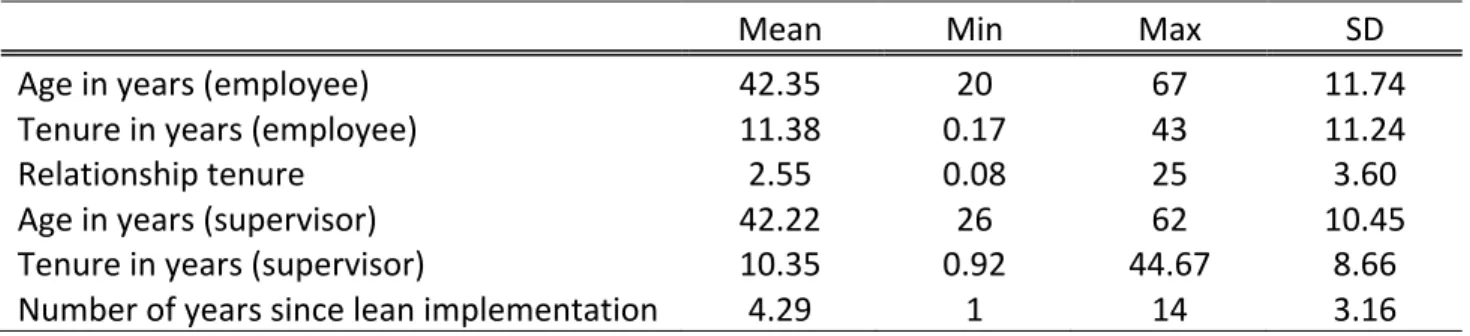
Table 1 – Descriptive Statistics of the samples ... 41
Table 2– Gender Distribution within the samples ... 41
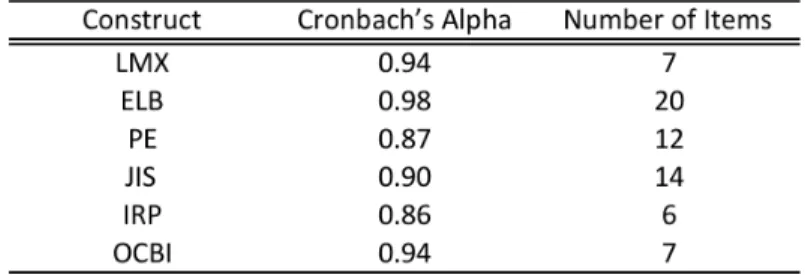
Table 3– Scale Reliability Statistics ... 42
Table 4 - Bivariate Correlations ... 42
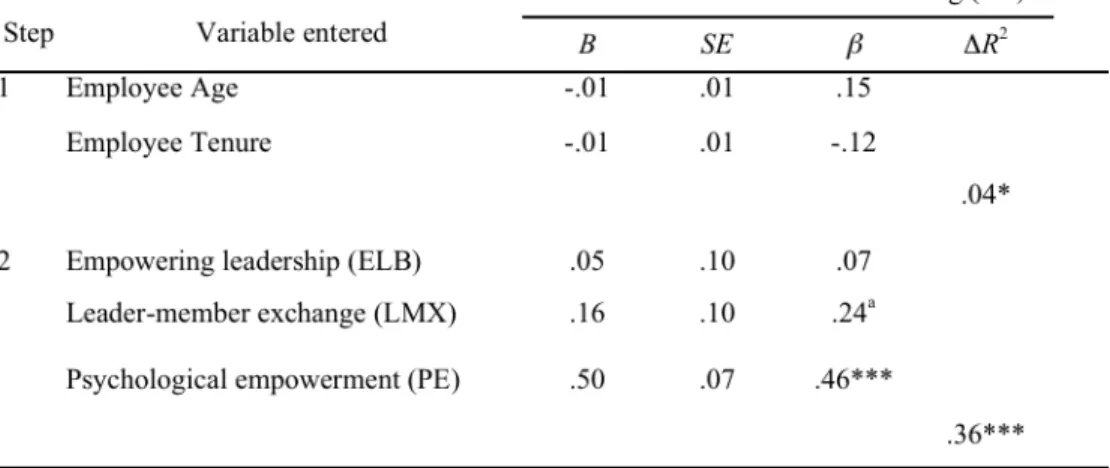
Table 5 - Regression analysis of leadership domain variables on job involvement in the work setting ... 44
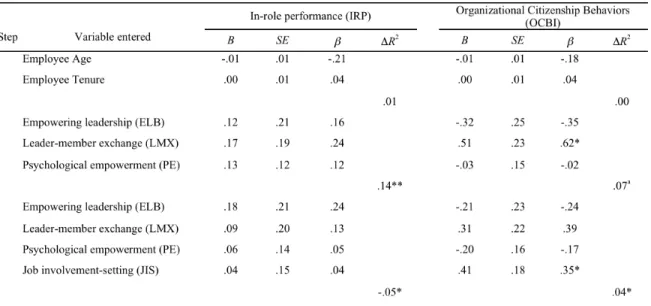
Table 6 - Hierarchical regression analysis for mediation of the relationship among leadership domain variables and individual performance variables by job involvement in the work setting ... 45
LIST OF FIGURES
Figure 1 – General Research Model ... 24 Figure 2 – Conceptual Research Model ... 34
LIST OF ABBREVIATIONS
5S Workplace organization method described by 5 Japanese words: seiri (sort), seiton (straighten), seiso (shine), seiketsu (standardize), and shitsuke (sustain)
ELB Empowering Leadership Behaviours IRP In-Role Performance
JIR Job Involvement – Role JIS Job Involvement – Setting JIT Just-in-Time
OCB Organizational Citizenship Behaviour
OCBI Organizational Citizenship Behaviour directed towards an individual OCBO Organizational Citizenship Behaviour directed towards the organization TPS Toyota Production System
ACKNOWLEDGEMENTS
First and foremost I would like to acknowledge and thank my research co-directors and members of the jury for their precious feedback and guidance in completing my Master’s research paper: Guylaine Landry, my initial research director, who agreed to continue to supervise my research during her maternity leave and change of employment; Michel Pérusse who agreed to take on the role of co-director part way through the process; and Alexandra Panaccio, who kindly accepted to be a member of the jury.
I would also like to thank Mario Roy for his encouragement, and confidence in my ability to complete my research work while undertaking my first year of doctoral studies. It is probably a good thing that I did not fully understand the magnitude of this undertaking when I began my studies last fall. A special thanks to my colleagues in the doctoral program, Caroline Blais and Mélanie Lagacé, and to my close friend Marie Claude Drouin, for their words of wisdom and encouragement, and for providing moments of laughter when they were most needed.
I would also like to acknowledge the excellent advice and assistance provided by Jean Cadieux and Carl Blanchette with the statistical analysis, allowing me to draw interesting conclusions despite the relatively small sample size.
And last, but certainly not least, I would like to thank my partner Paul Chamberland, and my children Judith and Philip Lajoie, for their patience and understanding. Returning to university after 22 years of full time employment was a considerable change, one which they all fully supported and encouraged, allowing me to fully invest in my studies and research.
CHAPTER ONE - PROBLEMATIC
The fundamentals of lean management can be traced back to the Toyota Production System, developed by Taiichi Ohno, following the end of the Second World War. This production system focuses on the elimination of waste and excess in production processes. The most important aspect of the system that Ohno developed was focusing management on the workplace and eliciting wisdom and innovation from people in the workplace. Ohno was more interested in getting people to think for themselves than in telling them what to do; he underscored the crucial importance of motivating people in the workplace through inspirational leadership (Shimokawa & Fujimoto, 2009).
Interest by the Western manufacturing world in the Toyota System was limited until the publication of the book The Machine that Changed the World that coined the term ‘lean manufacturing’ for the Toyota Production System (Womack, Jones & Roos, 2007). With competition from the Japanese, North American manufacturers were looking for more modern manufacturing methods to reduce costs and improve efficiency. The majority of companies, however, emulated the techniques and tools of lean management without understanding the lean philosophy, and many attempts to convert to lean practices have failed. Very simply, for lean to succeed, it needs to be viewed as a philosophy and not a short-term strategy for cost savings (Bhasin & Burcher, 2006). It needs to permeate the culture and the thinking of the leaders of the organization and it needs to become a way of doing business. Lean management has, in much of the research literature, been treated as a neotayloristic management model that is not necessarily a healthy nor a productive work concept (Boje & Winsor, 1993). However, lean management is much more than the application of the tools and techniques (such as Kanban, JIT, Jidoka, 5S, standardized work, production leveling), which lead workers to believe that it is simply another way to squeeze more efficiency out of them.
The management principles of lean manufacturing steer the organizational form away from a command and control management system to a more flexible environment where teams that are closest to where the work is done determine the best methods and solve problems to improve quality and working conditions. Within this context, the role of
the first line supervisor has a critical bearing in the day-to-day conduct and decision-making regarding work and workers (Parry, 1997). Despite the importance of this role, very little research has been done on the supervisory role and its importance in lean management. This research project will attempt to elucidate the leadership behaviours required of first line supervisors, the type of relationship they must develop with subordinates, and the employee cognitions that should be encouraged for enhanced performance of individual employees in a lean environment.
CHAPTER TWO - THEORETICAL FRAMEWORK
To understand the theoretical framework for this research paper, an understanding not only of the origins of lean management, but also of the key characteristics of a lean environment, and the expected role of the employee and supervisor in such an environment is required. Therefore, this chapter will begin by providing the required background in lean management. A literature review of the key concepts included in the study, and the specific hypotheses that will be tested will follow, and the chapter will conclude with a presentation of the conceptual model for the present study.
1. LEAN ENTERPRISE MANAGEMENT 1.1 Mass production versus lean production
Following World War I, Henry Ford and Albert Sloan of General Motors revolutionized the automotive manufacturing processes transitioning from craft production to mass production, leading the US to dominate the global economy (Womack et al., 2007). Mass production was based on the scientific principles of Frederick Taylor. The scientific method Taylor advocated was the use of time and motion studies to determine the most efficient method for performing work. High specialization of workers and piece rate systems followed. In mass production, the idea of division of labour is taken to its ultimate extreme – typically, each employee has one task to perform, and does so repeatedly throughout the work shift. Emphasis is on doing the work as quickly as possible using methods designed by professionals outside the work group. Ford had huge success using this method and the North American car manufacturers became noted for high efficiency and low costs. In mass production, standardized products are churned out in very high volumes using expensive single purpose machinery. Because the machinery is expensive and, in most cases, cannot cope with disruptions, buffers are added in the process (extra materials, extra people, extra space) to assure smooth production. The result of mass production is a lower cost product for the customer, but at the expense of variety in the product offering and employee morale (due to the implementation of work methods that are boring and dispiriting for workers) (Womack et al., 2007). Workers on the shop floor in
this environment became interchangeable parts of the production system. Despite the economic success of methods adopted by Ford from the scientific method of Taylor, this type of management created dissatisfaction among the workers leading to labour unrest and a growing interest in the management literature on worker motivation and satisfaction. Hence, by the time of the great depression and the rise of labour unions, the issues of seniority and job rights were at the forefront and an ever-growing list of job rules led to a reduction in the efficiency of the mass production factories.
Following World War II, the Japanese car manufacturers were far behind the American manufacturers in terms of productivity and quality. Toyota undertook the challenge of catching up to the productivity standards of the American manufacturers. It was at this time that Taiichi Ohno, then working at Toyota’s Koromo (Honsha) Plant, went to work on modifying the assembly process and created what is now known as the Toyota Production System (TPS). This production system was developed over many years and with much trial and error (Holweg, 2007). Ohno focused on the elimination of waste and excess in production processes. His methods came to be known as “lean” production with the publication of the book The Machine that Changed the World (Womack et al., 2007) as they eliminate waste in all aspects of the manufacturing process – including human effort, manufacturing space, capital investments, time, and inventory – as compared with mass production. Toyota, in fact, set out to copy Ford’s mass production techniques but capital constraints and low volumes in the Japanese market did not justify the large batch sizes commonly used by North American car manufacturers. The advantages of small lot production with economies of scale in manufacturing under TPS went largely unnoticed for many years (Holweg, 2007). While Ohno is credited with inventing a new production concept, it was in fact a continuous learning cycle that spanned several decades. The Toyota Production System was not formally documented until 1965, and was not translated into English until 1977, with the publication of the article Toyota Production System and Kanban System: Materialization of Just-in-Time and Respect-for-Human System by Sugimori, Kusunoki, Cho and Uchikawa (1977). By this time, Toyota had a significant productivity advantage over US and European manufacturers. Their manufacturing
methods were widely referred under the nomenclature of ‘just-in-time’ manufacturing or the ‘Toyota Way’ until the first publication of the book by Womack in 1990.
Interestingly in the first English translation of TPS (Sugimori et al., 1977), the system is defined by the following two concepts:
“First of all, the thing that corresponds to the first recognition of putting forth all efforts to attain low cost production is “reduction of cost through elimination of waste”. This involves making up a system that will thoroughly eliminate waste by assuming that anything other than the minimum amount of equipment materials, parts and workers (working time) which are absolutely essential to production are merely surplus that only raises the cost.
The thing that corresponds to the second recognition of Japanese diligence, high degree of ability and favoured labour environment is “to make full use of the workers’ capabilities”. In short treat the workers as human beings and with consideration. Build up a system that will allow the workers to display their full capacities by themselves.” (p. 554).
The second concept, fundamental to TPS, emphasizes a style of leadership that demonstrates respect for people by eliminating wasteful movements, considering worker safety in job design, and allowing workers to display their capabilities by entrusting them with greater responsibility and authority in decision making (Sugimori et al., 1977). More and more western (particularly manufacturing) companies were emulating the Japanese methodology and techniques by this time, but the focus on a leadership that emphasizes respect for people appeared to get lost in translation. This is surprising given that these concepts were not totally new; as far back as the 1920’s there were calls for an “appreciation of the importance of the human factor” (Gordon Watkins, 1922 as cited in Kaufmann, 1993, p. 21). The essence of the human relations perspective of the 1920’s was that through effective motivation, communication and leadership in the workplace it is possible to create an organizational climate that promotes a mutuality of interests between management and labor and high levels of job satisfaction and productivity among employees (Kaufmann, 1993). These ideas were further developed by Elton Mayo, who
viewed human nature as being driven by emotion and not by reason. Mayo and Roethlisberger’s documentation of the Hawthorne experiments are presented in many textbooks as the foundation of human relations theory. Managers need to be concerned with what motivates workers and why, thus moving into a role of team builder and facilitator to enhance both job satisfaction and productivity, and not just the latter (Lemak, 2004).
Another advocate of human relations theory was Mary Parker Follett. Follett saw the organization as a social setting whereby individuals and groups contribute to the overall success through participation in decision making. It is not enough to transfer formalized power; individuals must be directly involved in analyzing problems and implementing solutions. In this way, Follet moves away from the concept of a leader having power over a subordinate to the concept of sharing power with subordinates and developing their ability to be full partners in the organization (Eylon, 1998). While Follet was an American political scientist and philosopher, her work was more influential in Europe than in North America. It is not surprising then, given Follett’s view of mutual problem solving, the use cross functional teams, and flatter organisational structures, that her philosophical view of empowerment foreshadowed the development of lean principles and the Toyota Way (Feldheim, 2004).
1.2 Lean Implementation and Lean Principles
There is a surprising amount of research on the cause of the failures related to the implementation of lean manufacturing, and on the negative impacts of lean practices on employees. Hasle, Bojesson, Lnagaa Jensen and Bramming (2012) performed a review of the literature on lean management in order to better understand its relationship with the working environment, and its effect on employee health, job satisfaction and commitment. Their review attempted to settle the ongoing debate on whether lean is mean, or a healthy and productive work concept. The results suggest that both negative and positive outcomes are present, however, the negative appear to dominate. These include lower job autonomy, higher demands, faster work pace, increased workload and augmented work intensity. In terms of effects on health, the authors report several studies linking lean to anxiety, stress and lower job satisfaction. While limited, positive effects, such as greater job autonomy, improved commitment, increased motivation and higher satisfaction were reported in some
of the studies reviewed. The authors suggest the ambiguity in the results stems from differences in implementation, practice and context. The predominantly negative effects reported may be attributable to the introduction of lean as a series of tools and techniques for cost cutting.
To properly understand lean manufacturing it is, therefore, necessary to look beyond the tools and practices and examine the system itself. The principles of lean have been clearly documented in the book Lean Thinking (Womack & Jones, 2003). The starting point for lean thinking is “value” as defined by the customer. Next is understanding the “Value Stream”, which includes identifying all of the specific activities required to bring the product or service to the customer. Once the value stream steps have been identified, and the non-value tasks eliminated, it is necessary to make the remaining value creating steps “flow”. Creating flow will engender an improvement in productivity and a cash flow windfall from reduced inventory and improved cycle times. Ongoing benefits come from introducing the fourth principle, “pull”, which allows the organization to produce only what the customer needs. Instead of producing to a forecast, only product that has been sold will be replaced. The final and crucial aspect of the lean principles is “perfection”, continuously striving for an ideal. As Holweg (2007) states “it is this dynamic learning capability that is at the heart of the success of the Toyota Production System” (p. 422). Any improvements made within a lean system are made in accordance with a standard scientific problem solving method, under the guidance of a teacher, at the lowest level possible within the organization. Frontline workers make improvements to their own jobs and their supervisors provide assistance. Organizations that manage according to TPS share the overarching fundamental belief that people are the most important corporate asset and that investment in their skills and knowledge is essential to building competitiveness (Spear & Bowen, 1999).
1.3 Lean Production, Lean Philosophy and Lean Enterprise
Lean has been used to describe many things including manufacturing processes, organizational culture, organizational philosophy and the management system. Lean production and lean manufacturing are used interchangeably to describe a production system that when implemented provides a way to produce more and more, with less and
less (less material, less effort) and comes closer and closer to providing customers with exactly what they want (Womack et al., 2007).
Lean philosophy, on the other hand, is concerned more about changing the way people think than with the elimination of waste in the individual processes. A company’s philosophy is reflected in its management system (Mann, 2005). Management systems within a lean philosophy ensure that decisions are made at the lowest organizational level possible, closest to where the actual work is being done. As well, they nurture a learning environment (so critical to lean manufacturing) systematically focusing on the customer, and promoting lean leadership at all levels. This is accomplished through the use of visual lean metrics, daily accountability systems, leader standard work, and discipline (Mann, 2005).
The term Lean Enterprise is presented by Womack and Jones in their book Lean Thinking (2003) to describe the interaction required between all of the actors along the Value Stream, from the raw material supplier to the final end customer. The focus of all involved is on providing value to the customer. Lean Enterprise involves all functions within an organization (human resources, finance, engineering, supply chain, marketing, and sales) and all the suppliers and contractors that are connected in one way or another with the Value Stream.
This distinction of the terms is important as the organization involved in this study has implemented an Enterprise Management System with components that encourage behaviours to support their lean philosophy, the use of tools fundamental to lean manufacturing, and management systems that are common within all functions of the organization.
1.4 Prominence of the Team in a Lean Environment
Teamwork is an organizational approach that responds to the need for flexibility, adaptability and tight coupling in response to extremely competitive market conditions
(Tranfield & Smith, 2002). The fundamental idea underlying teamwork of all forms is the emphasis on responsiveness, flexibility and proactivity at both the individual and team level (Ibid). Womack and Jones (2003) make several assumptions about lean teams: 1) workers are multifunctional, 2) operators have greater responsibility for tasks such as quality control and routine maintenance that were previously under the responsibility of specialists, and 3) workers contribute to improvements through group problem solving. Several studies have looked at organizational designs for team working and have found that while the general archetype of self-directed work teams is extensively used in manufacturing organizations, the subtype used within lean organizations is quite different (Delbridge, Lowe & Oliver, 2000; Forza, 1996; Tranfield & Smith, 2002).
Lean production teams are tightly coupled because of the need to manage with low buffers of inventory between the individual processes, and because of the use of standard work. There is a need to coordinate behaviours within the system if the total process is to function effectively. In these environments, formal leaders co-ordinate team activities and interact with other parts of the production system (Tranfield & Smith, 2002). Autonomy in these environments occurs in the innovation mode, where employees choose which problems to resolve and how to resolve them (Ibid). Problem solving is organized around production teams. These teams have responsibility for monitoring quality, planning work activities and are committed to continuous improvement in all aspects of the operations (Cuther-Gershenfield, 1994; Tranfield & Smith, 2002). These are not self-directed work teams (given that a leader is present) but lean production teams that have ownership of their processes (Forza, 1996). These lean production teams are the type found within the organization in the current study.
1.5 Role of the Supervisor in a Lean Environment
The supervisor role has changed as manufacturing has moved from craft to mass to lean production. In craft production, the supervisor was considered the person in charge. With the shift to mass production and ‘scientific methods’, the supervisor became the person in the middle implementing management decisions affecting production operations (with little influence on the decisions made), and monitoring production (Mason, 2000). The flattening of the organization structure, increasing pressure on cost and quality, and the
emphasis on teamwork and worker involvement in lean production places increasing demands on the first-line supervisor. As a result, the role has considerably evolved and the task of supervision in a lean environment is more complex. While the front-line supervisor maintains a position of authority, the role has shifted from one of problem solver to one of facilitator and motivator (Mason, 2000; Olivella, Cuatrecasas & Gavilan, 2008). No longer strictly associated with quality control and scheduling, the supervisor role becomes one of encouraging more participation, and creating an environment of continuous improvement. In addition, tasks such as improvement activities, health and safety initiatives, training and discipline, previously the domain of middle managers have become the responsibility of first-line supervisors (Barton & Delbridge, 2006). Decentralization, participation in decision-making and continuous improvement are at the heart of lean – the role of the first line supervisor is, therefore, critical to success.
In the lean work environment, the supervisor is expected to demonstrate a leadership style that incites self-management, promotes empowerment, provides encouragement, and builds trust (Arnold, Arad, Rhoades & Drasgow, 2000). Hach (2009) reinforces this perspective indicating that the leadership skills required in a lean environment include behaviours that motivate, mobilize and manage change, set and communicate direction, enforce standards and the use of new work processes, create a culture of accountability, empower individuals and teams for action and coach individuals to enhance performance. The elements related to the first line supervisor leadership style will be explored in the current research.
2. KEY CONCEPTS AND HYPOTHESES 2.1 Leadership
Leadership is a much-studied phenomenon that has generated a great variety of definitions. A common definition, proposed by Yukl (2010), describes leadership in the following way:
Leadership is the process of influencing others to understand and agree about what needs to be done and how to do it, and the process
of facilitating individual and collective efforts to accomplish shared objectives. (p. 8)
The definition is general and only hints at the numerous theories that attempt to explain effective leadership. Several perspectives on effective leadership exist including competency; personality or trait; behavioural; situational or contingency; relational; and implicit theories. The competency perspective assumes that leaders possess specific competencies that make them effective, and individuals are able to develop the competencies required to become great leaders (e.g., Hogan & Kaiser, 2005; Mintzberg, 1995; Quinn, Faerman, Thompson, McGrath & St. Clair, 2007; Yukl, 2010). Proponents of the personality approach to leadership believe, contrary to the competency approach, that effective leaders are born and not made. Researchers of this perspective study the link between specific personality traits and leader effectiveness (e.g., De Vries, 2012; Kramer, 2003; Judge, Bono, Iles & Gerhardt, 2002; Judge & Piccolo, 2004). The behavioural approach, on the other hand, concentrates not on the personality of the leader but on what the leader does on the job, focusing on the identification of effective leadership behaviour. While several types of behavioural leadership have been researched, the most studied behavioural leadership theories are transformational and transactional leadership. In fact there have been more studies on transformational or charismatic leadership than all other leadership theories combined (Judge & Piccolo, 2004). The situational approach emphasizes the importance of contextual factors that influence leadership processes. According to this perspective, different attributes will be effective in different situations; therefore, effective leadership is determined by the situation. Contingency theory presumes there are separate outside forces that determine the leader’s effectiveness. These forces may be environmental, organizational or cultural; or may be related to the group characteristics. Relational theories focus on the relationship between the leader and the subordinate. The quality of the relationship is assumed to influence the subordinate’s attitudes. Implicit theories of leadership suggest the characteristics people look for in their leaders; in short how effective leaders are defined by their followers.
Graen and Uhl-Bien (1995) address this diversity in leadership theories and propose examining leadership through a three-domain approach, instead of examining leadership
from a single perspective such as behaviour, competency or trait. These authors suggest that considering leadership from the domain of the leader, the follower and the leader-follower dyad may provide a more balanced and powerful explanation of leadership than any one of the domains individually. In the leader domain, one finds behavioural approaches to leadership, where the primary focus is on the appropriate mix of personal characteristics and behaviours that would promote the desired leader outcomes. Leader outcomes may be defined as specific desired follower behaviours (organizational citizenship behaviours for example) that lead to enhanced performance. In the follower domain, the focus switches to the effectiveness of certain leadership styles on follower attitudes and hence on desired follower outcomes. Examples of followers’ attitudes may include job satisfaction, perceived organizational support, or commitment that again leads to desired behaviours and hence, enhanced organizational performance. In the relationship domain of leadership theory, the focus is on the dyadic relationship between the leader and the follower. It considers the characteristics of this relationship, how the quality of the dyadic relationship is related to desired outcomes, and what behaviours are required on the part of leaders and followers for a high quality relationship. In several studies cited by Graen and Uhl-Bien, when leadership is assessed in the three domains, the variables taken in combination provide a more complete explanation and generate a more predictable variation in the leadership outcomes. In other words, “leadership is a multifaceted construct involving aspects of the leader, the follower, and the dyadic relationship between the two. Therefore investigations of leadership should focus on all these facets” (Ibid, p. 224-225).
The current study uses the three-domain framework proposed by Graen and Uhl-Bien to examine the leadership skills required of first line supervisors within a lean environment that lead to enhanced individual performance. In defining a lean environment as one where employees are empowered to drive continuous improvement, sustained competitive advantage comes from leaders combining technical skill and know-how with effective leadership skills in all three domains.
Several studies have examined the link between leadership and individual performance, and have demonstrated that the relationship is mediated by employee attitudes (Hogan & Kaiser, 2005). The current study will use this relationship of mediation as the
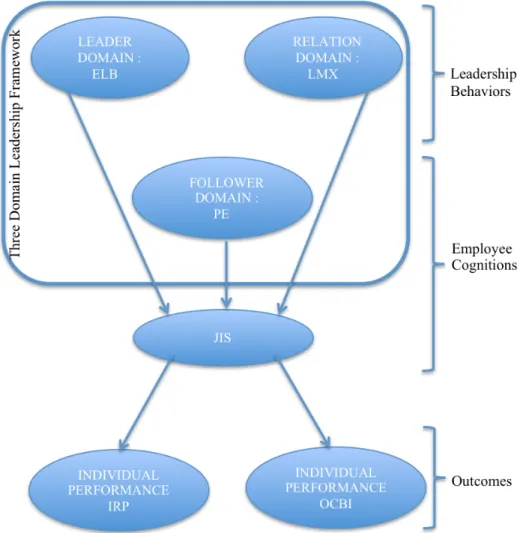
general research model (see Figure 1), where leadership includes the three domains of leader, relational and follower leadership.
Figure 1 – General Research Model
2.1.1 Leader Domain: Empowering Leadership Behaviours
In a lean environment, the management structure tends to veer away from a traditional structure to a flatter structure enabled by empowered work teams having ownership of the production process. This emphasis on teams leads to different requirements for leaders. Arnold et al. (2000) noted a paucity of research on the required behaviours for leaders of empowered teams despite the widespread popularity and use of such teams. Consequently, they developed a model for empowering leadership behaviours that are associated with effective team leadership in a team environment.1 The behavioural categories and scale developed by Arnold et al. (2000) share more similarities with the behaviours of leaders of empowered teams described by Manz and Sims (1987, 1991), than with behaviours of the more popular theories of transformational leadership. These authors introduced the concept of ‘SuperLeadership’ whereby a “leader leads others to lead themselves” (p.18; 1991). The behaviours of empowering leaders are defined, therefore, by the shift in control from the leader to the team members.
Arnold et al. (2000) defined five categories of empowering leadership: participative decision making (encourage employees to express their ideas around issues at stake and provide them with opportunities for voicing these opinions); showing concern/interacting with the team (the extent to which the leader attends to each worker’s needs and listens to
1 Arnold et al. did not study leadership behaviours associated with perceptions of increased empowerment. Perceptions of empowerment (i.e., psychological empowerment) will be analyzed in the follower domain in a subsequent section of this paper.
their concerns, and encompasses the need for respect and recognition for their individual contributions); leading by example (the extent to which the leader is a role model, and demonstrates the leader’s commitment to their own work as well as to the work of their team members); informing (dissemination of information about the organization’s objectives, policies and practices, allowing employees to have a thorough understanding of their roles and responsibilities and how they contribute to the goals of the team); and coaching (the teaching or developing process through which an individual is supported while achieving a personal or team goal). While several required behaviours such as modeling appropriate behaviour, providing encouragement, and communicating a vision are shared with transformational leadership, empowering leadership is distinguished by behaviours whereby power is shared with subordinates (Srivasta, Bartol & Locke, 2006).
In the context under study in this paper, the first line supervisor sets goals and boundaries for the team, but allows the team to develop the methods and measurements to meet these goals. The basis of the lean environment is continuous improvement, and empowering leadership has been linked positively to continuous improvement in previous research (e.g., Carroll, 2001). Hach (2009) identified six core leadership behaviours in a lean environment, including empowering teams for action, communicating direction and coaching individuals, all three key elements of empowering leadership as defined by Arnold et al. (2000)
Several studies have linked empowering leadership behaviours to organizational performance through enhanced individual and team performance (Ahearne, Mathieu & Rapp, 2005; Huang, Liu & Gong, 2010; Raub & Robert, 2010; Srivasta et al., 2006; Vecchio, Justin & Pearce, 2010; Wang, Sui, Luthans, Wang & Wu, 2014; Zhang & Bartol, 2010). All of these studies indicate that the correlation of the leadership behaviours to performance is not necessarily direct, and as Graen and Uhl-Bien (1995) propose, a combination with other domains is necessary to fully understand the multifaceted concept of leadership. The two other domains are more fully explained in the following sections, beginning with the relation domain.
2.1.2 Relation Domain: Leader-Member Exchange (LMX)
A relationship-based approach to leadership emphasizes the dyadic relationship between the leader and the subordinate, focuses on the characteristics of this relationship and how it may be related to specific outcomes such as performance. The relationship people have with their supervisor is crucial to understanding and shaping their work experience (Martin, Epitropaki, Thomas & Topakas, 2010). Of the relationship-based approaches, Leader-Member Exchange (LMX) theory is the most prominent, developing over the last 50 or more years. LMX theory describes the dyadic process by which roles and expectations are developed between a leader and each subordinate (Dansereau, Graen & Haga, 1975; Graen & Cashman, 1975). The term member in LMX theory refers to the subordinate who is a member of the group that the leader manages. It is not a term used frequently in organizational psychology, but is employed within the concept of LMX to distinguish the leader from a member of the team, and to avoid the top down perspective that the term subordinate may imply, which is somewhat at odds with LMX theory. For simplicity, however, the term subordinate will be used interchangeably with the term member throughout this paper.
LMX theory breaks from approaches prevailing prior to the 1970’s that generally assumed leaders treated all subordinates the same. It is rooted in the Vertical Dyad Linkage theory whose premise is that leaders develop relationships with subordinates of varying degrees of support and openness, and each relationship is unique. In a review of LMX research, Martin et al. (2010) indicate that one of the clearest definitions of the LMX concept comes from Scandura et al. (1986): “leader member exchange is (a) a system of components and their relationships (b) in both members of a dyad (c) involving interdependent patterns of behaviour and (d) sharing mutual outcome instrumentalities and (e) producing conceptions of environments, cause maps and value” (cited by Martin et al., 2010, p. 37). According to LMX theory, effective leadership is created through the dyadic relationship. It is rooted in social exchange theory (Brower, Schoorman & Tan, 2000; Graen & Uhl-Bien, 1995) and explains how the LMX relationship develops via a process of exchanging a variety of tangible and intangible commodities. The resulting relationships
range on a continuum of low quality LMX (based mainly on the employment contract), to high quality LMX (that extends beyond the job contract) (Martin et al., 2010).
In a meta-analytic study, Dulebohn, Bommer, Liden, Brouer and Ferris (2012) provide a theoretical framework summarizing 247 studies of LMX research. Their study examined the follower, leader and interpersonal relationship characteristics that influenced the quality of the LMX relationship and the resulting attitudes and behaviours of the relationship. One of the most interesting findings, according to the authors, was that leader behaviours and perceptions explained the most variance in LMX of all of the antecedents analyzed. As for the benefits of LMX, they are numerous (Dulebohn et al., 2012). The strongest average correlations, between LMX and its consequences, were with perceptual outcomes (such as procedural justice and empowerment), followed by attitudinal outcomes (satisfaction and commitment) and finally behavioural outcomes (such as job performance and organizational citizenship behaviours).
In the Dulebohn et al.’s (2012) meta-analysis, LMX was examined as a mediating and conceptually central variable. In the current study, it is proposed that LMX represents a complementary domain of leadership to empowering leadership behaviours (ELB) and employee psychological empowerment. Job involvement – an employee cognition – is proposed to be a mediator of the relationship between the three leadership domains and employee performance.
2.2 Employee Cognitions
2.2.1 Follower Domain: Psychological Empowerment
The domain approach to leadership of Graen and Uhl-Bien (1995) signifies that an understanding of leadership requires a focus not only on leader behaviours, but also on the follower and their relationship. A focus on followers involves looking at their cognitions or behaviours, in line with the concept of followership explored by various authors (e.g., Kelley, 1988; Meindl, 1995). In the present study, the leader behaviours are captured in the construct of ELB, and the quality of the relationship of the dyad is represented by LMX. Psychological empowerment, an employee cognition, will represent the follower domain given its pertinence to a lean environment.
Psychological empowerment has been conceptualized and studied by a large number of researchers and may be separated into two separate conceptions of empowerment. The first, shared by a large number of management theorists, regards empowerment as a set of techniques whereby authority is delegated to followers. This approach to empowerment, defined as the socio-structural approach, focuses on the policies and practices that lead to the sharing of power (Spreitzer, 2008). Practices that have been identified as contributing to empowerment include participative decision making, skill/knowledge based pay, open flow of information, flat organizational structures, and training. Conger and Kanungo (1988) argue that empowerment is not simply a process of delegation but a process of enabling, achieved through the enhancement of personal efficacy. In their operationalization of empowerment, managerial strategies and techniques such as modeling, goal setting and participative management, combined with the removal of organizational factors that lead to a psychological state of powerlessness, strengthen beliefs in personal efficacy resulting in desired behavioural effects (such as enhanced performance). In the current study, this conception of empowerment is addressed under the previously presented construct of empowering leadership behaviours.
In the second conception of empowerment, introduced by Thomas and Velthouse (1990), empowerment is viewed as an active work orientation. They describe empowerment broadly as increased intrinsic task motivation based on generalized beliefs regarding impact, competence, choice and meaningfulness. These global assessments are assumed to be generalizations from previous task assessments and thus represent an individual’s accumulated learning. As explained by these authors, these assessments are the key cognitions, which are presumed to be proximal causes of intrinsic motivation.
Spreitzer (1995) follows this stream of research and further extends the approach focusing on empowerment as a psychological mindset, which includes four cognitions that reflect a proactive orientation towards one’s role in the organization. These cognitions include meaning (a fit between the requirements of a work role and the beliefs and values of the individual); competence (an individual’s belief in his or her capability to succeed in the activities required by the work, also referred to as self-efficacy); self-determination or autonomy (the sense of having a choice in initiating and continuing work behaviours); and
impact (the degree to which the individual can influence outcomes at work). Spreitzer demonstrates the validity of the four dimensions of empowerment and their contribution to an overall construct of psychological empowerment.
In reviewing the body of research on empowerment, Spreitzer (2008) indicates that the combination of the socio-structural and the psychological views of empowerment are important. Pointing to examples of employees working in environments where the structure, practices and policies create an empowering climate, but found to nonetheless demonstrate feelings of powerlessness, she indicates that each approach on its own will have little effect. The organizationally centric view of the socio-structural approach needs to be combined with the individually centric view of psychological empowerment for a full understanding of empowerment. The multi-faceted nature of empowerment requires an approach combining top-down mechanistic features which include setting direction, vision and goals and providing a formal organizational framework for the execution of tasks versus the organic approach which embodies a more bottom-up approach and focuses on trust, personal growth and risk taking of subordinates (Quinn & Spreitzer, 1997).
Psychological empowerment has been linked to a variety of positive outcomes such as task related performance and proactive behaviours. Workers who see themselves as competent and having some degree of autonomy are more likely to execute assigned job activities and innovate (Boudrias, Gaudreau, Savoie & Morin, 2009). The majority of authors, however, position psychological empowerment as a mediating variable between leadership behaviours, task characteristics, or organizational characteristics and affective or behavioural outcomes (Boudrias, Gobert, Savoie & Vandenberghe, 2003). The current study will propose a slightly different framework. As mentioned, psychological empowerment (PE) will be considered as the variable representing the follower domain of leadership, and therefore will be studied along with the leader (ELB) and relation (LMX) domains as independent variables predicting performance. The relationship between these leadership domains and performance will be mediated in the proposed model by job involvement, which is explored next.
2.2.2 Mediation through Job Involvement
A variety of definitions for job involvement have been presented in psychological and managerial literature. Paully et al. (1994) define job involvement as “the degree to which one is cognitively preoccupied with, engaged in, and concerned with one’s present job” (p. 225). Since the introduction of the job involvement construct by Lodahl and Kejner in 1965 (Brown, 1996), a plethora of empirical studies have been conducted. Based on these studies Brown concludes, “increasing job involvement can enhance organizational effectiveness and productivity by engaging employees more completely in their work and making work a more meaningful and fulfilling experience” (p. 235).
The job involvement construct has often been confused with the similar yet distinct construct of work centrality. Work centrality, rooted in the Protestant work ethic, refers to the broad notion of the importance of one’s work in general in one’s life. Job involvement, on the other hand, is more specific and refers to concern with one’s job. Paully et al. (1994) demonstrated that these were indeed two very different constructs, and furthered the understanding of job involvement by demonstrating that the latter consisted of two components: job involvement-role (JIR) and job involvement-setting (JIS) both of which are equally important in overall job involvement. JIR refers to the degree to which one is engaged in performing the tasks that make up one’s job and JIS the degree to which one finds carrying out one’s tasks in the present job environment to be engaging.
The meta-analytic study by Brown (1996) indicates that job involvement is substantially related to situational antecedent variables, in particular supervisory behaviours such as participation and consideration. Participative decision-making had the strongest relationship with job involvement than any of the situational variables studied. In the same study, Brown found that there was also a correlation between job involvement and performance (classified as a consequence in this meta-analysis); however the relationship was weak. In their study, Rotenberry and Moberg (2007), based on the limited support of the relationship between the attitude of job involvement and performance in previous studies, set out to demonstrate that this was due to the measurement scales used. Their study used the job involvement measure developed by Paullay et al. (1994) and focused on performance measures that distinguished between in-role performance (i.e. related to tasks)
and organizational citizenship behaviours (OCBs). OCBs are discretionary efforts to help others in the organization, or the organization itself, above and beyond the tasks required by their job description2. The results of their study demonstrate a significant correlation between job involvement and performance, both in-role and OCBs, with the most significant correlation observed between job involvement and OCBs directed at the individual supervisor. Their study however did not analyse the specific effects of each of the two components of job involvement (JIS and JIR) defined by Paullay et al. (1994).
It has been demonstrated that job involvement is an integral aspect of lean production processes (Wickramasinghe & Wickramasinghe, 2011). JIS, as mentioned previously, is the degree to which one finds carrying out the tasks in a particular environment to be engaging (Paullay et al., 1994). The specific items of the measurement scale estimate an individual’s level of participation in team activities that improve the production process, as well as the level of effort that an individual is willing to invest in resolving team problems. Lean identifies employee participation as central to the philosophy, and employee involvement tends to be higher in lean production than in traditional manufacturing plants (Forza, 1996). The emphasis in JIS is on teamwork, which is of importance in a lean environment (as explained in section 1.4). In another study, Judeh (2011) found a relationship between job involvement and teamwork effectiveness. Based on these findings, the present study is interested in understanding the degree to which employees find carrying out their tasks in a lean environment, with an emphasis on teamwork, to be engaging (corresponding to the JIS component of job involvement). More specifically, we are interested in the extent to which JIS mediates the relationship between the three domains of leadership and individual performance.
2A more complete definition of OCBs can be found in section 2.3.1 concerning individual
2.3 Outcomes
2.3.1 Employee Individual Performance
There are two separate dimensions of employee performance: in-role and organizational citizenship behaviours. In-role performance (IRP) refers to how well a person performs activities that are directly related to their job description and also includes the degree to which an employee complies with the policies and regulations of the organization. An organizational citizenship behaviour (OCB) is defined as a “behaviour that is discretionary, not directly or explicitly recognized by the formal reward system, and that in aggregate promotes the effective functioning of the organization” (Organ, 1988, p. 4). Katz (1964) noted over fifty years ago that spontaneous employee innovation was necessary for organizational success, and hence, noted a growing interest by managers in employee activity that went beyond the role requirements and significantly contributed to achieving organizational objectives. According to Katz (1964), “if the system were to follow the letter of the law according to job descriptions and protocol, it would soon grind to a halt” (p. 133). Organ’s definition led to much discussion as behaviours that were traditionally thought of as being above and beyond the job description (“extra-role”) began to be recognized within the formal reward system. As a result, Organ (1997) revised his definition of OCBs to “performance that supports the social and psychological environment in which task performance takes place” (p. 95). The advantage of this revised definition is that it maintains the distinction between task performance and OCBs but avoids some of the difficulty in viewing OCBs as discretionary behaviours for which an employee was not compensated (Podsakoff, Whiting, Podsakoff & Blume, 2009).
Over the years, the dimensions of OCBs have evolved. In a critical review of the empirical research on OCBs, Podsakoff, MacKenzie, Paine and Bachrach (2000) integrated the variety of definitions and dimensions of OCBs from previous literature into seven dimensions: helping behaviour, sportsmanship, organizational loyalty, organizational compliance, individual initiative, civic virtue and self-development. Williams and Anderson (1991) were the first to distinguish between behaviours oriented towards the individual (OCBI) and those oriented towards the organization (OCBO). OCBOs benefit
the organization in general and include such elements as giving advance warning when unable to come to work and adhering to informal rules devised to maintain order. OCBIs, on the other hand, include behaviours that immediately benefit specific individuals and through this indirectly contribute to the organization. Factors of OCBIs include helping others who are absent, and taking a personal interest in other employees. Williams and Anderson (1991) demonstrated that in-role behaviours (IRP), OCBIs, and OCBOs are separate dimensions of performance that can be assessed using supervisory ratings. For the purposes of this paper, given the research concentrates on the supervisor’s role and leadership, IRP and OCBIs will be the main focus.
Numerous studies have been performed in order to identify the antecedents of OCBs. Initial research concentrated mainly on personality traits, dispositions and employee attitudes (Bateman & Organ, 1983; Organ, 1988; Smith, Organ & Near, 1983). More recent research offers a larger perspective investigating social ties and variables related to the organizational context. In their critical review, Podsakoff et al. (2000) provide a meta-analysis of 42 variables and their relationship to the most common dimensions of OCBs. The results indicate that job attitudes, task variables and various types of leader behaviour appeared to be the main antecedents of OCBs in general. More specifically, trust in the leader, quality of LMX relationship and leader supportive behaviours demonstrated the highest correlations with overall OCBs, providing support for the multi-domain perspective of leadership.
3. CONCEPTUAL MODEL AND HYPOTHESES
Figure 2 – Conceptual Research Model
Note: ELB = Empowering leadership behaviours, LMX = Leader-member exchange, PE = Psychological empowerment, JIS = Job involvement in the work setting, IRP = In-role performance, OCBI = Organizational citizenship behaviours targeted at an individual.
This study is guided by the broad proposition that leadership influences employee cognitions, which in turn affect employee behavioural outcomes. The role required of first line supervisors for enhanced individual performance in a lean environment is situated in three leadership domains: empowering leadership behaviours (ELB) in the leader domain, LMX in the relation domain, and psychological empowerment (PE) in the follower domain.
The combined effect of these three domains is proposed to have a significant relationship to individual performance (both in-role and OCBIs), through the mediating variable of job involvement in the work setting (JIS). The study proposes that using the multi-domain perspective of leadership provides a more complete view of the leadership required of first-line supervisors in a lean environment. In summary, the following hypotheses will be tested:
Hypothesis 1: The relationship between the leader (ELB), relational (LMX) and
follower (PE) domains of leadership and in-role performance (IRP) will be mediated by job involvement-setting (JIS).
Hypothesis 2: The relationship between the leader (ELB), relational (LMX) and
follower (PE) domains of leadership and organizational citizenship behaviours directed at individuals (OCBIs) will be mediated by job involvement-setting (JIS).
To facilitate reporting of the results, the two main hypotheses will be subdivided as follows:
Hypothesis 1a: The leader (ELB), relational (LMX) and follower (PE) domains of leadership will be related to job-involvement setting
Hypothesis 1b: The leader (ELB), relational (LMX) and follower (PE) domains of leadership will be related to in-role performance (IRP)
Hypothesis 1c: Job-involvement setting (JIS) will mediate the relationship between the three leader domains and in-role performance (IRP)
Hypothesis 2a: The leader (ELB), relational (LMX) and follower (PE) domains of leadership will be related to job-involvement setting
Hypothesis 2b: The leader (ELB), relational (LMX) and follower (PE) domains of leadership will be related to organizational citizenship behaviours directed at individuals (OCBIs).
Hypothesis 2c: Job-involvement setting (JIS) will mediate the relationship between the three leader domains and organizational citizenship behaviours directed at individuals (OCBIs).
CHAPTER THREE - RESEARCH METHOD
1. RESEARCH SETTING AND PARTICIPANTS
The organization participating in the study is a large multinational healthcare organization with over 60,000 employees. With manufacturing facilities around the world, the company develops, manufactures and distributes products that save and sustain lives across the globe. Lean Enterprise management is the fundamental management philosophy of the global manufacturing organization, and incorporates the key fundamentals of lean management. The study was conducted in North American facilities in order to simplify the data collection and to ensure national culture similarity. Working with the human resources staff in the facilities, participants were invited to complete the survey questionnaires.
Two groups were invited to participate in the study: first line supervisors and their employees. Participation was voluntary, and the research methodology was approved by the ethics committee at the University of Sherbrooke (the certificate is included in Appendix A). The data was collected using self-administered questionnaires, using 5-point Likert-type scales, from matched supervisor-employee pairs. The survey instruments are described in some detail below and the full scales are presented in Appendices B and C.
Data collection was performed in two phases. First, employees at the various manufacturing locations were invited by HR representatives to participate in the study. The employees were asked to indicate their names on the questionnaire as well as the name of their supervisor. This method limited the implication of the HR representatives of the organization. It also allowed for the pairing of the supervisor and employee by the researcher, which was required in analyzing the relationship between the employee and supervisor. All questionnaires were returned in pre-addressed envelopes directly to the researcher to provide reassurance on the confidentiality of the responses. Once the employee questionnaires were received, and the list of supervisors identified, the supervisor questionnaires were then distributed. The supervisors were asked to fill out a questionnaire for only those employees that participated in the study, limiting unnecessary evaluations.
Data from the employees was collected from October to December 2013, and data from the supervisors from January to March 2014. Four hundred (400) employee surveys
were sent out to eleven manufacturing facilities. Due to specific contextual factors, one facility decided not to participate in the study, therefore, a total of 10 facilities participated in the survey. Of the 400 surveys distributed to employees, 195 were returned (48% response rate), 37 surveys were not usable due to incongruities or missing data, leaving 158 useable employee surveys. There were 77 supervisors for the 158 employees (an average of 2 employees per supervisor). Thirty-five (35) first line supervisors completed and returned the survey (a response rate of 45.5%), providing 83-paired questionnaires. The final sample is thus composed of 83 supervisor-employee dyads.
2. MEASURES
All of the variables included in the model have been the subject of theoretical interest and/or have empirical support which increases the possibility of comparing results of this research with those of previous studies (Ouakouak & Ouedraogo, 2013). As the surveys were distributed to English-speaking facilities within North America, there was no need for translation of the items. All questions were rated using a 5-point Likert scale: participants were asked to indicate their level of agreement to each of the statements (1=strongly disagree, 5= strongly agree).
2.1 Leader Domain
2.1.1 Empowering Leadership (Employee survey)
A 20-item version of the Empowering Leadership Questionnaire (Arnold et al., 2000) was used, with employees rating their perception of the empowering leadership behaviours demonstrated by their supervisors. Their best fitting model for Empowering Leadership included the following five factors: leading by example, participative decision-making, coaching, informing, and showing concern. Due to considerations concerning the length of the questionnaire, the original 38-item scale was modified to include a total of 20 items, with a minimum of 3 items per factor. Items were chosen based on appropriateness to the specific context of the study. Because the subscales for the five leadership behaviours are highly correlated (Ibid), the subscales were combined as a single empowering leadership measure. Sample items include “(My supervisor) sets a good example by the