
Pépite | Contributions à l'optimisation mono et multi-objectifs : vers une optimisation massive, distribuée et autonome
141
0
0
Texte intégral
(2) HDR de Bilel Derbel, Lille 1, 2017. Bilel Derbel: Contributions to single- and multi- objective optimization, Towards distributed and autonomous massive optimization, © Defended December 11, 2017, Lille, France. page web: http://www.cristal.univ-lille.fr/∼derbel courriel: [email protected]. © 2017 Tous droits réservés.. lilliad.univ-lille.fr.
(3) HDR de Bilel Derbel, Lille 1, 2017. ACKNOWLEDGMENTS I would like to express my deepest gratitude to the reviewers and the members of the jury who accepted to read this document and who attended the defense. In deed, this habilitation would not have been possible without the expert feedback and the insightful comments of Hernan Aguirre, Jose Lozano, Nouredine Melab, Fr´ed´eric Saubion, Pierre Sens and Lionel Senturier. This habilitation was a unique opportunity to provide a unified overview of my research trajectory during the last few years. In this respect, I would like to warmly thank all my colleagues in the DOLPHIN research group in Lille; in particular, Nouredine Melab and ElGhazali Talbi for their kind support. Thanks so much to the Master, PhD students and the post-docs I had the chance to collaborate with; especially, Trong-Tuan Vu and Christopher Jankee, for their hard work and the pleasurable experience we had together. Besides, I would like to thank all my colleagues in the computer science department of the University of Lille, in the CRIStAL research center, and in Inria. They highly contributed making my research and teaching activities very much enjoyable. I am very much grateful to all the colleagues I had the chance and the honor to collaborate with; in particular, Kiyoshi Tanaka, Hernan Aguirre, Cyril Fonlupt and Qingfu Zhang for their friendship and their strong commitment to the development of our common scientific ideas and research collaborations. There is in fact evidence that, due to their continuous support, the next coming years will be again very intensive in research collaborations and in scientific exchanges between France, Japan, Hong Kong, and beyond. I am also so much grateful to my friends Arnaud Liefooghe and S´ebastien Verel. Without their big support and their precious advice, it would not be possible to conduct most of the research described in this document. Last but not least, I would like to thank all my family. To my dear wife Yosra and my little diamond Ela - thanks so much for your patience and your love.. iii. © 2017 Tous droits réservés.. lilliad.univ-lille.fr.
(4) HDR de Bilel Derbel, Lille 1, 2017. CONTENTS 1. 2. introduction 1 1.1 From theoretical distributed algorithms to optimization 1.2 Current Research Topics 3 1.3 Document Outline 5. 1. distributed and parallel branch-and-bound 7 2.1 Introduction and Background 8 2.1.1 B&B in a nutshell 8 2.1.2 Compute Environments and Paradigms 9 2.1.3 Parallel and Distributed B&B: The Main Challenges 11 2.1.4 Parallel and Distributed B&B: Literature Overview 12 2.2 Contribution #1: Dynamic Load-Balancing in B&B 15 2.2.1 Work Stealing: the Basics in a Nutshell 15 2.2.2 Tree-based Dynamic Load-Balancing 16 2.2.3 Selected Experimental Results 18 2.3 Contribution #2: Node-Heterogeneous Work Stealing 20 2.3.1 A large-scale Multi-core Multi-CPU Multi-GPU B&B Approach (3MBB) 2.3.2 Selected Experimental Results. 22 2.4 Contribution #3: Link-heterogenous B&B Load Balancing 24 2.4.1 Dynamic load balancing under Link-Heterogeneity 24 2.4.2 A Generic Link-heterogenous Work-Stealing Algorithm 26 2.4.3 Selected Experimental Results 27 2.5 Conclusions and Perspectives 29. 3. distributed and adaptive heuristic optimization 33 3.1 Introduction and Background 34 3.1.1 General context, motivations and goals 34 3.1.2 Adaptive Operator Selection: A focused Literature Overview 37 3.1.3 Benchmarking Operator Selection 39 3.2 Contribution #1: Distributed Adaptive Operator Selection 42 3.2.1 DAMS and Select-Best-and-Mutate strategy 43 3.2.2 Independent and Collective Machine Learning based Strategies 43 3.2.3 A simple Master/Worker Architecture 45 3.2.4 Selected Experimental Results 47 3.3 Contribution #2: Benchmarking for Adaptive Operator Selection 49 3.3.1 The Fitness Cloud Model 50 3.3.2 Selected Experimental Results 52 3.4 Other related contributions 54 3.4.1 Hyperheuristics based on neighborhood tree search 54 3.4.2 Landscape-aware offline algorithm configuration 56 3.5 Conclusion and perspectives 57. 4. multi-objective optimization and decomposition 61 4.1 Introduction and Background 62 4.1.1 General Context and Definitions 62 4.1.2 Evolutionary Multi-Objective Algorithms 64 4.1.3 Moea/d: Motivation, Challenges and Literature Overview 66 4.2 Contribution #1: Design Components of Decomposition based Approaches. 20. 69. iv. © 2017 Tous droits réservés.. lilliad.univ-lille.fr.
(5) HDR de Bilel Derbel, Lille 1, 2017. contents. 4.3. 4.4. 4.5 5. 4.2.1 On the Impact of the Scalarizing Functions 69 4.2.2 Improving Mating Selection and Replacement in Moea/d 72 Contribution #2: Distributed decomposition-based approaches 76 4.3.1 A distributed localized and adaptive approach 77 4.3.2 Designing Parallel Multiobjective Decomposition 81 Other related contributions 85 4.4.1 Connecting Decomposition and Local Search 85 4.4.2 Design of Adaptive Evolutionary Operators 87 Conclusions and Perspectives 89. looking at the future. 93. a extended cv 97 a.1 Academic Position 97 a.1.1 General Information 97 a.1.2 Education and Academic Milestones 97 a.2 Doctoral and Student Supervision 98 a.2.1 PhD Students Supervision 98 a.2.2 Invited and External PhD Student Supervision a.2.3 Postdoctoral Supervision 99 a.2.4 Master 2 Student Supervision 99 a.2.5 Master 1 Student Supervision 99 a.3 Funded projects and scientific animation 100 a.3.1 Funded projects and scientific responsibilities a.3.2 Research dissemination and visibility 102 a.4 Summary of teaching activities 104 b. 98. 100. personnel bibliography after phd 107 b.1 Book Chapter 107 b.2 International peer reviewed journals 107 b.3 International conferences with committee and proceedings. c bibliography. © 2017 Tous droits réservés.. v. 107. 113. lilliad.univ-lille.fr.
(6) HDR de Bilel Derbel, Lille 1, 2017. © 2017 Tous droits réservés.. lilliad.univ-lille.fr.
(7) HDR de Bilel Derbel, Lille 1, 2017. 1. INTRODUCTION. This document aims at providing an overview of my scientific activities and contributions in the field of single- and multi- objective optimization in general, with a particular interest in distributed and parallel optimization, and general-purpose search algorithms. Before going into a more focused description of the research topics addressed in this document, I would like to first share with the reader some milestones in my research developments showing how my (re)search trajectory has been evolving from theoretical distributed algorithms to optimization. It is also the opportunity for me to highlight very briefly some of my research contributions in the theory of distributed algorithms (which is otherwise not discussed elsewhere in this document), and to give a short overview of my initial scientific background.. 1.1. from theoretical distributed algorithms to optimization. from south to north. During my PhD thesis at the University of Bordeaux (LaBRI) from 2002 to 2006, and later as an assistant professor (ATER) at the University of AixMarseille 1 in 2006-2007, I was mainly working on the theoretical aspects of distributed and graph algorithms. After I moved to the University of Lille in September 2007 as an associate professor (Maˆıtre de Conf´erences) within the DOLPHIN (now BONUS) research group of the CRIStAL (previously LIFL) Laboratory and Inria, I continued working on those aspects and in the same time started to progressively work in the optimization field, as discussed in the following paragraphs. locality in distributed algorithms. I was, and to some extent, I am still, interested in the local aspects of distributed computing [Pel00a]. In a distributed or decentralized system, a number compute entities interact in order to compute some task. Interaction among compute entities is in general enabled through some kind of communication and a fully distributed algorithm is a protocol to be executed locally by each compute entities. A compute entity typically has a very local view of the global state of the distributed system, since only a snapshot of the state of the other entities with whom it is interacting directly is available at some moment of the system time-life. Thus, each distributed compute entity has to make decisions based on this local view, hopefully leading to a correct and efficient evolution of the global state of the whole distributed system. In this context, my initial background is on the (time) complexity analysis of distributed graph algorithms from a very theoretical perspective and relating directly to the locality of the problem to be solved. theoretical distributed graph algorithms. Let us consider a standard graph-based message passing distributed model, where the nodes of the graph model the distributed entities, and the edges of the graph model the fact that two nodes can communicate together by sending and receiving messages. Let us also assume a very simple setting where the system can operate in rounds, where each round costs one time unit, and a node can send and receive a message to each of his neighbors in this time unit. It is not difficult to see that if a distributed algorithm has a time complexity O(τ), that is every node terminates after at most O(τ) time units/rounds, then all the (topological) information used by every node to compute the intended task lies exactly in the ball of radius O(τ). When it comes. 1. © 2017 Tous droits réservés.. lilliad.univ-lille.fr.
(8) HDR de Bilel Derbel, Lille 1, 2017 2. introduction to compute distributively some graph structure, like a spanning tree or a coloring, this means that if initially every node knows the local topology of the graph up to distance O(τ), then it can compute the intended task in one round. Of course, this reasoning holds in a very theoretical model, known as the ”Linial’s free model” or the ”Local model” [Lin92; Pel00b]. This kind of theoretical model allows one to study a fundamental question which is tightly related to the (time and message) complexity of distributed algorithms: ”what local information does every node need in order to compute some task?” or equivalently ”what is the locality degree of a distributed task?”. In this context, during the very first years of my carrier as an associate professor, I continued working on different theoretical models (e.g., [DMZ10; Der+09; DG08; Der+08; Der08; DMG08]); where I was mainly interested in computing distributively in a fully decentralized manner a number of graph structures appearing at the bottleneck of a number of networking and telecommunication applications, and are often considered in graph theory as core problems. These aspects are not addressed in this document. They are only discussed very briefly in the following two paragraphs highlighting how my scientific interests shifted to the optimization field. distributed graph spanners. I was firstly interested in the locality of computing the so-called graph spanners. More formally, an (α, β)-spanner of a graph G is a subgraph H that approximates distances in G within a multiplicative factor α and an additive error β, ensuring that for any two nodes u, v, dH (u, v) 6 α · dG (u, v) + β. For this kind of structures, we are interested in optimizing another criteria: the weight (or the number of edges) of the subgraph H, i.e., not only preserve distance in the skeleton H, but make it as sparse as possible. It is well-known for instance that every n-node graph has a (2k − 1, 0)-spanner with O(n1+1/k ) edges, k is an integer parameter, which can be obtained by a modification of the Kruskal’s minimum spanning tree algorithm [Alt+93]. This is also related to the Erdos¨ Simonovits Girth Conjecture [Erd64; ES82], where it is believed that every (α, β)-spanner with α + β < 2k + 1 must have Ω(n1+1/k ) edges for some worst-case graphs. During my PhD, I was mainly concerned with spanners having a purely multiplicative stretch factor (β → 0), and continued studying purely additive spanners (α → 0) as an associate professor. For instance, we were able to derive new lower and upper bounds for the distributed construction of nearly additive graph spanners [Der+09]; where we provide a generic and deterministic distributed algorithm that in constant number of rounds constructs, for every n-node graph and integer k > 1, an (α, β)-spanner of O(βn1+1/k ) edges, where α and β are constants depending on k, e.g., a (1 + ε, O(1/ε)k−2 )-spanner of O(ε−k+1 n1+1/k ) edges for any ε ∈ (0, 4]. Such a result is actually based on some pre-processing steps involving advanced tools from graph theory such as the distributed computation of sparse clusters and independent/dominated sets. randomized distributed symmetry breaking. The previous considerations are purely theoretical in the sense that the runtime analysis is derived with respect to a purely theoretical message passing model which informs about the locality of a distributed task in an ideal scenario. Nonetheless, such a model might not hold in practice and I was interested in a more realistic setting where communications between neighboring nodes are subject to collisions and/or interferences [GW13]. Computing distributed scheduling schemes enabling collision-free message transmission is hence mandatory for such a distributed setting, e.g., in multi-hop radio networks, wireless ad-hoc networks, etc. From an optimization perspective, such a scheduling can ’simply’ be viewed as a graph problem. From a distributed perspective, this turns out to be a symmetry breaking problem where the major challenge is to avoid that two nodes transmit simultaneously and given that nothing about the surrounding and/or global distributed environment is available locally for each node. In this context, I was interested in the distributed self-organization of nodes using two standard techniques for distributed symmetry breaking in graphs: randomized algorithms and graph-based structures such as node coloring, independent sets and edge matchings,. © 2017 Tous droits réservés.. lilliad.univ-lille.fr.
(9) HDR de Bilel Derbel, Lille 1, 2017. 1.2 current research topics. 3. and contributed some theoretical and applied results [Jem+15; Jem+13; Ghr+13; DT10a; DT10b]. For instance, in [DT10a], we are able to prove that under the harsh SINR (Signal-toInterference-plus-Noise Ratio) physical model, and for every n-node unit disk graph with maximum degree ∆, there exists a distributed algorithm computing with high probability and in at most O(∆ log n) time slots a (1, O(∆))-coloring, that is a coloring where nodes at distance 1 have different colors and at most O(∆) different colors are used overall. The time bound is actually optimal up to a logarithmic factor and is proved by combining graph properties with conventional ’theory’ and analysis tools in randomized algorithms. optimization begins... In parallel to the previously-mentioned research, my scientific interests started shifting progressively to combinatorial optimization and high-performance parallel computing. This was motivated from two scientific perspectives. Firstly, distributed algorithms can be considered as a fundamental building-block in many massively parallel and large-scale compute environments. Tackling large-scale or hard optimization problems often requires to organize the communications between the available processing units in a smart manner. As such, and given the strong involvement of my research team in the first national large-scale experimental grid established in France [Gri], I started looking at the application of different graph based structures, e.g., small world graph, distributed hash-tables, etc, with the aim of efficiently applying them in the design of parallel and fully distributed optimization algorithms. Some fundamental aspects related to termination detection, fault-tolerance, formal verification and complexity analysis, which are not described in this document, were in particular studied within the first PhD Thesis [Dja13] I had the opportunity to co-supervise. Later, designing parallel and distributed optimization algorithms [AT02; Alb05; Tal09] became one of my main scientific activities as discussed all along this document. Secondly, locality in distributed algorithms have, in some sense, a number of common aspects with general-purpose search heuristics. For instance, and specifically with respect to parallel search heuristics, there exist a number of widely-used models and algorithmic frameworks, e.g., the island model, cellular genetic algorithms, ant colony metaheuristics, where local cooperation is shown to play a crucial role. Hence, I start being naturally interested in designing high-level (distributed) search algorithms which would rely on simple local rules that would imply a powerful global behavior of the underlying (distributed) system. Later, designing autonomous, high-level and general-purpose optimization algorithms [HMS12] became one of my favorite research topics, together with the systematic analysis and the fundamental understanding of their behaviors.. 1.2. current research topics. Generally speaking, my current research activities are related to a number of interrelated topics including combinatorial single-objective optimization, evolutionary multi-objective optimization, general-purpose and autonomous optimization algorithms, fitness landscape analysis and of course parallel and distributed algorithms. My main focus is on the design, analysis and understanding of high-level search algorithms, where parallelism and distributed computations play a crucial role, both to take full benefit from the ever-increasing growth of high performance and large scale compute facilities, and to improve the robustness of the underlying optimization procedures with respect to the ever-increasing complexity of optimization problems and their specific features and application domains. Accordingly, my research can be viewed following four interrelated aspects as summarized in the following paragraphs providing a more focused description of my current scientific interests and objectives. This shall also constitute the main concern of the rest of this document. large-scale parallelism. Optimization algorithms for solving optimization problems are time consuming when applied to difficult, expensive and/or large real-life problem in-. © 2017 Tous droits réservés.. lilliad.univ-lille.fr.
(10) HDR de Bilel Derbel, Lille 1, 2017 4. introduction stances. Distributed and massively parallel modern compute environments (see e.g., [Hus+13]) harnessing huge amount of computational resources (e.g., super-computers [Top], grids [Gri], clouds [Ama; Zha+11]) are a key option and a unique opportunity to speed-up the optimization process. Designing efficient and scalable parallel and distributed algorithms for that purpose is a challenging task, not only because of several technological issues such as the hardware characteristics of a target compute platform and the underlying programming paradigms (shared memory, message exchange, virtualization, etc), but also because the optimization flow might itself be difficult to think and to design distributively in parallel. In this context, I am interested in designing fully distributed optimization algorithms, as well as their effective deployment in large-scale and massively parallel compute environments. locality and cooperation. Metaheuristics and evolutionary algorithms have been proved to be extremely efficient in solving hard optimization problems [Hol75; Gol89; HS04; Tal09]. Although a large body of the literature is devoted to the parallelization of such algorithms [AT02; Alb05], there still remain a wide field to be explored when it comes to set up novel distributed and parallel search heuristics both at the design level and at the implementation and deployment level. In this context, I am interested in adopting a principled approach where the algorithm is thought and designed in parallel till the beginning eventually fitting a real compute platform. This includes the use of a purely local information when designing the different components of an algorithm and the design of novel local coordination mechanisms that do not rely on any global information but rather on a cooperative information acquired during the optimization process. The objective is two-fold: (i) design effective optimization techniques, and (ii) run them efficiently on large-scale compute environments without much additional design efforts. adaptiveness and learning. The performance of an optimization algorithm depends heavily on the accurate configuration and combination of its several algorithmic components and their respective parameters. Besides, there might be a plethora of approaches that one can adopt to tackle a given optimization problem. An algorithm that is well suited for a particular instance type might fail when executed on another one. It might even be the case that different algorithms have to be combined at different stages of the optimization process in order to achieve optimal performances. This is especially the case when designing general purpose solvers that are intended to tackle problem instances or problem domains having different characteristics. In this respect, I am interested in the design of autonomous optimization techniques [HMS12] in order to improve the robustness of existing optimization methods and to enable the automatic design of novel and high-level search algorithms. This is also related to the on-line and off-line tuning and selection of algorithms, as well as other algorithmic techniques coming from the learning and computational intelligence fields, such as portfolio design, performance prediction, surrogates and meta-models, etc. Generally speaking, being able to adapt the optimization process depending on the problem being considered, the instance one wants to tackle, the current state of the search, the variable setting, the search trajectory, the possible components or parameters, etc, requires learning mechanisms that I am interested in designing, analyzing and understanding. multi-objective optimization. In real-life applications, one has to deal with a number of objective functions to be optimized simultaneously although being by essence pairwise conflicting [Deb01; CLV07]. In contrast to single-objective problems, where the goal is to compute one solution optimizing one cost functions, multi-objective problems imply a whole set of solutions providing the best possible compromises. Finding such a set, or even an approximation of it, is usually a challenging task for which specific solving methodologies and approaches are needed. In this context, I am interested in the development of computationally efficient evolutionary algorithms, with a particular focus on decomposition based techniques [ZL07] that consists in transforming the original problem in a number of. © 2017 Tous droits réservés.. lilliad.univ-lille.fr.
(11) HDR de Bilel Derbel, Lille 1, 2017. 1.3 document outline. 5. (smaller) sub-problem using some scalarizing function, and solving the so-obtained subproblems cooperatively. This kind of approaches offers in fact a high degree of flexibility, e.g., when leveraging existing single-objective evolutionary algorithms, and enable parallelism in a rather natural manner. Additionally, it is worth-noticing that the research issues discussed in the previous paragraphs still hold in the multi-objective setting, and I also consider to address them while coping with the multi-dimensional nature of the objective space.. 1.3. document outline. The rest of this document provides an overview of some of the research I conducted in collaboration with different colleagues and postdoctoral student, as well as PhD and Master students I had the chance to co-supervise or to work with. For clarity, some contributions are not included in this document. In particular, my early contributions on the locality and theory of distributed algorithms are not presented and some of my recent contributions are also omitted. My goal is in fact to provide the reader a consistent overview of my main current research interests and activities and, it is my hope, a clear idea about the research path I would like to follow in the future. The rest of the document is organized following a simple classification of the optimization problems and algorithms I am interested in, namely, whether an exact or a heuristic approach is considered and whether the target optimization problem is single- or multi- objective. The described contributions are there-by structured into three chapters, each one eventually dealing with one or more particular facets of the research topics mentioned in the previous section. In Chapter 2, we consider exact (single-objective) optimization algorithms where we are mainly concerned with the design of parallel and scalable high performance load-balancing algorithms to cope with the dynamic and irregular tree search work-load in a heterogeneous compute environment. Our general goal is two-fold: (i) provide a systematic investigation of the design of parallel B&B in a large-scale and massively parallel environment, and (ii) improve and leverage the existing dynamic load-balancing protocols from the High Performance Computing (HPC) community. In Chapter 3, we consider evolutionary (single-objective) optimization algorithms, where we are mainly concerned with the design and analysis of online distributed adaptive operator selection techniques. Other related contributions in the sequential setting are also highlighted with respect to hyperheuristics and offline algorithm configuration. Our general goal is three-fold: (i) leverage existing operator selection techniques from reinforcement learning in the distributed setting, (ii) enhance our fundamental understanding of the behavior and dynamics of existing techniques in lights of the properties of the considered optimization scenario, and (iii) strengthen the existing methodologies in attempt to establish more automated and autonomous optimization algorithms. In Chapter 4, we consider (evolutionary) multi-objective optimization algorithms, where we are mainly concerned with the design of sequential and distributed decomposition-based techniques. Other related contributions on the design and incorporation of evolutionary operators based on local search and adaptive (machine learning based) stochastic sampling are also discussed; respectively for discrete and continuous domains. Our general goal is three-fold: (i) reduce the curse of dimensionality by adopting a divide-and-conquer approach allowing to incorporate a high level parallelism, (ii) contribute to the strengthening of the main design components of such an approach and the analysis of their combined effect on the search behavior and dynamics, and (iii) enhance our understanding of the main challenges and bottlenecks for a high quality and computationally efficient multi-objective optimization process. Besides some standard and well understood optimization paradigms and algorithmic concepts that the reader is assumed to be familiar with, the chapters are self-contained and pair-. © 2017 Tous droits réservés.. lilliad.univ-lille.fr.
(12) HDR de Bilel Derbel, Lille 1, 2017 6. introduction wise independent. Each chapter starts with a short abstract summarizing the corresponding contributions, and providing a general outline, together with a summary of related scientific projects and collaborations. It then follows a general introduction providing the necessary background, definitions, related work, etc, and stating the general challenges and the adopted methodology. A description of our contributions, organized in different sections, is then provided and some selected experimental results are discussed. We in fact choose to go briefly into some empirical findings, since our work is essentially based on a systematic and comprehensive empirical analysis. The last section of each chapter provides a conclusion, and a number of general perspectives are discussed as well. In Chapter 5, we provide a general conclusion where our main research perspectives are discussed from a very general perspective in light of our current and on-going projects. Notice also that an extended CV including our research projects, research and teaching responsibilities, student supervision, personal bibliography etc, is provided in Appendices A and B.. © 2017 Tous droits réservés.. lilliad.univ-lille.fr.
(13) HDR de Bilel Derbel, Lille 1, 2017. 2. D I S T R I B U T E D A N D PA R A L L E L BRANCH-AND-BOUND. In this chapter, we describe our main contributions to the design of efficient parallel and distributed Branch-and-Bound (B&B) algorithms in both homogeneous and heterogeneous compute environments, where heterogeneity can occur either at the computing-node level or at the communication-link level. This piece of research was mainly conducted in the context of Trong Tuan Vu PhD Thesis [Vu14]; where the focus is on balancing B&B workload accurately and on leveraging state-of-the-art dynamic load-balancing algorithms coming from the High Performance Computing (HPC) literature. The following aspects will be addressed: • In the introductory section, a general overview of B&B and the different types of compute environments that we shall consider is first given. The design challenges, as well as some related work, are then highlighted. The goal is to provide the reader with a brief overview of some critical aspects to effectively set up a parallel B&B algorithm; while abstracting as much as possible the technical, yet important, implementation and technological issues. • In Section 2.2, a tree-based load-balancing protocol is described and its efficiency is studied in a large-scale node-homogeneous compute environment. Our goal is to highlight the effectiveness of carefully structuring compute nodes using a distributed tree like architecture, compared to a (centralized) Master/Worker architecture, and more importantly compared to the well-established random work stealing based dynamic load-balancer. • In Section 2.3, a heterogeneous multi-core multi-CPU multi-GPU approach is then described and its parallel efficiency is demonstrated. To the best of our knowledge, the performance obtained when applying the underlying parallel and distributed protocols for the permutational flowshop problem, constitute the state-of-the-art both in terms of parallel efficiency and distributed scalability. • In Section 2.4, an adaptive distributed load-balancing protocol based on the work stealing paradigm and dedicated to link-heterogeneous compute environments is described and its behavior is studied using an emulation-based approach. We show in particular that, independently of parallel B&B, our distributed protocol is able to outperform existing algorithms for unbalanced tree search workload dynamic scheduling.. related publications, projects and collaborators. collaborators. A. Ali (Postdoctoral Supervision), A. Bendjoudi, M. Djamai (PhD Supervision), N. Melab, T.T. Vu (PhD Supervision) publications.. [Dja13; Vu14; VD16; VD14; VDM13; Vu+12]. projects. HEMERA Inria large wingspan project (Responsible for Challenge A - COPS) (2010-2014), BQR Emergent Research (Coordinator) (2012-2013). (See Appendix A.3). 7. © 2017 Tous droits réservés.. lilliad.univ-lille.fr.
(14) HDR de Bilel Derbel, Lille 1, 2017 8. distributed and parallel branch-and-bound. 2.1 2.1.1. introduction and background B&B in a nutshell. serial b&b. Branch-and-Bound (B&B) is a universal search algorithm [LD10] that can be used to find the optimal solution(s) with respect to a given optimization problem. The general idea of B&B is to represent the search space as a tree, where the root of the tree represents the whole search space, and the intermediate nodes represent smaller sub-problems where typically the range of few variables has been fixed or restricted. Generally speaking, a sequential B&B algorithm uses four operators as illustrated in the high level template of Algorithm 1. The algorithm maintains a list of subproblems which constitutes the nodes of the search tree. At each iteration, one specific subproblem, that is one intermediate node in the search tree, is selected to be processed. Processing a subproblem first consists in computing its cost. If the subproblem is a leaf in the tree, then this means that all the variables of the subproblem have been determined, and a complete solution is obtained. In this case, the quality of the solution is evaluated using the cost function of the original problem to be optimized. The newly computed solution is retained if its quality is better than the best one found so far in previous iterations. Otherwise, the cost of the subproblem is computed using a problem-dependent method. Without loss of generality, this corresponds to the computation of a lower bound in case minimization is considered. If the computed lowerbound is worst than the quality of the best solution found so far (i.e., the best known upper bound), the subproblem and all its potential descendants are discarded and not expanded further in the tree. This is known as the pruning phase of B&B. If the lower-bound does not allow to prune, the branching operation is activated and the current subproblem is further decomposed into two or more smaller subproblems. The newly computed subproblems represent new intermediate node in the tree, with the current subproblem originating them being their parent, and so on until all the search tree is fully explored. sources of parallelism. Pruning the B&B nodes can significantly reduce the size of the search space by exploring only those parts that exhibit promising costs. However, B&B is a computing intensive algorithm that requires a relatively huge computational effort especially when dealing with large-scale and difficult problem instances. Parallel and distributed computing is among the classical alternatives that are used in order to speed up the computations of serial B&B. This has been the object of abundant work and a relatively rich literature can be found about the subject. In particular, the sources of parallelism in B&B are now well-identified and one can find several taxonomies and classifications on the subject B&B [Tri86; TB92; GC94; BCG00]. All these classifications share the following simple observation. The problem-dependent bounding operation is many often the most time consuming part of a serial B&B algorithm and much gain can be obtained when parallelizing this step. This type of parallelism is known as low level or node-based. We can distinguish two basic variants. In the first variant, the bounding operation is parallelized when executed for one single subproblem. In the context of our study, this is of limited interest since the bounding operation is problem-dependent. In the second variant, many bounding operations are carried out for different subproblems which constitutes a much more generic and standard source of parallelism in parallel B&B. Tightly related to this source of parallelism, another important type of parallelism in B&B consists in exploring different subproblems in parallel. This is known as high level or tree-based parallelism. It typically consists in exploring different B&B subtrees in parallel, that is distributing the computed subproblems over the available computing processes and performing the serial B&B in parallel. This type of parallelism enables to implicitly perform the bounding operation in parallel when concurrently exploring different subtrees, but it might also imply different tree explorations strategies than the original serial B&B (in the same manner that different branching strategies can impact the search [Cer+17]).. © 2017 Tous droits réservés.. lilliad.univ-lille.fr.
(15) HDR de Bilel Derbel, Lille 1, 2017. 2.1 introduction and background. 9. Algorithm 1: A simplified template of serial B&B for minimization problems. 1 2. 3 4 5 6. 7 8 9. Input: r : root node (representing the whole problem to be solved); f : objective function vector, to be minimized; uy∗ : initial upper bound (e.g., obtained with a heuristic); Output: x∗ : optimal solution; y∗ = f(x∗ ) : optimal objective value; T ←− {r} ; // BB active tree while T 6= ∅ do // Select the next node to be explored in the B&B tree (e.g., DFS, BFS) N ←− Select(T) ; T ←− T \ {N} ; // node N will now be explored N := (N1 , . . . , Nk ) ←− Decompose Branch(N) ; for ` ∈ {1, · · · , k} do // if N` is a final node (feasible complete solution) if N` is a leaf then if f(N` ) 6 y∗ then x∗ ←− N` ; y∗ ←− f(N` ); uy∗ ←− y∗ ;. 10 11. 12 13 14. 15. 16 17. 18. N ←− N \ {N` } ; else // Pruning by infeasibility if X(N` ) is not feasible then N ←− N \ {N` } ; else // Compute lower bound (problem-dependent) LB(N` ) ←− a lower bound with respect to partial solution N` ; // Pruning by bounds if y∗ < LB(N` ) then N ←− N \ {N` } ;. // Updating the tree with the newly created (not pruned) nodes T ←− T ∪ N ;. In practice, computing resources with different characteristics are nowadays increasingly available in the form of public and private clouds, grids, aggregated clusters and personal computers scattered over possibly large-scale distributed platforms connected via a network. This huge number of parallel an distributed resources offers an impressive compute power which is in theory sufficient to tackle large problem instances. On the other hand, exploiting such a compute power when parallelizing B&B is challenging mainly due to the complexity coming from the considered system architectures. In our work, we consider to use computing resources coming from both shared and distributed memory systems. For completeness, we first sketch the characteristics of the computing environments and the underlying compute architecture considered in this work, and then we state the underlying challenges with respect to parallel B&B. 2.1.2. Compute Environments and Paradigms. shared memory systems. A shared memory system refers to a computing environment where all threads/processors share some common memory space. The interconnection of processors to the main memory defines the particular type of the architecture in shared memory systems (e.g., UMA, NUMA, etc). The most common shared memory systems use one or more multicore processors in which a multicore processor has multiple CPUs or cores. © 2017 Tous droits réservés.. lilliad.univ-lille.fr.
(16) HDR de Bilel Derbel, Lille 1, 2017 10. distributed and parallel branch-and-bound on a single chip. Such systems assume that processors are able to access directly any part of the main memory thanks to a logical address space. From a programming or engineering perspective, writing parallel programs for shared memory systems requires to coordinate the work of the different threads. This is not difficult per se; however, achieving parallel efficiency is generally a challenging task. One of the most critical issue is the synchronization of the communications among the threads via some local operations on the shared variables. For instance, in parallel B&B, an idle thread running on a core can perform load balancing to migrate some subproblems from another working thread. The idle thread has to remove the subproblems out of the work pool of the working thread and to write them into its own pool. This can cause data race issues. Synchronization techniques are hence borrowed to transform simultaneous accesses to a sequence of several single access. Obviously, this comes with a price and reduces the potential parallelism of a system. Besides, when dealing with particular types of devices such as GPUs (Graphics Processing Units), memory access is perhaps the most severe issue that might impact parallel performance. distributed memory systems. A distributed memory system indicates that the underlying processing units (PUs) do not share a common memory but are connected through some kind of networks, allowing them to communicate through the message passing paradigm. Although the quality of the distributed interconnect is getting better and better, and allows for a relatively fast delivery of messages, communications in distributed message passing systems are in general much expensive compared to the local communication enabled by shared memory. This constitutes the first challenge when dealing with parallel algorithms in such a compute environment especially if high performance and scalability are the main objectives. In this work, we are interested in large-scale distributed systems where PUs could be geographically distributed and connected through different types of physical networks (i.e Local area networks or Wide area networks). Such systems are generally built as an aggregation of several types of PUs connected by different types of networks; thus, exposing different levels of hardware and network hierarchies, and leading to a complex system and network architecture. This raises several challenging issues for setting up largescale distributed protocols. Heterogeneity is one critically important aspect in nowadays modern platforms [Top]. It is also the main focus of the work described in this chapter. For the parallel B&B algorithms that we are interested-in, we shall distinguish two main types of heterogeneity in accordance with the general classification commonly used in the high performance and distributed computing community [BR10a]: node-heterogeneity and link-heterogeneity. Node-heterogeneous systems use more than one kind of processors with possibly different compute powers and abilities according to their hardware/memory architectures. For example, a node can be simply a single CPU, multi-core CPU or a complex one with a multi-core CPU equipped with a many-core GPUs of different potential computing capabilities. Link-heterogeneous systems refers to the use of different physical networks connecting the underlying PUs. The PUs can thus communicate with different network speeds and bandwidths: ethernet, infiniband, LANs, WANs. etc. centralized vs. decentralized computing. A centralized computing architecture, often termed as Master/Worker (MW), is widely used when setting up parallel and distributed computing systems and algorithms. PUs are split into one (or possibly few) master(s) and several workers. The master is the central point of the system which usually manages all the control and coordination/synchronization operations. The workers are in turn responsible for most of the computations. In parallel B&B, the master usually controls the assignment of subproblems to workers and the workers perform B&B computation like branching, bounding, selecting and pruning. In our experience, we observed that this model can lead to rather efficient protocols (especially in small scales); however, for large scales, the performance drops dramatically mainly because of the bottleneck created at the master level. In contrast, a decentralized computing architecture is intended to leverage. © 2017 Tous droits réservés.. lilliad.univ-lille.fr.
(17) HDR de Bilel Derbel, Lille 1, 2017. 2.1 introduction and background. 11. the communication bottleneck that might occur at any PU. It refers to a fully distributed management of PUs and does not count on any centralized master. Generally speaking, the communication between PUs is organized following some deterministic or probabilistic patterns, hence implying some kind of abstract communication topology called overlay. This usually allows one to distinguish between two classes of decentralized architectures; those organized following (i) an unstructured overlay, where no fixed topology is imposed, typically when messages are exchanged on a random basis; and those using (ii) a structured overlay, typically following a tree, a hypercube or a distributed hash table as in peer-to-peer computing. It is worth-noticing that some architectures referred to as Hierarchical Master Worker (HMW) are simply to be viewed as using a decentralized tree-like overlay topology in which some PUs are specialized to play some specific actions, hence offering a kind of compromise between a fully decentralized and a fully centralized architecture. 2.1.3. Parallel and Distributed B&B: The Main Challenges. Abstracting away from the characteristics of the distributed environment and the programming paradigm, a parallel B&B algorithm is essentially a parallel tree search algorithm where the tree is constructed dynamically at runtime as a consequence of the branching and pruning operations. At every node of the tree, a bound has to be computed before determining whether the tree can be expanded/explored or not. At a first glance, it is straightforward to set up a parallel a B&B algorithm. In our opinion, however, the main point is not on how to parallelize the B&B on a specific platform, but how to achieve high performance and scalability with respect to that specific platform. On the one hand, as the parallel exploration is carried out (either to compute bounds or to explore subtrees), the workload has to be distributed fairly among the available PUs. On the other hand, considering that most target platforms are heterogeneous with possibly different levels of hierarchy and compute ability of the underlying PUs, different tightly coupled issues for a parallel efficient B&B have to be addressed. We summarize them in the following. mapping b&b parallelism. The main types of parallelism exposed in a generic B&B is (i) at the node level to evaluate (bound) several B&B tree nodes (subproblems), and, (ii) at the tree level, to explore different B&B subtrees in parallel (bound, prune and branch) [Tri86; TB92; GC94; BCG00]. However, one still have to decide how to generate B&B work units and to which PUs they should be assigned. For instance, the optimal traversal strategy adopted when expanding new active nodes (e.g., DFS, BFS, etc), and subsequently assigning them to some available PUs can depend on the particular optimization problem at hand. Moreover, since some PUs can be better suited to deal with a particular type of parallel B&B operations, mapping these well-established sources of parallelism in B&B to the underlying hardware can constitute a difficulty. In our work, we are mainly concerned with CPUs or GPUs. In contrast to CPU cores, the GPU cores can suffer from thread divergence due B&B work execution. Hence, we shall simply restrict the GPU side to deal with the B&B node-parallelism, that is the bounding of a number of B&B active nodes. Since the bounding operation is problem-specific, B&B node-parallelism can it-self imply some issues, but which can only be investigated in the context of a particular optimization problem. This is of limited interest in the context of our work since our goal is to gain insights in the design of general-purpose parallel B&B algorithms. workload irregularity. The dynamic and irregular nature of the B&B tree constitutes a major source of workload unbalance that can dramatically prevent high performance and scalability. Processing the search tree distributively in parallel is trivial, for instance, by iteratively generating and distributing subproblems over the available PUs. However, such a naive approach often fails to achieve high parallel efficiency because (i) the shape of the search tree is unknown in advance, i.e., it is difficult to predict in advance the nodes of the. © 2017 Tous droits réservés.. lilliad.univ-lille.fr.
(18) HDR de Bilel Derbel, Lille 1, 2017 12. distributed and parallel branch-and-bound tree that would generate enough work for subsequent iterations, and (ii) the actual explored subtrees differ in shape and have very unbalanced structures, e.g., the depth and the number of nodes that could be attained when following different branches are highly variable. In this respect, we argue that the main challenge is the design of an accurate load balancing mechanism where B&B workload can unfold dynamically at runtime. platform heterogeneity. The heterogeneity of the compute environment is the other critically important issue when balancing workload across different PUs. For instance, the compute power of PUs of the same type could be substantially different when considering different clusters in a grid-like platform. The computational capability of different PUs can also be very substantial. According to the optimization problem being tackled, the relative performance can for instance range from few to hundreds orders of magnitude in favor of a modern GPU device compared to the most recent CPU cores. Similarly, the communication cost can vary very substantially depending on the different types and means of the communication medium used by the different PUs. This impacts the time PUs stay idle, and hence, can strongly decrease scalability and parallel efficiency. In brief, besides dealing with the unpredictable B&B workload, addressing the heterogeneity of large-scale compute environments is mandatory for high performance. distributed global operations. The cost of the best known feasible solution needs to be maintained in order to prune subproblems efficiently. This information is hence to be shared distributively between all B&B parallel processes. Moreover, we have to deal with termination detection, that is to determine whether the search process is terminated or some PUs are still processing some nodes in the B&B trees, in which case the underlying tasks still have to be shared. Although termination detection is often not as critical as the previously mentioned aspects, and can be managed using standard techniques [Dij87], it appears to have a non-negligible impact if not well embedded in the underlying protocols. 2.1.4. Parallel and Distributed B&B: Literature Overview. The previously discussed challenges are in general at the core of several studies. Given the abundant literature on the subject, it is beyond the scope of this document to go through a detailed discussion of related work. A non exhaustive set of representative approaches are nonetheless discussed in the following. shared and distributed memory b&b. One can find several studies dealing with shared memory parallel B&B, see e.g., [JS89; SD12; Sil+14; Dro+12; BB10; KJL13a; BDW11; ECG11; OD10; OD12]. In such a setting, work pool(s) management is a common issue which is shown to play an important role. In fact, we can see from the generic template of Algorithm 1 that an iteration of a B&B consists of a procedure to pop a subproblem from a pool, perform a set of operations (branching, bounding and pruning), and then insert one or several generated subproblems into the pool. Work pool management then refers to a specific data structure (e.g. array, list, map, stack, queue, etc) placed in a memory location where PUs access generated subproblems. Obviously, this is tightly related to distributing, and thus balancing, the B&B workload. Simultaneous I/O operations to the same work pool(s) pose several issues. In practice, there are two common strategies. In single pool based algorithms, only one memory location is used to maintain a single global pool shared among PUs. Synchronization techniques are then unavoidable when popping/pushing a B&B node from/to the single global pool. For instance, a single pool approach is presented in [MMT13], where the authors reported a relatively big gap between their implementation and the ideal linear speed up. In multiple pool based algorithms, a set of different memory locations are used to handle B&B work units. There are some variants depending on the number of pools used in the system, namely collegial, grouped and mixed. In the first case,. © 2017 Tous droits réservés.. lilliad.univ-lille.fr.
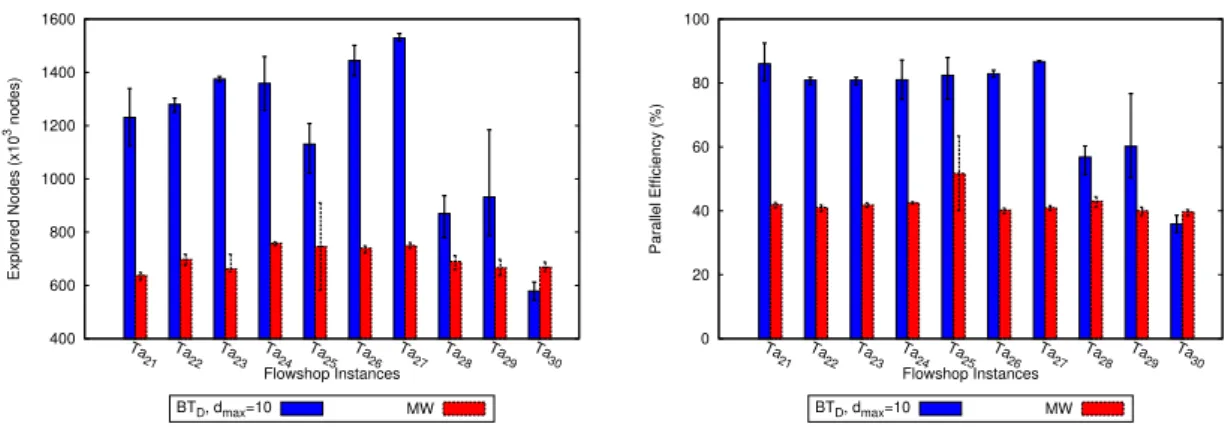
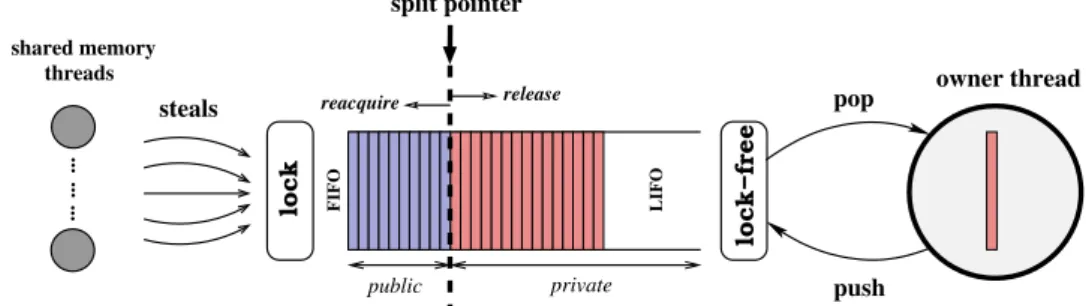
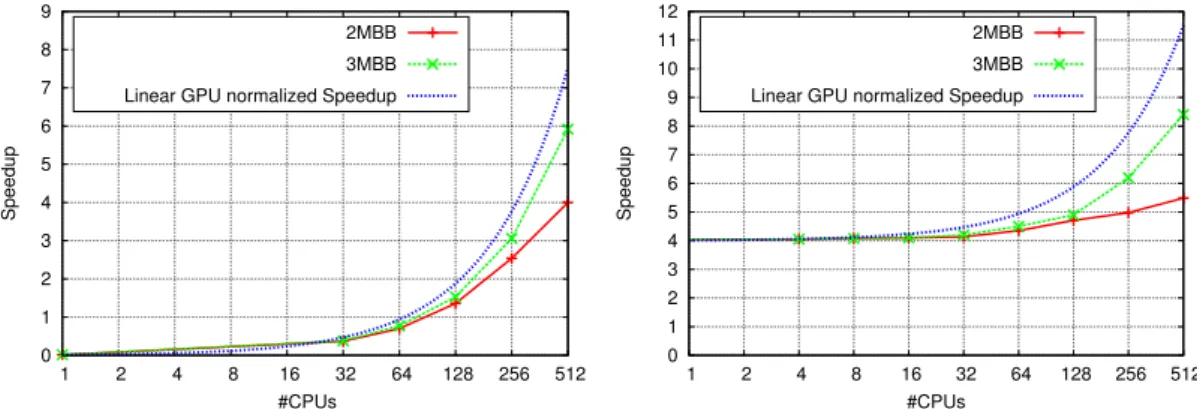
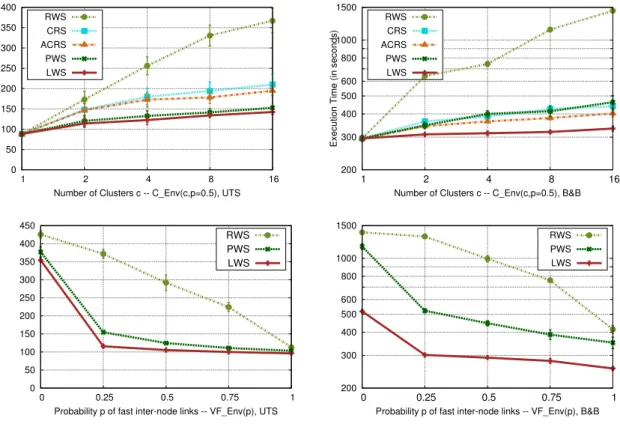
(19) HDR de Bilel Derbel, Lille 1, 2017. 2.1 introduction and background. 13. each PU has its own pool. In the second one, all PUs are partitioned in several groups and each group shares the same work pool. The choice of the number of pools depends on the number of PUs as well as their accessing frequency. The last one is a mixed between collegial and grouped. In this context, we can cite the work of Casado et al. [Cas+08] who proposed two multithreaded schemes for parallel B&B. In the first scheme, all threads share a global pool of generated subproblems therefore a synchronization mechanism is designed in a master-worker style. In the second scheme, each thread manages a local pool to avoid synchronization overheads and a dynamic load balancing is proposed to deal with the B&B irregularity. At each iteration, if a certain condition is satisfied, a thread creates a new one and migrates work from its local pool to the pool of the new one. The condition for new thread creation is described as follows: the number of running threads are less than the total number of available cores and there is more than one subproblem in the local pool of the thread. In the same spirit, Evtushenko et al [EPS09] presented a B&B solver that allows to deal with both shared and distributed memory environments. At the shared memory level, a global pool and one local pool per compute thread are implemented. When a thread becomes idle it picks a subproblem from the shared pool, or it stays blocked unit the shared pool is fulfilled. After a number of steps, a thread migrates some problems from its local pool to the shared pool which stands for load balancing. At the distributed memory level, they use a masterworker like paradigm to coordinate the distributed threads. Similar load-balancing considerations are addressed in [Her+13b; Her+13a], where a thread can create a new one if the maximum number of threads is not reached. Barreto et al. [BB10] conducted a comparison of parallel B&B approaches on shared and distributed memory systems using respectively OpenMP and MPI. A good speedup of both implementations compared to the sequential one is reported; however, the speedup using MPI was found to be slightly better than with OpenMP. This might appear counter-intuitive at the first sigh since it is in fact well understood that inter-communication is much costly in MPI where exchanged messages have to pass through standard networks connecting computers. However, this result also enlightens the negative impact of using synchronization mechanisms in shared memory systems. Most of previously mentioned approaches and more recent ones, e.g., [Mez+14; Ler+14; Sil+14; SD12], try to address the (shared and distributed) memory hierarchy mapping and the pool management issues with respect to B&B workload. Despite their skillful design, previous approaches suffer scalability issues when considering large distributed environments. centralized master-worker (mw) b&b. In (message-passing) distributed environments, the classical Master-Worker (MW) paradigm is widely used for parallel B&B. Most often, the distribution and scheduling of B&B work units run only on the master which tries to maintain a faithful global view of work being processed. Among others [Gou+00; GLY00; CF01], we can cite the B&B@GRID approach described in [MMT07b; Mez07], where an interval representation of B&B work units for the permutation-like problems is investigated in attempt to reduce the communication latency and the cost of synchronizing and updating the workers. Otten et al. [OD10; OD12] introduced a scheme to predict the complexity of a subproblem so that subproblems can be evenly distributed among workers based on the prediction scheme. Initially, the master node explores the tree up to a parallelization frontier for having enough subproblems, then send them to its workers and wait for the result. Balancing the B&B workload is then ensured by the prediction scheme which estimates the size of the explored space of a subproblem (i.e. the number of explored nodes to solve a subproblem). In [KJL10] a Master-Worker algorithm called GAUUB is proposed, and then improved by proposing another version called GALB [KJL12; KJL13b] that reduces load unbalancing among the available processors. The algorithm GALB is composed of two steps: initialization and distribution. The master executes the initialization step by performing the sequential B&B algorithm until reaching a fixed level L of the search tree in order to generate a large amount of work to distribute among the slaves processors and therefore to. © 2017 Tous droits réservés.. lilliad.univ-lille.fr.
(20) HDR de Bilel Derbel, Lille 1, 2017 14. distributed and parallel branch-and-bound ensure load balancing for all processors in the second distribution step. Generally speaking, it is well understood that MW-based approaches are only suitable at small or intermediate scales, which is also confirmed by our own investigations. Some hierarchical master-worker (HMW), as well as fully decentralized, schemes are proposed to solve the scalability of MW.. hierarchical master-worker (hmw) and decentralized b&b. Despite the many variations that one could find, the key idea of HMW B&B is simply to use several masters organized hierarchically following a tree overlay. As such, there are in general two types of layers that are considered: a control layer comprising one or more levels of masters and a work layer composing workers. For example, Aida et al. [AF02; AO05] proposed a three-tier tree structure comprising a supervisor, masters and workers. The supervisor is the root node of the tree and manages all masters. Workers are grouped into sets and each set is managed by a master. The supervisor and the masters are in charge of all communications among workers belonging to different sets such as load balancing, and broadcasting upper bound values. Similarly, Xu et al. [Xu+05] proposed a framework to implement parallel search algorithms called APLS. The framework uses the following entities: Master, Hub and Workers. A hub controls a fixed number of workers and the number of hubs increases proportionally with the number of workers. Load balancing is also taken into account at two levels: intra-cluster and inter-cluster. In the first level, the hub manages dynamic load balancing and the workers periodically update their workload to the hub, hence helping the hub to detect and to correct an unbalanced situation. This design principle is also shared in other studies and frameworks, e.g., [EPH01; Dro+12; Dic07]. In [BMT12b; BMT12a], the authors suggest a MHW architecture which allows workers to additionally communicate directly together after receiving a task from the master hence exposing less communication bottleneck to the masters. This actually implies a kind of communication overlay, and is inline with other fully distributed or peer-to-peer existing algorithms, e.g., [FM87; IF00; Dic07; Dja13; Meh+09; Meh+08]. Each peer in such systems has in general a local pool storing all work units for processing. When the local pool of a peer is empty, the peer basically sends work requests. Upon receiving a work request, a peer shares some work units from its local pool to the requesting peer. This is actually performed according to some load balancing policy. To cite a few, in [LM92; TLM95], the authors proposed to balance the workload of a peer with its neighbors by means of a weight function which takes into account the quality and the quantity of generated subproblems. The quantity is the number of subproblems in a local pool. The quality is the minimum cost of generated subproblems of a local pool.. gpu based parallel b&b. The previous approaches and related issues (pool management, synchronization issues, memory mapping, hierarchical and distributed architectures, load balancing, etc), are continuously revisited with respect to the devices and hardwares that can compose a large-scale compute environment. In particular, one can find a number of studies dealing with the integration of GPU devices in parallel B&B, e.g., see [Cha13] and the references there-in. A single GPU device can offer an impressive compute power when bounding different tree nodes in parallel, which is the main type of parallelism that a GPU device might offer. In fact, implementing the whole B&B process inside the GPU device is a difficult task, mainly because of thread divergence issues and the difficulty in handling efficiently the different memory levels. As mentioned before, the obtained speedups with respect to a single CPU are hence problem-depend since the bounding operation depends on the problem one wants to tackle. In the context of our work, we rather focus on the scalability issues. In fact, when multiple GPU devices are combined with multiple multi-core CPUs, most of the existing approaches fail to be highly scalable which is mainly attributed to the heterogeneity of the underlying compute systems and the unbalanced and fine-grained workload of parallel B&B, e.g., [Gmy+17; CM16; CM15].. © 2017 Tous droits réservés.. lilliad.univ-lille.fr.
(21) HDR de Bilel Derbel, Lille 1, 2017. 2.2 contribution #1: dynamic load-balancing in b&b. 2.2. 15. contribution #1: dynamic load-balancing in b&b. The main contribution of the work described in the rest of this chapter is to bring high performance on the scene of parallel optimization, by cross-fertilizing parallel B&B with general-purpose dynamic load balancing algorithms; thus bridging the gap between the solving of difficult optimization problems and the establishment of novel large-scale distributed and parallel algorithms. As discussed previously in Section 2.1.3 about the main challenges that one has to face, and as witnessed by the bench of studies described in the previous section, the most recurrent issue in the design of parallel B&B is how to balance the workload dynamically at runtime. This is since the parallelism exposed by generic B&B is straightforward in our opinion; but, keeping all PUs busy doing useful work at any time of the execution is the main point that may prevent high performance and scalability. Although being critically important, balancing workload is not always addressed in an explicit manner. This can mainly be attributed to the technical complexity of setting up an effective B&B parallelization on top of a specific compute environment, especially when dealing with a new type of parallel hardwares or parallel technologies. Interestingly, there exist a relatively well-established body of research, coming form high performance and parallel computing community, that deals explicitly with dynamic load balancing. In this section, we will in particular focus on the first steps we made in leveraging such techniques for parallel B&B in a large-scale compute environment. To better position our first contribution, we start providing a brief overview of state-of-the-art general purpose (i.e., independent from B&B) load balancing techniques. 2.2.1. Work Stealing: the Basics in a Nutshell. Load balancing is tightly related to the more general problem of task scheduling which is a well known problem that, besides B&B, can occurs in a different number of situations and application fields, e.g., [Kum+94; XL97; WR93; Lar+17]. In our setting, we are interested in the Dynamic load balancing of the workflow generated at runtime by a parallel application, that is, when the work units or the tasks of the corresponding application are generated during the course of the computations, and nothing about what each PU is executing, neither the cost or the number of work units, can be assumed beforehand. As such, the main goal of a dynamic load balancing method is to offload work units from overloaded PUs to underloaded/idle PUs dynamically at runtime in order to ensure that all PUs have approximately the same workload at any time of the application execution. Different general-purpose methods have been developed so-far [BS81; ELZ86; KGV94; SKS92]. They are often fully distributed and implemented using multiple work pools. More specifically, each PU is associated with a single pool for storing and sharing the tasks generated at runtime. Existing methods can then be distinguished in three types, depending on who is the main initiator of the load balancing operations. In work pushing [ELZ86], it is the role of overloaded PUs to balance workload. In this class of methods, a PU with a non empty work pool automatically offloads tasks to an appropriately chosen PU, typically when it has more tasks than a threshold value. Every PU has then to decide on how to select a target PU, as well as on how many tasks to offload and how often. In work stealing [BS81], it is the role of idle PUs to start a load balancing operation. When a PU finds no task in its local pool, it simply requests another PU; which then offloads tasks if its own work pool is not empty, or rejects the request. The idle PU repeats this process until effectively fetching some work somewhere. Similarly, a PU has to decide on how to select a target PU whenever it is idle and how many tasks to offload when receiving a request. The third class of approaches is without surprise hybrid [SKS92], in the sense that it combines the previous two approaches by both offloading tasks from overloaded PUs, or stealing on demand when PUs are idle.. © 2017 Tous droits réservés.. lilliad.univ-lille.fr.
(22) HDR de Bilel Derbel, Lille 1, 2017 16. distributed and parallel branch-and-bound In work-pushing, good load balancing strongly depends on how often tasks are offloaded in a system, which is generally controlled using some predefined thresholds. If these thresholds are not well optimized to the correct value depending on the target application, tasks will be moved ahead either so often or so rarely. Furthermore, work pushing could be unstable when the granularity of workload is high and the application highly irregular, i.e., even when the system load is high at some stage of the execution and all PUs are actually busy, task offloading will still occur. Hence, it can be argued that work pushing is not a good choice for highly irregular applications like parallel B&B. In contrast, work stealing appears to be more suited, and it is actually chosen as a scheduler for load balancing in several well-established softwares and frameworks (e.g Cilk [FLR98a], Intel TBB [Int], OpenMP 3.0 [Ope11] and Javelin [Nea+00]). In work-stealing, a PU running out of work is called thief, whereas those that service thieves’ work requests are called victims. The most important factors for an efficient workstealing based protocol are: (i) the selection strategy adopted by a thief to chose its victims and (ii) the work sharing strategy which is the amount of work offloaded from a victim to a thief. This was addressed in a number of studies and in different application settings, e.g., [MIY11; Din+07; Din+09; Cyb89; FLR98b; Oli+07; OP08; Sar+11; MIY11; QW10a; RLP11]. The main issue when designing an appropriate selection strategy is to minimize the time the thieves stay idle searching for work. The most simple selection strategy is a random one, i.e., a thief chooses one victim uniformly at random. The so-obtained random work stealing protocol is actually at the corner stone of several other variants. The work sharing strategy is in turn responsible for balancing the load evenly between a victim and a thief; which will subsequently becomes a potential victim. The most common strategy is the steal-half strategy which consists in offloading half of the work units available at the victim local pool. The goal behind coupling an appropriate victim selection with an appropriate work-sharing, is to flood the whole idle PUs in the system with fresh work as quick as possible, and hence to maximize the global parallel efficiency of the system. From a purely theoretical perspective, Blumofe and Leiserson proved in a seminal paper [BL99] that random work stealing is essentially optimal (up to some constants) in terms of time, and communication. To be more precise, a random work-stealing algorithm for scheduling the so-called fully strict (well-structured) multithreaded computation model is presented and analyzed in the so-called atomic-access model. Under those theoretical assumptions, which are not detailed in this document for clarity, it is proved that the expected time of random work-stealing when executed by p identical parallel processors is Tp = T1 /p + O(T∞ ), where T1 is the minimum serial execution time of the multithreaded computation and T∞ is the minimum execution time with an infinite number of processors. Similar tight bounds (for divide-and-conqueror computations) are also provided for the amount of communication required between the p processors, which is actually better than the bounds previously known for work-sharing. Such results, even restricted to some theoretical assumptions, comfort us in the idea that random work stealing is a highly effective approach to dynamic load balancing, especially in our target parallel B&B. 2.2.2. Tree-based Dynamic Load-Balancing. Our first contribution is on the design of a work stealing distributed protocol improving the performance of basic random work stealing in a large-scale distributed environment [Vu+12]. The main idea is that structuring computing nodes in a specific overlay can help addressing the issue of fetching work efficiently. Based on our previous investigations on the behavior of peer-to-peer B&B algorithms [Dja13], we describe in the following the core idea of our tree-based work stealing protocol for B&B dynamic load balancing. stealing on tree edges. Let us assume that PUs are organized logically following a rooted tree. The target application to be parallelized is initially pushed at the root PU. An. © 2017 Tous droits réservés.. lilliad.univ-lille.fr.
(23) HDR de Bilel Derbel, Lille 1, 2017. 2.2 contribution #1: dynamic load-balancing in b&b. 17. idle PU steals synchronously downwards and upwards in the tree. In the down phase, every idle PU first requests its children. The steals are sent sequentially by choosing a child uniformly at random at each step. Then, if and only if all children are idle, a steal is sent at last upwards to the parent. Conceptually, this corresponds to a random work stealing strategy, but considering only the set of children that have not sent a request upwards yet.. stealing on bridge edges. The previous protocol exhibits much locality, since tasks inside a subtree will always be completely finished before load balancing requests are sent to the parent. This property leads to some drawbacks, basically because a PU only steals upward when its subtree becomes entirely idle. Therefore the whole subtree remains idle during the round trip of the parent upward steal request. To handle this issue, while maintaining a low communication overhead, we introduce what we call Bridge-based work steals with the aim of speeding up work flow from overloaded subtrees to under-loaded ones. Apart from the tree edges, we propose to connect PUs being far away each other using random bridge edges. Those bridge edges are to be viewed as logical shortcuts that can be traveled by work to reach under-loaded subtrees more quickly. In this approach, every PU v further requests work from one PU r through a bridge edge bv→r chosen uniformly at random among PUs being neither children nor parent. More precisely, in parallel while requesting its neighbors in the tree, every idle PU v asynchronously sends a steal request over bv→r . Such an asynchronous steal request does not block v waiting for a response from r. Instead, v is allowed to concurrently search for work from its neighboring PUs in the tree, as described previously. If the remote neighbor r owns work, then it immediately services v. If r is idle, then this means that r has already sent an asynchronous work request through its bridge edge, and it is also requesting its respective direct neighbors. Thus, whenever an idle node, say p, gets work from its neighbors or through its bridge, then it immediately services all nodes from which a steal request was received. Let us remark that this distributed strategy operates in a recursive manner, implicitly building up a logical cluster of idle PUs. Consequently, all idle PUs are more likely to cooperate efficiently in searching for fresh work.. tree-dependent work sharing. The previous protocol is further combined with the following work sharing strategy. We propose to dynamically adjust the amount of work transferred from one PU to another one according to the size of the overlay subtrees. Based on the observation that idle PUs should not be selfish when searching for work, but should acquire enough work to serve their neighbors, our work sharing policy is overlay-dependent: a PU simply divides its current work into the ratio of its own tree size and the tree size of the requesting PU; which is to contrast with a standard steal-half strategy.. other b&b specific operations To gain in generality, some B&B specific issues were hidden in the previous discussion. The work acquired by a PU is in fact assumed to represent a B&B work unit which might be a B&B active node, as well as any alternative encoding of B&B subtrees. Each PU is then responsible for executing a B&B on the work units it acquires, that is, the standard branching, bounding and pruning operations as specified by a serial B&B and with respect to the optimization problem. Moreover, the sharing of the best feasible solution found by a B&B process is managed by sending messages through the overlay tree. Finally, termination detection is also handled in a distributed fashion following tree edges. Notice that without the bridge steals, termination can be detected straightforwardly by the root of the tree; however, we manage to carefully implement a wave-based distributed protocol in order to safely ensure that no work units are still traveling along an asynchronous work-transfer responses.. © 2017 Tous droits réservés.. lilliad.univ-lille.fr.
Figure
+7
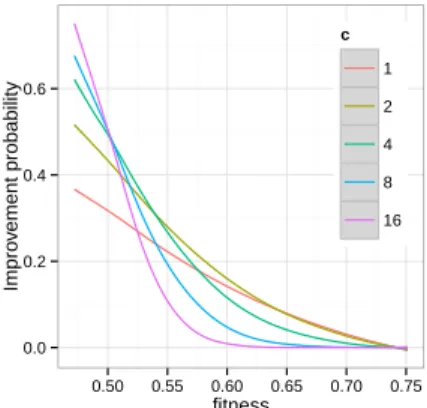
![Figure 7: Expected improvement for the OneMax problem [GL11] for a bit-string of size N = 1000](https://thumb-eu.123doks.com/thumbv2/123doknet/3496970.102252/47.892.119.707.96.584/figure-expected-improvement-onemax-problem-gl-string-size.webp)


Documents relatifs