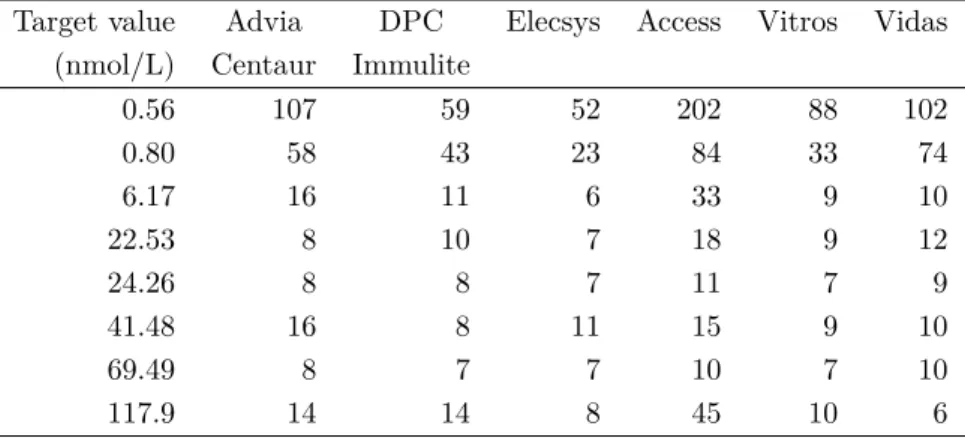
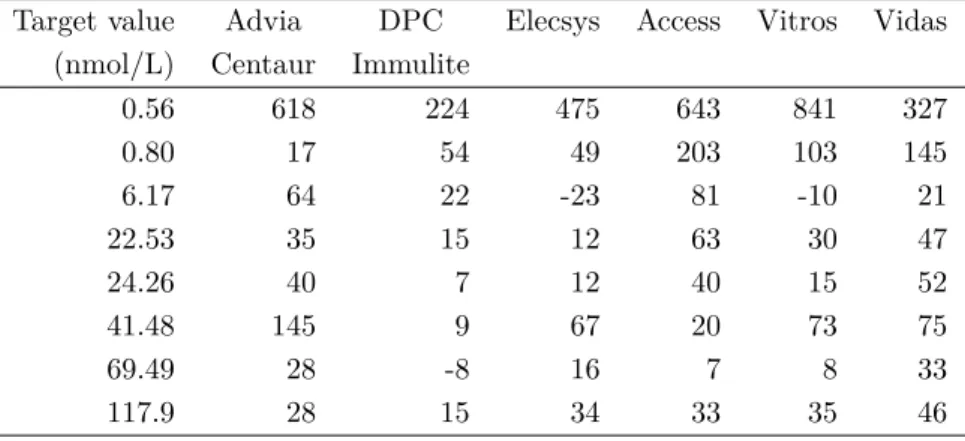
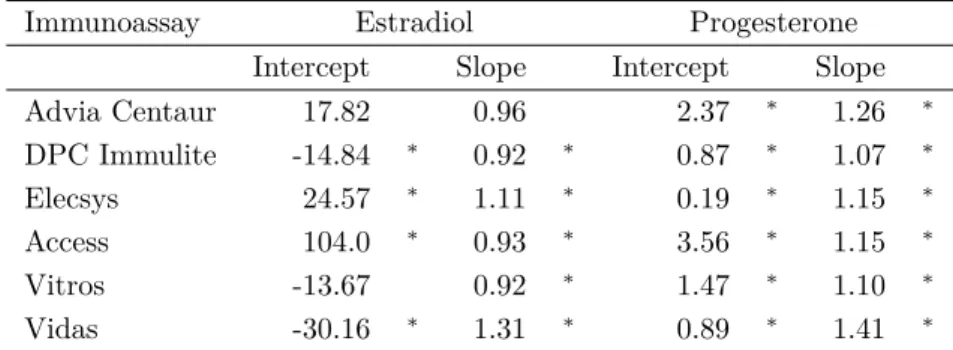
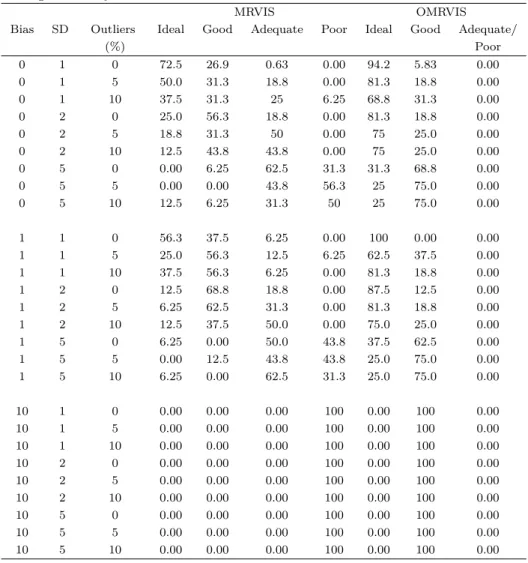
UNIVERSITÉ DE LIÈGE
FACULTÉ DE MÉDECINE
Contribution to the statistical
evaluation of data obtained in
External Quality Assessment
programmes
Wim COUCKE
Dissertation présentée
en vue de l’obtention du grade de Docteur en Sciences de la Santé publique
UNIVERSITY OF LIEGE
Faculty of Medicine
Department of Public Health
Medical Informatics and Biostatistics
Contribution to the statistical
evaluation of data obtained in
External Quality Assessment
programmes
Wim COUCKE
Supervisor
Professor A. Albert
January 2012
© Université de LiègeAcknowledgements
This work would never have been accomplished without the help, support and stimulation of many persons, to whom I want to express my deepest and honest gratitude.
Professor Adelin Albert, Head of Medical Informatics and Biostatistics, Fac-ulty of Medicine, University of Liège, acted as my promotor and supervised my thesis. Prof. Albert, you have read this work several times in detail, com-mented and improved it. Your ideas and support were of priceless help, and your guidance with the redaction of the articles that have emerged from this work has been much appreciated. Also your continuous motivating words during the last years have kept me on track with the thesis.
I a much indebted to Professor Jean-Paul Chapelle, President of the ac-companying committee and of the jury, as well as to the other members of the jury, for their interest in this work.
Nothing of this work would have been started without Dr. Jean-Claude Libeer, former head of the department of Clinical Biology of the Scientific Institute of Public Health (WIV-ISP). Dr. Libeer, you accepted me as a
I also want to thank Dr. Christel Van Campenhout and Dr. Philippe Van de Walle for contributing to my experience in External Quality Assessment programs and their sustained support at WIV-ISP.
My sincere gratitude also goes to Dr. Marjan Van Blerk. Marjan, you have introduced me to the art of writing articles, have let me participate in some of your research projects and let me have access to the surveys you were responsible for. Your ideas and practical assistance stimulated the develop-ment of several novel techniques.
I am much grateful to Dr. Nicole Hamers, who originally guided my ideas in external quality assessment and triggered the estradiol/progesterone article.
My cordial thanks also to Dr. Bernard China, who gave me new insights in the surveys he was conducting and offered me the opportunity to analyse the data.
I also want to express my gratitude to Professor Johan Smitz from the VUB Laboratory of Clinical Chemistry and Radioimmunology, who helped me for the estradiol/progesterone article.
All my colleagues of the department of Clinical Biology have to be thanked for their interest in the work and for creating the right atmosphere in which research can grow.
A special thanks goes also to Dr. Lixin Zhang for the interesting discus-sions we have had and for the sharing of ideas and new developments.
the beginning of this work. You have shown patience and understanding, evening after evening, weekend after weekend of the past year and so many times before. Whenever I was hidden behind my computer screen, you com-pleted with a smile what I had planned to do in the house.
Summary
Laboratory medicine has undergone a spectacular evolution in the last deca-des and has become today of crucial importance for supporting diagnostic and therapeutic decisions. The increase of the volume of laboratory analy-ses has not gone without an emerging risk of measurement errors that may have far-reaching consequences, even on the patient’s life. External Qual-ity Assessment (EQA), already established since several decades in various countries and often running on an international level, aim at going further than the "internal quality control" procedures of every laboratory and at im-proving laboratory quality by inter-laboratory comparisons. An EQA round generally consists of sending aliquots of the same sample to various labo-ratories for assaying selected tests. After finishing the assays, results are reported back to the EQA organizer. Subsequently these results are subject to a statistical analysis, which is performed globally, for all the participants, or for each analytical technique separately. Finally, a report is sent to every participant that informs about the acceptability of the individual results, with respect to predefined limits, and with respect to the group of peers.
This thesis, structured in five chapters, focuses on the External Quality Con-trol of clinical laboratories by a critical analysis of existing methods and by
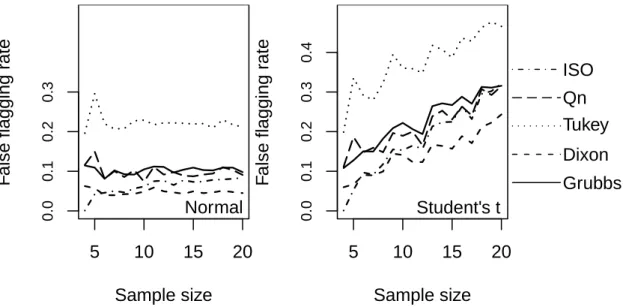
clinical laboratory and EQA in the quality improvement. After the report ’To Err is Human: Building a Safer Health System’, numerous scientists became interested in investigating the frequency, source and impact of lab-oratory errors. The Total Testing Process (TTP) became recognized as the best framework to investigate laboratory errors. The three different phases of the TTP - respectively, the pre-analytical, analytical and post-analytical phases - are described in detail and the nature and frequency of errors in each phase explained. For each phase, possible improvements are described and the role of EQA is suggested. Today, EQA principally focuses on the assessment and improvement of the analytical phase. Proposals are made to improve the role of EQA for assessing and improving pre- and post-analytical error as well, by using specific sample material and by automating the report-ing of data and laboratory reports to the EQA participants. The principle of the comparison of results of a laboratory with those obtained by the other laboratories is traditionally based on the calculation of "z-scores". An in-depth study comparing different techniques has been made, shedding new light on the shortcomings and strong points of the different approaches. We concluded that robust techniques may exhibit weak performance for smaller sample size, while techniques that eliminate outliers before calculating z-scores should be recommended.
The second Chapter discusses the role of EQA as a tool to assess harmo-nization between methods. The role of EQA is described, together with the pitfalls and current shortcomings for assessing harmonization. A major prob-lem in assessing standardization between methods is the possible presence of matrix effects in control samples, in which a method-specific bias may ap-pear. Several explanations for matrix effects are mentioned and statistical techniques are described that assist EQA organizers to split up the data in homogeneous peer groups using multivariate statistics. The chapter also re-views several techniques to be used in method comparison studies, and the
preference for the use of orthogonal regression is expressed. In addition, an example is given of a method-comparison study for Estradiol and Proges-terone, with a novel technique of assessing standardization between various methods, in the presence of matrix effects for a small number of samples. The study also reveals that standardization between various methods is not attained, and that the striving for standardization with standards of higher order may not be satisfactory.
Chapter 3 introduces different evaluation techniques that combine informa-tion from different samples or parameters: Variance and bias index scores, Mean ranking scores, counts of z- and u-scores, and a long-term analytical Coefficient of Variation. Also, a new and original method is introduced that uses 3 steps to identify outliers in a first step, to find laboratories with ex-ceeding variability in a second, and to identify laboratories with high bias in a third step. Each of the techniques are evaluated and discussed by means of a data set in which accidental outliers, high variability and high bias were induced. In addition, the comparison between the different evaluation meth-ods reveals that distinguishing between variability and bias is a tedious task, and that some long-term analysis methods lack robustness against outliers. Also, it is proven that evaluation techniques summarizing results of different parameters may hide useful information. In addition, the 3-step method is proposed as a method for discerning between errors produced in the pre- or post-analytical phase, and errors that arise from the analytical phase.
Chapter 4 applies the 3-step method to data obtained from the Belgian EQA. Data sets from alcohol, flow cytometry, lithium and semen analysis surveys are examined. The method is extended for applicability to heteroscedastic, i.e. unequal residual variability, regression models and demonstrates that it is able to be used in a wide range of surveys. For each of the surveys under consideration, a follow-up is made of the occurrence of accidental mis-takes, and the evolution of within-laboratory variability and bias for selected methods. It highlights several conclusions that show a striking similarity for various EQA surveys: an improvement of laboratory performance has been
In Chapter 5, some graphical representations of EQA data are explored and a graphical representation of the 3-step method is described. The histogram, normal quantile plot and box plot are described in detail and suggested for providing a quick visual overview of EQA data. Other graphical representa-tions that respond to specific quesrepresenta-tions are given and discussed as well, like Shewhart charts, Cusum charts and graphical representations to combine variability and bias in one graph. In addition, the 3-step method is graph-ically explored by means of three distinct graphs. The chapter finishes by suggesting the use of interactive graphs for improving feedback from the EQA organizers to the EQA participants by means of Scalable Vector Graphics. The latter is illustrated with web-accessible examples of long-term evaluation of z-scores and the results of the 3-step method for the data obtained in the Belgian EQA for alcohol determination in blood.
In brief, this work describes in a critical and constructive way current sta-tistical methods used in EQA and proposes novel stasta-tistical and graphical techniques to help alleviating the future needs of External Quality Assess-ment programmes.
Résumé
La biologie clinique a connu au cours des dernières décennies une évolution spectaculaire. Elle est devenue aujourd’hui une discipline incontournable dans l’aide à la décision médicale. L’augmentation du volume d’analyses de laboratoire n’est toutefois pas sans entraîner un risque accru d’erreurs de mesure pouvant avoir des conséquences graves sur la vie même des patients. Les programmes d’Evaluation Externe de la Qualité (EEQ), mis en place depuis plusieurs années tout au niveau national qu’international, se sont fixés pour objectifs d’aller au-delà des procédures de « contrôle de qualité interne » de chaque laboratoire et de contribuer à l’amélioration globale de la qualité par l’organisation d’enquêtes inter-laboratoires. Au cours de chaque enquête EEQ, un (ou plusieurs) même échantillon contrôle est envoyé à l’ensemble des laboratoires pour analyse. Une fois les dosages terminés, les résultats sont renvoyés à l’organisme responsable EEQ. Ces résultats font ensuite l’objet d’une analyse statistique, globale ou par technique de dosage (c’est-à-dire par groupe de laboratoires utilisant le même principe analytique) et un rap-port est adressé à chaque participant l’informant sur l’acceptabilité de ses résultats (par rapport à des limites prédéfinies) et sur sa performance par rapport à ses pairs.
permettant d’améliorer les procédures actuellement en place.
Au Chapitre 1, l’accent est mis sur l’évolution du rôle des laboratoires de biologie clinique et des programmes EEQ dans l’amélioration de la qualité. Après la publication du rapport « To err is human: building a safer health system », de nombreux chercheurs ont commencé à s’intéresser et étudier en détail la fréquence, l’origine et l’impact des erreurs de laboratoire. Dans ce contexte, le concept de « Total Testing Process (TTP) » est reconnu comme le meilleur système pour traquer les erreurs de laboratoire. Les trois phases du TTP, respectivement libellées pré-analytique, analytique et post-analytique, sont détaillées en spécifiant pour chacune d’elles la nature et la fréquence des erreurs. De plus, des améliorations potentielles sont décrites à chaque fois, notamment grâce au rôle que peuvent jouer les programmes EEQ dans cette problématique. Il faut reconnaître qu’à l’heure actuelle, ces derniers se focalisent surtout sur l’évaluation et l’amélioration de la phase analytique. Quelques propositions sont faites pour améliorer le rôle des pro-grammes EEQ dans le suivi et le développement des phases pré-analytique et post-analytique, en utilisant des échantillons contrôles de matériel spé-cifique et en automatisant l’échange des données et des rapports entre les participants et l’organisme EEQ. Le principe de la comparaison des résultats d’un laboratoire avec ceux obtenus par les autres laboratoires est tradition-nellement basé sur le calcul des « z-scores ». Une étude comparative des méthodes de calcul des z-scores a été menée afin de mettre en évidence les points forts et les points faibles de chacune d’elles. Il en ressort que les méth-odes basées sur la statistique robuste sont peu fiables lorsque le nombre de laboratoires est faible, tandis que celles basées sur l’élimination préalable des valeurs aberrantes (« outliers ») avant le calcul des z-scores sont meilleures et dès lors recommandées.
d’évaluation de l’harmonisation des méthodes analytiques. Le rôle de l’EEQ, les pièges et limitations actuelles de l’évaluation de l’harmonisation y sont décrits. On évoque notamment la problématique de l’effet de matrice dans les échantillons contrôles, qui peuvent causer un biais spécifique par méthode. Ces effets de matrice trouvent des explications et peuvent être contournés en formant des groupes homogènes de laboratoires en ayant recours à des techniques de la statistique multivariée. Le chapitre 2 passe aussi en revue plusieurs approches statistiques pour comparer différentes méthodes analy-tiques; une préférence se dégage pour l’utilisation de la régression orthogo-nale. En guise d’illustration, une étude comparative des méthodes de dosage de l’estradiol et de la progestérone a été menée pour essayer de standardiser plusieurs méthodes de dosage en présence d’effets de matrice pour certains échantillons. L’étude montre que la standardisation n’est pas atteinte et que le fait de rechercher une standardisation en se basant sur es standards d’ordre plus élevé pourrait s’avérer insatisfaisant.
Le Chapitre 3 introduit diverses techniques d’évaluation de la qualité combi-nant l’information de plusieurs échantillons ou paramètres, à savoir les scores de variabilité et de biais, le score basé sur le classement des moyennes, les scores Z et U, et le coefficient de variation (CV) à long-terme. On pro-pose également une méthode nouvelle et originale en trois étapes (« 3-step method ») basée sur le modèle de régression linéaire. La première étape con-siste en la détection d’éventuels « outliers» pour chaque laboratoire ; dans une deuxième étape, on identifie ensuite les laboratoires ayant une variabilité excessive ; enfin dans une troisième étape, on repère les laboratoires avec un biais important. Les méthodes existantes précitées et la nouvelle approche en 3 étapes font ensuite l’objet d’une étude comparative par simulations sur un échantillon de données dans lequel on a introduit des erreurs accidentelles, une variabilité excessive et un biais élevé. Les simulations montrent qu’il n’est pas facile de distinguer entre la variabilité et le biais, et que certaines méth-odes d’analyse à long-terme ne sont pas robustes en présence d’« outliers ». On a aussi montré que les techniques d’évaluation des différents paramètres peuvent masquer des informations utiles. Le point saillant de l’étude est que
Au Chapitre 4, la méthode en 3 étapes est appliquée à des données du pro-gramme Belge de l’Evaluation Externe de la Qualité : alcoolémie, cytométrie de flux, lithium et analyse de sperme. La méthode est ensuite étendue pour être applicable à des situations où les conditions d’homoscédasticité (ho-mogénéité des variances) ne sont pas respectées, situation fréquente en EEQ. On a effectué un suivi de l’occurrence d’erreurs accidentelles et de la variabil-ité et du biais inter-laboratoires pour une méthode donnée des programmes EEQ belges. Les conclusions montrent une similarité remarquable entre les différentes périodes EEQ, à savoir une amélioration globale des prestations des laboratoires dans le temps, due essentiellement à la réduction des erreurs accidentelles. En effet, la performance analytique des méthodes de dosage n’a pas réellement montré d’amélioration.
Le Chapitre 5 est consacré aux représentations graphiques des données EEQ, en particulier pour la méthode en 3 étapes. L’histogramme, le graphe des quantiles normaux et la boîte à moustaches sont fréquemment utilisés pour une exploration visuelle des données EEQ. D’autres représentations graphiques, davantage liées à des questions spécifiques, sont mentionnées comme la carte de contrôle de Shewhart, celle des « cusums » et les représentations qui com-binent la variabilité et le biais sur un seul graphique. La méthode en 3 étapes est explorée graphiquement par trois graphes séparés. Le chapitre se termine avec la présentation de graphes interactifs comme moyen d’améliorer le feed-back des organisateurs EEQ aux participants, notamment en ayant recours aux graphes vectoriels adaptables. Ceci est illustré par des exemples qui peuvent être visualisés sur le web, notamment une évaluation à long-terme des z-scores et les résultats de la méthode en 3 étapes pour les données EEQ d’alcoolémie dans le sang.
méth-odes statistiques et graphiques utilisées actuellement en EEQ et propose de nouvelles approches visant à répondre aux besoins futurs des programmes d’Evaluation Externe de la Qualité.
Samenvatting
Laboratoriumgeneeskunde heeft de laatste decennia een spectaculaire evo-lutie ondergaan en is tegenwoordig een onmisbare discipline geworden voor de ondersteuning van diagnostische en therapeutische beslissingen. De forse stijging van het aantal laboratoriumanalyses is samengegaan met een ver-hoogd risico op meetfouten, die verreikende gevolgen, ook voor het leven van de patiënten, kunnen hebben. Externe kwaliteitscontrole (EKE), een disci-pline die al gedurende verschillende jaren in verschillende landen en op een internationaal niveau wordt uitgevoerd, is één van de mechanismes om de kwaliteit in het laboratorium te verbeteren, om een aanvulling te zijn op de interne kwaliteitscontrole van elk laboratorium en om bij te dragen aan de algemene verbetering van de kwaliteit door de organisatie van interlaborato-riumproeven. Een EKE-ronde bestaat in het algemeen uit het versturen van de aliquots van hetzelfde staal naar verschillende laboratoria, die bepaalde testen erop uitvoeren. Na de analyse worden de resultaten teruggestuurd naar de EKE-organisator. Daarna worden de resultaten statistisch geanaly-seerd, globaal of per meettechniek (dwz per groep van laboratoria die dezelfde meettechnologie gebruiken) en een rapport wordt verstuurd naar elke deelne-mer dat informeert over de aanvaardbaarheid van zijn resultaten, tegenover vooraf gestelde limieten en tegenover de andere laboratoria die eenzelfde
sevaluatie van de klinische laboratoria door een kritische analyse van de bestaande evaluatiemethodes en ook door het opstellen van nieuwe benaderin-gen die in staat zijn om de huidige evaluatietechnieken te verbeteren.
In het eerste hoofdstuk ligt de klemtoon op de evolutie van de rol van het klin-isch laboratorium en EKE. Nadat het IOM rapport ’To Err is Human: Build-ing a Safer Health System’ was verschenen, zijn wetenschappers begonnen de frequentie, bron en impact van laboratoriumfouten in detail te onderzoeken. Het totale testproces (TTP) wordt beschreven als het best referentiekader om laboratoriumfouten te onderzoeken. De drie verschillende fases van het TTP - respectievelijk pre-analytisch, analytisch en post-analytisch - worden in de-tail beschreven en het karakter en de frequentie van fouten in elk proces wordt uitgelegd. Voor iedere fase worden toekomstige verbeteringen beschreven en de rol van EKE wordt hierin voorgesteld. Tegenwoordig bekommert de EKE zich vooral om de evaluatie en de verbetering van de analytische fase. Er worden enkele voorstellen gemaakt waarbij EKE programma’s ook het pre-en post-analytisch deel kunnpre-en opvolgpre-en, door specifiek staalmateriaal te ge-bruiken en door het rapporteringssyteem voor gegevens van de laboratoria naar de EKE organisator te automatiseren. Het principe van de vergelijk-ing van resultaten van een laboratorium met deze bekomen door de andere laboratoria is traditioneel gebaseerd op de berekening van "z-scores". Een studie die verschillende berekeningswijzes van z-scores vergelijkt is uitgevo-erd teneinde de sterke en zwakke punten van elke wijze bloot te leggen. Deze studie leidde tot de conclusie dat de methodes die op robuuste statistieken gebaseerd zijn, minder betrouwbaar zijn wanneer het aantal laboratoria laag is, terwijl zij die gebaseerd zijn op een voorafgaande stap die afwijkende waardes ("outliers") elimineert betrouwbaardere z-scores opleveren en dus aangeraden zijn.
har-monisering tussen methodes na te gaan. De rol van EKE wordt beschreven, samen met de valkuilen en huidige tekortkomingen om harmonisering na te gaan. Een groot probleem hierbij is het verschijnsel van matrixeffecten in controlestalen, die een methode-specifieke bias kunnen veroorzaken. Ver-schillende verklaringen voor matrixeffecten worden gegeven, en er wordt een beschrijving gegeven van statistische technieken die EKE-organisatoren informatie kunnen verschaffen of de te evalueren groepen homogeen zijn. Oplossingen worden voorgesteld om de te evalueren groepen op te splitsen aan de hand van multivariate statistiek. Het tweede hoofdstuk beschrijft ook verschillende technieken die kunnen gebruikt worden in studies die methodes met elkaar vergelijken, en een voorkeur voor orthogonale regressie wordt uit-gelegd. Daarnaast wordt een voorbeeld gegeven van een studie die methodes voor Estradiol en Progesterone vergelijkt met een nieuwe techniek om stan-daardisering na te gaan tussen methodes in aanwezigheid van matrixeffecten bij een klein deel van de stalen. De studie toont ook aan dat standaardisering tussen verschillende methodes niet bereikt is, en het streven naar standaardis-atie op basis van standaarden van hogere orde onvoldoende zou kunnen zijn.
Het derde hoodstuk introduceert verschillende evaluatietechnieken die infor-matie combineren van verschillende stalen of parameters: variantie en bias index scores, scores gebaseerd op de gemiddelde rangorde, tellingen van z-en u-scores, z-en ez-en langetermijns- analytische variatiecoëfficiënt. Er wordt ook een nieuwe en originele methode voorgesteld die is gebaseerd op het lineaire regressiemodel gebruikt en in 3 stappen ("3-step method") werkt. De eerste stap spoort eventuele outliers op voor elk laboratorium apart, in een tweede stap worden de laboratoria geïdentificeerd met een te grote vari-abiliteit, en in een derde stap worden de laboratoria geïdentificeerd met een grote bias. Dit model wordt in detail beschreven en zijn voor- en nadelen wor-den gedetailleerd besproken. Elke zonet vermelde techniek wordt geëvalueerd en besproken aan de hand van een dataset waarin toevallige fouten, hoge variabiliteit en extreme bias werden gestoken. De vergelijking tussen deze methodes toont aan dat het niet eenvoudig is om een onderscheid te maken tussen variabiliteit en bias, en dat sommige methodes voor een analyse op
3-stapsmethode voorgesteld als een methode om een onderscheid te maken tussen de fouten die in de pre- en post-analytische fase worden gemaakt, en fouten die ontstaan bij de analytische fase.
In het vierde Hoofdstuk wordt de 3-stapsmethode toegepast op gegevens die bekomen werden in het Belgische systeem voor Externe Kwaliteitsevaluatie voor alcohol, flow cytometrie, lithium en sperma-analyse. De methode wordt uitgebreid om toegepast te worden voor heteroscedastische regressiemodellen en er kan gezien worden dat ze toepasbaar is in een breed domein van EKE’s. Voor elk van de EKE’s die in beschouwing worden genomen wordt een opvolg-studie gemaakt van het voorkomen van toevallige fouten, en de evolutie van de variabiliteit tussen de laboratoria en de bias voor enkele methodes. De conclusies vertonen een opvallende gelijkenis voor verschillende EKE’s: een verbetering van prestaties van laboratoria is bereikt over de tijd. De voor-naamste verbetering was een reductie van het aantal toevallige fouten. De prestatie van de analytische methodes vertoonde echter geen verbetering over de tijd heen.
Het vijfde Hoofdstuk wijdt zich aan de grafische voorstelling van EKE-gegevens en een beschrijving van een grafische voorstelling van de 3-staps methode. Het histogram, de normale quantielplot en de box plot worden vaak gebruikt voor een visuele verkenning van EKE gegevens. Andere grafis-che voorstellingen, die eerder te maken hebben met specifieke vraagstellingen, worden ook gegeven en besproken, zoals Shewhart grafieken, Cusum grafieken en grafische voorstellingen die variabiliteit en bias in één grafiek combineren. Daarnaast wordt de 3-staps methode grafisch verkend door middel van drie aparte grafieken. Het hoofdstuk eindigt met de voorstelling van interactieve grafieken als een middel om de terugkoppeling te verbeteren van EKE or-ganisatoren naar de deelnemers door middel van Schaalbare Vectorgrafieken. Dit wordt geïllustreerd met voorbeelden van een lange-termijn evaluatie van
z-scores en de resultaten van de 3-stapsmethode voor de gegevens bekomen in het Belgische EKE voor bepaling van alcohol in bloed en die via het web kunnen worden bekeken.
Kortom, dit werk beschrijft op een kritische en constructieve manier de ver-schillende statistische en grafische technieken die momenteel in EKE worden gebruikt en beschrijft nieuwe benaderingen die een antwoord kunnen geven op de toekomstige noden van programma’s voor Externe Kwaliteitsevaluatie.
Contents
Glossary xxvii
1 External Quality Assessment for Laboratory medicine 1
1.1 Introduction . . . 1 1.2 Errors in laboratory medicine . . . 4 1.2.1 Introduction . . . 4 1.2.2 Identification of laboratory errors . . . 4 1.2.3 Frequency of laboratory mistakes . . . 7 1.2.4 Reducing errors . . . 7 1.3 Quality for the clinical laboratory . . . 10 1.4 External quality assessment . . . 10 1.4.1 Background . . . 10 1.4.2 Design of EQA schemes . . . 14 1.4.3 Improvement of external quality assessment . . . 15 1.5 Statistical analysis of EQA data . . . 19 1.5.1 The z-score concept . . . 19 1.5.2 Estimating z-scores . . . 21 1.5.3 Simulation study . . . 24 1.5.4 Results . . . 25
1.6 Conclusion . . . 31
2 Matrix effects, EQA schemes and standardization between
methods 35
2.1 Introduction . . . 35 2.2 Matrix effects . . . 37 2.3 Solutions for avoiding matrix effects . . . 38 2.3.1 Improving sample quality . . . 39 2.3.2 Partitioning of results into peer groups . . . 40 2.4 Method comparison studies . . . 47 2.4.1 Assessing standardization of an analytical method . . . 48 2.4.2 Assessing commutability of EQA samples . . . 52 2.5 Application: Oestradiol and Progesterone . . . 54 2.6 Conclusion . . . 63
3 Combined evaluation of different EQA surveys or samples 67
3.1 Introduction . . . 67 3.2 An artificial data set to compare the approaches . . . 68 3.3 Variance and Bias index scores . . . 69 3.3.1 Introduction . . . 69 3.3.2 Example . . . 70 3.3.3 Comments . . . 71 3.4 Mean ranking scores . . . 73 3.4.1 Introduction . . . 73 3.4.2 Example . . . 74 3.4.3 Comments . . . 76 3.5 Z-and u-scores count . . . 76 3.5.1 Introduction . . . 76 3.5.2 Example . . . 78 3.5.3 Comments . . . 78 3.6 Long-term Analytical Coefficient of Variation . . . 80 3.6.1 Introduction . . . 80 3.6.2 Example . . . 82
CONTENTS
3.6.3 Comments . . . 83 3.7 A novel three-step method . . . 85 3.7.1 Introduction . . . 85 3.7.2 Pitfalls of using a linear regression line . . . 87 3.7.3 Description of the algorithm . . . 90 3.7.4 Example . . . 95 3.7.5 Comments . . . 98 3.8 Conclusion . . . 100
4 Applications of the 3-step method 103
4.1 Introduction . . . 103 4.2 Applying the 3-step method . . . 104 4.2.1 Identification of outliers . . . 104 4.2.2 Identification of exceeding variability . . . 105 4.2.3 Identification of exceeding bias . . . 106 4.3 Belgian EQA for ethanol determination . . . 106 4.3.1 Introduction . . . 106 4.3.2 Results . . . 108 4.3.3 Discussion . . . 112 4.4 EQA survey for lymphocyte subset counting . . . 114 4.4.1 Introduction . . . 114 4.4.2 Results . . . 114 4.4.3 Discussion . . . 119 4.5 EQA survey for Lithium . . . 121 4.5.1 Introduction . . . 121 4.5.2 Results . . . 122 4.5.3 Discussion . . . 125 4.6 Belgian EQA for semen analysis . . . 126 4.6.1 Introduction . . . 126 4.6.2 Results . . . 127 4.6.3 Discussion . . . 133 4.7 Conclusion . . . 133
5 Graphical representations of EQA data 135
5.1 Introduction . . . 135 5.2 Graphics for one-dimensional data . . . 136 5.2.1 Normal quantile plot . . . 136 5.2.2 Histograms . . . 137 5.2.3 Empirical Cumulative Distribution Function . . . 140 5.2.4 Box and whisker plots . . . 141 5.3 Graphs for combining variability and bias . . . 143 5.3.1 Normal quantile plot with added variability . . . 143 5.4 Combining results of different samples . . . 145 5.4.1 Bar plots of standardized laboratory biases . . . 146 5.4.2 Youden plot . . . 146 5.4.3 Plots of repeatability standard deviations . . . 149 5.4.4 Shewhart control chart for z-scores . . . 150 5.4.5 Cusum control charts for z-scores . . . 151 5.4.6 Representation of the 3-step method . . . 153 5.5 Towards interactive plots . . . 156 5.5.1 Scalable Vector Graphics . . . 160 5.5.2 Long term evaluation of EQA results by SVG . . . 164 5.6 Conclusion . . . 168
Discussion and Conclusions 171
Appendix 179
Glossary
ACD Analytical Critical Difference
AJAX Asynchronous JavaScript and XML
API Application Programming Interface
B Bias
BIS Bias Index Score
CB Constant Bias
CCV Chosen Coefficient of Variation
CLSI Clinical and Laboratory Standards Institute
CV Coefficient of variation
DV Designated Value
E2 Estradiol
ECAT European Concerted Action on Thrombosis
ECDF Empirical Cumulative Distribution Function
EDTA Ethylenediaminetetraacetic acid
EQA External Quality Assessment
g/L gram per liter
GLM Generalized Linear Model
GLMM General Linear Mixed Model
GUM Guide to the expression of Uncertainty in Measurement
HAMA Human Anti-Mouse Antibodies
HL7 Health Level Seven International
HTML Hyptertext Markup Language
ICP-MS Inductively Coupled Plasma-Mass Spectrometry
ILAC International Laboratory Accreditation Cooperation
IOM Institute of Medicine
ISO International Organization for Standardization
Glossary
IVD In Vitro Diagnostic Medical Devices
IQR Interquartile range
JVM Java Virtual Machine
LCVa Long-Term Analytical Coefficient of Variation
Li Lithium
LIS Laboratory Information system
LOINC Logical Observation Identifier Names and Codes
LTS Least Trimmed Squares (regression)
MANOVA Multivariate Analysis Of Variance
MCD Minimum Covariance Determinant
mL milliliter
mmol/L millimol per liter
MRBIS Mean Running Bias Index Score
MRVIS Mean Running Variance Index Score
nmol/L nanomol per liter
NPV Negative Predictive Value
OLS Ordinary Least Squares (regression)
P Progesterone
PB Pillai-Bartlett trace
PDF Portable Document Format
pmol/L picomol per liter
PPV Positive Predictive Value
PrB Proportional Bias
PSA Prostate-Specific Antigen
RM Reference Material
SDs Standard Deviation(s)
SI Système International d’unités (International System of Units)
SSE Residual Sums of Squares
SVG Scalable Vector Graphics
SWF Shockwave Flash
TE Total Error
TTP Total Testing Process
U/L Units per liter
Glossary
W3C World Web Consortium
WIV-ISP Wetenschappelijk Instituut Volksgezondheid - Institut
Scientifique de Santé Publique
CHAPTER
1
External Quality Assessment for
Laboratory medicine
1.1
Introduction
Laboratory medicine, the specialty that deals with assaying biological spec-imens from patients, is an integral part of the complex process of therapy control and management of a patient’s disease [137, 146]. It is estimated that laboratory test results have an impact on over 70 percent of medical decisions [54, 15]. Clinical laboratories are high-output, high-quality enti-ties, employing highly skilled and continuously trained staff [146, 46, 83]. They do not only deliver test results, they also act as knowledge service and translate laboratory data into comprehensive information for the clinician [84, 20]. During the last decade, clinical laboratories have undergone funda-mental changes [16]. Their complexity and role in health care has evolved, requiring a greater involvement of laboratory professionals in the diagnos-tic process [46]. Remarkable developments in instrument technology and computer science, laboratory automation, the expansion and improvement
of testing procedures and controls, and compliance with systems of quality management, have greatly enhanced the possibilities of the clinical labora-tory. Nonetheless, technological advances in laboratory medicine have also taken place in a context of drastic cost reductions. Two types of approaches have been identified to reduce costs. The first approach focuses on advan-tages of scale and encompasses consolidation of laboratory sections with the creation of big central core laboratories, largely relying on automation and scale savings. Secondly, an increased efficiency has been reached by improv-ing the diagnostic performance, creatimprov-ing more effective diagnostic strategies and effectively utilizing laboratory information for the diagnosis and treat-ment of patients [119, 112, 145].
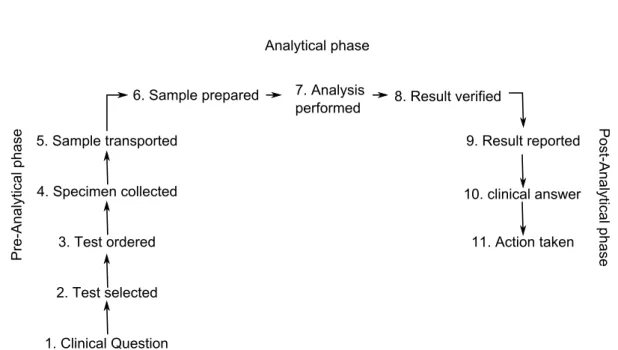
In spite of the changing needs and technologies, the basic process of the clinical laboratory has remained the same and it can be precisely described by the Total Testing Process (TTP), consisting of 11 steps divided into three phases, first devoloped by Lundberg [88]. The pre-analytical phase, ranging from taking the sample to preparing it for analysis; the analytical phase, during which a test result is produced, and finally the post-analytical phase, in which the result is verified, interpreted and a medical action is taken (see Fig 1.1). Recently, it has been recognized that the pre-analytical phase is preceded by a pre-pre-analytical phase and the post-analytical phase is succeeded by a post-post-analytical phase. The “pre-pre-analytical” phase includes the formulation of a clinical question and the selection of appropriate laboratory tests. In the “post-post-analytical” phase, the clinician interprets laboratory results to build a diagnosis and take subsequent therapeutic steps [163].
Traditionally, clinical laboratories have been concerned with the quality of the analytical aspect of their work. Unlike many other medical processes, these activities are precisely defined and more controllable than a procedure or treatment in other medical disciplines. In recent decades, standardization, automation and technological advances have significantly improved the ana-lytical reliability of laboratory results and decreased the error rates to a level
1.1 Introduction
1. Clinical Question 2. Test selected
4. Specimen collected 10. clinical answer
3. Test ordered 11. Action taken
P re-A n alytical p ha se Analytical phase P ost-A na lytical ph ase 9. Result reported 5. Sample transported
6. Sample prepared 7. Analysis
performed 8. Result verified
Figure 1.1 The 11-step process of a clinical laboratory analysis.
which is far lower than seen in overall clinical health care areas, although it doesn’t match up yet with industrial quality standards [185, 68, 123, 106].
In 1999, the Institute of Medicine (IOM) published its report ’To Err is Human: Building a Safer Health System’ [71], investigating the level of mis-takes in US clinical laboratories. It indicated that medical errors were the eighth most important cause of death in the USA, more important than breast cancer or AIDS-related deaths. It was the start of a debate and con-cern about patient injuries in health care. Patient safety, an issue not well understood or discussed in health care systems, became a major subject of discussion and clinical laboratories started to investigate the nature, causes and frequency of their errors. In this chapter, the role of External Quality Assessment in improving quality and reducing laboratory errors will be dis-cussed, with highlights on the current role of External Quality Assessment (EQA) in the changing environment of laboratory medicine. The Total Test-ing Process will be used as a framework for explorTest-ing sources and solutions for mistakes. For each phase, the role of EQA will be exemplified and the chapter ends with an in depth discussion of z-scores, which are one of the most common statistical techniques to evaluate EQA data.
1.2
Errors in laboratory medicine
1.2.1
Introduction
Investigating errors in laboratory medicine should start from a patient-center-ed approach. Any direct or indirect negative consequence for the patient related to a laboratory test must be considered [125, 127]. The Total Test-ing Process is an excellent framework to start from. A mistake can occur in each of the 11 steps in this process [15], starting from test request and ending with the physician’s reaction to laboratory information. According to this perspective, the definition of laboratory error is ‘‘a defect occurring at any part of the laboratory cycle, from ordering tests to reporting results and appropriately interpreting and reacting on these”. Investigating errors is nev-ertheless a complicated subject, since the Total Testing Process is complex, consisting of a series of interrelated processes [122, 13, 79, 128].
1.2.2
Identification of laboratory errors
Pre-analytical phase
The pre-analytical phase includes the phases from the test request to the preparation of the sample for analysis [122]. Specifically, it starts from the clinician’s request, including the selection of tests to be performed, prepa-ration of the patient, collection of the primary sample, continuous with the transportation of the sample to and within the laboratory and ends just be-fore the analytical procedures begin. By far, sample misidentification is a serious concern [81]. In addition, several patient-related and less controllable variables may influence the in vivo concentration of several parameters in the patient’s body fluids, for example the patient’s age, gender, ethnic back-ground, diet, physical exercise or drug use. They need to be considered when interpreting the final laboratory result and hence they have to be registered correctly before sampling [25, 146, 80, 124]. The act of taking the sample may also influence the laboratory results. Posture during blood sampling for example, influences numerous parameters, and the use of a tourniquet may
1.2 Errors in laboratory medicine
change the concentrations of various analytes. The transportation of the sample from the sampling site to the laboratory has to ensure a timely de-livery as well [146]. The type of container the blood is collected is a frequent mistake as well [85]. In case of pre-analytical mistakes, the concentration of the analyte in the sample does not reflect the true concentration in the patient’s blood or other body fluids, although the sample may have been analyzed correctly [146].
Analytical phase
The analytical phase starts when a sample is ready for analysis and lasts till the approval of the test result. It consists of the sample preparation, the determination of the test result, mostly by an automated analyzer, and the final approval by the medical laboratory staff. The performance of analyti-cal procedures is often described in terms of bias and variability, or trueness and precision. Trueness is the proximity between the average value obtained from a large series of test results and an accepted reference value [97]. For method with high trueness, the average of several measurements made on the same sample will be very close to the true value. For a precise method, repeated measurements will be very close to each other. It should be noted that, although different factors may influence trueness and precision in a dif-ferent way, they both need to be under control to ensure the delivery of a high quality test result.
Problems may arise before analysis when samples have to be diluted, for example when the sample volume is insufficient or the dilution is inappro-priate. Almost every analysis is preceded by a calibration and an internal control check. Calibrators may be out of date or prepared in a wrong way before analysis. One way to control the analytical process is internal quality control. Adequate action should be undertaken whenever the internal quality control indicates that the analysis process is out of specifications. In addi-tion, every analytical method should give comparable results to any other analytical method and in particular to a reference method. Although
refer-ence methods with well-defined standards are available for many methods, a problem persists for different antibody based assays. In this context, it is important to use appropriate statistical techniques when performing method comparisons. Often, manufacturers rely on Pearson correlation coefficients and interpret them in conditions when they should not be used. Moreover, in-terference with analytical procedures by endogenous or exogenous substances may lead to false results [156]. Hemolysis, for example, is one of the factors that may impact the final test results. Although debatable, we prefer to classify hemolysis as an analytical event, since it is not always possible to recognize it before analysis and because it interferes with the measurement of several analytes [166]. The most important example from exogenous sub-stances which may interfere with analytical test results are drugs and their metabolites, and substances added to the blood to avoid coagulation [146].
Postanalytical phase
The postanalytical phase starts when the result has been verified and lasts till the appropriate action has been taken by the medical staff. It includes verification of laboratory results by qualified personnel, storing them into the laboratory information system and reporting them to the clinical staff who requested the tests. Often interpretative comments are given to guide the clinical staff in their final diagnostic decision. It also involves an alert system by passing urgent messages to the clinical staff whenever necessary. Report-ing of results strongly affects the effective translation of results into clinical information [70]. It also includes storage and disposal of samples when the analyses have been completed [146, 120]. However, most post-analytical er-rors derive from inappropriate interpretation and utilization of laboratory results. A part of the post analytical procedures take place outside of the laboratory and may be described by post-post analytical steps. They include the receival, reading and interpretation of the results by the clinician, and the final decision of the clinician based on the information provided to him.
1.2 Errors in laboratory medicine
1.2.3
Frequency of laboratory mistakes
During the last decades, the laboratory error rate has been significantly re-duced, in particular for analytical errors. The variability of analytical per-formance is now less than 1/20th of what it was 40 years ago. Further, it has been estimated that up to 75% of laboratory errors generate results without endangering the patient results, and that 10-20 % are absurd results which are detected before they result in inappropriate care. There is a rest of less than 10% of errors which may have an impact on patient care [55, 126, 128]. Looking at the different phases of the TTP, it is generally accepted that the pre-analytical phase is the most error-prone, with reported frequencies rang-ing from 60 to more than 80% [126, 122, 55, 166, 21, 82]. Even more, the frequency of error in this phase, which still consists of manually intensive procedures, has increased in the last decade [79]. The error frequency of the analytical phase is around 10%, and ranges in the postanalytical phase between 20 and 50 %. It should be noted however that the exact number of mistakes is difficult to assess, because there exists no widespread process to follow them up systematically and there is a wide variety of definitions and methods to measure them. Moreover, it has been shown that errors are reported with higher frequency when studies look particularly for them than when they are reported in the daily routine. Also, there may be a biased fo-cus on mistakes that result in adverse events [15]. Overall, the reported error rate in clinical laboratories ranges from less than 0.05% up to 10% [68, 21].
1.2.4
Reducing errors
The Institute of Medicine report “To Err Is Human” generated widespread interest in medical errors and adverse events in health care, as well as strate-gies for reducing them. The most obvious improvement in the latest decades may have been the widespread implementation of quality management sys-tems, encompassing processes for process and risk analysis, and focussing on error prevention, detection and management [79, 124, 83]. Quality man-agement systems should cover all the steps involved in the overall testing and non-testing processes [133] and the implementation of a systematic error
tracking system may be worked out in this framework. The International Organization for Standardization (ISO) has released a norm, ISO 15189 [62], focusing on quality management in the clinical laboratory. It encompasses all the steps and processes within the TTP [120, 124, 21]. The following paragraphs will explore the three main phases of the Total Testing Process and describe in detail the different opportunities to improve quality in the clinical laboratory which are not directly a consequence of a quality system implementation.
Pre-analytical phase
Several issues have become important, such as involving the provision of appropriate clinical history and laboratory specimens, and the satisfaction of patients and professional staff about the collection process have become important [55]. Automation has been described as one of the major recent improvements to avoid errors in this phase. Bar-coded wrist bands, for exam-ple, reduce patient identification errors, pre-analytical workstations perform-ing sample preparation tasks are seen as a major improvement, and software exists to reduce the number of mistakes during phlebotomy [128, 123, 85]. In addition, data loggers that register environmental parameters and three-dimensional acceleration may inform about unwanted acceleration of auto-matic transportation chain [37]. A recent study has shown, for example, that sudden acceleration had a direct relation with increased hemolysis [162].
Analytical phase
The analytical phase has been for decades the phase that has attracted most attention for improvement. In 1950, Levey and Jennings introduced the role of control charts in clinical chemistry and clinical laboratories [76]. Later on, Westgard et al developed a series of QC rules based on statistical process con-trol to effectively apply internal concon-trol techniques [184, 183]. In addition to good test performance and result calculation, attention is now also drawn to adequate turnaround times and the electronic delivery of test result reports. Engineering developments have helped to create automated analyzers, which
1.2 Errors in laboratory medicine
are able to perform routine analyzes in a more standardized way [166]. Tra-ditionally, External Quality Assessment (EQA) schemes have been designed to control for errors in the analytical phase, providing participants a view of their analytical performance with respect to other laboratories and providing an overview of analytical performance of different types of analyzers.
Post-analytical phase
It has become essential for laboratory medicine to set high standards on the way they communicate with clinicians, since laboratory tests serve as a basis for many clinical decisions. Next to the test result, interpretation of results should be given. Also, any information which may explain a deviating result should be noted, like for a example a bias due to a high lipid or protein concentration in the sample [156].
Information technology, in particular expert systems, may be applied to screen and verify test results. They provide for example the means for a delta check, which compares the current test result with previous results from the patient. If the values are significantly different from historical values, the result is flagged. It is important here to note that the choice of parameters to perform delta checks should be made carefully and taking into account the type of patient population [161]. In addition, electronic communication and reporting offer significant opportunities to enhance the communication between the laboratory and clinicians in the field and reduce diagnostic er-rors [81, 55, 122, 123]. Care still has to be taken with keyboard entry erer-rors, and, as always, processes supported by advanced automatizing rely heavily on a stable network infrastructure. The more processes rely on computeriza-tion, the more vulnerable they are to network downtime or computer failures. Attention should also be given to the interpretation of results by the clini-cians. For example, a study [158] has shown that, even when specificity and sensitivity of test are communicated, clinicians do not always know how to interpret these values. Especially when the prevalence of a disease is low, di-agnostic decisions may be impacted. To provide high quality interpretative
comments, laboratory personnel should receive adequate training and also here the need for quality assurance and audit is high [14, 123].
1.3
Quality for the clinical laboratory
Quality assurance has been defined as the whole spectrum of quality improv-ing activities which ensure the usefulness of laboratory investigation. The International Laboratory Accreditation Cooperation (ILAC) and the Inter-national Organization for Standardization (ISO) have released standards re-lating to this subject. The gold standard for most non-medical laboratories has been ISO 17025 [61]. The International Organization for Standardization has released a document particularly focusing on quality assurance in medical laboratories, ISO 15189 [62]. It describes among others the organization and management of the clinical laboratories, the set up of a quality management system and management of nonconformities. It focuses on the three phases of the Total Testing Process and describes in detail the actions to be under-taken to maintain and assure quality. It also clearly requires that laboratories participate in External Quality Assessment programmes [108, 153]. By par-ticipating, a laboratory is able to to check whether its performance is within the limits of its internal standards and to derive measures for continuously improving the quality of its work [18]. Results from External Quality As-sessment may be regarded as the single most relevant indicator of laboratory quality [121].
1.4
External quality assessment
1.4.1
Background
External Quality Assessment is a widely used tool for assessing whether lab-oratories perform tests competently. Its objective is to ascertain and assess the ability of individuals and protocols to perform clinical assays satisfac-torily, beyond the particular items or challenges presented. It may also monitor the quality of commercial analytical systems, reagents and test kits
1.4 External quality assessment
[148, 169, 150]. It has its origin in the work of Belk and Sunderman [165], who distributed samples from the same origin to a group of laboratories in the Philadelphia area in 1947. They were originally used to identify a small number of incompetent practitioners and may have been punitive towards poor performers [108]. Nowadays External Quality Assessment is primarily educational, providing valuable information to individual participants relat-ing to their performance as well as facilitatrelat-ing method comparisons. Satis-factory results in EQA schemes are an important evidence that analytical procedures are under control, that technicians work in an appropriate way, and that effective internal quality rules are in place [29, 43, 63, 154, 121, 42]. Two terms exist to describe this kind of activities, often used interchange-ably: “proficiency testing” and “External Quality Assessment”. In general, the former is more often used in North America and often related with regula-tory, or legal, attributes. The latter is more often used within the European area and is often seen as a broader activity, of which proficiency testing makes up only a part, and usually regarded as educational and as a self-assessment tool. In this work, we will stick to the term “External Quality Assessment”. Currently, External Quality Assessment schemes operate in the field of laboratory medicine in many countries and their aims, stages of development, and design differ [169]. EQA programmes have shown in the past their usefulness by helping to improve analytical performance and hence diagnostic accuracy. The educational aspect of EQA programmes has been mentioned several times as one of the key aspects helping to improve the quality of clinical laboratories. This is likely due to a combination of direct participant feedback and education through scientific meetings and publications [53, 69, 132]. In addition, the follow-up of poor performance in EQA programmes has helped laboratories in identifying analytical errors and detecting their possible sources [14]. Also, the elimination of poor per-formers has resulted in an overall improvement of test quality [69]. There is however only indirect evidence that EQA has improved patient safety [108].
Since EQA programmes are the main tool enabling laboratories to monitor the overall quality of their results, they must be aware of their own challenges
and pitfalls. In particular, setting target values, preferably with traceability towards reference methods, commutability of patient and EQA samples, and providing comprehensive evaluation of the individual laboratory are corner-stones of a well functioning EQA programme. Also, they should promote the improvement of overall performances and support the management of unsatisfactory performances [149, 121]. For this reason, it is important that EQA organizers strive to use sample material which resembles real, single-donor samples as much as possible, while achieving a stability which is strong enough to cover the time delay by sending out the samples. Also, generat-ing comprehensive information for laboratories, settgenerat-ing performance goals and providing information about trends in analytical techniques and perfor-mances are a continuous challenge [121].
A central and important aspect is the evaluation of the laboratories’ outcome of measurements. Two main approaches exist to establish the performance of laboratories. The first approach is the so-called peer group comparison of each individual result with the results obtained by the other laborato-ries. It assumes that the majority of the laboratories answer a result that is equal or close to the correct result, and identifies laboratories who have responded deviating values as poor performers. The procedure to determine when a result deviates and to identify these laboratories will be explained in larger detail later on in this work. The second approach is based on an-alytical quality specifications or goals [67] which have been set by external criteria. Setting analytical quality specifications has been a subject of debate for many years and several strategies have been developed to calculate them. In 1999, a conference sponsored by IUPAC, IFCC and WHO was held in Stockholm on ‘‘Strategies to Set Global Analytical Quality Specifications in Laboratory Medicine’’. It was a milestone in the discussion on setting ana-lytical target. The hierarchy of strategies can be summarized as follows [117]:
1. Evaluation of the effect of analytical performance on clinical outcomes in specific clinical situations. Sometimes a clear and unequivocal relation ex-ists between levels of a certain single parameter and the onset of a particular
1.4 External quality assessment
pathology, for example in markers for cardial damage or in lead poisoning. Performance limits may be derived from threshold values in these specific settings.
2. Evaluation of the effect of analytical performance on clinical decisions in general. Here, data based on components of biological variation or based on the analysis of clinician’s opinion may be used.
3. Published professional recommendations from national and international expert bodies or from expert local groups or individuals. For several param-eters, like serum cholesterol for cardial failure risk assessment, or for serum prostate-specific antigen (PSA), cut off values are determined by an interna-tional expert group and may be used as a basis for calculating specification limits.
4. Performance goals set by regulatory bodies or organizers of External Quality Assessment schemes. The US national External Quality Assessment organizer CLIA has established its own limits to evaluate its participants. The procedures to develop these limits are not explicitly provided, they are implicitly linked to the state-of-the-art laboratory practice as of 1988.
5. Goals based on the current state of the art, demonstrated by data from EQA or as found in current publications about the applied methodology. EQA organizers may use the data of their surveys to calculate limits beyond which a normal value is very unlikely to fall. These limits however are purely empirical and don’t have any link to clinical decision-making or biological variability.
In 2010, the main actors in this consensus strategy have evaluated this pro-cedure and concluded that the strategies developed then have shown to be successful. They also recognized that work was still to be done, mainly in the field of non-numerical evaluation scales, pre-analytical factors and matrix ef-fects, point-of-care-testing, target values of control materials [116]. Recently,
Haeckel has made an interesting proposal which could serve as an alterna-tive to the second step in the hierarchy. It uses reference ranges, data from analytical methods and takes into account the rate of false-positive rates [47] and Krouwer has suggested to apply error grids [74].
1.4.2
Design of EQA schemes
An EQA scheme basically consists of preparing control samples, sending sam-ples to the participants, and analyzing and reporting the participants’ results. Initially, the EQA organizer selects an appropriate test material and deter-mines which tests have to be determined by the participating laboratories. Control material should be tested for its homogeneity and stability before sending. Then, the EQA organizer sends the samples to the participating laboratories, often under controlled conditions, to preserve the stability of the parameters to be tested. Samples may be sent once a year and analyzed by the laboratories on a regular basis. Samples may also be sent at distinct pe-riods and the laboratory analyzes the samples upon arrival in the laboratory. Samples are often shipped with an instruction form about their handling upon arrival, and a list giving an overview of parameters to be determined. Also, a description of the clinical case represented by the samples may be given. The laboratories then analyze the samples according to their standard routine procedures and return the results, preferably with interpretative com-ments, to the EQA organizer [43]. The results may be written down on a paper form or entered remotely in a web-based platform. After collection of the data, the EQA organizer applies statistical and graphical techniques to evaluate laboratories and the methods they applied. Usually, two reports are made. An individual report, focusing on the individual performance of the laboratory, is sent confidentially to each participating laboratory. Also, a report describing the performance of the laboratory in global terms and focusing on the performance of the analytical methods may be joined. Often, results of several rounds are compiled in an additional report, overviewing different clinical cases and describing a representative state of the art of testing by the participating laboratories. Also here a report with
individ-1.4 External quality assessment
ual details for the laboratories may be provided confidentially. Laboratories with unacceptable performances may receive a warning letter inviting them to investigate their method and to undertake corrective measures.
1.4.3
Improvement of external quality assessment
Traditionally, External Quality Assessment has focused almost exclusively on monitoring and improving the analytical phase. However, it has been shown before that the analytical phase is the less error prone part of the Total Test-ing Process. EQA schemes should attempt to focus on the pre- and post analytical phases as well [107, 121]. Efforts have been made to build ques-tionnaires about standard laboratory practices and questions about interpre-tation of examination results [82]. The Norwegian EQA organizer NOKLUS has developed Internet-based surveys to be sent to an extended group of clinical practitioners. Examples are given in literature for the interpreta-tion of urine albumin [1], glucose test results [155] and warfarin monitoring [73]. In addition, the College of American Pathologists has organized a post-analytical survey about interpretation of elevated calcium results [56], and the IFCC Working Group Project “Laboratory Errors and Patient Safety” has issued a list of quality indicators that can be used to measure and eval-uate laboratory testing in the different phases of the TTP [147]. Surveys investigating the interpretation of results tend to assess the post-post ana-lytical phase instead of the post-anaana-lytical phase. Other enhancements are possible for each of the three phases of the Total Testing Process, as discussed in the following sections.
Assessing the pre-analytical process
Laboratories may be screened for behavior in case non-ideal samples or test request lists arrive. EQA organizers may serve themselves of simulated spec-imens, such as contaminated samples or samples with vague instructions [121, 177, 82]. It should be noted that in this phase, risk evaluation is differ-ent than the one commonly made. Errors appearing in this phase don’t have a continuous character and may make the end result completely wrong [185].
It is therefore important to evaluate in this phase the errors by frequency of occurrence.
Assessing the analytical process
EQA has historically been considered as an important tool in controlling analytical error, and also in this respect, improvements may be suggested. The use of commutable control material, i.e. material behaving in a similar way as native patient samples, is of interest to compare possible biasses between analytical methods and should be stimulated. In addition, the use of reference material is an added asset to inter-method comparison and the use of target values established by reference methods would be an ideal goal for all External Quality Assessment programmes. Also, when commutable control material is used, the comparison of result interpretations can be made without taking into account differences between methods. However, the mean of a subset of methods or techniques is also often used, mainly in cases of test specimens with so-called matrix effects, that do not affect patient specimens. In this case, true bias may be masked [131, 182] and laboratories exhibiting high precision should receive an optimal evaluation, disregarding the bias. The next chapter will deal with this issue in further detail. Furthermore, the use of an trueness-based rather than consensus-based evaluation creates room for improvement for, for example, glucose assays [197]. Another aspect which has not gained much attention yet is the monitoring of turnaround times. EQA organizers may use inquiries to obtain information about this issue [144].
Assessing the post-analytical process
The post-analytical process offers EQA organizers various opportunities of action, of which only a part has been explored so far. Laboratories may receive the description of a clinical case together with the samples they have to analyze. For the risk assessment of Down’s syndrome for example, a risk can be calculated based on a combination of various measurements on the mother’s blood and other clinical data, such as the mother’s age, weight, and
1.4 External quality assessment
gestational age of the fetus. [177]. Another example is given by Sciacovelli [149], who has asked laboratories to formulate interpretative comments. Key phrases were identified in each comment according to the degree of abnor-mality found in the samples. Subsequently these phrases were allocated into key groups, and the consensus between laboratories in adding a brief inter-pretative comment to the patients’ results was verified. Such a break down of interpretations into key phrases enhances a computerized processing of the data [78].
To mimic the Total Testing Process as much as possible, laboratories should be enabled to report to the EQA organizer in a way that is as similar as possible to their routine way of reporting. Nowadays many laboratories rely heavily on their Laboratory Information System (LIS). A LIS is a comput-erized platform enabling the capture of test results, storage and retrieval of adequate data, and a communication with other information systems. The international standard HL7 is a worldwide and generally accepted standard supporting communication between medical centers. It uses structured mes-sages to transfer information between different systems.
Laboratory test results may be reported according to the Logical Observa-tion Identifier Names and Codes (LOINC) [91] convenObserva-tions. EQA organizers should include the possibility to communicate with their participants via HL7 and use LOINC codes to describe the tests they want to be performed. Using the power of LOINC, EQA organizers may also gain easily information about the applied reference ranges and interpretation of test results. Even more, laboratory reports can be made up based on HL7 messages and EQA organizers should strive to receive the data in computer-readable HL7-format and in human-readable laboratory test report format.
An automated way of reporting will not only enhance the communication between laboratories and EQA organizers, it will also avoid clerical errors while filling out web or paper forms, which are used nowadays. The latter are specific for EQA and are not representative for the Total Testing Process.
In this respect, it is interesting to read the comments on a question raised by Woods in 2004 [193] about the way EQA organizers handle obvious mistakes, such as a unit mistake or a wrongly placed decimal mark. Most responders said not to change any reported value [92, 190, 77, 187]. Only a minority mentioned unit mistakes as a reason why to change values [151, 129, 187]. In our opinion, values should never be changed without informing the labo-ratory and we suggest a ’correction phase’ at the end of each EQA round. A laboratory may be shown an intermediate report, with a temporary evalua-tion of its results. z-scores (see sectio 1.5) and graphical representaevalua-tions (see Chapter 5), as shown on the final report, may be used here. Subsequently, laboratories may be invited to screen their results.
Data which are the result of an error are supposed to have high z-scores, or to be shown as an outlying observation on the graphical representations, and should attract the attention of the reader. It would then be advisable to give the opportunity to the laboratories to comment on their own results. Exceeding values may be flagged as an error, and specifications, such as pre-analytical, analytical or post-analytical error may be specified. If possible, the laboratory should have the possibility to respond the true analytical re-sult of the test.
This approach will not only enable EQA organizers to use cleaner data in calculating their measures of performance, it will also be more informative to the laboratories. Moreover, summarizing statistics about the source of the error reflect the laboratories’ performance in the light of pre-, middle- and post-analytical error, and may be of interest to the participating laborato-ries. Lastly, only corrected values should be used for any kind of calculations. EQA organizers should not be blinded by the robustness of their methods. Robust methods for estimating mean and variance are less sensitive to out-lying results than standard methods, they are still sensitive to it.