STRATEGY FORMATION AND SUBSIDIARY PERFORMANCE: THE MODERATING EFFECT OF CULTURAL DIFFERENCES
THÈSE PRÉSENTÉE
COMME EXIGENCE PARTIELLE DU DOCTORAT EN ADMINISTRATION
PAR
MIGUEL NONAKA
Avertissement
La diffusion de cette thèse se fait dans le respect des droits de son auteur, qui a signé le formulaire Autorisation de reproduire et de diffuser un travail de recherche de cycles supérieurs (SDU-522 - Rév.01-2006). Cette autorisation stipule que «conformément à l'article 11 du Règlement no 8 des études de cycles supérieurs, [l'auteur] concède à l'Université du Québec à Montréal une licence non exclusive d'utilisation et de publication de la totalité ou d'une partie importante de [son] travail de recherche pour des fins pédagogiques et non commerciales. Plus précisément, [l'auteur] autorise l'Université du Québec à Montréal à reproduire, diffuser, prêter, distribuer ou vendre des copies de [son] travail de recherche à des fins non commerciales sur quelque support que ce soit, y compris l'Internet. Cette licence et cette autorisation n'entraînent pas une renonciation de [la] part [de l'auteur] à [ses] droits moraux ni à [ses] droits de propriété intellectuelle. Sauf entente contraire, [l'auteur] conserve la liberté de diffuser et de commercialiser ou non ce travail dont [il] possède un exemplaire.»
l wOlild like to thank Professor Prosper Bernard. Since entering to the Ph.D. program, he has advised me throughout the lengthy process of research and thesis redaction. His proactive and managerial spirit tallght me how to condllct inde pendent research and his spiritual support has been invaluable dllring the entire dissertation research process. My special thanks also go out to Professor Michel Plaisent who has been very helpful in my dissertation research; his comments on the draft of the dissertation and his sharing with me his academic experience were most lIseful. Professor Terry Lituchy also provided very interesting feedback which aIlowed me to improve the research.
l would like to thank Ms. Myra Roussy, who has always been very encouraging and suppolting during difficliit times and also for her help in reviewing my texts. l also want to thank ML Raymond Lalibelté for his invaluable help in putting my survey on- line and fOl' his advice on the survey process. J would a1so like to tbank the Data Analysis Consulting Services (SCAD) at UQAM, and more specifically Ml'. Bertrand Fournier, for his valued help and his patience during the verification of research results process.
Special thanks are dedicated to my parents who inculcated in me the value of effott and hard work necessary for obtaining the final objective. My wife Lucy and my sons Alejandro and André were my source of inspiration and motivation to continue with ail the hard wode To ail of you thank you for waiting such as a long time and for sacrificing your holidays in order to accompany me through this intellectual joumey.
Fina11y to ail my friends who have provided a positive influence during this research process, l would like to offer my most sincere gratitude to ail of you.
TABLE OF CONTENTS III
LIST O.F FIGURES lX
RÉSlTMÉ XlII
CHAPTERI
LIST OF TABLES VII
ABSTRACT XI
INTRODUCTION 1
1.1 STATEMENT OF THE PROBLEM 2
1.2 THEORETICAL CONCERNS 3
1.3 FOREIGN SUBSIDIARY FIRMS IN CANADA 6
lA STRUCTURE OF THE DISSERTATION 7
CHAPTERTI LITERATURE REVIEW 9 2.1 CULTURE 9 2.2 CULTURALOlMENSIONS 10 2.2.1 SYlnbols 10 2.2.2 Heroes Il 2.2.3 Rituals Il 2.2.4 Values Il 2.3 ORGANIZATlONAL CULTURE Il
2.3.1 Myths and Sagas 14
2.3.2 Language Systems and Metaphors 14
2.3.3 Symbolism, Rituals and Ceremonies 15
2.3.4 Value Systems and Behavioural Norms 15
2.4 NATlONAL CULTURE 16
2.4.1 Influence of National Cu Iture over OrganizationaJ Culture 16 2.4.2 Influence of National Culture on Perfonnance of the Subsidiary 17
2.5.1 Organizational Culture Distance 22
2.5.2 National Culture Distance 24
2.6 SUBSIDIARY PERfORMANCE 25
2.6.1 Socio-Psychological Outcomes 26
2.6.2 Economie Outcomes 27
2.7 STRATEGY 27
2.7.1 International Strategy of the Multinational Firms 28
2.7.2 Subsidiary Strategy JO
2.7.3 Influence of the Strategy of the MNC on the Strategy of the Subsidiary J2
2.7.4 Strategy Formation J4
2.7.5 Strategic Planning 36
2.7.6 Emergent Strategy J7
2.8 INSTITUTIONAL THEORY AND SUBSIDlARY FIRMS J9
2.8.1 Legitimacy and Culture 41
2.8.2 Implementing Different Types of Legitimacy 42 CHAPTERIII
RESEARCH MODEL 44
J.I CONCEPTUAL FRAMEWORK 44
J.2 HYPOTHESIZED RELATIONSHfPS 44 Proposition 1 44 Proposition 2 49 Proposition J 5J Proposition 4 55 CHAPTERIV METHODOLOGY 60 4.] RESEARCH DESIGN 60 4.2 USlNG TRIANGULATION 60 4.3 SAMPLE REQUIREMENTS 61 4.4 SAMPLE SELECTION 6J 4.6 COLLECTING DATA 66 4.7 QUESTIONNAIRE DESIGN 67
4.8 QUESTIONNAIRE DISTRIBUTION 69 4.9 QUESTIONNAIRE COLLECTION 70 4.10 MEASURES 70 4.10.1 lndependent variable 70 4.10.2 Dependent variable 74 4.10.3 Control Variables 0.. 00076 4.11 METHODS OF ANALYSIS .. " """ 0.. ",, 77 4.1101 Power Analysis ".. " .. " " " "." " 0" "." 77 4.11.2 PreliminalY Analysis " .. " 078
4.11.3 Specifie Statistical Tests " 78
CHAPTER V
QUALITATIVE ANALYSIS 80
501 ORGANIZATIONALCULTURE DISTANCE " 83
5.2 NATIONAL CULTURE DISTANCE "" " .. " """ ,, 84
5.3 STRATEGICPLANNING " " 85
5.4 DECENTRALIZED EMERGENT STRATEGY" "." .. " " " 86
5.5 SUBSIDIARY PERFORMANCE " " 87 5.6 CONCLUSIONS " 89 CHAPTER VI RESULTS 91 6.1 DATA SAMPLE 91 6.2 DA TA ANALYSIS 93 6.2.1 Descriptive Statistics 93 6.2.2 Principal Variables 000 00 0 00 0.. 0" 96
602.3 Possible Influencing Variables ".. " " " " "" .. ,," .. " "" ,, 97 6.3 TESTS AND RESULTS " " " "." .. "" .. "" .. " """ " 99
6.3.1 Tndependent Sam pie "000 0 0 0 0.. 0.00 .. 0 0 0.. " .. 0 0 0 00099 6.302 Speannan Correlationo .. o.oo o o " 000 "00 ".00.,,.0100 6.3.3 Regression Analysis "" " " " .. "." 105
6.4 DISCUSSION BY HYPOTHESIS 105
6.4.2 Hypothesis 1b 111 6.4.3 Hypothesis 2a 113 6.4.4 Hypothesis 2b 116 6.4.7 Hypothesis 4a 118 6.4.8 Hypothesis 4b 120 CHAPTER VII CONCLUSIONS 124 7.1 FINDINGS 124 7.1.1 Key Findings 124 7.1.2 SecondalY Findings 126 7.2 CONTRIBUTlON 127
7.3 LlMITS OF THE STUDY 128
7.4 RECOMMENDATIONS FOR FUTURE RESEARCH 130
APPENUIX A 132
NATIONAL CULTURE DISTANCE AND INDUSTRIES 132
A.PPENDIX B 134
STATISTICAL RESULTS 134
APPENDIX C 142
SURVEY MODEL 142
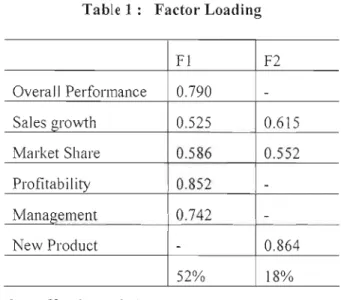
Table 1: Factor Loading 75
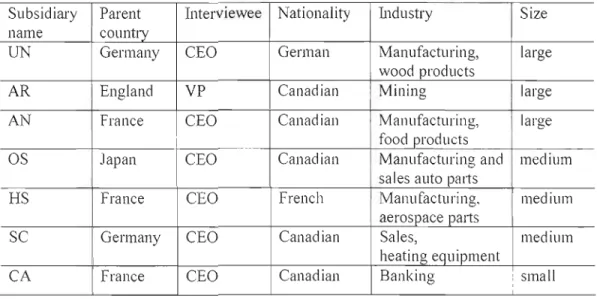
Table 2: Summary offirms interviewed 81
Table 3: Alpha Cronbach 94
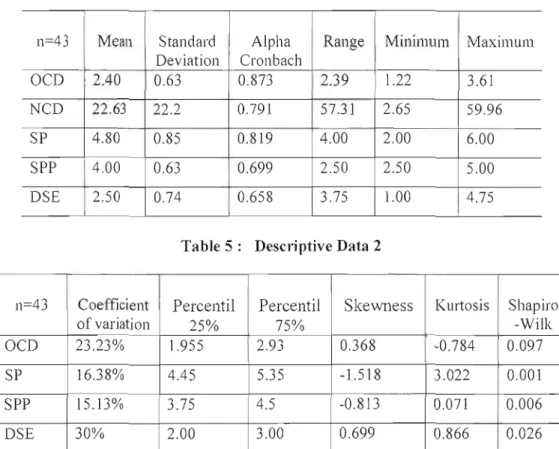
Table 4: Descriptive Data 1 96
Table 5: Descriptive Data 2 96
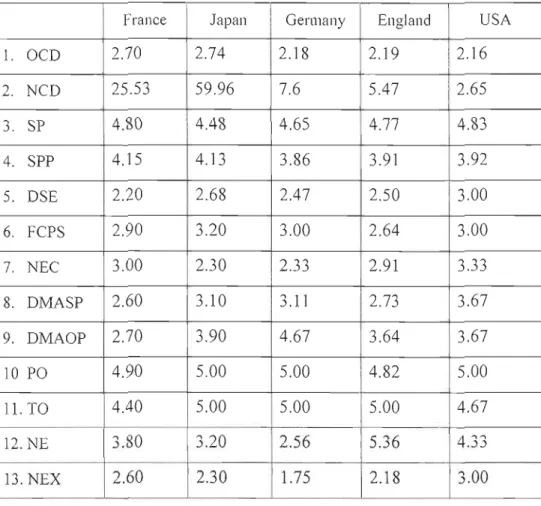
Table 6: Mean for Each Variable and Country 99
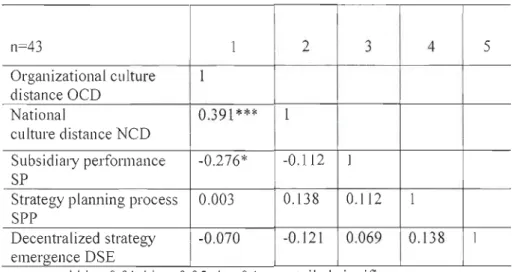
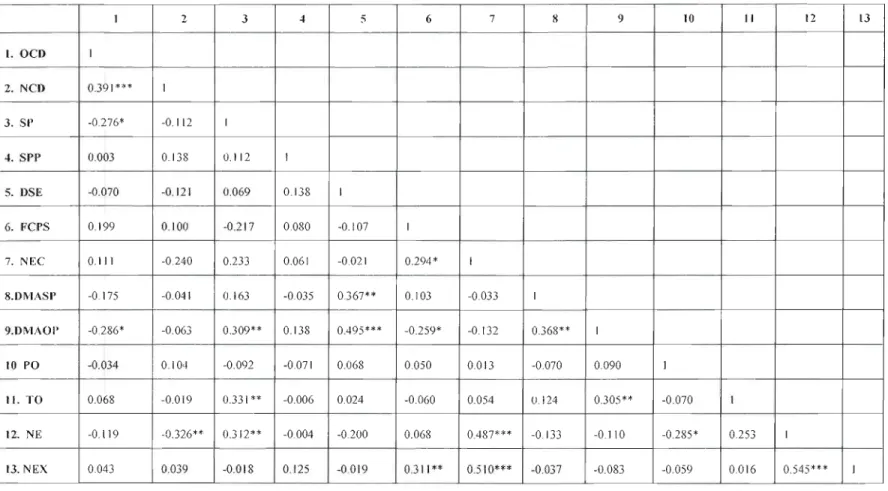
Table 7: Spearman COlTelation Coefficients (Direct and Indirect Variables) 101
Table 8: Spearman Correlation Coefficient 102
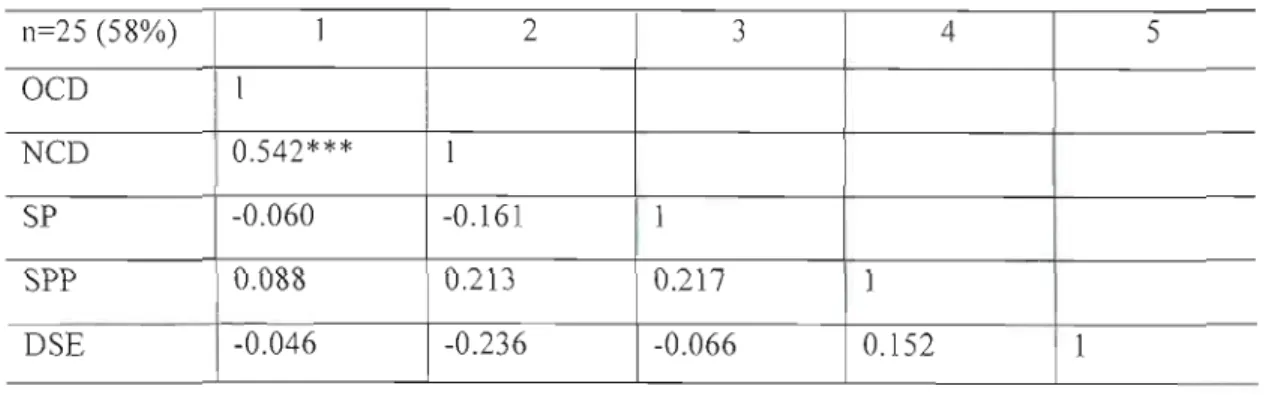
Table 9: Speannan Conelation Coefficient for Small and Medium Subsidiaries 104 Table 10 : Spearman Correlation Coefficient for Large Subsidiaries 104 Table Il : Moderate Regression Analysis Results for Hypothesis 1a 106 Table 12 : Moderate Regression Analysis Results for Hypothesis 1a (Small-Medium
Subsidiaries) 108
Table 13 : Moderate Regression Analysis Results for Hypothesis 1a (Large Subsidiaries). 109 Table 14 : Moderate Regression Analysis Results for Hypothesis 1b III Table 15 : Moclerate Regression Analysis Results for Hypothesis lb (SmaIJ-Medium versus
Large Subsidiaries) 112
Table 16 : Moderate Regression Analysis Results for Hypothesis 2a 113 Table 17 : Moderate Regression Analysis Results for Hypothesis 2a, (Small-Medium versus
Large Subsidiaries) 114
Table 18 : Moderate Regression Analysis Results for Hypothesis 2b 116
Table 19 : Regression Analysis Results for Hypothesis 3 117
Table 20 : Regression Analysis Results for Hypothesis 3, (Small-Medium versus Large
Subsidiaries) 118
Table 2l : Moderate Regression AnaJysis Results for Hypothesis 4a j 19 Table 22 : Moderate Regression Analysis Results for Hypothesis 4b 121
Table 24 : Countries Representee! in the Sample ane! their Scores on Cultural Dimensions and
National Culture Distance from Canada 132
Table 25 : National Culture Dimensions of Canada 132
Table 26 : Industries Represented in the Sample 133
Table 27 : Spea1111an Correlation Coefficient for Subsidiaries (3 years or more of operation) ... 134 Table 28 : Spearman Correlation Coefficient for Dimensions of OCD and Performance 134
Table 29 : Confinnatory Factor Analysis of OCD 135
Table 30 : Conditional Effect of Focal Predictor at Values of the Moderator Variable 137 Table 31 : Conditional Effect of Focal Predictor at Values of Moderator Variable
Figure 1: Integrative Strategy Formation Model in a Culturally Distant Context 5 Figure 2: Hypotheses 1a 45 Figure 3: Hypothesis 1b 47 Figure 4: Hypothesis 2a 49 Figure 5: Hypothesis 2b 51 Figure 6: Hypothesis 3 53 Figure 7: Hypothesis 4a 55 Figure 8: Hypothesis 4b 58
Figure 9: Moderating Effect of OCD over the DSE-SP Relatiollship 110 Figure la: Moderating Effect of OCD over the SPP-SP Relationship 115
CD CEO OSE DMAOP DMASP EMC FCPS [ND LTO MAS MNC NCD NE NEC NEX OCD PD PO ROI SOL SP SPP S2 TO UA VP Cultural cl istance Chief executive officer
Decentralizecl strategy emergence
Decision-making authority over c1aily operations granted the subsicliary by the parent firl11
Decision-l11aking allthority over strategic plans granted the subsidiary by the parent firm
EntlY mode choice
Frequency of contact between the parent and subsidialY firms Ind ividua lism/Co Ilecti viSI11
Long term orientation Mascu 1inity/Femininity Multinational
National culhlre distance Number of employees
Number of execlltives From the subsiclialY in contact wiliJ lhe parenl finn. Number of expatriates working in managerial charges in the subsidiary Organizationat culture distance
Power distance
Paliicipation ownership Return on investment
SllbsidialY's ownership leveJ. Subsid iaty pelformance Strategic planning process Subsidiary size
Time operation Uncerta inty avoidance
ln the literature on strategy, it is recognized that there are two basic tendencies, which oftentimes overlap, at the root of strategy formation: planning strategies and emergent strategies, and that ail strategies can be located on this scale, according to their combination of the folJowing dimensions: leadership intentions, central control and environment (Mintzberg & Waters, 1985). The complementarity ofthese two strategy-making modes was demonstrated by Andersen (2004), who empirically tested their positive effects on organizational performance, under two environmental conditions: internationalization and turbulence. It is also recognized that one of the most important sources of impediments to the success of multinational finns and its subsidiaries is culture differences (Miroshnik. 2002). The reason for this is that an increase in llnceltainty caused by cu ltural distance influences on the choice of the strategy-making mode (Peng, 2002). This explanation is the focus of this dissertation, which sets out to better understand the influence of the cu ltural environment on the strategy fonnation process. This study examines the influence of cultural differences betvveen subsidiary and parent finn (at the national and organizational level) in the relationship between the strategy formation process (planning and emergent processes) and organlzational performance.
The sam pie population for this research includes foreign subsidiaries of English, French, German, Japanese and United States multinationals operating on Canadian soil. The dissertation data includes data gathered from qualitative sources, such as personal interviews conducted with CEOs and Vice Presidents who have the closest contact with their headquarters. In addition, a survey condllcted to top managers engaged il1 the strategy making of the subsidiary finn, and who are frequently in contact with the parent finn, in order to understand the perception of organizationa 1 culture differences, strategy formation and performance data.
Four established measures provide the major independent variables used for statistical analysis. They include national culture distance secondaty data based on Hofstede's (2001) country indices as applied in Kogut & Singh's (1988) fonnula for national cultural distance. The others three independent variables and the dependent variable use prim31Y data gathered by a survey: the organizational culture distance measure using the scale of Hofstede (1990), the emergent and planning strategic process measures using Andersen's (2004) scale and a scale which meaSlll'es the subjective pelformance of the subsidiary. The results were analysed using a hierarchical regression analysis in order to test the moderator effect. Aiso the variables were analysed using the Speal'man correlation index and l'egression linear.
The results provided suppOti for the hypothesis which proposes the relationship between organizational culture distance and subsidiaty performance; the research also fOlll1d that only organizational culture distance has a significant effect on performance, while the influence of national culture distance on perfonnance is not significant. Exploratory statistics show some inroad regarding the moderating influence of organizational culture distance on the relationship betvveen decentralized strategy emergence and subsidiary performance, for large subsidiaries. However, no support is found for the notion that national culture distance
influences the relationship between strategy fonnation and performance. Flllther findings imply the study of another factor which can influence the strategy formation and the subsidiary's performance, inside the firm, such as the degree of control that the parent exelts on the su bsicliary.
Keywords
Strategy; strategy fonuation; emergent strategy; planning strategy; organizational culture distance; national culture distance; perfonnance; institutional theory; mu ltinational; subsidiary.
Dans la littérature sur la stratégie, il est reconnu qu' i1 Y a deux tendances de base, qui souvent se chevauchent, à la racine de l'élaboration des stratégies: des stratégies planifiées et des stratégies émergeantes, et que toutes les stratégies peuvent se retrouver sur cette échelle, selon leur combinaison des dimensions suivantes: l'intention des dirigeants, le contrôle central et j'environnement (Mintzberg & Waters, 1985). La complémentarité de ces deux méthodes d'élaboration de stratégies a été démontrée par Anderson (2004), qui a empiriquement testé leurs effets positifs sur la performance organisationnelle, dans deux conditions environnementales : l'internationalisation et la turbulence. Il est également reconnu qu'une des sources les plus impOltantes des empêchements au succès des firmes multinationales et leurs filiales est la différence culturelle (Miroshnik, 2002). La raison pour expliquer ceci est qu'une augmentation de l' inceltitude causée par la distance culturelle influence sur le choix du mode d'élaboration des stratégies (Peng, 2002). Celte explication est le focus de cette disseltation, dont le point de dép31t est de mieux comprendre l'influence de l'environnement culturel surie processus d'élaboration des stratégies. Cette étude examine l'influence des différences cu lturelles entre les fil iales et leurs sociétés mères (aux niveaux national et organisationnel) dans la relation entre le processus d'élaboration de stratégies (processus planifié et émergeant) et la performance organisationnelle.
L'échantillon de population clans le cadre de cette recherche inclut cles fi 1iales étrangères de multinationales anglaises, françaises, allemandes, japonaises et états-uniennes ayant des activités sur le sol canadien. Les données de cette disseltation incluent des données cuei Il ies de sources qualitatives, telles des entrevues personnelles auprès des PDG et vice-présidents qui ont le plus étroit contact avec le siège social. De plus, une enquête fut menée auprès des hauts dirigeants impliqués dans J'élaboration des stratégies de la filiale, et qui sont fréquemment en c011tact avec la société mère, afin de comprendre la perception des différences organisationnelles des cultures, de l'élaboration des stratégies et de la performance des dOlU1ées.
Quatre mesures établies fournissent les principales variables indépendantes utilisées pour l'analyse statistique. Files incluent les données secondaires sur la distance de la culture nationale basées sur les indices de pays de Hofstede (2001) appliqués dans l'équation de Kogut et Singh (1988) pour la distance de la cu lture nationale. Les trois autres variables indépendantes et la variable dépendante utilisent les données primaires cueillies par voie d'enquête: la mesure de la distance culturelle de l'organisation selon l'échelle de Hofstede (1990), les mesures découlant des processus de stratégies planifiées et émergentes selon l'échelle de Anderson (2004), et une échelle qui mesure la performance subjective de la filiale. Les résultats ont été analysés en utilisant une analyse régressive hiérarchique afin de tester l'effet modérateur. Aussi, les variables ont été analysées utilisant l'index de corrélation et de régression linéaire de Speannan.
Les résultats fournis appuient l'hypothèse qui propose la relation entre la distance culturelle organisationnelle et la performance de la filiale; la recherche a aussi trouvé que seule la distance organisationnelle culturelle a un effet significatif sur la pelformance, alors que l'intluence de la distance de la culture nationale sur la perfonnance n'est pas significative. Les statistiques exploratoires font une percée par rapport à l'influence modératrice de la distance cu Iturelle organisationnelle sur la relation entre la stratégie décentralisée émergeante et la performance de la filiale, pour les grandes filiales. Cependant, aucun appui n'a été recensé pour la notion que la distance culturelle nationale influence la relation entre l'élaboration de la stratégie et la performance. D'auo'es recherches impl iquent l'étude d'un autre facteur qui peut influencer l'élaboration de la stratégie et la performance de la filiale, à l'intérieur de la finne, telle degré de contrôle exercé par les sociétés mères sur la filiale.
Mots-clés
Stratégie; formation des stratégies, stratégie émergeant; stratégie planifié; distance culturelle organisationnelle; distance culturelle nationale; performance; théorie institutionnelle; multinational; filiale,
INTRODUCTION
The purpose ofthis study is to propose and test a theoretical framework linking strategy making modes and cultural distance, to organizational pelfonnance. The framework focuses first of ail on the relationship benveen the nvo strategy-making modes and organizational performance (Andersen, 2004); cultural distance is considered to be a moderate variable with a relative influence on the relationship between the strategy-making mode and the firm's performance. This principle is based on Peng's (2002) statement that cultural distance increases the uncertainty, which in tum can influence on the choice of the strategy-making mode. The theoretical framework also considers the direct influence of the cultural distance on the organizational perfonnance. This relationship is considered in tenns of moral legitimacy, which propose that closer values and norms obtain a positive evaluation of the subsicliary (Tian and Gao, 2006) and cognitive legitimacy which facilitates the acceptation and underst31lding ofthe subsidialY firm (Tian and Gao, 2006).
The unit of study is the subsidiaty Finn which affronts several risky challenges with respect to the firm's profitability such as diversification of the dimensions of the national market, quality of the labour resources, natllral resources, political divergences, geographical distances, cultural differences, etc. From these factors, we chose to study cultural difference which is, according to Miroshnik (2002), the first dominant factor accounting for the failures and problel11s encollntered in mu Itinationa 1business.
Our choice of the subsidi31Y firm as a subject of study is sustained by the continually increasing impoltance of subsidimy firms in global business. There are same 790,000 foreign subsidiaries of about 79,000 parent firms which contributed approximately $31 trillion USD to world sales in 2007, while the l1umber of employees in foreign affiliates reached 82 million (UNeTAD, 2008) and the value-added activity (gross product) of foreign affiliates worldwide accounted for 11 % of global gross product in 2007.
A subsidiary faces a double challenge as on one side it has to comply with local practices and nonns, but it also has to comply with its parent finn in order to gain access to knowledge, experience, resources, etc. Regarding the relationship between parent and subsidiary firms, there are some difficulties which affect the effective communication between the two, and one of the sources ofthis problem is the cultural distance between them.
The results of this disseltation contribute to the multinational literature by providing: an empirical explanation of the importance of the strategy-making modes on the perfonnance of subsidiary firms, when studied from a cultural environment perspective.
1.1 STATEMENT OF THE PROBLEM
The objective of this disseliation is to fmiher increase our understanding of how the cultural differences between the foreign parent and Canadian subsidiary firms influence on the relationship between the strategy-making mode and the performance of the subsidiary finn.
This problem is impoliant because it involves the perfonnance of the strategy-making modes of subsidiary finns which represent 11 % of the gross global product (UNCTAD, 2008) and 57.6 % of the foreign investment stock in Canada (Cameron and Sabuhoro, 2008). Each year new subsidiaries from developed countries are incorporated into Canadian industries, but also there are new subsidiaries from developing countries culturally different from Canada, which assures that this problem is not onJy continuous but increasing in impoltance.
The cultural differences between the subsidiary and the parent fil111S create problems for both firms, but the subsidiary because of its size and its nature of being a foreign finn in a host country is more affected. For the subsidiary it is important to establish a good level of contact with its parent finn in order to receive the transfer of knowledge, experience and strategic ideas, but the cultural clifferences between the two firms affect the natural communications between them (Cui et CIl., 2006). These cultural differences are pali of the subsidiary's cultural environment and affect the processes in the subsidiary firm, such as the
performance of the strategy-making modes, thereby rendering difficult the transmission and comprehension of strategic plans.
To accomplish the anaJysis of this probJem, we propose a theoretical model (presented in Figure 1.1) which hypothesizes the influence of cultural distance on the interaction between strategy-making modes and organizationaJ performance. This last relationship has already been demonstrated by Andersen (2004) but not in a cultural context, as he used two other environmental variables: tnrbulence and technology. One of the reasons we analyze that relationship in a cultural context is because cultural differences are considered to be the first source of problems in multinational firms (Miroshnik, 2002).
Within the framework of this study, performance differences within a firm are explained by the variations in resources and capabilities, which can be caused by the cultural distance of the subsidiary with the national and organizational culture of the parent Finn. In effect. a
factor which can help to reduce costs and increase competitiveness is the close cultural distance between the subsidiary and parent finns as this can help to stabilize the subsidiary's source of resources, and increase the capabi lities of the su bsid ialY firm.
1.2 THEORETICAL CONCERNS
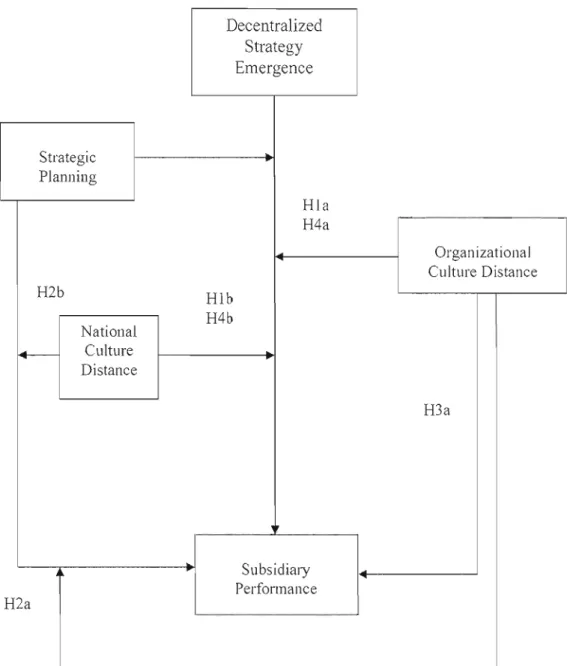
The theoretical model presented in Figure 1 snggests four basic propositions, which are translated into hypotheses that will be tested based on the data collected from the subsidiaries of foreign tïnns operating in Canada. The propositions are as follow:
1. Decentralized strategie emergence is positively related to a subsidiary's performance in a subsidiary-parent finn close cultural environment.
This proposition is developed, by studying the moderate effects of cultural environment factors such as national culture distance and organizational culture distance on the relationship between decentt'alised strategy emergence and performance. According to Cui et
01. (2006), these cultural environ ment factors influence the technology transfer from the parent to subsidiary firms. wilere the transfer of technology is considered ta be a strategic
initiative. Therefore, cultural environment factors affect the influence of strategic initiatives, and ultimately the performance.
2. Planning the strategic process leads to desirable outcomes in a subsidiary-parent finn close cultural environment.
The parent finn has a global strategic plan, and each subsidiary has its own local plan, which reflects the worldwide strategy into local requirements. The relationship between strategy planning and culture is highlighted by Herbeli (1999), who states that strategy planning is inherently culture-bound because it is built on culturally-derived assumptions which make the transfer ofa strategic plan difficult from one culture to another.
3. Close cultural distance leads to desirable outcomes.
Pothukuchi el CIl. (2002) proved the negative effects of national and organizational culture distances on efficiency and competitiveness in an international joint venture. Cui el a/. (2006) analyzed the cultural environment represented by cultural distance on two levels, organizational and national, which negatively influence effectiveness of communications and infonnation sharing between the parent finn and its subsidiaries.
4. The strategy planning process and decentralized strategy emergence lead to desirable outcomes in a subsidiary-parent firm close cultural environment.
Andersen (2004) asserts that these two strategy-making modes are complementary. He demonstrated that the interaction between strategy planning and decentralized strategy emergence has a positive influence on the performance of fions engaged in intemational markets. According to him, these firms are more sensitive to exogenous environmental factors. We studied this interaction in subsidiary firms, which are more sensitive to variations of cultural environment factors, such as: national and organizational culture distance.
Decentralized Strategy Emergence Strategie Planning Hia H4a OrganizationaJ Culture Distance H2b Hlb H4b National Culture Distance H3a Subsidiary Perfonnance H2a
1.3 FOREIGN SUBSIDIARY FJRMS IN CANADA
We focus on the subsidiary literature which analyses the situation of Canada as the host country with foreign finns located in it. The lifting of trade barriers during the 1970s and 1980s caused the subsidiaries to move from the small-scale replica model encouraged by the protectionist model proposed by the govel11ment, to other l'oIes more oriented to the world market and characterized by high vaJue-added specialist l'oIes, and aJso to the other roJes oriented to the local market characterized by the low value-added generaJist (Birkinshaw and Hood, 1997).
The Free Trade Agreement signed with the United States and its geographic nearness to Canada favour the formation of a large population of subsidiaries from that countlY; they represent 57.6 % ofCanada's direct foreign investment stock. Other important countries \Vith direct foreign investment stock in Canada are the United Kingdom with 10.9 %, the Netherlands 6.3 %, France 3.5 %, Switzerland 2.8 %, Japan 2.7 %, Brazil 2.6 % and Germany with 2.1 % (Cameron & Sabuhoro, 2008). SubsidialY firms tend to be 10cated in Central Canada, especially in Ontario, where more than half of the foreign subsidiaries in Canada are located; more precisely, they account for 53 % of ail the revenues eal11ed by foreign subsidiaries in Canada, followed by Quebec with 17 %, Alberta 12 % and British Columbia Il %. 38.6 % of the ail subsidiary finm are dedicated to manufacturing industries, 16.3 % to mining and gas extraction, lIA % to oil and gas extraction and support, and 13.5 % to finance and insurance.
The main activities of these foreign-owned subsidiaries in Canada are focused on high value-added manllfacturing and resource-based sectors, sllch as transpOliation equipment (motor vehicles, airplanes), natural resources (oil, mining) and electrical products. Cameron (1998) analysed data for foreign subsidiaries of four countries (United States, Germany, England and Japan); he found that subsidiaries are velY impoliant to the external Canadian trading which is reflected by the fact that these subsidiaries of parent finns from only four
countries are responsible for 44 % of expOlis and almost 50 % of impolis, although only 2 % ofthe exporters are foreign subsidiaries.
One of the strategic altematives available to the foreign subsidiary in Canada is to enter the global market, to put itself in a position to enjoy a privileged position within the multinational network, thereby enabling it to access knowledge on product characteristics, state-of-the-art technology and market information. If the su bsid ialY doesn 't have the capacity to create a cost competitive plant in Canada, it can become a marketing satellite, impOliing from other subsidiaries and selling. Another altemative for the subsidi31Y is to tailor its products and to focus on Canadian customers; Canada's particular and harsh weather opens up, for example, an oppOliunity in the manufacturing sector involving mining equipment. Thus, subsicliaries exploit the Canadian requirement for equipment which can endure the cold and open-pit conditions (White and Poynter, 1984).
Canada is a developed and industrialized countl)', rich in natural resources such as oil, minerais, fish and wood. For this reason, the goals set for subsidiaries in Canada include the goals related to industrialized countries (e.g., knowleclge acquisition, learning, strengthening of corporate image) but also other goals which mostly relate to subsidiaries in developing countries, such as: raw materials and natural reSOllTces (Luo, 2003). For the other side, Delany (2000) considers the fact that Canada is highl)' dependent on the activities of foreign owned subsid iaries, which influence in the country the expectation that the subsid iary wi II c1evelop according to the national interests of the Canadian economy.
1.4 STRUCTURE OF THE DISSERTATION
This disseliation is divided into 7 chapters. The first chapter outlines the proposed research, the model to be tested, and briefly outlines the situation of foreign subsidiaries in Canada. Cha pter two is a review of the relevant bacl<:ground literature in four substantive spheres, namely: culture, strategy, performance and institutional theory. Chapter three discusses the research model, especially the proposed hypotheses. Chapter four discusses the evaluation of the proposed model, through which this study proposes a research method, including research design, evaluation of variables, data sources and survey instruments.
Chapter Rve presents our observations and findings from a qualitative study of eight interviews with CEOs of subsidiary finm. Chapter six presents the results of the surveys, first describing the primary data, followed by a statistical analysis, the presentation of the findings and a discussion of the hypotheses. Finally, chapter seven includes our conclusions, which are divided up between key findings, secondary findings, contributions to the theory, limits of this study and recommendations for future research.
LITERATURE REVIEW
2.1 CULTURE
Culture is a central concept of anthropology and social SCiences, introduced in management as a necessity to understand the social experience inside an organization. The number of different definitiolls which the authors have given of culture gives us an idea of the complexity of this construct. Each school of thought has its own definition of culture, even according to geographic precedence. Although culture is a very controversial definition in anthropology, we present here one of the most common definitions, one which presents culture as an integrated system of shared artefacts, behaviours and ideas which are characteristics of a society (Hiebert, 1976, p. 25).
Swaliz (2001) considers that culture has two universally accepted characteristics intrinsic to its definition: being learned and being shared. The first characteristic makes reference to the intangible nature of cultl1l'e; its meaning is something which is in our minds while something learned is something taught. There is thus a cultural transfer, which is a very important subject in multinational business, where the emigration of people from different cultures causes movements of diffusion and assimilation of culture. ln the second characteristic, the mention of the word 'shared' is synonymous to several people or cultural groups, which leads us to the differential approach which considers culture as a group of mental activities accepted more in celiain societies than in others (Lévy-Bruhl, 1960).
D'Andrade (2001) suggests, in order to bring precision to the definition of culture, that in the modern anthropological paradigm, culture becomes a purely mental process: meanings, ideas, beliefs and knowledge. For him, physical activities and objects are not culture. Culture as a purely mental and psychological phenomenon is constrained by psychological processes like learning and cognition, as a cogniti ve frame of reference and myths.
For Jordan (1995) culture is a system of symbols with meanings created arbitrarily by its users. The symbols can be objects, gestures, logos, songs, etc.; the meanings are stored in our minds as cognitive frames which can be transmitted to other members of the group. In essence, what we transmit to ollr partners are the cognitive frames and not the physical ones. Lastly, a characteristic which is very impoliant to multinational business is that culture is adaptive, which means that it can change in relation to its environment in order to survive. This is the key to the survival of culture, which depends on activities of subsistence, like in the case of the habitants of the rough lands of the Andes who have adapted their culture to the difficult environment.
This research uses Hofstede's (1980) definition of culture, which more adapted to the subject of bis research, cultural differellces. Hofstede defilles culture as the collective program of the spirit "vhich distinguishes the members of a category of people with respect to another one.
2.2 CULTURAL DIMENSIONS
Researchers agree that culture is a multidimensional construct. For D'Andrade (2001), the dimensions are purely mental, as are meanings, ideas, beliefs and knowledge. For Hofstede and Hofstede (2005), the dimensions are symbols, heroes, rituals and values; they a1so consider that culture is a mental subject, like mental programs with software to link them together, and that software is the culture. They propose a determinist approach to culture in considerillg that the mental programs vary according to the environmellt in which they were developed. For Hofstede (1980), the manifestation of culture is covered by the following four tenns.
2.2.1 Symbols
The palticularity of symbols is that their meaning can only be recognized by the culture of the members. The symbols are the language, objects, pictures, which are embedded in the
collective memory of the people, and have a meaning shared by everyone. People from different cultures can interpret the same physical object differently.
2.2.2 Heroes
They represent the persons who serve as 1110dels for the behaviour of the members, because their psychological attributes are highly valuecl by the members of the society 2.2.3 Rituals
Collective activities are considered essential. At the organizational level, they represent meetings, speeches and behaviours. The meaning of a ritual is found in our cultural framework, so people from different cultures attribute different meanings to the same physical act.
2.2.4 Values
According to Hofstede (1980, p. 8), values are "broad tendencies to prefer certain states of affairs over others". Values represent the core of the culture, resting in our subconscious; this is also the aspect of culture which is most difficult ta change. The values are not physical objects, people or ceremonies; they are invisible, inside the minds of the people.
The four cultural dimensions affect both national and organizational culture. For example Hofstede (1991) states that values are at the heart of national culture differences, while symbols, heroes and rituals are related to organizational culture differences.
2.3 ORGANIZATIONAL CULTURE
Jordan (1995) considers that the clifference between the anthropological and organizational paradigms studied makes it difficult to use the anthropological literature for organ izational analysis. The reason is that wh en the concept was introduced for the first lime .. it was necessary ta redefine it and to add one or more characteristics in order to explain the
structure or the goals. It was Pettigrew (1979, p. 572) who, based on a longitudinal pro cess approach which explores organization as a continuai system, ascertained the development and emergence of organizational culture which he cons id ers to be "the amalgam of beliefs, ideology, language, ritual, and myth".
Smircich (1983) and Garibaldi (2006) distinguish two other approaches to organizational culture. The first considers culture as sornething the orgal1ization is; this approach is similar to Garibaldi's (2006) symbolic view which considers culture as a metaphor for conceptualizing organizations. The second approach considers culture as a variable to study the organizational level; this approach is called the functionalist approach and it is used by Peters and Waterman (1982), who consider culture as the source of the success of firms, they also predict the impoltance of strong culture for the success of the finn.
From a normative perspective, Schein (1992, p. 12) tackled the subject from the point of view of "the pattern of basic assumptions". For him organizational culture is the fruit of the manager's vision, that it is his ideas, convictions and beliefs based on past experiences, which are transmitted to the other employees. Organizational culture is the set of postulates which come forth after the integration and assimilation of the ideas, convictions and beliefs to the employees. Wilkins and Gibb (1988, p. 523) consider organizational culture as "socially acquired and shared knowledge that is embodied in specific and general organizational frames of reference'·. It is necessary to highlight the cyclic character of these purposes, the melting point of the knowledge forms the frame of reference, but this frame of reference is in charge of evaluating ail the new knowledge for its incorporation into the existent knowledge.
From a comparative approach, Hofstede (1991) argues that the core of organizational culture is composed ofpractices shared by its members, as ifwe apply a comparison between firms, they wiU differ in their practices, which are the most visible aspects of culture and thus are manageable by the managers. Adler and Je1inek (1986) place the organizationaJ culture of the firms on a scale ranging from determinism to free will. They argue that the fundamental support for the organization is free will, but that the organization accepts smail quantities of determinism imposed by the organization's culture. They comment on the cross-cultural
approach, mentioning the importance of cultural differences which accept a greater degree of determinism than the organizational culture concept. This perspective accepts the managers and employees as fundamentally conditioned by their national culture.
In the field of international business, Miroshnik (2002, p. 537) states that the most critical factor accounting for the failures and problems in multinational business is culture. With respect to the MNC, she states that it is necessary to refer to the variations in culture. She also says that organizational culture is a combination of micro values, macro values and "meso" values, and that the organizational culture of the subsidiary varies from country to country in relation to the differences in national cultures. The structure of a national culture includes the micro values which are, for example, the sense of belonging, having fun, entertaining wann relationships, security, respect, excitement el~oyment, self-fulfillment, being weIl respected and having a sense of accomplishment The combination of micro and macro values could produce meso values which are specifie to a country, as codes of behavioUL which influence the members of the society.
On the other side, the organizational culture of a big and geographically dispersed organization like the MNC may have many different cultures which can remain stable but not static, Miroshnik (2002). Effectively, the stability of a palticuJar culture is a condition of its survival, but this stability doesn't mean that the culture is static, but rather that it evolves accord ing to the process of socialization which forms the new frames of reference. Both static and instable cultures are condemnecl to disappear; the first for its inability to assim ilate environmental changes, and the second for the disalticulation in small subcu\tures which are unable to socialize between themselves.
Sbirivastava (1985) considers that organjzational culture can be described by a set of cultural products through which it is perpetuated and stabilized. He considers four categories of cultural products: myths and sagas, language systems and metaphors, symbolism, ceremony and rituals, value systems and behaviour norms. Follows is a description of Shirivastava's (1985) cultural products.
2.3.1 Myths and Sagas
This stage of problem formulation is characterized by social interactions as managers infonnally and indirectly scan for information about the problems, trying to clarify their nature. In this case, the myth provides an abundant source of information easily interpreted. The first source of these myths comes from within the same finn, but they can also come from the parent firm which is a larger and more experienced fim1, able to suppJy the myths based on its own experience. The age of the subsidiary holds an impo11ant l'ole because a more recently constituted one will be more easily influencecl than an older one.
The social nature of the myths leads us to relate their creation to the conlext of the surroundings and to the national culture of the subsidialY. In other words, the myth is influenced by the national culture. fn the subsidiary, there are the myths which come from the parent firm and which try to impose themselves on the subsidialY's organization through socialization, which implies concurrency with the native myths present in the minds of the local employees. There is a necessity to correctly fonnulate the collaboration of the problems and needs of both the native and parent myths. The first contributes to the knowledge of the native problematic and the second to the technology and experience. The contribution to the strategy fonnation in the subsidiary fmn will depend on the success of the socialization between the myths and its capacity to develop a powerful myth able to apply the experience and technology of the parent finn to the pal1icular problems and existing knowledge of the subsidimy finn.
2.3.2 Language Systems and Metaphors
The depth of understanding which is required for the analysis of alternative solutions makes it necessary to use specialized language and sophisticated metaphors. The parent finn can transfer its language systems and metaphors alreacly developed in its strategy and management processes. The more sophisticatecl and developed language of the parent finn renders it attractive to the managers because it allows them to learn new technologies. However, it couic! be rejected on the basis of being too complex and not aclapted to the subsidiary's reality. In the case of the metaphor, the influence of the parent film is more
difficult to assess because the metaphor provides more accessible and known objects, and the metaphor from the parent fiml is difficult to adapt to the subsidiary, because it has its basis in another context.
2.3.3 Symbolism, Rituals and Ceremonies
Wong (1996), in analyziog a case study of a MNC subsidialY, found tbat the symbols from the parent firm produce an influence but onJy on the base-level employees, not on the managers. Symbols are used as a means to promote the acceptance and understanding of the strategic issues, are easy and quick ways to convey the strategic message to the employees. Therefore, the difference between the symbols of the parent and subsidiary finns could be a source of difficulty at the diffusion and acceptation level of strategic issues and could affect teamwork. The large parent fÏl1ll may have ritualized procedures for developing strategic plans, but the subsidialY firrn is small and requires something less cornplicated and more flexible. Moreover, the parent finn is the oldest and its ritualized procedures are legitimized through years of usage; contrarily, the subsidiary is a relatively YOllnger filïl1 which is in tbe process of legitimizing its own procedures. The parent finn can supply advanced and sophisticated procedures but tllese have to be implemented in the subsidialY in respecting its differences with the parent finn.
2.3.4 Value Systems and Behavioural Nonns
The influence on the value systems of the subsidiary managers is necessarily a long process of learning and interaction. The influence of the parent firm in the va lue system of the manager begins even before his hiring, in searching for flexibility and a close resemblance to the parent firm' s vaille system. Another way is to select expatriates who share the same value framework as the parent finn. The value system influences on the choice of strategy, but the final decision is generally taken by the managers, who are normally expatriates or natives socialized in the culture of the parent finn. This selection reduces the risk that the managers will tal<e decisions contralY to the values of the parent firm.
2.4 NATIONAL CULTURE
Hofstede (1991, p. 5) considers that national culture is "the collective programming of the mind which distinguishes the members of one group or category from another". His idea is that the national individual values, beliefs, assumptions, behaviours, attitudes and expectations are shaped into a mental cultural programming.
He reaches this conclusion when studying national culture through a survey of 116,000 IBM employees working in 40 subsidiaries around the world. Analyzing his extensive database, Hofstede (1980) discovered four dimensions of national culture: individualism, power distance, unceltainty avoidance and masculinity. Individualism is the tendency of individuaJs to focus on their own needs and to solve by themselves their problems. Power distance, measures the acceptance by individuals of the inequality in relationships; unceltainty avoidance is the tolerance of ambiguity; and masculinity is the tendency to accord more value to material goods rather than to relationships.
The measure of Hofstede's dimensions of the national culture is that it continues relatively stable, allowing researchers to define the national characteristics of the countries based on his mode!. Accepting the continuity of the Hofstede measures is also accepting the premise that while cultures tend to modernize, they continue with the divergences in their attitudes (Herbig and Miller, 1992). So it can be said that globalization affects culture so slowly that we can consider that the divergences between national cultures continue, and that they are the hardcore values of the culture and most difficult to change.
2.4.1 Influence of National Culture over Organizational Culture
Hofstede' s (1980) researcb proves that the organizational cu lture of the multinational does not eliminate nor reduce the national culture. Although ail the subsidiaries share the same organizational culture, they have their own national culture, which is confirmed by the survey performed by Hofstede (1980). Another conclusion drawn from his study is that personal values vary more by country than by fmn, an affinnation which confirms the influence of the national culture on the organizational culture.
Nelson and Gopalan (2003) state, that the general cultural environment of the national culture affects the organizational culture via institutional fonns and indiviclual socialization. They also discovered, in their empirical study involving three countries, certain contradictOty phenomena affecting their own previous affirmation and Hofstede's discovery: they found that within a countlY clusters of organizational subcultures can exist which are in contradiction with the national values of the host country.
According to Yip et al. (1997), nationality is a multidimensional construct involving histOty, citizenship, experience and culture, which can apply to different aspects of the MNC like the location of corporate headquaJiers, nationality of the managers, subsidiary and national location of units. Tlley consider the nationality as being that of the country where tllost of the head office managers of the parent fil111 are located. Also, the authors sUIte that the parent firm's nationality affects the types of personnel practices, management processes, organization structures and manageriaJ culture which predominate. In the l11ultinational firms, there are severai national cultures interacting: the national culture of the parent firtn and Lhe national culture of each subsidimy. When asking which of these cultures wou Id predominate in the case of the subsidiary firm, we think that because culture is a multidimensional construct, then its influence is also a function of several factors.
2.4.2 Influence of National Culture on Performance oftlle SubsidialY
ln order to study the influence of the national culture of the host countlY on the performance of the subsidialY, we follow the recommendation of Evans and Mavondo (2002) who propose to disaggregate the national culture in Hofstede and Hofstede's (2005) five dimensions (unceliainty avoidance, individualisl11, power distance, mascu1inity and long-tenu orientation).
2.4.2.1 Individualism
This dimension is explained as a characteristic of the society in which people only take care of their family and themselves (Hofstede, 1980). The degree of individualism collectivism is related to the degree of entrepreneurship, innovation and inventiveness, which also relate to the routines and repeltories developed by the finns in different contexts (Hofstede, 1980 and Morosini et al., 1998), which also influence the perfonnance ofthe fil111
because the routines and repertories can be used to improve a firm' s structure, business strategy and operations.
Hofstede and Hofstede (2005) state, that this dimension affects human resources management. An individuaList society manages individuals while a collectivist society manages groups. ln the case of Human Resources Management of bonuses based on perfol1nance, in an individualist society they will be distributed in function of the individuals' performance, while in a collectivist society the bonuses will be distributed according to the performance of the group (Hofstede and Hofstede, 2005). This policy could stimulate working in groups in order to achieve better group perfonnance; it also appears to reduce the level of conflicts which also contributes to improve the perfonnance.
Davis and Jones (2000) highlight the characteristics of individualistic societies which encourage innovative behaviour, such as professional freedom, autonomy, initiative and independence. Contrarily, in a collectivist culture, the individual initiatives and aspirations are subordinated to the group, affecting in this way the innovative process.
2.4.2.2 Unceltainty Avoidance
Jaeger (1996) associates low uncertainty avoidance with a predisposition to take risks and accept organizational change. Distance in this dimension, represents significant differences in control and power structures (Hofstede, 1980 and Morosini et al., 1998). High uncertainty
avoidance is related to the preference of procedures and organizational roles favouring planning, monitoring and control (Hofstede, 1980). According to Hofstede (1980), countries
with high unceltainty avoidance favour sh0l1-tenn feedback, which can lead to the implementation of a top-clown type of management (Morasin i et al., 1998).
The finn implements celtain routines and repeltories to attain the high unceltainty avoidance cultural characteristic. According to Morosini et al. (1998), some of these routines and repertories, such as those related to innovation, clecision-making practices, inventiveness and entrepreneurship, are relevant to the performance of the finn and also to be able to imitate or develop them in another culture. If the parent finn comes from a higher uncertainty avoidance national culture, its tendelley to implement rules, controls and monitoring in the subsidiary cou Id favour their fast implantation in the subsidialY and also the growth of sales in the ShOit tenn. But in the medium and long tel111S, this policy could be counterprocluctive because it provides the subsidiaty with the necessalY flexibility to compete in a market with 100ver levels of uncertainty avoidance.
On the other hand, the finn from countries with a low level of unceltainty avoidance could have problems in adapting to the higher level of rules and contrais, in other words to the bureaucracy; this situation demands a greater level of palticipation by the host culture in the subsidiary at the onset. The influence in the perfonnance of the parent whose unceltainty avoidance culture is lower could be accomplished through characteristics which are: practical, democratic and flexible, as the strategy-making process is less structured than in cOllntries with high unceltainty avoLdance which establish the strategic planning. But the influence of these characteristics in a highly constrained environment, 1ike high uncertainty avoidance, is not easy to understand, as perhaps the constrainecl environment renclers the transfer of these characteristics to the subsicliaty finn more cl ifficlilt to achieve.
According to Hofstede and Hofstede (2005), the effects of the cultural dimensions interfere with each other, thereby strengthening or weakening the effect of the dimension. More precisely, they advocate that the effect of unceltainty avoidance on the society's legislation depends on its degree of individualism. In countries with large unceltainty avoidance, indiviclualist rules wil1 be explicit and written into laws, while in the contralY situation with collectivist rules, they will be implicit and rooted in tradition. Jones and Davis
(2000) characterized the two extremes of this dimension as strong uncertainty avoidance, which is associated with the need for fonnal rules, procedures and consensus, which may in turn negatively affect the perfonnance of the finn. By contrast, the weak unceltainty avoidance cultures encourage competition, challenges and avoidance of fonnalized rule characteristics which may positively affect performance.
2.4.2.3 Power Distance
Power distance is defined as the degree to which a society accepts the inequality of the distribution of power between its members (Hofstede, 1980). National culture distance, in the dimension of power distance, affects the structures of control and power in the finns (Hofstede, 1980 and Morosini et al., 1998). For Hofstede and Hofstede (2005), there is no empirical evidence of the difference in effectiveness in the power distance dimension. Tiley propose that tasks which demand subordinate initiatives will be comfortably executed in the small power distant country. On the contrary, the tasks which demand discipline will be well executed in a large power distant environment. The low power distant environment stimulates employees' initiatives and autonomy in work, which helps to enhance the individual and team performances.
For Davis and Jones (2000), the high power distant cultures are associated with rigid stratification, excessive rules, top down control and central power, characteristics which increase the cost of transactions and decrease performance. The low power distant culture is associated with the decentralization of knowledge and responsibility, limited usage of ru]es and controls, free exchange of information and less hierarchical power. These characteristics contributc to incrcasc the f1exibility of the finll to contextual changes, reduce transaction costs because of a reduced number of procedures, increase the transfer of knowledge. a Il of which contribute to an increase in the firm 's performance.
2.4.2.4 Masculinity
The predominant values in the society considered to be masculine in nature are: acquisition of money and objects, assertiveness and not caring about others (Hofstede, 1980).
According to Hofstede and Hofstede (2005), the masculine dimension is more adapted ta the competitive environment, becallse of characteristics like aggressiveness and decision, and moreover, the masculine society strives for perfonnance (Jaeger, 1996) while the feminine society sO'ives for a welfare society. The allthors propose a necessary fit between work and the cultural characteristics of the society in arder to have successful industries. Masculine culturally developed countries excel in manufacturing in large volumes, heavy eqllipment and bulk chemistty. Feminine cultures excel in services, agriculture, biochemical and manufacturing over quantities of measure.
According to Davis and Jones (2000), characteristics of masculine cultures such as emphasis on the task, acceptance of conflicts and competition, levels of achievement and reward are related to innovation and performance. The feminine societies are focalized on group orientation and relationships, instead of competition which may affect performance. 2.4.2.5 Long-Term Orientation
Long-tenn orientation is tlle degree to which the nation adopts forward-thinking values anc1long-term devotion to traditions. The main value of a long-term highly oriented culture is the perseverance in the purSllit of goals, which is complemented by the fact that they are focused on market position and Jong-term profit, contrari ly to low Long Term Orientation (LTO), whicll is focused on the bottom line and seeks short-tenn profits. To illustrate, let's take the Japanese firms which have a high long-term orientation; they are ml1ch more patient in reaching their goals than western finns (Park and Ungson, 1997).
On the other hand, human reSOl1rces are velY impoltant for high LTO firms, maintaining that harmony is essential based on respect, a sense of shame, complementalY of l'oies and a stable hierarchy. ln the lo",\' LTO firms, the impOltant aspect is personal steadiness and stability, which is necessary to maintain the initiative and to affront risks and changing situations (Hofstede and Hofstede, 2005). Davis and Jones (2000) identify the two poles of this dimension, namely the higb LTO which is focused on perseverance, hard work, savings, shame, velY c1ynamic and future oriented, which favours an increase in performance. The opposite pole, that is to say tlle negative LTO or shOlter term perspective, is associated with
tradition, static, fulfilling social obligations, reciprocity, past-present orientation, ail of which may affect the competitiveness and perfonnance of the finn.
These national culture dimensions are used in this research to determine national culture differences as it uses the values obtained by Hofstede (1980) for each country. The long teml orientation dimension is not used because there is no reliable data availabJe for France.
2.5 CULTURAL DISTANCE
This construct is born from Hofstede's (1980) research, which found cultural differences among people of different nationalities. He states in his book that although people, groups or countries are exposed to common problems which demand collaboration to reach a solution, they react differently because they think, feel and act differently, suggesting in this way that some cultures are more distant than others. This construct is frequently utilized in international business, especially in studying entry mode choice, foreign investment expansion and performance of subsidiaries. Shenkar (200 l, p. 519) considers that cultural distance measures are "the extent to which different cultures are similar or different".
The complication of this construct consists in the fact that culture is a multidimensional construct, so it detel1nines the difference or distance between cultures involved in order to analyze each of these cultural dimensions, which can become a very complex task. But in a more critical way, Shenkar (2001) considers cultural distance as a way to bypass the complexities related to the definition of culture, by means of a quantitative measure. Although the construct could apply to ail cultural Jevels, in practice it is used for matters relating to the country, and more recently in the organizational level (Makino and Beamish,
1998).
2.5.1 Organizational Culture Distance
The organization as a group of people pursuing the same goals has its own culture which IS an amalgam of ideology, beliefs, language, rituals and myths (Pettigrew, 1979). The
cultural differences between two organizations or the cultural distance (Cui el al., 2006),
means that those cultural manifestations rnentioned by Pettigrew are different for each culture. For Hofstede (1991), the differences in organizational culture reside mostly in practice, so are more related to people's behaviour and activities or daily practices. But cultural distance as a construct becomes really useful when those cultures are brought into contact with each other. Accord ing to Shenkar (2001), the construct cultural distance (CD) refers to the interaction between two cultures; the only way to analyze the CD is when both cultures clash. For Sirmor and Lane (2004), one of the most important factors affecting the organizational culture differences is the historical management practices of a firm in a nation. One of the first researchers to include this construct is Davidson (1980), who found that firms in the initial stage of foreign expansion could prefer close and similar cultures, as the cultural preferences tend to diJninish when the finn is in advanced stages of expansion.
Because organizations normally are embedded in the society in which they operate, the relationship between national and organizational culture is intense. Therefore, cultural differences between organizations from different countries also include the national culture as an impOltant source of values. This is claimed by Pothukuchi et al. (2002), who state that research on the influences of cultmal distance on intemational business, should include not only the national culture, but also the organizational culture. They propose that studies including only macro measures of national culture could not differentiate the effects caused by individual cultural dimensions. They propose, considering that culture is a multidimensional construct, that the best way to analyze cultural distance is by lIsing specific indexes in each cultural dimension, not only the general indexes of national and organizational cultural distance. Hofstede et al. (1990) found six practice dimensions of organizational culture, which they defined as common practices perceived, which represent the differences between organizations according to their management orientation processes: process vs. result, employee vs. job, parochial vs. professional, open vs. closed system, loose vs. tight control, and normative vs. pragmatic. They state that this model could be used to quantify among organizational cultures and that the number of dimensions could vary depending on the environment.