O
pen
A
rchive
T
oulouse
A
rchive
O
uverte (
OATAO
)
OATAO is an open access repository that collects the work of Toulouse researchers and
makes it freely available over the web where possible.
This is an author-deposited version published in:
http://oatao.univ-toulouse.fr/
Eprints ID : 3005
To link to this article :
URL : http://www.gpe-epic2009.org/
To cite this version : Albasi, Claire and Causserand, Christelle and Dorandeu, C.
and Faucet –Marquis, V. and Marion, benedicte and Pfohl-Leszkowicz, Annie and
Wang, Li ( In Press: 2009)
Cyclophosphamide removal by nanofiltration and
reverse osmosis membranes - effect of water matrix properties.
In: 2nd
International Congress on Green Process Engineering,2nd European Process
Intensification Conference, 14-17 June 2009,Venise,Italie.
Any correspondence concerning this service should be sent to the repository
administrator: [email protected]
)
CYCLOPHOSPHAMIDE REMOVAL BY NANOFILTRATION AND REVERSE
OSMOSIS MEMBRANES - EFFECT OF WATER MATRIX PROPERTIES
L. WANG (1), C. ALBASI (1), V. FAUCET-MARQUIS (1), A. PFOHL-LESZKOWICZ (1), C. DORANDEU (2), B. MARION (2), C. CAUSSERAND (3) *
♦ (1) Laboratoire de Génie Chimique (UMR 5503), 5 rue Paulin Talabot, 31106 Toulouse, France
♦ (2) Laboratoire de biophysique et bio-analyse, faculté de pharmacie, Université de Montpellier, BP 14491, 15 avenue Charles-Flahault,
34093 Montpellier, France
♦ (3) Laboratoire de Génie Chimique (UMR 5503), Université de Toulouse, Université Paul Sabatier,
31062 Toulouse cedex 09, France
*Email address of corresponding author: [email protected]
Abstract. The rejection of cyclophosphamide (CP) by nanofiltration (NF) and reverse osmosis
(RO) membranes from ultrapure (Milli-Q) water and membrane bioreactor (MBR) effluent was investigated. Experimental results showed that the RO membrane provided excellent rejection (>90%) under all operating conditions. Conversely, efficiency of CP rejection by NF membrane was poor: in the range of 20-40% from Milli-Q water and around 60% from MBR effluent. Trans-membrane pressure, initial CP concentration and ionic strength of the feed solution had almost no effect on CP retention by NF. On the other hand, the water matrix proved to have a great influence: CP rejection rate by NF was clearly enhanced when MBR effluent was used as the background solution. Membrane fouling and interactions between the CP molecule and water matrix appeared to contribute to the higher rejection of CP.
Key-words. Cyclophosphamide; Nanofiltration; Reverse osmosis; Removal INTRODUCTION
The occurrence of pharmaceuticals in wastewater effluent [1], drinking water sources [2] and even in some treated drinking waters [3] has raised substantial concern in public and regulatory agencies, although often detected at trace levels (sub-ng/L). Compounds with a very potent mechanism of action such as cytostatic drugs are of particular environmental concern because of the high potential risk and the possible chronic adverse effects. Cyclophosphamide (CP) is one of the most frequently used alkylating cytostatic drugs, involved in the chemotherapy of various forms of cancer, in the treatment of autoimmune diseases and as immunosuppressants after organ transplantations [4]. CP is converted in the body to active alkylating metabolite (4-hydroxycyclophosphamide) through cytochrome P450 enzyme system. This mechanism of action also accounts for its adverse effects on living organisms such as mutagenic, carcinogenic, teratogenic, and embryotoxic effects described in the literature [5].
CP exhibits high resistance to biodegradation and low adsorption ability in the traditional activated sludge process of wastewater treatment plant (WWTP) [6, 7]. This indicates CP will be extremely persistent in aqueous environment. It could reach surface water and ground water at pg or ng/L level via hospital or WWTP effluent. For example, Buerge et al. [8] have detected 0.15-0.17 ng/L CP in the river Limmat, Switzerland. Zuccato et al. [9] found 2-10 ng/L CP in the river Lombardy near Milan, Italy. These exposure concentrations are thus several orders of magnitude lower than the concentrations at which acute ecotoxicological effects have been reported in the literature. However, limited knowledge is available on chronic health effects related to the consumption of drinking water containing trace amounts of pharmaceuticals or their metabolites [10]. Therefore, it is unanimously accepted that preventing such molecules from entering the aquatic environment is essential. A precautionary approach is also desirable once these compounds emerge during wastewater reuse and drinking water production.
Nanofiltration (NF) and reverse osmosis (RO) are increasingly used for water treatment, because of their complete or nearly complete removal of a wide range of organic micro-pollutants [11, 12]. Many researchers have evaluated the ability of several commercially available NF/RO membranes to reject
various pharmaceuticals. Most of these studies tried to explain the different mechanisms that play a role in compound rejection by controlling the operating conditions or by comparing rejection behaviours of different target molecules [13]. But the individual contributions of the influencing factors to membrane retention are not well identified. Meanwhile, a broad range of pharmaceutical activated compounds (PhACs) have been selected as target molecules for rejection studies with NF/RO membrane [14]. However, to our best knowledge, CP has never been included in these researches. Furthermore, few studies have focussed on the influence of natural water matrices on solutes removal by membranes and the conclusions can be in some cases conflicting [15, 16].
The objective of the present study was to investigate whether NF and RO membrane could be used to effectively remove CP from water at trace level. Meanwhile, the main influencing factors and removal mechanisms were also examined. In these concepts, experiments were carried out in a dead-end batch filtration cell in order to limit the volume of solutions and control the operating parameters. A first series of experiments was performed with single solution of CP molecule in Milli-Q water in order to evaluate the removal efficiency of CP by NF and RO membranes. Then the main influencing factors, such as transmembrane pressure, ionic strength and CP feed concentration were also investigated. In a second series of experiments, the effluent of MBR was directly used as the background solution to study the influence of water matrix on CP retention.
MATERIALS AND METHODS
Experimental set-up and filtration protocol
All experiments were performed in a dead-end stirred filtration cell (see Causserand et al., 2005). The effective membrane area was 3.52×10⁻³ m2 and the total effective volume was about 400 mL. Stirring speed was maintained constant (200 rpm) in all tests. Trans-membrane pressure was exactly regulated by pressurized air through an electronic pressure transducer (in the range 5×10+5 – 25×10+5 Pa). The filtrate flux J (mL/min) was measured by an electronic balance via a computer with an accuracy of ± 0.1 g. All experiments were performed at room temperature (20±3°C).
Before its first use, the membrane was soaked in ultrapure water (Milli-Q) for 24h. Then Milli-Q water was filtered through it at 20×10+5 Pa for about 2h until the flux had stabilized. The pure water permeability of the new membrane was then determined. After the pre-compaction, the cell was emptied and filled with 380 mL of feed solution. Then the cell was pressurized and the filtration was conducted until 200 mL of permeate had been collected. The first 100-mL permeate sample (named 100ml permeate) and the second one (named 200ml permeate) were collected separately for CP extraction and further analysis. Feed and retentate samples were also collected at the beginning and end of experiments respectively. After the filtration run, the cell was emptied and the membrane was washed thoroughly with Milli-Q water. Its pure water permeability was measured again in order to determine the difference before and after the filtration.
The observed retention coefficient: Robs=(1-Cp/Cf)×100% was calculated from concentrations measured in the permeate Cp and the feed Cf. After each run, the membrane and the O-ring gasket were replaced by new ones in order to avoid cross contamination between runs by adsorption-desorption of the molecules.
Membranes
The NF membrane: Desal 5 DK (Osmonics) used in this study was a three-layer thin-film polysulfone-based membrane with a polyamide top layer. Its pure water permeability (5.8 L/m2/h/bar) is especially high compared with other NF membranes [18]. The surface is negatively charged in the pH range of 4.4 – 8.3.
The selected RO membrane was a YMAKSP3001 (Osmonics). It is also a polyamide membrane which is commonly used in pharmaceuticals removal.
Chemicals and Characterization
Cyclophosphamide monohydrate (CAS Number: 6055-19-2) was purchased from Fluka, France. Water was purified by distillation and passage through a Milli-Q system (Millipore, Bedford, MA, France). The ultrapure water was then used for the preparation of all aqueous solutions but also as eluent in liquid chromatography tandem mass spectrometry (LC/MS/MS). All reagents (Humic acid, Sodium chloride, phosphoric acid) were norm-pure grade and obtained from Sigma-Aldrich, France. All solvents (methanol, acetonitrile, dichloromethane) were of HPLC grade from ICS, France.
The main properties of CP molecule were listed in the Table 1. The octanol-water partition coefficient is quite low which indicates that interactions between CP molecules and the hydrophobic
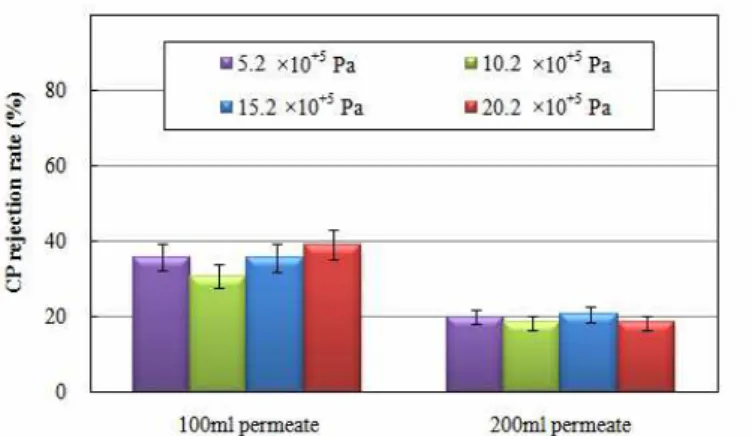
Figure 1. Influence of trans-membrane pressure on CP retention by NF.
membrane surface will be weak. The pKa value was just given in a range, because no exact value can be found in the literature. CP molecule will mainly exist in the neutral form within the normal pH range of water.
Table 1. Main physico-chemical properties of CP molecule
Sample extraction and Analytical methods
All CP samples were first concentrated by lyophilisation-extraction procedure. Then LC-MS-MS method was applied for CP detection and quantification. The injection volume was 50 µL. The mobile phase consisted of methanol-water-acetic acid (65:34.3:0.7) at an isocratic flow of 0.25 mL/min. Isofosfamide was used as internal standard for quantification of CP. Calibration was found to be linear within the 0.01-5.0 µg/L. Detection limits were 10 µg/L and 20 µg/L in ultrapure water and in MBR effluent, respectively.
RESULTS AND DISCUSSION
CP rejection by NF membrane
Influence of trans-membrane pressure on CP retention. CP initial concentration in the feed solution was fixed at 400 µg/L. Background solution was ultrapure water and pH was about 6.0. Fig.1 shows the influence of trans-membrane pressure on CP retention by NF membrane.
We observe in figure 1 that CP rejection rate by NF membrane is relatively low: ranging from 20% to 40%. Considering (i) the CP molecular weight: 261.09 in comparison with the molecular weight cut-off (MWCO) of NF membrane provided by the manufacturer: 180-300 g/mol; (ii) the low polarity and the neutral form of
CP molecule in the pH condition of the experiments; the low rejection rate of CP demonstrates that the typical steric hindrance mechanism governed CP retention by NF membrane. Other evidence about this mechanism will be further analysed in the later part of this paper.
It was also found that CP concentration in the first 100 mL permeate was always lower than that in the second 100 mL permeate. Thus CP rejection rate decreased from almost 40% after the first 100 mL filtered to 20% after 200 mL permeate filtered. This can be attributed to weak adsorption of CP molecules onto the membrane that increased the apparent retention at the beginning of the filtration. As a consequence 200 mL of permeate has to be filtered in order to obtain an accurate evaluation of CP retention by NF membrane.
However, for the same volume filtered, CP rejection rate was almost the same whatever the trans-membrane pressure investigated. Desal 5 DK trans-membrane retention efficiency was not sensitive to pressure changes and exhibited almost constant rejection performance for CP in the pressure range 5.2×10+5 – 20.2×10+5 Pa.
Influence of CP feed concentration on CP retention. The concentrations of CP found in sewage and drinking water source are in the order of ng/L. Such concentrations are difficult to maintain in experiments due to analytical difficulties (detection limits). As a consequence, relatively higher concentration was used for experimental study. In this context, it was necessary to investigate the
Molecular formula
Molecular
weight Log Kow pKa
Charge at pH=6-7
Molecular structure
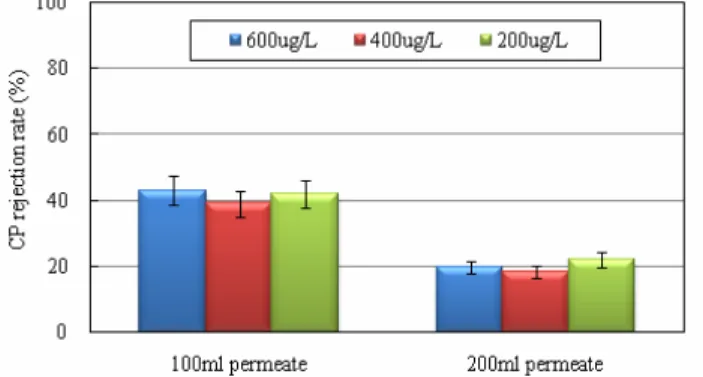
Figure 2. Influence of CP feed concentration on CP retention by NF.
Figure 3. Influence of ionic strength on CP retention by NF.
Figure 4. Influence of water matrix on CP retention (CP feed concentration: 10 µg/L).
influence of CP feed concentration on CP retention. CP solutions in ultrapure water at 200, 400 and 600
µg/L were then prepared and filtered at 20 ×10+5 Pa.
As show in Fig.2, no obvious effect of initial CP concentration on Robs value was observed. Similar conclusion has been drawn in previous study when pesticides were filtered through NF membrane [19]. Thus within the experimental error, it can be concluded that CP concentration in the feed solution has no influence on CP rejection by NF membrane.
Influence of ionic strength on CP retention. Sodium chloride was used to adjust the ionic strength of the
feed solution (25 - 50 mM). CP feed concentration in this experiment was fixed at 400 µg/L and trans-membrane pressure was 20×10+5 Pa. Fig.3 shows the CP rejection rate at different ionic strength. It can be seen that Robs value of CP didn’t change too much under different ionic strengths, particularly after 200 mL permeate filtered. From these results it appears that the presence of salt will not affect CP retention by NF membrane.
In previous study, some researchers have observed that the presence of salt can alter the solute rejection behaviour [20]. For example, for charged solute, the presence of salt will decrease solute rejection rate due to the shield of repulsive electrostatic interactions generated by membrane surface functional groups. On the other hand, the “salting-out” effect will decrease the hydrated radius of solute molecule and thus reduce the “apparent
size” of the molecules. Both effects would be expected to influence solute rejection in similar ways and can’t be easily separated. However, for CP molecule, it mainly exists in the neutral form in the feed solution as mentioned before. Salting-out and repulsive electrostatic effects will not have much influence on the uncharged CP molecule. So the presence of salt has almost no influence on CP retention in our study. This also demonstrated that the size exclusion mechanism governed CP retention by NF membrane, while electrostatic repulsion mechanism didn’t play any role.
Influence of water matrix on CP retention. MBR effluent was used as background solution to investigate the influence of water matrix
on CP retention. Experiment was performed at trans-membrane pressure of 20×10+5 Pa. A decrease of 21% in membrane water permeability was measured after filtration with MBR effluent. Both in-depth membrane fouling due to the NOM retention and NOM adsorption onto the membrane surface may contribute to the membrane permeate flux decrease.
As the results shown in Fig.4, water matrix has obvious influence on CP rejection by NF membrane. When MBR effluent was used as the background solution, CP concentration
in permeate was quite lower and rejection rate was much higher than that in ultrapure water. Furthermore, CP rejection increased with the increase of filtered volume, which is opposite with the tendency in ultrapure water. The CP retention enhance was mainly attributed to the membrane fouling by the components (mainly NOM) of MBR effluent as clearly demonstrated by membrane water flux decrease as mentioned before.
Considering the physico-chemical properties of CP molecule, the pore restriction mechanism caused by NOM may play the utmost role in the increase of CP rejection. CP adsorption onto the membrane surface and solute-membrane interactions are weak due to the neutral form and high polarity of CP molecules. So the modification of membrane surface charge caused by NOM will have little effect on CP retention. In addition, the increase in CP rejection in presence of NOM may result from the binding of CP to NOM due to hydrogen bonding, forming NOM-CP complexes that are larger and exhibit an increased negative charge. Similar conclusions have been drawn in a previous work [16].
CP rejection by RO membrane
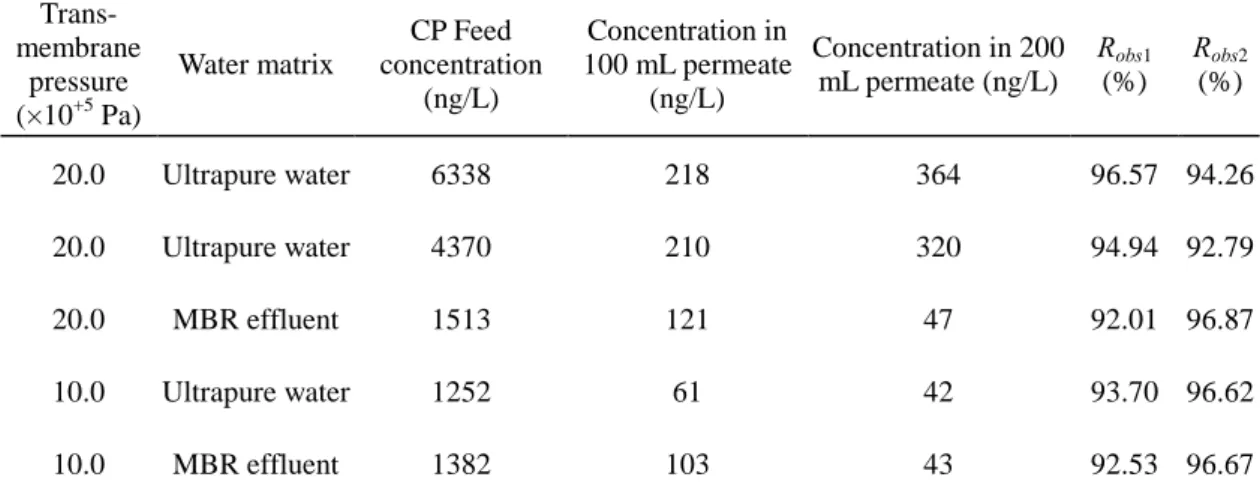
The CP rejection experiments using an RO membrane were conducted at relatively low concentrations (1~10 µg/L) in order to simulate the actual applications. Table 2 shows the CP rejection by RO membrane under different operating conditions. As can be seen from this table, the RO membrane provided excellent CP rejection (>90%). Furthermore, the CP rejection rate was almost stable under all operating conditions. No obvious difference was observed when the trans-membrane pressure, CP feed concentration and water matrix were changed.
Trans- membrane pressure (×10+5 Pa) Water matrix CP Feed concentration (ng/L) Concentration in 100 mL permeate (ng/L) Concentration in 200 mL permeate (ng/L) Robs1 (%) Robs2 (%) 20.0 Ultrapure water 6338 218 364 96.57 94.26 20.0 Ultrapure water 4370 210 320 94.94 92.79 20.0 MBR effluent 1513 121 47 92.01 96.87 10.0 Ultrapure water 1252 61 42 93.70 96.62 10.0 MBR effluent 1382 103 43 92.53 96.67 Note: Robs1-CP rejection rate in the 100 mL permeate; Robs2-CP rejection rate in the 200 mL permeate.
Table 2. CP rejection by RO membrane
Considering the high efficiency in terms of CP retention whatever the operating conditions, an RO system could be considered for tertiary treatment of raw water containing CP as well as for a post-treatment unit after the MBR system in wastewater post-treatment. For the latter application, an MBR-RO system is an ideal choice for hospital wastewater treatment since it can be expected to totally remove many pharmaceutical compounds, such as CP, that are assumed to be present at quite high concentrations in this type of wastewater.
CONCLUSIONS
The rejection of CP by NF and RO membranes from Milli-Q water and MBR effluent was investigated with CP feed concentrations ranging from 1 to 600 µg/L. The RO membrane provided excellent rejection (>90%) from the water matrices examined under all operating conditions. This suggests that a combined MBR-RO system could provide efficient removal of CP.
Concerning the NF process, this study has shown that the typical steric hindrance mechanism governed CP retention by NF membrane. Moreover, the results obtained demonstrated that the adsorption phenomenon between CP molecule and membrane surface was weak but non-negligible as it led to an over estimation of the CP rejection rate at the beginning of the filtration experiment. In consequence, an accurate evaluation of CP removal by NF membrane was achieved after filtering 200 mL. Rejection was poor from Milli-Q water: 20 % in steady state conditions. Trans-membrane pressure, CP initial concentration and ionic strength of the feed solution had almost no influence on CP retention. On the
other hand, the water matrix greatly influenced the CP rejection behavior by NF. The CP rejection rate was significantly enhanced when MBR effluent was used as the background solution. Both membrane fouling and interactions between CP molecules and water matrix may have contributed to the higher CP retention.
From this point of view, both MBR-NF and MBR-RO combined systems can be considered as promising processes for the treatment of real waste water containing CP in future applications.
REFRENCES
[1] N. Vieno, T. Tuhkanen, L. Kronberg, (2007) Elimination of pharmaceuticals in sewage treatment plants in Finland. Water Res., 41, 1001-1012.
[2] B. K. Hordern, R.M. Dinsdale, A.J. Guwy, (2008) The occurrence of pharmaceuticals, personal care products, endocrine disruptors and illicit drugs in surface water in South Wales, UK. Water Res., 42, 3498-3518.
[3] G.A. Loraine, M.E. Pettigrove, (2006) Seasonal variations in concentrations of pharmaceuticals and personal care products in drinking water and reclaimed wastewater in Southern California. Environ. Sci. Technol., 40, 687-695.
[4] Endoxan, Product Monograph; Holoxan, Standard Information For Hospital Pharmacists, 2nd update; Baxter Oncology GmbH: Frankfurt am Main, Germany.
[5] C.K. Grisolia, (2002) A comparison between mouse and fish micronucleus test using cyclophosphamide, mitomycin C and various pesticides. Mutation Research-Genetic Toxicology and Environmental Mutagenesis, 518, 145-150.
[6] T. Steger-Hartmann, K. Kümmerer, A. Hartmann, (1997) Biological degradation of cyclophosphamide and its occurrence in sewage water. Ecotoxicology and Environmental Safety, 36, 174-179.
[7] T.A. Ternes, N. Herrmann, M. Bonerz, T. Knacker, H. Siegrist, A. Joss, (2004) A rapid method to measure the solid-water distribution coefficient (Kd) for pharmaceuticals and musk fragrances in sewage sludge, Water Res., 38, 4075-4084
[8] I.J. Buerge, H.R. Buser, T. Poiger, M.D. Muller, (2006) Occurrence and fate of the cytostatic drugs cyclophosphamide and ifosfamide in wastewater and surface waters. Environ. Sci. Technol., 40, 7242-7250.
[9] E . Zuccato , D . Calamari , M . Natangelo , R . Fanelli, (2000) Presence of therapeutic drugs in the environment, The Lancet, 355, 1789-1790.
[10] A.C. Johnson, M.D. Jürgens, R.J. Williams, K. Kümmerer, A. Kortenkamp, P. John, J.P. Sumpter, (2008) Do cytotoxic chemotherapy drugs discharged into rivers pose a risk to the environment and human health? An overview and UK case study, Journal of Hydrology, 348, 167-175.
[11] B. Van der Bruggen, C. Vandecasteele, (2003) Removal of pollutant from surface water and ground water by nanofiltration: Overview of possible applications in the drinking water industry, Environ Pollut., 122, 435-445
[12] Y. Kiso, Y. Sugiura, T. Kitao, K. Nishimura, (2001) Effects of hydrophobicity and molecular size on rejection of aromatic pesticides with nanofiltration membranes, J. Membr. Sci., 192, 1-8.
[13] L.D. Nghiem, A.I. Schäfer, M. Elimelech, (2005) Pharmaceutical Retention Mechanisms by Nanofiltration Membranes, Environ. Sci. Technol., 39, 7698-7705.
[14] A.R.D. Verliefde, S.G.J. Heijman, E.R. Cornelissen, G. Amy, B. Van der Bruggen, J. C. Van Dijk, (2007) Influence of electrostatic interactions on the rejection with NF and assessment of the removal efficiency during NF/GAC treatment of pharmaceutically active compounds in surface water, Water Res., 41, 3227-3240.
[15] Y. Yoon, P. Westerhoff, S.A. Snyder, E.C. Wert, (2006)Nanofiltration and ultrafiltration of endocrine disrupting compounds, pharmaceuticals and personal care products. J. Membr Sci., 270, 88-100.
[16] A.M. Comerton, R.C. Andrews, D.M. Bagley, C. Hao, (2008)The rejection of endocrine disrupting and pharmaceutically active compounds by NF and RO membranes as a function of compound and water matrix properties, J. Membr Sci., 313, 323-335.
[17] C. Causserand, P. Aimar, J.P. Cravedi, E. Singlande, (2005) Dichloaniline retention by nanofiltration membranes, Water Res., 39, 1594-1600.
[18] C. Mazzoni, S. Bandini, (2006) On nanofiltration Desal-5 DK performances with calcium chloride-water solutions, Separation and Purification Technology, 52, 232-240.
[19] B. Van der Bruggen, J. Schaep, D. Wilms, Nanofiltration as a treatment method for the removal of pesticides from ground waater, Desalination, 117 (1998) 139-147.
[20] L.D. Nghiem, A.I. Schafer, M. Elimelech, (2006) Role of electrostatic interactions in the retention of pharmaceutically active contaminants by a loose nanofiltration membrane. Journal of Membrane Science, 286, (1-2), 52-59.